Lee: In the back of my mind was a picture of the Delgados interrupting them, sharing their wealth with me. I would’ve hoarded it back then if it had been me.
Jim: Sure.
Lee: And so it brought the humanity of the issue to my mind. This is not just an intellectual endeavor. This is not just adding up the evidence and coming to a rational conclusion. God is real. And if he is real, he’s a relational God.
John: Well, that’s Lee Strobel, and he joins us today on Focus on the Family with Jim Daly. And I’m John Fuller.
Jim: John, Christmas is such a meaningful time of year. I love it, it’s joyful, all those great things. We gather as a family, we sing carols, we celebrate the birth of Jesus Christ, our Lord and Savior. But for many people there are lingering doubts and questions. Was Jesus really born in Bethlehem? Is the Christmas story a legend?
John: Mm-hmm.
Jim: I mean, I, I was there, when I was a teenager I didn’t know. I wasn’t sure when Jesus walked the earth and what was the connecting evidence, et cetera. Um, you know, I think I was watching Bill Maher on a YouTube thing the other day with Charlie Kirk, who was, uh, killed not long ago. And they were talking about the virgin birth of Jesus.
And Bill Maher was going, “You know, you have to be brain-dead to believe in that. Really, just think about it, a virgin birth that can’t happen.” And Charlie Kirk was so good, he said, “You know, I’m kind of worried that you don’t realize it could happen. I mean, he created the universe.”
John: Yeah, exactly.
Jim: So why couldn’t he create a virgin birth with himself being that child? It’s kind of interesting. But, you know, Bill Maher was reflecting a real materialistic viewpoint that miracles don’t happen, but that one did.
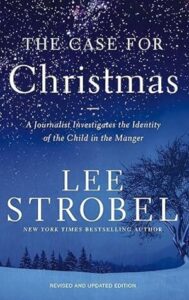
John: Yeah. Yeah. And we’re so glad Lee Strobel is here. Uh, he’s a former investigative journalist. Uh, he once considered himself an atheist, but he carefully examined the evidence and became convinced about the truth of Christianity. And he’s written a number of bestselling books, including this little seasonal book we’re talking about today, The Case for Christmas: A Journalist Investigates the Identity of the Child in the Manger. And you can learn more about Lee and this book and other resources we have for you. And the details are at Focusonthefamily.com/broadcast.
Jim: Lee, it’s great to have you back at Focus on the Family.
Lee: I love being here. Such a great group of folks.
Jim: I love having you. My energy level goes up. I think it’s our shared passion for evangelism.
Lee: Yeah.
Jim: I mean, if I assess my own, uh, leanings.
Lee: Yeah.
Jim: I, I think I’m in that category of evangelists. I love talking to people about the Lord.
Lee: Yeah, me too. It’s exciting.
Jim: There’s an energy that comes with it.
Lee: There is.
Jim: Yeah.
Lee: And when you see people come to faith and lives transformed, I mean that to me… Second Corinthians 5:17 talks about when a person comes to the Lord, the, the old is gone, the new is here. And to be able to watch that in people and see the change in their values and character and morality and worldview and so forth, just exciting.
Jim: It’s always good. You know, I’m thinking about you as a journalist, as an atheist.
Lee: Yeah.
Jim: There’s a lot of parallel with the detective, I think.
Lee: Yeah.
Jim: Right?
Lee: Yeah.
Jim: I mean, they’re similar.
Lee: Sure.
Jim: One is criminal, obviously.
Lee: Yeah.
Jim: But a journalist, you’re looking for the who, what, where, and how. Right?
Lee: Right.
Jim: To try to find the evidence of what’s happening. So I’m sure that that is how you attack this.
Lee: Yes.
Jim: In fact, I love the part of the story, ’cause your wife, Leslie, had become a Christian-
Lee: Yes.
Jim: Before you.
Lee: Right.
Jim: And you’re like, “I’m gonna prove this wrong.”
Lee: Right.
Jim: “And, and set her straight.”
Lee: Yes. That’s right.
Jim: It was kind of the attitude. Right?
Lee: Yeah.
Jim: So what convinced you that the Christmas story isn’t just wishful thinking or, you know, just a great story, but actually factual?
Lee: Well, when you look at the sources of information we have that provide the details of the birth of Jesus, uh, they’re compelling. Um, you have first century sources that date right back to the beginning from reliable people like Luke, who I… He wrote the Gospel of Luke and the Book of Acts, and he’s my favorite Gospel writer because he was sort of an investigative reporter in the first century. You know, he inve-, he said, “I carefully investigated everything so I could write an orderly account about the certainty of what took place.” I love that.
Jim: Yeah.
Lee: It wasn’t, this isn’t once upon a time, fairy tales, make believe. He’s looking to document stuff. And what’s interesting about the Gospel accounts is only two of the four Gospels have an account of the birth of Jesus. So we see it in Luke and we see it in, uh, Matthew. Um, but what, what is compelling though is that the two accounts are complementary. They’re different a bit, but they don’t contradict each other. They’re complementary. Luke is writing from Mary’s perspective, and Matthew is writing from Joseph’s perspective. And so you have different details that are presented, but they date right back. So they’re relying on sources that go right back to the beginning. Interestingly too, we have in Mark in verse six, uh, chapter six, verse three, Mark refers to Jesus as Mary’s son. Now, in first century Hebrew culture, you would always refer to someone as their father’s son.
Jim: Huh?
Lee: It would’ve been Joseph. Even if the father was deceased, you would always refer to him as Joseph’s son. But no, Mark refers to Jesus as Mary’s son. That tells you he knew there was something unusual about the birth of Jesus.
Jim: Yeah.
Lee: And then in John, of course, you’ve got that magnificent opening in the Gospel of John, where he talks about, “In the beginning was the word and the word was God.” And it said, “The word became flesh and made his dwelling among us.”
Jim: Yeah.
Lee: So that is a supernatural event that he is alluding to there as well. So we have good historical data from these early accounts that date back very close to the event itself. Um, that report on what took place.
Jim: Let me ask you this. Uh, you didn’t have the benefit of seeing that clip that I r- referenced with Charlie Kirk.
Lee: Yes.
Jim: And Bill Maher. How would you have answered Bill Maher yourself?
Lee: Yeah.
Jim: I mean-
Lee: Yeah.
Jim: You know, somebody that says you have to be brain-dead.
Lee: Right.
Jim: To believe in a thing like a virgin birth. Just think about it. It doesn’t happen.
Lee: Right.
Jim: That was his perspective.
Lee: Well, one of the greatest, uh, defenders of Christianity is Dr. William Lane Craig, and Dr. Craig had a problem along these lines. Because he said, “Wait a minute, in order for Mary to give birth to a male, she would have to have the Y chromosome.” Well, she didn’t have the Y chromosome, uh, if this was a virgin birth. So how could she give birth to a male child? And then he realized, “Wait a minute. We have strong evidence from science, from cosmology and physics that God created the universe.” And for whatever begins to exist, uh, has a cause behind it. We know the universe began to exist. There must be, uh, therefore a cause behind the universe, that would be God. So we have good evidence that God created the universe, just as the Bible says in Genesis one verse one. And therefore, his conclusion ultimately was, “Wait a minute, if God can bring a universe into existence, he can create the Y chromosome in Mary so she could give birth to a male child.” That would be like child’s play. Mm-hmm.
Jim: Yeah. That’s so good. In the book, you mentioned the Delgado family.
Lee: Yes.
Jim: How did you meet them and what was the outcome of that?
Lee: I was an atheist at Chicago Tribune. One of my first assignments was to write a thirty-part series about the poorest people of Chicago.
Jim: Thirty-part?
Lee: Yeah. Thirty-part series.
Jim: Wow. That’s big.
Lee: Writing, leaning up to Christmas. So I was to profile of, a destitute family every day. And one of the first families I profile, uh, was a Delgado family. It was a woman named Perfecta Delgado. She was 60 years old, she had arthritis, she couldn’t work. She had two grandchildren who she was raising, teenagers. And, uh, they had nothing. I went to their place, it had been burned out, and, and they were living in a hovel. This, this tenement. There was nothing in there. I mean, I’m telling you, there was not a picture on the wall. There was not a rug on the floor. There was not, uh, there was no clothing in the closet. Uh, the two girls had one sweater between them.
And in the biting Chicago cold, one girl would wear the sweater halfway to school while her sister shivered next to her, and then she would take off the sweater and give it to her sister-
Jim: Oh, my goodness.
Lee: To wear the rest of the way.
Jim: Yeah.
Lee: All they had was one cup of rice in their place. So I, I wrote about ’em, and what I did is I put the redress on West Homer Street in the article, hoping that Tribune readers would respond. Well, they did. So the article was published on Thanksgiving. On Christmas Eve, I’m in the newsroom, nothing’s going on. I said, “I’m gonna go visit them and see what’s going on.” I drive out to their house, their granddaughter opens the door, and it looked like Macy’s inside.
Jim: Oh, my.
Lee: They, people had showered them with everything. You couldn’t believe all the gifts they had received. The place was just… And, and what I had interrupted was the grandchildren and Perfecta Delgado packaging up much of their newfound wealth to give it away.
Jim: Wow.
Lee: And I said, “What are you doing?” And she said, through a translation, “Oh, well.” She said, “I, we cannot have plenty while our neighbors have nothing. This is what Jesus would want us to do.”
Jim: Unbelievable.
Lee: And I’m, I’m shocked by this. And then, and then I said, “Well, are you amazed at this outpouring of gifts?” And she said, “Oh, yeah. This is wonderful. This, we didn’t expect this. This is a gift from God.” But she said, “That’s not the greatest gift of God. That is tomorrow. That is the birth of Jesus.
Jim: Amazing.
Lee: And I thought, here I am an atheist, I’ve got all the material things in the world I could have. I worked for a big newspaper, I’m successful and so forth. Um, and yet inside I was as barren as their old apartment. And here they are, they had nothing, they have faith in God, that he was gonna come through for them, and he did. And, and it seemed like they were living off of this robust, um, belief in Christ that fueled their entire lives. And it made me long for that, even as an atheist. It made me want to have what they have, or I should put it this way, made me want to have who they had, Jesus. And so I remember the Delgados for years and years and years, and would always bring them back into my mind.
Jim: You know, in that context, for those that might not know the Lord right now, Lee.
Lee: Yeah.
Jim: People listening and watching us. Uh, that was a little bit of a planting of a seed, I would guess.
Lee: It was. That’s right.
Jim: But when you look back on how you became a Christian-
Lee: Yes.
Jim: I mean, what was the impact of meeting them and seeing their joy?
Lee: Yeah.
Jim: Seeing their trust.
Lee: Yes.
Jim: Not in their circumstances-
Lee: Right.
Jim: But in their faith.
Lee: Yes.
Jim: How did you process that and how did that help you become a Christian?
Lee: Because, um, my investigation of the evidence for Christianity dealt a lot with science, cosmology, physics, biochemistry, the evidence that God exists, and then especially the resurrection of Jesus. That he claimed to be the Son of God, and he backed it up by returning from the dead. So I’m looking at all this facts, all this logic and so forth, but in the back of my mind was a picture of the Delgados interrupting them, sharing their wealth with me. I would’ve hoarded it back then if it had been me.
Jim: Sure.
Lee: And so it brought the humanity of the issue to my mind. This is not just an intellectual endeavor. This is not just adding up the evidence and coming to a rational conclusion. God is real, and if he is real, he’s a relational God. And if he’s a relational God, he will change our perspective and change our lives as he had the Delgados. So it brought that human element to it. Um, to this day, I could, I could close my eyes and take you back to that-
Jim: Yeah.
Lee: That evening,
Jim: Which is so good. You know, and there’s two parts to becoming a Christian. You have your, the heart part.
Lee: Yeah.
Jim: Where you believe. I think that’s what that means, when you believe. That’s a heart thing.
Lee: Yeah.
Jim: But you have your head too.
Lee: Yes.
Jim: And you’re looking at data, trying to figure out, could this be real, etc.
Lee: Right.
Jim: One of the things I remember sitting in a philosophy class in college, and the professor was talking about the words of Homer and Plato and those, uh, linkages to antiquity.
Lee: Yeah.
Jim: And, y- you know, I innocently put up my hand and said, “What about the words of Jesus?”
Lee: Mm.
Jim: And he castigated me.
Lee: Really?
Jim: And he said, “That is a fairy tale. You have to be a numbskull to believe in that.”
Lee: (laughs) Wow.
Jim: I mean, he was on the attack.
Lee: Wow.
Jim: Which was so bizarre.
Lee: Sure.
Jim: It’s like I struck an emotional chord.
Lee: Yeah.
Jim: But it did set me on an adventure to kind of look at that rule of ancient ant-, writings of antiquity.
Lee: Yes. Yes.
Jim: And Homer was the closest.
Lee: Mm.
Jim: 60 manuscripts written about 600 years-
Lee: Yeah.
Jim: After Homer lived.
Lee: Yeah.
Jim: And he’s teaching me that this is what Homer said. And the Scripture, the Gospels, man, there’s so much more evidence written in that lifetime-
Lee: So close to the life of Jesus.
Jim: I think it’s 24,000 manuscripts and multiple languages that line up.
Lee: Not o-
Jim: But, but in that regard, the question I want to ask-
Lee: Yeah.
Jim: And the critics will often say that the Gospels were written long after Jesus lived.
Lee: Yeah.
Jim: But 600 years was Homer.
Lee: (laughs)
Jim: What when the disciples writing these things down? How many years after Jesus died?
Lee: Very quickly. I mean, if you look at, um, Jesus was put to death in ’30 or ’33 A.D. And, um, if you look at the Book of Acts, which is the story about the spread of the early church, um, we can date that to these early sixties A.D. So Jesus, that’s about 30 years difference. Um, because of several things that happened in the sixties that are not in Acts that would’ve been if it had been written later.
Well, Luke wrote his Gospel before he wrote the Book of Acts. So we can date that even earlier. So that’s in like the late fifties A.D. And then two, uh, one of Luke’s sources was the Gospel of Mark. So Mark goes back even earlier. But here’s what’s fascinating to me. And this was one of the most decisive things of me coming to faith in Christ. The Gospels are not the earliest stuff we’ve got. We have creeds of the earliest church that are embedded in the New Testament that go back even earlier.
For instance, First Corinthians 15, starting at verse three is a creed of the earliest church that says Jesus died. Why? For our sins, he was buried on the third day he rose from the dead. And then it mentions the specific names of eyewitnesses and groups of eyewitnesses to whom he appeared. This creed has been dated back by scholars to within months of the death of Jesus. Within months.
Jim: Yeah.
Lee: That is a news flash from ancient history. One of the greatest historians who ever lived was A.N. Sherwin-White of Oxford. He said, “The passage of two generations of time is not even enough for legend to grow up and wipe out a solid core of historical truth.”
Jim: Right.
Lee: We don’t have two generations of time passing here. The Gospels are all written, um, you know, before, uh, Matthew, Mark, and Luke, at least before 60 A.D. And so that’s in the first generation of people.
Jim: Yeah.
Lee: Uh, the, the Gospel of John is dated later. Some date it in the nineties; some date it before ’70.
Jim: Yeah. Let me emphasize this, because those of us that didn’t study these things-
Lee: Yeah.
Jim: It’s fresh, we’re hearing it. But you know, you think of something like Robin Hood, and I don’t mean to demean the Gospels.
Lee: Yeah.
Jim: I’m just saying these are the comparisons that you get, and the legend factor that you’re talking about. These are things that grow over decades and centuries.
Lee: Exactly. And then once upon a time.
Jim: This person, right.
Lee: They’re written, they’re not intended to be taken as history.
Jim: So what you’re deconstructing there is that is how a legend grows.
Lee: That’s right.
Jim: It grows over decades or centuries.
Lee: Right.
Jim: And that person becomes, you know, it’s William Wallace.
Lee: Yes.
Jim: Or whatever it might be, and they make movies about that.
Lee: That’s right.
Jim: Some of those elements are probably built on legend, not on fact. But you’re saying given the sources of the documents-
Lee: Yes.
Jim: That’s where this truth about Jesus is different.
Lee: Exactly. And you know, uh, some people will say, “Oh, this is just a recapitulation of ancient myths.” You know, and, and there’s old myths that, uh, ref-, you know, for instance, the, and Da Vinci Code popularized this years ago.
Jim: Yeah.
Lee: Uh, they said,
Jim: Interesting movie, but not rooted in great truth.
Lee: Exactly. So he, that movie claimed, and some scholars have claimed that, um, oh, Christianity’s just, it’s a copycat religion. It’s based on the myth of Mithras. Mithras was a myth. Mithras was born of a virgin on December the 25th. Um, he had 12 disciples. He, he, um, died for world peace. He died and was resurrected from the dead. And so, Jesus, that’s just a copycat. They just… Well, then you investigate it, you know what you find? Was he born of a virgin, Mithras? No, he emerged fully grown from a rock, naked with a hat on. That’s what the myth said. Now, unless they considered the rock to be a virgin, that was not a virgin birth. Secondly, he was born on December 25th. Well, so what? We don’t know the date Jesus was born. It’s not in the Bible. Um, third, he had 12 disciples. No, he didn’t. According to one version, he had one disciple. According to another version, he had two disciples.
Jim: So no consistency at all.
Lee: No. And, and not only that, but he didn’t die for world peace. He’s known for killing a bull. And there’s no record of him ever dying. There’s no myth about his death, therefore no resurrection. So when you look into it, it collapses. It, it, these parallels evaporate.
Jim: Mm-hmm.
Lee: And, uh, so I think that’s important for people to understand.
Jim: Yeah.
Lee: When we think, oh, this is just another myth.
John: Mm-hmm. Our guest today on Focus on the Family with Jim Daly is Lee Strobel, and we’re covering his book, The Case For Christmas: A Journalist Investigates the Identity of the Child in the Manger. Uh, get a copy of the book and, uh, find other resources to help you in your faith journey at our website. And that’s focusonthefamily.com/broadcast.
And Lee, um, there’s such an over-commercialization of this holiday season.
Lee: Yeah.
John: I mean, there’s great spiritual import, but it tends to get kind of glossed over, I, I talked to my mom back in early October and she said they already had Christmas trees up in her assisted living facility.
Lee: Wow.
John: So, I mean, it’s a big shopping season. How do we cut through the clutter of all that and keep the heart of the Gospel story, which is the Savior came into the world.
Lee: Yeah. You know, you’re right. It has become very commercialized and secularized. But the other aspect of that is studies have shown that people are more spiritually open during the Christmas season than any other time of the year. And so here’s a real opportunity for us as Christians to be able to engage with people and to talk about Christmas. What does it mean and why would Jesus come into the world? What was his mission? His mission to, you know, ultimately die for our sins so that we could spend eternity with him in heaven. And, um, so, um, I think what I wanna do is seize those opportunities where I see spiritual curiosity that people have. People are more likely to go to church on Christmas, uh, than virtually any other time of the year. Maybe Easter be the other time.
Jim: I think Lee, one of the things is ideas for parents to help their kids remember what the season is about.
Lee: Yeah.
Jim: Do you have some ideas there on very practical things we might be able to do?
Lee: Yeah.
Jim: I mean, with our kids, particularly. Not just our neighbors.
Lee: Yeah. I, I think it’s a great tradition to read the Gospel accounts, um, going up to Christmas. In Luke, uh, and Matthew to read those accounts and to talk about it with your kids.
Jim: Wanna talk about the history of it.
Lee: You talk about the history of it, the fact that, yeah, here we have Luke who says, I’m not making this up. I carefully investigated everything.
Jim: Yeah.
Lee: Um, and here’s what Luke says took place, and then get into a discussion and say, what do you think of that? Why do you think this happened? And, and what do you think the implications are? And use it as a, um, a way to tap into the curiosity that’s natural among children.
Jim: Yeah. I think, uh, Ray Vander Laan, the man who has helped us and worked with us with That The World May Know, a Jewish scholar.
Lee: Yeah.
Jim: There’s still great content. I mean, he keeps, uh, providing focus, many good things, which are meant for you.
Lee: Yeah.
Jim: The listener, the viewer, um, he’s got an RVL discipleship series that’s terrific. In there somewhere I caught Ray’s emphasis that the early church didn’t really overstate Christmas, they were about Easter.
Lee: That’s very true.
Jim: That it was a low-key thing, the birth of Christ, but Easter was the differentiator. Speak to your findings in that regard.
Lee: Yeah.
Jim: Like, but it’s interesting that the world emphasizes Christmas.
Lee: Yes.
Jim: And de-emphasizes Easter.
Lee: Right. That’s true. It’s interesting that early Christians did not observe birthdays in general.
Jim: Huh.
Lee: In fact, they, we have writings from some of the early church fathers criticizing the Romans, making fun of them because they observe birthdays. W- why observe a birthday? They, they didn’t get it. What the Christians would observe are the dates of martyrdom.
Jim: Mm-hmm.
Lee: If someone died for their faith, that was a date that was remembered. And so when Jesus was born, what was the date? Nobody really paid attention to that. And then years later, they tried to determine, well, when was he born? And in about the year 200 A.D. a bunch of scholars went off to Egypt for a conclave and said, “Let’s try to figure it out.” And they figured that Jesus was born on May the 20th. And, um, so how did we decide it was December 25th? It’s a real interesting story. There’s two theories about it. One theory is that’s around the winter solstice. And this is when a lot of pagan religions would hold these, these, uh, raucous, um, uh, festivals, um, that were full of debauchery and, and so forth, and drinking. And, and so, um, Christianity provided a counterpoint to that. Interesting other theory, though, there was a connection among early Christians between creation and redemption. And there was a belief that Jesus would’ve been conceived on the same day of the year that he ultimately died.
Jim: Huh.
Lee: And so in about the year, 200 Tertullian was a church father, um, computed that Jesus died on March the 25th, according to their calendar of the day, the Roman calendar of the day, March 25th. Well, if that’s true, then he would’ve been conceived on March 25th. And then if you move ahead nine months of gestation, it’s December the 25th.
Jim: Huh.
Lee: And that’s how a lot of people believe we got December. Now we see in the early writings in the, uh, third century, um, December 25th being mentioned as the birthday of Jesus. But it doesn’t really matter the day he was born. It’s not-
Jim: Right.
Lee: You know.
Jim: Lee, the most critical thing we’re talking about is who Jesus was.
John: Mm.
Jim: You do have outside biblical context, you got Josephus-
Lee: Yes.
Jim: And other secular writers.
Lee: Right.
Jim: Of that period that reference him. Again, buttressing the fact that he was born.
Lee: Yes.
Jim: To call this a fairy tale is so anti-intellectual.
Lee: Yes.
Jim: Um, and that’s where people go, ’cause it’s probably a comfortable way not to deal with Jesus.
Lee: That’s right.
Jim: Put him in, put him in the fairy tale category.
Lee: We have 110 facts about the life, teachings, miracles, death and resurrection of Jesus in ancient sources outside the Bible.
Jim: (laughs)
Lee: Uh, that Dr. Gary Habermas has documented in his book The Verdict of History. Uh, so yeah. There’s a lot of, um, non-Christian attestation to-
Jim: Yeah.
Lee: The fact that Jesus existed.
Jim: You know, right at the end here, Lee, again, people understanding the listener, the viewer, understanding where you came from.
Lee: Yeah.
Jim: Gives so much legitimacy to where you are today.
Lee: Yeah.
Jim: You were not leaning in this direction.
Lee: Right.
Jim: You were not there to say, yeah, I, I’m a believer.
Lee: Yeah.
Jim: You were there to disprove your wife’s newfound faith.
Lee: Yeah.
Jim: So you could have a different peace in the home.
Lee: Right.
Jim: Without God.
Lee: Exactly.
Jim: Because this was bugging you.
Lee: Yes, that’s right.
Jim: I know the story, the film, it was great.
Lee: Yeah. Yeah.
Jim: But I… There are people listening that are right there, Lee.
Lee: Yeah.
Jim: Who are saying, Yeah, the fact that we can’t nail his birthday is enough evidence for me. I knew a professor at a local university, he went to Princeton Divinity School-
Lee: Mm-hmm.
Jim: And lost his faith.
Lee: Sure.
Jim: I said to him, “How did that happen?” He goes, “I just read too much.”
Lee: Yeah.
Jim: I mean, you think of that.
Lee: Yeah.
Jim: They read him out of his own belief in God.
Lee: That’s right. It happened to Billy Graham’s best friend, Charles Templeton.
Jim: Yeah.
Lee: Who did come back to faith before he died though.
John: Mm.
Jim: That’s terrific.
Lee: Yeah.
Jim: But speak to that person in terms of what those two or three core elements are to really dig in. You’ve got one life; you better get the answer to this question right.
Lee: Yeah. You know, the Bible is a big book, it’s over 800,000 words, and it can be intimidating. For me, when I was an atheist, I’m opening the Bible, I’m flipping through, I’m thinking, where, where do I begin? Where, how do I investigate this? Where the… And it took me two years to really investigate the historical data before I was convinced that Jesus not only claimed to be the Son of God, but backed it up by returning from the dead. But I like to tell people, you know, I can summarize the central message of the Bible. What is Christmas about? What is Easter about? In 21 words. One verse. One verse, Romans 6:23, “For the wages of sin is death. But the free gift of God is eternal life through Christ Jesus, our Lord.”
In other words, the wages of sin is that what we earn, what we deserve, because we’ve, we’ve walked away from God, we’ve violated His laws. We’ve, we, we, we’ve ignored him. The, the consequence of that is, the Bible says death, which means eternal separation from God. That’s what hell is. None of us wants that. But it says, “The free gift of God is eternal life through Christ Jesus our Lord.” Jesus came into this world, lived the perfect life, died as our substitute to pay the penalty we deserve for the sins that we’ve committed and offers forgiveness and eternal life as a free gift of his grace. And if we receive that gift and a prayer of repentance and faith, we can have confidence that when we close our eyes for the last time in this world, we’ll open them in the presence of God for eternity.
Jim: Well, that’s it. And that is the greatest Christmas present you will ever open.
Lee: Yeah.
Jim: Is your belief in Christ. So get a hold of us. We have wonderful material coming home, a PDF that we can send you that explores how to become a Christian.
John: Mm.
Jim: What does it mean to have a relationship with Jesus? Something Lee’s written about his entire life with A Case for Christ, a great book in terms of proving the facts of Christianity. And this wonderful book, The Case for Christmas, which really zeros in on, uh, is it fable or is it true? And I think we’ve all come to that conclusion, it is true. And I hope you do as well.
And we’d like to send you a copy of this quick read. And if you can make a gift of any amount, uh, we will send it to you as our way of saying thank you for helping with the ministry and helping to touch others. When you contribute to the work we do here at Focus on the Family, you’re delivering hope and joy to people like Rita who wrote to tell us this, “I’m so grateful for Focus on the Family. Being disabled, I can’t get out much. So your resources help guide me through my days. I turn to them often for encouragement, hope, and comfort. Your program has been a lifeline through many difficult seasons in my life. I honestly don’t know how I would get through life without it.”
John: Mm. Well, that’s certainly encouraging.
Jim: It is. And hey, why don’t you join us in touching the lives of other people to help introduce ’em to Christ, deepen their relationship with Christ and have a full life.
John: Yeah, and the Christmas season is the perfect time to deliver hope and joy to families, uh, through your support of Focus on the Family. And as you continue to provide that needed help, uh, you’re gonna be reaching people like Rita. So please consider donating generously today.
And right now through a special match opportunity, your gift will be doubled, uh, dollar for dollar. God’s gonna use your contribution to bring healing and redemption to twice the families. So look for that Coming Home article and donate and get your copy of The Case for Christmas at focusonthefamily.com/broadcast, or call 800-A-FAMILY. That’s 800-232-6459. And join us again tomorrow as we begin our best of 2025 programming. We’ll be looking back at some of the most responded to programs of this past year. And tomorrow it’ll be the late Dr. Greg Jantz sharing how to free yourself from the grip of anxiety.
Greg: When people start to get healed from anxiety, they start to have this gratefulness. It’s really powerful. It’s hard for anxiety and gratefulness to live together.
John: Thanks for listening to Focus on the Family with Jim Daly. I’m John Fuller, inviting you back as we once again help you and your family thrive in Christ.