

Day One:
Senator Ben Sasse: I am finite, and that is good. That is how it should be. God is omniscient, omnipotent, and infinite, and He creates us to be His children, and we need to understand our place. And it is a glorious place to be Imago Dei day, but we’re not God.
John Fuller: That’s former Senator Ben Sasse, talking about how we can keep our lives in perspective as we consider Almighty God. Well, we have a powerful conversation about the brevity of life and, uh, about eternity in front of us today on Focus on the Family with Jim Daly.
Jim Daly: John, I met a few days ago with Ben Sasse in Austin, Texas, uh, to hear his poignant thoughts about life and death as he courageously deals with the recent diagnosis of stage four pancreatic cancer. It was very gracious of him to take some time to meet with me and share about how he’s processing things and what God has been speaking to him in these real difficult times.
John: Mm-hmm.
Jim: When you get that kind of diagnosis, things become crystal clear. What’s important to you? And I think anyone listening or viewing will want to pay attention to what he has to say in this important conversation. I found it very inspirational.
John: Mm-hmm. And, uh, Ben Sasse represented the state of Nebraska for nine years as a former US Senator, from 2015 to 2023. He served as the president of the University of Florida. He was a professor as well. Most importantly, however, he’s a husband and father. And let’s go ahead and, uh, hear the conversation now with former Senator Ben Sasse on Focus on the Family with Jim Daly.
Jim: Former Senator Sasse, it’s so good to have you with me.
Ben: Good to be with you.
Jim: Let me ask you a question that, that Lee Strobel actually asked me when I was interviewing him, and he said, “You know, with your teens and 20-somethings, here’s a good question to ask them. If you’re with God and God had to answer one question right there in the moment, what question would you ask Him?” I thought, “Wow, that’s a good question.” So that night at dinner, I’m asking my boys. And my science boy, Trent, he said, “Give me 20 minutes and I’ll find an answer.”
Ben: (laughs)
Jim: And my other son said, “Yeah, give me a couple of minutes.” And we’re eating. And then Trent, my science guy said, “I’d like to ask him, what is the element that we’re missing in the creation of the universe? What do we not see that’s plainly in front of us?” I went, “Oh, that’s good.” And then my English lit major-
Ben: Mm-hmm.
Jim: … Troy, he goes, “Why do we suffer?”
Ben: Hmm.
Jim: And that really shows the heart of humanity, doesn’t it? Those that wanna understand this material world, and that’s a good thing.
Ben: Absolutely.
Jim: But then those are asking the deeper question of, why do you allow us to suffer?
Ben: Hmm.
Jim: How would you answer that?
Ben: Wow. I mean, uh, first I wanna try my hand at answering the question you, you threw out in your parlor game at dinner.
Jim: (laughs) Right?
Ben: I, uh, I am just obsessed at present with the Trinity and the mystery of the Trinity and the relationality of God overflowing that He desires relationship with us.
Jim: Hmm.
Ben: Why? We would gladly be slaves and servants in the kingdom at the Adoration Feast of the Lamb. And He makes us His children who get to say, “Abba Father, Daddy,” and we get invited to sit at the table. W- why? Why would He do that?
Jim: Yeah.
Ben: It’s amazing. Suffering, to your question, obviously don’t understand it, but Jesus took on incarnate flesh and came and didn’t just fulfill the whole law for us.
Jim: Mm.
Ben: He also suffered all the punishment that Adam and we in Adam deserve. And though it’s terrible, there is something very special in being able to be united with Christ’s suffering in route to this veil of tears’ final enemy, this last enemy-
Jim: Yeah.
Ben: … because it helps us cleave away from all the idolatries we’ve built as we fell in love with the creation instead of the creature. And we should love the creation, but because it’s overflow of the Creator and we have all these idol factories in our hearts and they need to be smashed to make us fit for heaven, not to earn our salvation, but because God has already declared us just. He’s now also sanctifying us.
Jim: I wanna follow up on that in a moment, but some people listening or watching may not know your situation. So again, I’m so grateful that, uh, you said yes, because when we first reached out, I thought people need to hear Ben Sasse’s story because we’re all gonna meet this fate. Nobody gets away.
Ben: Yeah.
Jim: We all have a fatal diagnosis.
Ben: That’s exactly right.
Jim: But we just don’t know it.
Ben: That’s right.
Jim: And we live our lives as if mortality isn’t gonna come at some point.
Ben: Mm.
Jim: Isn’t that true? It’s totally true?
Ben: It’s totally true.
Jim: And then boom, all of a sudden, you get a diagnosis. What happened for you?
Ben: Uh, I’ll give you the speed history. Um, around Halloween, I started having a lot of very weird pains, both front and back, all through my abdomen. And I do weird sports. I’m, uh, turned 54 since then.
Jim: (laughs)
Ben: But at that point, I was 53 and I still did sprint triathlons a lot. And when I train, I wear a weight vest a lot. And in retrospect, this was so stupid. It makes sense to wear a 45-pound weight vest for some of the running events. Should never have done that on my bike. And occasionally I would just leave my vest on the bike. And I thought I pulled a bunch of muscles in my abdomen and in my back. And we couldn’t figure out what was wrong for six or seven weeks. And finally, we got some full body scans and the doctors called me back an hour later. This is on December 13th or 14th, and, uh, they’re beating around the bush. And I’m like, “I’m not the toughest guy in the world, but I’m farm kid tough.”
Jim: Yeah.
Ben: “I can take it, doc. Tell me a truth. Give me, give me-”
Jim: Nebraska tough.
Ben: “… give me something real.” (laughs) And he goes, “Really?” And I said, “Yeah, just be blunt.” And he said, “Ben Sasse’s torso is chock-full of tumors.”
Jim: Wow.
Ben: And so I have a metastasized stage four pancreatic cancer and now five other kinds of cancer, liver being the farthest along. Um, but pancreatic cancer is a nasty one, um, because the mortality, the, the death rate is off the charts. And so-
Jim: It’s like 97%-
Ben: Exactly. Yeah.
Jim: … fatal.
Ben: And so I was given three or four months to live in mid-December, and it’s already been three months. Um, and I thank the Lord so much that even in the midst of that terrible diagnosis, and to your point, we all have a death sentence, but mine became a defined number of days-
Jim: Right.
Ben: … instead of the fact that we have a death sentence and we don’t know what it is. I, I felt with Paul to live is Christ, to die is gain at peace right away. I didn’t wanna die because death is terrible and I love my wife, Melissa, of 31 years. My girls are awesome, 24 and 22. But we also have a boy who’s only 14, and he still needs a dad-
Jim: Yeah.
Ben: … knocking him upside the head and loving on him and discipline him and repenting with him and to him. And, um, so I’m grateful that we may get a bunch of extra months out of the clinical trial I’m on.
Jim: You know, Ben, in mentioning your children, and that’s kind of the heart of the reason with your wife, Melissa, too, that I want to talk to you, because not everybody faces something like this. And the way that you’re doing it is so honoring to the Lord. Um, l- let me ask you about your 14-year-old son. I mean, you must sit there and think, “Lord, this seems so wrong, so unfair. He needs a dad.” I mean, I was 11 when my dad died.
Ben: I know you were young.
Jim: And I was nine when my mom died.
Ben: Yeah.
Jim: It, it goes deep.
Ben: Yeah.
Jim: It lasts a lifetime.
Ben: Yeah.
Jim: That loss, that hole-
Ben: Yeah.
Jim: … in your heart. So I can feel for your son because I know what he’s gonna experience, and your daughters too.
Ben: Yeah.
Jim: But at the same time, I would say that all of us in the Daly Clan, the five children would all say, that have all come to the Lord, that we would not have-
Ben: Praise the Lord.
Jim: … changed anything.
Ben: Mm.
Jim: But it seems contrary to comfort.
Ben: Yeah.
Jim: So in that context, how do you wrestle with that to say okay?
Ben: R.C. Sproul used to say, “There is no Maverick molecule.” God is not uncertain about anything that’s has happened, is happening, or will happen, and He will weave together that mosaic for our own good. God loves His church, and those Christians that he has, um, written into eternity, He will use this for good. And I… Our, our son’s name is actually Augustine. We call him Breck. Augustine’s theologically pretty heavy for a 14-year-old kid on a football field.
Jim: (laughs) Yeah, Breck’s a little bit-
Ben: So we call him Breck. But I trust the Lord through all of this, and yet my deepest aches, I, I, I don’t wanna be separated from Melissa. I, I, it, I, I love this woman. I wanna be with her. We’re gonna be together for eternity, all of us-
Jim: Right.
Ben: … in God’s church are. Um, but the part that’s most baffling is why will Breck not have a dad at 15 or 17 or 19? And yet, God knows exactly what He’s doing, and He has a plan for Breck’s life-
Jim: Yeah.
Ben: … that coming up child. But it hurts.
Jim: Yeah. You know, on behalf of those that are going through some form of pain or suffering, I think the right question right here is for the person who’s going, “No, it’s wrong. It’s wrong.” What would you say to help them reconcile the tear in their heart and to be at peace, which seems impossible-
Ben: Yeah.
Jim: … when you’re looking at what you’re looking at, and knowing your daughters, your son, Melissa, that unless the Lord intervenes with a miracle-
Ben: Mm-hmm.
Jim: … your days are numbered more finitely than others? What would you say that person’s saying, “I don’t have the faith to get there.”
Ben: Uh, I mean, I guess I come at it from two angles. Um, I don’t wanna be, um, aggressive with the intellectualist, rationalist side, but God tells us in scripture everything we need to know for faith in life, but He doesn’t tell us everything we wanna know or everything that we ultimately will know. And He is God and to whom else would we go? So I trust Him because He is who He is and He has been faithful. And so I won’t get every answer this side of eternity. But then I think about in Galatians and Ephesians where so many times you think of the believing community in song, and then I go to things like Amazing Grace. “When we’ve been there 10,000 years-”
Jim: Right.
Ben: “… bright shining as the sun, we’ve no less days to sing his praise than when we first begun.” Death is an enemy. Death is wicked. But it’s the final enemy, it’s our last battle, and after that, there will be no more tears.
Jim: Yeah.
Ben: And so we, we will have these answers and we will know that God used it for His good.
Jim: You mentioned the idolatry that we face in this life. It, it’s so amazing. I think you have to be engaged to recognize that idolatry and to work with the Lord-
Ben: Right.
Jim: … to overcome that idolatry.
Ben: Rightly ordered loves. Um, C.S. Lewis, uh, has that kind of quippy joke that the woman who falls so in love with her cat that she makes it her God-
Jim: Mm.
Ben: … can’t actually even properly love a cat. And you should love your cat or your dog. You, there are many, many things. Being great at playing the guitar is glorious, but it can’t be God, right?
Jim: Right.
Ben: And so to properly order our loves is to understand how God sees the world. And God created this world and called it good. This place is filled with a cornucopia of glorious things where we get to think God’s thoughts after Him. You get to feel the, the joy, Eric Little in, um, Chariots of Fire, feeling the joy of running. God has created the opportunity for us who are material beings, who live in creation to enjoy sport. But Eric Little didn’t want to defile the Sabbath by letting this thing become his idol and not be gathered w- Hebrews 10:24-25, “Let us not forsake assembling with believers on the Lord’s Day.” Running is great, but running can’t be God. I’m the son of a football coach. Football is great, but football better not be my hope and dream. It will disappoint me. And so Calvin has that great line, um, that the human brain after Adam is an idol factory. We’re constantly running around the world-
Jim: Yes.
Ben: … and trying to say, “Why don’t I put myself in God’s place? Why don’t I put myself on the throne? Why don’t I try to assemble all of creation?” I can’t even grow skin on my face. We can’t keep the planets in orbit. I say that as a joke, because Jim, you and I were talking before the show with some of the radical clinical trial I’m on, the chemotherapy, the poison makes it almost impossible for me to regrow skin on my face. So my face bleeds constantly.
Jim: Wow.
Ben: And what a fool to think that I could be God. I am finite, and that is good.
Jim: Mm.
Ben: That is how it should be. God is omniscient, omnipotent, and infinite, and He creates us to be His children, and we need to understand our place. And it is a glorious place to be Imago Dei, but we’re not God.
John: This is Focus on the Family with Jim Daly, and that’s former Senator of Nebraska, Ben Sasse, talking about how he’s resting in God’s sovereignty, even though suffering is part of his own personal story. And if you’re in that kind of a place today, if you need encouragement, we’ve got a wonderful resource here at Focus on the Family to help you. It’s our free audio collection called Remembering the Hope of Heaven. It features John Burke, Lee Strobel, Erwin Lutzer, and others. It will be an infusion of hope and encouragement. Sign up for that free audio collection at FocusontheFamily.com/broadcast. And let’s go ahead now and return to Jim‘s conversation with Ben Sasse.
Jim: Y- you know, this is a good place to insert your work in, in the Senate (laughs) when you’re talking about idols. (laughs) And, you know, even that city, I used to not like even landing there. It sounds horrible, but I thought, “Lord, do I have to be here?” But then I would go and have meetings with you and your colleagues, and we’d pray together, we’d talk about things. By the way, I would say the meetings that I had with you, you took notes on family issues. You’re so studious about the issues and the topics. I think you were the only one-
Ben: I love the work you do.
Jim: … that actually sat and took the notes as we talked about policies that could help families. And, you know, I, that says a lot about who you are. Also, you did complete your PhD in history. Was that at Harvard?
Ben: Yale. Yeah.
Jim: Yeah. At Yale. Sorry, boy, was that a mistake. (laughs)
Ben: (laughs) More, more importantly, I grew up with a, a PhD in Focus on the Family studies-
Jim: (laughs)
Ben: … because my mom had the radio running in every room of our house as a child.
Jim: (laughs) No, it’s so good though. But it, it, like, in that context, the city, how did, literally with what you know and your faith in Christ, how did you get up every day in that role as a senator and say, “Okay, Lord, here we go?” (laughs)
Ben: God is the God of everything, every, every domain, every institution, but isn’t it wonderful that government which is necessary now will not be needed to restrain evil in, uh, over Jordan? In eternity will won’t need-
Jim: Think of that.
Ben: We wo-
Jim: That’s a big statement.
Ben: … we We won’t need government to restrain evil anymore because we will be in a city, as Revelation said, where, where Christ at the center is the light of the kingdom and there will be no gates.
Jim: Wow.
Ben: Because all the old things that will have passed away and the, and the sin that was still in our members will all be gone. What a, what a glorious time that will be. Heaven, um, is, um, a place where there is no stealing, there is no cancer. Right now, we need biomedical researchers. We need oncology departments and chemotherapy departments.
Jim: Yeah.
Ben: We need phlebotomists, uh, taking my blood all the time. Um, we need government to restrain evil right now. And so government is a really important calling, but the, the way Christians around the American founding would have said it is it’s a one cheer for government kind of calling. It’s neither zero nor a three, right? It’s not that we don’t need government. The world is broken. There’s somebody who wants to take your life and your liberty and your stuff, but it’s not a three cheers for government because government is about restraining evil. It’s not about the glory of what happens at worship. It’s not about the warmth around your dinner table where you’re telling your kids how much you love them and asking them about their day. Government is just about a framework for ordered liberty. And so we have to be able to hold moderately, not, not right left moderate, but our passions hold moderately-
Jim: Yeah.
Ben: … to certain institutions like government because they’re important, but they’re passing away. And that’s glorious.
Jim: And that is so beautifully said. Let me ask you though, uh, in that context. Where the world is at today in that political sphere, it feels like we’re, like the enemy of our soul has opened up a can of hate.
Ben: Yeah.
Jim: And it just, like a, an aroma just fills those chambers-
Ben: Yeah.
Jim: … in DC. And when you talk about the biblical mandate, God’s mandate for government to restrain evil, that is the one mandate He gives government.
Ben: That’s right. That’s right.
Jim: And what do we do as Christians when government cannot discern, seemingly, between good and evil and actually promotes evil?
Ben: Yeah. Yeah. Uh, let’s, let’s maybe do, distinguish between two big thoughts here. So your, uh, culture mandate or your creation mandate, when we think about after Cain and Abel, and we don’t yet have Sam as, you know, the line that Jesus is gonna come from, there’s still a mark to protect Cain, though he’s a murderer, from the consequences of what could happen. And so my friend, Mike Horton, the theologian often jokes that in the kingdom of the left hand, we have speedboat manufacturing and public policy, right? These are not salvific things. Speedboats are great, but they’re not gonna save you. Government is great, but it’s not gonna save you. It needs to restrain evil. It needs to do basic things to create a framework for liberty so people can assemble for worship on Sunday morning. Also, we want our government to have a framework for worship for people who don’t have the same theology as we do, to also be able to assemble for their worship that we don’t agree with them. We wanna protect everybody under freedom of religion to be able to assemble so that we can then try to persuade people free from violence. You asked why is there so much hate oozing? I think 100 years from now, if the Lord hasn’t returned yet, when we look back on this moment, we’re not gonna talk very much about public policy. We’re gonna talk about the fact that social media-
Jim: Mm.
Ben: … created a completely different kind of information ecosystem, and there’s these grand temptations to steal our attention all the time. We know that only about 12% of Americans will read a book this year. Um, there are benefits to the, many benefits to the digital revolution. There are some benefits to the communications revolution that flows from it. Focus is not just broadcast at a given moment, but you’re also able to be streamed.
Jim: Yeah.
Ben: And so more people can download it at a convenient time. But we don’t yet know how to digest information when it’s coming at us firehose style from every side. And it turns out the Ninth Commandment, bearing false witness, matters a lot. And if everybody has a giant megaphone, there’s a whole lot more ninth commandment violating going on. And so we’re just spraying nonsense and lies-
Jim: Yeah.
Ben: … and disrespect all the time. And we haven’t learned the habits of editing and self-control and restraint.
Jim: Well, that is a good point because it feels like that’s what we’ve lost as human beings, civility, how to be civil toward each other. Like you go online, people say what they think (laughs) and-
Ben: And feel or rage. (laughs)
Jim: … or feel or rage. And there used to be a filter there-
Ben: That’s right.
Jim: … we, you would never say some of the things in public that we’re now saying in social media. And, you know, to your point, it makes that job of a Christian even harder to restrain from jumping into that cesspool-
Ben: Yeah.
Jim: … to try to f- you know, engage people. And so-
Ben: That’s exactly right. And given that one of our obligations in treating other people, other ensouled humans created in God’s image with dignity, um, we need to exercise self-restraint about what we say, not just vomiting out whatever we feel or the anger in any given moment, but we also have to maintain the opportunity for persuasion. You think about Paul at the Areopagus, um, we’re trying to persuade other people to consider the claims of Christ. And one of the things that happens in a social media world is a lot of confirmation bias and fan service where people just say to their audiences exactly what everybody already believed and you just, um, preach to the choir in a secular sense of just say whatever somebody already thought, let me just tell them they’re definitely right. Well, actually, l- lots of us are wrong about tons and tons of things and we need to learn the habits of daily repentance.
Jim: Right.
Ben: That requires a different level of self-restraint and control and self-discipline in our communication.
Jim: You know, the Lord’s prescription for humanity, I, I’m so grateful He wrote it down. I mean, right there in Galatians. When we accept Christ, what should we look like?
Ben: Mm.
Jim: What’s our aroma?
Ben: Mm.
Jim: You know, somebody could say, “I don’t see it clearly in the Bible,” but Galatians 5:22, He tells you-
Ben: Mm.
Jim: … it’s gonna be the fruit of the Spirit is what people should see.
Ben: Amen.
Jim: Love, joy, peace, goodness, long-suffering, patience, all the things we seem to be coming up a little bit short with in this day and age as the Church.
Ben: Yeah.
Jim: How do you recommend the church become more aware of that fruit of the Spirit and lean into that as the antidote to culture’s ills?
Ben: Uh, this feels like I’m gonna do kindergarten version of it, but, um, being blessed with Melissa as my wife and our, our girls, again, in their early to mid-20s and our boy a decade younger, uh, we lived on a campaign bus for about 16 months when they were 12, 10, and two, and Melissa would sing that song about putting on the armor-
Jim: Yeah.
Ben: … and the fruits of the Spirit. They had these little kids songs-
Jim: (laughs)
Ben: … and I was like, “Man, we need to memorize more scripture.”
Jim: Yeah. Right.
Ben: We need to feel that, live that, dream that, sing that. The, the fruits, and so many- Paul in Epistles, the fruits of living a Christian life are gratitude, regarding others more highly than yourself, and singing, and singing with other people, and committing things like the fruits of the Spirit-
Jim: Yeah.
Ben: … to, to our brains.
Jim: Yeah. Melissa, let’s spend a little time there, because in 2007, uh, she suffered from a stroke. She was young.
Ben: Yeah.
Jim: So when you look at, again, you look at the circumstances of what you’re facing physically as a family with Melissa having a stroke, first and foremost-
Ben: Thanks.
Jim: … how is she doing and what’s happening for her?
Ben: So we had a verte- you’re right, she was so young. We’re, she’s still looking young. I’m looking a little shabby in my mid-50s, but my wife’s looking great in her mid-50s.
Jim: (laughs)
Ben: But when we were 37, uh, Melissa had a vertebral dissection, so you have four blood flows to your brain. One of her arteries in the back of her neck came apart, produced three strokes, and we had a year and a half period where it wasn’t clear, um, if she was gonna live, and then if she was gonna be coherent, and had just massive neural regeneration. Uh, one of the ways neurologists talk about brain injury in the young, uh, as opposed to the old, old-
Jim: Right.
Ben: … when you’re really old and your brain breaks, it kind of breaks. It’s like glass. But when you’re young, it’s more like throwing a baseball through a cobweb. There’s a little bit of cobweb on the baseball that rolled away, but mostly you just have these dangling things. And we had neural regeneration where big chunks of her brain regrew. So we were incredibly blessed that… Our girls were three and five at the time. Our girls have had a very, very smart and engaged mom for their whole life. And then God gave us another son, a providential surprise-
Jim: (laughs)
Ben: … uh, a decade after the girls. But over the course of the last seven or eight years now, we’ve suffered a lot of seizures. And so you ask how she’s doing. In 2024, she had nine seizures that year.
Jim: Oh. Yeah.
Ben: Um, in 2025, one, and so far in 2026, zero. Um, the m- miracle’s not the right word, but the glories of, um, modern medicine, she’s on massive, uh, anti-seizure, sedative drugs, but then we have an ability to wake her up every morning and counter affect that. And 20 years ago, nobody would’ve been able to live the life she lives. She’s, you know, incredibly able and competent. She’s smartest woman I know.
Jim: That’s amazing.
Ben: So we’re incredibly blessed with-
Jim: I love the smile on your face.
Ben: Yeah.
Jim: But I’m sorry, you said-
Ben: No, I, y- you asked earlier about my son and the heaviness of a 14-year-old potentially losing his pops. Um, his mom, uh, is gonna gap fill in lots and lots of important ways.
Jim: Wow, that’s very sweet. And your love for Melissa is obvious.
John: This is Focus on the Family with Jim Daly and what a powerful, uh, really raw conversation with former Senator Ben Sasse. We’re gonna continue with the balance of that discussion next time.
Jim: But John, when you hear a story like this, facing a diagnosis of stage four pancreatic cancer, um, you’re reminded that each one of us is living with the reality that life has an end. I mean, we don’t know it, we don’t feel that way, but it is mortality, right? We all have a day of reckoning, and we don’t know when that’s gonna happen. Uh, but man, it is so clear that Ben has found in the midst of his physical pain and uncertainty, a peace that is anchored in Christ. And I hope that you were leaning into this conversation about suffering, the mysteries of God, and the promise of heaven. When our loves are ordered correctly, when God is first, followed by family relationships, everything else begins to make sense, and that was so evident in what Ben was talking about. God doesn’t promise that life’s gonna be easy, but He has promised to be with us, to be fruitful through us, and to offer us assurance that even in suffering, He’s weaving a story that leads to redemption. Allow us here at Focus on the Family to encourage you. We want to share a free audio collection called Remembering the Hope of Heaven, featuring conversations with John Burke, Randy Alcorn, Lee Strobel, Dr. Erwin Lutzer, and many others. You’ll be inspired by their insights about the life to come in heaven. And if you don’t know Jesus as your personal Savior, we wanna invite you to begin a relationship with God, and we’d like to share an online booklet called Coming Home that tells you how you can do that today.
John: You can visit our website to sign up for that audio collection or link over to the booklet, and our site is FocusontheFamily.com/broadcast. And then to schedule a phone conversation with one of our Focus counselors to address your struggles or needs, whatever they may be, uh, just give us a call. Our number is 800, the letter A, and the word FAMILY.
Jim: And right here at the end, uh, John, let me just encourage those that can support Focus to be able to get the gospel out to do so. We need your help and, uh… Meh, let’s just leave it at that.
John: Okay. Well, get in touch, let us know how we can help you, or if you wanna partner with us as we reach out, uh, literally around the world. Our number again, 800, the letter A, and the word FAMILY. Online, we’re at FocusontheFamily.com/broadcast. And on behalf of the entire team, thanks for joining us today for Focus on the Family with Jim Daly. I’m John Fuller inviting you back as we once again help you and your family thrive in Christ.
Day Two:
Senator Ben Sasse: R. C. Sproul used to say, “There is no maverick molecule.” God is not uncertain about anything that’s has happened, is happening, or will happen, and He will weave together that mosaic for our own good. God loves His Church, and those Christians that He has, um, written into eternity, He will use this for good.
John Fuller: That’s former US Senator, Ben Sasse, last time on this broadcast sharing about God’s sovereignty in everything, especially in difficult situations, and in his case, a recent terminal cancer diagnosis. This is Focus on the Family with Jim Daly, and if you didn’t hear the conversation last time, get the Focus on the Family app for your phone or listen online. And Jim, what a conversation you had with Ben Sasse just a few days ago in Texas. Uh, we’ve got part two of that, uh, queued up today.
Jim Daly: Yeah, we do, John. And, uh, Ben really opened up last time about facing a diagnosis of Stage 4 Pancreatic Cancer, like you said, and how his faith has been shaped through this experience. You know, you think about this as only a negative, but he really brought the idea that, you know, when you get that diagnosis or something else might happen, just like Paul said, you know, be content in all things.
John: Mm.
Jim: We don’t know how we’re gonna react when that comes, but the reality is each and every one of us will have our last day.
John: Mm.
Jim: And that’s something to think about. And I think one of the most poignant things that I caught from talking with Ben Sasse is how this helps order and prioritize your life and how he wished he would’ve been able to make some of those decisions long ago, and I think that’s what we need to take away from those.
John: Mm-hmm.
Jim: Those of us that are healthy and doing well, because that’s the clarity that we need to hear about. Uh, he’s an inspiration and he’ll offer more practical wisdom for parents and families about living with intentionality in this powerful reminder today. Uh, Ben’s message is that God’s promises and presence are eternal, and I believe you’ll be inspired by his thoughts today.
John: Mm. And Ben Sasse, of course, is a former US Senator from Nebraska, uh, he’s a husband and father, and we’re gonna pick up again where we left off in the conversation last time that Jim had with him, uh, just a few days ago on today’s episode of Focus on the Family with Jim Daly.
Jim: Let me, uh, play a clip in a moment. Uh, this is, uh, Dr. Tim Keller, a friend of yours, a friend of mine. He passed away from pancreatic cancer. And, uh, I, I think we spent three or four times talking for Focus on the Family doing an interview. The last one was not long before he passed away, we had to do it right alongside the Hudson River.
Ben: Yeah.
Jim: It was amazing discussion that we had about where he was at and his life, but one of the things that he has said referring to suffering is that, uh, suffering is God’s gymnasium.
Ben: Mm.
Jim: And it’s something we go to work out to strengthen our holy body, our holiness.
Ben: Mm.
Jim: Let me play this clip and get your response.
Dr. Tim Keller: The core of suffering is to stay faithful. Don’t stop reading the Bible, don’t stop praying, don’t stop going to church, don’t stop obeying the 10 Commandments, don’t get into the medicating behavior we were talking about before.
Jim: Don’t rationalize.
Dr. Tim Keller: Don’t rationalize, do not, don’t get into bitterness and self-pity. Do everything you can in prayer to simply say, “Lord, I’m just gonna take the next step. I’m j- I don’t know what I’m gonna do, but I’m gonna trust you, I’m gonna take the next step and every day I’m just going to, I’m gonna go through my paces, I’m gonna go through the normal things that I always did as a Christian, but in suffering I don’t feel like doing, I’m gonna do them anyway, which is means of grace, Bible study, prayer, fellowship, serving other people, worship.” You just do it. That’s the core.
Jim: Mm.
Dr. Tim Keller: Because when it’s over and it will be over, you will find, oh my goodness, it’s just like bicep curls. It’s like all that stuff, I am in far better spiritual shape than I was before. Now, that’s not to say that there aren’t specifics around every kind of suffering, but I think that’s the core is-
Jim: No, I think-
Dr. Tim Keller: Acting like you’re in God’s gymnasium.
Ben: Wow, that’s special. Uh, and it’s fun to hear Tim’s voice again. I still listen to a lot of his sermons as well.
Jim: So true-
Ben: And I’ve been to that, uh, high rise with him and Kathy at that kitchen table you’re talking about.
Jim: (Laughing) right.
Ben: In the city. Um, what a special way to say, um, that faithfulness, God will use the, the word, um, it never comes back void, uh, by the Spirit. And so in the Old Testament, one of the most common hortatory verbs is, remember, remember, remember, remember the faithfulness of the Lord, and we get to respond in gratitude by being faithful and doing things like attending to, to prayer and to the reading of the Word, and to the assembly with believers, and to worshiping God, and, and to the sacraments and to be at the supper, um, as that foretaste of the adoration feast of the lamb. One of the things that Tim said to me, and I, I think you’ve probably played this clip before too, he said, “I hate pancreatic cancer. I would never wish pancreatic cancer on anyone, and yet I would never wanna go back to the prayer life I had before I knew the prayer that flowed from pancreatic cancer.” It’s not unique to his and my specific, um, disease, but the weakness, the feebleness, the dependency that you feel, we lie to ourselves all the time and pretend we’re independent. No, we’re little babies and we’re old people who are becoming incontinent and need somebody at our hospice-
Jim: Right.
Ben: bedside with us. Um, prayer of dependency is true prayer because you’re saying to God, “You are the Almighty. You are God the Father Almighty. You have all this power and yet you tell us to approach you as a daddy and I know I’m dependent.” And we get to attend to that in faithfulness and God honors it.
Jim: Yeah. I’m thinking, um, in those low places in my life, um, when I can overcome that through the power of the Holy Spirit, right? When you’re in that moment, I’ve had the impression that puts a smile on God’s face because He has you. When your circumstances should not dictate joy, confidence in Him, you name it. When you can maintain that, like what Tim was just saying, He smiles, I think, because He has your heart.
Ben: Yeah.
Jim: It’s not about your circumstances. And what’s so hard in this life and in modernity now is how much we rely on comfort-
Ben: Yeah.
Jim: And winning and all of that. It’s such a spiritual deficit-
Ben: It is.
Jim: For us as human beings.
Ben: A word that we neglect is pilgrimage. We are on a pilgrimage, right? We are meant for home, we should yearn for home. Uh, we should, uh, be looking forward to that glorious city that has foundations, and we should also cease our labors, not just every Sunday, but every evening and break bread with our families, but we should know that you don’t build your dream house on a bridge, and we’re on a bridge. We’re not there yet, and the opportunity-
Jim: Yeah, so good.
Ben: In that time of un- uncertainty to rely on the Lord, it’s a blessing. We don’t know the outcome A versus B on a whole bunch of choices, and is my clinical trial gonna last a few extra months? We’re all gonna die, we’re all gonna be pushing up daisies, but then we’re gonna get a glorified body and we’re gonna be at that adoration feast again, and it is gonna make the sufferings of this present age seem too infinitesimally small to even try to recall.
Jim: That’s so true. And I think I wanna make sure I capture this out of the Tim Keller clip and your experience right now, but that illumination, if I could refer to it that way. You know, I feel like most of life is muted, we’re going down the highway of life for the metaphor and, you know, things aren’t popping all the time. You’re, you get married, you start your career, you have children, we go through the motions. So many of the families that write or call us for help, they’ve kind of fallen into that rut. So many marriages that are not thriving in Christ because they’ve just grown weary of, of loving each other.
Ben: Mm.
Jim: And I’m grateful that we have Hope restored. We give these couples simple tools to reconnect emotionally, spiritually, physically, and it is amazing. 81% success rate. And many of these-
Ben: Congratulations, praise the Lord.
Jim: People have divorce papers. But the point of that illustration, when you’re facing what you’re facing, that illumination of what is important in this life must be so much easier to see, like a clarity that comes to you in every aspect of your life, it would seem.
Ben: It does feel that way. I use the football example because I love football. If, you know, if I could have-
Jim: (Laughs).
Ben: Done anything, I would’ve been the Nebraska football coach. Uh, Uh, my dad was a football coach, uh, for my whole childhood. And right now, I, uh, thinking back to January and the NFL playoff season, I still love football. It wasn’t a temptation to be an idol like it has been in the past.
Jim: Interesting.
Ben: Because I know I have limited days, and you can’t take things that are tools or respites, um, of this world and make them ultimate things when you’re headed toward the veil of tears.
Jim: Right.
Ben: That’s a blessing.
Jim: When it’s like you are reaching forward and touching it-
Ben: The things of earth-
Jim: And you know it.
Ben: Will grow strangely dim. That doesn’t mean that creation isn’t glorious. I wanna know more about biology, I wanna l- know more about the diversity of colors in God’s created order and on, on that rainbow at sunset. But I wanna know it because I want God to explain to me, what were you building there? What did you create? What are you allowing us to co-create? Not because we would make it the center.
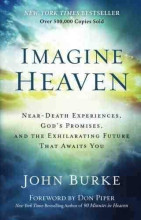
Jim: Yeah. You know, I interviewed John Burke, who lives in Austin, and, uh, he wrote, uh, a great book called Imagine Heaven and then Imagine the God of Heaven. And in there, he was a agnostic engineer.
Ben: Okay.
Jim: And he ended up, uh, taking over his father’s work, which was near-death experiences, and he interviewed almost 2,000 people. And as an engineer, he put those experiences into about 40 loose categories.
Ben: Okay.
Jim: Really well done. But, you know, things that where people were outside of themselves on an operating table and can give you the numbers on the top of the fan or the tennis shoe location at, on the top of the hospital. So it doesn’t explain a hormone rush at death because they were seeing things above themselves. But in that context, he paints such a picture of heaven, you know, those people that have come and looked into that arena in this middle area and then come back into their body. And it, it’s a fascinating view of, you know, just the light from a throne and things like this. It gives me such confidence of that next step for me. It makes me wanna leap into that experience with the Lord and with joy in my heart-
Ben: Yeah.
Jim: Not with fear. Have you thought about it?
Ben: Uh, I, I have. Um, you said a bit, I’m gonna say something in the Book of Revelation, but also Ecclesiastes. The chasing after the wind, when we take things that are meant to be goods, uh, in instrumental ways, and we try to make them ultimate things, and it becomes so futile. I mean, it feels like there are three kinds of time. There’s daily time, there’s kind of a planning horizon, there’s eternal souls. Every day, we should be good at the gratitude of saying, “Give us this day, our daily bread.”
Jim: Yeah.
Ben: We should be able to stop at the end of the day and look at the fruit of our labor and be grateful to God that we could live a life of gratitude to him by serving our neighbor. And we know who we, we wanna be and who He’s making us for eternity. Planning matters, decisions and habits we build over the next 30 days that are gonna pay off over the next 30 years, but man, that middle space can crowd out daily gratitude and thinking about eternity. When you’re in pain, um, on a operating table, um, it’s pretty tough to think, “I wonder if I’ve gotten my funds allocated properly in my 401K.”
Jim: Yeah.
Ben: What, what you think about, not that that’s unimportant, but it’s instrumental work. It’s pretty glorious to think, what does it mean in revelation when we say all of the beasts, all of the scary things will have been cast off into the sea, we will have no more opponents and no more threats, and the feast table that we get a break bread with our family-
Jim: Yeah.
Ben: Will now be purified with no selfishness and Jesus will be there?
Jim: How about all tears being wiped away?
Ben: All tears.
Jim: I wanna feel that.
Ben: Will be wiped away.
Jim: You have talked about the family. Uh, let me ask this question in terms of that illumination, that clarity that comes when you’re in the circumstance you’re in. Being the dad you want to be, how has that changed your relationship with your girls, with your son?
Ben: Oh, we are a family of Type A overachievers.
Jim: (Laughs).
Ben: And, uh, I have repented to my family. It started before this diagnosis, but we’ve talked about it a lot more intentionally since then.
Jim: Mm.
Ben: I have repented to my family about not having been a good leader about the Lord’s Day. We never missed Sunday morning worship, but often by 2:00, 3:00 in the afternoon, our hearts and affections and attentions were getting on to all the achievements we had to do starting Monday morning and all the work we needed to do.
Jim: Mm-hmm.
Ben: And a lot of that work is important and meaningful, but man, the feast day of the soul is more important than I gave it attention to. And I now want my kids to view the glory of not needing to strive from Saturday night to Sunday night-
Jim: Yeah.
Ben: As an unbelievable blessing that we get to rest. Martin Luther’s great, um, A Mighty Fortress is based on, uh, Psalm 46. And if you, if you read Psalm 46, it’s, they’re pretty, obviously, three movements. There’s a, um, you don’t have to fear anything, you’re gonna be fine, God’s got this. And then this command, “Be still.” It means stop trying to be self-sufficient.
Jim: Yeah.
Ben: You get to be a child of the eternal king, and every Sunday we can live that. I didn’t do that enough.
Jim: No, that’s really, really good. And I, I’d wanna ask on behalf of the fathers that maybe have not done many things well. How do we recover that when we’re healthy?
Ben: Yeah.
Jim: Not being motivated by death in front of us.
Ben: Yeah.
Jim: But I mean, you’re seeing it more clearly than many of us. What advice would you give to a dad? To live it better now, don’t wait for the diagnosis that you’re not gonna be here tomorrow?
Ben: Yeah. Let’s be humble with our kids and say, I, I’m not announcing a new policy for our family starting four days from now that we’ve never lived before and it becomes this law, but it is, boy, it’s glorious to get to reflect on the things of the Lord. What can we read together as a family this Sunday? How can we lock up our phones? How can we set aside time on the Lord’s Day to just linger and reflect back on the sermon? Not have to get out of church the second it’s over, but go find the folks who are in need there or the visitors there. But I’d say two of the most practical, operationalizable ones for us are we lock up our phones, uh, most of Sunday and we read aloud together a lot.
Jim: Yeah, that’s good to just read the Word.
Ben: If I had the skills, we’d make music together.
Jim: Yeah.
Ben: One of, one of my kids is a great, uh, pianist and one of my daughters is a great violinist. And so I’ve told them, one of my, uh, deathbed asks is, “Can you guys write a few songs for dad?”
Jim: (laughs) That’s good.
Ben: Not about dad, but just look, play your music more.
John: This is Focus on the Family with Jim Daly, and you’re listening to Ben Sasse share some of the moments of joy that he’s found as he’s fellowshipped with his family and with God. And it’s so important to find joy in difficult times and moments of adversity. Uh, if you’re experiencing something like that, we’d love to come alongside and offer you our free audio collection. It’s called Remembering the Hope of Heaven, and it puts a real eternal perspective on this life that we have and the life to come. It features guests, including John Burke, Lee Strobel, Erwin Lutzer, and more. Sign up for that free audio collection at FocusontheFamily.com/broadcast. Let’s go ahead and continue hearing this conversation with Jim and Ben Sasse.
Jim: You know, one of the things, and, you know, you’re sharing very openly, and, uh, Jean and I have this discussion, uh, about talking about death. She’s very adverse to that, I’m more open with it, probably because I experienced it with my-
John: Yeah.
Jim: Mom and dad.
Ben: Yeah.
Jim: And I understand that uncomfortableness. But even in that context, advice you might have for parents who are facing something similar or are hitting that moment where we’re gotta talk about grandma and grandpa. And of course it’s always age appropriate, but how open should we be? How open have you been with your kids with what’s facing you?
Ben: Yeah. Well, we’ve been very, very open with our kids and we’re incredibly grateful to the Lord that they have, um, embraced, um, you know, even a little bit of the gallows humor about it. We should laugh at death, it’s terrible. Um-
Jim: Huh.
Ben: But it’s not gonna win. Death doesn’t get the final word.
Jim: I love that, I love that.
Ben: Uh, I have a podcast that I had agreed to do in October, and then I got this diagnosis in December, and we were due to launch in January. We decided to still do it. We changed the name from Quick Study to Not Dead Yet.
Jim: (laughs).
Ben: Which comes from Monty Python (laughs).
Jim: (laughs) There’s a little humor.
Ben: We need to redeem the time.
Jim: (laughs).
Ben: Um, but we’re blessed that the, the family trusts that, um, God knows what He’s gonna do, and eternity is long, and we will be together again. But two really concrete things we can do to make the reality of death more, um, tangible and, uh, be more aware of it in our lives, go to nursing homes and go to cemeteries and go a lot. Our age has the best technology in the history of the world, but we don’t have the most wisdom in the history of humanity. And one of the stupid things we do in our time and place is crazy, um, age segregation-
Jim: Yeah.
Ben: Where we act like the year you were born is the, to define your peer group. If you’re 17, everybody you know should be 17, that’s ridiculous. 17-year-olds’ frontal lobes aren’t fully formed.
Jim: (laughs).
Ben: When you’re 17, you need to be around 2-year-olds and 82-year-olds.
Jim: Yeah.
Ben: Not a lot of 17-year-olds. And so we, um, go to nursing homes a lot and find people to observe and adopt there. We also walk cemeteries a lot.
Jim: Wow.
Ben: And we’ve done that for a long time. We have, again, we embrace a little bit of gallows humor at our house. We have a, a day we call Death Not Dead Day, um, which is, uh, January 25th, 2007 when Melissa had her aneurysm and didn’t die and we thought she might. We have for 20 years now, since then, taken that day and tried to go spend a lot of time with long walks in cemeteries just praying out of gratitude to God that He preserved Melissa, but also to make us reflect on the reality. We bought our cemetery plots early in marriage-
Jim: Wow.
Ben: On St. Paul Lutheran Church Road in Washington County, Arlington, Nebraska. And I think it’s important to, um, go to the cemetery and particularly go to cemeteries who were built by people who had rich theology, where when you walk in through the gates, it says things over the archway like, “The dead shall be raised.”
Jim: Yeah, these old cemeteries-
Ben: “These molecules are gonna be knit back together.”
Jim: Yeah. I love that, I love that. And I love that embrace and I think it really opens your children’s minds to that moment. Like we began this discussion talking about we really don’t realize our own mortality.
Ben: Yeah.
Jim: But for your kids to experience that and to be able to navigate it, understand it, that they do have a set number of days that the Lord’s gonna give them. That’s a, I think that’s healthy.
Ben: Amen. It’s just basic wisdom of you got cut from a baseball team or a cheerleading squad. Guess what?
Jim: Yeah.
Ben: It isn’t the biggest deal in your life.
Jim: Boy, that’s so true.
Ben: And when you’re 17 or 13, it might seem like the biggest deal in your life. If you were helping some 85-year-old with dementia at a nursing home four days ago-
Jim: Yeah.
Ben: It turns out you get a little more wisdom.
Jim: I love that. And Ben, uh, right here at the end, I think o- one of the amazing things, I’ll say it in a political context and then I’ll move it toward the spiritual, this question of a friend of mine who’s a non-believer said, “If you guys are worried, I should be really worried because you guys are supposed to be fear-not people.” Isn’t that interesting?
Ben: That’s a good phrase.
Jim: So he’s looking at us and our panic-
Ben: Mm.
Jim: And saying, “Wow, if those people are supposed to be people that do not fear…”
Ben: Yeah.
Jim: “And they’re fearful, what am I missing?”
Ben: Yeah.
Jim: Right, that’s interesting.
Ben: It is.
Jim: And a great observation. So we as Christians, again, what are we projecting? And in that context, on the spiritual side, I’m so glad every year we do survey work at Focus. Um, over the last 12 years or so, anywhere from 170,000 to 290,000 last year, people said Focus was the organization that led them to the Lord.
Ben: Wow. Praise the Lord.
Jim: And I’ve never, you know, I don’t think Dr. Dobson, nor I, years ago, saw this as a, that kind of organization, right?
Ben: Mm-hmm.
Jim: We’re here to help your family, but a- amazingly, how many people come to Christ because of pain in their family.
Ben: Yeah.
Jim: In that context, speaking too, I’m assuming we’re gonna have a number of non-believers listening to you. You were a senator, the president of a university, a football fan.
Ben: (laughs)
Jim: In that context, what would you say to the person right now who’s going, “Wow, this guy’s, his, his days are numbered, but he still smiles.”?
Ben: Hmm.
Jim: “He still has joy.”? What would you say to them?
Ben: The calling, uh, to be a human created in the image of God is big and grand, but we’re a part of an idol, um, making rebellious tribe. We are all united with Adam. Genesis 3 tells us in rebellion against the good Father who created this world and created us for fellowship with Him, and yet, Romans 5 says the bigger story is that there is a second Adam, there is a new Adam. Jesus came to fulfill all that Adam failed on-
Jim: Yeah.
Ben: And, uh, to justify us, to declare us righteous in a court of law, but also intrinsically to begin that process of sanctification. And I am both in Adam and in Christ, but the real Ben, the future Ben, is the one in Christ where the old Adam’s sin and members are being crowded out. And so death, judgment is terrible, but also what a m- mitigating blessing for there to be a truth among us that says all the brokenness of this world, all the pain that you feel, all the suffering that you’ve known, this is not how it was supposed to be.
Jim: Yeah.
Ben: This is what came from Adam’s fall, and what’s gonna become true and more true in the future is going to be the end of that age and the arrival of the new age that Jesus ushered in and that His resurrection was the first fruits of. And so I will never shy away from saying death is wicked. I don’t want this wicked thief to come. I don’t wanna be broken away from my partner and friend, Melissa. I don’t want my daughters and my son, um, to not have a dad there to walk them down the aisle or to celebrate with my kid when he hits a home run or to give him a big hug and noogie and-
Jim: (laughs).
Ben: And maybe slap them upside the head if he thinks the strikeout was too big of a deal.
Jim: Right.
Ben: Let it go, man.
Jim: Yeah.
Ben: Um, I don’t want those things to happen, and yet passing through this final veil of tears, it need not scare us who are in Christ because it will be the last enemy and then there will be no more tears.
Jim: I love it, I love it. Uh, Ben Sasse, you’re a good friend. I wish I could have spent more time with you.
Ben: You as well, Jim. And we will again.
Jim: Yeah. I just-
Ben: Whether this side or the other side of Jordan.
Jim: So appreciate everything you’ve done for the country and the way you’re modeling how a Christian behaves with a lot of headwind, and your faith in Christ is a great example. And I hope literally thousands of people of the 100,000 or 200,000 will say, “It was that show with Ben Sasse that brought me to Christ.” Thank you.
Ben: Thank you, brother.
John: Former Senator, Ben Sasse on Focus on the Family with Jim Daly, and what a powerful message from him, uh, Jim as he really shared from his heart just a few days ago.
Jim: Uh, he is so focused on worshiping God and loving his family. Uh, it all boils down to that, and you could hear the sincerity in his heart as he shared, both as a husband and a father. You know, it’s so interesting, a man that successful, a senator, a president of a, you know, a big time university, but his core message is faith and family, and that’s what we believe as well. Uh, pray for Ben and his family, I know they would appreciate it. In the New Testament, Jesus said to Martha, “I am the resurrection and the life. Whoever believes in me, though he die, yet shall he live. And everyone who lives and believes in me shall never die.” Amen to that.
John: Mm-hmm.
Jim: And, uh, the time is coming, as I’ve said, for each one of us to cross the finish line at some point in this life. And we don’t know what the time will be or the day, but God does and then comes eternity. And what happens in eternity depends on our relationship with Jesus. And if you know Him, you’ll spend eternity with Him. And if you don’t know Him yet, I wanna invite you right now to put your trust in Him. You can become a Christian, you can decide to follow the things that Jesus taught and ask Him to save your soul. We have a free online booklet called Coming Home that will explain what it means to put your hope, trust, faith in Christ. And we also have a special free audio collection called Remembering the Hope of Heaven featuring Lee Strobel, Pastor John Burke, Randy Alcorn and many others with inspiring thoughts about what heaven will be like. It has turned my attitude around. I wanna jump into the next life, yahoo!
John: (laughs).
Jim: Because of the authors and how they have captured what this is gonna be like.
John: Mm-hmm.
Jim: It’s gonna be amazing.
John: Yeah, get that free audio collection, Remembering The Hope of Heaven, and also the little booklet, uh, online, Coming Home. The links are at FocusontheFamily.com/broadcast. And then if you’d like a counselor to speak with you or pray with you about, uh, whatever’s, uh, really on your heart or mind, set up that phone appointment, which won’t cost you anything, uh, to call. Uh, the number is 800, the letter A, and the word FAMILY.
Jim: And here at the very end, for those who believe in the mission of Focus on the Family, um, that we are here to strengthen marriages and to evangelize, to tell people about Christ, uh, pray for this effort that we can continue to reach as many people as possible and help those that are hurting. If you can help us financially, let me just say thank you.
John: And next time, we’re going to hear from Deborah Pegues with a 30-day challenge to avoid saying anything negative because our words do make an impact.
Deborah Pegues: Because words never die. And that’s what we have to remember, words never die. They’re gonna last like, they’re gonna be like shrapnel in that person’s brain.
John: On behalf of the team, thanks for joining us today for Focus on the Family with Jim Daly. I’m John Fuller, inviting you back as we once again help you and your family thrive in Christ.