




Opening:
Teaser:
Man 1: Real men don’t cry. Never show weakness as a man.
Man 2: You always take the lead. Men are initiators, women are responders.
Man 3: No, you don’t need any help. Be self-reliant. If you don’t take care of things yourself, no one will.
Man 4: Men are winners. You know, you do whatever it takes to work harder, think smarter, and dominate.
End of Teaser
John Fuller: Well, what do you think? (Laughter) Do any of those stereotypes really, uh, reflect manhood? Or does being a man, a godly man, look like something else? This is our topic on Focus on the Family. Your host is Focus president and author Jim Daly, and I’m John Fuller.
Jim Daly: Uh, John, this is one of those topics we don’t want to do a long introduction because there’s no, uh, right answer. We’re gonna upset people one way or the other. But the true issue is, in the culture today, men are a bit puzzled about what’s expected of us. And how do we raise our boys, uh, to become men? And it’s a challenge because there’s so many expectations to be more in touch with your emotions to, you know, kind of tap down that desire to go hunting and fishing. And that’s looked upon with a little bit of a critical eye. So we want to talk about it today. You might be in that spot. As a wife, you might be there. This will be, I think, both educational for you, but also give you some ideas on how to open up some great conversation with your husband, ‘cause the other big thing about men, we don’t talk a lot about this stuff because it’s either uncomfortable, or it’s out of our depth. We’ll just be who we’re going to be, and I hope you love me nonetheless, right?
John: Yeah, we don’t want to give a wrong answer. I mean, that’s something most men don’t want to do. Uh, we have two great guests with some great answers for us on this topic today, Rick Burgess and Andy Blanks. And they’re ministry leaders, speakers, advocates who really want to help men become better husbands, fathers and followers. Rick is half of the popular Rick & Bubba radio show, which addresses a lot of issues that men care about, including faith and family.
Jim: That may be as redneck as you get.
John: I don’t know. (Laughter) We’re gonna get some crit on that one (laughter).
Jim: Oh, there you go. It’s OK. That’s a huntin’ and fishin’, you know, extravaganza.
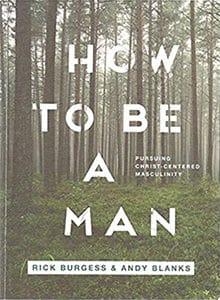
John: Well, Rick has been with us before. Andy Blanks, uh, has not joined us in the studio before. We’re glad to have him. He’s the co-founder and publisher of YM360, which provides resources and training to youth ministry workers. And these guys have written a book called How to Be a Man: Pursuing Christ-centered Masculinity.
Body:
Jim: Andy, welcome for the first time. And, Rick, welcome back.
Andy Blanks: Happy to be here.
Rick Burgess: What a pleasure. What a pleasure to be here.
Jim: OK, there’s no easy way to get into this. So let’s just hit the big topics, this idea of toxic masculinity. I mean, it’s – it’s kind of hummin’ in the culture, a lot of, I’d say, stones being cast at men. Give me your take on this idea of toxic masculinity.
Rick: Well, first of all, you know, there’s always a flawed version of everything that God intended. And, you know, as much as there is a toxic masculinity, we’d also say there’s a toxic femininity. You know, men and women are equal, but they are not the same. And our culture is trying so hard to say that men and women are interchangeable.
And I know that the adversary is laughing with delight as that confusion is everywhere in our society. And frankly – and this is, you know – this – I’m about not just identifying problems, but then solving problems.
I think the Western church in general has done a very poor job of ministering to men and discipling men because of a flawed strategy that – that came from somewhere. And I’ve talked to many pastors that admit this was the strategy that they were told, that the way to get men, uh, into the church is to do a great children’s program, a great women’s program. And then the children and the wife will bring their husband and father into the church. And the only thing wrong with that strategy is it’s not biblical. Uh, but other than that, it sounds great. And what you have is men on the peripheral looking in, saying, “There’s nothing here that speaks to the way God made me. This is designed for women and children,” and you can’t disciple a man treating him like he’s a woman or a child.
Jim: OK, I want to – you know, I’m going to play a bit of the antagonist, so I can…
Rick: Sure.
Jim: …You know, represent the – the ears that are listening saying, “Wait a minute.” So pastors listening, saying, uh, “Rick, you don’t have it all down right. I mean, we’re trying to appeal to everybody. And we’ve got things, but….”
Rick: Sure.
Jim: So, you know, double down on making your case. What should a church do to attract men into it?
Rick: Well, we actually started this. I was – we were talking earlier. And I – I remember, I was speaking a lot of men’s conferences. And I certainly love men’s events. And I still do them, and there’s a lot of positive things.
And what I noticed was that there really wasn’t a time for men to get together and talk to each other as men. A pastor, to your point, Jim, certainly cannot sit there during the worship time and cater to men when he has women and children in the room.
Jim: Sure.
Rick: I certainly understand that. But I started looking that biblically that God told Moses three times a year to go get the men and bring them before him. And he would then instruct the men on what he expected in the families and for what they were doing. And I thought, well, that – that sounds like a pretty good idea. Maybe there’s a – a time that men should get together throughout the year and there be a service that’s designed just for men
Jim: Huh.
Rick: Like, put on by men for men. So we – I started thinking about that. And I said, “Well, let’s don’t get overly complicated” – just like this book – “Let’s just call it Man Church.”
Rick: And that means that four times a year, every quarter, we’re gonna get together, and we’re gonna have speakers come in and challenge the men. And then we’re gonna talk to men the way men need to be talked to because, I said, you can’t disciple a man treating him like a woman or – or a child. That’s flawed strategy.
And we get in there, and we hash it out. And then the most important part – because when you’re addressing things like pornography or pride or a man’s got his work out of whack, you’re treating symptoms. The disease is a man has not been discipled from spiritual infancy to spiritual maturity. And so that has to take place. So we then get other men to stand up and say, “We’re all teaching Bible studies for the next six to eight weeks.” And then we vet those guys out. They get up and offer those different topics. Men plug in, and we put them at different times of the day…
Jim: Sure.
Rick: …Throughout the week. And then the men that are willing to do that, they are discipled all the way up to the next Man Church. So you have a cycle, Jim. You have a cycle – to the pastors that are listening – that the men are never outside of – see, too many men strategies are, “Let’s get together. Let me challenge you. Here’s a six-week Bible study.” And then, when the six weeks is over, what did the men do? I did it. We’d look at you and go, “Hey, that was fun. See you later.”
Jim: See you next quarter.
Rick: Yeah, and then we… (Laughter).
Andy: Or next year.
John: Yeah.
Rick: See, this time, every quarter – every quarter you have a Man Church, and so that’s the entry point for the men of the local church. They’re discipled in these Bible studies. And then inside those services, the church comes and says, “We have a widow that needs her house rebuilt. We have – we have young – young boys that don’t have mentors. We have a mission trip we need men for.” So you’re engaging the men of your church and discipling them in a system that they never can get out of. But it’s always available for ‘em.
Jim: Sure.
Rick: And we’ve seen incredible fruit from this.
Jim: Yeah.
Rick: Now it’ll turn out to be a remnant. But that remnant can radically change the body.
Jim: Yeah. Andy, let me bring in here, obviously, the, uh – the problem so many Christian families face…
Andy: Yeah.
Jim: I mean, obviously they’re numerous. But when we start zeroing in on the issue of men, fathers, husbands kind of stepping up to their roles, it seems they’re always deficient. I mean, that’s what we hear, you know? It’s either passivity, we’re not engaged, uh, we’re overly committed to our vocation.
Jim: Wives and moms are frustrated because dad’s not there for the kids. Kind of fill that out, why that’s occurring. Why do we not prioritize our families like we should?
Andy: Yeah. I think it’s a…
Jim: And I’m guilty of it too.
Andy: Oh, I think we all are. I mean, that’s the other thing, too. I don’t think there’s anybody in our position that would say we have all the answers or that we figured it out. Um…
Jim: That’s what men, uh, need to say right up front.
Andy: Yeah, that’s right.
Jim: Because it’s true. We usually – we’re very good at compartmentalization.
Andy: Yeah.
Jim: It’s one of the brain skills God gives us.
Andy: Absolutely.
Jim: But it also doesn’t work well in developing a really loving marriage! (LAUGHTER)
Andy: That’s right. And I tell – and I had a story. Um, I’ve told you this story. I had a guy say, “Hey, can we get lunch?” And he’d talk – say, yeah, you know, go to lunch. And he begins to talk about his marriage. We were friends, and we weren’t super close, but kind of acquaintances. And he’s saying, you know, “I feel like my wife’s not supporting me. And I need to – I really need to go kind of explore the things that I’m passionate about.” You know, he loved music. And he said, “You know, I booked a concert in Chicago, and I didn’t tell her about it until a couple days before, and she got so mad at me.”
And he just kind of – I was, like, thinking, “Yeah, well, I’d get mad at you too,” right?
Jim: Right, yeah. She had other plans.
Andy: Yeah, right? So he goes down this – keeps talking. What I realize is that this guy’s doing what most men do. And I don’t know why men are more prone to this than women. But he is living for himself. And I think he thought I was gonna validate his desire to go sort of pursue his – his hobbies. And I said, “Can I tell you what I think is the issue?” And he said, “Yes.” And I said, “I don’t think you’re living out your role as a husband.” You know, I said, “Paul tells us in Ephesians 5 that you have to die to yourself.”
Rick: Right.
Andy: You have to love your wife like Christ loved the church. And I said, “It sounds like you’re living for you. And if you could get the role right in your home that you would sacrifice yourself for your wife, putting her needs above yours, that your marriage would fall in proper order.” And he looked at me. And he said, “That’s not what I thought you were gonna say!”
Jim: Well, and let me pull that out a little bit because that sounds overwhelming.
Andy: Yeah.
Jim: You know, guys – you ever see lions out on the savanna? And the male lion’s laying under the tree, yawnin’, kind of rolling in the dirt. And the lionesses are out doing the hunt.
Andy: That’s right.
Jim: And I think so often it takes a lot of effort beyond what we think we’re capable of. And we’d rather lay under the tree.
Andy: Absolutely.
Jim: …And kinda scratch our backs with our paws. (laughter)
Andy: Absolutely.
Jim: But, you know, how do we get out of that? How do we lay our lives down?
Andy: There is a, um – it’s a discipleship issue. It goes back to discipleship.
Uh, Barna just did a great research project on Gen Z, this next generation of teenagers. There’s a quote. It’s not even part of the research. It’s a pull-out, right? It’s something that they encountered. It said that the faith that boys particular are being taught is not rigorous enough to stick with when they grow up. And I thought…
Rick: It’s too soft.
Andy: It’s too soft.
Jim: Wow.
Andy: You said men and women are – are equal but different. And we – we affirm that. We believe that, that men and women are equal in God’s eyes. But they’re very…
Rick: Co-heirs with Christ.
Andy: Absolutely. And very different, though – and I think boys, even a boy that’s not that hypermasculinity – I mean, we see it in video games, right? They’re – we’re hardwired for competition.
Jim: All the time.
Andy: You know? I mean, that’s just – that’s how God made men.
Jim: Typically – and that’s one of the unwinding things right now.
Andy: I agree.
Jim: …Is we’re trying to dampen that down.
Andy: Yeah.
Jim: And don’t be so – everybody gets a medal. Everybody gets a trophy.
Andy: Exactly.
Jim: Hey, I’ve got a – I want to get to the core of the book.
Andy: Yeah.
Jim: And so I want to just run through these. And then we’ll come back and touch a couple because we’ve only got, you know, a little bit of time.
Rick: Understood.
Jim: But in the book, How To Be A Man, you identified eight core characteristics for godly manhood, which – you know, I’ve got a senior and a sophomore in high school right now. So this is speaking to my heart.
Jim: But let’s get into a couple of these quickly. Identity – this is probably the core, I would think. But explain why boys today, teens today, 20-somethings today, really need to know who they are.
Rick: Yeah, well, first of all, you know, it’s called How To Be A Man. And it talks about what you just talked about. We got a little pushback on that, believe it or not. “Well, who are you to say?” And I said, “Well, look at the part, pursuit of Christ-centered masculinity.” There’s only one example of manhood that is not flawed, and that’s when God became one.
Jim: Yeah.
Rick: So that one’s perfect.
Jim: What’s that pushback sound like, though? Give me some help.
Rick: Well, just what you’re talking about. “Oh, that’s too harsh.”
Jim: OK.
Rick: You know, once again, see, Jesus Christ himself, at Matthew 7, said – what? – “The road to destruction is the one that’s wide and easy.”
Andy: Right.
Rick: And everybody’s going there. If we would just tell men, to follow Jesus is actually hard. And you enter by a narrow gate, and only a few ever really pull it off.
So I think if we would tell men that – so first of all, that’s what our approach was. Let’s shoot straight. We don’t have the answers on how to be a man.
Andy: Yeah, absolutely.
Rick: We’re as flawed as any man. But Jesus Christ lived out all of these eight characteristics.
Jim: OK.
Rick: And so we’ve set it up so you go through 40 days. You spend five days on each one. So what – you asked about identity. I mean, first of all, men don’t know who they are.
Andy: That’s right.
Rick: And we’re – and what is our identity? And that identity – and you unpacked that chapter very well.
Andy: Well, and I would say this. And it goes back to what you were saying about toxic – toxic masculinity. We don’t have to be scared, as Christians, of that word. As men, we get riled up. And we say, “Well, hold on a second. Don’t be throwing” – there is such a thing as toxic masculinity.
Jim: Right.
Andy: Right? And the…
Jim: And men out of control.
Rick: That’s right.
Andy: That’s right. You know, hypermasculinity, toxic masculinity, it’s a masculinity that abuses power, that wants to beat people down and wants to overwhelm people. That’s – that’s a definition of masculinity that comes from culture, right? We could find other definitions of masculinity
I mean, I was a missionary in China. And the first thing I see is two Chinese students, guys, sitting on each other’s lap, holding hands. I was like, huh, that’s – that’s unusual. Then you realize that’s the expression of friendship between two males in their culture.
Jim: And they do that in Africa. The men hold hands…
Andy: In Africa, the exact same way.
Jim: …Walking down the street.
Andy: In Kenya, it’s the exact same way.
Rick: That explains why you tried to hold my hand when I came in. (Laughter). It all makes sense now.
Jim: It doesn’t go down well in America.
Andy: No, but my point is we look to culture to find the source of our identity. We’ll never find it.
Jim: Right.
Andy: It’s gotta be found in the person of Christ.
Rick: Amen.
Jim: Absolutely.
John: Well, you can find a whole lot of other great information from our guests today, Rick Burgess and Andy Blanks. Their book is How To Be A Man: Pursuing Christ-centered Masculinity. We’ve got copies of that and a CD or download of our conversation at focusonthefamily.com/broadcast or call 800-A-FAMILY.
Jim: You know, I am aware that our audience, there’s some nonbelievers that listen, hopefully because they can get good marriage and parenting advice. And I appreciate that. But a vast majority of our audience are Christians. They follow Jesus. And – but in that context, let me speak specifically to those of us who believe Jesus is the son of God.
We get trapped, just like the world gets trapped, in this kind of – what I think you called unholy relationship with work. And I don’t know why there’s that sucking sound for men – that we get our identity out of that, we love our titles. But I guess frame that. What does that mean, the unholy relationship with work? And why do we gravitate to that? We define ourselves by it.
Andy: I think it’s how – it goes back to the garden. We talk about this.
Rick: Yes.
Andy: …That God created Adam. And if you look at the task God gave Adam, it was to work.
Rick: Right.
Andy: It was a holy calling. And then look at the curse when God sent Adam and Eve out after they rebelled against him. What does he say to Adam? He says, “By the sweat of your brow.” So work went from something holy…
Rick: Yep.
Andy: …To something that was wrapped up in the curse of sin. I think that’s the basis for why men find themselves with this unholy, um, relationship with finding their identity in work.
Jim: Well, part of me, I – I don’t find that to be an issue. It’s probably when it becomes unhealthy. And I guess, then, I’m asking you, what’s the definition of an unhealthy vocational reliance?
Rick: I’ll give you an example because that’s how – usually how men learn – I do.
Jim: Yeah.
Rick: “Give me an example. Give me an example.”
Jim: Tell me a story.
Rick: So I’m sitting in – at work. And I had a very, very successful man who, um, was sitting across from me who was kind of, you know, workin’ on his relationship. And we’re talking about business. And he said to me, “I need you on this Thursday night to meet with this client. And it’s the only day they’re gonna be in your town, and they want to meet you.” And I looked at him, and I said, “No, I’m out.” And he looked at me and said, “What are you talking about?” I said, “Well, I have right here on the calendar, my wife and I have a date that night. She wants to go to something. We have tickets to it. And, um, so I’m going with her.” And he looked at me, said, “You do realize this client is huge” – as an advertiser for the Rick & Bubba Show – “And this is the only time they’re gonna be able to meet with you face to face. And they want to meet with you.” I said, “No.” And I said…
Jim: (Laughter) They were probably perplexed. “What’s he sayin’?”
Rick: But here’s the thing though, we’re already resolved in what we’re supposed to do and not do. Well, I knew – and this is the conversation we had in the hall. He’s a little frustrated with me. Now, this does lead to a funny, which you’ll enjoy – because he’s in the outdoors business. So he has access to great hunting and fishing and everything you love in the outdoors. He says, “I guess that was a hard decision for you.” And I said, “No, it really wasn’t.”
Jim: Yeah.
Rick: And he said, “What do you mean?” I said, “Because as a follower of Christ, I already know that my No. 1 earthly relationship is my wife, and nobody outranks her. And I certainly want to be successful. And I’m certainly a good provider.” You know, the Bible is clear that anyone who doesn’t provide for their family is worse than a pagan – you know, the letter from Paul to Timothy. And I said, “I want to keep that in balance. But you asked me to put work ahead of my wife.” And I looked at him, and I said, “You’re a very successful man. And you write this down. Go home to your wife tonight and ask her, would she rather have more you or more money?” And I said, “I promise you she’ll tell you more you.”
Jim: Yeah.
Rick: Well, then it burned me ‘cause I was supposed to go hunting with him at a very nice place. Be careful (Laughter) when you say the right thing.
Andy: Yeah.
Rick: ‘Cause no good deed goes unpunished. He called me. And he said, “Hey, you know, we’re supposed to go hunting next week.” I said, “Yeah.” He goes, “Man, what you said really impacted me.” (LAUGHTER)
Jim: And you’re going, “No!”
Rick: No, I didn’t mean take me out. I don’t – I didn’t mean cancel our trip! (LAUGHTER) And he said, “I really need to spend more time with my wife.”
Jim: Oh, that’s funny.
Rick: So even though that was biblically right, it cost me a hunting trip.
Jim: Yeah, that…
Rick: But that’s the kind of thing I’m talking about. The toxic deal would have been, “Hey, honey, I know we got this thing Thursday night. This big client’s coming to town.” And you know what he said? “Well, I think the way I’m supposed to be a good husband is provide more money for my wife, more money for my children.” And I said, “No, no, no. Certainly, we need to be good providers.”
Jim: Yeah.
Rick: “But they would rather have more you.” And if you already know that going in, those decisions are easier to make.
Jim: Well, and I love that story about Phil Mickelson, who’s the golfer.
Rick: Right.
Jim: And some of our audience may not know him. But he’s a, you know, world-renowned golfer, top five certainly. And he passed up a million-dollar, um, you know, tournament because his daughter was graduating, I think, from high school.
Rick: Yeah. OK.
Jim: And people were shocked. Like, “How could you do that?” And he was at the top of his game and still is in many ways. But, uh, that was a real, real amazing thing to see somebody pass up a million dollars, you know?
Andy: Oh, yeah.
Rick: A good provider is good. But it becomes the wrong kind, it becomes unholy when now it becomes ahead of your children, ahead of your wife and really ahead of, um, your devotion to Christ.
Jim: All right. So that’s good on identity. Let’s move to influence. Um, it’s another core characteristic of godly manhood. And you have some stats that reveal how much a man’s faith or lack of it will impact his whole family. I thought this was phenomenal. So get a pen and paper right here ‘cause you’re gonna want to write this stat down. Go ahead.
Rick: Well, it really leads to what I talked about how important it is for the church to put men’s ministry in the number-one most important slot. And I know that that’s counter church culture to a lot of men. I had a pastor say to me, “Why are you saying our men’s ministry should be the number one ministry in the church?” And it’s these stats. I said, “Now, every Father’s Day, we sit in church. And you guys get up and tell us we’re the most influential force in the home, in the church and in society. Then what are you doing about it? Do you believe what you preach every Father’s Day?” And the – Barna came out and said, “If a child in the house becomes a follower of Christ, there’s about a 7 percent chance that the rest of the house will become followers.”
Jim: Seven percent.
Rick: Seven percent.
Jim: OK.
Rick: If mom becomes a follower of Christ, it lands somewhere around 23 percent that the house will follow mom as a follower of Christ. If the father of the home becomes a follower of Jesus Christ, there’s a 93 percent chance that the rest of the house will follow.
Jim: Wow.
Rick: So my question to the church is, if you invest in men’s ministry, can you argue with the return?
You realize how many problems you solve in the church, in the house and in society if you’ll simply disciple that man intentionally from spiritual infancy to spiritual maturity? I believe our strategy is turned upside down, and we’re paying a price for it
Jim: No. I mean, that’s a phenomenal stat. And we should…
Rick: Or don’t preach that on Father’s Day anymore if you don’t believe it.
Jim: Well, I mean, that’s – that’s part of it, is that we don’t believe it, I don’t think.
Rick: It’s the most influential force. And – and we have to act like we believe that. Let me tell you who believes it – Satan.
Jim: Oh, yeah.
Rick: He believes it.
Jim: Yeah. He doesn’t want men…
Rick: And that’s why he is tearing us down from the man destroying everything else. And we need to learn as the church that we believe it as much as Satan does.
Andy: That’s right.
Jim: Yeah You know, one of the things sometimes in marriage we forget is that God has put us in that place. Uh, we’re the right dads for our kids. We’re the right husband for our wives.
Andy: Absolutely. Yes. Absolutely.
Jim: It’s not a mistake that you’re together. You might think that in your marriage, that I married the wrong person. I don’t think so. I really do believe that the Lord’s saying, “No, just do the right things. Lay your life down for me. Surrender, both of you, and I’ll show you something magnificent.”
Uh, speaking of surrender, Andy, let’s go there. You use the term surrender in the book is one of the core characteristics. I imagine most men, uh, we kind of bristle at that. Surrender is not what we’re taught to do. We want to conquer!
Andy: That’s right.
Jim: We want to, uh, win, especially if you were in sports from being a little tot. You know, it’s all about winning. How do we learn to surrender, and why is it so difficult to do?
Andy: I think, uh, it’s one of the great paradoxes in Christianity, that only in Christianity do you gain victory through surrender.
Jim: Yeah.
Andy: You know, it’s completely – goes against everything we’re taught. And you’re right. Uh, I think, um, what I have seen in years of ministering to dads and their sons is that, uh, it’s real hard to get a dad off his agenda, right? I mean, you’ve got…
Jim: (Laughter) I’m laughing ‘cause it’s so true!
Rick: It’s so true.
Andy: No, it is. I mean, um, you’ve got your hobbies. You’ve got your work, you know. And unfortunately, sports in our children is wrapped up in – and my – my daughter plays travel sports. Your sons play – have always played sports. And, um, if we don’t – if we aren’t willing to surrender our agenda for God’s agenda for our lives, we’ll turn around, and we’re giving God the last quarter of that pie, you know, the last little slice of the pie of our life.
Jim: What should it be? Give me that example.
Andy: Well, I think – and we get into this, and – and I don’t know if we wanna get into this at this point. But, um, we talk about in the book that there’s no difference in – on our platform. We say this to men – “There’s no difference in discipleship and parenting.” There’s no difference.
Jim: (Laughter) That’s true!
Rick: Yeah.
Andy: We – we tend – the culture makes this distinction, and we even do it in the – well, parenting is what I do over here.
Jim: Right.
Andy: And that’s, uh, the discipline and the sports, and that’s parenting. I get it. And discipleship’s over here, and that’s what we do in family Bible study. No, the way you interact with your child at the ball field, you don’t think that’s discipleship?
Jim: Right.
Andy: You don’t think you’re – the way you interact with your son on the court or your daughter, even, you know, as a dad – you’re telling them so much about what it means to be a follower of Christ.
Jim: Um, let’s cover one more. Maybe we can squeeze two. But passion, you’re kind of in that passion zone. So, uh, describe why passion is a core characteristic. Uh, what do godly men need to be more passionate about? I mean, I think the answer’s obvious. But…
Rick: It is.
Jim: …It competes with other passions.
Andy: Yeah. And I think too, I think we see Jesus being passionate…
Rick: Yeah.
Jim: Very much so.
Andy: …About the things of the kingdom, right? Flipping the tables over in the temple, going at the Pharisees, right? I mean, he was passionate in his expression of – of his role. And…
Jim: So how do – let me ask you this ‘cause it’s important, I think.
Andy: Yeah.
Jim: How do men – how do we act manly like that? We go right there.
Andy: Yeah. Yeah, yeah, yeah.
Jim: “I could do that. I could flip a table over. I could…”
John: I could get angry. (LAUGHTER)
Jim: And then – and then, you know, then love, joy, peace, goodness, kindness, mercy – wow. OK. These are more difficult for us. And some people would even accuse us sometimes of being too effeminate…
Andy: Yeah.
Jim: …If we’re displaying these things ‘cause these are more women tendencies. Is that – you know what I’m saying?
Andy: Yeah, I do. Uh, I…
Jim: So how do we be a man in the full way that I think God intends for us to be, to be hard-charging competitive winners on this end, and yet compassionate, tender and, you know, emotional?
Andy: Yeah. I think the – the way we express passion in the book is an all-in commitment to every level of your life. And that’s what Jesus did – he didn’t hold anything back, right? All in on the mission and could have – I mean, had every right to pull the cord at any moment, right?
Jim: Right.
Andy: I mean, as God himself. But – but I think for men, one of the biggest things that we see, um, in – in – in men, especially in parenting, is that they’re just – they leave it to mom. You know, a dad will say, “Well, I’m just not passionate about this. I’m not all in on parenting.”
Jim: Right.
Andy: It might be easier for mom to do this. Maybe she’s more hardwired for relationships. I don’t think that God gives us that option.
Rick: No.
Andy: I – I don’t think he does.
Rick: And I’ll tell you an example that – that really rocked my world. And I hope every man hears this ‘cause Andy’s exactly right
When we did the first Man Church at our – at our church, 23 women came up to that place and were praying on the outside of that building. And when we talked to all of them – my wife talked to them. She said, “They all said, I don’t want to be the spiritual leader of my home. It’s not my desire.” Certainly – my wife talks about this – from the Fall, there’s a desire for women sometimes to take the lead when they’re not supposed to. But there’s a lot of women that don’t want to lead. They’re leading because they don’t have a choice.
Jim: Right.
Rick: And, and I’ll have to say this, if you initially say this. If you say that the power of the resurrection has justified your spirit, and you’ve come and you’ve repented of sin and you’ve come under the authority of Jesus Christ, and it hasn’t changed you? That doesn’t say much about Jesus. And this is not about legalism, this is not about a code of conduct, but the bottom line is Jesus is powerful enough to change every man into His image. And if that’s not happening in your life, something is wrong. And because as we’ve said, these things, these attributes, they don’t earn us salvation, but the Bible screams that they’re the fruit of salvation. They’re the result of salvation, and I think a lot of men get that wrong, they think it’s some legalistic code of conduct. No, it’s just the power of Jesus Christ to transform anybody who’s totally willing to submit to Him.
Jim: Well this is great, uh you know it’s June. The summer’s here. I’ve got one son who’s gonna be moving into to college, and you know, leave the house this summer, but what I’d love to do is challenge you to do the study with me. If you have boys, raising boys, be that dad. What I’ll try to do uh, on social media is we’ll go through the book together. I’ll tell you what I’m studying with the boys, give you a few notes, and then you can read that and fall along with us, and why don’t you get your boys and do that as a dad. I think that’d be a great thing for July and August. Take the journey with me and uh, on social media again, I’ll keep you abreast of how we’re doing. That- and some weeks we’re probably gonna say, “Aw we went fishing!”
Rick: That’s right.
Closing:
Jim: And we didn’t go over it, but let’s do it together. And I’d encourage you to get a copy of the book. You can do that by contacting us here at Focus on the Family. I wanna encourage you to joining us to help equip and motivate parents like we’ve done today, John. Your financial gifts, I’m speaking to you. They are what fuel the ministry to reach people and touch people, to produce broadcasts like this one. Maintain our websites and provide the resources like Rick and Andy’s book. But, think of how much more God can do through all of us if you partner with us. If you’ve benefited from one of these programs, why not pass that blessing forward to someone else with your generous today.
John: Donate at focusonthefamily.com/broadcast or call 800, the letter A, and the word FAMILY. 800-232-6459, and when you make a contribution of any amount to Focus on the Family today, we’ll say thanks by sending a complimentary copy of that book, How To Be a Man: Pursuing Christ-centered Masculinity.
Jim: Rick and Andy, I’ve got more questions. John you might have a couple, too. Let’s take it to the web extra. So if you’re listening and you want to hear more about the content that Rick and Andy are sharing with us today, come to the website. We’ll continue on this discussion and cover a little more ground. Can we do it?
Rick: Yeah. Great.
Andy: Yeah. Love it.
Jim: All right.
John: Well, find that extra content at focussonthefamily.com/broadcast. You can also find details about how to get an audio copy of our conversation with Rick and Andy. And if you enjoyed the program today, give us some feedback. Just look for our broadcast listener survey. It takes a few minutes, and your input is valuable. And coming up next time, why loving yourself doesn’t mean you can always do whatever you want.
Teaser:
Leslie Vernick: So, when you appropriately love yourself, you guard your heart. You discipline yourself. You correct yourself, you put yourself under accountability so that you can grow. Because otherwise, we don’t become our best self.
End of Teaser