




Preview:
Dr. Kathy Koch: If they don’t develop an ability to walk out of their trauma, they won’t become who God intended for them to be, and that grieves me, because God has a plan for every person He creates, and it’s only when we’re resilient, where we come back from difficulty, that we’ll learn and grow and discover how life works. We’ll develop character, faith, um, perseverance and diligence, problem-solving, health… mental health, all of that.
John Fuller: That’s Dr. Kathy Koch, and she joins us today on Focus on the Family with Jim Daly. I’m John Fuller.
Jim Daly: Hey John, when it comes to instilling character in our kids, what a great goal?
John: Mm-hmm.
Jim: How do we do that?
John: Yes.
Jim: That’s the question. I think, the most important aspect we can teach and model for them is bouncing back from struggles and difficulties.
John: Mm.
Kathy: Mm.
Jim: Eh, this is known as resilience. A lot of psychologists talk about that, the importance of it. I think, the Bible, first and foremost talks about it in, uh, second Corinthians, 4:8 and 9. It says, uh, through the apostle Paul, where he writes, “We are afflicted in every way, but not crushed.”
John: Mm, mm.
Jim: That’s good, “Perplexed but not driven to despair. Persecuted but not forsaken. Struck down but not destroyed.”
John: Yeah.
Jim: Isn’t that great?
John: That is a wonderful, beautiful picture.
Jim: Now, the question is, how do we teach that to our children-
John: Mm.
Jim: … and how do we live that out? Uh, when challenges arise in our child’s life, uh, you want them to be able to face those, uh, situations with courage and confidence, and that’s where resilience comes into play-
John: Mm-hmm.
Jim: … and today we wanna give you a solid idea, help you create that plan of instruction for your child, and teach them how to embrace that. We’ll also give you some tools to help you develop and nurture a spirit of resilience yourself.
John: Mm-hmm. Yeah, and our great friend Dr. Kathy Koch will help us do just that.
Jim: Yay! (laughs).
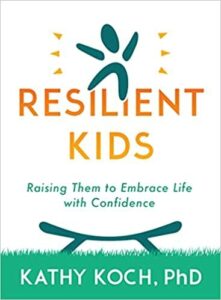
John: She’s been here a number of times, a perennial favorite. Uh, Kathy is a speaker, educational psychologist, a former teacher. She’s a blogger. She’s written a number of books. Today, we’re really going to zero in on her book called, Resilient Kids: Raising Them to Embrace Life with Confidence, and you can find more details about the book and our guest at FocusontheFamily.com/broadcast.
Jim: Kathy, welcome back to Focus on the Family.
Kathy: Thank you, Jim, I’m honored to be here, really happy to be here.
Jim: It’s always good to have you here.
Kathy: Thank you.
Jim: And, uh, people respond so well to the content that you-
Kathy: Mm-hmm.
Jim: … provide. So, thank you for that partnership, coming on and-
Kathy: Oh.
Jim: … helping instruct parents how to do a better job parenting.
Kathy: I value you-
Jim: (laughs) it’s-
Kathy: … and Focus on the Family and what you do, so it’s super cool to be here-
Jim: … well, it’s one of the great things where we can work together-
Kathy: … Yeah.
Jim: … to get the word out. You founded Celebrate Kids. It’s dedicated to helping kids better understand who they are, and their purpose in God’s Kingdom. Wow, there’s a purpose statement, isn’t there?
John: Mm-hmm.
Jim: Um, as you’re out speaking and working with children and their parents, what are you hearing about the importance of resilience in all of our lives?
Kathy: Yeah, I appreciate that question. I think, people are aware that it’s necessary that we allow our children to suffer a bit, and struggle, and learn how to step up on their own, or they’ll become way too fragile, but I think, a lot of parents are afraid to let that happen. They don’t know the balance of allowing the struggle, but also preventing the struggle. I think, there’s tension there with a lot of our parents.
Jim: Oh, absolutely-
Kathy: Mm-hmm.
Jim: … I mean, eh, I’m thinking when the boys were young. I mean, Jean would have this, Jean and I would have this, uh, little discussion about whether they were safe enough outside climbing a tree, and-
Kathy: Right.
Jim: … you know, it’s funny today, we talk about, “The Bubble Wrap parent.”
John: Mm-hmm.
Jim: And, I think, we did both… sometimes we were probably (laughs) not as in tune as we shoulda been. So, how… first of all, how do we become mindful of it as a parent that, “Oh, okay, are we balanced ourselves,” and then how do we not project fear into our kids that you’ve gotta have every limb taken care of-
Kathy: (laughs).
Jim: … you know, things do happen?
Kathy: They do happen, and these are difficult days, in comparison to when we were younger. So, here’s the thing Jim, I want us to all remember what the scripture teaches, because it ought to be the guide that we turn to, right? And God teaches us in Romans and in James that in the struggle we grow up. We know that when we walk through the valleys, don’t sit down and count the blades of grass per square inch in the valley, the scripture says, Psalm 23, “Even though I walk through the valley,” so we’re gonna walk through the valley. We get to the mountaintop on the other side, and in that experience, which will be a bit of a struggle, a step forward, a step back, two steps forward, one step back, we develop our character and our faith. We endure, we develop our hope. When I ask audiences, “How many of you have benefited from the struggles that God has allowed you to experience?,” almost every hand goes up.
Jim: Sure.
Kathy: “How many of you have a better character? How many of you have a deeper faith in the God or the Bible, because you had to rely on Him in a difficult time?” So, the parents in my audiences are admitting that they’ve benefited from the struggles that they have encountered. It’s grown them up in spiritual maturity and in character maturity. Then I say to them, “Then let your children struggle sometimes.”
Jim: It’s so hard, (laughs).
Kathy: Let them suffer the consequences. They forgot there was a test. You chose not to remind them. They earnest see, they didn’t get it. They earned it. And they complain. You look them in the eye. You chose to forget to study. There’s a consequence for your actions. And we have to realize.
Jim: That’s good.
Kathy: We have to realize, Jim, that it’s not about us. This is where moms and dads have to take a step back and go. If my kids struggle a bit and I look like a bad parent, I am not a bad parent. I did a wise thing by teaching my child that consequences are a result of the choices you make.
Jim: That’s so good.
Kathy: And I know it’s not easy, but if we don’t do this, we’re going to have fragile kids who boomerang back home all of the time and do want to be bubble wrapped, and they won’t succeed, and they will not fulfill the purpose that God created them for.
Jim: That’s a good point. Uh, when you were a child, you- you put this in your book, you had a frightening experience while swimming in a lake-
Kathy: Yeah.
Jim: … how did resilience show up in that experience?
Kathy: That’s actually-
Jim: I’m looking forward to this, because I only got a part of it, so I wanna know more?
Kathy: … yeah, that’s an interesting, um, connection to what we were just saying-
Jim: Yeah.
Kathy: … actually. So, I’m a young girl, family vacation, swimming in the lake, and, um, I hit, something hit my forehead, I felt it. Get out of the water, put my hand up on my forehead, take it off, and it’s full of blood-
Jim: Yeah.
Kathy: … and of course, it’s way worse than it was, because the water’s making the blood, you know-
Jim: Yeah.
Kathy: … go everywhere. I’m screaming, “Mommy.” She comes running down and lo and behold somebody had been skipping stones-
Jim: Oh, okay, that’s what it was.
Kathy: … in- in- in the beach next door-
Jim: (laughs).
John: Oh.
Kathy: … unfortunately, it skipped badly (laughs) and it came into the swimming area, and I’m hit. Mom and dad take me to the hospital. I get my first stitches, but guess what, you guys? I went swimming the next day.
Jim: Mm.
Kathy: The next night my dad went fishing. He didn’t sit on the beach worried that I would get hit by another rock. My mom didn’t say, “Oh, you better not swim again, you just never know-
Jim: Right.
Kathy: … what might happen?” So, resilient people understand life comes with heartache and hardship, and even some trauma, but we don’t, we don’t succumb to that. We don’t let that bring us down. We still walk forward, otherwise we don’t grow up.
John: Mm.
Jim: Yeah, and in that regard, I mean, what are the benefits of resilience in our lives, you’re tipping-
Kathy: Oh.
Jim: … that direction, but let’s just-
Kathy: Yeah.
Jim: … get it out there. Wh-
Kathy: I love that.
Jim: … Yeah, I mean, most people wouldn’t see it as a benefit, if you suffer, there’s no benefit, it’s just painful.
Kathy: Oh.
Jim: But valley walkers as I like to call them (laughs)-
Kathy: Right.
Jim: … typically do life better, stronger, with a better attitude, more balanced, because well, like that old adage, you know, “Trust people that walk with a limp.”
Kathy: Oh, see, that’s so good. Well, like I said, I think, primarily we develop our character and our hope there. We know that God will come forward for us. We know that He’s on our side. We know that His wisdom and love and passion, and mercy, and grace is real, because we’ve needed it, and we’ve begged for it, and we’ve experienced it. And this is where we develop perseverance, teachability, patience and hope, other-centeredness, of, you know, being led by someone else, because we can’t get out of the valleys on our own. And then we- we grow, we make progress. We become very effective problem-solvers. Most resilient people don’t want to sit down in the valley. They want to figure things out. So, they try again, and they try again. So, these are children who don’t whine and complain, “Mommy, it’s too hard. I can’t do it.” But instead they go, “Shoot, this was hard, I wonder what would make it easier?” So, on their own… they still need a mom and dad to be their support system… absolutely, but on their own, they begin to figure things out, so they-
Jim: Yeah.
Kathy: … develop a healthy independence, which, I think, is so great. Healthier mental health. When I wrote the book, I was actually pretty stunned at the research on, um, hope. In fact, resilient people… think of this as true guys, resilient people can be angry obviously, but not defined by their anger.
John: Mm.
Kathy: Resilient people who are angry, don’t necessarily act angry all the time. They’re able to kinda categorize that and still act appropriately-
Jim: Mm-hmm, yeah.
Kathy: … if that makes sense, whereas if you’re not resilient, you’ve been bubble-wrapped. You’re aware of all your failures, never your strengths, then the anger s- just is who you are-
Jim: Mm-
Kathy: … really dangerous.
Jim: … that’s interesting.
John: Mm.
Kathy: Makes sense?
Jim: Yeah. Um, I think, sometimes we overcomplicate it-
Kathy: (laughs).
Jim: … um, so much of life is pretty straightforward, but we tend to derail it, because we overcomplicate it.
Kathy: That’s right.
Jim: And I’m thinking as a parent, it doesn’t take a lot to, you know, think about resiliency for your children. It just means you have to stop and think about what you’re about to do, a- and I don’t know that we’re that thoughtful-
John: Mm.
Kathy: Ooh (laughs) that’s good.
Jim: … as parents, I mean. You know, because, we’re just in protection mode, especially in this culture today, with all the dangers that are out-
Kathy: Mm.
Jim: … there, you just put the full throttle on protection, and you don’t stop and think, “Okay, am I gonna do some damage here, or how do I let my child struggle a little?”
Kathy: Mm.
Jim: You in fact had that experience in, as teaching second-graders and their snow suits (laughs).
Kathy: Right, right.
Jim: Tell us that story-
John: Oh, what a picture this is.
Jim: … because again that’s a simple straightforward thing that parents should be aware of.
Kathy: Mm-hmm. Oh, I love your comments. Right, so I- I taught second graders for four years before I earned my PhD and began to do ministry, and I- I, the first year I taught, I had 28 little adorable second graders, and-
Jim: (laughs).
Kathy: … it would snow and be cold every once in a while, and it was time for recess, or time to go home, and guys I could’ve put on all 28 snow suits faster than watching them-
Jim: (laughs).
John: (laughs).
Kathy: … right, but I knew that they had to figure it out.
John: Yeah.
Kathy: But they would put on their mittens, and then try to zip their coat shut-
Jim: (laughs).
Kathy: … it’s not gonna work (laughs) well for you, or they would put on their-
Jim: Oh.
Kathy: … their coat and zip it-
Jim: Yeah.
Kathy: … and their hat and their mittens, and then try to put their boots on. You can’t bend over-
Jim: (laughs).
Kathy: … to put your boots on, I mean-
Jim: Right, there’s a sequence.
Kathy: … yeah, there’s a sequence-
Jim: (laughs).
Kathy: … and so I would watch, I’d, and sometimes I’d have to l- actually leave the hallway and let them figure it out-
Jim: Right.
Kathy: … because I do wanna rescue them. I do wanna love them well, and sometimes I feel like I can’t let them struggle. But, no, they had to figure it out, and then what was so cool about that was the victory they felt when they did it, and they would go, “Miss Koch, I figured it out. I should put on my mittens last.”
Jim: Mm.
Kathy: And then we would clap, and it’s… you can’t steal their victory.
John: (laughs).
Kathy: If you do everything for them, you steal their victory, they don’t have that chance to feel good about themselves, and that’s not right. We- we’ve gotta-
Jim: Mm.
Kathy: … let them figure it out, so that they can grow up, because you know what, if we don’t guys, we’re always gonna have to follow them around. So, when we protect them at the right time, that’s really wise… really good, obviously, if the kids gonna run out into the road, yell, “Stop,” don’t sit there and go-
Jim: Right.
Kathy: … “What would Dr. Kathy want me to do?” I would want you to yell, “Stop.”
Jim: Right.
Kathy: But if your child is about to spill their milk, and you’ve told her six or seven times to watch out what she’s doing, maybe she has to spill it to figure out that mommy wasn’t kidding that there’s gonna be a consequence if you spill your milk, you know, the book is ruined, et cetera, et cetera. So, we have to recognize Jim that we’re raising them for their tomorrows.
Jim: Absolutely.
John: Mm-hmm.
Kathy: Right, we’re- we’re raising adults.
Jim: Yeah, right.
Kathy: We’re- we’re raising them for their tomorrows, and that means that we have to help them figure out how the world works.
John: Mm.
Jim: Well, and the irony is, yeah, your second graders in third grade did, they didn’t repeat that mistake-
Kathy: Exactly.
Jim: … right? That’s- that’s the idea of growing and-
Kathy: And the other thing-
Jim: … learning.
Kathy: … that I think happens Jim, is not only do they learn the snow suit sequence. I think, they took that ability into everything else.
Jim: Yeah.
Kathy: If I-
Jim: Yeah.
Kathy: … try again, if I think it through, if I slow down, if I’m intentional… even with my spelling, even with my homework, even with taking my dog for a walk, right, you can train them and teach them how to embrace this thing called life.
Jim: Yeah-
John: Mm-hmm.
John: Mm, mm. Well, this is Focus on the Family with Jim Daly, and our guest today is Dr. Kathy Koch, and it’s always a pleasure to have her here. She’s talking about some of the concepts in her book, Resilient Kids: Raising Them to Embrace Life with Confidence. And certainly we’d encourage you to get a copy of the book from us here at the ministry. Uh, the details are at FocusontheFamily.com/broadcast.
Jim: Kathy, you write in the book that we tell ourselves stories to make sense of circumstances-
Kathy: Mm.
Jim: … et cetera-
John: Mm.
Jim: … explanatory style is what you or somebody labeled it. Um, there’s four elements. Let’s talk through this, and I know this sounds maybe a bit geeky, but-
Kathy: (laughs).
Jim: … this is fun, I mean, it really gives you the tools to understand your child. I’m trying to think about just that, the explanatory style. If I did a lot of talking myself through something… help us understand-
Kathy: Yeah.
Jim: … what it is?
Kathy: It’s interesting Jim, it’s the story we tell ourselves. It’s not-
Jim: What does that sound like?
Kathy: … yeah, it’s like, “Am I the only one that’s responsible, or am I gonna blame somebody else?” So, f- there’s four elements. One is, “Who is responsible?” So, resilient kids tend to own their stuff.
Jim: Oh, interesting.
Kathy: They own their strengths-
Jim: They don’t run from it-
Kathy: … they don’t run-
Jim: … or hide, or-
Kathy: … right.
Jim: … blame others?
Kathy: They don’t blame others as much-
Jim: Yeah.
Kathy: … and they own their strengths, and if kids don’t own their strengths, they don’t know how to overcome something that’s a challenge. So, one element is, “Who is responsible?” So, does your kid, “My teacher’s so stupid,” or, “The test was so hard, my teacher’s so mean.” Well, maybe you didn’t study. (laughs)
Jim: (laughs) right.
Kathy: So, maybe the teacher’s not mean, maybe you made a mistake. Resilient kids would go, “Oh, I didn’t study well.”
Jim: Right-
Kathy: Make sense?
Jim: … yeah, totally.
Kathy: So, whose responsible?
Jim: You own it.
Kathy: You own it. Number two is, “How long will it last?” So, resilient children understand that it was a blip in the radar, it was one pothole. It doesn’t mean, like if they don’t do well in a spelling test, it doesn’t mean the whole day is terrible. If they don’t win a baseball game, it doesn’t mean they’re gonna lose every other game. So, it’s not a forever kind of a thing, if that makes sense-
Jim: Yeah.
Kathy: … right? The third element is, “How will, how will it affect them?” And we all know kids are like, “My whole life is ruined,” you know?
Jim: Yeah-
Kathy: So, again, spelling-
Jim: … it’s called, “The teen years,” (laughs).
Kathy: Probably so resilient kids are able to, compartmentalize things. They’re able to say, okay, that was athletics. This is academics. This is mom, this is grandma. They separate it out. But non resilient kids, they just blend it all in a blender. And though my whole life is over and that’s really hard to overcome okay. So it’s who is responsible. How long will it last and how will it affect them. And then there’s a fourth element. And the fourth element is what will it require. And resilient kids are able to realistically say a little bit of studying would have helped. You know, they’re able to figure out what it would require. I should have asked mom for help, she offered. I was foolish to not accept her her offer. I should have allowed myself to do that. We’re not resilient kids. They don’t believe they can overcome the negativity.
Jim: Yeah.
Kathy: and they just sit down in their valley.
Jim: and they’re overwhelmed by it.
Kathy: They’re overwhelmed by it. And so are adults. And I understand that. And so do you guys. Being overwhelmed is really easy today because the culture is chaotic and people are messy and and truth is harder to maybe hear in in the loudness of of the liar, if I can put it that way. That’s why what you do here at Focus is so important. So four elements. We can train our children to think rightly and realistically about their part of the problem, somebody else’s part of the problem. Own it. Yeah.
Jim: Yeah, totally. The permanence aspect of this, the other, one of the other ones, permanence in their moment, whatever that horrific moment might be, how- how-
Kathy: (laughs).
Jim: … how do we help our children, um, understand that bad things don’t last forever?
John: Mm.
Jim: I’m thinking, you know, the irony of that one is a teenager with acne (laughs).
Kathy: Right.
Jim: I mean, that’s a-
Kathy: It’s very real.
Jim: … just an example where, “This is my life and look at my face-
Kathy: Mm-hmm.
Jim: … and it’ll never be different,” and-
Kathy: Mm.
Jim: … you know, a lot of parents, we experience that. I, we had that a little bit, but-
Kathy: Yeah.
Jim: … um, you know, you have to talk to them about, “This is a temporary situation. Your body’s changing, and,”-
Kathy: Yeah.
Jim: … but that’s a big one.
Kathy: It is, so, you teach. I love what you’re saying, “You teach, you communicate,” you maybe, you know, you get a relationship with the doctor, and let me tell you about patients I’ve had. You show before and after pictures of the-
Jim: Yeah.
Kathy: … use of medicine, all of that is right. Maybe talk a little bit about your own story, and what you’ve overcome, but one of the things we don’t do, is we don’t say, “Oh, just get over it,” right (laughs)? That is toxic positivity.
Jim: You’re right.
Kathy: It’s… they’re gonna run from you, the room.
Jim: Um, eh, when we’re trying to discover our child’s explanatory style, what- what do we do? How do we-
Kathy: Mm.
Jim: … what are some of the tells-
John: Uh.
Jim: … for us?
Kathy: We, um, we, like I said before, “We watch more. We observe really carefully. We listen to their comeback.” We listen to the, even the tone of voice. What- what’s the consistent story, “How was school?” Every day it’s the same negativity; there’s something wrong there with permanence. There’s something wrong there with responsibility. So, I think, Jim, it’s an intentionality to listen, and an intentionality to observe, and then to have the courage to bring it up, and to say, “Hey, we love you. We don’t appreciate your current attitude, and let’s help you figure that out.” So, we have to be brave and talk about it-
Jim: Yeah.
Kathy: … and we have to make sure that we are also righting the explanatory story well within our own being, because they’re picking up on us, right?
Jim: Sure, sure.
Kathy: Absolutely.
Jim: And in kids, it’s normal to have mistakes and failures-
Kathy: Absolutely.
Jim: … you know, you can’t repair this thing. You don’t have the dexterity, or you can’t do something because you lack the ability to do it.
Kathy: Mm-hmm.
Jim: It’s more prevalent in a child than it… hopefully-
Kathy: (laughs).
Jim: … than it is in an adult (laughs) when it comes to home- round the home stuff-
John: Uh-huh.
Jim: … I’m probably still stuck in fourth grade, but (laughs)-
John: (laughs).
Kathy: (laughs).
Jim: … but how do we as a parent, how do we, uh, describe the difference between those two, mistakes and failures, and how can we help our children understand the difference?
Kathy: Yeah, that’s so huge, isn’t it? So, mistakes happen. It- it could be lack of training, lack of ability, lack of skill. It could be bad attitude. A mistake could be that I didn’t train you well, like I- I rushed, and I was in a bad mood, and I didn’t give you grace, and therefore, you know, you feel like you made a mistake. What’s very frightening to me Jim, is that there’s a body of research that suggests that children believe mistakes mean that they’re stupid-
Jim: Yeah.
John: Mm-hmm.
Kathy: … alright?
Jim: It’s a natural-
Kathy: It is.
Jim: … connection.
Kathy: And- and I think for, I hope for us, we know that that’s not the case. When I make a mistake, I think, “Okay, what went wrong? What could I have done differently?” So, here’s the thing, right, you say to your son or your daughter innocently, you say, “Oh, well, what’s the big deal, you made a mistake?”
Jim: Right.
Kathy: What your kid just heard was, “What’s the big deal, you’re stupid.”
Jim: Wow.
John: Mm.
Kathy: So, we have to be really careful of even using the word, and what I would love to see families do, who are listening to this, is define the word, “In our family, what does mistake mean?”
Jim: Yeah.
Kathy: “Mistake means we try again. Mistake means I should have asked questions before I attempted it on my own. Mistakes mean, I’m in school and I don’t know everything yet.” I love to tell children (laughs) that the reason you’re in school is that you don’t know everything yet-
Jim: Right.
John: (laughs).
Kathy: … and you’re going to make mistakes, because you don’t know everything yet.
Jim: Mm-hmm.
Kathy: And, failure, kids think failure means they’re bad.
Jim: Or that it’s over.
Kathy: Or that it’s over.
John: Yeah.
Kathy: It’s final, it’s fatal, so I… it’s not just that I made a mistake, or I’m stupid, but I’m bad. I don’t like the word failure. I would like us to not use it. Um, an- and, you know, so, a series of mistakes can cause failure-
Jim: Yeah.
Kathy: … but, when I, when I read the research, and realized that so many kids think that it means that they’re bad, I would want us to not use the word, or again, in a school, in a class, in a family, let’s define it, let’s look it up in a couple of dictionaries, let’s look it up biblically, and in our family, we’re not gonna use the word, we’re gonna use this word instead, or if we use the word, this is what we mean by it.
Jim: Yeah, I like that idea, “Definition.”
Kathy: Cool.
Jim: Um, I think, it’s so critical to lay that out there, because, you know, mistakes will happen definitely-
Kathy: Absolutely.
Jim: … so have the freedom to make mistakes.
Kathy: And have-
Jim: We’d rather have you make them now-
Kathy: … absolutely.
Jim: … and learn from them, and they’re not fatal. Oh, now let’s define fatal (laughs).
Kathy: Right (laughs).
John: (laughs).
Kathy: I love that.
John: (laughs).
Kathy: And-
Jim: Yeah.
Kathy: … let’s have confident moms and dads who don’t hide all their mistakes from their kids-
Jim: Yeah.
Kathy: … because if moms and dads hide all of their mistakes, and children think that their parents are perfect, they’re not going to be willing to admit their mistakes to them, because they will assume that they will have no compassion, empathy, or understanding.
Jim: Yeah. Kathy, right at the end here, this is the last question we could squeeze in, but, uh, let’s come back next time and keep it rolling for a two day-
Kathy: I’d love to.
Jim: … and, uh, eh, eh, you know, the parent that maybe has not been mindful of this… I’ll speak for the husband, the father, that may have said, “Ah, get over it, come on, don’t touch it, it’ll- it, the pain will go away,”-
Kathy: Mm.
Jim: … whatever we’re saying as flippant dads, and then whatever that mom might be doing to bubble-wrap and overprotect, uh, their child, is it ever too late to kinda correct, and I’m talking about probably having late teens in the home-
Kathy: Mm-hmm.
Jim: … before they’re gone. Do you sit down and say, “Whoa, okay, I’ve made a few mistakes?”
Kathy: It’s never too late. We know that, otherwise why would be here on the radio, right? We know that people can overcome. It takes humility on the parents’ and the grandparents’ part, and it would take vulnerability, because what I would love to recommend is that maybe they even ask their preteens and teens to listen to the show, or to sit down and say, “Man, I- I heard this conversation today, and it revealed to me that I have made some mistakes, and I am sincerely so sorry,” and then be careful of excusing yourself. We don’t let kids give their reasons for why something went bad, just say, “You’re sorry, would you give me a chance, because I’d really like to improve, so that our relationship is stronger, and your future is brighter.”
Jim: Yeah. I get excited about this topic, because I could still see those improvement areas that I could use-
Kathy: Mm.
Jim: … even though my boys are in their 20s now.
Kathy: Oh, I would have that.
Jim: But having those discussions, and talking with them, because ultimately, I want them to be great husbands and great fathers someday, you know?
Kathy: Yes.
Jim: So, that’s all investment that I can provide them, and examples, and hopefully, uh, I can be the example-
John: Mm-hmm.
Jim: … for them. So, this has been great. Uh, let’s do that. Let’s come back next time Kathy and continue the discussion.
Kathy: I’d love to.
John: Well such great insights from Dr. Kathy Koch today on Focus on the Family with Jim Daly and we trust you’ve been inspired to look for ways to help your child grow and develop their resilience.
Jim: You know, John, I so appreciate Kathy’s insights. As I said at the top of the program, when it comes to instilling character in our children, the most important aspect we can teach and model for them is bouncing back from struggles and difficulties. In other words, being resilient. And here at Focus on the Family, we feel this is so important. We put together a special curriculum. For churches and schools and it’s called Built for Resilience, and I’ve invited Dr. Danny Huerta, Vice President of Parenting and Youth that Focus on the Family, to tell us a little bit more. Danny is also the co-host of our parenting podcast. Co-hosts of our Parenting Podcast, Parenting podcast, Practice Makes Parent. Danny, welcome.
Danny Huerta: Thankful to be with you guys, excited to be with you.
Jim Daly: Hey, we just heard from Kathy Cook about resilience and we’ve had other people on the program, John, speak to the importance of resilience. It’s like one of the cornerstone things that children need in their character to succeed. Describe for us how resilience can benefit a child.
Danny: Well it helps our mindset. I mean, look at the five areas of a child’s development, the spiritual development. You need resilience to power through that and really know what it means to follow Jesus in a culture that’s pointed against you. Yeah. Let me ask you this.
Jim: Let me ask you this, when a child doesn’t have that resilience, what are those signs, what are the characteristics? I would think anxiety, maybe depression,
Danny: Oh yeah.
Jim: …where the world, life is beating them down and a parent needs to have their eye on that.
Danny: Yeah, I mean, they give up easily. They don’t go into the learning space. To experience growth. You’ve got to be able to power through moments where you are failing. A lot of kids avoid anxiety, avoid failure. They want immediate gratification and that’s how society is set up right now where you can get whatever you want right away.
Jim: Let me, let me ask you, for the churches and schools, this idea that, okay, we identify this difficulty, this problem, we’re saying we can equip you, we can help you to help children develop this resiliency. So tell us more about Built for Resilience.
Danny: So Jim, it equips a church to have this ongoing class within their church. It’s 13 weeks of going into these 40 developmental assets and then these five foundational rhythms of a Christian home. And then as they’re equipping parents, kids are benefiting from all these assets being built into their lives. Now, this equips a church to have these ongoing classes all year long, and then from there they can serve the community around them.
Jim: You know, it’s perfect for that church environment. These are the things that we need to equip people within the church to be able to teach the children around them. It’s wrapped in wisdom. These are tools that kids are going to need. Now, a parent might be asking themselves, where do I get my Built for Resilience? You’re talking about churches and schools. Is there something for parents, or is this different?
Danny: No, it’s intentionally done within the church or within the school as a community. It’s intentionally done in the church or in the school as a committee. And a lot of parents say, seven out of 10 parents say that they are lonely. And so they need community. And this is what this is about. It’s community building. It’s practical. It gives parents ongoing homework throughout the weeks. And so parents, this is about you being live. There. The training Built for Resilience is for somebody to take online, and then from there you’ll provide the classes for the parents, but you’re going to be learning as a community face-to-face, encouraging one another, praying for each other, bringing up stories. And as we piloted this, the churches said, this is the best curriculum retention-wise that we’ve ever seen, and then we’ve seen immediate changes in the families that we’re going through. And that was a mega church. And a small church, it was both sizes. So we’re excited about what this is gonna do within the church.
Jim: Well, Danny, thanks for being with us. I’m excited. This is what we should be doing together as the body of Christ. How do we help the next generation have resiliency, mostly spiritually, but emotionally too, to be able to meet the needs that the Lord will ask of them in this next generation. So way to go.
Danny: Super excited.
Jim: And if you believe that’s an important goal together as the body of Christ, let me encourage you to become a monthly donor to Focus on the Family. We need your financial support. We can build the engine, but if it doesn’t have gas, it’s not going anywhere. So help us, be a part of it. Help us to create great resources like Built for Resilience. And we can also offer you a copy of Kathy Koch’s outstanding book, Resilient Kids, Raising Them to Embrace Life with Confidence. It’s such a great guide on helping your child learn to bounce back from challenges, and we’ll send you the book and we will send the book to you for a monthly donation of any amount and if you can’t commit to a monthly amount we understand. If you can make a one-time gift we will send it as well. Your continued prayer and financial support allow us to provide much needed help to individuals and families. So let me say thank you for supporting Focus on the Family today.
John: Yeah, learn more about Build for Resilience and donate and get a copy of Kathy Koch’s book, Resilient Kids, when you call (800) the letter A and the word FAMILY, (800) 232-6459 or online you’ll find the details at FocusontheFamily.com/broadcast. Well thanks for listening to Focus on the Family with Jim Daly. I’m John Fuller inviting you back as we continue this conversation with Dr. Kathy Koch and once again help you and your family thrive in Christ.