




Opening:
Teaser:
Man #1: I love my kids, but they ask questions constantly without stopping.
Woman #1: They’re so clumsy that like yesterday my daughter broke a plate just by picking it up.
Man #2: If we don’t make sure that everything is put away and put in its place and out of his reach, he’s gonna find it and you know, when he finds something, he’s gonna have that look on his face like, “Ah, ha, ha, look what I found.”
Woman #2: My kids are pretty great, but it’s time for them to go.
End of Teaser
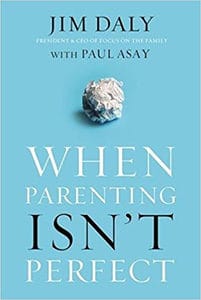
John Fuller: Well, no one ever said parenting would be easy. In fact, it’s anything but that. But raising children is also one of the most rewarding things you can ever do. Welcome to “Focus on the Family.” Your host is Focus president and author Jim Daly. I’m John Fuller. And Jim, we’ve got a couple of guests here in the studio, even though we’re here to talk about your new book, When Parenting Isn’t Perfect.
Body:
Jim Daly: We are, John and it’s a great delight. One of the special guests, the first and foremost, is Jean, my wonderful wife of 30 years. Welcome to “Focus” again.
Jean Daly: Well, thank you. It’s always, always a pleasure being on the broadcast.
Jim: Is that true? Sometimes you’re like, “Oh, no.”
Jean: Oh, no.
Jim: Yeah, so you do enjoy this.
Jean: It is a pleasure. I do.
Jim: Oh, good and then also as the host today, we have asked Dr. Meg Meeker, a pediatrician for 30 years, right?
Dr. Meg Meeker: Yes. (Laughter) I know, I don’t know if that’s a good thing to say or bad, ‘cause it ages me, but yes.
Jim: That’s good; no, it’s wisdom.
Meg: Thank you.
Jim: You have seen a lot of patients and parents, which gives you a lot of insight to the topic we’re gonna talk about today.
Meg: Absolutely.
Jim: So, I want to say thank you for coming here to Focus to be our guest host today
Meg: Well, thank you, Jim. It’s so fun for me to be here, because whenever we’re together and we’re talking about parenting, you know, the conversation gets so dynamic and it’s really, really fun and I’m really looking forward to talking to Jean about your book as well, When Parenting Isn’t Perfect. As we were talking about before, I really think it should be Parenting Isn’t Perfect, because it’s hard for me to find any parent who says things are going perfect. But this is a book that I think is long overdue, and it’s an incredible book. I believe this is a book that will allow every person listening who’s a parent out there to take a big deep breath and go, “Ah, I got this.” And isn’t that what we want to do?
Jim: I hope so. Because that’s one of the tensions I feel leading Focus on the Family. So much of the response that we get from the audience, from you, the listener, is about failures in parenting. “My child has done this.” “My teenager is moving this direction as a prodigal.” “What did I do wrong?” And I think so often we think in terms of formula, and you know what? The truth is, I’m sure God had that in mind too, that if I create Adam and Eve, all will be well, but He gave us free will,
And our little ones also have that same free will, and so, we as imperfect parents should take a cue, a lesson from God, who was the perfect Father, who had His kids go wayward. So I think it’s good to unpack that, and that’s what I’ve tried to do in When Parenting Isn’t Perfect.
Meg: Yeah, well, I’m glad you did. You know, as a pediatrician I see a lot of parents, and I’m sort of a professional listener of kids and parents, and one of the trends I’ve seen, Jim, over the past 20 years is that parents feel increasingly burdened. I don’t believe that when I was raising our children, my husband and I were raising our children in the 80s, I felt as stressed as a lot of the young parents do today.
And I think it’s because they have information overload. And then, as a Christian parent on top of that, they want to do well by Jesus, and sometimes it’s overwhelming, and that’s why I think When Parenting Isn’t Perfect is such a critical book at this time in history, but also, for every parent out there, where does the pressure on parents come from?
Jim: Well, you think of social media; that’s got to be a big, new phenomena where you have Pinterest, you have all these pictures and input from your friends and everybody else that you’re interacting with on social media, always everybody’s best foot is forward, and so, you look at these great little kids who are all clean-faced and wearing their little outfits and those kinds of things, and you’re thinking, well, that family looks perfect, but in reality, behind the picture, behind the post, there is gonna be imperfection in there.
But I think that adds to the pressure today that we are projecting perfection, yet behind the scenes there is a lot of messiness, and that is normal. And I think what we’re missing is the idea that messiness is normal, and that we should be comfortable with it.
Meg: So why are we projecting our perfection to our friends? Shouldn’t we be saying, “Hey, I’m kind of a mess. Will you help me?”
Jim: Yes! But think about this, that this is happening in our parenting, but think about the church broadly, how we do this in our faith. We project this perfection, and the world looks at it, and they see imperfection; they see what they then call hypocrisy, because we talk about whatever it might be, fidelity in marriage, yet you see Christian leaders who commit adultery. You see other things going on in the church, and we don’t have the ability to be real.
And I think that’s, hopefully, one of the great things that the Lord is doing in this generation, that idea of authenticity. Let’s be authentic people that live life in a sinful nature. I mean we’ve got to acknowledge that we are sinners saved by grace. Our kids are the same. They are not gonna be perfect. And I think when we start understanding that imperfection, the fact that the whole purpose is that Christ died for us sinners, then we’re compelled to live as best a life we can before the Lord, to please Him and to follow Him—in our parenting, in everything we do—and hopefully to be real in that, so those that don’t know the Lord can look at us and say, “There’s something different, something authentic, something real about them.”
Meg: Right, do you think Christian parents put more, or Christians put more pressure on parents, because we add the spiritual element in there, too? Not only do you want kids who are good performers, you want holy kids, too, that love the Lord and do their devotions and pray and are witnesses to their class.
Jean: Absolutely and I don’t know what it’s like to be a parent in a non-Christian home. I grew up in that, so saw that, so can only imagine that you have half the pressure, and I’m not even sure if we’re putting it on ourselves, or others are putting it on us, but yes, that actually probably adds 75 percent of the pressure, I think, because then it’s not just doing well in school, and maybe doing, excelling in sports. But then you have all the character issues that matter to us.
Jim: Say “please,” say “thank you.” How many times have we said that?
Jean: And not that non-believers don’t do this and don’t embrace these things, but then wanting your children to go over and mow the neighbor’s lawn without pay because that’s a nice thing to do; that’s a godly thing to do. So yes, I think there’s tremendous pressure as Christian parents.
Meg: Do you think that parents, particularly mothers, get their value from being a great parent and feeling that, well, if my child isn’t performing great or being great, then it’s a reflection on me, and I’m a bad parent? Do you think there’s that in there too, that our value comes from our children doing well?
Jean: Yes, and I can only speak for stay-at-home mothers; that’s what I am. Oh my goodness, yes, because that’s really our job. And if our children aren’t doing well, then we perceive that we have failed at our job, absolutely.
Jim: That’s a great connection. I think that’s so true.
Meg: I think this living with this sense of failure every day totally breaks parents down. And I think fathers have it, and we’ve talked about that, you know, in past programs about the pressure on dads. But I think that you’re right, Jean, because I think that women have been fed this belief, really a lie over the past 30 years, “You can be your child’s everything, and oh, by the way, if you’re a Christian mom and you love Jesus, you need to teach your kids to do that too, and they should offer to mow the neighbor’s lawn without you even saying anything.”
Jim: They will be perfect.
Meg: They will be perfect. And if they’re not, and I think that’s the kind of pressure that women put on women, and I wonder if men do it to each other in different ways?
Jim: Well, everybody’s going to be a little different. And let me say this. In writing the book, what I was trying to achieve is the idea that kids need boundaries. You know that as a pediatrician. I’m not trying to get away from that idea of discipline and making sure those things happen, but inside, that core of who you are as a believer in Christ, as a person living in a world full of sin, the idea is [that] grace is what saves us, not performance, and we’ve got to remember that in our parenting. And I think for Jean and I, that’s a struggle that we have, because we want to see our kids get straight A’s. We talk boldly and proudly when they do, “Wow, what a great grade!” And you don’t want to see your kids get F’s. I realize all that.
And yet, at the same time, kids are wired differently, and we’ve got to remember the goal for the parent, the finish line for us, is character. Behavior is a part of that, but if everything is measured by behavior, I think we’re missing the mark. I would rather have a boy like David, who may fail in big ways, but God Himself said David had a heart after His own heart. How could that be? As believers, how do we rationalize that? He committed adultery. He committed murder. Those are biggies.
Yet, God Himself said his heart is after God’s heart. That’s because he was contrite. When he confronted his sin, he knew that he was wrong. And I would rather have a son, even if he fails from time to time, that he would know that failure. He would repent of that failure. He would seek God’s forgiveness, and then try harder the next day. If you have that kind of child, you’re in a good place. It’s not that failure isn’t gonna happen; it will; but have you taught them how to manage this life that we have?
Meg: But if our value as a parent stems from how good our kids are, or how well they’re doing, how hard is it for us, then, to say, “You really messed up, so let me teach you through this.” Because if you’re acknowledging your kid’s really messed up, then you’re sort of acknowledging you messed up.
And I’d like to dig into this grace thing a little bit, because you write about a young boy in the book who got into pornography, and his parents found out. I don’t know if he told them, I don’t remember, and how despondent his parents were. So let’s sort of pick this apart, if you would, and say, okay, what does grace look like for every parent listening to us who feels that their value comes from being a really great parent and having a great child, but then their child does something like they find he’s on porn? What do we do then? What does a grace-filled response look like?
Jim: Well, I think a grace-filled response isn’t backing away from the harm of that behavior. Let me again say that right up front: you need to deal with that behavior. But true grace is when you can talk through that. I know in this instance this young man was a child of a Christian leader and the parents freaked out. “We’ve failed. We haven’t done the right thing. Look, we have failed.” And yet, at the same time I think most moms of sons particularly in the audience, you’re gonna cross this river at some point, typically. I mean the numbers and the statistics, aren’t in your favor, maybe 80 percent, 90 percent.
Meg: Even if your son’s not looking for it, I will testify this with my son, it comes to kids. And I remember when my son was 14 and he screamed all of a sudden in my study. And I thought, somebody’s stabbed him and porn came across and he was ashamed; he was embarrassed. But I think that in that, what I’m hearing you say is it’s really important for parents not to go, “Oh, I failed. What happened?” But rather, say, “Wait a minute. My son just saw pornography. The world is a tough place. I need to move in and help.”
Jim: Right and it’s an equipping moment. And I think the difficulty, and I don’t want to be gender-specific, but I think for moms particularly, this is a very tough issue, because it cuts at the core of their identity. I think for dads there’s an understanding in this area where they have battled their entire lives with it; they, hopefully, as Christians have been able to overcome that and not be addicted. Many people listening right now, many men, probably are and you need to get help.
Meg: You need to get help.
Jim: And we’re here at Focus for that reason. But it doesn’t honor the Lord, that’s the core purpose or the core reason that you need that help. But in that context, I think in this case when that mom called another mother who had teen boys and they were able to talk that through, that provided some comfort that, okay, this is more normative, and now how do I begin to equip that boy to make better choices?
And that’ll be the battle the rest of his life and that’s just the way it is. But how do you have that kind of heart-to-heart talk and say, “What’s important here? This is gonna be in your face the rest of your life. You’re no longer in the bull pen,” to use, I’m a sports guy, so that baseball analogy, “you’re not in the bull pen throwing pitches, warming up to be the pitcher. You’re actually on the mound now, and you’re in the big game and you’ve got to figure out whose team you’re going to be playing for—God’s team or Satan’s team?” And that really is the choice and especially for boys, what great language to evoke to talk about what this life is about and I think that’s a healthy way to go about it.
Meg: Well, I love that illustration, because I think that when you really talk about how a mother or father can respond when a child has done something, then we kind of get it. Because I don’t know about you, Jean, but raising my son, I didn’t quite understand all of that. I really didn’t. I thought, That’s disgusting. Why would anybody want to look at pornography? And it’s very different and I couldn’t say that to my son, so I did recruit my husband’s help, but I think that when our kids really fall down or into that behavior, whatever, we have to recognize as parents we’re living in a culture that doesn’t like our kids very much.
Jim: Oh absolutely not.
Meg: And it’s not always our fault; it’s a tough world out there, and Satan is just waiting to grab hold of these kids. Now you use a term, an expression in the book, When Parenting Isn’t Perfect, Jim, that I love. You say, “We’ve got to teach our kids to shake it off and move forward.” My dad used to say, “Just shake the stink off and move forward.” What do you mean by that?
Jim: Well, it’s pretty much what I mean. Think of Peter, I mean Peter in the Scripture, where Peter blows it. I mean he denies that he’s associated with the Lord Jesus Christ after saying, “I would do anything for you, Lord; I would die for you.” How many of our teenagers will repeat that in a different way. They’re gonna say, “Dad, I love you. I care about you and mom. I’m so sorry I did that,” and the next day they’re denying you.
And I think it’s a great example for us. Think of Peter having to shake off the fact that he had denied the Lord. And he’s an adult, and he knows what he’s done, and yet, God gave him grace to say, “Peter, I love you. I knew that was gonna happen. It’s okay. Think of that, the amount of imperfection Peter must have felt.
Now think of your teenager, your son or your daughter, who blows it in some way, some magnificent way maybe, horrible way, and use the parent imaging the Father in heaven, have to say, “I know you’ve blown it, but I still believe in you. I still trust you and most of all, I still love you.” That’s what God was saying to Peter.
Meg: Yeah.
Jim: That’s what He wants. And what child—I mean I was an orphan kid—what child doesn’t want to hear, “You’re sinful. I get it, but my grace is sufficient for you. Now pick yourself up, dust yourself off, and let’s go get ‘em, Tiger.”
Meg: That’s such a, I love what you said. That’s very, very beautiful. Giving ourselves grace is extremely hard. Now, we need to get into your background, Jim, because I think that’s what gives such power to this book, that this book, When Parenting Isn’t Perfect, was written by a man who knows deep pain in childhood. And to me it shows that if a man who comes out of such pain can be a great parent like you are, our listeners need to know some of your back story. So would you tell them a little bit about your life as a child?
Jim: Yeah, I’ll give you a thumbnail sketch of that. So first of all let me say this. For those that are walking a difficult path in this life, maybe you came from hardship, it’s been difficult to get over this, think of it this way, which has helped me tremendously. The Lord asks us to live this testimony that He’s provided. These are actually His stories. We want them out, but He has bought them for a price, you know, His blood on the cross, and I love to think of it that way. So can we be obedient to say, “I will do this, Lord. I don’t know why I got the short straw, but I want to be joyful in my circumstances, because they are not going to dictate to me who I am in you”? So that’s a great foundation to start from.
From there for me, I was the youngest of five kids. I’m six years from my closest sibling. I was the “oops baby.” And ironically, I remember when Dr. Dobson and I were talking about me taking over Focus, I thought, Oh man, the inadequacy of that. And I thought the irony is, I’ve lived in just about every family type that you can live in. I had a normal dysfunctional mom and dad. My dad was an alcoholic. They divorced when I was 5. My mom remarries when I’m 8. I had a stepfather, therefore, and not a nice man.
My mom dies a year and a half later, when I’m 9. He leaves the family the day of the funeral. We came home from the funeral. He sold all the furniture, he came out with his bags packed and said, “I can’t take the pressure. I’m moving back to San Francisco.” I remember being 9, thinking, What do I do? I can’t take the pressure either. This is big pressure. “And oh, Jimmy, you get to go to foster care.” So I was in foster care for over a year.
Meg: You probably didn’t know what it was.
Jim: Oh yeah and then my bio dad reappeared, so I lived with him, my sister and I, as a single-parent father. So, I mean it literally, single-parent mom, normal dysfunctional alcoholic home, a stepfather, and then in junior high and high school, I lived with my brother, who had just married his teenage girlfriend. And you know, so there was very little boundary for me, and that was what I’m coming out of. But there was a thirst and a hunger. That’s what, for me, I think that’s where the Lord, when He’s got you by the collar–
Meg: Thirst and a hunger for Him?
Jim: For Him, but I didn’t know how to shape it. No one had talked to me. My mom accepted the Lord the day before she died, and nobody came along to the little 9-year-old to say, “You know, this is what your mom did. This is what she committed to.”
When I was 15, years later, that a football coach was able to take me to the Fellowship of Christian Athletes camp, and there I heard the gospel and this man ironically said, “Have men let you down? Has your father let you down? Has your stepfather let you down? Let me introduce you to somebody who’s never going to let you down: Jesus Christ.” And I went forward. I said, “I want that relationship.”
And so, it was wobbly, but the point of it all, Meg, is that in the valley is where God breaks you. And I love that psalm, Psalm 38, “God is close to the brokenhearted and He saves those crushed in spirit.” So let’s not live a false lie of perfection. Let’s live a life of brokenness and in that, got is lifted up. That’s my goal.
Meg: Speaking of brokenness, you write with a wonderful fondness about your mother, and your mother gave you some very, very important tools or memories or character qualities, and you write about her laughter and her humor, which was really surprising for me as a mother, because I’m trying to think of her as a mother and you as a son. You were so poor, many times you had to have Kool-Aid with your Cheerios?
Jim: If we had food at all. There were times we didn’t have dinner; it was that bad.
Meg: Right before your mother died–she knows she’s dying–she asks you to do something very special. Can you tell our audience what she asked you to do?
Jim: To me, this typifies my mom. I mean, first of all she had just such a great sense of humor, and being in very difficult circumstances, like not being able to eat, she just brought such joy. And even in that, she would make us laugh. She would say something. She would dress up funny just to make us laugh. It cost nothing to do those things. And then for a year and a half we lived in Compton, California, so that Hank and my mom could save money for a house. Tough stuff.
But in this particular story, about a year and a half after living in Compton, we’re in Long Beach, California; she’s frail. I know she’s not well, but I didn’t know she was dying, but she asked me to come to the room. Now, Hank guarded that. He used to lock her in the bedroom and wouldn’t let the kids see her because he would tell us, “You’re gonna drain her energy and that’s not good.” So now I’m connected to a no-good act, which is loving my mom.
But one day Hank wasn’t there; the door was slightly ajar and she’s calling for me. I walked back there. I haven’t seen her in a couple of weeks, even though we’re in the same home together. And she said to me, “I’ve got a special project for you. Could you go get some flower seeds from my favorite flower and plant them outside?
Meg: What was the flower?
Jim: Yeah, that’s the funny part. I was in fourth grade, and she said, now get a pen and paper. And I went and got it, and she said, “Okay, my favorite flowers are chrysanthemums.” I mean I’m thinking, Can we go with roses? (Laughter) I just learned roses. Chrysanthemum, I’m going K-. She goes, “No, C.” I just remember that was hilarious.
And I went dutifully about four blocks away, and I picked up the flower seeds, but I got back, and like any boy would do, I planted them in the [soil] with my finger and put the little dent in there, covered it, and I think, thankfully, before the spring rains of California came, because I only watered it once.
But it was probably six, seven weeks later that my brother came home from the Navy; he’s 19. He brought us each into the room one at a time, and my siblings all came out of that room crying. I remember I was the last one, because he went in birth order, so I’m the last one, they’re all crying, and I go in. He shuts the door, he sets me on his knee and says, “This is really tough, Jim, but I’ve got to tell you something. Mom’s dead.”
And that was the … that was my introduction to death. And I remember just panicking and thinking, What does that mean? When will I see her again? All those things that a 9-year-old will think. I remember we were all gathered in the living room, trying to figure out what to do. And I remember the chaos, and I just went back to that flower bed, just how the Lord would use it, just like my mom, I’m sure, intended it to be used. And I went, and sure enough, about an inch and a half, these little flower shoots were coming up, and even for a 9-year-old, I caught what my mom was trying to do. What she was saying is life, to me, life would go on; flowers will bloom. Your whole life’s ahead of you. Go for it.
Meg: And it can be good.
Jim: And it can be good, and that’s what it’s been.
Jean: You know what’s remarkable to me is that Jim had nine years with his mother, and those nine years were not perfect; she was an alcoholic at one time and went into foster care for that. She was working most of the time. And yet, for all these many decades later, when he speaks of his mother, it’s just so fondly and warmly, and his memories are so positive of her, because I think she showed unconditional love and laughter.
Jim: Grace.
Jean: And you talk about, Jim, the one thing that she really taught all of you was the Golden Rule, do unto others, but you know just in nine short years, with all that imperfection, just what a foundation she laid for these kids.
Meg: Well, and I think, as I said, I think that’s really where the power of the book comes from, is that as you read, your mom got a few big things really right in those short nine years, and that was enough to get you to where you are today. I’m not talking about your professional success, which is huge, you know, leading an international ministry, but to be a great dad, to have a great wife, to have a great family life. I mean that’s redemption. That’s the work of the Holy Spirit. That’s the messiness of parenting. But the beauty is that any parent out there, think about that, all that your mother gave you, and she had no instruction. She had probably no shows to listen to like this. She got a lot of the big stuff right, and I’m so grateful.
Jim and Jean, what a privilege it’s been for me to listen to your story, to talk about When Parenting Isn’t Perfect. I have learned so much from you, and I have been so inspired and encouraged. And I hope every listener out there, mother or father, who today feels they are just falling short, they’re not getting it right, remember what Jim’s mother gave him in those short nine years. And she gave you so much that launched you into having a great life. The book is When Parenting Isn’t Perfect. It is a perfect book. (Laughter) Everybody needs to read it, because it really is a very, very powerful story, and I thank you so much for writing it, Jim.
Jim: Thank you.
Closing:
John: And our gratitude to Jean Daly, as well, for joining us, and Dr. Meg Meeker for being here. And do get a copy of the book, for encouragement and for some great practical insights into your imperfect parenting journey. We’ve got it, and a CD or a download of our conversation at http://focusonthefamily.com/radio. Or call 1-800, the letter A and the word FAMILY; 1-800-232-6459.
And at the website, go ahead and take a few minutes and take our Seven Traits of Effective Parenting Assessment. It’s free and it’s a really helpful tool to recognize your strengths as a parent and areas where you can make some improvements.
When you get in touch, please donate generously to keep us going here at Focus on the Family. We need your prayer and financial support to keep messages like this out there through the broadcast, the website, our magazines, and so much more. Donate today, and we’ll be happy to send a complimentary copy of When Parenting Isn’t Perfect to you. It’s our way of saying thank you for supporting us, and making sure that you get this book and can benefit from it. Our number once again, 800, the letter A, and the word FAMILY.
And on behalf of Jim Daly and the entire team here, I’m John Fuller, inviting you back next time. We’ll continue the conversation about parenting with grace, and once again help you and your family thrive in Christ.