




David Green: You know, we bring all of our co-managers at, at Hobby Lobby together and we talk to them. I, I only spend a few minutes with them, but there’s something I wanna tell all of them. And that is, you know, it’s, your job is the least important thing you got going.
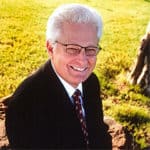
John Fuller: What insights from David Green, a much-needed reminder of what truly matters in life. And as the founder of Hobby Lobby, he’s discovered the meaning of building a generational legacy, not through material success so much, but through faith. And he joins us today with his friend and co-author, Bill High. This is Focus on the Family with Jim Daly, and we’re so glad you’ve joined us for a great conversation. I’m John Fuller.
Jim Daly: John, you know, uh, I have a beef with David Green.
John: Okay.
Jim: My wife spends way too much money at Hobby Lobby (laughs).
John: (laughs) I don’t know.
Jim: And she loves it. You know, how many people love Hobby Lobby? Uh, people go, uh, to Hobby Lobby and find the things they need for decoration and all the fun stuff that, uh, really, uh, takes your household to another level.
John: Mm-hmm.
Jim: And, uh, just on behalf of Jean, David, thank you for all those great things. But, uh, you know, the bigger part that I so admire about the Green family, about Hobby Lobby, is stepping up in the culture and really, uh, being present and not dividing their faith from their business. It’s very integrated, and I so admire that and respect that. There’s other companies that do that as well, and it’s such a beautiful model for the rest of us to engage the culture with our faith, not without it.
John: Mm-hmm.
Jim: And, uh, also when it comes to family, how do we, how do we pass on our faith to the next generation and maybe even two or three generations beyond that? And that’s what we’re gonna talk about today.
John: Yeah, it’s kind of a high, long view on what family’s all about. And, uh, in addition to starting and continuing to work, uh, at Hobby Lobby, David and his wife, Barbara, uh, have two sons, one daughter, 10 grandchildren, 22 great-grandchildren.
Jim: Yahoo.
John: And, uh …
Jim: (laughs)
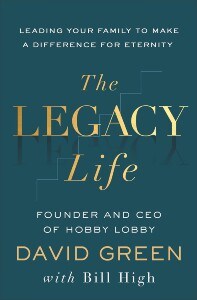
John: … he’s very involved in the community. Uh, Bill High is an author, lawyer, and speaker, and he has a consulting company that helps families think about these things to build a generational legacy. And, uh, he and his wife, Brooke, have four children and five grandchildren. David and Bill’s book is called The Legacy Life: Leading Your Family to Make a Difference for Eternity. And you can learn more about our guests in this terrific book at FocusontheFamily.com/broadcast.
Jim: David and Bill, welcome to Focus on the Family. Great to have you back, David. And Bill, I think this is our first time.
David Green: Yeah, it is. Glad to be here.
Jim: Great. Yeah, I’m so glad you guys are here.
Bill High: Yeah. Good to be here.
Jim: Do you have a response when people meet you and go, “Oh, you’re the problem with my budget (laughs).”
David: Yeah (laughs). Yeah, a little bit. But, uh, uh, it reminds me of my wife one time she was in the store and a gentleman came in and he looked around and he said, “I have never, ever seen a store that has so much stuff you just don’t need.”
Jim: (laughs)
David: Well, I had a problem with that, but that was his, uh, his idea and …
John: (laughs)
David: … and maybe some people don’t need it, but they think they do and …
Jim: Isn’t that nice?
David: … thank God for that.
Jim: Now, let me ask you, you know, you start talking about legacy. There’s usually a mom somewhere in the background (laughs).
David: Yeah.
Jim: And it was your mom who would ask you a question every time something good happened. And what was that question?
David: Right. And, and, you know, and I think about that and, you know, raising kids and, and raising grandkids and great grandkids. And I really think about what my mom said really has a lot to do with, uh, our legacy.
Jim: Mm-hmm.
David: And that is, uh, “Hey, mom, I’m a youngest manager, one of the youngest managers, and I’ve got a store, you know. David, what are you doing for the Lord?”
Jim: (laughs) That was her response.
David: When you really think about that, that’s what we have to ask all of ourselves. We have to ask ourselves and our kids. And if they know that that question’s there, maybe that’s one of the best things you can do in raising children is, “I don’t care if you’re president of the United States, David, I don’t care.” Oh, by the way, the second time it was, “Hey, mom, I’ve got all of these stores I’m supervisor of.” I get the same answer.
Jim: Right.
David: “What are you doing for the Lord?”
Jim: Mm-hmm.
David: So she’s totally unimpressed with what we’re doing with our job. She’s impressed with what are you doing for the Lord? And that’s really what it all ought to be about.
Jim: Yeah. Let me ask you this, though. I mean, that could feel like, “Oh, she doesn’t appreciate what I’m doing.” Were you … Did you feel like, “Mom, let me ask you a question” (laughs)”
David: (laughs) You know, I think because of the way that I was raised, I knew that it was right, you know.
Jim: Okay, that’s good.
David: And it, and, and it could have bothered me.
Jim: Mm-hmm.
David: But because I knew who she was and how that they lived their life and their prayer life and, and walking with the Lord, it didn’t really bother me. It could bother somebody. But I think because of the way I was raised, I knew who she was that it really didn’t bother me. And I knew that she was right, you know, and I needed to do something besides be a supervisor of a bunch of TG&Y stores.
Jim: That’s right. TG&Y. I remember those.
John: I remember those.
Jim: That’s something.
John: Yeah.
Jim: Bill, uh, bringing you in here, uh, now are you a nice lawyer?
Bill: I’m a good lawyer.
Jim: Oh, good.
Bill: There you go.
Jim: Oh, we didn’t answer the question.
Bill: Yeah (laughs).
Jim: (laughs)
Bill: Well, we try to avoid those direct answers on that.
Jim: (laughs) Well, you were well-trained. Um, you mentioned in the book, how short-term thinking can be so destructive to our culture today. A- And you are a long-term planner. That’s how you and David got together and, you know, talked about legacy and what is this all about and really the planning component to this. W- Why do we think so short term as human beings?
Bill: Yeah, and that’s a big part of the book. We’re trying to reset what I would say is the theology of family, which is this short-term mindset. And the short-term mindset is that you raise your kids up in a nest, and then at 18, you kick ’em out and say, “Go off and do your thing.” And that’s not God’s design. God’s design is that the family was really meant to be a team, and that team was meant to expand and grow. This is the original blessing to Abraham, land, people, and blessing. Through that one family, I’m gonna bless the whole earth.
So the short-term thinking of, “Hey, I’m gonna, you know, build a business or build a family, kick ’em out at 18, and then I’m gonna go retire and sit on a beach,” that’s not God’s design. Our God is a generational God. He thinks and he plans in terms of generations. Abraham, he told Abraham, 400 years later, “This is when you’re gonna come back and possess a land.” And so we’re trying to stretch the thinking of families to say, “Let’s think much longer term.” Just like with, uh, David’s family, his parents were really built around this idea that we want you to think for eternity. They had no idea that they were setting in motion generations of influence.
Jim: Yeah, that, that’s the point of your parents, your grandparents, and planting those seeds. David, uh, what does the Bible say about leaving a legacy? What does scripture inform us?
David: You know, when I think about that, I often think about purpose. God has given us off a purpose, and our legacy is, are we f… really fulfilling our purpose? I think he has purpose for more than just the pastor or the missionary, et cetera. I think he has a purpose for every single one of us. And I s… I think if we want a legacy, we’re gonna fulfill our purpose. And our purpose, I think, is a lot of things and, and mostly I think it’s our family.
What are we doing with our family? Are they serving the Lord? You know, we bring all of our co-managers at, at Hobby Lobby together and we talk to them. I, I only spend a few minutes with them, but there’s something I wanna tell all of them. And that is, you know, it’s, your job is the least important thing you got going.
Jim: (laughs) That’s so countertintu- intuitive.
David: You know, you know, and you … And I don’t want it to be the most important thing. I don’t want Hobby Lobby to be the most important thing in your life. And I s… I … There’s plenty of people to talk to them about business, but I need to tell them something. And that is that most of us are good at our jobs. We’re pretty good at our job, but we kind of mess up in our marriage and are raising our children, and that’s why we’re closed on Sundays. That’s why we’re closed at 8:00 at night because we want them to have time with their family and with their marriage.
And so, by the way, when you’re good at your marriage and your family, you’re gonna take care of them. You’re gonna be good at Hobby Lobby.
Jim: Yeah.
David: But too much, we put the job before the more important things. And so that’s what I wanna do in my life. I want to … My family is more important than Hobby Lobby.
Jim: Yeah. Uh, Bill, how has today’s culture, uh, changed the way families function?
Bill: Well, that, that’s some of what we say. The rise and fall of nations, there’s this whole line of thinking, and at the end of a civilization, the end is hyper-individualism.
Jim: Mm-hmm.
Bill: And that’s where we’re at today. It is, let’s pick my life, my wants, my needs, my desires over and above this idea of community and family. And that’s where we’re at today. And so some of what we try to drive to in the book is how do we return to this idea of family’s meant to be a team? Uh, we’re supposed to be part of a community. And so that’s some of the big thinking is you are part of something.
Everybody wants to live a meaningful life. They wanna live that legacy life. They wanna do something that’s important. But like David says, you’re not gonna get that through your job. You’re gonna get that through the people that are around you. And what do the proverbs say? The proverbs say that, what, uh, the greatest grief to a father, mother is when they have kids who are walking away.
Jim: Yeah. Boy, that’s well said. And that grief is out there. It’s real. We hear from people often about how, for whatever reasons, uh, it’s become a point of pain for them. They’re 20-something, 30-something.
Bill: I don’t know if you’ve heard the statistic, but it’s a troubling one. I think Cornell did a study that something like 25% of parents are experiencing alienation from their kids.
Jim: Yeah.
Bill: And we believe that’s a symptom of this hyper-individualistic culture that we’re living in.
Jim: Yeah.
John: Yeah.
Jim: David, getting into that practical nature of this, uh, what are some of those things that you did with your family that really began to build into this generational idea of legacy?
David: Bill brings up something that’s very important to our lives as well. Bill, many years ago, said, “You need to have a document that says this is your mission, your vision, and your values.” And that’s what we put together. So the family, we come together once a year minimum, ’cause we come together once a quarter as well and, and celebrate different, uh, birthdays during that period of time. But this mission, vision, and values that we have as a document, and sometimes, well, how does everybody come around one particular, uh, set of rules? I think you get it by the Bible, you know. It’s all based on the Bible. So it’s not my idea, “Oh, family, we’re gonna follow me.” No, no, no. We’re gonna follow God’s word. And that’s one of the reasons that in, uh, Washington, D.C. that we have the, um, museum is because God’s word means so much to us.
John: Mm-hmm.
Jim: That’s the Bible Museum.
David: The Bible Museum …
Jim: Yeah.
David: … in Washington, D.C., that’s what holds us all together if we don’t … We have to have something. You know, there’s the Bible on God’s way, then there’s another 10 million ways, you know, but this is the way that we believe and our family buys into that this is God’s word. He created us and he left us this word. And so we have the mission, vision, uh, and values that Bill come along with the family and said, “You need this document.”
John: Mm-hmm.
David: So we come together, we know the document that this is our mission, this is our vision, and this is our values. And I think that has really helped hold the family together, that we know that this, we all agreed upon it. Gen one and gen two put it together, then we gave it to gen three and says, “What do you think?” And they may have changed a couple of scriptures or all, but they accepted this is who we are. This is who our family is. And who we are is God’s word.
Jim: Mm-hmm.
David: And so we come back to something that we can really stand on and we can stand on God’s word. So I think it’s important to have this document that says, “This is how we’re gonna travel the roads as we go down.”
Jim: Mm-hmm.
David: And, and I think it’s been very important for the family to stay together.
John: Mm-hmm.
Jim: How do you coach the kids and coach others in being the person who can say, “Bill, I appreciate that insight. The fact that I’ve done well on the legal side, but I have maybe a blind spot on the legacy side.” That takes a lot of humility, especially for a successful person. So what advice do you have there for people to remain humble no matter what God gives you to steward?
David: Yeah, I, sometimes I go back to, uh, 1985 when it was the only time that our company lost money and the banks was threatening to foreclose on us. And I found myself physically under my desk just praying out loud because before that time, everything was successful and I was prideful, you know, that this is what I’ve done and I work harder than anybody else, something of that nature. And that’s where I was. I was prideful and I think God allowed us to lose money because he wanted to just, uh, me to die. God wants us all to die.
I don’t know that you can solve your problems with one experience in life, but I know that I reflect back on that time when I know that I know that I know that I cannot do this without the Lord. And so I try to remember every day, I use the word try ’cause I’m certainly not where I ought to be, I guess, but I also know that I don’t want to ever be prideful anymore.
Jim: Mm-hmm.
David: So I know that I need to tell if we’re successful, and we are, it’s because God has blessed us, and I wanna give Him all the glory. So I wanna be very, very careful on that. I also wanna reflect back on that time when God dealt with me under the desk when I was there asking, crying out to Him to help us, uh, to, to survive. And we had our kids involved, we had a lot of employees, and it looked like we were gonna lose the company, but I, I, I wanna constantly reflect back on that, but also just remember that if you really think about it, there’s nothing that we have that’s any good that didn’t come from God. It’ll all come from Him.
So we have …
Jim: Yeah.
David: … to remember that. Well, if I know how … I’m a pretty good merchant, by the way.
Jim: (laughs)
David: And that’s not pride …
Jim: I think so.
David: … uh, that’s not prideful. That’s … He gave me that. So I think it’s, if you know where you got it, maybe, and I’m using the word maybe, it’s not prideful. It’s just that God gave me this. But if you have it, you got it from God, you know. So, oh, by the way, if I worked harder, well, God gave me that. So anything good that I have comes from God.
Jim: Mm-hmm.
David: And so I wanna remember that and not to think in terms of what I think I thought before I had the time when I lost money. So that’s …
Jim: Yeah.
David: … what I try to do and know that anything we have comes from God.
John: Mm-hmm. That’s David Green, and he and his coauthor, uh, Bill High, are with us today on Focus on the Family with Jim Daly and, uh, we’re talking about their book, The Legacy Life: Leading Your Family to Make a Difference for Eternity. And we encourage you to get a copy of this great book just to frame your thinking and to have you, uh, move forward in this very thing that David’s been talking about. Uh, you’ll find the details about, uh, vision and values and, uh, mission all captured in their book and, uh, we’re at FocusontheFamily.com/broadcast.
Jim: In fact, the book really does help you think through mission, and vision, and values in a very good way. And we won’t have time here to get into all those concrete examples, but it defines them really well. So, uh, I would encourage people to get a copy of the book.
David: Mm-hmm.
Jim: Um, but I do wanna give families hope, uh, David and Bill. And I think in this way, um, family is so important, but it, it’s not easy. You know, some families … People have their free will. Think of the Lord with Adam and Eve.
David: (laughs)
Jim: Right? So you get a 20-something who maybe isn’t, a- as bought into the faith, and how can families navigate conflict in a way that doesn’t harm the relationship?
Bill: Yeah. There’s a chapter in the book called The Broken Legacy, and we, we do wanna give families hope because, as you appreciate, a lot of families are coming to the table and they’re feeling like, “Am I too late?” That’s one of the big questions we get.
Jim: Correct. Exactly.
Bill: “Am I too late to do this?” Or grandparents who are listening to this are like, “Oh, it’s, it’s hurting now.” And … Or how do I put the toothpaste back in the tube, the proverbially speaking? And if you look at the scriptures, the scriptures are clear about how much brokenness there is.
Jim: Yeah.
Bill: I mean, Moses committed murder, he’s banished to the wilderness, David’s an adulterer, his son tries to conspire and take over the kingdom. There’s story after story that’s broken. Ruth, she’s a Moabite, yet she marries in and she’s a widow.
Jim: Mm-hmm.
Bill: So story after story of brokenness, yet, and this is the hope, God’s message is, “I redeem and I restore.”
Jim: Mm-hmm.
Bill: And the only thing that you have to do in this moment for those that are listening is to be faithful.
Jim: Yeah.
Bill: Be faithful right now. Choose to be faithful and say, “I’m gonna be faithful with what you’ve put in front of me, whatever, God, you put in my hand, and I’ll do that much,” let Him take care of it, and you just never know then what He’ll do.
Jim: Yeah. And David and Bill, you can jump in on this, but, you know, we, we know a lot of high-net-worth families. It’s really unique to find a high-net-worth family where God has blessed them through their hard work, whatever it may be. Well, you know, we know people at Chick-fil-A, we know people at In-N-Out Burger, we know people at Hobby Lobby. These are very successful businesses.
And one of the things that’s really unique is how to raise kids in that environment that don’t feel entitled. And this could be just a, a f… we know plenty of people in farming and building. And so it’s a lot of different industries, but where families are really blessed, it seems in this culture, there is a struggle that their kids don’t feel entitled. I know your kids a- and they are really great kids. You wouldn’t know that the Lord has blessed you and the family with a lot of wealth. How does that happen? How, how do those children, adult children, get a grip on, “Okay, these are only tools to do other things?” How did you do that?
David: Right. I, I have to say that there was a time in my life when I knew that we had a lot of wealth and, uh, this was gonna be a problem. It’s gonna be a problem with your family, the wealth that God has given you. And so I remember asking and I, I reached out to individuals that were Christians that had even written books, and their advice to me was to give this to your kids and then give it to their kids, and I couldn’t sleep at night. It was the worst time in my life. Or one of the worst times in my life was what do I do with what God has given me? The worst time.
Jim: Wow.
David: And I cried and I, I had all this weight, and I knew that I couldn’t do what Christian advisors were telling me to do, and that is to give it to their kids and then give it to their kids. And, and they were advising me that way and I just, I couldn’t live with it. And so, uh, it was a pivotal moment to me ’cause I was praying and I was in the backyard. I’ll never forget it as long as I lived. And the Bible said, “What would you do with Hobby Lobby if the Jones family owns it?” That was the answer to my problem right there. What would you do with Hobby Lobby if the Jones family owns it? If the Jones family owns it, I don’t own it.
Jim: Mm-hmm.
David: Oh, by the way, if I was a good scholar and knew the Bible real well, I wouldn’t need that because there’s several places in the Bible that says you don’t own it. It is a hundred times better to be a steward than an owner. An ownership brings a tremendous amount of pressure on you. What do I do with it? And who do I give it to?
Jim: It’s all on you. Yeah.
David: I don’t give it to anybody.
Jim: (laughs)
David: It’s God’s.
Jim: It’s a really good perspective.
David: But once you, once you get there, your job is easier, you know exactly what to do. So Hobby Lobby belongs to God, we’re stewardin’, and because of that, we think, “Hey, for the last 20 years, we’re able to give 50% of what we make. And then, by the way, the rest of the money grows to make a bigger 50 next year.”
Jim: Mm-hmm.
David: So what do you do with the rest of the money? We add more stores to make more money to give more, a bigger 50.
Jim: (laughs) That’s so good.
David: But Hobby Lobby is not owned by the Green family. It’s owned by God. We get paid for what we do because that’s what God’s word. So it’s really given us a lot of, uh, where it was the biggest problem that I had with the wealth, and now it’s no problem at all because we just wanna be good stewards of what God has given us.
Jim: You know, David, that works at every level. I mean, it, you don’t have to be running a, a, you know, a huge business to do that. It’s, it’s your household.
David: Yep.
Jim: It’s how you approach it. And the irony is the principles are all the same.
David: Yeah.
Jim: All the same.
David: I don’t care. It, it was the same for my mother and father.
Jim: Yeah.
David: Their talents God owns, their time God owns. So not everybody has a Hobby Lobby, but it’s, it’s all His. Everything that we have is His, and sometimes He uses our talents as our ministry or our time. And so whatever we have belongs to God and we need to give it back and be good stewards.
John: Mm-hmm.
Jim: And that’s rooted right there in what Paul instructs us to do as Christians, right? And I think that’s, again, Bill, back to the selfishness, uh, that’s in our heart. It has seeped into the Christian’s hearts as well. It’s the culture we live in. It’s very hard to create that barrier. Um, we have to do the best we can, but it does seep into us. And that’s where you need to arrest that and understand it and counter it, so we become closer to God in every way in our character.
But that’s what you do at your, your workshops, those legacy workshops that you’re doing, Bill, and you ask them. And I think this is really critical because David was just doing it. You ask these folks that are thinking about leaving the legacy to create stories, just a handful that your family can live by.
Bill: Yeah. There you go. The … Just dovetailing what David just said a moment ago, that stewardship idea is the place that you get freedom. And we are all stewards. And one of the things that you’re a steward of is your story.
Jim: Mm-hmm.
Bill: That’s part of the power of it. So we’ll say in these workshops that we lead for families is, what are the 10 stories that your kids need to know? So just much like what you guys have done here over the years, you get people to tell stories, because when you tell those stories psychologically, neurologically, you step into the story and you visualize yourself with it, and you experience the same joy, the same pain, you identify with it, and it seeps into your life being. And we know that the families who succeed are storytellers.
Jim: Mm-hmm.
Bill: Uh, one of the families that we worked with in a, uh, workshop, they came up to us and they told us a story about how their family, uh, it, it, it was an event where somebody was stepping away from the ministry and they, so they di… decided to have a big celebration, and that celebration was built around stories and songs. They’ve been doing that celebration now for 103 years.
Jim: (laughs) Oh, man.
Bill: And that’s all they do.
Jim: Yeah.
Bill: They … At that celebration, it’s an annual family reunion and they tell stories. And what are those stories? They’re the stories of how I came to know Christ, uh, how mom and dad pushed me a little bit, asked me the great questions, uh, how did I, what was my moment of loss, what’s my moment of joy? Those are the stories that stick with our kids. And if we’re stewards of those stories, that’s how we succeed as a family from generation to generation.
John: Mm-hmm.
Jim: And what is so often the case, it’s framing this to think differently. It, it’s not you’re a bad Christian, it’s just let’s think differently about how we do things and …
Bill: Yeah.
Jim: … that’s the goal.
Bill: One of the stories in the book is the story of the Rechabite family, little known story. People don’t pay attention to that story. It starts in 2nd Kings 10. It goes to Jeremiah Chapter 35, but the family’s still following, and it’s 250 years. You can trace that family into the Book of Nehemiah, 400 years. You can trace that family into history as late as 1862.
Jim: Oh my goodness.
Bill: It’s like 2,000 years. And none of us think that way. The … Will the Daly family … If Jesus tarries, will there still be a group of believers who are …
Jim: Mm-hmm.
Bill: … still carrying on with the same set of values 2,000 years later?
John: Mm-hmm.
Jim: Boy, that, that’s the thought to land on. And this has been great.
John: Mm-hmm.
Jim: Thank you for giving us the many things to think about and for this book, The Legacy Life. And like we said, there’s so much packed in there, we can’t cover it all.
John: Yeah.
Jim: And so many practical, uh, tips on what to do in a godly way to, uh, you know, not ensure because there’s no guarantee, but to lay the pathway for a family that follows Christ, hopefully for generations. And, uh, man, if you could do that, that’s probably worth more. It’s not probably. It is worth more than any company …
John: Mm-hmm.
Jim: … that you could own or steward, uh, that three generations from now, your great-great-grandchildren are doing well and following Christ. Wouldn’t that be awesome?
Bill: That’d be great.
Jim: Thanks for being with us.
Bill: Thank you.
David: Thank you. Appreciate it.
Jim: And we wanna encourage you to get a copy of this book. Uh, you’ll find more practical tips for preserving your family legacy in the book, The Legacy Life. And we have copies for you here at Focus on the Family. And when you make a gift of any amount, we’ll send you a copy as our way of saying thank you for supporting the ministry. And I hope you’ll take this opportunity to invest in your family and help us invest in families all over the world.
When you donate to Focus on the Family, you are joining with us in strengthening parents, saving marriages, and providing resources for families to leave a legacy of faith. Uh, one listener named Tim told us that he was inspired after reading a Focus on the Family article to buy a memory box, uh, when each of his children were born. Then he filled the boxes through the years with letters and notes. He said, “I write about the warm, fuzzy memories and about lessons I learned the hard way. I tell them about how much God loves them and how proud we are to be their parents. I tell them about how I see them growing up into the young women and young men God has called them to be. I know I am a better husband and a better father because of how God has used Focus on the Family to speak into my life. Thank you so much for your ministry.”
Wow. Uh, what a blessing for his children to have those letters to see a tangible reminder of biblical truth and their family identity. Investing in your family is so impactful. I know it can be a distraction at times because there’s so much more going on, but there’s nothing more important than you can do to build up your child’s confidence, their hope in Christ, and the life’s journey ahead. And that is our mission at Focus to help you and your family to thrive in Christ. So be part of what God is doing today.
John: Yeah. Join us in ministry, donate, and get your copy of David Green and Bill High’s book when you call 800-232-6459. 800, the letter A, and the word FAMILY. Or you can do so by stopping at FocusontheFamily.com/broadcast.
Well, we hope you have a great weekend with your family and your church family as well and then be sure to join us next time as we feature a wonderfully touching story of selfless love.
Dr. Robertson McQuilkin: She’s cared for me unstintingly all these years. If I should care for her another 30 years, I’d still be in her debt. And it’s not that way. Actually, I love her. I don’t have to take care of her. I, I get to take care of her.
John: Thanks so much for listening to Focus on the Family with Jim Daly. I’m John Fuller, inviting you back as we once again help you and your family thrive in Christ.