

Day One:
Heather Avis: Where God resides, where His heart beats the loudest is not in those easy comfortable places. So if you want to hear God’s heartbeat more fully, understand Him more fully and sit in the worth and value of life and humanity, then you have to be willing to step into those hard places. You can have easy, that’s fine, but you’re missing out on the heartbeat of God if you do that.
John Fuller: A rather profound statement from Heather Avis. She’s a mom and an advocate who wants to help you and me rethink what a “normal” family looks like. Heather and her husband, Josh, are on today’s Focus on the Family with Jim Daly. I’m John Fuller, and we’re glad you’ve joined us.
Jim Daly: We’re going to share the remarkable story of this husband and wife who had a plan for their future family. But you know what God will do with our plan, right?
John: (laughs) Yes.
Jim: And, uh, God gave Heather and Josh His heart for needy children who are often unwanted in our culture. And in the United States alone, there are an estimated 343,000 children in foster care. Just think of that number. Kids who need safe and healthy and godly homes. A significant portion of those children are legal orphans because the parental rights, for whatever reason, have been terminated by the court. And those kids really do need a family. They’re just out there in a community of foster kids. This is a wonderful opportunity for the Christian community to step up and help these children. As you hear Heather and Josh’s story today, I hope you’ll consider what God might be calling you to do to help orphans or to come alongside foster and adoptive families who need support.
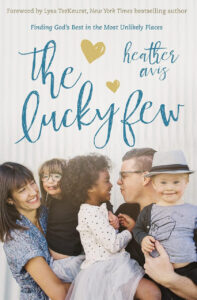
John: Yeah, and uh, just hearkening back to what Heather said um, there in that clip, “Step into the hard places,” now we’ve got ways you can do that. We’ve got ways to uh, make a difference through our Wait No More program as its called here in the U.S., Waiting to Belong in Canada. Uh, check those out and see how you can wrap around a family. Now Heather has also written a wonderful book about the journey she and Josh have had in foster care and adoption. It’s called The Lucky Few: Finding God’s Best in the Most Unlikely Places. Look for the resources we’ve talked about here at our website, FocusontheFamily.com/broadcast. Now, the conversation that we have for you today was recorded with Heather and Josh Avis a few years ago. And here’s how that discussion began on today’s episode of Focus on the Family with Jim Daly.
Jim: Heather and Josh, welcome to Focus on the Family.
Heather: Thank you so much. Just happy to be here.
Josh Avis: Thanks for having us.
Jim: Well, what an amazing story. Um, I always like to get a bit of background, you know. Jean, whenever I’m watching a sporting event on TV, she goes, “I would be so much more into this if I knew the people who were playing.” And so you’re the players and for the sake of my wife, I want to know more about you. And I think the listeners can connect with that in such a deep way. How long have you been married? What formed your marriage? And where did God play a role in just you two coming together?
Heather: Yeah. We just celebrated 15 years last month. And we met – so technically, the real story is I was 13 and…
Jim: When you met?
Heather: …When we met.
Jim: You didn’t get married?
Heather: No, no. I didn’t get married at 13, but I…
Jim: You’re going back to biblical things.
Heather: Yes.
(LAUGHTER)
Jim: That’s not, actually, normal today. OK. So you met at 13 because you’re neighbors or what?
Heather: So Josh is older than I am, and I have an older sister and he was friends with my older sister. They met…
Jim: OK.
Heather: …In high school.
Jim: She’s very proud of the fact, Josh, that you’re older than she is.
Heather: Yes, much, much older.
(LAUGHTER)
Jim: OK. So you’ve known each other when you were, really, kids.
Heather: Yes.
Josh: We grew up together.
Jim: That’s awesome.
Heather: Yeah, yeah.
Jim: That’s kind of rare today I would think.
Josh: Yeah.
Heather: It is. It is. And I just see God’s hand on us and I’m so thankful. So then we got engaged when I was 19 and got married when I was 20, and I just imagine any one of my children at the age of 19 saying “Hey, I’m going to get married.” I’m like, “I don’t think that’s a very good idea.”
Jim: I’m impressed that…
Heather: That feels very young, right?
Jim: …Impressed that you, actually, even – your parents let you drive at 19.
Heather: Right?
Jim: We’re trying to refrain our kids from even driving. But, no, that’s good.
Heather: So we just see God’s hand on it, that in the last 15 years we’ve grown together, closer. And we know the opposite could have happened and we consider God’s grace there.
Jim: So those first couple of years of marriage, was it all bliss and fun? Or what was happening?
Josh: I think so. Some people say their first year is hard. Ours was – um…
Heather: It was pretty fun.
Josh: Yeah. It was like an extended honeymoon. We actually got married the senior year of our college year. And after we graduated, instead of getting real jobs or going after grad school, we moved to Hawaii and spent six months in Hawaii.
Jim: Who had that idea?
Heather: It was both of us.
Josh: Yeah.
Jim: OK. For all the 19-year-olds listening, you may want to do that. That sounds like a good thing.
Heather: Well, there’s not very many times in life when you can say what next. And we had, really, no responsibilities. And so we did one way plane tickets, lived in Hawaii. We didn’t know how long it’d be. It was six months, moved back home, which is southern California for us. And then I got a job as a teacher working towards my teaching credential.
Jim: What age were you teaching?
Heather: Well, I was 22 when I got my first classroom and I was teaching seniors…
Jim: Seniors?
Heather: …In high school.
Jim: I was thinking maybe kindergarten because that’s the best year, right?
Heather: Right. No. It was – the question was how old are you always. And the answer was old enough to be your teacher always, but just barely.
Jim: Yeah, right (laughter). That’s fantastic. The typical theme, then, you’re married a couple years. You’re having some exciting times. You’re without kids yet, so you’re feeling a bit Footloose, right? And you can go to Hawaii for six months and kick around. What was your favorite island? Someone’s asking that through the microphone.
Heather: Oh, Maui forever.
Jim: Maui forever (laughter). There you go, in case somebody’s going. So Maui’s your favorite.
Josh: Shout out to Maui.
Jim: (Laughter) And – um – you start thinking about children, right?
Heather: Mm-hmm.
Jim: And what happened?
Heather: Um, we – yeah – we just decided it’s time to start our family. And we’d been married four years. And we had a really great first four years. Because we got married so young, we traveled a ton. I think we’re both very adventurous spirits. And we thought we’ll try to get pregnant and we’ll get pregnant. I think that the majority of people stepping towards parenthood think that.
Jim: It’s pretty formulaic, in other words, right? You get married and then…
Heather: Exactly. Yeah, there’s no reason for it not to happen for me.
Jim: Right. We even sing songs about that, right? First comes marriage, then comes love, you know, however it goes.
(LAUGHTER)
John: Obviously we don’t sing that song a lot.
Jim: I didn’t have to very good teacher. I needed a better teacher. But that is – there’s a rhythm to that.
Heather: Exactly.
Jim: And so you guys are expecting it’s going to happen for you, but it doesn’t.
Heather: It doesn’t. Right. So a few months turn into more months, turn into years, and we just find ourselves on that grueling path of infertility.
Jim: Heather, you expressed in the book, I think beautifully, a couple of instances where, really, I guess, put a spike through your heart. One was with a student who came to you and had some serious – a serious situation. And even getting involved with that kind of was a – kind of a double-edged sword for you, right? What happened?
Heather: Yeah, definitely. Yeah. I’m sure people were getting pregnant before I was trying to get pregnant…
Jim: Yeah, right (laughter).
Heather: But in that season, it really felt as though everyone around me was pregnant. Um, it was unbelievable how many people we knew who were pregnant. And every time we found out, it was just like a little bit of a stab in my heart, even when it was people I loved very dearly, which, including my sister got pregnant at that time when we were trying so hard. But the kicker was always a student. And I had this idea in my head that I had done everything right – um – that I had made the right choices. I had gotten married first. We had a really healthy marriage. We were establishing careers. Uh, we were doing all the right things…
Josh: We had a plan.
Jim: Faithful to God.
Heather: Faithful to God, yeah. And it was – the fair thing was next we get pregnant and it should happen very easily because that’s fair, right? And so then when I would have a student – I had one girl who was just like a – she just had a chip on her shoulder. She had had a really rough upbringing. And I had kind of taken her under my wing during the school year and she came to me during my planning period just in tears. And she just said, “Mrs. Avis, I’m pregnant and my parents are going to kill me. And I didn’t think I could get pregnant because I already had an abortion.” And she was 15.
Jim: Oh, my goodness.
Heather: And it was just like oh, my word. And so she’s crying and I’m crying, partly for her, but mostly for me. Like how is this possible, God? This girl’s pregnant? This one here? Really?
Jim: And that’s so honest. I love that, in your book, the way you express that because it’s very human.
Heather: Yeah.
Jim: But you’re sitting there consoling this 15-year-old thinking how could she be a mom, I’m sure. Lord, I’d be – I’d be the good mom. Why am I not getting pregnant? Before I move to you, Josh, to talk about the husband in this moment, one other question for you in this regard, Heather, is your relationship with the Lord. Did you have some bitterness or did you have a discussion with the Lord? That, Lord, I don’t know why.
Heather: Right. Yeah, lots of…
Jim: Come on. I’m a good person.
Heather: …Lots of discussions.
Jim: Kind of this quid pro quo. And so much of the church, we’re trapped in that a bit, you know, that we think that if we do these things, Lord, you do this. That’s not the formula, is it?
Heather: It’s definitely not. And there were lots of moments. There were lots of shaking my fist at God, hysterically crying, just totally angry moments. And – um – I feel like the ultimate lesson that God really impressed on my heart in that season – and I grew up in the church – this idea that God is God, period. It seems real simple, but just this idea that His goodness and His faithfulness and His love for me do not hinge on my ability to get pregnant or not. They are what they are. God is God. And so to hold that truth – you have to be in this place where I’m going to hold that truth real tightly and I’m going to be really angry and frustrated and it has to be both and. And it’s an intermingling of all these emotions that feel like they’re conflicting, but God’s grace is so much bigger than that. And I really felt like He met me – I can look back and feel like He met me only with gentleness and grace – almost like this arm around me knowing it’s going to be OK. But He’s also not going to be the person that’s like, try this and I’m praying for you. It’ll be OK. Just the arm, just…
Jim: Just the arm…boy, that’s well said.
Heather: Just the arm, you know, like, just this is hard. Here I am. I am God.
Jim: So Josh, being the husband, I’m sure you’re thinking OK, here we go. This will be great. What was the emotion like for you finding out that you can’t have children as a couple?
Josh: It was – Heather mentioned earlier that we have been blessed and there’s been grace upon us as we got to grow together. So it was a time where we really leaned in to each other. And…
Jim: So it didn’t tear you apart?
Josh: No, not at all. And I felt that the arm that Heather’s describing in a way that showed up. And I remember sitting in our kitchen – we had this little, tiny mountain home. And I remember it was – as if he – God was saying to me what’s next is better. I have something for you. For whatever’s coming next is going to be far better than this. But it was really hard to keep saying that to Heather. And sometimes it would just come across as – we’re just gonna – the solution is coming, and she didn’t want to hear that. Sometimes it wasn’t words. And – but I – I rested in that God had this firm foundation that He had given us that this – something better’s coming. And I have such a distinct memory of sitting in the kitchen and saying that to her and truly believing it. But there was a lot of other conversations where it was – it was – you just had to sit in it. And I would just say – um – to a lot of the husbands out there that suggestions and solutions aren’t going to be helpful right now. Just sit in it – sit in it with your wives, sit in it.
Jim: Well, yeah. And Heather, that had to be, I mean, I know discussions I’ve had with Jean when I’m saying, “Here’s what I think the Lord’s telling us,” and she’s not thinking the same way (laughter). You know, that can be a hard conversation in your marriage. How did you manage that when Josh was saying something better’s coming when you’re feeling like you’re at the bottom? How can you say that?
Heather: Yeah. No, that’s how I managed it. How do you – how can you think that (laughter)?
Jim: I can hear it!
Heather: Why would you say that? That’s not – I don’t want to hear it. Um, but again, it’s just – I keep going back to the grace piece of it because I wasn’t, like, this great, holy person. I was angry and frustrated and bitter and I didn’t want to hear it. And that’s OK. I feel like it was OK to be those things and to feel that way. And there’s another side to it. And I got to the other side of it, and I could look back with – um – fresh eyes and good perspective. But you just – there’s just not an easy way out of hard things you, know. And infertility is one of those – there’s lots of hard things people go through. But there’s just not an easy way out. You’ve got to be in it. And God’s grace is sufficient for all of your bitterness and anger and resentment and it’s seasonal.
Jim: Boy, it is. And you never know at the beginning that that is true…
Heather: Yeah.
Jim: …Until you get there and then you realize it is.
John: Well today we’re hearing on Focus on the Family with Jim Daly, from Heather and Josh Avis. And Heather has written a book about their family journey. The title is, The Lucky Few: Finding God’s Best in the Most Unlikely Places. Get your copy when you call 800, the letter A and the word FAMILY. 800-232-6459. Or stop by FocusontheFamily.com/broadcast. Let’s continue now of the conversation. I asked Heather and Josh if they had any kind of support from other couples as they were struggling with infertility.
Heather: That’s a great question. No one’s asked me that before. And looking back, it’s such a foggy time. I think – um – like, my memories are people saying things like we tried for a year or we tried for two years or we tried for five years and got pregnant in an encouraging way, but that was the most discouraging thing someone could say to me because a year in trying to get pregnant, it’s like dog years. You’re like, wait a second, I think that’s a hundred years, at least, is what that feels like. So I don’t know that we did have – we had lots of people being prayerful. We had lots of great support. Our family was really supportive. We had wonderful pastors who came alongside really gently and just lifted us up in prayer and let us know they were doing that. But in terms of someone who had gone through it, no, but also because we were very young and not a lot of people we were doing life with were…
Jim: Were in that spot, yeah.
Heather: … struggling with infertility, yeah.
Jim: It was happening, which had to, again, put a load on you emotionally. Everybody else is being blessed, why are we not?
Josh: Just relax. Just relax. It’ll happen.
Jim: I can feel that…
Josh: Go shopping or, yeah, there was always a quick answer.
Jim: So how many months or years do you move through this part of the trying and the tears and, you know, just the realization that maybe it won’t happen for us? How long did that last before you started thinking maybe there’s another way to go?
Heather: I think it was about two years, right? It was about two years of trying to fix it, trying to make it work. And we never went as far as in vitro fertilization. Um, but we tried everything else and got to a point where – um – I had had a test done that affected my body really negatively and my OB-GYN just saying, like, I think that’s it, basically stamping me with infertility, and the only way you’re going to be able to conceive is through IVF. We could try that, was it.
Jim: That was your last option.
Heather: That was it. And we knew that that wasn’t going to be a road that we were going to travel down. So that really felt like OK, that’s it. Now what? Because my desire to be a mom was still very much there.
Jim: So let’s turn the corner, though. This is where you begin to think maybe adoption is an option. How did that idea start within the two of you?
Josh: Yeah. Well, we always thought about adoption, but what we – what we thought we were going to do – we go back to that plan – was we’ll have our own biological kids and then we’ll adopt. And so with Heather teaching in the special ed and in – she worked with a community of kids that were just amazing and had – some of the kids were in foster system, some of the kids – um – we had seen that and then we – so we just thought we’ll do – we’ll have our own kids and then adopt. And so then…
Jim: Sounds like a good plan.
Josh: …Here we are. So, yeah.
Heather: So we were at that crossroads. And it was there – we knew we wanted to be parents. We knew we were going to grow our family. So IVF or adoption, that was, really, the only way that was going to happen. And IVF wasn’t an option, so it was adoption. And – um – I think there were a few weeks that we were doing – we were mourning and then I think that I was ready to adopt before Josh was. I remember being online – and this was 10 years ago, so things are very, very different – but Googling international adoptions and trying to figure out which is the fastest, like what is the fastest way I get a baby in my arms.
Jim: Wow. Yeah, no, that’s fair.
Josh: We wanted a baby. Give us a baby.
Heather: Yes.
Jim: I get it. Some might go whoa, but I get it.
Heather: Yeah. And so we – I think I was ready, maybe, a month or so before Josh was. And so we’re like, OK, let’s do this, let’s adopt. Now what? And we didn’t know anyone who had adopted 10 years ago, not one person. So we’re asking around and it turns out one of my – I was a teacher – so one of my teachers aide’s son had adopted. And she said why don’t you have dinner with them? And this is a couple that loves the Lord fiercely and – um – just, like, exude Jesus. And so they invited us to their home. Total strangers, said yeah, come on over. We’ll answer any question. And we go to their home. And they open the door. And there’s these two rowdy boys running around the house. And – um – I don’t know what we were expecting, but when we left, we left realizing this is just a family.
Josh: Yeah.
Heather: Like, wait, what we just experienced was family (laughter).
Jim: That is a beautiful statement. Really. That is probably one of the most beautiful things I’ve heard about adoption. It’s just a family. That’s choking me up. So that’s great. What’s next? So you walk away from that evening with your new friends and they’ve, probably, encouraged you that adoption is a good thing. What’s the next step?
Josh: Uh, well, we asked them a ton of questions, and so they started pointing us in direction. And so I think we still create a plan out of what we were going after. And so part of that was, well, if we can go after a private adoption agency, at least we’ll have some control over age and –
Heather: Health.
Josh: Yeah – and the health of the baby…
Jim: You can check the boxes.
Josh: Yeah.
Jim: For those that don’t know, we’ve done foster. So you have a list of things that seem…
Josh: All these options.
Jim: …Bizarre, actually.
Heather: It’s wild. It’s very bizarre.
Jim: You know, would you accept head knocking children…
Heather: Yup.
Josh: Yup.
Jim: … children that set things on fire. I mean, it’s an interesting…
Heather: It is a very…
Jim: …Process.
Heather: …And a very interesting concept to get to check the boxes.
Jim: So you were checking all the boxes that said healthy.
Heather: Yes.
Jim: …well adjusted.
Josh: A healthy newborn baby.
Heather: We wanted a newborn. So, yeah, as little as possible, preferably day one. I’m in there for the labor and delivery (laughter). Like that’s the dream.
Jim: And that’s a good thing. I mean, it’s a natural thing.
Heather: Sure, sure. And we’re first-time parents, too, so we just didn’t know. And first time – we were just dipping our toes into the adoption world and trying to understand God’s heart in adoption. And when we started down the adoption path, our goal was grow our family, not know more about the Lord, not see His heart for orphans. None of that. It was all selfish, just I’m going to grow my family.
Jim: I’m so glad to hear that because when I read your story, you two stand next to the Lord, in terms of extending your home and your love and your parenting to strangers, I mean, in the beginning. Where did you go? How did you do your first adoption? What motivated you to adopt the child you adopted?
Heather: Yeah. So we end up at this private agency, the family that we had had dinner with us, who invited us in their home, was the agency they used. And it’s in L.A. And while private adoption is expensive, they’re a little more affordable. And we want that healthy infant. And so we did the whole process, checked off the list and we end up – um – leading our – a group in our church on a trip to Romania to do a summer camp for youth in Romania. And it had been our third summer, and so we’re so excited about this, but at the same time, I’m wanting this phone call so that I’m not going on the trip, like I’m waiting until the night before. Please call me. Because when you’re in – people who are waiting, adoptive parents know that a call comes and, usually, it’s that day, sometimes you have a weekend, maybe a week – right? – to prepare for this baby and you drop everything, your life changes. But you can’t live that way when you’re in the process, at least, we found that you had to move forward with life, live life normally as you could, but ready to drop it all. Anyway!
Jim: No, I get that. I mean, you got to hold it loosely.
Heather: Yes. You got to hold it loosely. And so I send my social worker a little email. Hey, we’re going to be out of the country just so you know if we don’t answer our cellphones or don’t check email. Go to Romania, spend this week at this camp. It’s amazing. God’s doing awesome things. We go to our hotel room…
Josh: You asked her how it was going.
Heather: Oh, in the email I said how are things going. She emails back. And we open it. I’m in Romania. I open up the laptop. And I see an email from her and my heart drops – any time I see her name my heart drops, like, where’s my baby. And then I remember she’s just replying to my email. So she says something like, thanks for letting me know. Things are really slow. We have a couple of babies with Down syndrome placed in with our agency. It’s always hard to find placements for them. Your profile’s been viewed once. Hang in there, love her name. And instantly God did something in my heart – um – when I read those words babies with Down syndrome, and it was instantaneous and it was – I was not excited about this. I wasn’t like yes Lord, let’s step towards this, it’s like no, no, no, no, no. And I got down, and our team was waiting for us, we were going to go to dinner, and I – and, like, Josh and I lagged behind. And he’s like, what’s going on? I tell him. And I’m waiting for him to say oh, no that’s not what we’re going to do. And he goes yeah, I think we should pray about that.
Jim: Can I ask you a tough question? Were you hoping he would say “What? No, let’s not do that?”
Heather: Yeah. I was hoping that he’d say no, we’re not waiting for those babies. Like, she’s just telling us that happened so we’ll wait for our baby.
Jim: And Josh, I got to ask you, I mean, what – why did you respond with what you responded to? A lot of couples listening to us now are going why? Why would you do that?
Josh: I mean, I’m getting choked up hearing her talk about – these are my kids, so just hearing her explain it that way – um – it gets me choked up. I think – uh – I’m just a firm believer everything happens for a reason. And so if this was the reason we were going and this is the direction we’re going, then let’s step in that direction, so yeah.
Heather: Yeah, I think a lot of people look at our story – so there’s these two little girl with Down syndrome and the short of it is – we adopt one of these children with Down syndrome. And from the moment we read that email to bringing our daughter home, it was mostly us saying no or us saying I don’t think so, but we’ll keep stepping this direction. And so we weren’t these amazing holy saints. We were fighting what God had laid before us, fighting against it and God kept meeting us with OK, let’s keep moving forward. All right. That’s nice. Let’s keep moving forward.
Jim: Well, and I so appreciate that honesty. And we are at the end of this day, but I want to come back – I mean, people are going what, you can’t stop now! But I want to come back and really understand your heart, your relationship with the Lord, what He was speaking to you because I think a lot of people, even believers, this is a tough decision. But it’s an awesome decision if those two can go together. And I so respect what you have done. But I’ve got a ton of questions. And we want to hear about how things have grown. You now have a family of three. So let’s come back next time and pick the story up right here where you’re adopting your first child who has Down syndrome. Can we do it?
Heather: Yeah, let’s do it.
Jim: OK. Let’s do that.
John: Well today on Focus on the Family with Jim Daly, we’ve been hearing from Josh and Heather Avis about their remarkable journey from infertility to adoption. And they’ve captured their story in Heather’s book called The Lucky Few: Finding God’s Best in the Most Unlikely Places.
Jim: John, what I love about this couple is how they kept listening to the Lord, even when He seemed far away. Have you ever felt that? I mean I have. They didn’t give up. They kept trusting that God knew what was best for their family. Do you have that same kind of trust? Are you willing to follow the Lord’s leading into something that’s unfamiliar and beyond your comfort zone? That’s a challenge. It’s my prayer that today’s program is motivating you to get involved in some way. Especially in what the Bible calls “pure religion” out of the book of James — caring for widows and orphans. One way you can do that is through our Wait No More program here at Focus on the Family. What we’re looking for are Christian couples who will consider foster care or adoption. Or even “respite care,” where you bring children into your home for a day or two to support and give those foster parents a little break. That’s something my wife Jean and I have done quite a bit.
John: Yeah, and that is so laudable and so difficult at times, right? I mean it really is a messy kind of commitment that you make. But when you do that, you are serving those orphans. Another way to help is by kind of wrapping around those families who are doing foster care or adoption. Just do simple things like grocery shopping, or help them with yardwork or housework, or invite them in to your family – bring that mess into your own family. We’ve got details about Wait No More and how you can get engaged and Heather’s book, The Lucky Few, at our website. Make a donation of any amount to Focus on the Family today, and we’ll thank you for your partnership. We’ll send a copy of The Lucky Few to you for your own benefit or maybe to share with a small group or in your church.
Jim: We need to mention also what these donations are paying for. According to the research we do every year, about ½ million families in the last 12 months were willing to investigate foster care or adoption, and how they might get involved. That’s amazing! I’m so grateful for the generosity of friends who help make ministries like Wait No More possible. Can I invite you to participate as well? Send a gift to Focus on the Family today. Or make a monthly pledge — anything and everything helps. Let me just add, if you’re the one person in your church that has an eye on this, just rally some people around in the church to get around that adoptive couple or that foster couple that might be in your church. Ask that question. Are they among us and how can we help them?
John: Yeah, appreciate that Jim. Well, donate, get a copy of Heather’s book, and learn more about how you can get engaged all at our website. Again, that’s FocusontheFamily.com/broadcast. Or give us a call 800, the letter A and the word FAMILY. 800-232-6459. And then one final resource we want to point you to is our free “Special Needs Parenting” audio collection, more than 5 hours of encouraging content for parents who are really stepping up and raising kids with special needs. We urge you to check it out at our website or in the show notes. And on behalf of the team, thanks for listening today to Focus on the Family with Jim Daly. I’m John Fuller, inviting you back next time as we continue the conversation with Heather and Josh Avis and once again help you and your family thrive in Christ.
Day Two:
Preview:
Heather Avis: Instantly, God did something in my heart, um, when I read those words, babies with Down Syndrome, and it was instantaneous. And it was, I was not excited about this. I wasn’t like, “Yes, Lord, let’s step towards this.” I was like, “No, no, no, no, no, no.” And like, Josh and I lagged behind and he’s like, “What’s going on?” I tell him, and I’m waiting for him to say, “Oh, no. That’s not what we’re gonna do.” And he goes, “Yeah, I think we should pray about that.”
John Fuller: And that’s Heather Avis remembering a significant turning point in her marriage and family. And you’ll hear more from her and her husband Josh today on Focus on the Family with Jim Daly. Thanks for joining us. I’m John Fuller.
Jim Daly: You know, last time, we featured a great conversation that we recorded a few years ago with this remarkable couple. Heather and Josh described their torturous years of infertility, wondering where God was and why He wasn’t answering their prayers for a baby. Uh, then the Lord revealed a different path for their family, the path of foster care and adoption. Heather and Josh were willing to embrace that, and now they have three children they’ve adopted, two of them with Down Syndrome. And you know, John, some of my heroes are parents who are raising children with special needs, especially when you are opting in to take care of those kids. That can be a challenging job. And my heart goes out to you if that’s your story. Uh, here at Focus on the Family, we want to encourage you any way we can. One great resource we have is our Special Needs Parenting audio collection. This collection features some of our best programs and stories from parents just like you, over five hours of inspiring content, and I know you’ll find it helpful. Best of all, it’s completely free. Contact us if you’d like to learn more.
John: Yeah, you can sign up for that collection at FocusontheFamily.com/broadcast, or call. Our number is 800, the letter A, and the word FAMILY. We also want you to know about the book that Heather Avis has written capturing their remarkable story. It’s The Lucky Few: Finding God’s Best in the Most Unlikely Places. Check that out on the website as well. And now here’s part two of our conversation with Josh and Heather Avis on today’s episode of Focus on the Family with Jim Daly.
Jim: Heather and Josh, welcome back to Focus.
Heather: Thank you so much.
Josh Avis: Thank you. It’s an honor.
Jim: It was, it was so wonderful last time, uh, you spoke so, uh, boldly, so transparently, and I’m sure, I know listeners connected with where you are at, what you have walked through, how God has, um, sustained you. And again, John, if people miss that, I would get that through a download or just call us, we’ll get you the CD, whatever we can do. But it was really inspiring, and that’s a big word to use. Um, I want to continue on, we dropped off last time where you had been working with an agency. You had just taken the trip to Romania, missions trip. The agency had texted you or emailed you saying, “We have two kids, but they both have Down Syndrome. It’s hard to place Down Syndrome children.” But right at that moment, you kind of thought, okay, maybe.
Josh: Mm-hmm.
Jim: I do wanna say, um, it’s almost angelic (laughs). I mean, most people would say, “I can’t carry that burden. That’s too much for me. Lord, the Lord will know. I’ve got so much that’s going on.” Um, how did you process that? How did you say, “I could do this.” You’ve only been married four years, you’re young in your mid-twenties.
Heather: Mm-hmm. Yeah.
Jim: This is gonna be a load. This isn’t just, you know, normal parenting.
Heather: Yeah, definitely.
Jim: How?
Heather: Um, God would kept nudging us along the way. We had a week left in Europe that Josh and I just did together and went to Greece, and we spent that entire week, the majority of our conversations were around this idea of adopting a child with Down Syndrome. And, um, Josh would make lists, pros and cons lists. I’m not that organized in the way that I think-
Jim: (laughs).
Heather: … but Josh is, and he would do lists. I got pros and cons. And, um, what it really came down to is, as people who love Jesus and who desire to have a heart that beats like his, not one of the items on the con list was a good enough item to say no to being parents to a child who needed parents. That at the end of the day, there was a baby who needed a mom and a dad. We were a mom and a dad. That was it, and that’s enough, and that’s enough. And I think that’s a huge piece of adoption is at the end of the day, there’s a child who needs a family. You can be a family and that can be enough. Um, we moved forward in that way, and even after saying, “Okay, yes, let’s learn more,” we got home from Europe called the social worker, it’s a very long story, but we, even in that moving forward, it was like, okay, it was a roller coaster. We’re so excited we got this. And then an hour later, no, no, no, no, we cannot do this. What would this look like for our life? This is terrifying. This is overwhelming. We’re not equipped. And then the next day, okay, we can do it. We can do it. So it wasn’t just a seamless…
Josh: Yeah.
Jim: No, and I appreciate that. So that vacillation, did it come from both of you, or was it one of you predominantly that you, you were retreating after going forward? Or was it a shared kind of thing where depending upon the day-
Josh: Yeah.
Heather: Mm-hmm.
Jim: Josh, you were saying, “Honey, come on. Really?”
Josh: Yeah.
Heather: Mm-hmm.
Jim: And then the next day, it was you (laughs).
Heather: Yeah.
Jim: I mean, that’s completely natural. I understand this.
Josh: Yeah.
Heather: Yeah. For sure.
Josh: Yeah. I, I, it was definitely a process for sure. It was up and down. I, I think it was a, a lot of hard conversations where I would pull her up or she would pull me up or you would try to convince the other or… And even hard conversations with family to be honest and hard conversations with our support around us saying, “Are you sure about this?” And so it just-
John: Were family members saying, “Hey, don’t do this.”
Josh: I think they were just protective of us.
Heather: Right. No one ever flat out said, “Don’t do this.”
Josh: Yeah.
Heather: But it was a lot of like-
Josh: Like, “Oh.”
Heather: “Okay, tell us more. Why are you doing this?” Um, I have always been like a cheerleader for the underdogs since I was really little, like, since my parents can recall, and since I can recall. I’ve had this heart that breaks for the broken-hearted. And so my mom, I think, was worried that I was trying to rescue, that I was trying to do this big noble thing and rescue this poor, poor child and, and that my intentions maybe weren’t gonna be healthy in the long run for me. And I’m her daughter, you know? So she’s looking at me as her daughter-
Josh: Yeah.
Heather: … like, how, what is this gonna mean for your life? And so I did have a conversation with my mom, um, where I decided to say, “Hey, Mom, you have to trust who you raised me to be, who God’s made me to be and what he’s calling us to in this. I need you to just trust right now.”
Jim: Did the question… Did you appreciate the question for solidifying the decision you already had in your heart? Was there any appreciation for your mom’s forcefulness with that?
Heather: Oh, absolutely. Yeah.
Jim: I mean, I could see myself as a dad-
Heather: Yeah.
Jim: … of, of a now 17-year-old-
Heather: Right.
Jim: … in a few years, he might make that decision. I might ask that question.
Heather: Right.
Josh: Yeah.
Jim: In part, just to make sure that my adult son or daughter-
Josh: Yeah. Yeah.
Jim: … really has counted the cost.
Heather: Right. Yeah. And so, and I think that’s also why we went to our parents and went to our people who we could love and trust, ’cause we needed-
Josh: That support.
Heather: Yeah, that support, and, uh, the different perspective. We needed people to be pushing back, ’cause it was a big decision for us.
Josh: Yeah.
Heather: And we, I was 27 years old, you know?
Josh: Yeah.
Heather: And it was a big decision because I, we also, at any given time could have said no, firmly and officially, and then probably within a few weeks been receiving a phone call for this healthy infant we’ve been waiting for.
Josh: Yeah.
Jim: Sure. It, it let me… This just, the thought came to me. Do you think either of your parents, did they think, what are we being pulled into here when we have to babysit-
Heather: Right.
Jim: … and caretake? Was there any of that consideration that you’re aware of?
Heather: I’m sure. Sure.
Jim: I mean, I hadn’t thought about that-
Josh: Yeah.
Jim: … but that would be a normal grandparent in question here.
Heather: Right. Yeah. I think there is a lot of people’s first reaction is what does this mean long-term? Like this, what are you gonna do with this child when you’re gone?
Josh: Right.
Heather: Who’s taking care of this child as an adult? And things are very different now in the Down Syndrome world, that narrative’s really changing significantly. That’s a whole other topic. But definitely-
Josh: Mm-hmm.
Heather: … I think all of, everyone in our family was like, “Okay, this has huge implications on the entire family,” because it does. You know?
Josh: Yeah.
Heather: And even my… I have an older sister who had two kids at the time, and thinking of my, our future daughter’s cousins and that there’s, there’s no burden or pressure on anybody. But if the day comes that no one-
Josh: Yeah, yeah.
Heather: … can care for our daughter and she does need extra care-
Josh: Yeah.
Heather: … is it my nephew and niece, you know?
Josh: Yeah.
Heather: Like, that everyone here is affected. And before that child enters our lives, a child with Down Syndrome, I think that it is this idea of this is, this is a lot, this is heavy, this is too much. And then enter said child and everyone’s tune changes almost instantly to like, “Oh no, I get her, I get her, I get her.”
Josh: Yeah, yeah.
Heather: Like, this battle over that.
Jim: Well, I… I have a smile on my face ’cause I know the kids are with the grandparents right now.
Heather: Yeah (laughs).
Josh: Yeah, yeah.
Jim: So that’s proof in the pudding.
Josh: Right.
Jim: You know, um, some people, Heather and Josh, may not even understand the diagnosis of Down Syndrome.
Heather: Mm-hmm.
Jim: Um, they hear it and we’ve heard it in the news lately. There’s some things that have happened in other countries. Um, what are the obstacles? What are the hurdles? What does a Down Syndrome child display?
Heather: Mm-hmm. Yeah. So Down Syndrome is just the, um, 21st chromosome. They have three 21st chromosomes. So everyone with Down Syndrome has one extra chromosome.
Josh: Right.
Heather: Um, so it’s called Trisomy 21. So that’s the scientific-
Josh: Medical.
Heather: … description. Medical, I don’t know. And the thing that with Down Syndrome is there are some similar characteristics. So often it’s like there’s physical, so like an almond-shaped eye, usually a little bit smaller in stature, flat face, like a flatter nose. Um-
Josh: Low muscle tone.
Heather: Low tone is very common.
Josh: Yeah.
Heather: And some kind of an intellectual disability. And then there can be heart defects. Um, I think it’s about 60% of kids with Down Syndrome born with a heart defect, and hearing problems, vision problems, um, higher likelihood for leukemia, higher likelihood for Al- Alzheimer’s. So those are all characteristics that are terrifying, right, on paper. Um, I think that we forget as people that when you’re giving birth to a child who has no special needs, that a lot of those are the same risks as they get older. Right? Like, there are, if you’re gonna look at, there’s all these possibilities for this child who’s totally healthy at birth, they could also have any one of these things.
Josh: Yeah.
Heather: Not, not necessarily that, the same for Down Syndrome.
Josh: Yeah.
Jim: Um, now let’s move through that story a little more.
Heather: Sure.
Jim: Because you didn’t stop there. This is number one.
Heather: Right.
Jim: What happened? What’s it like bringing Mason home night one, week one?
Heather: Oh, gosh. Yeah.
Josh: Oh my gosh.
Jim: Month one, year one.
Josh: Yeah.
Heather: I mean, we have to… Right. We have to back up a tiny bit that when we first, so we, we say, “Yes, we wanna move forward with possibly adopting a child with Down Syndrome.” And then the social worker says, “Oh, okay. Well, one of those babies was placed and the other one is, so we just found out all these medical needs. We’re not looking at placing her.” And we recognized later that they thought she wasn’t gonna live. They thought, they had just-
Jim: So they’re protecting everybody?
Josh: Yeah, yeah.
Heather: Yes. They’re protecting their adoption-
Jim: She wasn’t an option.
Josh: Sure.
Heather: Um, they had just discovered this lung condition called pulmonary hypertension and that her heart defect was more severe than they had recognized. And at six weeks old, which is when we had found out about her, she was gonna go in for a heart surgery, not open heart, but like a-
Josh: Right.
Heather: … a very serious heart surgery to help prolong her life. And that’s where we had called and said, “We’re interested.” And they’re saying, “Oh my gosh, we don’t know that she’s gonna live through the surgery,” but they’re not telling us that. So we hang up the phone and go, “Oh my gosh, what if we don’t get a kid with Down Syndrome?”
Josh: Yeah.
Heather: And we recognized that God had done a complete-
Josh: Yeah.
Heather: … shift in our hearts in that regard.
Josh: Mm-hmm.
Heather: And then we went along our lives. And a month later they call and say, “Hey, that little girl we told you about went through a surgery. We have a better grasp on her health. Are you still interested?” We said yes, and we go in, learn more about her. And all of a sudden, Down Syndrome is a back burner issue because she’s on medication, she’s on oxygen 24/7, her lung condition is so severe that they don’t know how long she’s gonna live. And we’re just like, “Ah.”
Josh: Very-
Heather: “What are you doing, Lord?” It was very frustrating (laughs), and-
Josh: It became a baby with, uh, with this very medically fragile-
Heather: Right.
Josh: Right. Yeah.
Heather: And so now we’re not just saying yes to Down Syndrome. We’re saying yes to, we don’t know, like a list.
Jim: But you’re pressing ahead.
Heather: Right.
Jim: Some of us are shaking our head.
Heather: Oh, I know. No, we were shaking our heads and still moving forward, so.
Jim: (Laughs) You’re shaking your head and pressing ahead.
Heather: Right. We didn’t wanna say yes, but we knew no wasn’t the answer. So we kept taking steps forward. That’s what that looked like for us in that moment.
Josh: Yeah.
Heather: And I think when I talk to a lot of people who say like, “How do you move forward when things are so scary and things are so challenging?” And I, for us, it was one foot in front of the other, literally like, I’m gonna lift up my foot. I’m gonna put it down. I have no idea where my second step is, and I don’t have to know that.
Josh: Mm-hmm. Yeah.
Heather: I just have to know this one.
Jim: You know, I wanna just bring in some of the statistics, because it’s so important. 70% of babies that are, um, in utero that are diagnosed with Down Syndrome are aborted.
Heather: Yeah.
Jim: I mean, 70%.
Heather: Yeah.
Jim: I know there’s been, as I mentioned before, a lot in the news about Iceland and other countries now that almost a hundred percent-
Heather: Right.
Jim: … are aborted. Um, this kind of turns that all on its head-
Heather: Hmm.
Jim: … because some of the most powerful comments that I heard is that why are we discriminating against children that just have some different physical attributes? And they are impaired in different ways, but they’re still human beings-
Heather: Mm-hmm.
Jim: … made in the image of God-
Josh: Yeah.
Heather: Right.
Jim: … that need protection. As parents who have adopted Down Syndrome children, what does that make you feel like when they are talking about eradicating Down Syndrome by aborting everyone who’s diagnosed with it?
Heather: Yeah, it makes me feel, at first it’s like, wait, what?
Josh: Yeah.
Heather: That doesn’t make any sense. Like, why would you do that? Um, because they’re the best. And then it’s infuriating and then it’s a little bit terrifying-
Josh: It’s disgusting.
Heather: … for our humanity as a whole, like that as humans, we’re okay or we’re wanting to live in a world where everyone is perfect with air quotes or, um, doesn’t have different abilities. And, and then you can go more concentrated as the church and say, “Okay, if, if people with different abilities are being formed in their mother’s wombs, created in the image of God as they are,” right? So then if they are image bearers of God, we’re missing out on a huge piece of God if we’re not willing to do life intimately with them.
Jim: Yes.
Heather: Or let them live it all.
Josh: Amen.
Jim: And Heather and Josh, the statement here, this is not a political statement.
Heather: Right.
Jim: This is the condition of humanity.
Josh: Yeah, yeah.
Heather: Yeah.
Jim: This is something that is in us.
Heather: Right.
Jim: How do we treat one another?
Heather: Right.
Jim: Do we do that by simply killing them?
Josh: Yeah.
Heather: Yeah.
Jim: I mean, it seems… And you’ve gotta be somewhat intimidating to that community who wants to eradicate Down Syndrome. I mean, for you to say, “No, we will love these children.”
Heather: Yeah.
Jim: “We will take these children in. God has given me a purpose in doing this.”
Heather: Mm-hmm.
Jim: They must go, “What?”
Heather: Right.
Jim: It’s gotta be an, an anathema to them.
Heather: Definitely. And I think that the majority of people who are in the world in which they’re choosing to eradicate Down Syndrome are people who are not doing life with Down Syndrome. I don’t know this for a fact, but I could just, I wanna say with a lot of confidence that chances are these people do not have a loved one with Down Syndrome, and the decision is being made purely out of fear and ignorance. Um, and so I-
Jim: Mm-hmm.
Heather: It’s not even a pro-choice, pro-life issue with this, what’s happening with the Down Syndrome world and community. It’s an idea of are people with, with Down Syndrome human? Are they worthy of life? Um, are they worthy of acceptance? And in the church, again, are they image bearers of God? Do they have giftings and talents like the rest of us? Can we see God in them? The answer is yes to all those questions. So people are deciding to terminate a pregnancy based on fear and ignorance, so then giving birth to that. So every time a child with Down Syndrome is terminated, we’re just giving birth to more fear and more ignorance and then living in that. So yeah, I hope that community, those people are intimidated by me (laughs).
Jim: No, it’s beautifully said.
John: That’s Heather Avis, and she intentionally became the mom of two children with Down Syndrome. And, uh, today on Focus on the Family with Jim Daly, we’re featuring a conversation we recorded a few years back with Heather and her husband Josh. Uh, Heather’s written the book, The Lucky Few: Finding God’s Best in the Most Unlikely Places. As you can tell, it’s really inspirational. And so we hope you’ll get a copy when you call 800, the letter A, and the word FAMILY, 800-232-6459, or, uh, stop by FocusontheFamily.com/broadcast. And let’s, uh, continue with the conclusion of our conversation with Heather and Josh Avis on today’s Focus on the Family with Jim Daly.
Jim: Heather, I’ve gotta ask you, ’cause I know every mama’s heart is out there saying, “Where is Macy at today? What’s happened? Is she doing well?”
Heather: (laughs).
Jim: Right?
Heather: Right, right.
Jim: Okay. So answer that question.
Heather: Yeah, I know. I will answer that. And you, and I’ll go back just a little bit, ’cause you had said, “First days at home, first week’s at home, what’s it like?” And so we say yes to this child. It’s terrifying. We bring her home oxygen and all, and, and there’s a baby in my arms.
Josh: Yeah.
Heather: I’m a mom and it’s the most incredible life-giving experience of my life. And so there we are, parents, it’s all we know. We don’t know any different. Um, the next day, our very first day as parents, we go and meet with her surgeon to schedule open heart surgery. So, hello, welcome to parenthood. And then a month later, she has open heart surgery. It goes great. Two years later, she’s miraculously cured from this lung condition and off oxygen and all medications. And so we are now front row seat to miracles, seeing God’s goodness, like this gift to get to experience that in and, and see God in that way. And so we just held this child like, oh my gosh, this is the best yes we’ve ever said. We’ve never, we never would’ve known God so fully had we not taken this big risk. And today, she’s nine. Um, currently, she has a cold, so that’s a bummer (laughs). But she’s doing great. She’s amazing. And-
Josh: She’s thriving.
Heather: Yeah.
Jim: That’s good.
Heather: Health-wise, we see cardiology and pulmonology every two years. We go in there like, “She’s great. Get outta here.”
Jim: (laughs).
Heather: And-
Jim: That’s what you want to hear.
Heather: Yeah.
Josh: Yeah.
Heather: No other health issues.
Jim: Josh, you were feeling this emotion, man.
Heather: (laughs).
Jim: Your eyes are all watery.
Josh: This, this story still gets me choked up. Yeah, it’s, I mean, we, you just see we serve such a good God and-
Jim: Wow.
Josh: … He loves us so much. And so we got a front row seat to see, um, this miracle baby. And you know, we just celebrated her ninth birthday. And I remember when we talked to her cardiologist early on, um, and he said, “This lung thing is really scary. We can do the heart surgery, but um, you know, we can’t guarantee that she’ll live past eight.”
Jim: Because of the lung issue?
Josh: Yes.
Jim: Wow.
Josh: And so nine, nine was a big one for us. So you just celebrated nine years old.
Jim: (Laughs) That is good. Miracles continue to happen.
Josh: Yeah.
Jim: And those miracles, meaning you didn’t stop there.
Heather: No.
Jim: You ended up continuing to adopt. You adopted two more children. Describe those two kiddos.
Heather: Oh, gosh. So we went into our next adoption just a lot wiser, I think, in having seen God so clearly and fully through our first daughter.
Josh: Humbled.
Jim: (Laughs).
Heather: And a lot more humbled.
Josh: Yeah.
Heather: And so we went into our second adoption. “God, we’ll take any child in the world. Who do you want for us?” And we end up with this little girl.
Josh: It wasn’t that quite angelic.
Jim: (Laughs) I love your honesty.
John: You had some boundaries?
Jim: Man, you’re making me feel better.
Heather: I thought I said that. You talk, you speak for yourself.
Josh: I mean, we… We were closed fists on the first one. Like, we wanted, we had the list, we had that. This one, we walked in and said, “Uh, God, our hands are open.”
John: Mm-hmm.
Josh: So, but we did-
Heather: Your hands were. My arms were like, “Any child in the world.”
Josh: (laughs).
Heather: So (laughs).
Josh: Yeah.
Jim: So it was fitting.
Josh: Yeah.
Jim: You were, you were enjoying this mommy thing.
Heather: Oh, it was the best. It was so good. I mean, it’s so hard. Right? All the moms, all the parents out there know, it is no joke, parenthood. But it’s so worth it.
Jim: Yeah (laughs). That is so true.
Heather: Um, so we end up with this little girl who has no health issues. She’s got some family, birth family history that’s pretty heavy and serious that we had to talk about just very briefly ’cause we knew we’d say yes. Um-
Jim: This is Truly.
Josh: Yeah.
Heather: This is Truly, yeah.
Jim: I love that.
Heather: We named her Truly, little girl. And she’s, we knew birth mother was Guatemalan and birth father’s unknown. She came home at six months old. Um, and we’ve done DNA tests and things, so she’s half African-American, half Guatemalan, and she’s just a spitfire. She’s a world changer, but she’s six. So that’s really hard. (laughs)
Jim: Wait, and you know, in the book, you touched on this, and I’m glad we have a couple of minutes here to dig into this-
Heather: Mm-hmm.
Jim: … because you said she was, she’s your strong-willed child.
Josh: Yeah.
Jim: (Laughs) Those of us with strong-willed kids, we’re all laughing going, “Yeah, I got one of those.” Um, but you said something in there that at first I was struggling with.
Heather: Mm-hmm.
Jim: And that was her attitude and her behavior. You came to the conclusion that I have a role in this. The way I’m parenting-
Josh: Yeah.
Jim: … her may not be helping her.
Heather: Yeah.
Jim: I kind of had a little conviction about that (laughs). So why, why did you look to yourself as the problem, not Truly, the strong-willed child?
Josh: Mm-hmm.
Jim: Because we really get on those kids in, in a bad way.
Heather: Right. Yeah.
Jim: You know, it’s not me, it’s because of you.
Josh: Right.
Heather: Yeah.
Jim: But maybe you can teach us how to look at it differently.
Heather: Sure. I think that ultimately I’m the adult and she’s a tiny child, and so it’s not fair, right? It’s not fair to say, “Hey, three-year-old, mature. Um-”
Jim: (Laughs) Act like an adult.
Heather: Right.
Josh: Mm-hmm.
Heather: “Act like an adult. Shape up.” And she was so different than Mason, so people who have multiple kids, and I thought, “Hey, I’m a really good parent.” And then entered Truly, I’m like, I have no idea what I’m doing. So she was like a refiner’s fire for me.
John: What did that look like on a day-to-day basis?
Heather: Um, it was really hard. It still is. I mean, she’s only six years old and Mason’s nine and… And day to day, it is just like a lot of grace. There’s a lot of apologizing from, from me to her. I apologize often, sometimes daily for my reaction to her. It’s what we’re trying to figure out still. And then, and it’s still, and I think probably forever, um, is God’s made her to be a certain way. And maybe that rubs me the wrong way. And I don’t wanna squelch that, you know? Like, because I need control over these spaces, but she’s not gonna let me have that control, that’s not bad. She’s not a bad kid. That’s not, she’s not outside of God’s will. She’s on this path she’s supposed to be on, but it’s hard for me ’cause I’m not her. You know? And we’re very different.
John: Yeah.
Heather: Or very similar (laughs).
John: But she’s, she’s arguing a lot with you, I’m, I’m guessing.
Heather: Yeah. Yeah. Or she’s pushing boundaries. Truly is, where is the line? And then she’s gonna put her toe over it and she’s gonna look at you and go, “Now what?”
John: Mm.
Heather: And I-
Jim: Sounds like a healthy family (laughs).
Heather: Right? And I think that-
John: It’s pretty typical, yeah.
Jim: It’s just family. Right.
Heather: Just family, just family. And we always say, the characteristics that Truly has right now that are difficult are gonna serve her so well as an adult.
Josh: Yeah.
Heather: So how do we hold those, help her manage those and not squelch ’em?
Josh: Yeah.
Jim: I tell you, parents with a strong-willed child, I think we repeat that. Our pillow talk at night is-
Heather: Mm-hmm.
Jim: … I know it’s hard right now, but I think it will really serve him well.
Heather: Mm-hmm. Yeah.
Josh: Yeah, yeah.
Jim: Man, Jean and I have had that chat.
Heather: Yeah.
Jim: Now you have a third child.
Heather: Mm-hmm.
Josh: Yeah.
Jim: And we’re running outta time, but describe, uh, just quickly your third child.
Josh: Yeah, yeah.
Jim: Also Down Syndrome.
Josh: Yes.
Heather: Yes, yes.
Josh: Yeah. So again, we wanted to be parents again. And this time round, again, we had our, um, hands open. Uh, we did it, we weren’t looking to adopt a kid with special needs, and uh, sure enough, um, He aligned things-
Jim: (laughs).
Josh: … and we met a birth mother who was pregnant with a, a little boy who had Down Syndrome. And we brought him home, uh, the day after he was born.
Jim: Wow.
Josh: And, um, August Riker is, uh, I would describe him as he’s the bearer of joy.
Heather: Yep.
Jim: Oh, man.
Josh: He really is. Uh, he’s three years old, three, three and a half.
Jim: I love the name, August Riker.
Josh: Yeah.
Heather: (laughs).
Jim: Sounds like a character in a novel.
Josh: Yeah. We have a beautiful relationship with birth mom, and he just fit right in.
Jim: Okay. This is the big push now.
Josh: Yeah.
Heather: Okay.
Jim: Uh, we’re down to the last minute. You’re convincing me, you’re saying things that I’m warming up to. What should I do next? I mean (laughs), okay.
Heather: What’s next? I know, right?
Jim: Yeah. Maybe I should look into adoption. Maybe I should, uh, foster adopt. Maybe I should ask for a special needs child.
Heather: Yeah.
Jim: Maybe Down Syndrome, maybe something else. Push me over the line.
Heather: Yeah. I think it’s, you gotta take that one big step. I think you have to really abandon all those fears or say, “Great, I’m terrified this is gonna overwhelm me. Okay. I’m still gonna take that step.” It really is a step. It’s not some giant leap of faith. It’s, I’m gonna move forward towards this, recognize that this is God’s calling on us if we love Him and we wanna know Him more.
John: Yeah, yeah. Yeah.
Jim: Can I-
Heather: Yeah.
Jim: … end with this one? I keep saying that, don’t I, John?
Heather: (Laughs).
John: We’re gonna end the program several times.
Jim: (Laughs) It’s this battle that we have, especially in Western culture, where we have leisure and comfort as our main goal.
John: Mm-hmm.
Josh: Yeah.
Jim: And it’s really-
Josh: That’s not what God called us to.
Jim: It’s not.
Josh: Yeah.
Jim: But how do we shake the shackles of that desire to have an easy life, a comfortable life? Now I’m starting to really put a knife into people’s sides-
Heather: Mm-hmm. Mm-hmm.
Jim: … and say, “Lord, I know you’re not calling me to that.”
Heather: Right.
Jim: That is a big step.
Heather: Yeah.
Jim: That’s not a little step.
Heather: No, you’re right. I think that, um, as in the West, we are pursuing this idea of like ease and comfort, how do we have this easy, comfortable life, and recognizing that the things that are the most worthy in life are not going to be easy, period. And where God resides, where His heart beats the loudest is not in those easy, comfortable places. So if you wanna hear God’s heartbeat more fully, understand Him more fully, and sit in the worth and value of life and humanity, then you have to be willing to step into those hard places. Um, you can have easy, that’s fine. But you’re missing out on the heartbeat of God if you do that.
John: Mm.
Jim: I just, that sounds so much like what the Lord would say to all of us.
Heather: (Laughs).
John: Yeah.
Josh: Yeah.
Jim: Um, Heather Avis, author of the book, The Lucky Few, and Josh, her wonderful husband. Man, you guys, you are rocking it.
Heather: Aw, thanks (laughs).
Josh: Thanks for having us.
Jim: And it’s awesome to see. Thanks for being a great witness.
Heather: Thanks for having us.
Josh: Yeah. Yep.
Heather: Yeah, thanks.
Jim: Well, I hope this, uh, couple’s wonderful story has encouraged you today. That’s been our goal in that you’ll prayerfully consider what role you might play in helping children who are in foster care. There are many ways to get involved, uh, simply offering to help a foster or adopt a family in your neighborhood or at your church, I think that’s the easiest way, is a great place to start. And if you’ll check out our Wait No More program in the US or Waiting to Belong in Canada, you’ll find all the information that you need to engage. Of course, uh, we’d also recommend, uh, you get a copy of Heather’s book. Send a gift of any amount to Focus on the Family and we’ll send it right out to you is our way of saying thank you for being a part of the ministry.
John: Mm-hmm. And one of those financial partners who contributed wrote us and said this, it was a woman named Dolores. She said, “When I hear all that you stand for, it draws me to the cross and makes me want to help however I can. What you, Focus on the Family, do for children who don’t have a home touches my heart.”
Jim: That’s exactly why we produce programs like this one-
John: Mm-hmm.
Jim: … uh, that puts a smile on everybody’s face, and why we need your help getting the word out about providing good and Godly homes for children in foster care. Uh, join Dolores in helping us any way you can with a one-time gift or a monthly pledge. Anything you can do will make a difference. And let me say thank you in advance for your generosity.
John: Yeah. We welcome your support when you call 800, the letter A, and the word FAMILY. 800-232-6459. Or donate online and learn more about Wait No More, and, uh, get your copy of the book The Lucky Few at FocusontheFamily.com/broadcast. Thanks for listening to Focus on the Family with Jim Daly. I’m John Fuller, inviting you back as we once again help you and your family thrive in Christ.