




Larry McCall: I think a lot of couples don’t realize how the Lord wants our marriages to flourish.
Jim Daly: Hmm.
Larry: God designed marriage to be a reflection of Christ and His love for His bride, the church. And so, He wants our marriages to be a beautiful living reenactment of the greatest love story ever.
John Fuller: That’s Larry McCall. He’s with us today on Focus on the Family with Jim Daly. He’ll be sharing some thoughtful ways that you can strengthen your marriage in the second half of life together. And we’re so glad you’re joining us. I’m John Fuller.
Jim: You know, John, this season of life, uh, doesn’t get nearly the attention it should because there’s still rocks in the road. You know, you think of a married couple who’s been married 20 years, 30 years. They’ve got everything ironed out, all those, uh, bumps and wrinkles in the road, right? But there are other things that pop up, like things can get a little dry. Uh, you can have to deal with in-laws, elderly parents, whatever it might be.
John: Hmm.
Jim: And, uh, things aren’t gonna go exactly according to plan, even though you feel like you’re comfortable and you’re kind of set in the way of the marriage. I mean, Jean and I are gonna hit 40 years, uh, next August.
Larry: Which is incredible.
Jim: 40, that’s big.
John: Yeah.
Larry: Congrats.
Jim: Yeah. And I’m feeling like, okay, do we have it down perfectly? If Jean were here to be honest, she’d say, “No, you don’t have it down perfectly.”
John: (laughs)
Jim: I do. No, I’m kidding. But, um, I mean, it’s so much fun. It, we enjoy it, but what a great opportunity to think about that second half, especially for those of you, 20-25, uh, we’re really encouraging you-
John: Hmm.
Jim: … to tip in here and listen because it’s gonna be important.
John: And Larry McCall is the director of Walking Like Jesus Ministries, and he’s the longtime pastor at Christ Covenant Church in Winona Lake, Indiana. Uh, he and his high school sweetheart, Gladine, have celebrated 50 years of marriage together. Congratulations. Uh, so he’s-
Jim: 50. Well, let’s stop there. I mean, that’s pretty good.
John: (laughs)
Larry: The more you get to know me-
Jim: I’m only coming up to 40.
Larry: The more you get to know me, the more you respect her. (laughs)
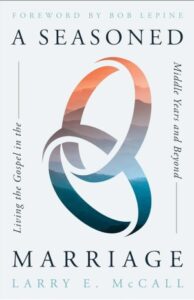
John: (laughs) Well, we’re gonna hear stories from your life and insights that you’ve got, uh, from that pastoral perspective and a lot of that is captured in a terrific book called A Seasoned Marriage: Living the Gospel in the Middle Years and Beyond.
Jim: Larry, welcome to Focus on the Family. Good to have you here.
Larry: Thanks for having me.
Jim: And congratulations on 50 years of marriage.
Larry: Yeah, the Lord has been kind.
Jim: (laughs) Well, Gladine, it sounds like has been very, uh, patient.
Larry: She has been.
Jim: (laughs)
Larry: It’s amazing. It’s an evidence of God’s grace in her life.
Jim: Okay, so there’s a good place to start. That opening question, you know, if you’re talking to a younger couple, like I mentioned, someone who’s been married 15, 20, 25 years, what do you say to them to, this is the reason or the way to make it to 50 years and beyond?
Larry: Well, the short answer, Jim, is God’s grace.
Jim: (laughs) Yeah.
Larry: It’s only by God’s grace applied to everyday life. And the subtitle of the book even, Living the Gospel in the Middle Years and Beyond.
Jim: Yeah.
Larry: We’ve had to learn that along the way. Uh, as we’ve journeyed together in our marriage, we’ve had to learn what that means to live out the Gospel and not just-
Jim: Yeah.
Larry: … grit our teeth and tolerate one another.
Jim: You know, not long ago we did some marriage research, and it points to this very fact. And what it delineated is those that are convictional Christian, not what I would call light Christian. And we did ask those questions. We work with Ipsos out of DC. It’s a journal-ready kind of research study. So, it’s very professional.
John: Mm-hmm.
Jim: Um, and we didn’t tilt it. We interviewed 4,000 couples.
Larry: Wow.
Jim: So, it’s statistically very, very sound. But here’s the deal. Uh, in a more Christian light experience, they had the highest divorce rate.
Larry: Wow.
John: Hmm.
Jim: Higher than the world’s-
Larry: Wow.
Jim: … in our study.
John: Mm-hmm.
Jim: Those that had the most satisfying marriages in every category, uh, physical, emotional, spiritual were the convictional Christian. And it led me to the conclusion that, you know, it’s one thing to say “I love Jesus,” but when you apply the Word of God, especially read the Word, pray together, go to church together, the benefits of that convictional Christian attitude are gonna be there. And it’s less so for, again, what I would call a social Christian or-
Larry: Yeah.
Jim: … somebody that’s made a confession of Christ, but you don’t really live it.
John: Mm-hmm.
Larry: Yeah.
Jim: Would you agree with that?
Larry: I agree with it very much.
Jim: And has that been part of your experience as you’ve counseled with couples, you know, when you see that convictional attitude that we gotta take this to the Lord? It’s the difference.
Larry: It is. And I think it goes back, Jim. The question, why did we get married in the first place? And, um, I’ve been a pastor in a Christian college town for 40 some years. And so, when you’re a pastor in a Christian college town, a small town, (laughs) you end up doing a lot of premarital counseling.
Jim: Yeah.
Larry: A lot of times when I’m counseling a couple, premarital counseling, I’ll ask, “Why do you wanna marry this person?” And so, if I turn to him first and say, “Why do you wanna marry this gal?” You know, he’ll say something like, “Well, she just makes me so happy. You know, I just love her so much, and she laughs at my jokes.”
Jim: (laughs)
Larry: “She watches sports with me. She makes me so happy. I just wanna marry her and give her the opportunity of making me happy for the rest of her life.”
John: (laughs)
Jim: A guy has said that?
Larry: No.
Jim: Oh, okay. But that-
John: But that’s the implication.
Jim: Metaphorically.
Larry: That’s what they mean.
John: Yeah, it’s true. Yeah.
Larry: And she’ll say something similar.
Jim: Yeah.
Larry: You know if I ask her, “He makes me so happy.” And I think that almost all of us get married because we think this person has the capacity of making me happy for the rest of their life.
Jim: Well, and sometimes that’s conscious, and sometimes it’s very unconscious-
Larry: Yes.
Jim: … that we’re requiring that or expecting that.
Larry: Yeah.
Jim: You, you mentioned in the book how you guys, you and Gladine reached a low point-
Larry: We sure did.
Jim: … in your marriage and, uh, you weren’t feeling happy anymore.
Larry: Yeah.
Jim: So, okay. First of all, thank you for that vulnerability. I think you’re speaking for just about every couple-
Larry: Yeah.
Jim: … if we’re honest. There will be somebody who’s watching go, “Well, we were never unhappy.”
John: Hmm.
Jim: “We’ve been married 50 years, and it was all bliss.” Man, God bless you. (laughs)
Larry: (laughs) Obviously.
John: I would say they’re the exception. (laughs)
Jim: But you do have people that have that experience.
Larry: Yeah.
Jim: But for the most part, that other 99.9% of us are gonna hit some lulls-
Larry: Yeah.
Jim: … in our marriage. You and Gladine did.
Larry: Yeah.
Jim: What was going on, and how did you arrest that?
Larry: Yeah.
Jim: How did you get ahold of that and say, “Okay, this isn’t gonna be the way to go.”
Larry: Well, thanks for asking. Yeah, we were about 20 years into our marriage, so about 30 years ago, uh, I would just summarize our marriage at that point as saying we were committed to one another. Neither of us was calling a divorce attorney, but neither of us was happy. And I look back on it now, and I can see more clearly what we were doing.
Jim: Mm-hmm.
Larry: I expected her to make me happy and my analysis, correct or not, my analysis was, “You’re not doing a very good job at making me happy.”
Jim: (laughs)
Larry: And you know, she didn’t verbalize that, but she could have. And had I the humility to ask her, she probably would have said the same thing. And I think it was kind of like, you know, if you just poured enough love into me, I would have some love to get back into you. And there was like a stalemate, and here we were. I was a pastor for years by that point. I taught marriage seminars, and here we were unhappy in our marriage.
Jim: Larry, I mean, this is the problem.
John: Hmm.
Jim: I think this is the core of it all when you talk about the selfishness that we have as human beings.
Larry: Yeah.
Jim: And it’s almost like we expect something different, but we’re like, in this life, in this world, this is the, the ankle bracelet, the ankle chain that exists for most of humanity.
Larry: Yeah.
Jim: We are selfish creatures. We live in sin. We’re in a sinful world. Jesus died for those sins and for our eternal life.
Larry: Yeah.
Jim: But it is a process-
John: Hmm.
Jim: … to find the key to take that ankle-
Larry: Yeah.
Jim: … uh, chain off, correct?
Larry: Yeah. Yes.
Jim: And I mean, it’s that epiphany where we gotta get to that place where, okay, being selfless is maybe the whole goal-
Larry: Yeah.
Jim: … of this institution of marriage to make us more like Christ.
Larry: Amen. Thank you, Jim.
Jim: But in that context, that’s a tough journey.
Larry: Yeah.
Jim: Because we are selfish.
Larry: Yeah.
Jim: So, how do we get ahold of ourselves as husbands, as wives to say, “Okay, I’m blowing it?”
Larry: Yeah.
Jim: And now Jean’s listening to this, I’m sure today.
John: (laughs)
Jim: I’ve got to go home and face the music myself.
Larry: Yeah.
Jim: “Well, you spoke so well, Jim.”
John: (laughs)
Jim: But we all have selfish areas.
Larry: Yeah, we do.
Jim: How do we begin to work on that?
Larry: Well, Jim, you used the word epiphany a while ago and when you said that my heart resonated ’cause it was like the Holy Spirit turned the lights on. Um, when we were in that bottoming out era, and I hope it was a bottom out. I never wanna go back there.
Jim: Huh.
Larry: At that time, we met an older gentleman in our community whose wife was in the latter stages of Alzheimer’s and lived in a nursing home just up the street from our home.
Jim: Hmm.
Larry: And every day, Bob would go to the nursing home, and he would help the staff spoon-feed his wife. He would help change her diaper. He would wash her.
Jim: Care for her.
Larry: And then he would sing love songs to her.
Jim: Hmm.
John: Hmm.
Larry: And this was when we were at a low point, right? And so, here’s a gentleman in his 80s. And I’m watching him, listening to him love his wife sacrificially. And it dawned on me. He’s not getting anything from his wife.
Jim: Yeah.
Larry: Gladine was still loving me. I just didn’t, in my pride, I didn’t think it was enough, but his wife wasn’t doing anything for him. She wasn’t serving him practically. She wasn’t serving him through her words. Um, she didn’t even remember his name.
Jim: Hmm.
Larry: And at that same time, that epiphany, the Holy Spirit brought 1 John 4:19 to this hard heart. “We love because He first loved us.” And the lights came on. The way Bob can love his wife is he’s not depending on her to pour love into him.
Jim: Mm-hmm.
Larry: He’s leaning on God’s love, which is super abundant, overflowing love. And the Holy Spirit broke my heart. And it was a gradual change, but He began to blow fresh air into us. (laughs) Um, and the balloon of our marriage began to rise again. And Gladine came with me on that journey. That was 30 years ago and uh, it’s not that we don’t have any ups and downs now, but that was the turning point. It was seeing that our love for our spouse is not dependent on our spouse. Our love for our spouse is depending on God’s love for us.
Jim: Uh, you have been married 50 years. You’ve kind of lived through all the seasons, maybe except the very last season here that is gonna face each and every one of us.
Larry: It’ll come.
Jim: But in that regard, what would you say is the most important thing to, again, navigate life seasons? So, if you break it in first half and second half, uh, speaking to the married couples listening-
Larry: Yeah.
Jim: … what’s the thing to remember about life?
Larry: Yeah. Well, I think one thing to remember is that life continues to change. I think a lot of us, we don’t always welcome change. Some change is good, but some change is hard. And I think of the seasons of marriage, um, I think a turning point for a lot of couples is when the last of their kids leaves home.
Jim: Mm-hmm.
Larry: Um, that all of a sudden, they just see the two of them now. They’re just looking at each other. And I think a lot of couples get to the point where they’re empty nesters and they’re thinking, “Who is this person?”
John: Hmm.
Larry: And they have a decision to make. Are we going to regroup here? Are we going to reconnect as a couple, or are we going to continue to live parallel lives that are committed but not, uh, full of joy?
Jim: Yeah.
Larry: And, uh, I think that’s a marking point for the seasoned marriage-
Jim: Yeah.
Larry: … I would call it.
Jim: You know, I read this article years ago in The Washington Post, but it resurfaced, I think, uh, in another newspaper, maybe The New York Times. I can’t remember. But they refer to it as the graying of divorce.
Larry: Yeah.
Jim: And this is the phenomena I think best described by saying couples that, you know, the husband pursues a career, maybe the wife too. They have children, maybe the wife made the decision to stay home. The kids are now out of the home. They’re through college. And she kind of looks at them and says, “I really don’t love you anymore.”
Larry: Yeah.
Jim: “I don’t know you anymore.” And it’s a high number of wives filing for divorce in that graying of divorce situation.
Larry: Yeah.
Jim: Speak to that disconnection. It is, it feels very transactional. We got together. We created children. We’ve raised these children-
Larry: Yeah.
Jim: … now we don’t need to be together anymore. That’s not God’s intention for us.
Larry: It’s not at all.
John: Hmm.
Larry: But it happens so easily, so naively (laughs) that, you know, a couple gets married. And they have this season of joy in their, uh, honeymoon season, and then maybe it’s, children come, um, financial struggles, “Can we afford to buy our first house?” Then caring for that house, and the career is more demanding. And they just don’t work on their marriage. They don’t focus on their marriage. And whether they realize it or not, they’re gradually drifting apart. And then the last of the kids leaves home, and they come to that realization. “We hardly know each other anymore.”
Jim: Mm-hmm.
Larry: So, now the question is, “What decision you’re going to make? What action steps you’re going to take to draw back together?”
Jim: And what would be some of those actions-
Larry: Yeah.
Jim: … that you could do-
Larry: Yeah.
John: Hmm.
Jim: … uh, in the busy time of life to make sure that the second half is set up? You know, think of how we plan for retirement hopefully, you know, you’re putting-
Larry: Yeah.
Jim: … something away. You’re meeting with your financial advisor, and they’re telling you, you know, 10% of this, 5%, whatever.
Larry: Yeah.
Jim: But you put intentionality toward it. We don’t do that in our marriage-
Larry: Yeah.
Jim: … the first half to say, “Okay, once we hit 25 years, what should the next 25 years look like?”
Larry: Yeah.
Jim: What would you say to them?
Larry: Thanks for asking, Jim. Yeah, I think in those situations, if a couple comes to that point where they realize we’ve drifted apart, there should be a leaning into God’s grace to humbly confess, “I’ve contributed to the distance.” And so, I think for us, especially us men, we need to humble ourselves and realize we’ve contributed to the distance. And the man’s focused on his job, focused on his hobbies and, uh, he’d be happy to keep on going for a while. But the wife’s saying, “Hey, hey. What about us?” (laughs)
John: Hmm.
Larry: And so, for a man to realize his security in Christ, the safety of the Gospel, that he doesn’t have to be proud and defensive, I’m a proud and defensive man. So, I speak for us-
Jim: Aren’t we all?
Larry: … men. Yeah.
John: Hmm.
Jim: (laughs)
Larry: But to lean in and say, “You know what, sweetheart? I’ve contributed to the distance. Will you forgive me for not pouring more into you as your husband?” And then you take that to the Lord confessing, “We need Your help. We wanna come together.” So, it’s God-oriented, grace-saturated, but then it gets real practical. Let’s spend more time together.
Jim: Mm-hmm.
Larry: You know, let’s do things together. Let’s pray together. Learn together. Do chores together, um, where you’re beginning to bond again like you did in the early days.
John: Yeah.
Jim: Mm-hmm.
John: Yeah, I appreciate that. Our guest today on Focus on the Family is Larry McCall and uh, he’s got this terrific book. And we’re covering some of the points in it. A Seasoned Marriage: Living the Gospel in the Middle Years and Beyond. And you can get a copy of this terrific resource at focusonthefamily.com/broadcast.
Jim: One of the concepts that you mentioned in your book is to look for friends that are ahead of us.
Larry: Yeah.
Jim: And to pull from their wisdom and kind of wrap that whole comment and-
Larry: Yeah.
Jim: … question up in your response.
Larry: Well, certainly there’s value in having friends that are more mature in Christ than we are. And I think if we’re struggling in our marriage to have the humility to go to our friends and saying, “Hey, we want to grow in our marriage. We’re struggling right now. Would you pray for us? Would you help us?” And Lord willing, in the local church especially, you can find friends like that. But you know, Jim, you mentioned trying to see this from a wife’s perspective, and here we are three men talking about this.
John: (laughs)
Jim: Right. I’m trying to be that person at this table.
Larry: But as much as we can. Uh, what I do when I counsel couples pastorally, when I hear those kinds of stories-
Jim: Mm-hmm.
Larry: … my mind goes back to what Paul said in Ephesians 5, where he said, “Husbands love your wives,” and then he connects it to Christ, “Just as Christ loved the church. Wives submit to your husbands as to the Lord.” He ties everything in that whole section vertically to who Christ is, what He has done.
Jim: Yeah.
Larry: Children, parents, employers, employees, he ties them all directly to Christ. Everything ties vertical. And I tell a wife in that situation, when you’re looking at your husband, you’re saying, “Can… I want to love him again.” And she’s looking at her husband and feeling, seeing his inadequacy. I say, “Look over his shoulder. Who do you see? You see Christ. And your love for your husband is not based on the worthiness of your husband.”
Jim: Hmm.
Larry: “Your love for your husband is based on the worthiness of Christ. Look at who He is. Look at what He has done for you as a Christian woman. Lean on His grace. It’s gonna maybe be a rough road (laughs), but Christ is able to give you the grace to renew your love for your husband.”
Jim: Yeah. That, I mean, that’s it right there. Uh, it’s one thing to look for that couple ahead of us in church or wherever you might find that connection. It’s another thing for a younger couple to see you as the older couple.
Larry: Yeah.
Jim: Uh, because in our minds, we’re always the younger couple, right?
John: (laughs) Yes.
Jim: But for that younger couple to say, “Hey, would you guys like to mentor us?” That happened to you.
Larry: It sure did.
Jim: And how did that make you feel?
Larry: Yeah. Well, at first, we’ve been asked this several times. But one time in particular there was a young couple in our church, wanted us to walk with them through the premarital process. And uh, you know, our pastors, there’s six of us, you know, most of them are a lot younger than I am. And I thought, “Why didn’t you, you know, attach yourself to one of these younger couples closer to your age?” They said, “We wanted to meet with an older couple.” Uh, learn from maybe our more years of experience, our more years of processing of problems.
Jim: I think that’s great.
Larry: But, uh, one thing Gladine and I realized and, as a lot of older people, and we spend a lot of our time these days ministering to our peers.
Jim: Yeah.
Larry: Uh, because of the Seasoned Marriage book, I do a lot of grandparenting ministry. A lot of older couples feel like, “Younger couples don’t wanna hang with us. They don’t want to hang with old fogies.” And just the opposite is true.
Jim: Mm-hmm.
Larry: Most young couples would love to get time with an older couple. And so, I would encourage older couples to actually initiate if possible and approach a younger couple and say, “Hey, we’d love for you to come over for dinner and just talk. And we’ll, like, get to know you and see where it goes.” Uh, or even Gladine and I have Zoom calls with some younger couples in other places.
Jim: That’s fantastic.
Larry: And I’m trying to mentor them long distance, but, uh, to pour into them by God’s grace.
Jim: Yeah, that is so good. Uh, you challenge the cultural idea that retirement is all about leisure. Now you’re popping my bubble ’cause I’ve got my goals.
John: (laughs)
Jim: (laughs) It’s golf and maybe some other fun things to do with Jean.
John: Yeah.
Jim: That’s a good plan. Uh, but why do you believe it’s more important to retire to something-
Larry: Yes.
Jim: … than retire from something?
Larry: Yeah. I think most people wanna retire from.
Jim: Yeah.
Larry: “I wanna leave this job. I wanna leave the stress, the deadlines, the pressures, the commute.”
Jim: “I wanna breathe.”
Larry: That’s right.
Jim: (laughs)
Larry: And it’s understandable. It is. It’s a fallen world, and there’s a lot to daily life that are difficult, but to retire to something.
Jim: Uh-huh.
Larry: And I like to tell people, “Look at the beginning and end of the Bible.” I mean, literally the beginning and the end. You know, what do you read in the first couple of chapters? What do you read in the last couple of chapters? God designed us as an image-bearers to be fruitful, to work in a good way.
Jim: Mm-hmm.
Larry: And we tend to think of work as negative. Work came about before the Fall and work will continue after the curse is removed, that we’re going to have productivity in eternity. And for us to think, “Even if life is changing, I can still be fruitful.” We can still be fruitful in our older years. And so, to retire to something. God, what are you calling us to in this season that we can bring You delight as we serve other people?
Jim: Plenty of volunteer opportunities.
Larry: Oh, many.
John: Yeah. And I was really struck, Larry, by the story you had of a Sunday school teacher that you visited. Um, I’ve known some people that kind of hit that spot where they’re really confined.
Larry: Yes.
John: And they can’t do a whole lot.
Larry: Yes.
John: They can’t, uh, they can’t produce like they used to. I heard one older relative say, “I’m no good anymore.”
Larry: Yeah.
John: But this Sunday school teacher really inspired you.
Larry: She sure did. John, thank you for bringing that story up. Yes, Gladine and I grew up in the same church. We’ve known each other almost our whole lives.
Jim: Wow.
Larry: And we were blessed with a Sunday school teacher who was very fruitful in her middle season of years and, uh, very active in teaching children, very evangelistic (laughs) and a godly woman. And when we were married for a while, we were back in our hometown. And we went to visit her in the nursing home. And there she is in a wheelchair, and she was not complaining. She was not saying, “I can’t do this, and I can’t do that.” She realized that she could still be fruitful even if she was hindered through immobility. She couldn’t get out and about much anymore, but she devoted herself to a ministry of prayer hours a day. And she told Gladine and me, “I prayed for you two every day for years.”
John: Hmm.
Larry: And Gladine and I looked at each other as we left that place, and we began to wonder, “Is some of the fruit of our ministry, the fruit of her ministry in praying for us?”
John: Mm-hmm.
Larry: And so even some of the listeners today are struggling with immobility, uh, can’t do what they used to do. But they can still have a fruitful ministry in other ways through prayer, through writing notes of encouragement.
John: Hmm.
Larry: We always have opportunities until the Lord calls us home or truly fully disables us. We always have the opportunity to be fruitful for Him.
Jim: You know, John, uh, we don’t mention this, but, uh, we have a wonderful volunteer ministry here at Focus. I’m thinking of couples that come-
John: Mm-hmm.
Jim: … and they help serve at banquets and, you know, just do filing for us, and it’s been such a blessing. I mean, some of these folks have worked 50,000 hours.
Larry: 50,000?
Jim: Yeah. I mean, that’s a long time.
John: Mm-hmm.
Jim: Elaine-
Larry: That’s a lot of volunteer hours, yes.
Jim: I’m thinking of Elaine, right?
Larry: Bless her.
Jim: And she was like, top of the heap when it came to volunteers.
John: Hmm.
Jim: And, uh, that’s just part of it. And so, if you’re interested in that, get in touch with us.
John: Mm-hmm.
Jim: There’s probably ways to work that. Uh, you’ve said one of the greatest ministries older couples can offer is the legacy of a long-term marriage.
Larry: Yes.
Jim: Explain why that’s so important.
Larry: Yeah. I think a lot of younger couples, um, value committed relationships.
Jim: Mm-hmm.
Larry: But they, interestingly, they don’t necessarily see the value of what the old timers called holy matrimony. Um, and so they’re content with seeing people live together and never have the bond of marriage-
John: Hmm.
Larry: … the covenant of bond of marriage. And so, to give them a living picture in our longtime marriages that this is a beautiful thing. This is a reflection of Christ and His love for His bride. Long marriages have a mission of reflecting Christ in a way that the younger generation can see and aspire to.
Jim: In that kind of context, I think one of the good points that you’ve made in the book, there’s several, but one is you encourage couples to prepare not just for their legal and financial documents, but for their spiritual will. And I don’t think I’ve thought of that or heard of that.
John: I haven’t either. Yeah.
Jim: Explain what it is to prepare a spiritual will.
Larry: Yeah. I think a spiritual will has the idea of, “What am I wanting to give to our children, our grandchildren, our great-grandchildren that’s not necessarily tangible monetary, but shows them the value of Christ, the value, the treasure of knowing Him and serving Him in written form? And tell our story of how much we’ve enjoyed Christ, how we’ve benefited from His grace, but also encourage them to seek Him as well?”
Jim: Yeah.
Larry: So, it could even just be one sheet of paper.
Jim: You know, it was something I did. I encourage parents to do. I kept journals for the boys from the time they were conceived. So, both journals are probably 400 pages.
John: Hmm.
Larry: Wow.
Jim: And I just, I was able to travel internationally. I’d fill in family history, spiritual background, those things that the Lord did as key milestones in our family’s lives, you know? And it, uh, they’ve enjoyed it. Trent keeps it right at his bedside and reads-
Larry: Wow.
Jim: … and he told me he reads it every night.
John: Wow.
Larry: Wow, goodness.
Jim: Which I think is really cool.
Larry: It is.
Jim: But that’s another, that’s an expanded version-
Larry: It is.
Jim: … of that will. It is. But it’s a great way to communicate to your kids the things that are important to you.
John: Mm-hmm.
Jim: Larry, we’re right at the end here, and I think one of the most important questions is, uh, the couple that’s listening, they’ve gone through the hard grind of work and vocation and raising the kids, and now they’re just at a lull. They don’t have the spark for each other anymore.
Larry: Yeah.
Jim: And I think it’s a wise place for us to wrap up. Obviously, get a copy of Larry’s book. We’ll tell you how to do that in a minute. But there are ways that the Lord will intervene on your behalf if you lean into Him.
Larry: Amen.
Jim: But what, what should a couple practically do to say, “Okay, this is not healthy where we’re at. We need to get to a better place. How do we get there?”
Larry: Yeah, I think there are probably more than one step to that, but I would encourage couples to first focus on the hope we have in the Lord. And I think a lot of couples don’t realize how the Lord wants our marriages to, to flourish.
Jim: Hmm.
Larry: God designed marriage to be a reflection of Christ and His love for His bride, the church. And so, He wants our marriages to be a beautiful living reenactment of the greatest love story ever.
John: Mm-hmm.
Larry: And so, if we’re in that lull to lean into him and say, “Lord, we know You can resurrect our marriage. You resurrected Lazarus from the dead and others. You can resurrect our marriage from the dead.”
Jim: Hmm.
Larry: “Lord, we know You want that. Please help us.” And we ask His help, and don’t be surprised when you begin to see Him working in your lives. But also, to be humble enough to seek help. You know, I encourage people to get pastoral counseling, uh, talk to your friends that are stable in Christ and ask for their prayer support and don’t feel like it’s hopeless. It’s not hopeless.
Jim: And let me turn to the listener. Focus on the family is here for you. We want your marriage to be the best it can be. Hopefully, people feel that way, John.
John: Mm-hmm.
Jim: Uh, we have lots of great resources to help you. Uh, you can take our marriage assessment. It’s an online quiz. It’s free. It’ll point out your strengths and your weaknesses, the areas to work on and, uh, that’s something uh, Jean and I need to do it actually. I’m gonna do that this week.
John: Over a million people have taken that quiz.
Jim: Yeah, over a million people.
John: It will be a million and one or two with you.
Jim: (laughs) I’ll be that million first person.
John: (laughs)
Jim: But you can do that. And also, you can get a copy of, uh, Larry’s great book, A Seasoned Marriage. And to make this a good thing, if you can make a gift of any amount, uh, that’ll be great. We will use those resources to help other marriages. So, be part of the team and you’ll get a great resource. Take the free quiz and hopefully get into a position where your marriage is stronger and healthier in Christ.
John: Mm-hmm. Take that assessment, uh, get a copy of this book when you donate. Our number is 800, the letter A, and the word FAMILY. 800-232-6459 or you’ll find all the details online at focusonthefamily.com/broadcast.
Well, have a great weekend and uh, plan on joining us on Monday as Pastor Ted Cunningham offers some encouragement for every marriage, even if you’re not a perfect match.
Pastor Ted Cunningham: Here’s the bottom line. You will never find compatibility. You’ll never discover it. There’s not an algorithm in the world that can put you with someone compatible. Compatibility is something you choose. It’s something you create.
John: Thanks for listening to Focus on the Family with Jim Daly. I’m John Fuller inviting you back as we once more help you and your family thrive in Christ.