

Justin Brierley: You have to be honest. Coming to faith all, can absolutely an intellectual component that is often very important for people. But there’s also a spiritual component where you have to let your guard down and you have to open yourself up to the possibility that God may be the thing you were looking for all along. And, and when that happens, when the head and the heart meets, that can be just the most extraordinary thing.
John Fuller: That’s Justin Brierley. He’s a popular writer and podcaster in the UK, and he’s convinced that we’re witnessing a growing wave of Christian faith replacing the secularism in the culture. The question is, are we ready for it? Uh, welcome to Focus on the Family with Jim Daly. I’m John Fuller.
Jim Daly: Uh, John, I visited with Justin on my podcast, Refocus with Jim Daly, and we had a great conversation about what he’s observing in the culture. That’s kind of the theme of the podcast-
John: Mm-hmm.
Jim: … is culture. And, uh, also what he’s observing among agnostics and atheists. There is quite a wave, I think, occurring. There’s been some notable, uh, atheists now that have come to the Christian perspective, Christian faith. And, uh, like Justin, I believe we have an amazing opportunity to share the gospel right now. And that’s what we talked about during our visit. Uh, I first met Justin in London when we were promoting our new documentary film, Truth Rising, produced with the Colson Center, which fits right into the discussion today. But we also have a free four-part study to help equip you to reach others for Christ in this critical moment. And I wanna urge you to be part of this movement to impact the culture.
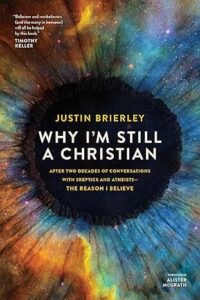
John: Mm-hmm. And we have details about Truth Rising and that free four-part study guide at FocusontheFamily.com/broadcast. And Justin Brierley is a Christian apologist, a very popular author in his book that forms the basis for this discussion is called Why I’m Still a Christian. After Two Decades of Conversations with Skeptics and Atheists, The Reason I Believe. And Justin has two very popular podcasts. One is The Surprising Rebirth of Belief in God, and the other is called Re-enchanting. And let’s go ahead and hear that conversation with Justin Brierley on today’s episode of Focus on the Family with Jim Daly.
Jim: Justin, thanks for joining me today on Focus on the Family.
John: Thank you so much. Great to be with you.
Jim: Let’s, uh, let’s get into it. You believe that Christians need to be well-rounded. That sounds good (laughs), you know, studying and knowing the word and knowing the world we’re in. Um, how important is it for cultural understanding?
Justin: It’s hugely important because if we don’t know what we believe and why we believe it, then when those difficult questions come, when we have those cultural conversations, you know, we’re, we’re gonna be left stranded. And, and so absolutely. I, I think we’ve, we’ve got more information now at our fingertips than we’ve had in many years. Uh, you can go online, you can find all kinds of resources. So in a way, there’s no excuse to take really seriously what was been said from the first century. Always be ready to give an answer to anyone who asks you about the reason for the hope that you have. And that’s essentially what I’ve been trying to do through what’s technically called apologetics, but just generally engaging with culture and, and seeing why it makes sense these days to believe in God.
Jim: Yeah. You know, I’m aware of a 2022 survey and it reported that 28%, and these are probably very similar to statistics here in the US, but 28% of people in the UK think of Jesus as a mythical figure, kind of a compilation of, of good deeds done, and they put it under this mythical figure. About 54% of the UK folks believe He was a real person, so that’s actually good, but it’s significantly down from past decades.
Justin: Yeah.
Jim: What, what do you think about that? We’re seeing some survey work now showing that that trend may have bottomed out and that more people are turning back to a belief in Christ.
Justin: Yeah. And this is the really interesting aspect of, of what I’ve been calling in some of my work a surprising rebirth of belief in God in the UK, but also in the West more generally. And you’re right, that skepticism around the Bible, around Jesus, has been very prevalent in the last couple of decades, especially with the rise of New Atheism and, and some of these big atheistic characters. But I noticed as I was hosting conversations between Christians and non-Christians a real change actually in the atmosphere in just the last few years around faith, a much more openness, exactly what you’re describing there, Jim, especially among younger generations interestingly. And I think it’s because the, the secular humanist atheist narrative just hasn’t worked out for people, frankly. It’s produced a very polarized sort of conflicted culture where people don’t really have a story to believe in any longer.
And I think young people especially they’re looking for a story to make sense of life. And I think that’s what is happening. We’re starting to see, especially with interesting influencers like Jordan Peterson and here in the UK, historians like Tom Holland talking about faith in ways that are beginning to make sense again for young people and, and adults in general. So I’m quite excited to see, as you say, some statistics now coming out showing that there is a difference, in fact, some very interesting statistics here in the UK that, that show actually a real rise in attendance in church among young people, especially among young men.
Jim: You know, one of the things, uh, at this point of our discussion, I think is important to mention, you know, Christians, I think every generation thinks this is the end times. You know? Look how children behaving. And, uh, from my journey in that way, I have wanted to develop a confidence that God has this in his hands. And I, it’s kind of an interesting equation that’s so true. What the world should see in us is this amazing confidence about eternity. And sometimes when these destabilizing things occur in culture, in politics, whatever it might be, it actually, it’s interesting that non-believers are troubled looking at us being troubled.
Justin: Yes, absolutely. If we call ourselves Christians, we, we should have that kind of confidence in the rock that is Jesus Christ so that whatever is going on around us, we, we have this refuge and this hope in something that is eternal and, and un-shifting despite the changing tides of politics and culture. Interestingly, just to add to that though, one of the reasons I’m seeing people taking Christianity seriously again, many secular people, I think it’s because they realize, well, you know, politicians can’t solve this stuff, you know, scientists can’t solve this stuff, the sociologists can’t solve this stuff, maybe it’s worth going back to the original story that seems to have grounded the West. And for that reason, although we don’t like living in tumultuous, turbulent times, sometimes those are the kinds of times that God uses to actually draw people back to Himself.
Jim: Well, exactly right. Let’s, uh, talk about, um, science and those things, the skeptics, you might say. But your dad, just to start that, uh, process there, your dad was a scientist, correct?
Justin: That’s right.
Jim: Uh, I mean, so how did he, as a man of faith, uh, I’m assuming that, but how did he, how did he come to those conclusions that all the science he was studying and talking about was congruent with his faith?
Justin: Yeah. Well, I was really fortunate to grow up in a home where faith was absolutely a part of family life, but absolutely there was an openness to the intellect, a scientific inquiry. As you say, my dad was a, a biochemist, but by background. And so we often had conversations as I was growing up about the interaction of science and faith. And he was someone who just never saw a conflict between the two. That, that was increasingly being sort of put out there by the New Atheists when, at the time where I was going into my late teens and early 20s, but actually it was really helpful having my dad who was grounded in science to say, “Well, actually, when I look at the world, at biology, at physics, I actually see this ex- extraordinary amount of coherence that seems to point beyond itself towards some kind of creative intelligence.”
Um, so, you know, working in biochemistry, my father sort of had spent time looking at the extraordinary inner workings of the cell and the way in which DNA, you know, sort of was this extraordinary factory for producing all the parts of a person or a tree or a flower. And he said, “There’s just no way (laughs) this, uh, came about by a completely undirected purposeless process.” He said, “Just looking at it scientifically tells you that that’s not true.” And so he was someone who kind of helped me to see that actually there’s, there’s something deeper than just the physics and the chemistry and the biology going on. There’s actually a kind of, well, literally what the Gospel of John calls the Word, the logos behind it all, the, the thing that spoke life into existence. You have to have that. You have to have that spoken piece of information, that, that thing that actually makes it come alive.
Jim: Mm-hmm.
Justin: And, and that I think is what scientists ultimately are kind of studying. They’re not studying dead matters. They’re studying things that have this divine spark of life within them.
Jim: Yeah. In that context, um, this element of faith, I mean, that is it. If you could prove something absolute, faith is not required, you have to take that step, that plunge into something you don’t understand. And I guess, do you see a pattern with people like Richard Dawkins and the others that you’ve debated and talked with that you’re mentioning? Does that become really the problem that they just can’t accept-
Justin: Yeah.
Jim: … this idea that faith is an element that God would want to see us demonstrate in order to believe?
Justin: I, I think there’s definitely something in that, Jim, because, you know, I’ve had hundreds of conversations with atheists, uh, and over the years. And in the process, you know, we’ve often gone back and forth on the intellectual arguments for and against God, but I, I very often get to the point where I think, well, ultimately this isn’t necessarily just an intellectual thing. There’s a heart issue here as well. And, and it’s that question of, do I want to believe in something that I can’t, if you like, examine, understand at a purely intellectual level? Because that, that means a certain amount of humility, almost a surrender, if you like. And it’s not that we have to surrender our intellect or our reason when we become a Christian. Far from it. I think, God, if you like, makes absolute sense of our intellect and our reason, but we do have to surrender our ego.
The idea that I am the top dog, the, the one to whom I, I will kind of be the judge of everything else. When you realize there’s a judge above you, and that you will never fully be able to understand or grasp, that requires a certain amount of humility. And I think that is where a number of the atheists I’ve engaged do struggle because they don’t want the universe to be like that. They, they want to be at the top of the pecking order. And having to say, “No, you are God and I am not God,” that’s something different than intellect, that’s a, a spiritual issue at, at its core.
Jim: Yeah, some of it’s just humorous observations sometimes. I have a friend who’s a Christian and he said, “You know, with atheists, it’s amazing they, they don’t believe in God, but they spend a lot of time talking about him.” (laughs) Uh, you must feel that way too. I mean, these are people that should shrug you off, you know, I really don’t care, but they, you know, to, to their credit, they want to engage you. But I do notice a lot of atheists are very vigorous about talking God down. (laughs)
Justin: Yes. Uh, as one friend put it to me, “I don’t believe in God, but I hate Him.” You know?
Jim: Right. (laughs).
Justin: There’s this kind of odd sort of contradiction, isn’t there? And, and I, I think, yes, that, that’s probably true. I, again, I, I don’t want to, you know-
Jim: Yeah.
Justin: … dismiss the honest search that many of my atheist friends go on, but at the same time, I’ve also seen that kind of atheism, which once you dig below the surface, it’s not really an intellectual thing. It’s ju- people just don’t like the idea of God. They, they sort of have a, yeah, they, they just want to push it away.
Jim: Yeah.
Justin: Having said that, you know, it’s extraordinary what can happen to give a change of heart. I mean, you’ve probably heard the story of Ayaan Hirsi Ali, probably the most famous female atheist in the world at one time, completely rejected God, religion, great friends with Hitchens, Harris, Dawkins, all the New Atheists. And yet, just about a year and a half ago, she has this extraordinary conversion to Christian faith. And it’s an intellectual journey, certainly. At one level, she came to see the way in which really Christianity was the foundation for everything she appreciated about Western civilization. But it was also a personal journey where she kind of encountered a meaning crisis. She couldn’t sustain her belief in, you know, the value of life and everything else. She couldn’t see a way forward on a purely atheistic worldview. She became very depressed, nihilistic, even alcoholic. And it was only when a counselor said to her, “Ayaan, I think you’re spiritually bankrupt. Have you considered praying?”
Jim: Mm.
Justin: And she said, “Well, I can’t pray. The God I was raised with was a monster,” because she had been raised in a fundamentalist Islamic sect and rejected it. But then this counselor said, “Well, what kind of a God could you believe in?” And this was the turning point for her. It was definitely a spiritual turning point, because she says she started to describe the kind of God she’d be willing to believe in, and she realized she was basically describing Jesus Christ.
Jim: Mm-hmm.
Justin: And so she thought, “Well, maybe I ought to investigate this person who claimed to be God.” She began praying. She started going to church and in her own words, God turned her life upside down. So I think, you know, you have to be honest, coming to faith all, can absolutely an intellectual component of that is often very important for people, but there’s also a spiritual component where you have to let your guard down and you have to open yourself up to the possibility that God may be the thing you were looking for all along. And, and when that happens, when the head and the heart meets, that can be just the most extraordinary thing.
Jim: It’s very much that step of faith we’re talking about. We’re actually, uh, releasing a film she’s featured in called Truth Rising. I loved her line in that film. She said, “What I found is that most every other mechanism of faith around the world,” and she was talking probably about her experience as in being, uh, raised in an Islamic home, is that when she encountered Christianity, she said, “I realized this was a faith rooted in love, and I had never encountered that.” I thought that is powerful because if you think about God, like to your point, if you could design the Jesus of your dreams, uh, this is it. The Lord has done it. We just have to discover it.
Let’s move into cultural, uh, observations. You know, one of the things for Western culture, this is where we’re linked around the world, Western culture, but as you see a decline in moral stability, you see a rise in evil. I mean, I think that is an equation that most of us in the faith would agree with, probably atheists may not agree with. But just describe that observation that when moral guidance, moral boundaries are loosened, what happens is you have more immoral behavior.
Justin: Hmm. Yeah. Uh, and it was Nietzsche, you know, a well-known atheist who, who put it so succinctly, said, “Without God, everything is permissible.” Because in a sense, if we do live in a world where there is no God, there is no ultimate moral law at the foundation of reality, then in a sense, it’s a free for all. It is just whoever is the most powerful, whoever gets their way kind of gets to rule, gets to set the rules. And, and, and yeah, of course, that’s why in a culture where we are forgetting God in so many ways, and in a sense saying, “Well, there are no rules to be obeyed. We just, you know, have to make it up for ourselves,” inevitably that gives license for people to go off in all kinds of immoral directions. I think though, it’s almost the fact that that is happening so much in our culture now has kind of led some people to realize, well, I, I don’t like the direction this culture is going, and I, I think we’ve kind of gone off the rails.
And there’s a very interesting sort of impetus back to more conservative Christian values in, in lots of parts of the culture today, even from non-Christians, interestingly. And I think what’s interesting about that is that, um, the question is, can you sustain those kinds of values without the story that undergirds them? And, and I don’t think you can. I think to… The, the reason we started to talk about humans in the way we do as having individual value and dignity because they’re made in the image of God, the reason we started to give dignity to, to women, to children, you know, to slaves in the first century, it was the Christian church that revolutionized the way we think about how to treat people in morality. That all happened because there was a, an absolute belief at the center of it that God had become human and experienced life with us and had given His life for us in the most extraordinary act of sacrificial love.
That completely changed the way people thought about what it means to be human. And it’s the reason why Christianity became the most extraordinary moral force the world had ever seen. Now, as we lose the Christian story, the question is, can we keep those values, those things that people sort of still recognize as, as being fundamental and important? And, and I think without the Christian story, we can’t actually. And, and that’s why people are asking now, well, maybe we need a return of Christianity, maybe the New Atheists in being so quick to dismiss and, you know, uh, get people to abandon faith, maybe they didn’t realize actually what they were letting in in its place, which is this completely amoral, immoral, divided and confused culture that we now find ourselves in. And that for me is, is so interesting, that sometimes things have to get worse before people realize they need Christianity again.
Jim: And of course, in that context, we as Christians are going, “How much worse can it get?” But again, the Lord’s in control, and He, there is some deep into the pool that He seems to bring culture back out of that and to, uh, make people aware that that’s too far. But let me, let me hit you with some good, tough questions so people can be equipped to answer these. Again, you’re an apologist and this is what your world’s all about. Christianity makes the claim to be the sole religion, the faith that actually connects to God, and there’s lots of analogies. It’s God reaching to us, not us reaching to Him. But give it your sh- your best shot when you’re with somebody who says, “Well, I just think that’s so narrow and so, you know, exclusionary, how can Christianity make that claim that they’re the only religion?”
Justin: Well, the first thing I’d want to gently point out to the person who says that is, well, you’re also making an exclusive claim, it, just in saying that Christianity cannot be the only true religion, you know, that’s simply, yeah, too arrogant or, or, or too particular, because actually what the person is effectively saying is, “I have the correct view. (laughs) I think maybe that all religions lead to God and we’re all just sort of on, you know, different paths up the mountain.” Well, that means that they have a specific exclusive view about religion and they’re making a truth claim. So the point is, we’re all making claims about truth, about reality. The question is, is yours true or is mine true? And, and in a sense, I think you, you just have to accept that we’re all in the same boat in that regard. But the, the next place I’d want to go to with, with someone who says this is that the, the reality is, you know, religions are different.
They make very different claims about reality. Um, and it’s, it, it can actually be rather insulting to say, “Well, we all basically believe the same thing, don’t we?” No, we don’t. You know, a Muslim believes very different things about God to a Christian, very different things about Jesus, between a, a Christian and a Jewish person maybe. And actually it’s more respectful to acknowledge that we, we have our different claims and, and obviously have good faith conversations about that, um, but don’t simply sort of try to pretend that we’re somehow all the same. We’re not. And, and it’s important to recognize that. And then finally, I’d want to say, it leaves us with this question in the end. Well, if there is a God, has that God revealed Himself to us? Because if, if it’s not just a case of saying, “Oh, well, they’re all basically the same or just kind of, you just have to pick one at random,” um, the question is, is there a reason to believe that Christianity is the true revelation of God?
And, and I obviously believe there is. And the reason is because God came in person in the Christian story to show who He was. And, and I rather liken it sometimes to, um, uh, a key that opens a door. You know, when I walk up to the church that I attend, I have a, a whole, you know, I, I’ve got access to the church with a big bunch of keys and they, they all look rather similar these keys.
Jim: (Laughs).
Justin: So sometimes I sort of have to try a few in the lock before finding the one that actually opens the door. But then once I’ve opened the door with that key, I don’t then try all the others as well, just in case one of them works.
Jim: Ah.
Justin: And I think it’s the same with religion. You might look around and you might try and find, you know, but you don’t have to try every religion out there. If you find the key that opens the door, you found the real thing. And I think for me, that’s expressed in Jesus, especially in His resurrection. If Jesus was who He claimed to be, the son of God, and if He died and rose again in vindication of that claim, then you found the key that opens the door. You don’t have to go searching through every religion. And it just is a fact that, that God has come, made Himself known in this person, Jesus. There’s a whole chapter in, in the book where I talk about the resurrection and why I think it is actually the definitive event of history and why we can have real faith in the historical claims of the Christian faith. But that for me is at the center of kind of going through the weeds of, well, maybe it’s this religion, maybe it’s the other, how can we ever know? I think we can know because of Jesus.
Jim: I, I like that. I like that analogy of the ring of keys. That’s really good. (laughs) And, uh, I’ll use that when I talk to my unsaved friends at this point.
Justin: (Laughs).
Jim: That’s a good one. Um, I think at the end here is just this idea, apologetics can often be seen as a battleground. You know, there’s a, it’s like playing rugby or American football. There’s a goal and I’m gonna go on offense and try to score the goal and get you to see the light, so to speak. And, um, you know, it’s this tug of war of ideas and thoughts and philosophy and religion and who’s right and who’s wrong. It, it seems like you have a great way, a winsome way of saying, “Well, let’s, let’s just come reason together,” which is what the Lord says, obviously.
Justin: Mm-hmm.
Jim: Um, speak to that need for that winsomeness and that idea that you’re not here to win, you’re simply here to live out the faith so people can see something different and hopefully develop that appetite then to want what you have.
Justin: Yeah. Well, I think you’ve put it so well yourself there, Jim, but I, I come back to where I began with 1 Peter 3:15. In a sense, that is the classic apologists verse, isn’t it? “Always be ready to give an answer to anyone who asks you about the reason for the hope that you have.” Now, that’s what you’re doing at an intellectual level with apologetics. You’re, you’re trying to make the case, answer questions, and, and show that it makes sense to believe in God, to believe in Jesus. We sometimes forget the bit at the end of the verse though, don’t we? Which is, “But do this with gentleness and respect,” because… And, and that is so critical, because if you’re simply there to, as a sort of battering ram, trying to make someone believe with this force of your intellectual arguments, I think that often fails because people want to feel that they’re actually being heard at their end, you know, that you’re taking a real interest in them, that you’re not just seeing them as a sort of project, if you like.
And that’s where the gentleness and respect comes in, because the way you say things matters just as much as what you say. And I don’t believe anyone in the end gets argued into the kingdom of God, okay? (laughs) It’s got to be about them wanting what’s on offer in the end. And for me, that’s so important. And sometimes we can do a great job of arguing for God, but not of representing God in the way we, we, we say these things. In the end, some, no one’s gonna want to become a Christian if the example they have sitting in front of them, you, doesn’t look like the kind of person they’d want to become.
Jim: Right.
Justin: So in the end, yes, we need to use intellectual arguments, but we need to represent God. We need to do it with, with, with grace and respect, just as we’re commanded to in scripture. And that’s the magic formula. That’s the way when we have good conversations, when we open ourselves up, when we treat people as human beings worthy of our dignity and respect, you might just find that conversation goes somewhere.
Jim: Yeah. Uh, so good. I’ve had, uh, you know, uh, secular friends who have said, “Yeah, I would never become a Christian because I knew this Christian and he stiffed me for 100 bucks.”
Justin: (Laughs).
Jim: And now I’m saying people’s behavior will always let you down-
Justin: Yeah.
Jim: … um, no matter what the standard. Uh, we find a way to, to do worse than the standard, but don’t let that dictate your search-
Justin: Yeah.
Jim: … for the Lord and your search for, you know, meaning and eternal life. So Justin, this has been terrific. I’m looking forward to reading your book, Why I’m Still a Christian. I’ll be giving it away to my boys and everybody I know because this is what it’s all about. And you’ve beautifully, uh, put together a real, sensible, reasonable articulation of why the faith is so important, not just to Christians, but to everybody. Thanks for being with us.
Justin: Oh, thank you for the opportunity, Jim. It’s been an absolute delight.
John: What a great conversation Jim had with Justin Brierley on, uh, his podcast, Refocus with Jim Daly, and you can listen to the entire in-depth discussion. Uh, we’re gonna link to it on our website.
Jim: John, I, I love how Justin is able to address scientific issues with scriptural truth without ignoring the heart of the issues that are drawing people in the culture to search for truth. You know, that’s part of Truth Rising. We’re saying truth will rise and the truth is Jesus.
John: Mm-hmm.
Jim: And I’m excited about the impact that film and this podcast and this broadcast will make. You know, Justin’s given us some good reminders as we go about our day to take time to listen to others and to hear their stories and develop caring relationships as we represent Christ in our conversations. This is why Focus on the Family is so important at this very moment. Uh, we’re sharing the gospel of Jesus Christ, helping families to navigate this culture, providing counseling for those who call us and seeing over 290,000 people just last year make a decision for Christ.
Uh, you are making it all possible when you are part of the financial support team, and, uh, this is one of many wonderful outcomes. One way you can help is to ask us for Justin’s book, Why I’m Still a Christian. I think it’ll be very beneficial for you. Uh, when you make a donation of any amount, whatever you can afford to help us in ministry here at Focus on the Family, we’ll thank you by sending this great book.
John: Call today, donate, and get that book. Our number is 800, the letter A, and the word FAMILY. That’s 800-232-6459 or visit FocusontheFamily.com/broadcast. Thanks for listening to Focus on the Family with Jim Daly. I’m John Fuller inviting you back as we once again help you and your family thrive in Christ.