

Preview:
David Bereit: She said never once has there been a message in our church offering hope and healing, and as a result, I assume this must not only be the unspeakable sin, but therefore it must be the unforgivable sin.
John Fuller: Today on Focus on the Family with Jim Daly, we hope to inspire you to help women who have made a choice or are about to, uh, that has far-reaching consequences. Thanks for joining us. I’m John Fuller.
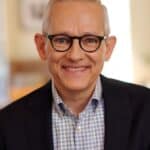
Jim Daly: Well, today is National Sanctity of Human Life Day here in the US, and we are featuring a message that will illustrate the spiritual aspect of this very real fight. And never forget, this is a spiritual battle. The Bible says Satan comes to steal, kill, and destroy. Yet, we can represent Christ and his life-giving ministry when we embrace those who are considering abortion or have had an abortion. And let’s remember that they are souls that God loves and wants to redeem. And our guest today is David Bereit, the founder of 40 Days for Life, which he led through its first 10 years. They’ve helped save 15,000 babies, brought almost 200 abortion workers out of the industry, and closed the doors of 96 abortion facilities.
John: Wow. What impact.
Jim: It really is. And David now serves as executive director of the Life Leadership Conference, a networking resource for pro-life groups.
John: And in that role, David speaks to many pro-life organizations around the world. And, uh, today we’re dropping in on a message that he gave for a summit sponsored by Anglicans for Life a few years ago.
With that, here’s David Bereit on Focus on the Family with Jim Daly.
David: As I was praying about what to share today, Georgette gave me the title Get Busy Church. I realized that, you know, I, I was just over at the March for Life conference and expo, and I was walking through the room of the expo, and there’s all these different organizations arrayed, and they do all kinds of wonderful things. But I recognize that ending abortion and saving lives is really not the responsibility of any nonprofit organization. It’s the responsibility of the Church of Jesus Christ. And that is the calling that we have been given. We are called in scripture to rescue those being led to the slaughter and to speak up for those who cannot speak for themselves. And the good news is, as Christians, it’s not all on us. The United States Supreme Court, seven men on that court-imposed abortion on all 50 American states and opened this Pandora’s box of abortion for our nation.
Since that time, 59 million children have perished under an abortionist’s knife, millions of women have been wounded, families have been torn apart, and our nation has been divided over this crisis. And when we look at it, it seems so daunting and so overwhelming. And honestly, at times, you realize that with man ending abortion, it’s not possible. But the good news is it’s not on us, because with God, all things are possible. Not just easy things, not just politically correct things, but all things. And so we as the church have, I believe, a greater responsibility than anyone in how we respond to this challenge.
I had a moment that changed the entire course of my life that happened in 2004, and as I was praying about what to share today, I really felt that this was something I was supposed to begin with. Uh, it was an experience where I was invited by a pregnancy resource center in Grand Rapids, Michigan to come up and speak at their fundraising banquet, and we were in the midst of the first-ever 40 Days for Life campaign in the little town in Texas where 40 Days began, so I was very busy and it was really hard to pull away, but I had made the commitment.
And so that day I flew into the Gerald R. Ford International Airport in Grand Rapids, Michigan, and I was picked up by the director of the pregnancy center, a young man named Jim Sprague, and Jim is a very enthusiastic, very entrepreneurial young man. Their pregnancy center is doing amazing work, saving lives throughout Western Michigan. But when he picked me up at the airport, he said, “David, we’re here early and I’ve got two things that we could do right now. Option one is I could take you to a hotel where you’d have a few hours to just rest up and you could get dressed and cleaned up for tonight. Or option two is in the interim, I could take you to show you something that will forever change your life.”
I don’t know about you. I don’t think that is a fair set of options.
Audience: (laughs)
David: So I was like, “Okay, Jim, you got me. I have to choose what’s behind door number two. What do I, what are we gonna… Change my life, what’s this all about?” So he smiled and he drove me quietly into downtown Grand Rapids. And if you’ve ever been in the city, it’s like a lot of mid-sized cities, lots of one-way streets going between the downtown office buildings. We were zigzagging through the city until finally we turned onto the street that held our destination. And when we pulled up and we parked in front of this building, I looked at it and it was a very old church-looking building. And I turned to Jim and I said, “So what is this? Where are we going?” And he said, “Well, I’m not going to tell you anything because we’re going to go inside this building and you’re going to meet the brand-new owners, but I’m just going to warn you in advance, brace yourself.” I didn’t know what he was talking about, but we walked up the steps, opened the big wooden doors, and we went inside, and we met the new owners of 72 Ransom.
And they proceeded to tell me the history of this building. The reason it looked like a big old church building is because indeed that’s what it had been built to originally serve as. Built in the late 1800s, it was originally a Jewish synagogue. And so for decades, this congregation came together inside of 72 Ransom and they honored God, the author of life. They held weddings and they had babies coming into the family of their congregation, they had funerals there, the whole circle of life, but over time this Jewish congregation outgrew 72 Ransom and realized, “We need to move out into the suburbs, where we can have more space.”
And so they sold the building, and this time, as they related to me, they sold the building to a Greek Orthodox congregation. And so now a new congregation came in and breathed more life into 72 Ransom, honoring God, celebrating His gift of life and people growing in their faith and growing closer to the Lord. But over time, that congregation also eventually started bursting at the seams and outgrew 72 Ransom and they said, “Well, we need to sell as well.” And when they put the building on the market, unfortunately it was not taken to be yet another church, but instead some enterprising business people bought the building and they said, “Well, we’re just going to turn it into a profit center. We’re going to rent it out to the highest bidder.” And unfortunately, in 1994, the highest bidder was a notorious Western Michigan abortionist.
During those next 10 years, from 1994 until I was standing in the entryway in 2004, they said they were aware of at least 20,000 abortions that were committed inside this former church. And it was only because when the abortionist left the building, they found all of the records of the patients that were supposed to be kept private and they were able to piece that piece back together and know that at least 20,000 children made in God’s image and likeness perished inside of that former church. 20,000 women scarred, some physically, but many more emotionally, psychologically, and spiritually.
But the Christian community, when that became an abortion facility in 1994, began to say, “We need to pray. We need to pray for God to reclaim this building that was once a church so that God can, can cleanse it, reclaim it, and use it for his good once again.” And so different people and different congregations just began to pray independently. Over time, a small group of people got together, and they started to work to build a network of others in the town.
For the next five years, they prayed for some way God to be able to reclaim and restore 72 Ransom, and five years later, 1999, they thought their prayers had been answered when a big for sale sign went up on the building. And they thought, “Yes, this is our chance.” And so they got together with other Christian business people and they put together a financial offer. They went to the owners of the building who were leasing the space of the abortionist and they said, “Here, we want to buy the building,” and their offer was rejected. And they went back with a different offer, and it was rejected. They tried going through third parties, and rejection after rejection, challenge after challenge. Five years went on after that for sale sign went up and they kept asking, “Is God not hearing our prayers? Why is he not answering our prayers? We want this building to be reclaimed for God.”
But in 2004, finally the dam broke. They went back with a ridiculously overinflated offer for the value of the building. The business owners at that point were just ready to unload this building, and they sold the building to a group of Christian business people confidentially, and those Christian business people did two things immediately. Number one, they kicked the abortionist out of the 72 Ransom and closed down his practice. And number two, they deeded the building over to a ministry called Life International that plants pregnancy centers anywhere in the world where abortion rears its ugly head. They go in and plant pregnancy health centers.
So the people I was meeting in the entryway were the new owners. They were the people who run Life International, and they shared with me that when I was standing there, it was three days after they had taken ownership of this building. And five days before that, so eight days before I arrived, was when the last abortions were committed inside of 72 Ransom. And then they took me on a tour of this building, which had not changed very much.
As we stood in the entryway, they explained to me that when young women would come into the facility, frequently they were with some support person. It may be a boyfriend, it may be a family member, it may be, uh, just a friend who had come along. And the abortion staff had been trained that, “If a woman comes in and somebody’s with her, you’ve got to separate her from that person because that person could be a support and they could talk her out of the abortion and cost us 600, 800, $1,200 of profit.” And so they would, at the entryway, separate the girl from her support person, send the support person upstairs that went off to the left and send the girl downstairs to the right. And when she got down to the bottom, the first door on the right was the waiting room. And she would walk in.
They took me in the room, and there were beautiful m- murals and paintings on the wall and nice leather upholstered couches, and the window was there and they said she would walk up to the window, she would get her clipboard to fill out her paperwork, she would sit down in a chair, and the way it was described to them as frequently, tears would be running down her face, but she would look around at all these other women in the same circumstance and think, “It’s our secret. We just have to keep this to ourselves.” And they would sit there waiting for their abortion appointment as they filled out their paperwork.
What they didn’t know was what was… Right as they were sitting against the wall, on the other side of the wall was the next room down that hall. And they took me out of the first room and into the next room, and when they opened the door, the stench of rot and mildew hit me like a ton of bricks. Because years earlier the ceiling had collapsed from water damage. They had never repaired the damage. There were cockroaches everywhere in this room, thousands of them. That was less than a foot away through the wall from where these young ladies were waiting for their so-called safe and legal abortions.
But then they took me into the third room, and this is where my perspective began to change, because the third room was the procedure room, and this was the room where that abortionist had performed those 20,000 or more abortions. Now, he had left those eight days earlier, so he had taken most of the evidence of what had happened in that room, but it was still obvious what had happened. On the floor, the linoleum floor, there was a dried rectangle of rust and dried blood because he had never cleaned up under the table where the abortions were done. And when the table was ripped out, you could just see all of that. On the wall where the suction machine was that would be used to pool the limbs off of these tiny children, there was mold on the wall behind it, and on the counter, there were rusted surgical tools that hadn’t been sterilized in who knows how long.
But what really struck me the most in this experience was when I looked at that linoleum floor, and right near that rectangle, there was an indention. It was an arc ground into the linoleum, an indention in the ground. And I asked my host, I said, “What is that? ” And they said, “That is where the abortionist stood and moved back and forth while he was pulling the arms and the legs and the bodies of these tiny children from their mother’s wombs.” And for whatever reason, that was when it hit me. This is not just some abstract issue. This is not just some political debate, or something that the Supreme Court takes up, or something that we address once a year on Sanctity of Human Life Sunday. I was looking at the reality of life and death, of good and evil, of heaven and hell right in that very room.
We walked out of that room and then we went to the final room on the tour, which was the waiting room after the abortions were done. No nice paintings here, no nice upholstery. Instead, it was moth-eaten stained plaid couches, because after they had gotten the money from these women, all they would do is abandon them in that room with a little Dixie cup of juice and a cookie until the woman would gain enough strength on her own to stumble her way up those stairs and go back out onto the street to continue on with her life.
John: You’re listening to David Bereit on today’s episode of Focus on the Family with Jim Daly. And a quick note that we have a CD of this entire presentation so you can listen again or maybe share it with a friend. Find that CD at FocusontheFamily.com/broadcast or call us and request it. Uh, our number is 800, the letter A, and the word FAMILY, 800-232-6459. Let’s return now to more from David Bereit.
David: I realized this is not about compassion. This is not about helping. This is hurting. I thought that I had had the experience that Jim had told me would have this profound effect on my life, which it had, but then they related to me what had happened three days before I arrived, the day they took ownership of the building, and that’s when I understood why we in the church have a unique obligation and responsibility in this crucial struggle, the defining struggle, I believe, of our generation.
The day they took ownership of the building, they called all of their friends, ministry leaders and pastors, and everybody came together to come into the church because they wanted to go through and pray over every square inch of this building that had so much harm had been done there and asked God to cleanse it for what it had been and then for him to recover it and reclaim it for His good and His glory. And when they gathered in the entryway, one of the board members for Life International said, “Well, where should we begin our prayer time?” And somebody said, “Why don’t we go to wherever the abortionists began every single day, and we’ll just retrace those steps throughout the entire building?”
So they went down those stairs I described, past those three rooms I just verbalized and explained to you, and they turned right in the little hallway that went to a metal door that opened out into the alley. And that was where every day the abortionists would park, come in, and begin his deadly business. So they gathered inside that metal door, it was closed and latched, and they all gathered in a circle, and they began to pray together. And when they reached the end of that time of prayer, one of the pastors said the final amen, and that big metal door burst open on its own, and they felt a rush of wind going out of 72 Ransom.
A few seconds later, they felt a gentle breeze come back in. One of the board members turns to another and says, “What did we just experience?” And the other one says, “I don’t know, but something sure seemed to want to leave here in a big hurry.” They were stunned. And they walked quietly back up the stairs that they had just come down, and they gathered in the entryway, not knowing how to process what they had just experienced when a woman walked in off of the street. And she said, “I had to ask, what happened to your statue?” And one of the volunteers pulled her aside and said, “I’m sorry, what are you talking about?” She said, “Well, I live near here. I run by here all the time. And for years, you’ve had on the roof of the building, that big statue of that, like, demon figure perched on the roof of the building. It’s been there for years. It’s gone today. What happened to the statue?”
Now, there had never been a statue on the roof of 72 Ransom, but as they looked in her eyes, they could tell that this woman had previously seen something that she was not seeing that day.
Three days later, as they recounted these events to me, they said, “David, we believe that what we experienced was a spiritual transfer of ownership of 72 Ransom Street,” and I believe that is exactly what they experienced. And is that not what we need here in our beloved America at this moment in history, a nation under God? But we have drifted so far away from that. We have an obligation, I believe, to live out the call, to speak up for those who cannot speak for themselves, and to bring about, with God’s help, a spiritual transfer of ownership in our churches, in our communities, throughout our states, and across this entire nation.
But what does that look like? I think it looks exactly like what Jesus described to us when the church official came to him questioning him about the greatest commandment of all, and he said, “What must I do to inherit eternal life?” And Jesus put the question back on him and said, “What do you think?” And he said, “To love the Lord, your God, with all your heart, all your soul, all your mind, and to love your neighbors, yourself.” And Jesus said, “That’s right.” And then the church official pressed on and said, “Well, who is my neighbor?” And Jesus related that famous story of the Good Samaritan.
We hear the story about the man who was robbed and half-naked and left to die on the side of the road, and the priest walking down the road went across the way to avoid having to even acknowledge the crisis, let alone deal with it, and he kept walking down and did nothing. And then the Levite came and did the exact same thing. And then the Samaritan, the least likely person to help, stopped, acknowledged the crisis and said, “I have an obligation to help this person, even though we’re supposed to be sworn enemies.” And he went over and he nursed the man’s wounds. He put them on his donkey. He took him to the inn. He gave his own money to help. “That,” Jesus said, “is what we do to love our neighbor.”
And here we are as the church, and we need to make sure that we are not the priest or the Levite. Dr. Martin Luther King, in his last speech he gave the night before he was assassinated, he was reflecting on this parable. And he said, “I have to think that the priest and the Levite were asking themselves, ‘If I stop to help this man, what would happen to me?’ They were worried about other robbers. Maybe they were running to a church meeting, maybe they were doing something else.” He said, “But the Samaritan asked a different question. He said, ‘If I don’t stop to help this man, what will happen to him?'” In our congregations, in our communities, there are people in crisis, women and unexpected pregnancies in your congregation and your community, those who’ve been wounded by past abortions, those who are carrying this burden and this grief.
I was in North Dakota a few years ago at a pastor summit, and they brought in some post-abortive testimonies to share their heart and to share the story with these pastors who’d never been involved with pro-life before, and this one woman had never given her testimony before and she was the last speaker, and she said to all of these pastors assembled, she said, “20 years ago, I had my abortion. The week before I had my abortion, I was sitting in my seat in my pew at my church. The week after my abortion, I was sitting in my seat in my pew at my church, and for the last 20 years, I’ve sat in that same seat in the same pew.” She said, “Never once has there been a message in our church offering hope and healing, and as a result, I assumed this must not only be the unspeakable sin, but therefore it must be the unforgivable sin.”
These pastors began to weep as she challenged them and said, “If you think you’re doing something compassionate by not bringing this issue up, if you think by being the priest or the Levite and just avoiding it and hoping it’ll go away, you’re helping people you’re not. Do everything you can. Help those in need, help those in unexpected pregnancies, help our culture that is sick.” We have the answer. The gospel of Jesus Christ was not only a gospel of salvation. It was a gospel of building his kingdom here on earth, and the way we do that is to love our neighbors as ourselves. In no place can we do that more effectively than in this work of the pro-life movement. It’s not easy, but it’ll be worth it.
And I’ll just conclude with one final story because it was one that I remembered as I walked in and I saw Georgette. Last year is my last official act with 40 Days for Life. We did a 50-state tour to rally the troops and encourage people to pray and fast, and Georgette came along on several of the legs of that.
My most meaningful moment on that tour happened in California at an event in West Covina, which is a suburb east of Los Angeles. And at that event, there were more than 400 people came out, and it was bilingual. It was beautiful to see the pro-life movement coming together. But at that event, I remembered having been in that same area five years earlier, when I was introduced to one of the babies that had been saved from abortion outside the abortion facility that had gone out of business in neighboring La Puente, California. And her mother described to me five years earlier how she had been going to the abortion center, but because a handful of people were praying outside of that facility, she had a change of heart, and those people then went with her to the local pregnancy center and helped her through her pregnancy. They were there with her after her baby was born, a baby girl she named Leah.
That was five years earlier. And here at this event in West Covina, I was thinking back on this flood of emotions because Leah was only the second child I had ever met as a result of 40 Days for Life campaigns after years of traveling on the road and hearing the stories, but only the second I ever met. But at the end of that rally, Yvonne, who was running the rally, announced, “We have a special surprise.” And running out of the crowd came a now five-year-old Leah. And she came over and gave me a big hug. And she went around onto our bus. We were encouraging people to sign their names, to go along with us. She went to the door of the vehicle, and right by the door handle, she signed her name, and her mother signed her name. And so for the rest of that tour, every stop I would open that door, I would be reminded of that beautiful girl, not just a baby, but now growing up.
And you have the same opportunity. If you’ve not yet met a child who’s alive because you act like that good Samaritan, if you’ve not yet had the experience of seeing someone find healing from the pain of an abortion, that’s the opportunity that you have when you go back home. So my prayer, my challenge for you is to decide before you walk out of this summit one thing, just one thing that you will do as a result of being here that you weren’t planning on doing before you came here, to live out this opportunity, to help bring about a spiritual transfer of ownership in our communities and throughout our nation. And when you do that and you inspire the people in your churches and in your communities, I believe the end of abortion will not be that far away. With God, all things are possible. Amen?
Audience: Amen.
David: Amen. God bless you.
John: That’s David Bereit speaking at a summit for Anglicans for Life just a few years ago on this edition of Focus on the Family with Jim Daly.
Jim: John, what an inspirational message, and I love David’s challenge there to think of one thing you can do to help mothers who are experiencing an unplanned pregnancy. There’s so many options. Uh, you can volunteer at your local pregnancy center. You can pray to change hearts and minds, and we’ll post a link to a free prayer guide to help you do just that. Another way that you can make a difference is through our Option Ultrasound program. Over the past 20 years, uh, we have helped save over half a million babies and the hands clap, right?
John: Yeah, that’s great, isn’t it?
Jim: That’s great news. When you consider how many women and babies were saved from the tragedy of abortion by those brave decisions, that’s over a million lives impacted for good. And we have found that when an abortion-minded woman goes to a pregnancy center, gets that ultrasound, sees her baby, and gets biblical counseling, the majority choose life. And that entire process is provided free of charge because of generous donors who support Option Ultrasound.
John: Right. And every month we get letters from mothers that say something to the effect of, “I thought an abortion was my only option, but when I saw my baby on the ultrasound screen, I just couldn’t do it, and I was determined to choose life for my child, and my local pregnancy center was so helpful to me.”
Jim: Yeah, and it’s an amazing outreach. Best of all, we’ve made it easy for you to help these mothers choose life. A donation of just $60 will help you save one baby. Just $60. Please consider giving to Option Ultrasound today.
And as we said at the top of the show, uh, today is National Sanctity of Human Life Day. The infamous Roe v. Wade decision, which legalized abortion, was handed down by the Supreme Court on this day in 1973, and since that time, there have been an estimated 64 million abortions in the United States, millions of children who did not get a chance to live their lives and millions of mothers who are living with the heavy memory of that abortion. That really, uh, breaks my heart, John.
John: Well, I appreciate that. Mine too. And, uh, we’re grateful, of course, that Roe was overturned by the Dobbs decision, uh, back in June of 2022, but that really wasn’t the end. It was really just the beginning, wasn’t it?
Jim: It has overturned that at a federal level, but, uh, it’s now each state battling and trying to decide what to do. And as we’ve seen, there’s been a wide variety of outcomes on that state level, from abortion being super legalized up to the day of birth in some states, to abortion being quite limited in other states. And, uh, I think I’ve seen a number of about 100,000 babies that have been saved-
John: Oh.
Jim: … in those states that are pro-life now.
John: That’s terrific.
Jim: Which is great. Uh, so in addition to voting wisely, which we should all be doing, we need to remember what David was getting at. We have access to spiritual power that can change the hearts of those in political office, empower moms and dads facing an unplanned pregnancy, and even close down abortion facilities like the story you heard today. So get that free prayer guide and become a prayer warrior for life. And please, donate to Option Ultrasound if you can. Help us save even more babies this year.
John: Yeah, and the best starting point is our website, that’s FocusontheFamily.com/broadcast, or just call us, 800, the letter A, and the word FAMILY, 800-232-6459.
Coming up next time, some common challenges that couples need to overcome in marriage.
Dino Petrone: Stop thinking about the short-term things that are me and think about the long-term things that are us, you know?
Jim: Yeah.
Dino: Because the Bible constantly is talking about the two shall become one, and especially in these early years, it was heavily about me and not us.
John: On behalf of the entire team, thanks for listening today to Focus on the Family with Jim Daly. I’m John Fuller, inviting you back as we once again help you and your family thrive in Christ.