




Preview:
Karen Leann Murphy: We want peace before the comforting. We want peace before the agreement. We want peace before we even aim for restoration. And so it just struck me that in that one little verse, I felt like this is why we’ve been doing it the wrong way. This, we’ve been doing it backwards.
End of Preview
John Fuller: What are some things you thought you knew about marriage? Welcome to Focus on the Family with Jim Daly, and whether you’re considering marriage or committed to being married, or you’ve been married for a while, we’ve got some great essential advice for you to improve the relationship. Thanks for joining us. I’m John Fuller.
Jim Daly: John, I don’t know about you, but, uh, you know, that wedding day, you’re thinking of all the highlights to come, right? I remember our wedding, Jean and I, my brother actually was a pastor at the time. He did our wedding.
John: Oh.
Jim: And through the whole thing, I’m going, “Now the rings,” you know, under my breath. And, uh, afterward he goes, “Man, did, could you just let me do that?”
John: (laughs).
Jim: So, that’s when I first realized I might have control issues.
John: Uh-huh.
Jim: But that was our wedding day. And then you roll into the actual marriage, right? After the wedding day and you’re thinking of all the highlights and everything pulled off perfectly and you’re both happy and exhausted.
John: Mm-hmm.
Jim: And then you start the real process of being together 24/7 and living together. And, you know, before long, things happen. This is marriage. I mean, it can be really bad, devastating things like betrayal or whatever it might be, financial difficulties, issues, kids come along, you got stresses with that. And over time, your marriage can drift apart. And yet, for us as Christians, we need to know the tools that are available to make sure that the least amount of drift, if any, can, uh, not occur, right?
John: Mm-hmm.
Jim: I’ll use double negatives there.
John: (laughs) Yes.
Jim: But you get the point.
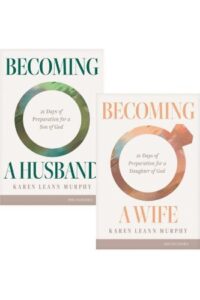
John: Yeah. And our guest today has been married for 38 years and brings some really incredible wisdom and, uh, practical tools for navigating conflict and rebuilding after infidelity and preparing for a lifelong godly marriage. Leann Murphy has written two devotional books, uh, which really serve as the basis for our conversation today. They’re Becoming a Wife: 21 Days of Preparation for a Daughter of God, and the companion, if you will, is Becoming a Husband: 21 Days of Preparation for a Son of God. Learn more about Leann and these terrific little devotional books at our website, and that’s FocusontheFamily.com/broadcast.
Jim: Leann, welcome to Focus on the Family. Good to have you.
Leann: Thank you. I’m excited to be here.
Jim: You know, this is a, a, a really insightful… I like those unique ideas about how to transfer your values to your kids, to your grandkids. There’s just so many unique thoughts there, but this, these two books really, uh, were the genesis of communicating to your sons about marriage via letters. Is that right?
Leann: It was.
Jim: What, what happened there?
Leann: Well, it was a little bit of a panic attack, right? I mean, my-
Jim: (laughs).
Leann: My oldest son, Patrick, came and said he thought this was the time he was gonna propose and he was making plans. And I just remember kind of having that thought, we’ve prayed for this. My husband and I had prayed for his spouse. Um, my mother had kind of planted a seed when they were little by giving us this little going… It was like a bonnet for a baby, which Mike almost became a nerd about boys wearing that bonnet at home. But, um, it was a little hanky and it was that someday it would be given to his wife as a reminder that she’d been prayed for. And so it planted a seed and we had done that when he said he was getting married. It was that thing where we went, “Whoa, did we do it enough? Have we said enough?” ‘Cause we know. We’ve, we’ve, um, been through the flat tires of marriage and the breakdowns. And so we were just, I particularly think it was a little bit of a panic attack on my side. Did I say enough? Have we told him enough? And so I thought, well, I’ll just write him a letter and I’ll give it to him before he gets married. And that turned into like 21 letters.
Jim: Wow.
Leann: And, um-
Jim: You had a lot to say. (laughs)
Leann: There was a lot, there’s a lot of stuff that we need to be prepared for with marriage. And I don’t feel like we were. And then when Colton, who at the time Patrick got married wasn’t really even dating anyone, but a few years later, he announced that he was getting married. We went to their, their engagement party dinner, and Patrick said, “Oh, Colton gets the book now.” And that does your heart good, right? He actually read it. And then his sweet little wife who has been part of our life since she was six years old, Lydia said, “Well, wait a minute, you kind of helped raise me. Do I get a book?” And so I went back and rewrote 21 days for a daughter.
Jim: Yeah.
Leann: And so that’s how they really started. They started as letters to children and-
Jim: Yeah.
Leann: … um, grew from there.
Jim: Yeah. Uh, y- you discussed how it was difficult for you particularly to put Jesus first in your marriage. Um, I mean, we’re young. How old were you guys when you got married?
Leann: So we were, we were older than a lot of people because we went into after college. So we were in, uh, 24. We were both about 24.
Jim: Yeah, okay. We were in that boat.
Leann: But we… And I think it was about, we both had Jesus first personally.
Jim: Right.
Leann: But to put it in that marriage, it’s kind of like we almost kept it as a bo- like, this is the marriage and this is spiritual. We went to church, we did those things, but we never really incorporated Jesus into the marriage conversations.
Jim: What does that look like to do that?
Leann: To incorporate Jesus into it, it looks very different. You know, our marriage is very different. So it’s, um, we talk about that as part of our plans. We pray together. Um, I think we would pray together at meals because that was kind of the tradition of our families, right?
Jim: Yeah.
Leann: And now we pray together in the morning, we pray together when we’re concerned about something. Um, we sat in the parking lot before we came in here and prayed together. Um, so it, He becomes part of that-
Jim: More integrated.
Leann: … unity, right? Instead of thinking, oh, there are two of us in this marriage. Now you start thinking there are three of us in this marriage.
Jim: Yeah.
Leann: And you start recognizing that, um, it, I mean, the marriage, I think we miss the point is that the marriage is an allegory of Christ in the church.
Jim: Mm-hmm.
Leann: We’re burying Him out in our marriage. And when you don’t have that in the forefront of your brain, it probably, we read the verse, but we had never made it practical. We had never said, “What does that mean and what should life look like in our marriage?”
Jim: Yeah, that’s so true. And I think the earlier in your marriage you can get to that place, the better off your marriage is going to be.
Leann: Absolutely.
Jim: Because what creeps up like a weed, in my opinion, a kudzu weed or whatever it might be-
Leann: Kudzu is a great example. Yeah.
Jim: But it, it, it’s the choking off of the healthy things in your marriage, the intimacy, emotionally, certainly physically and all those good things, and then you end up in places of doubt or mistrust or kind of all the things that are dark.
Leann: Mm-hmm.
Jim: And, you know, you don’t give the benefit of the doubt. You get, you’re on a hair trigger when it comes to, “What do you mean by saying that? I made a great meal,” or whatever it might be.
Leann: Right.
Jim: Um, or, you know, those kinds of things. You guys, y- you did something kind of unique when you first got married. You moved into your in-law’s backyard (laughs).
Leann: We did. We had-
Jim: Oh, why?
Leann: And it sounded like such good idea.
Jim: (laughs).
Leann: We, um, we were looking for a place to live, wanted to be, you know, frugal. And so we had, we were gonna buy a mobile home and move into that. And they were like, “Well, we have all this property.”
Jim: Yeah, come on.
Leann: “You should be here.” And so it made great sense. It, it really did. And-
Jim: It’s cheaper.
Leann: It was cheaper and it was peop- you know, we knew them. It was a small town and we were gonna be close to them anyway, so it just all seemed to make really good sense. Um, sometimes what makes really good sense doesn’t line up though-
Jim: Yeah (laughs).
Leann: … with-
John: Common sense.
Jim: What was the first clue-
Leann: Yeah.
Jim: … that, uh-oh, this might not be really good?
Leann: So I think the first clue was that Mike thought it was really wonderful and I started having concerns when there, conversations that we would have as a couple became conversations that included parents’ opinions on a lot of things. And he was eating lunch with her, you know, he’d go home for lunch and his mom was retired and his dad was retired, so they’d have lunch together. And I was still, I was a school teacher, you know, you don’t-
Jim: You were at work. Right.
Leann: … get a long lunch, so you’re at work. And so those connections, and my family meanwhile was seven hours away, six hours away. And so there was, there was this very tight-knit connection, which is a blessing, but it can also be a problem when you don’t cut those o- apron strings. And, um, nobody who knows Mike Murphy would say he’s a mama’s boy or anything like that, but there is, when that connection is still so solid between one parental unit and the other one is independent of that or by physical or whatever-
Jim: Yeah.
Leann: … reason, that can become a problem. And as we started realizing there were, some of our arguments were based on, well, but, you know, this really upset my parents or this concerns my parents, particularly when we were thinking about moving or getting a job and going somewhere else.
Jim: Yeah. You know, Mike’s out in the gallery here, so Mike can wave at me, but, uh, you know, truth be told, if you were to wind that tape back and Mike could redo that, I mean, the parents are gonna be the parents. You can’t really change that. And it, you know, they’re just talking.
Leann: Yes.
Jim: So there’s nothing wrong with it per se, but what, what could have been done differently to make you feel more in or try to compensate for that situation? I know, honey, it feels like you’re outside, but what, what would’ve helped you?
Leann: Yeah, I think part of it is just that extra effort. You know, if you’re the, the spouse that’s close to the family, physical proximity has a lot to do with it. I think interestingly, oftentimes it’s the reverse. It tends to be that daughters stay closer to their families. We just happen to be that reverse, because I had moved away from home. Um, but I think when you’re the one that’s closer to the family, you’re more intimately engaged with your family, that you have to be very intentional about recognizing their role, the spouse’s role is preeminent, right? Their opinion has to count more. Their, um, their interests have to be considered in that and not stay in that, that family of origin. It’s hard because you’re, you have to be breaking out. You’ve been in this family for 18, 22, 24, 26 years, and now you’re in this marriage for a year, two years. You have to build that relationship. And when you make those considerations-
Jim: Yeah.
Leann: … and you don’t intentionally say, “Well, I understand your opinion, but, but Mike and I have decided.”
John: Yeah.
Leann: Or, “Leann and I have decided,” or, “Well, this is very important to us and I, I’ve heard what you have to say about it, but this is our take on it.” You have to distance yourself.
Jim: Yeah.
Leann: Um, I recently heard a friend of mine say, “Well, you know, my mom and dad always understood how things were going and it just, like, I couldn’t get him.” And it’s like, whoa, there’s an alliance there, right?
Jim: Yeah.
Leann: Mom and dad always understand, he just!… And so in that statement, there’s a separation, right?
John: Yeah.
Jim: Yeah. And this-
Leann: There’s that connection.
Jim: Yeah. And this could be for, you know, a married, young married couple who live in town with one set of the parents, but not the other.
Leann: Right.
Jim: I mean, that same kind of circumstance.
John: Mm-hmm. This is Focus on the Family with Jim Daly, and our guest today is Leann Murphy, and she’s written a couple of devotional books that are really, uh, designed for pre-married couples. Uh, they’re called Becoming a Wife and Becoming a Husband. We’ve got those here at the ministry, and you can get yours at FocusontheFamily.com/broadcast. And Leann, uh, this was one of the factors that led to some resentment and distance in your relationship. So as things unfolded, um, was there ever resolution or did things just deteriorate?
Leann: You know, we, we had really wonderful times together, and I think that’s a lot of marriages. You know, you have great times together, things go well, um, you have friends, you have, you know, family that you do things with, but it’s in those quieter moments where it’s just the two of you that those conflicts rise up. And if you, um, go about the way of the world, right, you go, “Oh, just sweep that under the rug and keep moving.” And I think that’s what we tended to do.
John: Mm.
Leann: Things could look really great on the surface and we had, uh, we had a wonderful friendship. I, Mike’s always been my best friend, and I think he would say the same thing, but we did not nurture that marriage as the unique, sacred l- relationship that is. We treat it more like every other relationship, right? And so if a conflict came up with a friend, a lot of times you can just sweep that under the carpet and go on and, with your friendship and not have to address that. But in the intimacy of marriage, those things need to be dealt with and not swept under the rug. They’ve got to be addressed. And so just over time, I think that did. And I tend to be the very, um, you, there are nice ways you can say it, in other ways, more driven, more focused, more, um-
Jim: Direct.
Leann: … more direct.
John: Yes.
Jim: (laughs).
Leann: More aggressive, right? And, and Mike is probably a little bit conflict-avoidant. And, um, I think there’s, you see that in a lot of couples, right? You say one who’s very direct-
Jim: Right.
Leann: … and one who’s conflict-avoidant, and then you’re balancing that. And so that was more swept under the carpet.
John: Mm.
Leann: And over time, that becomes a, a challenge.
Jim: Leann, I, I don’t know, again, if this is predominantly, um, the wife’s emotional, or the husbands, it could probably flip, but there’s probably an 80-20 rule here-
Leann: Right.
Jim: … with the question I’m about to ask you, which is your disagreements and disappointments with Mike made you feel that God didn’t love you. I think most women are gonna go, “Exactly.”
John: Mm.
Jim: Most men won’t understand what, what?
Leann: Yeah, so I think, yeah, you, you do this thing, you know, you’ve prayed for this marriage. I, and a lot of women as my friends, we grew up praying for our marriage, praying for our spouses. And so then you find him and you’re convicted that he’s the one, and I know in my heart of hearts, Mike has been, um, the companion that I think God led me to. Um, but then when you feel that disappointment and you feel that you think, okay, well, wait a minute, God, this wasn’t what I thought I was going to experience, so are you really got my back? Are you really seeing me here?
Jim: And what I’m hearing you say, which is really the, the destructive dynamite of marriage, expectations.
Leann: Absolutely.
Jim: Especially unspoken expectations.
Leann: Yes.
Jim: We just think, “Well, he or she should know exactly what I need, what I want, what I prefer,” whatever it might be, whatever that expectation is. And then they go dashed. And in a relationship where that’s frequent, I mean, there’s like a, a withering of the flower in your heart. It just shrinks.
Leann: It does. And it-
Jim: And then you just let it happen, like sweep it under the rug. Those are the things we’re, you’re mentioning. And it is unhealthy to get there. And this is gonna continue in an unhealthy direction. You ended up one day kinda looking through a cabinet and something-
Leann: Yeah, so-
Jim: … you found something. Describe that moment and what you thought about.
Leann: So this is, um, we had, and again, great relationship in a thousand levels. And on the outside, everything looks great. We were raising children and going to church. We had moved to White’s Ferry Road in West Monroe and, uh, we loved that congregation and, um-
Jim: How old were the children at this moment?
Leann: Um, so the boys were… I have to think about that. Uh, right at 10 and six-
Jim: Okay.
Leann: … in that, in that ballpark.
Jim: Yeah.
Leann: And we came home from church one Wednesday night. Mike had had to work late and he had been home and I came home from church and, um, just out of the corner of my eye, I walked in the bathroom and saw him put something in a cabinet and didn’t even think, you know, kids are getting ready for bed, let’s hustle this off, get everybody settled, it’s the end of the school year. And when he walked away, I just opened the cabinet and there was his phone. And so I just… It’s like you don’t know anything and then you immediately know, and something wasn’t right. And I found a text message on there that was obviously not from me or to me, and it was a text message to another woman. And that’s when I found out things were not, you know, all that stuff that was under the carpet or that we’d put in the box was not in the box.
John: Mm-hmm.
Leann: It, there was something much bigger going on. And so that was how I discovered that.
Jim: You know, those moments, a- a- and there’s so many things that go into the ingredients of that moment that I think people that have not experienced that can easily look down the noses-
Leann: Mm-hmm.
Jim: … and pass judgment, and it, it is heartbreaking. What was that response that you had immediately? Because that, whew, that ends up becoming the thing that sets in place whether this will go in a good direction or a not so good direction.
Leann: Right. So the devasta-… I don’t think you can explain that level of devastation. And this many years afterwards, I can also say, which is, I did not ever imagine that I could be at this place, I can also say you can’t explain the devastation that the partner is going through, that your spouse is going through. Um, at that time, I could not even have fathomed that. But now, this many years later-
Jim: Right.
Leann: … having talked to him about it, and, and having talked to others, you know, Alan and Lisa Robertson were intimately involved with us during that time, and they were such a place of refuge and grace. And, and it is the opposite, right? It, it wasn’t the husband, it was Lisa in that situation. So I think the thing that I wanna say if somebody’s listening and they are there, they’re in that place where I felt like I was watching my marriage bleed out in the bathroom. I mean, it l- it was as though there were a body just bleeding out in front of me.
John: Mm.
Leann: Um, if you’re in that place, there is hope and there is healing because God gives us that hope and healing. And I think one of the things that I would say to those of us who… And because I, I was the same way. I probably arrogantly said, “Well, that’ll never happen in my marriage,” or, “I would never stand for that.” Um, David, a man after God’s own heart, uh, and, and you know, to be able, for God to say that about any of us would be like the ultimate-
Jim: Right.
Leann: … and David committed adultery and, um, there was a breakthrough there. So, there is hope. And I think for me at that point where you’re seeing that and you think this is it, you need to know that there is a possibility. And it’s hard to find that hope. Uh, I looked for books to give me that hope, uh, but it, they’re hard to find, but there is hope.
Jim: Leann, we’re not gonna unfortunately have all the time to kinda diagnose this and-
Leann: Mm-hmm.
Jim: … and how the Lord patched it all together. But the one thing I’ve observed with couples that have held together, of course, we have a lot of couples. This is probably the number one issue that couples will come to Focus on the Family’s Hope Restored efforts. We have four locations around the country, and if you’re in that spot right now-
John: Mm-hmm.
Jim: … not just with infidelity, but like, it feels like your marriage is in deep trouble, this is a place for you to come and get that restoration that Leann’s talking about. They have a four-day program. I mean, it’s grueling, eight to 10 hours each day, but it is the most effective way to get your marriage back on track. We go back to every couple two years later, over 80% of them have stayed together, but these are with people that have divorce papers in hand. And so if you’re in that spot, give it a try. What do you have to lose? And we will, uh, help you in that, just give us a call. But from that experience, Leann, the intimacy that’s developed post that affair kind of thing-
Leann: Mm-hmm.
Jim: And again, there’s no rational reason for it. We’re not saying you just put it under the rug, so to speak. It, but it does open this can of opportunity to go deeper, more intimate. And the couples that I’ve talked to that went through, uh, infidelity and have held together, they feel like their relationship now is so deep and so close because you know each other so well. I mean-
Leann: You do.
Jim: … y- you’re broken.
Leann: And I think that’s part of the reason, and like I said, it was almost a panic attack moment, because I don’t want my children to experience that. And so build those boundaries, set those boundaries, um, have those agreements with one another, have those conversations before you get married and then again-
Jim: Mm-hmm.
Leann: … on the first anniversary, and then again on the second anniversary. Um, know how to fight, you know, to normalize. You’re going to fight, and you need to be prepared for that, and you need to embrace that to the extent that you’re fighting for one another, not against one another.
John: Mm.
Leann: Um, and so to be able to say that to my sons, you know, fight for her. If you’re fighting against her, it’s the wrong fight.
Jim: It’s a great trigger to think of that before you get into a deeper, uh, problem.
Leann: Yes.
Jim: And, you know, even people hearing, “You fight? Christian couples should not fight.” I’ve had people contact us after doing a show like this, say, “Christians should never fight.” You can call it deep emotional disagreements-
John: (laughs).
Jim: … whatever you want to say, but that isn’t a sign of failure. It’s actually, if you can manage that well, it’s a sign of healthiness. Uh, Leann, 2 Corinthians 13:11 really spoke to you. It gave you the perspective you needed to handle disagreements in your marriage. What is that scripture and how did it impact you?
Leann: 2 Corinthians 13:11 was one of those scriptures I found when I was actually looking for scripture to point out why Mike was wrong in something.
Jim: (laughs).
Leann: Um, you know? I don’t know if anybody else does that, but sometimes I go, “Oh,” and I go get my Bible-
Jim: Nobody, nobody does that.
Leann: … and pout up with it.
John: (laughs).
Leann: Um, but it hit me and it starts with rejoice. And I was like, “Okay, Lord, why, why this scripture?” ‘Cause I was looking for scripture to point out that Mike is wrong. And so I was kind of stunned by it, but I, okay, I’ll stick with you a little bit. You’ve walked me through Proverbs 30. I, I can stick with you through scripture. And it dawned, there were six, I believe, verbs there. And I kept thinking, “He’s trying to teach me something here.” And it was, but rejoice was first. And so one of the things that I know helps you be in a better frame to have those deep, hard conversations, those emotionally intense conversations is to focus on the good first, do something fun together, do something where you just recount what the point of this argument is. It’s about, because I love you, I don’t want to be with you and I’m going to age with you, um, so to rejoice, and then to aim for restoration. And so it’s this idea in my mind, I just immediately saw a target, a bullseye, you know? The thing that you aim at.
Jim: Here’s your goal.
John: Mm.
Leann: So what is it? What are you trying to restore? A lot of times we don’t even, we don’t get to the root of the fight. We’re talking about, I’m aggravated because you left your dirty socks six inches from the hamper. That’s not the real argument, the real argument-
Jim: Are you talking to Jean?
John: (Laughs).
Leann: So you’ve got to find, what is it? So the argument is, am I valuable to you or am I just here to clean up your house, right? It, it’s, it almost always comes back to, am I valuable to you?
John: Mm-hmm.
Leann: And then to, um, aim for restoration, to comfort one another. And these are so out of order in my mind because it’s like, wait, we gotta come to agreement before that. And he holds h- come to agreement ’til the fourth step-
Jim: Right.
Leann: … you know? So it’s like rejoice and then aim for restoration and then comfort one another, then come to agreement and then live in peace. And it’s like, oh, we want peace before the comforting, we want peace before the agreement, we want peace before we even aim for restoration. And so it just struck me that in that one little verse, I felt like this is why we’ve been doing it the wrong way. This, we’ve been doing it backwards. And so I love that verse. And so we spend a lot of time in the journals talking about how to fight well.
Jim: That’s so good. In fact, that verse ends with, “And the God of love and peace will be with you.” (laughs).
Leann: Yes.
Jim: It’s kind of the thing you want the most is the thing he mentions last.
Leann: Yes.
John: Mm-hmm.
Jim: You know, I’m gonna be there with you.
Leann: I’m gonna be there.
Jim: Some days, it may not feel like it.
Leann: Yes.
Jim: But I’m there with you every step of the way.
Leann: Yes. And he gives us that pattern, it’s that one little verse, if you ever doubt how much time you need to be spending in scripture, that’s one verse.
Jim: Yeah.
Leann: So much packed into it.
Jim: You know, we have a program here, uh, it’s called Ready to Wed. Uh, Dr. Greg Smalley and the marriage team here at Focus pulled that together and it’s pre-marriage counseling and there’s great data to support that if you get 10 hours or more of premarital counseling, your risk of divorce is very slight compared to certainly the worlds, but even within the Christian divorce rate. For those couples that are dating, maybe engaged, this is the primary audience for the books. So, you know, grandparents and parents with adult kids in their 20-somethings who are looking to get married, what do you say to them about this companion set of books to be that good wife, to be that good husband?
Leann: So I, you know, I would just say you need to be intentional and you need to talk to one another, you need to address these issues. You know, we know what’s gonna cause marital problems. It’s money, sex, in-laws, parenting. So address those. And this gives you a place to respond. It asks you questions and it lets you share it with your spouse. And so I think just anything we can do to prepare our children, the people we love, to go through the things that we know are gonna be hard.
Jim: Yeah.
Leann: Marriage is gonna be tough, but it is so worth it.
Jim: Yeah. Leann, I so appreciate it. You know, think about it, folks. It’s not easy to come into a, a studio with a national and international footprint, millions of people are gonna hear this, and tell your story as a married couple with infidelity and how the Lord worked to repair that. So although Mike’s out in the audience there, Mike, thank you for that vulnerability as well. You could have said, “I really don’t want you to share this,” but I appreciate it because it will help other couples.
John: Mm-hmm.
Jim: And Leann for responding in a way that says, I’m gonna fight for our marriage.” And obviously years later, you’re here. So God honored that. So thank you for all of that. If you wanna strengthen your marriage or prepare for a great one in the future-
John: Yeah.
Jim: … whatever it might be, Focus on the Family is here for you. I think the one thing when I meet folks when I travel, they don’t realize the treasure trove of help that Focus on the Family can be. We are set up for that, everybody. We’ve been at it almost 50 years now. We have a treasure trove of resources. We have a counseling team. You can call. It’s all free. They’ll spend time with you on the phone, get an idea of where you’re at, help you biblically, spiritually, what will be some next steps to get you closer to God and hopefully repair some of the, uh, difficulty that you’re in. And, uh, you just need to call us and we’ll set up a time to call you back. So take advantage of it. We want to be taken advantage of. (laughs) Come and get the resource. And with these, if you can’t afford it, we’ll find a way to get it to you and trust that others will cover the cost of that. For those that can, if you can make a monthly gift to help Focus in the budget, that’s great. A one-time gift is great. And when you do that, we’ll send you the books as our way of saying thank you for being part of the solution, the ministry here at Focus.
John: Mm. Yeah, we’d love to hear from you. The number is 800, the letter A, and the word FAMILY. And we’ve got details to everything we’ve mentioned here along the way, including Leann’s great books, Becoming a Husband and Becoming a Wife. You’ll find those at FocusontheFamily.com/broadcast. And next time, Greg Koukl will equip you to stand up for your faith in a winsome way.
Greg Koukl: If Christians want to make a bigger impact, they need to get a little bit more education about the issues themselves and a- about some method, I offer one, some method that’s effective to move forward.