




Preview:
Crystal Paine: And so if you believe “I don’t have what it takes, you know, I’m not a go-getter, I’m not someone who is-”
Jim Daly: Mm-hmm.
Crystal: “… good with finances,” that’s gonna hold you back. And I really challenge people, instead of saying that, start saying, “I’m becoming a person who is learning how to use my finances well. I’m becoming a person who is learning how to save money.”
End of Preview
John Fuller: That’s Crystal Paine. She’s our guest today on Focus on the Family with Jim Daly. And, uh, we’re gonna have a conversation about healthy financial habits and finding confidence in your money, especially during this tough economic time. Thanks for joining us. I’m John Fuller.
Jim: Finances are a stressful topic for so many people, and I get it. With prices skyrocketing, you may be feeling a little tight on money right now, especially since basic needs like groceries and gas are taking up a bigger slice of your paycheck. But you know what also feels stressful? Financial terms like account balances, monthly income calculations, and of course the dreaded B word budget.
John: Ah. (laughs)
Jim: Don’t we hate those?
John: Mm.
Jim: Well, here’s the good news. Money doesn’t have to be complicated. And in today’s economy, you can learn to make finances work for you. Crystal’s going to share with us some practical tools that helped her make it through a tight financial time. It’s always good to learn from people that have gone through it. And I’m sure it will be a great help to you and your household, no matter what your economic situation is.
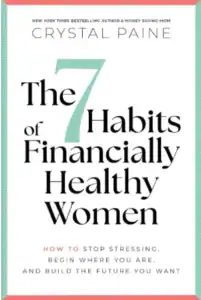
John: Mm-hmm. And Crystal Paine is an author, podcast host, blogger. Uh, she’s got the website, Money Saving Mom, and she’s written a book called The 7 Habits of Financially Healthy Women. It includes a lot of practical advice for all of us though. So find out more about Crystal and this book at our website.
And Jim, here’s how you started the conversation with Crystal on today’s episode of Focus on the Family with Jim Daly.
Jim: Let’s start by addressing the angst that many people feel about their money. You know, when Focus on the Family, we receive texts and emails and letters. You know, it’s really money and physical intimacy are two big issues in marriage, but money typically is right at the top. It just, uh, becomes so difficult for many. And, uh, I think you surveyed nearly 4,000 women, particularly about this topic. What did you discover about that feeling of angst?
Crystal: Mm. You know what was so interesting? In doing that survey, I found that every woman pretty much, whether she was doing really well financially or really struggling financially, had some fear-
Jim: Mm-hmm.
Crystal: Around money. And I think, you know, we think that “oh, if I get to this place financially, I’m no longer gonna have fear.” But that wasn’t the case.
Jim: You experienced some significant financial stress yourself. You know, I love having guests on the program who are speaking from experience, not just theory. Uh, what was going on and how did you and your family, uh, cope during that season of your life? And what was it?
Crystal: Yes. So when my husband and I got married, we set this audacious goal that we were going to stay out of debt, and he was getting ready to go to law school. And so we really (laughs) was like, “How are we gonna do this?” And we went through a few, it was three years or so where money was very, very tight to the point of, I remember, I don’t even know if I should say this on air, but our gold-
Jim: Oh, please do. This is the best part.
Crystal: (laughs) … our goldfish. We had a fish that we couldn’t buy food for because we didn’t have $2 in the budget.
Jim: Wow.
Crystal: And that, that fish stayed alive for two weeks without food. But it was like, it’s either us or the fish, you know? And that’s how tight money was. But we learned so much from that season. And honestly, that’s where my site, moneysavingmom.com grew out of.
Jim: Yeah. Please don’t write us if you felt the fish should come first. We get it-
Crystal: (laughs)
Jim: … but I think, uh, I understand (laughs) the problem. Let me ask you in that context, are you the one in that checkout line that you got 40 coupons that we gotta wait on? (laughs)
Crystal: I tell a story in the book where I actually got paid to buy groceries one time. Like, it was double coupon day, and I had so many coupons that we got to the end and there was a, a negative total and they didn’t know what to do. And then it was like, oh, I guess-
Jim: That’s unbelievable.
Crystal: We’re gonna … So they literally opened up their cash drawer and pulled out $3 and (laughs) handed it to me.
Jim: That’s pretty good.
Crystal: Yes.
Jim: I don’t think I’ve ever heard of that one, but you must be quite the coupon clipper.
Crystal: Well, I talk also in the book about the drugstore game, which is another thing that I did where you can get all these products, household and hygiene products for pennies on the dollar. And back in the day, it was really good. And so I would be just like every week getting $75 worth of products for maybe like 75 cents out of pocket.
Jim: Wow.
Crystal: And then I ended up selling a lot of those things in a garage sale and making money on them as well. (laughs)
Jim: That’s incre- … You are the little entrepreneur, aren’t you?
Crystal: (laughs)
Jim: That’s so good. You know, family of origin has so much to do with this and, you know, we tend to fall in two big buckets when we have people about finances on the program. It is true. You have spenders and you have savers. And oftentimes, those two are attracted in marriage. (laughs)
Crystal: Yes.
Jim: You have the spender and you have the saver. Uh, have you found that to be true? And then what’s the conflict potential and what do you do if one of you is a spender and one of you is a saver?
Crystal: Well, you can probably guess that I’m the saver in our relationship.
Jim: Exactly.
Crystal: Um, my husband is the spender. And when we first got married, it was really challenging because I just couldn’t understand the way that he thought. And one of the hardest things for me was to wrap my head around the fact that when he would spend money for me, it was because he loved me. Like he was trying to show me love.
Jim: You didn’t understand that.
Crystal: And I was like, “Why are you spending money?”
Jim: (laughs)
Crystal: “No, just save money. That’s how you show me love.” And so really having to work through that and really understand that he’s trying to take care of me-
Jim: Wow.
Crystal: … when he goes and buys this thing for me, he’s trying to show me love.
Jim: So let me ask this. Someone’s saying … Okay, so how many years have you, you been married?
Crystal: Almost 24.
Jim: Okay. So after all this time now, uh, does he still do that, or did you get him into compliance? (laughs)
Crystal: I did not. You know what? It’s, I have become more of a spender, and he’s become more of a saver.
Jim: Oh, wow. So you’ve, you-
Crystal: So we’ve balanced each other out.
Jim: The two have become one flesh, right?
Crystal: Yes. Yes.
Jim: That’s awesome.
Crystal: And when he buys something for me, which he does often, to see it as he loves me versus-
Jim: Yeah.
Crystal: … “Ooh, was that in the budget?”
Jim: Yeah. Well, that’s great though. You, you mentioned in the book how your grandparents and parents influenced you. Describe that a little bit.
Crystal: Mm-hmm.
Jim: That’s family of origin as well, but-
Crystal: Yes.
Jim: … what did they do that was positive for you?
Crystal: Mm.
Jim: I won’t ask you about the negatives.
Crystal: Uh, so much positives when it comes to finances. Um, I talk about how just my grandparents were such hard workers-
Jim: Mm.
Crystal: … and my grandpa actually taught my dad never to go into debt for anything but a house. And so my parents went into marriage with that goal. And then when I was young, they paid off their house and then they bought land in the country with cash. And then we moved into this construction trailer and lived out on this land while my dad was a general contractor, and they built a house debt free.
And so seeing my parents and all the sacrifices that they made and seeing how it gave them so much freedom and so much ability to be givers, that just really inspired my husband and I. And we said, “We wanna stand on their shoulders and we wanna take it even-”
Jim: Mm.
Crystal: “… further and not have debt.” And so not having debt for when he went to law school, paying cash for our first house, it just was a huge inspiration for us.
Jim: Yeah, that’s so good. What a great, um, I guess, tradition-
Crystal: Mm.
Jim: … to establish. What, from your perspective, your definition, what does it mean to be healthy financially?
Crystal: Mm. I think so often people think of financial health as like you have a lot of money or you have a lot of security when it comes to finances. But for me, it’s really about what you feel in your heart.
Jim: Mm-hmm.
Crystal: And it’s really about aligning your priorities with your spending so that you’re living with intention when it comes to your money. And then you have so much peace in your heart.
Jim: Yeah. Then that’s the goal, right? ‘Cause money, the love of money is the root of all evil-
Crystal: Mm-hmm.
Jim: … is what Scripture says.
Crystal: Mm-hmm.
Jim: It’s not that money is evil, it’s the love of money.
Crystal: Mm-hmm.
Jim: And that’s, you know, how to shape that in your children, how to take it from your parents and grandparents. It’s so good. A lot of people believe having more money will solve their problems. Um, you know, I have, uh, wonderful friendships of people that have done so well financially. And for the most part, it’s true. They’ve, because of their Christian orientation, it’s healthy. But I’ve met some people that more hasn’t really solved the problems because the problems weren’t money in the first place. What’s your perspective on that? More money will take care of us.
Crystal: Mm. You know, if more money was gonna be the thing that was gonna give you the ticket to happiness, we think about all these people in Hollywood-
Jim: Yeah.
Crystal: … that’s, it’s not working so well for so many. Um, I really think that so often money is, it’s an indicator of where our heart is. And I was just writing something this morning about how so often we think that spending money is gonna fix this hole in our heart that only God can fix.
Jim: Mm.
Crystal: And so often we’re trying to fill that hole with a quick trip to Target or that Amazon purchase. And if we were to stop before we make that purchase and say, “What am I actually feeling right now? Like, am I sad? Am I lonely? Am I scared? Am I tired?” And just really assess what we’re feeling and deal with that versus just hitting that, you know, buy now button or just swiping our card without even thinking about, “Why am I making this purchase?”
Jim: Yeah. And that is so good in terms of coaching because there is an impulse side of it. And advertisers know that. They’re trying to make you feel like you’re out of it if you don’t have it, that you’re less healthy if you don’t-
Crystal: Mm-hmm.
Jim: … have it, whatever it might be. And that’s their whole goal, right? To create a compulsion that you need this.
Crystal: Mm-hmm. I really think that, you know, it’s not about how much you have or don’t have. It’s about your contentment in your heart. And if you don’t start from a place of understanding, like, the goodness of God and having Him fill that hole in your heart, you’re always going to be chasing after more, thinking that it’s gonna be the thing that’s gonna make you happy, but it’s not.
And I look back to when my husband and I were in those lean law school years, and we learned so much that happiness isn’t something that you buy. And I learned so much about contentment. And so now that we have much more wiggle room in our budget, I’m like, you know, there’s not much that I need. And there’s just so deep contentment. And I think when you-
Jim: Mm.
Crystal: … live your life from that space of deep contentment, there’s just so much more joy and you don’t really even care about the money anymore.
Jim: Yeah. What a counter-cultural message that that real Christian message is. You know, when we look at different issues that we face as human beings, uh, I’m thinking of emotional issues. You know, some people will medicate through alcohol, through porn addiction, through all these things that they’re looking for. But your point about filling that hole in your heart, again, for the person struggling in the financial area, how do they get recognition of that? Okay, what… In a more practical way-
Crystal: Mm-hmm.
Jim: … what you just said that, you know, ask yourself this question. Why, why do you feel you need that?
Crystal: One of the things that I encourage people to do is take a 30-day no spending challenge. And I’m not saying, like, don’t buy anything, but don’t buy anything that is not an absolute necessity and really define what is a necessity. The way that this is gonna help you is that it’s gonna bring awareness. Maybe you don’t have any issues when it comes to spending, but I think everyone would benefit from doing this because it’s just going to help you to really start thinking about, “Why am I spending money? What am I spending it for?”
And I had a friend who did this and she realized that a lot of times at night when she was just feeling bored, she would go buy something on Amazon. And she was like, “I have all this clutter in my house that I bought for no reason other than-”
Jim: Mm.
Crystal: “… I was just bored.” But I think a lot of times also it can be something deeper-
Jim: Yeah.
Crystal: … that by taking that challenge of not spending anything that’s n- and not a necessity for 30 days, it’s going to help you just really just develop more of an awareness around your spending habits.
Jim: Yeah. You mentioned to start where you are, to take inventory, start where you are. I’m sure that connects with what you just said, the challenge, but is there any additional thing in that regard?
Crystal: Well, one of the things, so the seven habits, the first habit is start where you are. And the reason that I had that to be the first habit is because I feel like so many people think, “I can’t be financially healthy or I am not gonna, you know, be where I wanna be financially until I get to a better place, until I have a better job, until I’m in a better situation.” But I really challenge people, start where you are. What do you have? Use what you have right where you are.
And I do an inventory in the book to just really help you to look around and assess, “What do you already have that you can use to help you to get where you want to go?” And maybe it’s gonna be microscopic baby steps, but that’s still going to make an impact.
Jim: What do those questions look like if you’re taking that inventory?
Crystal: Yes. Well, so for instance, when my husband was in law school and I, we were living on this beans and rice budget, and I actually found out I was pregnant. I was really sick in my pregnancy. I had to quit working and I’m at home in this basement apartment all day long because we didn’t have an extra vehicle. And I’m like, “What do I have?” Well, I had an internet connection. I had the library, and I had time. And so I just started researching everything that I could about making money online because I really wanted to be able to-
Jim: Mm.
Crystal: … you know, make sure we had food to eat and all that. And you just start where you are instead of thinking that you’re stuck. I think so, so many times-
Jim: Yeah.
Crystal: … people feel like they’re stuck. And so then they’re just like, “I can’t do that,” versus saying, “What can I do?”
John: Crystal Paine is our guest today on Focus on the Family with Jim Daly. And as a mom who’s lived through some tough times financially, she sure knows what it’s like to save up and to make good money decisions on a tight budget. She’s got a ton of practical support in her book, The 7 Habits of Financially Healthy Women: How to Stop Stressing, Begin Where You Are, and Build the Future You Want.
Get in touch with us to get your copy of the book and, uh, along the way, make a donation, please, to support this ministry. Our number is 800, the letter A, and the word FAMILY. Or you can, uh, stop by our website, focusonthefamily.com/broadcast.
Jim: You know, Crystal, it, it sounds like you’re a go-getter. You know, that’d be a label I’d give you. I mean, you’re seeing a need in your own family and you’re saying, “Okay, I gotta find a way to, to remedy this.” That’s an incredible attribute; I’d say a God-given thing. People that may not have that label as a go-getter, they’re going, “Yeah, it’s good she could do that. I don’t know that I’ve got it to do that.” And what do you say to them? I mean, everybody’s got potential. You just have to have the energy, really, to apply yourself, right?
Crystal: Mm-hmm. I think a lot of it starts right here-
Jim: Yeah.
Crystal: … in our mind.
Jim: Yeah.
Crystal: And what we think dictates how we live. And so if you believe, “I don’t have what it takes,” you know, “I’m not a go-getter. I’m not someone who is-”
Jim: Mm-hmm.
Crystal: “… good with finances,” that’s gonna hold you back. And I really challenge people, instead of saying that, start saying, “I’m becoming a person who is learning how to use my finances well. I’m becoming a person who is learning how to save money.” And when you say that and keep telling yourself that over and over and over again, it changes the way that you think, but it also changes the way that you act because actions often follow our beliefs.
And so tell yourself, “I’m becoming a person who is good with money.” And then you think, “Well, what would a person who’s good with money do?” And start doing that.
Jim: Yeah.
Crystal: And so for me, I feel like you change so much when you change the way that you think.
Jim: Yeah. I like that. Um, you know, it’s pa- neuro pathway development, really. I mean, this is a function of how you, uh, train your brain to think differently. And the Scripture’s full of that, actually-
Crystal: Mm-hmm.
Jim: … to meditate on the Word, to fear not, all those things that God instructs us because He created us, uh, to teach us how to think in a more heavenly way, if I can use-
Crystal: Mm-hmm.
Jim: … that term. Another habit you recommend is identifying our financial priorities.
Crystal: Mm-hmm.
Jim: I, I wouldn’t be shocked at a lot of couples that cannot do that today. Um, it would not surprise me because we don’t spend a lot of time thinking about that, right?
Crystal: Mm-hmm. Mm-hmm.
Jim: Um, how do we wanna spend our money, et cetera. So give me some examples of how you can prioritize your financial situation. What does that mean?
Crystal: Mm. Well, I think starting out with having a conversation if you’re married with your spouse. And this is so good just for your marriage in general-
Jim: Mm-hmm.
Crystal: … for you to learn to communicate about money and get on the same page, but also to say, “Where do we wanna be in five years from now?”
Jim: Yeah.
Crystal: You dream about the future. My husband and I love to do that. And, you know, not all of our dreams have actually come to (laughs) fruition, but it just gets your creative juices flowing. So start asking that.
And then I also would say one of the habits I talk about in the book, it’s the last one, is consult your 90-year-old self. And so zoom out and think of, “What would my 90-year-old self tell me that I should be doing-”
Jim: Mm.
Crystal: “… right now when it comes to finances?” And so have that conversation with your spouse about that and then go and look at how you’re actually spending your money. Look at the last three months of your expenses and be like, “Is this in line with what we say our priorities are?” And so when I think of that, I think of, “You know what? My 90-year-old self would tell me not to be worrying about these things that-”
Jim: Mm-hmm.
Crystal: “… really don’t matter, and to be investing my time and my energy and my resources in the people around me, because that’s what’s gonna matter most.”
Jim: Yeah.
Crystal: And to be a giver.
Jim: Yeah.
Crystal: And to, you know, be generous with how I’m living my life. And so it just really helps me to have a better perspective on what matters in the day-to-day.
Jim: Uh, what about the B word, budget? Uh-oh, nobody wants to talk about that, except those go-getters.
Crystal: (laughs)
Jim: But the, uh, you know, what, what are your thoughts in terms of how to stop and who’s got the math skills and (laughs) who doesn’t-
Crystal: Mm.
Jim: … and who should manage the budget? How do you create the budget? Let’s give those practical insights.
Crystal: Mm. Mm-hmm. Well, I think a lot of people, when they hear the word budget, they instantly just kinda cringe and recoil because-
Jim: Yeah. Kinda like an audit.
Crystal: Yes. It’s like, “Oh, I don’t wanna do that.” Or, “I’m not good at that,” or, “I tried that and it didn’t work.” And what I really challenge people is maybe you need a different word. Like, maybe you call it a spending plan or a money roadmap or something that really helps bring a positive light to it instead of that negative light.
And then I think to recognize that it is not about you being, like, shackled and chained to have to be super, super frugal. What it is, is it’s something that’s gonna help you to be able to live with intention when it comes-
Jim: Mm.
Crystal: … to your money, and it’s gonna help you align your spending with your priorities, and it’s gonna allow you to have a lot more ability to give and to do fun things. Like, we budget for a lot of fun things. You can budget for things like concerts, you can budget for date nights, you can budget for vacations. And when you do that, your money’s gonna go so much further, and you’re gonna have so much peace in spending it.
Jim: You know, and again, I wanna raise this with all the context that we’ve talked about already. Couples that struggle with this, it could be a real point of conflict. And I, I guess in that way, let’s say in your situation as the wife, you’re mindful of it, you’re concerned about it, maybe fearful, and you wanna get a handle on this in your, your finances.
Husband’s a little more distracted, buying too many video games. I mean, I’m painting the picture of what comes in here, right? Not as mindful, not as concerned. You know, “We’ll dig out of the hole if we get in a hole. We’ll find a way. It always happens.” How do you take those first steps to say, “Okay, let’s not live on that kind of a wing and a prayer. We gotta be more practical.” W- how do you get started tonight?
Crystal: Well, I think a lot of women go into these conversations with an agenda. And I think when you go in with an agenda, you’ve instantly kind of hurt the conversation. And I would really encourage you to go in with a curious heart.
Jim: What does the agenda voice in your head sound like? Just so they can identify it.
Crystal: Yes. So a lot of times women will be like, “I don’t like the way he’s spending money. We need to get in a better situation financially. This is not working. I have so much fear around this. I’m frustrated with him, and we need to fix this.” And I hear from so many women who are like, “My husband won’t get on a budget and it’s just causing so much conflict in our marriage.”
But if you’re approaching it with, like, “He’s wrong and I’m right,” instantly, you have set things up to be unsuccessful. And so if you instead, you know, say, “Hey, I’d love to have this conversation with you.” And start with one of the things I talk about in the book is going back to your childhood and really hearing, like, what was his childhood like when it comes to money? And what were the conversations around money?
Did his parents even talk about money? Like, did he have good models? And just have these conversations so that you can understand where you both are coming from and maybe the baggage that you’re bringing into marriage that could really cause there to be conflict. And then I think just listening and continuing to ask questions, and then telling him, like, “I’m struggling and I’m feeling really fearful when it comes to money. Can we talk about this?”
Jim: What’s the mechanism you used or you would coach somebody, a, a wife to use when the, everything you just said is true, and those are true things. He’s not mindful of it. What do you, how do you get out of the triggering, hitting the button, and stepping back? I mean, practically, you’ve given the, kind of the idea, but for the wife who, what, “This is true. I can only speak the truth.” (laughs) You can hear the dialogue.
Crystal: Mm.
Jim: How do they actually back up and say, “The bigger goal is this. For us to get there, I need to say these things.”
Crystal: Mm.
Jim: I mean, you, you really need that mechanism in your head to do that so that you don’t trip on what is true.
Crystal: Mm-hmm. Mm-hmm. I think one of the biggest things, you know, going into these conversations with a lot of prayer-
Jim: Mm.
Crystal: … and, you know, asking the Holy Spirit, like, “Please help my husband to hear my heart in this conversation.” And then one of the things that my husband and I, we’ve learned is to, instead of saying, “You did this.”
Jim: Mm-hmm.
Crystal: You say, “I am feeling like this.”
Jim: Mm-hmm.
Crystal: And I find that that oftentimes really kind of just softens the ability to have a conversation. And then I would say you don’t have to overhaul your life overnight. Start with tiny little baby steps.
Jim: Yeah. You, uh… And we all know the word savings, you know, and we all wanna try to have enough and save enough and have an emergency savings in case we have a catastrophe. But you also talked about spaving, which I was… Okay, what’s spaving?
Crystal: So that is spending to save. And, um, it is where so often, I’ve seen this especially with women, you think you are saving money because you’re finding all these great deals. But when you don’t have a budget, when you’re not asking yourself, “Do I need this? Is this something we’re really gonna use? Do I have space for this?” You’re just going out and you’re collecting all of this clutter that’s actually, you’re spending more money by thinking that you’re saving. And so you’re spaving is what I call it.
Jim: Mm. No, it’s good. It’s a good way to look at things. You know, right at the end here, for the, uh, the wife who, this equation doesn’t sound like it will actually equal to some good thing-
Crystal: Mm.
Jim: … but this idea of saving and managing money, um, when you get right down to it, if you’re coaching that wife, how have you experienced freedom because of those disciplines?
Crystal: Mm.
Jim: Which is really the goal-
Crystal: Mm.
Jim: … to not be anchored by your money weight-
Crystal: Mm-hmm.
Jim: … to be free from it so you can do the things you wanna do. But it takes work, right?
Crystal: Mm-hmm. It does take work. It takes intention, but it is so worth it. And I would just tell the woman, I know that there’s a lot of women who are like, “I can’t even have that conversation with my husband.” I, and I would just encourage her, “What can you do? You know, is there some part of the budget that you are in charge of? Groceries. Well, then you focus on that and how can you do a great job of groceries? And let’s celebrate that. And then also, what can you be grateful for when it comes to your husband?” Focus on the good instead of focusing-
Jim: Mm.
Crystal: … on what’s wrong. And that can really change your perspective as well. And then I would just encourage, you know, any couple who is willing to actually get on the same page when it comes to finances. There is so much good and so much just joy that comes from being able to use your finances in a way that is really intentional.
I, my husband and I, we just see ourselves as conduits, like that God can just flow through us, that money is just a tool to be able to serve and give and bless others. And so when we use our money intentionally, we’re able to serve and bless and give to others even more. And there’s so much joy that comes from that.
Jim: Well, what a great place to get to and what a great conversation with Crystal Paine. There is so much we can take to heart about saving and spending money mindfully in today’s economy. The bottom line, remember that the source of our financial security and contentment is found in God alone, nowhere else. Whether we have a lot or a little money, we must trust in God to take care of us and provide exactly what we need.
Uh, we weren’t able to cover all seven money habits in Crystal’s book, so I wanna encourage you to get a copy of this great resource, The 7 Habits of Financially Healthy Women: How to Stop Stressing, Begin Where You Are, and Build the Future You Want.
And when you donate to Focus on the Family, either a monthly pledge or a one-time gift, we’ll send you a copy of Crystal’s book as our way of saying thank you for being part of the ministry and helping others.
John: Yeah, we’re so grateful for your donation, and let me share some encouragement from Annette. She’s one of our listeners. She wrote us and said, “Focus on the Family has such rich content in your broadcasts, which have been a blessing to me. I share links to your shows from your app with many others so they too can be blessed. And when I call your ministry, your staff are always so kind and helpful.”
Jim: Boy, that’s so good. And your financial support is helping people like Annette find the resources and support that they need. And without you, none of this is possible. It just won’t happen. And we’d like to thank you in advance for making a difference in God’s kingdom with your generosity.
John: Donate today and request your copy of Crystal’s book, The 7 Habits of Financially Healthy Women when you call 800, the letter A, and the word FAMILY. Or visit focusonthefamily.com/broadcast.
Next time, Heather Holleman will talk about the unique purpose that God has given to each one of us.
Preview:
Heather Holleman: What are these spiritual blessings? He chose me. I belong to Him. Why doesn’t that seem enough to heal this wound? What am I missing? And I began to really think about, “Well, God, what am I chosen for?” And that really got me on a journey of thinking first I’m chosen for Christ.