




Pre-Show Segment:
Speaker 1: I still remember the day that I got the crushing news that my mother had been diagnosed with cancer, and I was in a fog the rest of that day.
Speaker 2: When my dad passed away, it went so quickly, we didn’t really have time to process it. Um, he, he just passed away and we wish we had more time with him.
Speaker 3: I remember visiting my grandpa and knowing when we left that it was gonna be the last time that I ever saw him, and that was a really hard moment for me and for him.
Speaker 4: When my wife died, we all experienced God’s peace that passes understanding. I’ve gained such a unique understanding of God’s presence in the midst of pain through all of this.
End of Pre-Show Segment
John Fuller: Those are heartfelt reflections about the loss of a beloved family member or friend. And, uh, when someone you love is facing a terminal illness, that pain may be even greater because of the waiting, the uncertainty, and the what ifs that tend to kind of crowd your mind. Today on Focus on the Family with Jim Daly, we’re gonna be exploring how to navigate a terminal diagnosis within your family and all of the challenges associated with that. Thanks for joining us. I’m John Fuller.
Jim Daly: John, this is one of those topics, uh, we really don’t wanna talk about. Death is uncomfortable and we kinda have this perpetual sense that we’re gonna live forever. But guess what? None of us will. And, uh, not in this life. As Christians, we believe we have eternal life with Jesus in heaven. That’s a great thing. That’s what we call the good news, right? But we still have to go through the process of living this life and dying, and then of course being with God in heaven. And, uh, there are ways to process this. It’s difficult.
And we’re gonna talk about it today, hopefully to help you cope with aging parents and that moment when they get a diagnosis. And then what are those things you can do, uh, to process your grief, to make sure your loved one is as comfortable as possible, and then to talk about all of that with your kids. And it’s gonna be emotional.
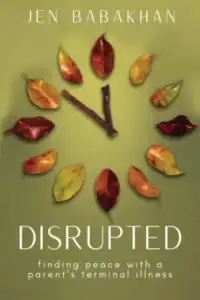
John: Mm-hmm. Yeah. We’re gonna have hope for those who are on the journey in preparation for those who have not yet but will experience some of this. Uh, Jen Babakhan is back with us today. She’s an author, literary agent and mom of two. She’s married to Ed. They live near Modesto, California. And the basis for our conversation is a terrific book that Jen has written. It is so full of wisdom. It’s called Disrupted: Finding Peace with a Parent’s Terminal Illness.
Jim: Jen, welcome back to Focus.
Jen Babakhan: Thank you so much. I’m so glad to be here.
Jim: Yeah. What a… It is a difficult topic though. I mean, I’m reading the prep this morning, sitting in my comfy chair at home about 6:00 and talking to Jean a bit about this. And she lost her mom and dad over the last, uh, 10, 15 years. Of course, I lost my parents years ago. I was a, a boy when they both died. And I, you know, I just… Watching Jean as an older woman having to go through that, we have a number of friends right now who are going through that. If you’re in your typically 50s and 60s, this is something you’re gonna experience with your parents in their 80s. And it, it just seems like an odd moment in life when your kids are on their way and then all of a sudden, you go from raising the kids feeling like empty nest is right around the corner.
Jen: Mm-hmm.
Jim: (laughs) And then boom, your parents are needing help. And some couples are in that pinch right now.
Jen: Mm-hmm.
Jim: So in that regard, uh, that’s the topic we’re gonna talk about. But I wanna get the description of your mom. Everybody loves their mom.
Jen: Right.
Jim: What was your mom like?
Jen: Oh my goodness. Thank you for asking. Um, she was the most, uh, joy-filled person that had such a great sense of humor.
Jim: (laughs) Yeah.
Jen: Um-
Jim: We had the same mom. (laughs)
Jen: … she… Yeah, that’s right. She loved to laugh. She loved to smile. She was loving. Um, she had a heart for those that, um, didn’t have all the things that they needed. And so my mom, um, would sometimes, um, cook and take it to homeless shelters and-
Jim: Mm.
Jen: … um, had just a real heart for hungry children as well. Um, she just loved. She loved and she loved the Lord and she stayed present and was really there for those that needed her.
Jim: That’s so good. Uh, there comes that day-
Jen: Mm-hmm.
Jim: … that many people will experience, and that is when you get a phone call.
Jen: Right.
Jim: And it’s the doctor’s diagnosis of a terminal illness.
Jen: Mm-hmm.
Jim: How did that day change everything for you? And how did you process it?
Jen: Yeah. You know, that day came out of nowhere. So I knew that my mom had been having some issues with high blood pressure and some back pain. Um, and the morning that I received the news was a morning like any other, waking up at home with, um, with my kids. And I saw that I had a missed phone call from my dad. Um, and it came in at five o’clock in the morning. Um, so I called him back and that’s when he said, “They think they found cancer in your mom’s liver and her lungs.”
Jim: Mm.
Jen: Uh, and I just thought, “What are you, you know, even talking about? How can this even be?” We had just lost my father-in-law to cancer the year before. Um, and so it was just, it was a real shock. And, and that was the moment where I just knew this is gonna be a bumpy ride. Yeah.
Jim: And in fact, in that diagnosis, they, they gave her just weeks, right?
Jen: Right. And we didn’t know that until, you know, I’d made my way down to the hospital and, uh, my husband had come home to be with the kids so I could get down there. Um, and once they had done all of the tests and CT scans and all of that, they said that it was, uh, stage four. And, uh, and she said she’s got about six to eight weeks.
Jim: Wow.
Jen: And so-
Jim: Just that straightforward.
Jen: Yeah. And to go from-
Jim: Yeah.
Jen: … my mom’s healthy, vibrant woman to we have a month and a half left with her was really just jarring and, and shocking. And, um, it was just, it’s something that you don’t really process in that moment. You just kind of sit there in, in shock. Um, now that diagnosis, uh, was correct, but her time span ended up being, um, much longer than that. She lived for nearly another three years-
Jim: Yeah.
Jen: … after that diagnosis. Um, thank God.
Jim: Which is incredible.
Jen: Yes.
Jim: What a blessing that was.
Jen: Mm-hmm.
Jim: When you’re in that moment though, it has to change your perspective on everything.
Jen: Mm-hmm.
Jim: Um, you know, you gave such a beautiful description of your mom and her, her good attributes.
Jen: Mm-hmm.
Jim: But, you know, mother-daughter, mother-son relationships can be strained growing up-
Jen: Right.
Jim: … for all kinds of reasons. How did that diagnosis change that perspective? And now all you wanna do, I’m sure, is talk about the good things, love on her, her love on you.
Jen: Right. Right.
Jim: What did it look like for you?
Jen: Yeah. You know, just like any other mother-daughter relationship, it was complex. And through especially the teenage years, you know, there was a lot of push and pull there. But in that moment when I knew, um, that our time was limited. And you know, as a child of any parent, you know that eventually you’re going to lose your parents, that’s a fact of life. But when that timeframe becomes so imminent, you suddenly have this perspective of none of the things that you thought matter matter. They don’t matter anymore.
Jim: Mm-hmm.
Jen: Um, the main things that remain are love and that relationship and just all of that that you’ve built with your parent. And so it really, for me, um, just boiled it all down to my love for my mom and any disagreements or arguments or, uh, differences in opinion we’d had in the past, that completely faded away. And yeah.
Jim: There’s so many things in that. I’m thinking of families that struggle concentrating on what they’re losing-
Jen: Mm.
Jim: … in the death of a parent or grandparent-
Jen: Mm-hmm.
Jim: … something like that, as opposed to what we’ve had.
Jen: Right.
Jim: You know, kind of the sense of blessing having this person in our lives-
Jen: Yes.
Jim: … for all of our lives to they’re not gonna be there anymore.
Jen: Mm-hmm.
Jim: And I guess that fear and that unknown can grip us as the surviving family member. How do we practically concentrate on the good things in the middle of bad things?
Jen: Right. Absolutely. There’s that tendency, especially with a terminal diagnosis, to just focus on the end. But what I found really helpful was focusing on the life that my mom was still living. So, you know, death is going to happen. We know that, but that’s not where God wants our focus to be, I don’t feel. Um, and so for me, it was really this practice of staying in the moment. Um, you know, whatever time she had left, we were going to make the most of it and focus on that, focus on being with her, sharing how much we loved her in that time, um, and, and continuing to try to live as normally as we possibly could, you know, because living in that space of doom and gloom is not good for anyone.
Jim: You know, the… Thinking about that, I mean, that intensity of the initial diagnosis-
Jen: Mm-hmm.
Jim: … being six to eight weeks.
Jen: Mm-hmm.
Jim: And then she lived almost, almost-
Jen: Mm-hmm.
Jim: … another three years.
Jen: Right.
Jim: That had to be… I mean, the first thing is we’ve gotta make every moment count here in this first six to eight weeks because she may not be with us-
Jen: Right.
Jim: … according to the doctor.
Jen: Yes.
Jim: So you live like that-
Jen: Mm-hmm.
Jim: … with that intensity for those weeks.
Jen: Mm-hmm.
Jim: And then treatments begin-
Jen: Mm-hmm.
Jim: … and things look a little better that it will prolong her life or his life. How did you manage just that aspect of it that you’re kind of on that, on death’s cliff-
Jen: Right.
Jim: … with her.
Jen: Right.
Jim: And it’s going longer than you anticipated, than she anticipated. And I mean, every moment, you wouldn’t come back and say, “How are you today, Mom?”
Jen: Right.
Jim: “What are you feeling like, Mom?” Right?
Jen: Right.
Jim: That intensity factor.
Jen: Yeah.
Jim: How did you and the family manage that?
Jen: You know, it’s living in that space of uncertainty. So anyone that has had someone with a serious illness in their life knows, uh, they call it scanxiety, right? That anx-
Jim: Scanxiety. Yeah.
Jen: Yeah. That anxiety that comes every time that you’ve got a scan coming up or you’re going to get news from the doctor, a blood test, whatever it is. And so we did our very best to live in the moment in those in between times, but I’m not going to lie. On those days where there, it was a scan day, my brother and I would text one another in the morning and just say, “How are you doing? How are you hanging in?”
Jim: Mm. Yeah.
Jen: Um, but yes, for that period of time when the treatments were working and we were just kind of living in these, you know, two to three month increments, you know, waiting to see what the next news would hold, it really helped us just stay focused on right now the news is good and we’re gonna focus on the good news that we have right now.
Jim: Yeah.
Jen: Um, because life is lived in moments. We cannot borrow time for the future. Um, you know, Jesus said what, worry does not benefit you at all. It doesn’t put extra hours onto your life. And so when we stay in this moment that we have and focus on the good that we have here, it shifts your perspective and, and brings peace.
Jim: Oh, without a doubt.
Jen: Mm-hmm.
Jim: Your boys were pretty young when your mom was diagnosed. And, uh, what were their ages at the time?
Jen: Um, three and five.
Jim: What was their relationship like with grandma?
Jen: Oh, they, they had-
Jim: (laughs) It had to be good.
Jen: … a mutual love for one another. My mom was the silly grandma that would have balloon races with them through the living room and, um, would get on the swings with them in the backyard. And, uh, they just delighted in one another. And my mom, um, was just, um, the picture-perfect grandma when it came to that sort of thing. So, uh, so yeah, that was a, a difficult, maybe one of the most difficult aspects of this journey.
Jim: How did you, you find that spot to try to help them begin to-
Jen: Mm-hmm.
Jim: … process this? I mean, it has to be age appropriate.
Jen: Right.
Jim: I just remember as a nine-year-old, they really cut me off from information.
Jen: Mm-hmm.
Jim: And 9, 10 years old, your cognitive abilities are pretty strong.
Jen: Right.
Jim: You’re on your way.
Jen: Mm-hmm.
Jim: Um, people will say that your moral compass is pretty well formed by 10, 11 years old.
Jen: Mm-hmm.
Jim: So the point being there, I was right on that cusp to kinda understand things-
Jen: Mm-hmm.
Jim: … with a little older understanding, but I just didn’t get information. I went to bed one night, woke up the next day and my brother told me my mom had died.
Jen: Mm.
Jim: It was just too much of a jolt.
Jen: Mm-hmm. Mm-hmm.
Jim: So one of the things I talk to people about is do inform your children-
Jen: Mm-hmm.
Jim: … age appropriately. Let them know something’s happening so that it’s not such a big event.
Jen: Right.
Jim: I mean, it’s still gonna be a change-
Jen: Yeah.
Jim: … and a big change. But if you know someone’s sick, they’re not doing well-
Jen: Mm-hmm.
Jim: … and what happens when you die-
Jen: Mm-hmm.
Jim: … tho- those kind of proper things. How did, how did you manage it?
Jen: So I was very honest with them, um, as was appropriate for their age level. So when she was diagnosed, I, I told both of them, “Grandma is sick. The doctors are going to, um, try to give her medication that will help her feel better.” And that then led to-
Jim: Yeah, that’s good.
Jen: … the questions from them, you know, “What if she doesn’t get better? Will she die?” And I said, “She will. She will go and be with Jesus, but we are going to make the best of our time that we have with her, and the doctors are going to, um, do what it takes to, uh, help her to feel better now.” And so, I thought that was really important that they understood the gravity of the situation, um, for sure. And of course, the physical changes that come with chemotherapy and all of that, you know, once she was losing her hair, I wanted them to have some kind of foundation for that, that it didn’t just come out of left field, that this was the medication that was helping her to feel better. Um, I never used the term get better because in a terminal diagnosis, we know that that’s, you know, not likely, though God does work miracles.
John: Mm-hmm.
Jen: Um, but I wanted them to know that, um, that the goal here was that she would feel as good as she could for as long as she could.
Jim: Mm-hmm.
John: This is Focus on the Family with Jim Daly, and our guest today is Jen Babakhan. And, uh, we’re talking about the book, uh, that she’s written capturing her experiences and biblical insights. It’s called Disrupted: Finding Peace with a Parent’s Terminal Illness. We’re kind of broadening this out to a beloved family member’s illness as well. So much good takeaway here. Get a copy of the book from us at the ministry. Our website is focusonthefamily.com/broadcast.
And Jen, um, one of the things I really appreciated kind of tying into the kids, but also just it helped me, was to be thinking about heaven, anticipating-
Jen: Mm.
John: … hopefully heaven.
Jen: Mm-hmm.
John: So you’re dealing with the here and now, but you shared some pretty good insights and a great story about a grandmother who actually celebrated something that most of us wouldn’t think about celebrating.
Jen: Yes. So for me, when I was writing this book, it was really important that I didn’t just solely focus on my experience because there are so many different ways to lose a parent to illness. Um, moms, dads, I, I wanted to cover it all. And so one of the women that I interviewed, Jamie, she, um, told the story of her mother that, um, when she was diagnosed with a terminal illness, when her grandchildren came over, the first thing she said was, “This is what we all look forward to when we start believing in Jesus.” And just told them, “I am going to have a change of address. I’m going to be moving.” So Jamie said it just changed her, her children’s perspective into, um, knowing that their grandmother was leaving for somewhere better and that one day they would join her there. And so I, I loved that story.
John: Mm-hmm. Yeah.
Jim: You know, Jen, things are tight in families if they’re healthy.
Jen: Mm-hmm. Mm-hmm.
Jim: And it’s completely natural to feel like, “God, where are you in this?”
Jen: Mm-hmm.
Jim: You know, because you selfishly, if I could say it that way-
Jen: Mm-hmm.
Jim: … and understandably, want more time-
Jen: Yeah.
Jim: … with your mom or dad. Um, so when these things, when you hit these situations, inevitably, you gotta get to that question of, “Lord, where are you in this?”
Jen: Mm-hmm.
Jim: And I love that, the description-
Jen: Mm-hmm.
Jim: … of heaven and how she handled it-
Jen: Mm-hmm. Mm-hmm.
Jim: … that grandmother. But how do you f… On the one hand, how do you process that, the answer to that question?
Jen: Mm-hmm. Mm-hmm.
Jim: And then how do you help your children process that with the death of their grandparent?
Jen: Right. So for me, you know, I remember when she was first diagnosed and I was sitting in that, um, hospital room thinking, “I just wanted Jesus to come in with a clipboard and give us the full explanation. What was the reasoning behind this?”
Jim: Or just heal her.
Jen: I, or just heal her.
Jim: Yeah.
Jen: I just, I wanted, I wanted Him there in a tangible way. And He was there. He was very much there. Um, and, and there was never a time in the deepest, um, parts of my grief where I didn’t eventually feel that He was with me through it all. Um, it also was one of those things where, for the kids, I, I told them, you know, the Bible says that we have a set number of days, that our days are numbered, um, before we are born. And that was something that really helped-
Jim: Mm-hmm.
Jen: … um, helped me to think about, okay, this was unexpected, um, on our side of things. This was not unexpected on the heavenly side of things. God knew how long He had orchestrated for her to live. And we ended up being blessed with more time. And so that’s the other thing that when someone’s given this very short period of time to live and then they outlive that, every day, every month, every week feels like a gift. It feels like a gift. And so when you can look at it from that perspective of what an extravagant blessing to have this extra time with my mom that I didn’t think we’d get to have, um, that is very helpful. And I still look back on that time and think what a gift it was to have that.
Jim: You know, in so many ways, that crystallizing of that moment, I mean, it’s unfortunate that we don’t think of that as believers-
Jen: Mm-hmm. Mm-hmm.
Jim: … particularly from every day forward after we accept Christ.
Jen: Mm-hmm.
Jim: That every day is a gift.
Jen: Yes.
Jim: And to make the most of that day for the kingdom, right?
Jen: Mm-hmm.
Jim: And to live in such a way that brings people that sense of amazement about God and His Creation and everything. And, and we just get overtaken-
Jen: Mm-hmm.
Jim: … by the human life, right? The regular stuff of the day. And we don’t live in that way, except-
Jen: Mm-hmm.
Jim: … I think we touch it when a loved one is diagnosed like this and all of a sudden, the intensity is so much stronger. You went to a, uh, cancer survivor-
Jen: Mm-hmm.
Jim: … party with your mom.
Jen: Uh-huh. Mm-hmm.
Jim: It was just such a highlight of the book.
Jen: Mm-hmm.
Jim: Describe what happened there.
Jen: So mom had called me and said that one of her nurses had told her about an event that was being held at a local church for, um, cancer survivors. And she asked if I would want to go. And, um, and I thought, “Okay, yeah, let’s go.” And so when we got there, and I didn’t know what to expect, you know, my, in my mind, I thought this is going to be kind of a depressing event or, you know, there’s gonna be so many sick people here and, you know, what will this look like? When we arrived, it was the most buoyant, joyful event. There-
Jim: Did that surprise you?
Jen: It did. It, it-
Jim: Yeah. It doesn’t seem to go- (laughs)
Jen: It did. I, I just, I looked at all of these women, and they all had these, um, pink or purple boas on, and they were just, you know, talking with one another and hugging each other. And so when we got out of the car, um, they welcomed my mom and hugged her. And, um, and, you know, my mom said she was there for the event. And once they realized that she had cancer, they said, “Well, you’re in the parade.” And of course, my mom looked at me-
Jim: (laughs)
Jen: … and I thought, “Oh, we’re, you’re in the parade, mom.”
Jim: Yeah. (laughs)
Jen: Um, it was in, it was held in a church, and my mom was the survivor for the shortest time. She had been diagnosed two weeks, and we were at this event.
Jim: Wow.
Jen: So she was at the front. She was the first person leading this parade, and she held a sign that said, “Survivor, two weeks.” And the, the line of women that all had their signs and the pride and the joy.
Jim: Mm.
Jen: Um, and I think that was the moment where I realized how important community is to those that have… Well, for all of us, but especially for those that have been given such a life-altering illness. Um, but also that there’s still joy to be found in these moments. I mean, we, at, at two weeks out, we still thought she had a very limited time. And so it was difficult to see her in that line. That was not something I ever wanted to see.
Jim: Mm.
Jen: But to see the joy on her face and the hope, I think that was the main thing is that it gave her such hope to see these women holding signs that said 15 years, 20 years, whatever. And there she was at the front with two weeks. And, um, I was just so, so proud of her. Um, I say in the book that those women that enveloped her, uh, were really, it felt like they were being Jesus with a feather boa.
Jim: Yeah. (laughs)
Jen: They just, they just, uh, were, were so lovely.
Jim: You know, in the book, you also talked about something that becomes a, a habit, I would suggest. I haven’t had the need to go through this in the same way you did.
Jen: Mm-hmm.
Jim: But it’s, this could be our last Thanksgiving. This could be our last Christmas. I mean, the fact that your mom went from six to eight weeks-
Jen: Mm-hmm.
Jim: … to almost three years, you did that. You-
Jen: Yes.
Jim: … this could be the last Christmas.
Jen: Every time. (laughs)
Jim: And h- how do you manage that, you know? Do you do things differently and special? Is, you know, if this is gonna be the end, it’s gonna be a party.
Jen: Right, right.
Jim: And let’s do it well for mom.
Jen: Y- yeah.
Jim: And yeah, so where did that go?
Jen: Well, those holidays were fabulous every time, I think, because we did go into it with that mindset of this could be the last. But I think, um, we didn’t do anything differently necessarily. I think we took more pictures. Um, we, we made more of an effort to get those pictures in that we knew we would want one day.
Jim: Was your mom okay with that?
Jen: Um-
Jim: The fuss of that?
Jen: Um, oh, of course. I mean, she, you know, she-
Jim: She got it.
Jen: She got it.
Jim: Yeah.
Jen: And she also recognized that it could very well be the last. But, you know, in that, I think that’s true for any of us. Any of these holidays could be our last. And we don’t live that way. Um, but it’s a gift to live with that perspective because then you are in the moment, you’re celebrating, and you’re cherishing the people that you have around you whenever you have them there, because there’s no guarantee whether you’ve got a diagnosis or not.
Jim: Yeah. Let, let’s come back next time and continue this discussion. But where I wanna end is probably a place where people are wondering about your dad-
Jen: Mm.
Jim: … who has survived your mom-
Jen: Mm-hmm.
Jim: … and he’s still alive.
Jen: Mm-hmm.
Jim: Speak to that dynamic as the daughter.
Jen: Mm-hmm.
Jim: You have a brother.
Jen: Mm-hmm.
Jim: But just as the daughter, how did you help him manage the loss of his wife?
Jen: Mm-hmm.
Jim: I mean, that brings tears to my eyes.
Jen: Yeah.
Jim: I remember when Jean’s dad died.
Jen: Mm-hmm.
Jim: I mean, every night for 53 years, they went to bed together.
Jen: Right.
Jim: And then this one night, boom, he’s not there. I just thought of the loneliness of that.
Jen: Mm-hmm. Mm-hmm. Yeah, absolutely. So for me as a daughter, and the oldest daughter, right, um, I felt this responsibility to make certain that, that he was going to be okay, and that I would do what I had to do to make sure that, that he had what he needed. And at the same time, knowing that I couldn’t stop his pain. I couldn’t take the grief away. I was grieving my mother, but he was grieving his partner of 40 years.
Jim: Mm.
Jen: Um, so we talk on the phone and visit and, and all of that all of the time. And, and yeah, I just think that, that period of time after the loss when your family’s finding your footing again, without such a huge part of it, my mom was the heartbeat of our family. And to lose that, um, really threw us all off our feet for a bit. And I think that was uncertainty in a new way. You know, during her illness, it was that kind of uncertainty. But after she died, it was, what does this look like now? How do we piece this back together as best as we can?
Jim: Yeah.
Jen: Um, and God really kind of led us through that. And so what that looks like is, um, you know, just including him as much as we can and visiting him all the time and him coming over all of the time and, and just realizing that, um, that it’s not ever gonna be the same, but it doesn’t mean that, um, that it can’t be good still.
Jim: Yeah.
Jen: And, and we cherish the time that we have with him now even more.
Jim: Yeah. Well, yeah.
Jen: Yeah.
Jim: It’s the, the learned moment.
Jen: Mm-hmm.
Jim: Let’s cherish every day together.
Jen: Right.
Jim: Jen, again, this has been so good. Thanks for your vulnerability and your expression of this. Like I started with the program, John, I mean this is a touchy subject. We don’t talk about this because it’s very uncomfortable.
Jen: Mm-hmm.
Jim: We don’t wanna talk about death, even as Christians. And I, you know, what I’m gleaning there, Jen, is being able to go into this like your mom demonstrated with joy.
Jen: Mm-hmm.
Jim: I mean, we know, we talk about the fact that we know where we’re headed.
Jen: Mm-hmm.
Jim: And then we don’t really demonstrate that with all the normal things of fear and, and that.
Jen: Mm-hmm.
Jim: But let’s go into that with a joyful attitude-
Jen: Mm-hmm.
Jim: … an expectant attitude. And I wanna come back next time, talk about that grief process a bit more, things we can do to prepare for that maybe as the one diagnosed.
Jen: Mm-hmm.
Jim: Um, and if we can do that, I think it’ll be very helpful for everyone listening. Thanks.
Jen: Absolutely. Thank you for having me.
Jim: And this is a great book, uh, Disrupted: Finding Peace with a Parent’s Terminal Illness. This is something you don’t typically look for, (laughs) but it’s a great resource to have in your arsenal with your parents still alive and that being right around the corner. And like I said, many of my friends are dealing with this. And I think this is, uh, a topic that you do need to be ready for as best as you can. It won’t prepare you for everything, but it will help you through that grief process. Get ahold of us to get a copy. Send a gift of any amount to Focus on the Family and join our support team. This is a great opportunity to do ministry through your giving, and we’ll say thank you by sending you a copy of Jen’s book.
And maybe you’re going through some kind of loss right now and your pain seems unbearable. Let us be there for you. We have caring Christian counselors who can pray with you, encourage you, and offer you effective Bible-based help for whatever you’re going through.
John: Yeah, and we should mention the Remembering the Hope of Heaven audio collection that we’ve put together. It’s a collection of great, powerful messages that will inspire your faith and it’s free.
Jim: That’s right, John. And we’ve got programs from John Burke sharing amazing stories of people who’ve had near-death experiences and saw visions of heaven. Really interesting. Lee Strobel and Randy Alcorn described the hope we have about spending eternity with God and how that hope can shape our lives today. This is really good content, and I highly recommend you get this collection today.
John: Yeah, learn more about Remembering the Hope of Heaven, the audio collection, and Jen’s book, Disrupted, when you stop by our website. That’s focusonthefamily.com/broadcast, or give us a call, 800, the letter A, and the word FAMILY.
And thanks for listening to Focus on the Family with Jim Daly. I’m John Fuller, inviting you back for more of Jen Babakhan’s remarkable story next time as we once again help you and your family thrive in Christ.