

Day One:
Speaker 1: One thing you should do in marriage is definitely to listen. Everybody kind of knows that.
Speaker 2: Don’t hesitate to tell your husband what you truly need.
Speaker 3: Do have lots of laughter together.
Speaker 4: And don’t expect your spouse to change.
Speaker 5: Don’t fight when you’re hungry. Don’t fight when you’re tired. And do buy each other chocolate.
John Fuller: (Laughs) There you go.
Jim Daly: We like that one.
John: What do you think? I mean, the, there are some good dos and don’ts there and, uh, every marriage can benefit from some insights. How well are you doing? I’m John Fuller and this is Focus on the Family with Jim Daly, and today we’re gonna be examining different habits that you can cultivate that will either help or hurt your relationship with your spouse. And thanks for joining us.
Jim: You know, John, Jean and I have been married like 40, almost 40 years. So probably 20 years ago, I think is a safe guess, I remember something that’s gonna make every husband shiver right now. I said to Jean, “Hey, on a scale of one to 10, how’s our marriage doing?” And she goes, “Well, what, what do you think it is?” (laughs) and I said, “I think it’s like a nine.” And she goes, “Yeah, I think it’s more like a three.” And I went, “What?”
John: Ooh.
Jim: You know, because … But it shows the difference. Sometimes we can live in a, a bubble. I think husbands are, you know, this is often where we’re at. We think it’s going splendidly. And our wives are not thinking it’s going so splendidly. I’m sure the shoe can be on the other foot, but I think it, it points out just how we may not be on the same page.
John: Mm-hmm.
Jim: And today we wanna talk with our guest about doing those things that hopefully get you to a 10. And when you’re asked, both are a 10.
John: Mm-hmm.
Jim: Wouldn’t be wonderful.
John: That would be nice.
Jim: I think I may have moved up to a seven or eight.
John: (Laughs).
Jim: So I, I’m feeling like I’m doing better.
John: Well-
Jim: But I better ask Jean again.
John: I think I … We’ve, we’ve got her on the line, Jim.
Jim: (Laughs) Right.
John: (Laughs).
Jim: Hang the phone up.
John: Yeah.
Jim: No, it’s, it’s a good question though.
John: Yeah, it is. And we’ve got a great guest here to talk about marriage and being stronger as a couple. Dr. Randy Schroeder is here. He’s an author, speaker, and licensed marriage and family therapist. And, uh, he and his wife, Jenny, are celebrating 50 years. How awesome is that?
Jim: That’s great.
John: Uh. He’s written a landmark book that we keep coming back to, Jim.
Jim: Yes.
John: It’s-
Jim: The book that keeps on giving.
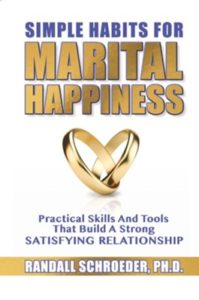
John: There’s so much to mine here. It’s called Simple Habits For Marital Happiness: Practical Skills and Tools That Build a Strong and Satisfying Relationship. And we’ve got details about Randy and this excellent book at our website, and that’s FocusontheFamily.com/broadcast.
Jim: Randy, welcome back to Focus.
Dr. Randy Schroeder: It is great to be with you. I am so grateful for you two and Focus on the Family, strengthening marriages and helping families.
Jim: We’re doing it every day. Now, you’re hailing out of Indiana, correct?
Randy: Yes, sir. We’re in a suburb of Indianapolis.
Jim: Oh, that’s great. Yeah. We, uh, of course, we love the cold simply because Peyton Manning came to the Broncos, but, uh, we don’t love him that much.
Randy: (Laughs).
Jim: We don’t, we don’t wanna see him, uh, you know, in the championship.
Randy: (Laughs).
Jim: But hey, let me ask you, uh, and this is a really important place to start, forgiveness and that linkage with happiness. Um. Why is forgiveness such an ingredient into a happy marriage?
Randy: Well, we think about forgiveness, we immediately think about Jesus.
Jim: Oh yeah, that’s good.
Randy: And the fact that he died for, uh, the sins of the world, our sins, and, uh, it’s through forgiveness, the three of us and all your listeners, uh, get to walk into heaven to be with Jesus for eternal life one day.
Jim: Yeah, that, that’s good, Randy, but you don’t know my husband. He ain’t no Jesus.
Randy: (Laughs).
Jim: Right? That’s what, that’s what I think some wives would say.
John: Mm.
Randy: Well, and, and that’s why forgiveness is the glue. And in fact, the Bible has 125 references to the importance of forgiveness-
John: Wow.
Randy: … for interpersonal relationships. And so without forgiveness, I always say it’s almost impossible, uh, to have lifelong happiness, uh, in a marriage relationship.
Jim: Yeah. Let me, let me make sure the listeners and viewers understand this, because I’ve met people that say, “Oh yeah, I’ve forgiven him or I’ve forgiven her,” but you can tell it hasn’t happened. You know, it’s just even in the tone of the person’s voice, it doesn’t sound like it was real. Speak to that delusion, if I could call it that, where a person, especially a spouse in a marriage, says, “Yeah, yeah, I forgave her.” What does it mean to really, truly forgive somebody?
Randy: Great question, Jim. Forgiveness is a process. Uh. And I always kind of remember three big words, besides process, it’s a, uh, gift and a promise.
Jim: Mm.
Randy: Uh. God for the sake of Jesus Christ gives us the gift of forgiveness. Likewise, the greatest gift a husband and wife can give to each other is forgiveness. And so we th- … when we think of it as a gift, and it can be hard for all of us to forgive others, and I, uh, when Jenny has, uh, needs to forgive me, I need to forgive her, we may think, “Gosh, you know, that’s gonna be hard to do. ” Yet, God gave me the gift, I need to give my spouse the gift. And then it’s a promise, not to be, bring up the forgiven wrong once it has been forgiven. Uh. God, the Bible tells us, “I will remember your sins no more.” God forgives and forgets. As humans, all we do is forgive. We’re still gonna remember, but we promise not to bring it up to our spouse again, and then it’s a process. With some deep hurts, maybe every day, I’ve had hundreds or over a thousand spouses tell me, every morning, Dr. Schroeder, I say out loud, “With God’s help, I’m working at forgiving my spouse for that particular deep hurt.”
Jim: So start your day with that thought in mind. That’s a good place to aim for in terms of that forgiveness, but what are the dangers of allowing unforgiveness? I think you used in the book a golf analogy, which quickly got my attention.
Randy: (Laughs).
Jim: But, but, uh, how do we deal with that unforgiveness?
Randy: Well, and, and forgiveness can be like, uh, I say in my book, uh, divots on a golf course. The polite thing to do when there are divots is to replace the divot or replace the divot with grass seed, uh, so that the grass grows back.
Jim: Yeah.
Randy: If the divots are not repaired, the golf course is gonna become barren. Likewise, if forgiveness, uh, hurts are not replaced, uh, with forgiveness, then a marriage can become barren-
Jim: Yeah.
Randy: … and continue to hurt.
Jim: For the non-golfer, that divot is someone like me who hits more dirt than ball.
Randy: (Laughs).
Jim: And then it, it puts this big chunk of earth, it displaces it and you have to repair it, which you should.
Randy: Yeah.
Jim: But that’s the point you’re making.
Randy: Yeah, yes, sir. Yeah.
Jim: Yeah. Come back and repair the divot.
Randy: Yes. Yes.
Jim: I like that.
Randy: Yes.
Jim: You know, another analogy you have is it’s a little bit on the gross side. I was thinking, was this eighth grade I may have said this?
Randy: (Laughs).
Jim: But, uh, you say unforgiveness is a lot like eating off dirty dishes. (laughs)
Randy: Yes. Yes.
Jim: I was thinking of the picking your nose, but this one’s far better.
Randy: (Laughs).
Jim: What can we learn about unforgiveness with dirty plates?
Randy: Well, if the three of us tonight had, uh, spaghetti, uh, and then we don’t wash those plates, we set them on the kitchen counter. Tomorrow night, we have barbecue chicken on those same plates we had spaghetti, but we don’t wash them, set them on the kitchen counter. Next night, we have, uh, roast beef with mashed potatoes and gravies-
Jim: Oh, I’m already grossed out.
Randy: … And ate them off those plates, eventually, we’re gonna get food poisoning. And likewise, uh, a marriage can become poisoned when the plates aren’t, uh, washed and clean. And that’s what forgiveness does. Forgiveness washes those plates. Uh. You know, I could tell a little story that, that would help with apologizing forgiving. I, uh, my PhD doctoral dissertation was actually on the benefits of apologizing and forgiving for a marriage. And I went through the whole Bible, read numerous books, numerous articles, and I wrote 350 pages on apologizing and forgiving. And, uh, the benefits for a marriage.
I had pastors refer struggling couples to me who wanted to strengthen their marriage, and many of them were on the verge of divorce, there had been adultery, and before, I take couples through a process and explaining, apologizing and forgiving in detail, and, uh, I had them assess their marriage and the best marriage was a C, of those who, couples that came in. So most, there were marriages that were graded themselves F, some D, some C. Once they learn the apologizing forgiving process, and I also had them apologize to each other, and then forgive each other, uh, with, “I forgive you, or with God’s help, I’ll work at forgiving you,” it was amazing that when they assess themselves after learning how to apologize, how to forgive, and all the little details about forgiveness that we don’t really have time to talk about today, the marriages that were F went to C.
Jim: Hmm.
Randy: The marriages that were D went to B, and the marriages that were C went to A.
Jim: Yeah.
Randy: Just absolutely amazing how we’re gonna spend eternal life in heaven because of forgiveness.
Jim: You know, a- and what’s so puzzling for us as human beings, I think, just for Jean and I, I’ll just talk about our own experience, why live there? Why not try to have a better marriage, have a healthier, happier marriage? I mean, you’re gonna live together, you know, if you don’t have an accident of some sort, you’re gonna be together 60 plus years. So you, you think about that, it’s almost insanity that you’d prefer to live in marriage mire-
Randy: Hmm. Yeah, yeah.
Jim: … than actually improve it. And have a good time, especially as Christians.
Randy: Yeah.
Jim: But these are the elements that you need. Another, uh, illustration that you have in the book is the Marriage Mirror. What is it and how do you see yourself in that?
Randy: That, that is a great question as well, Jim, and we need to, uh, be able to identify when we create hurts and disappointments in our marriage relationships. And, uh, and look in the mirrors, just like we look in a mirror to see, uh, you know, what needs to be improved on our appearance before we go out. And likewise, it’s good to look at the Marriage Mirror to see, you know, how we may have hurt our spouse’s feelings. Could be intentionally, could be unintentionally. I’d say most of the time, uh, as we grow as spouses, there’s a lot of unintentional hurts and yet still that’s a hurt and that needs to be apologized for and, and forgiven. And, uh, and so that Marriage Mirror is important. And I have often asked, uh, thousands of times spouses, “What would you like about being married to yourself?”
Jim: (Laughs).
Randy: And then, and then-
Jim: That’s a great question.
Randy: … and, and then a follow-up question, “What would you dislike about being married to yourself?”
Jim: (Laughs).
Randy: And, and that’s a, a good question for the three of us. I mean, uh, you guys are marriage experts, I’m a marriage expert, I need to ask that question, uh-
Jim: That’s really funny.
Randy: … Those two questions to continue my walk, uh, in becoming better and better in every way as a Christian spouse.
Jim: Man, I, years ago, Jean and I, we were having an argument about something and she said, “You know, I love you, I don’t like you right now.” And I said, “How could you not like me?”
Randy: (Laughs).
Jim: She goes, “Yeah, that’s the problem.”
Randy: (Laughs).
John: (Laughs).
Jim: So I think my mirror might be a little clouded at times, but I’m sorry, Jean.
Randy: (Laughs).
Jim: Uh. But, you know, it’s so fun. Y- you and Jenny likewise, in the book, you talk about times that you were not in sync or doing well, and that you had to navigate with her, uh, kind of emotional hurts and forgiveness in your own marriage. Has forgiveness ever been that kind of struggle for you?
Randy: Well, I think it is for all of us because we’re all imperfect flawed sinners and, uh, uh, it can be a challenge. There are different rituals that I, uh, healing rituals, I call them, that I ask couples to go through once they have forgiven. You know, I’ll suggest that they intentionally pray for their spouse’s mental wellbeing, emotional wellbeing, physical wellbeing for seven consecutive days.
Jim: Yeah.
Randy: Uh. I take them through what I call a Jesus exercise, where couples take a trip across the Atlantic Ocean in their mind, go below, uh, the cross of Jesus. Uh. Picture Jesus, crown of thorns on his head, dying for the sins of the world and that spouse’s sins and then picture their spouse standing right there, uh, across from them at the cross of Jesus. And the spouse says, “I’m sorry, I hurt you by being unfaithful or saying A, B, C.” And they always ask the humility part, and the most important part in the forgiveness process is, “Will you please forgive me?” And then they ask, “Will you please forgive me?” And then the spouse who needs to forgive, who’s been betrayed would say, “I forgive you or with God’s help I’ll work at forgiving you.” And they do that seven times, picture their spouse saying, “I’m sorry I hurt you by, will you please forgive me?” And they say, “I forgive you. With God’s help, I’ll work at forgiving you.”
I’ll never forget, I had a nurse whose husband was a doctor, but he had been unfaithful, uh, to his wife. And I remember her saying to me, she said, “Dr. Schroeder, I’m a nurse, blood doesn’t bother me.” She said, “But what I did is pictured myself filled with sin and then I pictured myself touching the cross of Jesus and a drop of blood from his forehead where the crown of thorns, uh, was on his head, came down and hit my hand and turned me righteous and holy. So I need forgiveness, just like my husband.” And then I pictured my husband saying to me, “I’m so sorry I hurt you by being unfaithful. Will you please forgive me?” And I said, uh, “Sometimes it’s, uh, gonna need to be with God’s help, I’m working at forgiving you.” Again, it’s a process. And she said, “That helps me so much.”
And I’ve had hundreds, maybe over a thousand spouses say every morning in the shower, they picture that Jesus exercise and may not do it seven times, but they’ll say out loud in the shower every morning, “With God’s help, I’m working at forgiving my spouse.”
Jim: Yeah.
Randy: So that process goes and they don’t bring it up to their spouse’s memory.
Jim: And I would think that changes that, that spouse’s heart.
Randy: Oh, that’s softens-
Jim: That’s what it-
Randy: … Softens the heart tremendously.
Jim: Yeah. That’s what it’s doing.
Randy: Softens the heart.
Jim: You know, one of the things I wanna be, I guess, uh, gentle here because we’ve used that example of unfaithfulness and forgiving that person, that’s perhaps the deepest wound that you can have in a marriage.
Randy: Yes.
Jim: Um. And I’m sure some people listening or watching have heard that. And, you know, that is the one thing that the Lord says that can dissolve a marriage. What’s been your experience working with people that have had that situation and the outcome if they can hold together and be in love again?
Randy: Terrific question again. And, and I th- thank God that it came up because I have seen hundreds and hundreds of couples where there’s been adultery restore their relationships and have better marriages after the adultery. Yeah.
Jim: It’s kinda like everything’s out there and, and the wounds and sin are just out in front now. There’s nothing I … I’m not hiding anything.
Randy: Exactly. Secrets hurt relationships-
Jim: Yeah.
Randy: … and yet they need knowledge in the seven major areas of a marriage, and that’s what I cover in Simple Habits For Marital Happiness. They need that logical knowledge, they need practical phrases, positive actions, specific guidelines, and then they restore their relationship. Now, to rebuild trust, uh, is a process, but it happens. And I always have the betrayed spouse make a list of actions and make a list of phrases that will rebuild trust. Again, hundreds of spouses, uh, the betrayer will say every morning to the betrayed spouse, “I am committed to you today.” And, and also, “I will be faithful to you today,” and that begins to rebuild the trust process. And there’s actions, you know, that if they’re not gonna be home on time, they text and say, “Hey, I’m gonna be 15 minutes late,” so it doesn’t hurt the trust. And yeah, and, and answer your question, couples, uh, uh, restore their relationship.
Jim: We’ve seen that in our Hope Restored, uh, four-day intensives, couples that come in with that specific issue-
Randy: Mm-hmm.
Jim: … and they seem, if they can get through that, if they can work on the, all those things that you mentioned, they are so strong-
Randy: Mm-hmm.
Jim: … in their marriages typically, because again, I think they’ve, they’ve shown every weakness.
Randy: Yeah.
Jim: They’re, they’re well known by their spouse.
Randy: Mm-hmm.
Jim: And it seems to, uh, really cement their commitment to each other-
Randy: Yeah.
John: Yes, yes.
Jim: … going forward.
John: This is Focus on the Family with Jim Daly, and our guest is Dr. Randy Schroeder, and I love the process of what we’re talking about here, based on Dr. Schroeder’s book, Simple Habits for Marital Happiness. It’s far more than simple habits. There’s a process and, uh, there’s kind of a repetition and a commitment to grow in your marriage. Uh. Now it might be that you and your spouse aren’t in a good place and that your relationship is even at risk. If so, let me urge you to check out Hope Restored. It’s our marriage intensives, offering counseling to couples who are in trouble. You’ll see details about Hope Restored and Dr. Schroeder’s book, Simple Habits at FocusontheFamily.com/broadcast.
Jim: Randy, let me ask you this. Um. We’ve laid out the case for forgiveness, obviously, but we’re still human and our flesh works against the spirit in us as Christians.
Randy: Sure, sure.
Jim: So why specifically with Christians do we struggle so much with forgiveness? And again, it doesn’t have to be in the context of unfaithfulness, but anything along that continuum where somebody has hurt us, where our spouse has hurt us, why do we struggle with that forgiveness, knowing that that’s what the Lord would want from us?
Randy: Well, it, it’s just human to have a hard time, uh, uh, saying those words. And I, and the other thing I think is so important is to use the forgive word, uh, and, and to say, “I forgive you, or with God’s help, I’ll work at forgiven you,” and not, uh, say, “That’s okay, no problem, I’m over it.” To say, “I forgive you or with God’s help I’ll work at forgiving you,” uh, seals the, uh, forgiveness process and, and makes it easier to move forward in a marriage relationship.
John: Yeah. You know, I mentioned, uh, Randy, the process part of this conversation, and you liken a good marriage to baking, uh, a good apple pie together.
Jim: Well, it got my attention.
Randy: (Laughs).
John: (Laughs) So what’s that about?
Randy: Well, it, uh, takes two healthy spouses, uh, to make a healthy Christian marriage. And so personal issues can hurt a marriage relationship, uh, like a high control spouse or abuse, or verbal abuse or, uh, addictions. And so, uh, in a healthy marriage, uh, both spouses add healthy ingredients to that good tasting apple pie.
Jim: Yeah.
Randy: Uh, if, if either spouse is a vinegar spouse and throws in vinegar into that apple pie, of course, it’s gonna taste not good, horrible. And so, uh, the spouse with the personal issues would need to really work hard to, uh, to make sure that they improve on whatever that personal issue is so that that apple pie tastes delicious and they got healthy ingredients, both of them, uh, going into the apple pie.
Jim: You urge couples to be givers in their marriage. I mean, that makes complete sense, you know? Again, sometimes that becomes difficult because you, “Well, I don’t think she deserves me giving something right now-”
Randy: (Laughs).
Jim: “She really wounded me.” But why is giving so important? How do you practice that in your marriage?
Randy: We’re, we’re gonna go right back to the Bible.
Jim: Okay.
Randy: God gave his only begotten Son. Jesus gave his life for the sins of the world. And so we, uh, we need to follow, uh, that example and be givers in our marriages as well, uh, and not takers, uh, and avoid selfishness and be selfless. And, uh, one of the questions I ask spouses, uh, to ask one another at the beginning of the week is, what can I do better in this coming week?
Jim: Yeah.
Randy: You know, how can I give to you in this coming week? So it’s no guesswork, we’re not gonna ask partners to read each other’s minds, but just be like Jesus, be a giver, and ask those questions, “What can I do better and how can I give to you this week?”
Jim: You know, another biblical, it seems a biblical, um, reference would be the garden. You know, when things went down, they blamed each other, they hid from God, and I think I wanna concentrate on that hiding component. I think, as men, I think husbands tend to hide emotionally.
Randy: Mm-hmm.
Jim: Uh. We’re not as open and honest. I’m sure the shoe can be on the other foot, and if you’re in that relationship, I get it, I’m not trying to, uh, say it doesn’t exist, but where one of the spouses tends to not be forthright, maybe because they don’t wanna get in trouble (laughs), you know?
Randy: Yeah, yeah.
Jim: It’s nothing serious, but it’s just like, you know, if I say that, I’m gonna get schooled on why I shouldn’t go to that movie with my buddies, even if it’s a reasonable, it’s a war movie with lots of violence and language.
Randy: Yeah, yeah.
Jim: Um. Something a little more innocent obviously than pornography or something like … that’s obvious that you should be concerned about that. But, but speak to that need to have the courage, either spouse to be able to get that on the table so we can talk about it. So the other spouse isn’t guessing, where did he go? What did he do? What was, what was in his head? What … How do you get that out of the relationship?
Randy: Outstanding point and, and, and so important to talk about secrets hurting a relationship. Uh. There are no secrets because God sees everything and, and we need to keep that in mind that God’s observing our behaviors, our words, and, uh, that puts us on our best Christian behavior. And one of the things I always suggest to, uh, couples is that, uh, if any activity needs to be secret, it’s not a healthy endeavor, especially financial secrets and I, I can think of, uh, in terms of financial secrets, a, uh, medical doctor one time, I’ll never forget it, helping he and his wife, he bought an apartment building and, and counseling said, “You know, I just forgot to tell you I was gonna make that purchase.” (laughs) That’s not a little purchase.
Jim: Mm-hmm.
Randy: Uh. But yeah, we didn’t know … The two big ones I would say are no financial secrets, no technology secrets, and, uh, I think it’s couples need to be careful, but be comfortable, you know, letting each other see-
Jim: Yeah.
Randy: … each other’s email accounts, see the cell phones-
Jim: Oh yeah.
Randy: Yeah, to avoid secrets.
Jim: In fact, John, do you have an example of that?
Randy: (Laughs)
John: (laughs) You know, I do, Jim. I mean, just honestly, yes, there was a time when-
Jim: I didn’t mean to put you on the spot.
John: No, no, but I appreciate that.
Jim: I’m teasing.
John: ‘Cause I think sometimes viewers and listeners think we have our act together and-
Jim: Yeah (Laughs).
John: … I had some secrets. I had some technology secrets. And it is so wonderful to not have those secrets anymore.
Jim: That’s good.
John: I remember Dr. Archibald Hart, uh, talking about when we expose secrets to the light, we rob them of their power.
Jim: Wow. Great.
Randy: That’s good. That is a good [inaudible]
John: And so that really has resonated with me, and I’ve seen that in my own life. Just what a beautiful thing to have no secrets, to be known and loved and accepted. I’m not saying I’m perfect on this, but-
Jim: Yeah. No, that’s very vulnerable.
John: It’s pretty revolutionary.
Jim: Well, thank you. That’s great.
Randy: Yeah, that is great.
Jim: Yeah. Well, Dr. Schroeder, this has been a great, uh, session for John and I to be with you and for you to straighten out some of our foibles in marriage. But no, it’s been-
Randy: These are reminders for me as well. Yeah. We’re all imperfect. Yeah.
Jim: You know, Jean and Dena are gonna listen to this. We’re had, you know. (Laughs).
John: Uh. And that’s okay.
Jim: She’s gonna say, “I heard you on the broadcast the other day. It was so refreshing that you actually knew some of your weaknesses.”
John: (Laughs).
Jim: No, I mean, it’s fun and we have a great relationship, but this has been really good stuff. Every time you’re on the program, Randy, people respond so positively, you just have a great way of blending biblical truth with human reality, and then putting it into day-to-day practice, which is awesome for a counselor. It’s kind of the gift you need, right?
Randy: Well, I am grateful for this opportunity and I pray that, by God’s grace, many marriages will be improved and strengthened through these powerful habits.
Jim: Yeah. We’re gonna pick up next time with CPR, which is obviously, you know, what you do to a, a heart that is not functioning, but your CPR is a little different. Just tease us with what your CPR is.
Randy: Well, we’ll talk about how to be respectful even when the … with those relationships that can be difficult.
Jim: So civil?
Randy: Civil, polite, and respectful.
Jim: Yeah, there you go.
Randy: Yeah.
Jim: Your CPR and marriage. So revive the, the marriage heart and join us again next time when we pick the conversation up right there. Thanks for being with us, Randy.
Randy: My honor, again.
Jim: Yeah.
Randy: Thanks for having me.
Jim: In the meantime, you need this amazing resource Randy has put together, Simple Habits for Marital Happiness. This is filled with practical advice on so many topics and we’ve only covered a few of those today. I can’t recommend this book enough. Make a monthly pledge of any amount to focus and we’ll get a copy to you as our way of saying thank you. This is a great way to get the tools you need to live out a godly marriage in today’s culture and help us expand that positive impact to more and more families today.
You know, in the past 12 months, uh, we do research every year to ask people that contact Focus on the Family, uh, “How did Focus on the Family help you?” And, uh, that research that we completed last year over the last 12 months showed that more than 500,000 couples were able to build stronger marriages with our help. That’s just in the last year. Be part of that ministry. Uh. Let’s work together. Also, more than 140,000 marriages were in a crisis, people that contacted us to get help. And Randy, I really appreciate you being part of that because we’re able to send your book to these couples to say, “Here, check this out. This will help.” And again, it’s, uh, it’s great to work with you in that way. So please be generous, we’re doing this together. The Lord sees you, provide that gift, and it accrues to your account in heaven, not ours. We’ll do the footwork, but we need the fuel to touch those lives.
John: Mm-hmm. We always appreciate your generosity. So make a monthly pledge to focus or a one-time gift, whatever you can afford, when you call 800, the letter A and the word FAMILY, 800-232-6459. Or of course, you can donate and get Randy’s book at FocusontheFamily.com/broadcast. Also, when you get in touch, check out our free marriage assessment. Over a million people have taken this. It’s been revised and it’s an excellent tool for you to spend 10 or 15 minutes with and learn what’s going well in your marriage and some things that you might work on. It’s an excellent assessment. It’s free. Check it out online.
And on behalf of the entire team, thanks for listening today to Focus on the Family with Jim Daly. I’m John Fuller, inviting you back as we continue the conversation with Dr. Randy Schroeder, and once again, help you and your family thrive in Christ.
Day Two:
Dr. Randy Schroeder: Picture Jesus, crown of thorns on his head dying for the sins of the world and that spouse’s sins and then picture their spouse standing right there, uh, across from them at the cross of Jesus. And the spouse says, “I’m sorry, I hurt you by being unfaithful or saying ABC.” And they always ask the humility part and the most important part in the forgiveness process is, “Will you please forgive me?”
John Fuller: Hmm. Dr. Randy Schroeder with a very powerful statement about the importance of forgiveness in marriage. He’s back with us today on Focus on the Family with Jim Daly. We’re exploring how bad habits and good habits can have a profound impact on your relationship in marriage. Thanks for joining us today. I’m John Fuller.
Jim Daly: You know, it’s so important. Having a strong marriage should be a goal for every couple, uh, certainly Christian couples. And I was, uh, really pleased with the discussion last time. It touched on so many fundamentally true things about who we are as human beings, what the Bible says about us, and then how to integrate that into a healthy marriage and work on that marriage so it can be a 10. And, uh, man, we’re all for that here at Focus on the Family. If you didn’t listen to the, uh, episode last time, get the, uh, app for the smartphone and you’ll have access to all the broadcasts that we do. And man, you can go to the website too and get a download there for that episode. But we don’t want you to not get the tools that you need to have the strongest marriage you could possibly have.
And we’re gonna continue the discussion today and dig in with more practical advice on how to make your marriage what it needs to be.
John: Mm-hmm. And, uh, Dr. Randy Schroeder has compiled that advice into a really helpful book. We mentioned last time we come back to this-
Jim: (laughs).
John: Time and time again. It’s such strong material. It’s called Simple Habits for Marital Happiness: Practical Skills and Tools that Build a Strong and Satisfying Relationship. You can get your copy of the book and, uh, as Jim said, listen to that first part of the discussion if you missed it at FocusontheFamily.com/broadcast.
Jim: Randy, welcome back to Focus on the Family. Always good to have you.
Randy: I’m grateful for this second opportunity to strengthen marriages.
Jim: We left off last time talking about when a person has a heart attack. The first thing that the caregivers will do is CPR, to try to revitalize that heart, get that heart pumping again so they can do the other life-saving things they need to do. But job one is to make sure that heart is beating again. You kind of applied that, you did apply that to, uh, marriages as well using CPR. Uh, describe the acronym for marriage and how it’s used, and then let’s get into some questions about it.
Randy: That, that is especially important with in-law relationships. I always suggest that there are kind of four types of relationships, acquaintances, friends, good friends, close friends. And so a lot of times, I’ll have married couples say, “You know, I’m not real fond of my mother or father-in-law.” And, and I’ll say, view them like an acquaintance. And as you just mentioned, CPR. What they would do is when they get together with their in- laws, they would be civil, polite, and respectful, and we can do that with strangers, you know, just acquaintances. And that has helped so many in-law relationships that I’ve seen in my practice, uh, to keep that thought in mind. Just CPR the relationships, you’re may not ever get to the point of, uh, good friends or close friends, but that will make the relationships healthy.
Jim: No, that’s good. I was playing golf not long ago with a guy and he missed the green and he goes, “That’s a son-in-law shot.” And I said, “What’s that? ” He goes, “Close, but not what I was hoping for ”
John: (laughs).
Randy: (laughs).
Jim: (laughs). So I better, I better stop repeating that one.
Randy: (laughs).
Jim: But, uh, that’s kind of what you’re talking about, right?
Randy: Yeah.
Jim: (laughs).
Randy: Yeah, exactly. Exactly.
Jim: Be more civil. Don’t tell a joke on your son-in-law.
Randy: Yeah.
Jim: Um, I was surprised by your assessment that interruptions may be the number one predictor. Oh my goodness, this is my weakest link. I read this this morning when, you know, I sit in the chair, read the prep, look at the book, have my coffee, Jean comes down, she wakes up, she sits next to me, we try to do a little devotional time after I’m done reading the prep and all that, and I read this to her and she just smiled.
Randy: Yeah.
Jim: ‘Cause it, I do that. I finish sentences for her. And I said, “You know, I feel like it shows you that I’m engaged.” And she goes, “No, it’s rude.” (laughs).
John: (laughs).
Randy: (laughs).
Jim: But no, it’s me being engaged just like, uh, I don’t know whoever burps after a meal. It’s gross to us in America, but in Germany, it’s a compliment.
John: Yeah.
Jim: But speak to the person, and I think it’s because I’m just thinking with her.
Randy: Sure, sure.
Jim: And if she’s a little slow to the trigger, let me fill that in for you. I love you because I’m such a great guy.
Randy: Yeah.
Jim: No, I wasn’t gonna say that.
Randy: Yeah.
Jim: (laughs) But I, I-
Randy: (laughs).
Jim: So, so help us are, you know, those of us that are verbal-
Randy: Sure.
Jim: to slow down, let your spouse finish their thought, and that actually shows respect.
Randy: And, and this is another excellent question, uh, about interruptions and, uh, it’s interesting and my book is grounded in research in biblical principles. Now, I did not include all the research studies in my book. I didn’t want it to be a great big thick book, but they did a research study on premarital couples and they discussed a differing opinion, you know, kind of a disagreement, and then they coded their communication for, I think it was an hour and 15 minutes. And then they came back five years later to find which of those couples were unhappy, which were separated, which were even divorced.
Jim: Mm.
Randy: You know, before five years. And what they discovered as the, uh, common denominator were interruptions because when we interrupt, we need to turn up the volume, uh, to get our point across.
Jim: Mm.
Randy: And, and so, uh, in answer to your question, and we all can do that. I can do that. The, uh, you guys are great communicators, and so it’s easy to interrupt and want to get our point out there, and we just need to pause, pause, pause. For 25 years, I was a professor of pastoral counseling at Concordia Theological Seminary, and I always suggested to pastors, when your parishioner is talking, wait 10 seconds before you respond.
Jim: Wow, that’s a long time.
Randy: A long time, just because maybe your parishioner wants to continue on-
Jim: Mm-hmm.
Randy: And they’re just thinking. And so that pause, pause, pause is there. But it also helps the three of us and your listeners learn to avoid interruptions, uh, because interruptions, again, are that big predictor, uh, that can create unhappiness and it, uh, kind of says, “We’re not listening well.”
Jim: Well, I wanna punch the point here. Uh, you said it’s the number one predictor where I would’ve thought doing what we do every day here at Focus on the Family would be lack of emotional or physical intimacy, finances, et cetera. But these researchers said no, it’s interruptions.
Randy: This was-
Jim: Wow.
Randy: This was just this research study.
Jim: Yeah.
Randy: You know-
Jim: But wow.
Randy: Yeah. Oh, yeah. Yeah.
Jim: That really, yep, put my problem at the top of the list and I really don’t like that.
Randy: (laughs),
John: (laughs).
Jim: (laughs). Let me say it that way.
Randy: (laughs) We all can struggle with that, Jim.
John: Yeah.
Randy: Especially, you know, again, you’re a good communicator and yeah, it can be a struggle, but, uh-
Jim: Okay. Jean, I will work on this. Honestly, I’ll work on this. 10 seconds.
Randy: (laughs).
Jim: Right?
Randy: Right.
Jim: Give her 10 seconds in between her thoughts, make sure she’s completed that thought.
Randy: Exactly.
Jim: Whew! I’ll have her grade me on this over the next-
Randy: (laughs).
Jim: Until you come back.
John: Five years. How about five years, Jim?
Jim: Listen, I like your advice too about being solution focused in marriage. I think that’s helpful. Uh, I tend to be driven by goal orientation-
Randy: Sure.
Jim: So solutions are really important to me. Uh, what does a solution focused approach look like in a marriage relationship?
Randy: I, I think it’s absolutely essential, another great question that, uh, couples, well, what do they say in the business world? Don’t bring me a problem unless you have a solution. And so we ju, we just need to take that over to the marriage world where, uh, you know, if, if, uh, Jenny has a hurt with me or a disappointment, which she does, she needs to give me a chance to, uh, to fix it and she can put out there a solution. Uh, and, and so I talk about the Speak the Truth and Love Formula. Uh, in my, uh, book, in Ephesians four, God tells all of us, “Speak the truth,” and the two words in love. So, you know, a spouse would say, “When I heard you say this, I felt hurt or disappointed because…”, give the reasons and then the final point is the will you please solution. “Will you please say it this way? Or, “Will you please do this?” So yeah, we need to be solution focused.
Jim: Randy, let me ask you this question, and I think, I think men struggle with this more than women. And when you say it that way, it’s like going to a counselor, you, you go to a marriage counselor and the person is saying accurately, you know, when you have conflict, Jim-
Randy: Mm-hmm.
Jim: I’ll just use myself, you know, address Jean by saying exactly what you just said. It sounds brilliant. It sounds wonderful, but it’s not what I’m thinking in the moment.
Randy: (laughs).
Jim: And, you know, how do we train ourselves to be able to slow down enough emotionally? ‘Cause your gears start spinning, your defense mechanisms go up, all those things that occur in a marital discussion, and you don’t remember to say, “Here’s what I heard, here’s what it sounded like to me, this is how you hurt me.” But how do we get there? Counseling thousands of couples, you, you must see a formula in there that works.
Randy: Sure.
Jim: Do people have to rehearse that? How do you capture that thing you don’t wanna say, like Paul writes about, “The things I don’t wanna do, I do, and the things I shouldn’t do, I…” You know.. So the, the whole thing there, how do you train yourself to do this brilliant breathing exercise emotionally?
Randy: Yeah. Yeah. Jim, I always say we can’t read minds, but you read my mind (laughs) because we do need to rehearse.
Jim: Okay. Yeah.
Randy: And, and, and, uh, and I’ll just say when I use that, uh, with my lovely wife, Jenny, I’ll just turn the sound off in the car and I’ll practice it in the car. You know, Jenny, when I saw you forget to do this, I felt disappointed because we need to remember, will you please write it down or something like that. Yeah. But I, but I do exactly what you just suggested, Jim. I just rehearse it-
Jim: Yeah.
Randy: Uh, away from her out loud, out loud, not thinking in my mind so that I say it very lovingly to her.
Jim: Yeah. You know, you speak also in the book about timeouts. Now, parenting time outs, we really moved to that.
John: (laughs).
Jim: Um, you know, instead of, uh, you know, the spankings at some point.
Randy: Yeah.
Jim: You know, I remember spanking Trent for hitting Troy. And Trent is so smart. I don’t know how old he was, six, seven, I don’t know, but he was mistreating Troy and I gave him a swat for it. And he’s like, “Dad, why do you hit me because I’m hitting Troy?” (laughs).
Randy: (laughs).
Jim: Right? That’s pretty smart.
Randy: Oh yeah.
Jim: And, uh-
John: Good question.
Randy: (laughs).
Jim: And that’s, that’s Trent.
John: And that moved you along to timeouts.
Jim: That moved me more to timeouts.
John: Yeah.
Jim: And I was big on, you know, taking away a toy that he really liked or putting him in a timeout. That was pretty effective as well. I think Supernanny talked about that as well. But you apply timeouts in marriage. Um, describe how that can work hel- in a healthy way.
Randy: Timeouts are critical, uh, for a marriage, so they don’t have harsh endings. In fact, another research study, I’ve done tons of research reading, said that harsh endings are the number one predictor for divorce. And so we don’t wanna have harsh endings-
Jim: Huh.
Randy: To differing opinions. We wanna have, like you mentioned earlier, Jim, solutions. We wanna find solutions. And so when a couple is discussing a differing opinion, uh, if something is said or it’s a facial expression or something is done, the spouse who felt that hurt would use one of two words, you know, that’s a pinch, or the other word is that’s, you know, the ouch, that hurt.
Jim: Mm.
Randy: And so if that is said a couple of times, pinch or ouch, well, the spouse who said pinch your ouch, if it happened again where the one spouse was disrespectful in tone of voice or words or facial expression, they would literally use the athletic timeout and just take a break.
And then when they’re apart, I always suggest to couples that they try to write down again in one sentence, one sentence what the differing opinion is, then talk about areas of agreement, what do we agree on as a possible solution, and then pray about it, and then maybe offer other solutions that have not come up. But, uh, the timeout could be 30 minutes, it could be an hour, it could be, we’ll wait till the next day and talk about this again.
Jim: But I like that formula of writing it down and what’s a, a different way we can approach this-
Randy: Sure.
Jim: Or solutions to the problem. That’s good. That’s really good. Yeah, I love this one too. You warn husbands and wives not to be a schnauzer.
Randy: (laughs).
Jim: I, you know, I, I think I’m connected with word association.
John: (Laughs).
Jim: That works for my brain.
Randy: Uh.
Jim: So how do we avoid … Well, A, what is a schnauzer and B, how do we avoid it?
Randy: A schnauzer is kinda putting their nose in the other’s p- partner’s, uh, business a lot and being critical and complaining. And-
Jim: Now, there’s gotta be … Just describe that because I think in marriage, I mean, that’s also described as intimacy. So (laughs) how do you know where that line is where, you know, you’re kinda putting your nose into my business-
Randy: Sure.
Jim: In an area that really should be off limits to you. That kinda sounds funny ’cause we’re one flesh.
Randy: Yeah, yeah. Well, going back, uh, to yesterday, a great question again when we talked about forgiveness, uh, too many couples, uh, view hurts as either minor infractions or major felonies, which means that it’s necessary to talk about all hurts. And so what I talk about in Simple Habits for Marital Happiness are scratches, cuts, and lacerations. Uh, if we scratch ourself working around the house, we don’t do anything to fix it. We know it’s gonna leave a faint scab and it’ll heal up on its own, no big deal. We just let it go. If we cut ourselves, we’ll put an ointment and Band-Aid on it. If we get a laceration much deeper, then we may have to go get a stitch or two. And so I always suggest, so couples, uh, our spouses are not schnauzers, you know, always complaining. Uh, I ask them to recognize that scratches occur and let those go.
Now, we all have our own dictionaries. What’s a scratch to a husband may be a cut to a wife, let’s say, okay, or, or in different marriages. And so, uh, I suggest to couples that they evaluate their concerns, that they don’t, uh, they check objectively, how often am I the four Cs correcting, criticizing, complaining, or condemning my spouse? Uh, and I often, if there is a schnauzers in a marriage relationship, I’ll say, “I would like for both of you to go three days and not do any of the four Cs, no corrections, no complaints, no criticism, no condemnation, and let’s see what, what that does for your marriage.”
Jim: (laughs).
Randy: So that, uh, and, and, and that, uh, now there could be some cuts and lacerations happen in those three days, but they let it go, you know, and, but it hopefully helps them understand the importance. We’ve gotta learn that if something is annoying, uh, Jenny, she may not bring it up to my attention or my wife, Jenny and-
Jim: Mm-hmm.
Randy: And vice versa.
John: Yeah. Good stuff today on Focus on the Family with Jim Daly as we continue a conversation that we began yesterday with Dr. Randy Schroeder and, uh, we’re covering some of the great principles and concepts in his book, Simple Habits for Marital Happiness: Practical Skills and Tools That Build a Strong, Satisfying Relationship. Get a copy of the book from us here at FocusontheFamily.com/broadcast.
And Dr. Schroeder, as we look at common flashpoints for marriages, uh, here at Focus, we get a lot of phone calls from couples struggling with finances. Uh, it’s not coming in, they’re not managing it well. You’ve got some pretty simple approaches to kind of reducing the stress in marriage when it comes to finances.
Randy: Yes, yes. Uh, there are a number of them, and I, uh, certainly a beginning point, I think it’s really beneficial for couples to have a joint checking account. So there’s not his money, uh, her money and, and, and our money kind of three accounts, because when it works like that, sometimes it feels like a business partnership. Uh, it, rather than a, as God says, the two shall be one, a one flesh union, plus it overcomes what we talked about, uh, the other day, no secrets. You know, to have that joint, uh, checking account, uh, prevent secrets, uh, because they both know the income and the outgo.
Jim: Yeah, but if I want to buy that special gift-
Randy: (laughs).
Jim: And not let her know about it, no, I’m teasing. I think that’s great advice. You also talk about take three, a method to help limit couples from impulse spending.
Randy: Yeah.
Jim: (laughs).
Randy: Impulse spending there-
Jim: Describe that so everybody knows what you’re talking about.
Randy: There is compulsive, uh, buying disorder, compulsive spending disorder, whatever you wanna call-
Jim: And it’s real.
Randy: Oh, it’s real. Yeah, it’s, it’s an addiction where a spouse says, “I have to-
Jim: Yeah.
Randy: Spend money today in order to feel good about myself.”
Jim: I think couples that don’t experience that are kind of a gasp that that’s how someone could operate. Um, but, you know, again, this is just out of control buying habits, right?
Randy: Yeah, it’s an addiction. It’s an addiction.
Jim: You know, in there-
Randy: And I saw a couple that, uh, the husband owned a business made $300,000 a year, and they were in debt.
Jim: Yeah.
Randy: He couldn’t keep up with their spending. That happens on that flip side too where the husband can be a compulsive spender.
Jim: Randy, and you’re a counselor, and you get this, but describe for us those underlying things. These are symptoms of other things, typically.
Randy: Sure.
Jim: Addictions of all sorts. It could be pornography, it could be impulsive buying, it could be lying, it could… You just… But these are the outcomes of something going on deeper in that person’s soul, really.
Randy: Sure.
Jim: Connect those dots for us a little bit.
Randy: Well, it, it is a personal issue. We talked about the, the vinegar, uh-
Jim: In the apple, apple pie.
Randy: In the apple pie (laughs). Yeah.
Jim: Doesn’t work well.
Randy: Yeah. And, and I kind of boil it down to two words, have to. You know, if, if a spouse says, “I have to drink today to feel better,” “I have to gamble on that sports game to make myself feel good,” and, and, uh, and then they develop a gambling addiction. “I have to spend money and go out shopping.” And so, uh, have to’s are addictions that can create problems. And so going back to that take three, uh, I think especially with major purchases, or it could be with minor purchases, if a spouse has a spending addiction, they need to take three days or three weeks or three months before buying something.
Jim: Yeah.
Randy: And so it kind of slows them down so every day they’re not spending money.
Jim: Is there … I, again, I’m just thinking to myself, I tend to buy the big-ticket items usually in our house. And, you know, I’m talking about washing machines. Jean will say, “Yeah, the washer’s going out.” I’m, you know, and she does do this as well, but we’ll tend to do research or something like that. But when I’m ready to go, I’m ready to go. And I don’t think it’s impulse spending. I think it’s just efficiency, right?
Randy: (laughs).
Jim: (laughs). I mean, but, you know, and I’m not, I’m not going out and buying a car without her knowing about it-
Randy: Mm.
Jim: But kind of describe that you get enough information, you go.
Randy: Sure, sure. And I also say when it comes to, uh, take three, if, uh, uh, a couple’s having issues with spending, maybe they involve three friends or three family members-
Jim: Huh.
Randy: To kind of say, you know, what are some good pros and cons with, let’s say you mentioned a car, a big-ticket item.
Jim: Yeah.
Randy: You know, and somebody’s an expert in cars. You know, what do you think about me getting this car? And, uh, now those three family members or friends are not involved in the discussion process, but they kind of say, “Hey, these are my thoughts. These are the pros and cons I see.” And then the couple takes that information and then they talk together, uh, is this purchase, uh, within the budget? Is it a want? Is it a need? And, uh, is this beneficial for our marriage?
Jim: You also believe there are some, uh, “simple habits” that will bond couples together in powerful ways. Uh, for example, sharing laughter together. I like this. Humor does a lot to cover up pain in marriage. I think most of your funny comedians come from places of pain, actually. It’s really interesting to look at comedians’ backgrounds, because they’re often hardship and things in there. But healthy kind of humor and just taking life with a little bit of, let me say sugar, not salt.
Randy: Yeah, yeah.
Jim: Uh, and understanding hard things happen and where we can laugh, let’s laugh together.
Randy: Yeah, yeah. Laughter removes the stress in life. And, uh, you too, Jim and John have a terrific sense of humor. Uh, John, you and I are visiting before the, uh, broadcast that, uh, your mom had a good sense of humor was teasing you today.
John: She does. Uh-huh.
Randy: (laughs). As you talked to her on the phone.
John: In good fun.
Randy: Yeah, yeah. How’d that make you feel, John?
Jim: (laughs).
John: It really is pretty fun to see.
Jim: Good.
Randy: Yeah.
Jim: That’s good.
Randy: No, that’s probably where you got your sense of humor is from your mom. But yeah, humor is absolutely essential and what, uh, laughter is good medicine.
Jim: Yeah. Hey, uh, Randy, let’s close with this. You believe a strong and healthy marriage is built on shared faith where couples read their Bible, pray together. Um, I think that’s critical. We’re seeing that in the marriage data that we’re doing. You wanna have, uh, the most rewarding marriage, go to church together, read the word together, pray together regularly. It doesn’t have to be every day, but several times a week. And I’ll tell you, Jean and I have been really good at that since, uh, being in COVID and coming out of COVID-
Randy: Mm-hmm.
Jim: We’ve kept that practice.
Randy: Good for you.
Jim: And it, it, it, it really develops intimacy. And I think the lowest divorce rates among all people, all marriages are people that practice those three things, going to church, praying together and reading the word together.
Randy: So true. And that, yeah, those research studies, uh, ha- have, uh, proven those facts. And I, uh, one of the things I think we need to keep in mind, and maybe, uh, your listeners are saying, “I don’t know how to pray.” You know, how do I pray with my spouse? I never saw my mom and dad pray together, my mom and dad didn’t teach me how to pray or we had, uh, just rote prayers that we did. And so what I suggest to all couples is that, uh, there’s three parts to prayer, you know, dear God, our Father in heaven, heavenly Father, and the second part is, you know, expressing, uh, gratefulness to God for certain blessings or petitions, whatever. And then the third part, of course, is in Jesus’ name. Jesus is our mediator, takes all of our prayers to our heavenly Father and, uh, and so what I do in counseling, I’ll have couples hold hands and I ask them to limit to one sentence.
Jim: Hmm.
Randy: So it doesn’t become a competition-
Jim: It’s easier to do.
Randy: Yeah. One spouse may be good at praying and could go on for, you know, paragraphs and the other spouse is intimidated. So I’ll have them hold hands and I’ll have the husband go first and I’ll just have him say, “Dear God, dear God, bless our marriage in Jesus, name amen.” And he says that and, uh, other than I’ll have say the wife say, “Dear God, bless us with good health, in Jesus’ name, amen.” And then I ask him at home to do that every day and they alternate. But I stress, you only get to say one sentence.
Jim: Mm-hmm.
Randy: So again, it’s not intimidating. And it’s unbelievable how that has developed. Now I say other times during the day, if one of you or both of you want to pray and pray in paragraphs, that’s fine, okay? But for somebody who’s never observed prayer in the home, you know, they were raised by parents that never prayed, and now all of a sudden they’re supposed to learn how to pray, it is a big stress relief, and it strengthens their oneness in Christ.
Jim: Yeah.
Randy: And so, uh, that one, that three-part prayer, one sentence makes a huge difference in a marriage relationship based on the facts you just shared while ago, Jim.
Jim: Yeah. Very good, Randy. And this has been great, kind of like rocket fuel. This isn’t just cheap premium gas. You’ve provided the rocket fuel we need to have happy and holy marriages. And I’m so grateful for your insights and this is the resource that you need folks. It is so practical and so straightforward, really process minded, Randy. I know that’s how you think. I mean, the title of, uh, the book couldn’t be more clear, Simple Habits for Marital Happiness. (laughs) Who doesn’t want that? Uh, we’ll send you a copy when you make a pledge of any amount to the ministry. Partner with us today to help strengthen more marriages and even rescue couples who are on the brink of divorce.
John: Yeah, and Jim, uh, I was looking at a comment that we had from one of our Hope Restored, uh, couples. Uh, they attended the marriage intensive and, uh, it, this is a several day, uh, process for couples who are facing serious problems. And one couple said, “We walked through the doors of the retreat center, broken and disconnected, and the Lord met us there. Thanks be to God for his sweet presence and the Holy Spirit’s powerful work. We’re leaving here encouraged and hopeful.”
Jim: Now, isn’t it amazing what God will do when we turn our hearts over to him? It’s that simple and we wanna make it that easy. Well, we have many more testimonies (laughs) just like that, miracle stories from couples who have participated in Hope Restored. And that’s what your monthly support of Focus on the Family provides; hope for those hurting couples, and practical resources like our online marriage assessment, and our counseling team, and more, more, more. So a monthly pledge really helps the ministry do more ministry. Or, a one-time gift! Anything and everything helps.
John: Yeah, donate today as you can. Our number is (800) the letter A and the word FAMILY. (800) 232-6459. Or
donate and get Randy’s book and learn more about the resources that we’ve mentioned, including Hope Restored at FocusontheFamily.com/broadcast.
Jim: Randy, again, thank you so much for being with us.
Randy: To God be the glory! Thanks for having me.
John: Mmmm. Coming up tomorrow we’ll hear how a growing wave of faith in Christ is having a tremendous impact on today’s culture.
Justin Brierley: You have to be honest. Eh. . . Coming to faith all – can absolutely, an intellectual component of that is often very important for people. But there’s also a spiritual component where you have to let your guard down and you have to open yourself up to the possibility that God may be the thing you’re looking for all along. And when that happens, when the head and the heart meet, that can be just the most extraordinary thing.
John: Thanks for listening to Focus on the Family with Jim Daly. I’m John Fuller inviting you back next time as we once more help you and your family thrive in Christ.