




John Fuller: Today on Focus on the Family, Amber Lia and her son, Ollie, join us to talk about the healing that God can bring to teens who struggle with anxiety. Thanks for joining us. I’m John Fuller.
Jim Daly: John, teen anxiety rates have really risen over the last few years. I think with COVID, it began to show. My own son, Troy, was a junior senior in high school. It was upside down. I mean, our little school district here in Colorado Springs, they weren’t really prepared to do at-home learning.
John: Right.
Jim: There weren’t the systems and all those things. So it was, it was unusual. And I think for those young people, particularly during that COVID season, junior and seniors, freshmen, sophomores, it made a real impact on them. Social structures were changed.
John: Mm.
Jim: I remember they didn’t do the prom one year, and then the next year, they put tape on a floor-
John: (laughs)
Jim: … And allowed only 10 students in the taped area.
John: Mm.
Ollie Lia: It’s crazy.
Jim: Where you, where you could go and co-mingle was on the deck.
John: Huh.
Jim: And guess what happened?
John: Yes. (laughs) Everybody was on the deck.
Jim: So I don’t know what that six-foot separation was.
John: Yeah.
Jim: But I mean, I mean, again, it was just odd. And I think it had a lasting impact. And we’re seeing as high as 50% of teens and early 20-somethings now that have depression or anxiety.
John: Hmm.
Jim: And it’s the highest it’s ever been. And, you know, here at Focus, we wanna help you as a parent. There’s no magic dust that goes over this. Uh, even Christian kids from Christian homes are going to be impacted by these, um, exterior inputs. And we have to be savvy and smart as to how to address those needs. They’re real. Uh, again, we experienced it in the Daly household. This is something to be taken seriously as a parent, and we wanna help equip you to do that better today.
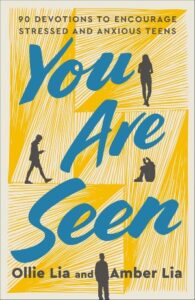
John: Mm-hmm. And our guests are Amber Lia and her son, Ollie. And, uh, Amber’s been here before. She’s a bestselling author and speaker. She’s got four sons, and Ollie is the oldest of those boys. Uh, he has a ministry to other teens on social media. And we’re gonna be talking about a book that mom and son have written called You Are Seen: 90 Devotions to Encourage Stressed and Anxious Teens. And you can learn more about our guests and get a copy of this book from our website, and that’s FocusontheFamily.com/broadcast.
Jim: This is great. I’m so thankful you’re both here. Ollie, I really give you a lot of credit here for stepping in your senior in high school. And we really appreciate hearing your heart and hearing from you about what that has looked like for you and having anxiety and dealing with it. And Amber, of course-
Amber Lia: Mm.
Jim: You’re so in tune and I so appreciate your parenting approaches and you are a bestselling author and speaker-
John: Mm.
Jim: … and all those things. That puts a little more pressure on you, doesn’t it?
Amber: Yeah, no pressure. (laughs)
Jim: Nothing like having to be perfect.
Amber: Right.
Jim: But you know what’s so true is we’re just human as well.
Amber: That’s right.
Jim: For those of us that have written books (laughs)-
Amber: Yeah.
Jim: … on things, we’re often writing out of our own experience-
Amber: Yes.
Jim: … our own pain and trying to process that-
Amber: Right.
Jim: … to help other people. So that’s the way I know you approach this.
Amber: Yes.
Jim: Ollie, let me start with you.
Ollie: Yeah.
Jim: And again, I just admire your courage. I love it. And in that context, w- when did you s- first kinda realize, “I think I’m feeling anxious. I think I’m waking up every day”? What did it look like? Paint the picture for parents that don’t really understand what it looks like to you.
Amber: Mm-hmm.
Jim: How old were you and what was the beginning of that journey?
Ollie: Yeah. Yeah. Well, first of all, thank you guys for having us. Um, I think my story kinda began going into my freshman year of high school. Um, we were living in California and then we moved across the country to Tennessee. It was a very big change, very big culture shock.
Jim: A- as a freshman.
Ollie: Yeah. Oh, yeah.
Jim: Yeah, oof.
Ollie: As a freshman, yeah. So, you know, I remember taking my first steps, walking in the door. I knew one person, and that was my neighbor that literally I met that morning who drove me to school.
Jim: Wow.
Ollie: So it was very, it was very new.
Jim: Nice guy.
Ollie: It was very new. And I remember walking into the class and it was just very different for me. Um, lots of different people and, and places. And I just remember feeling a little out of my zone. I felt very uncomfortable. And honestly, I feel like that’s kind of when my anxiety kinda started-
Jim: Yeah.
Ollie: … kick in because I felt like I was kind of outside, felt like I was the new guy and, you know, I felt like all the eyes were on me. Um, and, you know, of course that brought a little bit of a stress and anxiety because I, I thought, you know, am I the only one? (laughs) Which was definitely, uh, it was an interesting chapter for me to kind of begin my high school life in for sure.
Jim: That, you know, that’s a great opening point that parents can miss that when there’s a big shift-
Amber: Mm-hmm.
Ollie: Yeah.
Jim: … in life, whatever that might be, a big move or whatever-
Ollie: Yeah.
Jim: … that can be a, a beginning point for something like that.
Ollie: Yeah.
Jim: Um, how did it manifest for you?
Ollie: Yeah.
Jim: What, describe for us inside your own heart and mind-
Ollie: Yeah.
Jim: … what those voices were saying to you.
Ollie: Yeah. So, um, honestly, I think one of the main things that I struggled with, you know, walking into high school was finding friends, finding a good community.
Jim: Mm.
Ollie: Um, finding people that I could surround myself in to just text and be like, “Hey, you wanna go grab some coffee?” Or, “Wanna go grab lunch?” Um, you know, I didn’t have that. And I struggled because everybody kinda knew each other, you know, since they were born.
Jim: They were connected.
Ollie: And that was very different for me. Um, coming from California, you know, I, I was very, like, introducing myself to anybody that I could and, you know, it would, it’d be nice I’d be able to have a conversation or two and then just kind of felt distant again. It was just very weird. Um, I just remember feeling just lonely. I just remember feeling, you know, kinda sad because I, I s- felt like a people watcher almost because I could see people having relationships, having, you know, laughing and going and sitting with each other at lunch. And I just, I didn’t, I didn’t know who to sit with. I didn’t know those things.
Jim: Mm-hmm.
Ollie: And I, I felt very lonely, very, you know, kind of out of, uh, what was going on in this place that I had found myself. And I feel like that’s kind of where it also-
Amber: Yeah.
Jim: Kind of isolated.
Ollie: Yeah. Yeah. Extremely.
Amber: Mm-hmm.
Jim: And this is just four years ago, right?
Ollie: Right, this is four years now.
Jim: I mean this isn’t, this isn’t like back when.
Ollie: Yeah. (laughs)
Jim: I mean, you’re, you’re still in that school-
Ollie: 100%.
Jim: … I would imagine.
Ollie: I am still there. Yep.
Jim: So I, again, those are the little trigger things that happened. Amber, as a parent-
Amber: Yeah.
Jim: … were you eyes wide open? Were you looking for that?
Amber: No.
Jim: And Ollie’s your oldest.
Amber: Mm-hmm. Yeah.
Jim: Okay. So this is really, you had a deck stacked against you, right? You’re the oldest child.
Amber: Yes.
Ollie: Yeah.
Jim: Your freshman year.
Ollie: Yeah.
Jim: Move across the country change.
Ollie: Yeah, yeah.
Amber: Yeah.
Jim: I mean, I can’t imagine all the things you were feeling, but-
Amber: Well, and I think as a family, we were excited, right? Where you’re child, you know, you still live in the same hometown you’ve always said, but you’re going to a new school or there’s just a new season, you’re excited. We tend to focus on the positive. We don’t imagine, you know, necessarily that things are going to be so hard for our kids. And so for Oliver and even his younger brothers that were pre-teens and teens, we started to see with Ollie in particular, a bit of a shift in that he just wasn’t his normal perky self.
Jim: Uh-huh.
Amber: Like he’s typically very outgoing.
Jim: Joyful.
Amber: Joyful.
Jim: Yeah.
Amber: You know, conversational-
Jim: Right.
Amber: … when he’d get home. And he would start to just go up to his room, you know, and shut the door.
Jim: Mm-hmm. Right.
Amber: He started to shut down little by little. And I thought, okay, you know, it, we also were homeschoolers and then we shifted to going to school. Maybe just the pressures were, you know, getting to him a little bit. I didn’t realize how much it was affecting him. And he, I mean, you tried to mask it, I think-
Ollie: Yeah.
Amber: … for a little while too, until it got to a point where you couldn’t.
Jim: Well, put the good foot forward.
Amber: Yes.
Ollie: Yes.
Jim: You know, I’m sure that wasn’t deceptive.
Amber: Trying to do the best he could.
Jim: It was like, “I’ll try to play.”
Amber: No. Yeah.
Jim: Right? And it, you have that feeling. You know, let me say it in my, my expression, I think I might be the dad that would go up to your room and pat you on the knee and say, “You know, Ollie, it’s gonna be okay.”
Ollie: Mm-hmm.
Jim: Tell me what (laughs) not that your dad or mom did that, but how useless is that? (laughs)
Ollie: Well, um, genuinely it helps. Um, my mama, she, she loves me. And-
Jim: Mm-hmm.
Ollie: … I, I give her a lot of credit because I think without her, I probably wouldn’t be in the place I’m in now.
Jim: Wow.
Ollie: Um, she really introduced, uh, the Lord to me in the place where I wasn’t finding God. Um, you know-
Jim: Mm-hmm.
Ollie: … I would go up into my room. I’d be, it became a thing where I’d get home from school and walk straight up to my room, shut the door, and wait until you see me until dinner. And, which is not myself, you know?
Jim: Yeah.
Ollie: I’m used to, I’m the oldest, I’m the big family guy. I walk in and, you know, asking how my little brother’s doing and everything and-
Jim: You’ve got responsibility.
Ollie: Right. Yeah. I’ve got responsibility.
Jim: (laughs)
Ollie: So, um, but yeah, I mean, my mom, you know, she would come in and, and she would engage in conversations with me. And, you know, I do think that I was, uh, definitely distant and felt kind of short, you know?
Amber: It was, it was pretty hard actually at first.
Ollie: Yeah.
Amber: Like, explain a little bit about, like, just how you were so resistant.
Ollie: Yeah.
Amber: Because I think that’s what caught me off guard is how resistant he was at first when I would come up-
Jim: To the change or to the interaction?
Amber: To me trying to comfort him.
Jim: Okay.
Amber: Trying to talk with him.
Jim: All right.
Amber: So when I would go up there and try to talk to him, eventually he would open up to me, but not at first.
Ollie: Yeah. I think I tried to do things on my own. Um, not come on-
Jim: I can handle it?
Ollie: Yeah.
Jim: Yeah.
Ollie: I tried to, I wasn’t sure. It was new. And so I was kind of like, let me just figure this out. You know, this is just like a school assignment, this is just some homework, you know, I’m just feeling a little off, you know, I can try and get this done. Um, and I, I really, because I did that, um, put myself in a far worse place-
Jim: Mm-hmm.
Ollie: … than I really had to be in.
Jim: So the aim was noble-
Ollie: Mm.
Jim: … but the, the process didn’t help you-
Ollie: Right.
Jim: … is the point. And I think back to my question, the, the thing that we need to be mindful of as parents is, and, you know, I think Jean would have a fair criticism of me as my parenting style-
Amber: Mm-hmm.
Jim: … that I’m kind of pick yourself up by your bootstraps and go.
Ollie: Yeah.
Jim: And that doesn’t work in this spot.
Ollie: No.
Jim: You’ve got to-
Amber: Yeah.
Jim: … as a parent, you got to be there.
Amber: Yes.
Jim: You got to move in, you can’t be pushed away-
Amber: Right.
Jim: … by that superficial-
Amber: Yeah.
Jim: … kind of, I got this.
Amber: Mm-hmm.
Jim: You gotta keep processing and pressing into your child’s heart.
Amber: Yeah.
Jim: And I, I guess speak to me-
Amber: Yeah.
Jim: … as a dad in that context of how to think of this differently.
Amber: Yes. Well, I think it was very important, you know, when we started to see, like, panic attacks begin.
Jim: Mm.
Amber: Um, when we would start to see Ollie spiral into the darker places, like less of the just, I’ve got this and more of the, there’s clearly something wrong and when you feel so helpless as a parent, you’re not sure what to do.
Jim: Right.
Amber: And even in those moments, like we would come to Ollie and he would be like, “No,” you know. And he would be very resistant and push us away. He would even tell us that sometimes he just wanted to be in that dark place. Like he, even though he didn’t wanna be in that dark place, he wanted to be in that dark place.
Ollie: Yeah.
Amber: Yeah. And it was really difficult as a parent. And I think the key for us was to not give up.
Ollie: Mm-hmm.
Amber: I was just committed that I wasn’t gonna give up on him.
Jim: Yeah.
Amber: You know, we sought counseling, we looked into medications, different supplements, you know, changing his diet, making sure he got good sleep, a lot of practical things proactively, consistently is what helped to eventually break down some of these barriers and help us work through some things. And so for a parent, even when your child pushes you away and resists you, they don’t really want you to go away. They do need you there.
Ollie: Yeah.
Amber: And so to just not be personally offended by it, like at first I would get indignant and be like, “Wh- you can’t talk to me like that. I’m trying to help you,” you know, and then I realized quickly, whoa, that’s not-
Jim: This is essential.
Amber: … that’s not gonna help. Like this is him-
Jim: Yeah.
Amber: … feeling something that’s not about me and this isn’t my child that’s normally who he is. This is somebody different all of a sudden. And so to just continue to be patient with him and loving to him and to speak truth to him in small doses, even if he rejected it in the moment.
Jim: Yeah. So the first thing we’re hearing is as parents, be aware of situational changes that can impact your child’s emotional wellbeing-
Amber: Yes.
Jim: … just generally and don’t be flippant about it and-
Amber: Absolutely be aware.
Jim: … engage it so that-
Ollie: Mm-hmm.
Jim: … you know, you can attack this together. A- Amber, let me ask you, uh, the practical steps that parents can take to help their children who are dealing with intense anxiety, what are some of those practical steps?
Amber: Well, Ollie and I are so thankful that we even have some amazing professional, you know, counselors that-
Jim: Yeah, which is good.
Amber: … peeked into, you know, our lives and, you know, we include some of that in our book together too because we, we needed those practical steps. And so like when Oliver would get into a, a really deep, dark place, a hole, you know, it was almost like he was just in this pit and nothing could bring him out of it, it oftentimes was because of anticipating something that was about to happen.
Jim: Mm-hmm.
Amber: Like even if it was a good thing, it was like too much for him to handle. Like, you know, going, playing baseball, he loved to play baseball, but now all of a sudden the thought of going to a, a game or something would be so overwhelming and anxiety-inducing that it took all the joy out of it.
Jim: Mm.
Amber: And so we would do some practices, like one practice we would do is we would just take a deep breath in the moment.
Jim: Mm-hmm.
Amber: And so Oliver learned, I think you even, you know, you learned pretty quickly to do this when I wasn’t around-
Ollie: Yeah.
Amber: … um, to do some box breathing.
Ollie: Yes.
Amber: And so-
Jim: Box breathing. Describe that.
Amber: Yeah. So-
Ollie: Yeah, I’ll describe it. Box breathing is, it’s super simple. It’s like the, you know, very norm, like this is how you can start to figure out how to start managing your breathing is it’s, you know, you breathe in for four seconds. So you just … then you hold it for four seconds, and you breathe out for four seconds. And then you just wait for four seconds. And so you just kind of keep that cycle.
Jim: Yeah.
Ollie: And I like to think of it as a box, you know. And that’s why we call it box breathing.
Jim: And it kind of regulates your feelings.
Amber: Up one side and over the other side.
Ollie: Yes, it does.
Amber: Yeah.
Ollie: And I remember multiple times where I, I would be sitting in my bed. I just remember it d- I just remember it being a dark setting as well. I’d be sitting in my room, I would just genuinely be having this anxiety, this panic attack where I’d just kind of be freaking out. I remember being, like, crying and I remember being worked up. And I just remember my heart just beating-
Jim: Yeah.
Ollie: … and beating. And, you know, my mom would come-
Amber: Mm-hmm.
Ollie: … she’d, you know, hold my hand and, you know, sometimes I’d, you know, take my hand back-
Amber: Pull away.
Ollie: … and pull away. And I just remember these things and she’d just say, “Ollie, just give me a second. Like just give me a chance. Let’s just try the box breathing.” I’d say, “No, this is stupid. Like I don’t wanna do this.” And she just, you know, kept on going after me, kept on pursuing me, “Let’s just try this.” And so, you know, eventually I tried, I did those breathing steps, my heart started slowing down. I was able to have a conversation.
Jim: Mm.
Ollie: And that is when life change began to happen because that was when a space was created where I could open up to my mom. Um, and it was because of those practical steps that I was able to really talk about what was going on in my life, what was going on at school and my sports team.
Jim: Mm.
Ollie: How I was feeling, what was causing my anxiety, and that’s when those conversations began.
Amber: Yeah. And we learned also too, along with the box breathing, because the cortisol, right, and the stress hormones and all that.
Ollie: Yes.
Amber: The fight or flight mechanism-
Ollie: Yes.
Jim: Right.
Amber: … that’s chemically going on in his body in that moment, it allows us to just get back to reality for a minute.
Ollie: Mm-hmm.
Amber: Instead of in that swirly place, that panic driven place. And we would do that breathing, we would just get back into our senses again, and then I would often say, “Okay, Ollie, let’s, I’m just gonna tell you two things I’m thankful for just from today.”
Ollie: Mm-hmm.
Amber: And I would encourage him to do that. And sometimes he would resist, but eventually we, you know, just by being persistent and consistent with him, when we would do the breathing, we’d be like, “Let’s just shift from the fear of the future or the loneliness or the grief of whatever he may be processing from t- earlier today, but right now there’s still hope. We can still be grateful.” And just trying to shift his focus to there is good in your life right now. I know it feels dark and scary and overwhelming, but we have to take those thoughts captive and to focus on things that we can praise the Lord for even today.
Ollie: Yeah.
John: Yeah. We’re hearing from Amber Lia and her son Ollie today on Focus on the Family with Jim Daly and, uh, so appreciate the candor, um, and the insight that you’re offering. Uh, they’ve written a book together that’s a 90-day devotional to encourage stressed and anxious teens. It’s called You Are Seen, and we’ve got copies of that here at the ministry. Stop by FocusontheFamily.com/broadcast for more.
Jim: You know, before we move off of this theme, uh, there were kind of the senses grounding that you went through-
Ollie: Mm-hmm.
Jim: Uh, box breathing must have been one of them. What are the other senses, uh, orientation that helped you?
Ollie: Yeah. We had, um, we had, it was … Do you wanna try this one?
Amber: For sure. So one of the other key things that was helpful for us was telling Oliver, “Okay, in the moment, again, you’re panicking, but let’s try something called five, four, three, two, one,” which we learned from counselors too, is that I would say to Ollie, “Okay, Ollie, what are five things that you can see right now?” And just looking around the room, and at first, your teenager, they, again, might resist you. Like don’t allow their resistance to dictate what you do as a parent.
Ollie: Mm-hmm.
Amber: You know, you get to lovingly keep pursuing them.
Jim: Uh-huh.
Amber: And when he wouldn’t do it, I would sometimes even in the beginning just say it, “Okay, I can see, you know, the necklace around your neck. I can see, you know, the blanket here on the bed.
Ollie: Yeah.
Amber: And I can see, you know, the trees outside that are, you know, blowing in the wind.” And so just five things that you can see.
Ollie: Mm-hmm.
Amber: And then it would be like four things that you could feel, you know, feeling the shirt against your skin, uh, three things that, you know, you could smell, you know, two things that you could taste. Like just going through the senses one by one and allowing that again to bring us back to the present moment and not be in such a place of panic-
Ollie: Yeah.
Amber: … and overwhelm.
Jim: You know, going through some of that counseling for our family, I mean, I think we underestimate the power of sense-
Ollie: Oh.
Amber: Yes.
Jim: … and that’s what they’re connecting you with-
Amber: That’s right.
Jim: … so you can get better connected with what’s real.
Amber: It regulates your nervous system again.
Jim: That’s right.
Ollie: Yes.
Jim: I mean, these are simple things that they’ve learned-
Ollie: Yeah.
Jim: … to help reduce anxiety and depression.
Amber: Yes.
Jim: And it’s really phenomenal.
Ollie: Yeah.
Jim: I mean, they had, like, padding a tabletop-
Amber: Yes.
Jim: … while you’re doing a circle-
Ollie: Yeah. (laughs).
Jim: … on your chest.
Amber: Yes.
Jim: It just triggers aspects of your brain-
Ollie: Yes.
Amber: Yeah.
Jim: … that helps soothe it. It’s so interesting.
Amber: It is. And I think it helps to build empathy and compassion as a parent for your child because you’re realizing this is a really physiological thing and sometimes like a spiritual thing.
Ollie: Mm-hmm.
Amber: We don’t need to panic ourselves and think that there’s something terribly wrong that we’re not gonna be able to work through-
Jim: Yeah.
Amber: … that we can work through this. And also to, again, not take this personally-
Ollie: Mm-hmm.
Amber: … and start to feel guilt as a parent.
Jim: You know, let me ask this. We talked about, you know, the, in my case, the dad response, uh.
Ollie: Mm-hmm.
Jim: It’ll be okay. You know, it sounds hollow-
Amber: Yeah.
Jim: … to the person who is suffering from that anxiety or that depression. But Amber, I wanna ask you specifically and Ollie respond as the recipient of this, uh, how do we as parents encourage our children to trust God when the-
Amber: Mm-hmm.
Jim: … circumstances are that hard, it feels a little bit like it’ll be okay? Because again, that connection to the Lord can feel distant to the one-
Amber: Yeah.
Jim: … who’s dealing with anxiety.
Ollie: Yeah.
Jim: Yeah.
Amber: I absolutely know and believe that the Word of God is living and active.
Ollie: Yeah.
Amber: It is useful for life, for godliness, but it is powerful in the moments. In our worst moments, it is the Word of God that is going to ground me the most. And so as a woman who has, you know, faithfully clung to God’s Word, I hunger for it. Like I don’t have a quiet time or my own devotional time because it feels like a real activity, like I’m desperate for it. I need God that much in my life and it is His Word that has helped me the most. And so in particular, I found that as a mom, refocusing Ollie on the promises of God-
Jim: Mm-hmm.
Amber: … and his identity in Christ was the most helpful scriptural direction to give him.
Ollie: Yeah.
Amber: Which is why, you know, we called our book You Are Seen. We wanted to put in place all of these different, you know, 15 different things that are affirming for teenagers about who they are in Christ and His promises to them. Because when Ollie was struggling the most, I wanted him to know that, you know, the joy of the Lord is your strength.
Ollie: Mm-hmm.
Amber: You may feel weak right now, but there is joy in the Lord. Weeping will be through the night tonight. We are gonna cry some tears tonight. But Ollie, God’s Word says, “Joy comes in the morning.”
Ollie: Yes.
Amber: The Lord tells you, cast your cares on Him. That means you’re gonna have cares. You’re gonna have anxieties. Cast them on Him. He cares for you. And really trying to speak through the darkness to shine the light. You know, when the light is present, the darkness has to go.
Ollie: Yeah.
Jim: Um, how do we continue-
Amber: Yeah.
Jim: … to work constructively-
Amber: Yes.
Jim: … as a parent so we’re not damaging-
Amber: Yes.
Jim: … the relationship and we’re continuing to put … And I don’t mean this negatively, but continuing to put the spiritual breadcrumbs out there-
Amber: Yeah. Right.
Jim: … in such a way that they can say, “Hmm, this tastes good”?
Amber: Yes (laughs).
Jim: And they move to the next one.
Amber: Yeah.
Jim: You know, you just can’t be the bull in the China shop-
Amber: Mm.
Jim: … parent going, “Come on, straighten up.”
Amber: Yeah.
Jim: “This is really … I don’t know what to do with you.”
Amber: Right.
Jim: “And it’s freaking me out.”
Amber: Yeah.
Ollie: Yeah.
Amber: You have to lance the wound gently with the Word of God-
Ollie: Mm-hmm.
Amber: … as opposed to, like, coming in like a dagger, you know, to be-
Jim: Wow.
Amber: … really-
Jim: Mm.
Amber: … gentle spiritually with your child.
Ollie: Yeah.
Amber: I think that they know the tone is different. When you can come to your child with empathy, it’s all about the way I present it, right, with great compassion.
Jim: Right.
Amber: Like, he knew that I wasn’t trying to just be preachy at him-
Jim: Right.
Amber: … and be like, “You need to feel this way.” It was more, “Hey, Ollie, I know this hurts. I know that you’re feeling afraid.”
Jim: Yeah.
Amber: “And if you’re not, that’s okay, but I just want you to know that I’m here for you and the Lord is here for you.”
Ollie: Mm-hmm.
Amber: And just reminding them of those things in a gentle way.
Jim: Uh, Amber, let’s end with mom (laughs).
Amber: Mm-hmm.
Jim: Speaking to moms-
Amber: Yeah.
Jim: … and dads, but the mom’s heart to say, “Okay, if you feel like you’re in this spot, don’t ignore it.”
Amber: Yeah.
Jim: “Don’t try to just talk it out.”
Amber: Right.
Jim: “What are those things that I need to do-
Amber: Yeah.
Jim: … that I’m concerned about because my son, my daughter, is not what they used to be-
Amber: Yeah.
Jim: … in that emotional space.”
Amber: Yeah.
Jim: What do we do?
Amber: Well, first of all, you’re not alone. As you said at the beginning, like, this is a really common thing that so many teens are struggling with. And as a parent, we often are caught off guard by it. We’re surprised by it. We don’t realize how dark and deep it’s become for our teens. And so in general, I think it’s important that we keep our kids in prayer, you know, that’s like the foundation for me is I pray so fervently for my kids. And even in those moments when I had no idea what to do, because nothing I was doing was quote, unquote “working” with Ollie. He’d be in his room crying, you know, or just isolating. I got to a point where I would even, and I wasn’t really raised this way, but I was just like, Lord, I would take, you know, cooking oil and I would put it all around the doorframe of Oliver’s door and I would just be on my knees-
Jim: Yeah.
Amber: … outside his door when he would push me out and I would just pray over him.
Jim: Wow. Wow.
Amber: And I would just take scriptures and I would just say, “Look, the angel of the Lord is a guard around my son, you know, that Lord, just replace the dark thoughts with words of your truth. Like, I cannot get through to him, but I know, Lord, that you can.”
Jim: Yeah.
Amber: And so really praying fervently for my child and recognizing that while I wanted the Lord to be Ollie’s hope, He was also my hope-
Jim: Yeah.
Amber: … as a mom. And I could rely on the Lord-
Jim: Mm-hmm.
Amber: … to give me wisdom and discernment. And be consistent and persevering for your child. You know, be proactive in getting help. You know, do your homework, reach out to Focus for the resources that they offer and the counseling that they offer.
Jim: Yeah. Yeah.
Amber: Don’t give up on your child and please have hope.
Jim: Yeah.
Amber: You know, Ollie and I, our testimony hopefully will be a great encouragement to you. It could take a long time.
Jim: Yeah.
Amber: But don’t give up on your child and don’t give up on the Lord being a present help in your trouble.
Jim: Well, I, I like that point of hope because don’t let shame and guilt be those core-
Amber: Yes. Absolutely.
Jim: … principles. Let hope be the principle-
Amber: Yes.
Jim: … and make sure as a parent that we’re not, uh, reinforcing shame and guilt-
Amber: Mm. That’s right.
Jim: … because, you know, we didn’t get the child we hoped for.
Amber: Yeah.
Jim: My goodness, is that-
Ollie: Mm-hmm.
Jim: … so far?
Amber: And I have to say too that along with that, Jim, one of the main things that we dealt with a lot is the shame and guilt that Ollie would feel after some episodes he would have.
Jim: Yeah.
Amber: Then it would be the shame and the guilt for how he spoke to us or how he treated us.
Ollie: Mm-hmm. Yeah.
Amber: And I’ve gotten to the habit of saying to him, “Ollie, you were forgiven from the start.”
Jim: Yeah.
Amber: “You’re already forgiven and again, you don’t need to feel that shame or guilt.” And I think that’s why, you know, Ollie started an Instagram called Walking with Ollie just to speak to teens and peers so that-
Jim: That’s so good.
Amber: … that they would be able to see you don’t need to hide and isolate about this. It’s normal, unfortunately.
Jim: Yeah.
Amber: You’re not alone. And so just remembering people that they’re gonna, it’s good to be vulnerable and it’s good to connect.
Jim: Yeah.
Amber: But don’t feel shame over it.
Jim: That’s so good. Ollie, I’m impressed. I think, uh, you know, you continue on your path and then you can become president of Focus on the Family.
Amber: (laughs)
Ollie: (laughs)
Jim: (laughs) You, you got so many things going in your direction with the Lord. That’s impressive.
Ollie: Mm.
Jim: So well done. Way to go, way to fight for life. You know, John 10:10 says, “The thief comes to steal, kill and destroy.”
Amber: Mm. That’s right.
Jim: And it’s clever how he goes about doing that.
Amber: Mm-hmm.
Jim: It’s to kill you emotionally-
Amber: That’s right.
Jim: … to kill you physically and to destroy who you are made in God’s image. He hates that-
Amber: That’s right.
Jim: … that we’re made in His image. Yeah. And I’m proud of the way you have fought for life. And I mean that big life.
Amber: Mm-hmm.
Jim: You know, life in Christ-
Amber: Mm-hmm.
Jim: … is what the end of that, uh, scripture says.
Ollie: Mm-hmm.
Jim: To have life in Christ and life more abundantly. It seems like you are there.
Ollie: Mm.
Jim: And, uh, yeah, I’m just, it’s a privilege to meet you. Always good to see you, Amber.
Amber: Thank you. You too.
Jim: Thanks for being with us.
Amber: It’s my pleasure.
Jim: Let me turn to the listener. If you or your teen is really struggling with anxiety or depression, we are here for you. Our counselors can help you take some initial steps to get back to a place of peace, so give us a call.
John: Yeah, set up a free consultation with one of our caring Christian counselors when you call 800-232-6459. 800, the letter A and the word FAMILY. Or stop by FocusontheFamily.com/broadcast.
Jim: And let’s get a copy of Amber and Ollie’s, uh, devotional for anxious teens into your hands. This is a crucial resource because so many teens turn to smartphones or video games or worse, coping mechanisms to numb their anxiety. And You Are Seen can provide lasting solutions by grounding them in spiritual truth. So if you’re a parent of teens or a grandparent of teens, get a copy from us here at Focus on the Family. When you make a donation of any amount, we’ll send it to you as our way of saying, “Thank you for being part of the ministry.” And, you know, at Focus, we provide so many resources like podcast articles and counseling consultations completely free because we’re a nonprofit ministry. And if you’ve benefited from, uh, some of those resources over the years like today’s show, I hope you’ll, uh, make a financial gift so that we can continue to offer that support to other parents, couples, foster children, and many more.
John: Mm-hmm. Donate today. Request your copy of Ollie and Amber Lia’s book when you call 800, the letter A, and the word FAMILY. 800-232-6459, or, uh, stop by the website, that’s FocusontheFamily.com/broadcast. Next time, we’ll hear from Joshua Becker, who has some advice for how to embrace a minimalist lifestyle.
Joshua Becker: Until we started actually living that out and started, we got rid of 60 to 70% of our possessions. And when we did, I discovered, lo and behold, that Jesus knew exactly what He was talking about.