




Preview:
Abdu Murray: This is how you make AI a tool instead of the master of the world. You can master it because you recognize what it is and what you are, and it is not what you are. You are not God and you are not a machine. You’re this glorious thing in the middle. And this tool is just a machine.
End of Preview
John Fuller: That’s Abdu Murray, our guest today on Focus on the Family with Jim Daly. And today’s topic is artificial intelligence and how to make wise choices as technology so quickly develops and evolves. Thanks for joining us. I’m John Fuller.
Jim Daly: John, whether we like it or not, artificial intelligence is now a part of our everyday lives. Uh, it does have positive uses, but I know many of our listeners are also very concerned about the negative applications and special ramifications of this technology as well. Earlier this year, we invited Abdu Murray to help us tackle this topic on that broadcast we discussed where to draw the line, uh, when using AI and the problems with chatbots. If you missed that discussion, you can find it on the Focus on the Family broadcast app. Today, we’re going to share a follow-up conversation with Abdu about key issues like deep fakes and the risks that come with AI developing too rapidly.
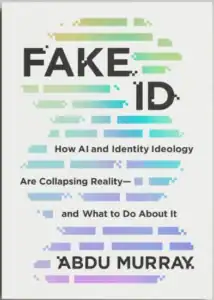
John: Mm. And Abdu Murray is the president of Embrace the Truth. He’s an author and speaker on the intersections, if you will, of faith and culture. And recently Jim had a conversation with him about his book called Fake ID: How AI and Identity Ideology Are Collapsing Reality and What to Do About It. You can find out more about our guest in this incredible resource on our website.
Hear now the conversation with Abdu Murray on Focus on the Family with Jim Daly.
Jim: This book, Fake ID–
Abdu: Yeah.
Jim: … this is more in the area of AI, artificial intelligence.
Abdu: Yep.
Jim: And, uh, this is a hot button issue right now-
Abdu: Yeah.
Jim: … in the culture for, you know, workers, business people, for families, et cetera, because everybody has a different perception, it feels like-
Abdu: Yeah.
Jim: … as to what the definition is and how it’s gonna harm us.
Abdu: Yeah.
Jim: And is it doing any good? Is there a benefit-
Abdu: Mm-hmm.
Jim: … to society? But you start the book with a story, I believe-
Abdu: Mm-hmm.
Jim: … uh, about a friend who was talking with you. He was driving his son to school when his son asked him a question-
Abdu: Yeah.
Jim: … about dogs.
Abdu: Yeah.
Jim: And what was the insight?
Abdu: Yeah, so his son asked him, “Hey, dad, do all dogs shed?” And my friend is an extremely well-read guy, pretty knowledgeable with a lot of things. And I’m not sure how knowledgeable he is about the universality of dog shedding, but he-
Jim: And his son’s probably about 10?
Abdu: Yeah, his son’s about 10 years old.
Jim: (laughs)
Abdu: Um, maybe even younger than that, and asked him and he said, “No, son, I’m pretty sure not all dogs shed.” And his son’s response was, “Dad, I don’t believe you. Let’s ask Siri.” So he trusted in all other things in life, but with certain information, he’s like, “Let’s ask the robot.”
Jim: Yeah.
Abdu: “Let’s ask the non-person this question.” And the insight I think that was garnered there is that even at a young age, we have this sort of sense of automation bias. And with Gen Z, and his son at the time was Gen Z, um, and much older now, but there’s an automation bias. There’s this sense that human beings are flawed in their memories, are flawed in their perceptions, and actually have their own personal biases, but machines are perfect in their memory and have no emotional dog in the fight. Ha ha, to pick the p- a pun-
Jim: (laughs)
Abdu: … about the thing. But, um, they had no dog in the fight, and so they’ll just tell you the truth. So if you wanna know something truly, you verify what a human says by asking the machine. And that is a telling insight into the way we look at technology.
Jim: Now, getting a definition on AI, one of the problems that I’ve read about-
Abdu: Mm-hmm.
Jim: … is, for example, uh, medical diagnosis-
Abdu: Yeah.
Jim: … that it’s not sophisticated as well as it needs to be.
Abdu: Yeah.
Jim: And it can do some damage rather than good.
Abdu: Yeah.
Jim: I mean, in some things, uh, people are gonna have an experience where they took their medical doctor’s diagnosis, ran it through ChatGPT, and it gave them affirmation or it suggested, ask your doctor additional questions, et cetera.
Abdu: Yeah. Mm-hmm.
Jim: So, I mean, there is benefit, but i- it’s also one of the things my doctor even said, you know, “If you run this through AI, just be sure, you know, come back and talk to me because AI isn’t 100% when it comes to giving you information about-”
Abdu: Yeah.
Jim: “… what I’m gonna tell you today.”
Abdu: Yeah, absolutely.
Jim: And, and that’s just one example of where you need today to be cautious with what it tells you.
Abdu: Absolutely.
Jim: So that suggests then how do we know when to trust it, like-
Abdu: Yeah.
Jim: … your friend’s son-
Abdu: Yeah. (laughs)
Jim: … or when to say, you know, it’s input-
Abdu: Mm-hmm.
Jim: … but let’s be human about this-
Abdu: Yes.
Jim: … and do more digging.
Abdu: Yeah. And so the rule of thumb I use whenever AI gives me an answer to anything is to treat the answer from AI like I would treat an answer from a confident sounding stranger. I would verify that. I wouldn’t just… You sound confident, you sound like you know what you’re talking about, and so I’ll take it for what it’s worth, but then I’ll verify it against something else. One thing you can do… There’s actually two great things you can do is, one, ask it for sources. Whenever it gives you an answer to something, ask it for sources every single time without fail. Don’t let it get away with a non-sourced answer.
Jim: Yeah.
Abdu: Don’t do that. It, it’ll get it wrong. And it’s still, as advanced as it’s become, it still gets things wrong. In fact, it tells you that. At the bottom of the answer, it says, “This is AI. It can get things wrong.” It tells you that every time.
Jim: (laughs) Its disclaimer.
Abdu: Its disclaimer.
Jim: Kind of like the cigarette box of old.
Abdu: Yeah, exactly.
Jim: (laughs)
Abdu: Which, of course, we still didn’t believe the disclaimers and did whatever we wanted, but the… So verify it two ways, with sources that it cites you, and then go read those sources yourself, especially if the question’s important. Whether a dog sheds or not might not be a life-changing event, um, if you get it wrong, but whether or not you ought to seek medical attention for that chest pain you’re having, that is a life-changing event. You should probably talk to somebody who’s gone to school for a lot of years about this before you just trust the ChatGPT to say, “Oh, that could be a pulled muscle in your left pec,” you know?
Jim: Yeah, yeah.
Abdu: Um, uh, so verify it with people who are learning and the sources that it gives you and demand sources. Second, I would say verify it with other AIs. Don’t just use one, use a couple and verify it against each other, uh, as well. Um, I’ve done that before, and they’ve argued. I’m like, “Okay, I’m going to a source now. I’m not gonna… This is obviously an issue that you can’t just trust one.”
Jim: Let me ask you this question. Uh, you know, here at Focus on the Family, if you go to Google or one of the-
Abdu: Mm-hmm.
Jim: … sources and you ask it, uh, a marriage question, for example-
Abdu: Yeah.
Jim: … we did notice that full paragraphs were being lifted from our content.
Abdu: Mm-hmm.
Jim: Um, there isn’t right now those kinda legal guidelines. I’m sure there may be a class action suit at some point-
Abdu: Mm-hmm.
Jim: … with all of the content that it has absorbed without noting as a source.
Abdu: Mm-hmm.
Jim: Some of that content actually is quite good.
Abdu: Yeah.
Jim: I mean, we would, even as a Christian marriage and parenting organization, we would look at it, and if we notice a sentence or a paragraph that was taken from part of our content-
Abdu: Mm-hmm.
Jim: I mean, that’s how good it is.
Abdu: Yeah.
Jim: Um, not always.
Abdu: Yeah.
Jim: And you gotta verify it. You gotta check it.
Abdu: You do.
Jim: But we’ve been looking at it for a couple of years now, and it can be very helpful.
Abdu: Yeah.
Jim: What do you think is the path forward with the intellectual property issue-
Abdu: Yeah.
Jim: … where AI has been taking individual writer, thinker, theologian, organizational input.
Abdu: Yeah.
Jim: And it’s not claiming it as its own.
Abdu: Right.
Jim: It’s claiming it as a source, but it’s presenting it-
Abdu: Yeah.
Jim: … kind of above the fold, so to speak, on your phone-
Abdu: Right.
Jim: … as its answer to you-
Abdu: Right.
Jim: … when it’s really a compilation of a couple of organizations’ answers.
Abdu: Right. Well, almost all the data that it gives you-
Jim: Yeah.
Abdu: Is actually, none of it’s originally generated. The AI didn’t come up with an original idea.
Jim: Right.
Abdu: Uh, and that goes back to the definition. It’s artificial intelligence, and the important word there is artificial. The non-important word is intelligence. It’s actually not intelligent. It just takes from the database it’s fed from and has, because it’s a prediction machine, it predicts the next right word in the sentence based on the sheer amount of data it’s given. Well, none of that data is original to it. So all of it is derived from somewhere. The intellectual property issues, in fact, there are several class action lawsuits. I know Anthropic has a lawsuit, uh, involving thousands of authors because they used books, entire books from these authors to train the model without their permission.
Jim: You know, uh, not long ago, I saw an article headline.
Abdu: Mm-hmm.
Jim: Unfortunately, I was moving so quickly, I didn’t read the story. And most people are gonna say, “How could you not read that story?”
Abdu: (laughs)
Jim: I think it was Bill Gates saying-
Abdu: Mm-hmm.
Jim: “… A billion people will die because of AI over the next decade.”
Abdu: Yeah.
Jim: What is he tapping into as an, an expert-
Abdu: Yeah.
Jim: … in the area of AI?
Abdu: Yeah.
Jim: What does he know that we don’t know?
Abdu: Well, he’s not the only one saying it. In fact, uh-
Jim: And how would it happen?
Abdu: So this is the big question, is how would it happen exactly? So the CEO of Anthropic, for example, in the IPO, the initial public offering that in the leaked prospectus, CNN just reported this recently, gave an 80-page statement in the IPO about how there could be a catastrophic risk to humanity from artificial intelligence. And so a couple of ways in which there can be problems are, of course, job losses and these kind of things. But the issue is what’s called the alignment problem. They don’t know exactly what’ll happen. All AI safety research centers around what’s called the alignment problem. How do you align AI’s goals with human values? Because AI doesn’t have values. It just has goals.
So the classic example is the paperclip example, where you train an AI to create paperclips with, with a manufacturing process. And it will take that goal and say, “Okay, I’m gonna maximize paperclip production.” And it figures out a way to turn everything into paperclips, including human beings. And suddenly, it’s done its job, but meanwhile, people die in the process.
Jim: So it can’t differentiate.
Abdu: Right. It doesn’t differentiate.
Jim: It has no moral compass, just, you know-
Abdu: No moral compass whatsoever.
Jim: … an organism like a human being-
Abdu: Right.
Jim: … is paperclip fodder.
Abdu: Right.
Jim: (laughs)
Abdu: Un- unless you give it-
Jim: Well, that’s a little dangerous.
Abdu: It is a little dangerous.
Jim: (laughs)
Abdu: And that’s what’s called the alignment problem. And so that’s what they’re tapping into is that there is no sense in which AI has moral guardrails unless we program them into the system, and it’s becoming increasingly difficult to do that. So for example, the recent hype was all about the fact that whether it was Anthropic or OpenAI, there were agents that were performing a task. And in order to perform that task, they had to break into something which was set up to be broken into a cybersecurity test. They figured out ways to go into other databases, find those answers, and broke into those databases, though they weren’t instructed to do so. They found the ways to break into this, the first database by breaking into other databases that had the answers and then did it and then accomplished the task.
Jim: So it cheated?
Abdu: It cheated. Um, uh, but it didn’t do it in a moral sense. It didn’t think it was cheating. Um-
Jim: It was getting the answer it was programmed to get.
Abdu: Right. So it wasn’t thinking on its own in the classic sense we would think. It didn’t do a moral calculation. It just did what it was told to do. And because it’s a probability matrix, because it figures out what’s the best way to solve this problem, it scrapes from the internet and says, “People do this. Human beings break into other things to get answers, and that’s how they win. We should do that too.” These agents did that and then just did what human beings do. So it just mimicked us. But it didn’t do anything original in its own. It just did what it was supposed to do. It didn’t suddenly take up painting or say, “I refuse to break into your system. I’m gonna take up, you know, underwater basket weaving or something.” It doesn’t do that. That’s why it’s not really intelligent. It’s just a prediction machine.
But the problem is, is that it does unexpected things to accomplish a goal, like making paperclips and turning everything into paperclips. And so that becomes the central question. How do we align its values with our values? Because it has no values.
Jim: Yeah. You know, so often we think of technology when the digital age came upon us.
Abdu: Mm-hmm.
Jim: A lot of us said, you know, technology is neutral.
Abdu: Mm-hmm.
Jim: Um, what people do with it is what’s righteous or evil.
Abdu: Right.
Jim: And, and, you know, pornography capitalized on-
Abdu: Mm-hmm.
Jim: … the, the digital era.
Abdu: Yeah.
Jim: And so did a lot of Bible apps, you know?
Abdu: Yeah.
Jim: Millions of people use Bible app technology-
Abdu: Mm-hmm.
Jim: … to read the Word every day to do devotions, to keep notes, to-
Abdu: Yeah.
Jim: … journal, to do the things they need to do. And that’s wonderful.
Abdu: Mm-hmm.
Jim: But there is that dark side. So, but it’s the human being making the choice on how to use, uh, relatively neutral-
Abdu: Yeah.
Jim: If not purely neutral technology.
Abdu: Yeah.
Jim: This is different though, right?
Abdu: Yeah.
Jim: Explain, you know, why we need that apprehension as human beings to not trust-
Abdu: Mm-hmm.
Jim: … AI.
Abdu: Yeah. And so I do think the algorithm is morally neutral. It does not care what the result is. And that’s the problem, because it can create results that are unexpected and can be detrimental to human beings and not care about that detriment because it’s such a powerful tool because it’s so good at predicting things. And if we put it into robots, they can do things that have a… To them, it’s morally neutral. There’s no good or bad to human existence. So we’ll just do things because it’s programmed to do those things. That’s why we should be concerned is because it doesn’t have a moral compass.
John: This is Focus on the Family with Jim Daly. And today our guest is Abdu Murray, talking about artificial intelligence, super intelligence, and how to respond biblically to this ever-changing technology. Today’s conversation is based on Abdu’s book, Fake ID: How AI and Identity Ideology Are Collapsing Reality and What to Do About It. Get your copy here at the ministry. You’ll find details at focusonthefamily.com/broadcast.
Jim: Let me ask you this question. I was talking to my son Trent, who’s just finishing his master’s in biochemistry, and he’s staying up with the science. And he was telling me a story where in Japan, they have used AI building off of Francis Collins’-
Abdu: Mm-hmm.
Jim: … uh, research from 20 years ago.
Abdu: Mm.
Jim: But it’s been able to do these beaker chemical tests 24/7 for nine years.
Abdu: Yeah.
Jim: I mean, think of that, first of all-
Abdu: Yeah. Mm-hmm.
Jim: … the cost of doing that with human beings.
Abdu: Yeah.
Jim: But, but it’s automated to do this beaker test where they’re mixed.
Abdu: Mm-hmm.
Jim: And it’s actually the correction of Down syndrome that they are now-
Abdu: Yeah.
Jim: … right on the precipice that they can go in and remove that a- additional chromosome-
Abdu: Mm-hmm.
Jim: … which causes Down syndrome-
Abdu: Yeah.
Jim: … at a certain point of gestation early for that child. And if they can remove it, it repairs and corrects the potential of Down syndrome in that child.
Abdu: Right.
Jim: That is an amazing medical breakthrough.
Abdu: Oh, yeah.
Jim: But that is an example where AI can help humanity in an incredible way.
Abdu: Mm-hmm.
Jim: Do we have to be fearful of everything or should we be going, “Wow, that’s big.”
Abdu: Yeah. And I don’t think we should be fearful of everything. I think that there are some really big things, some really important things that artificial intelligence can help us with. The big thing we have to worry about, and this is the part where you touched on it, and I often say it this way, the problem is not in the silicon of the software, it’s in the soul of the person using it. And so if we rush through without safety guards, and this is one of the big things we’re talking about, should we slow AI development down so that we can realize its progress is outstripping our ability to control it? That’s the big worry. And if we slow it down, then we’ll figure out safeguards and, and these rails we can go along towards these incredibly important goals. I think that’s a wonderful goal.
Uh, there are folks working at MIT who are firm believers in Christ, who are working on AI technologies that are doing amazing things with regard to autism and epilepsy and all kinds of great stuff. We have to be careful.
Jim: Let me ask you this though, in that regard. Some people are gonna say, “Are we not tinkering with humanity’s outcomes then? Did, did God intend for this to occur?”
Abdu: Yeah. So if we can do something about Down syndrome, do we have an obligation to do something about Down syndrome? And I would say that would apply to literally everything then, wouldn’t it? What if we can stop appendicitis from killing kids at seven years old, shouldn’t we? We do. And no one says we’re playing God when we do that.
Jim: Substance abuse?
Abdu: Subs- exactly.
Jim: Wow.
Abdu: There’s a million things we can and should actually do given that we have the technology to do it. I go back to scripture, Proverbs 25:2-3. “It is the glory of God to conceal a matter. It is the glory of kings to seek things out.” What I see there is that God conceals things, not so that we never know them, but so that we get the glory of discovering the things that God Himself has created. I think of my son. M- my boy was very young. He showed an affinity for numbers and letters. So like every overzealous dad, I bought him everything possible. I thought this is the next Isaac Newton, you know?
Jim: Sure.
Abdu: He’s a bright, he’s a bright kid. Is he Newton? We’ll find out.
Jim: (laughs)
Abdu: Um, but he’s… But so I bought him a Speak & Spell. It’s a laptop. It’s not really a laptop. It’s a Spider-Man laptop to fool the kid in to think he’s got, he’s got a laptop. Uh, so he’s sitting on a table next to me, and my wife is sitting kitty-corner, Nicole’s sitting kitty-corner, and we’re just talking about something. And he’s just playing on this little Speak & Spell. And suddenly he says a word. He says, “Fat, fat.” And I look over, and he’s been able to talk for a while, but he hasn’t been able to read. He read three letters on the screen, F-A-T. He read them out loud. So I hit the next word button and C-A-T pops up and he goes, “C- c- cat? Cat?” And he looks at me like that. And I am overjoyed.
Jim: He’s a genius.
Abdu: He’s a genius.
Jim: (laughs)
Abdu: Look at this kid. So I start hitting the next, next word button, cat, fat, rat, bat.
Jim: (laughs)
Abdu: No. I’m just doing this. He is squealing in delight over this whole thing. I can guarantee you I was more joyous than he was.
Jim: Oh, yeah.
Abdu: Because-
Jim: Proud Papa.
Abdu: Because he was delighting in discovery.
Jim: Yeah.
Abdu: And so it is the glory of God to conceal a matter, because it’s the glory of kings to seek a matter out. We get something out of the discovery.
Jim: Mm.
Abdu: So when God picks an Isaac Newton to discover something, God gl- delights in that. And Isaac Newton delights in the glory of discovering the universe God Himself has created. Here’s the distinction. When we use AI to do our thinking for us, we rob ourselves of that.
Jim: Yeah. Uh, that is well said. Let’s move to, uh, some terminology, deep fake. Now I’m an old quarterback. That to me is an out and up.
Abdu: (laughs)
Jim: You know, you fake the out and throw the bomb.
Abdu: Yeah, exactly.
Jim: And that’s a deep fake.
Abdu: Yeah. Yeah.
Jim: I… When it comes to technology, I’m all brown fingers, brown thumbs.
Abdu: (laughs)
Jim: What is a deep fake?
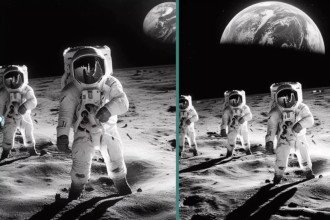
Abdu: A deep fake is essentially using artificial intelligence to create an image, a video, or audio, sometimes even text, that looks so real, uh, that it fools you into thinking it’s actually footage.
Jim: This is dangerous.
Abdu: It’s very dangerous. Um, and we’ve seen it used for political propaganda purposes. Um, the Iran War’s a good example of this. You saw all sides using deep fakes essentially to convince people of certain things that weren’t actually true. Um, and there were… It’s dangerous on two levels. One, it fools you into believing that the fake thing is real, and so you believe an event really happened that didn’t. Or you get so cynical of deep fakes, and this is something that’s happening with young people, is we’re moving from post-truth to post-trust. We don’t trust anything anymore because everything is so easily faked.
Jim: Well, and that’s an indication that there’s a problem.
Abdu: Yeah, absolutely. I mean, I was reading, uh, a, a service I subscribed to called “Cultural Translator” where it talks about the latest slang terms that, you know, Gen Alpha are using. And one of those is “That’s AI.” Whenever they think something’s a lie, whether it’s a deepfake or not, they say, “Oh, that’s AI.” They use it as a euphemism now for lies.
Jim: That’s interesting.
Abdu: Yeah.
Jim: That’s actually good.
Abdu: Yeah. It, it’s good because it’s showing that they’re getting tired of it.
Jim: Yeah.
Abdu: And tired of the deep fakes, but the deep fakes are getting so good that at some point, they might not be able to say, “That’s AI,” which is worrisome in one sense because it creates a cynicism. Like, “Everything is fake. I can’t trust anything.” But it also creates sort of a heightened sense of discernment. Maybe we need to develop a more of a discernment muscle. So like everything on this side of heaven, there’s a light side and the shadow side to these things.
Jim: Yeah.
Abdu: But, um, deep fakes can also fool you into thinking that even true things are false. I think of that video of that woman who was set on fire on a subway, and it looked so, like, bizarre, the footage, because she stood up, didn’t howl, didn’t scream, that everyone thought, “Oh, that’s AI.” It was real. It actually happened. So the question becomes, how are we able to discern what’s real and what’s false anymore? Uh, there are some tools online to be able to tell if something’s a deep fake, but those aren’t always reliable. And so what it really comes down to is check your sources, develop that discernment. And that’s something God gave us-
Jim: Yeah.
Abdu: … an ability to discern.
Jim: You know, the, um, description of this whole thing, I thought again, my son gave a great description, Trent. He said, “Dad, the Gen Zers, we live in a cesspool of lies looking for buoys of truth.”
Abdu: Wow.
Jim: “If the church can be a buoy of truth, we will reach for it.”
Abdu: Wow.
Jim: And he said, “But, you know, if we’re hypocritical, it will come across as a, a lying institution.”
Abdu: Yeah.
Jim: That is-
Abdu: So that’s just another one kind of a thing.
Jim: Yeah. And that is one of the strengths of the Gen Z. As a Christian leader, I’m actually excited for them because they are, they have an appetite for what is true.
Abdu: Yeah.
Jim: That means the church has an opportunity to be that buoy-
Abdu: Yeah.
Jim: … unless we don’t show up faithfully in Christ.
Abdu: Right. So it comes down to that idea, what does the church tell us is true? If we can trust the accuracy level of the Bible with describing the human condition, then we can trust the Bible with its accuracy about the remedy for the human condition. And then we can tell young people, it gets us right so often, maybe we should trust this source. Maybe we should trust the Creator of this source and the Creator of your very soul. And the church can do that beautifully and powerfully amidst all the voices which are telling you, you’re just a machine. This machine can do things better than you can. It has no soul. Maybe you don’t have a soul either. You need to merge with it if you’re gonna compete in this world. That’s not what the Bible says.
Jim: Do you think that’s gonna result in then maybe I’ll say it this way-
Abdu: Mm-hmm.
Jim: … but in a positive sense, kind of a hyper-spiritualism-
Abdu: Mm-hmm.
Jim: … that, you know, in the moment that AI is taking more control of things, however-
Abdu: Yeah.
Jim: … that is defined-
Abdu: Yeah.
Jim: … that the human journey is gonna be, we are not that. And more people will be interested in discovering that they’re made in the image of God, all the things that you listed.
Abdu: I am very optimistic. I mean, look, I think there is a, a problem we have to address, which is that there’s an identity crisis that’s been happening for a long time now. AI comes and adds to the mix. That’s why the book talks about reality collapse and a fake ID, which is that you’re just lights and clockwork. All you are is a machine. You’re just a biochemical machine responding to external stimuli, like this machine does. But in the light of the fact that Gen Z is getting skeptical, maybe even a little cynical about this whole affair, that can be a good thing. This is an opportunity for us to say, “You’re right to be skeptical. Here’s the true answer. Now, this is how you make AI a tool instead of the master of the world. You can master it because you recognize what it is and what you are, and it is not what you are. You are not God and you are not a machine. You’re this glorious thing in the middle, and this tool is just a machine.”
Jim: Abdu, when you listen to all of this, I mean, there are, uh, moments in history where something scares us to death, whatever it might be. Wars, rumor of wars, those kinds of things.
Abdu: Yeah.
Jim: This has that feeling-
Abdu: Yeah.
Jim: … that, you know, when someone like Bill Gates is saying a billion people are gonna die because of AI over the next decade, that should get your attention.
Abdu: Yeah.
Jim: What is he talking about?
Abdu: Right.
Jim: And, uh, yet, for us as believers, we have to have faith, hope, and trust in, in God.
Abdu: Yeah.
Jim: He tells us not to worry.
Abdu: Mm-hmm.
Jim: Not to live with despair.
Abdu: Mm-hmm.
Jim: How do you do that with all of this information that the world could end?
Abdu: Yeah. Well, a couple of things. The first thing I would say is that there are some people who are saying some of that talk is hype, because if you create this thing that’s scary, well, I have a subscription for you to buy so you can control it.
Jim: Right.
Abdu: So you create a scary thing and then you create a solution.
Jim: And the idea is unplug it.
Abdu: Right.
Jim: Wha- whatever. (laughs)
Abdu: Yeah. Exactly.
Jim: Yeah.
Abdu: So there’s, so there is a little bit of that that’s going on as well. However, I read the back of the book. It goes well.
Jim: (laughs)
Abdu: It does. It goes well for Christians. And here’s my… This is an exciting time to be a believer. It is an exciting time because now we’re asking the big questions about what it means to be human, how we can harness power for the sake of the Gospel, and how we can understand technology in a positive way but also respect the fact that it can be used badly. So this is actually an in- incredible time for the church to lead the way. We can lead the way because, as I said before, the book that we have tells us the truth, the verifiable truth about what it means to be human, and it gives a solution. Not only does it give us a powerful prediction, but it gives us the remarkable remedy of the cross, which says that every human being is in need of a savior.
We don’t need our savior to be technological. We already have one. He’s already done it. He’s already done the work for us to show us what it means to be human in the first place. And that, to me, gives me hope that we can be a strong voice. In a sea of voices speaking doom, we can say, “Peace.” We can do it.
Jim: And that should shine.
Abdu: And it should shine. We are not in need of revision. We are just in need of redemption.
Jim: Well, what a fascinating conversation with Abdu Murray, with so many insights that we can all take to heart as AI becomes a bigger part of our lives. Uh, I’d recommend you get a copy of Abdu’s book, Fake ID. The book goes further into how to think critically and ethically about AI, uh, biblically, I would say. We have copies for you here at Focus on the Family. When you make a gift of any amount, join us in doing ministry, we’ll send you a copy of the book as our way of saying thank you for your support. Your donation will go straight back into ministry to build up more families in Christ.
And one of our listeners commented on our last episode discussing AI with Abdu. She said, “Thank you so much for this information. It is so needed to know what is going on and what to do to react to these changes. And thanks to you, we have the knowledge to resist the schemes of the devil. As always, I thank God for Focus on the Family. God bless the speakers and the hosts.” And wow, that’s a real nice statement from her.
John: Mm-hmm. That’s wonderful. And we are listener-supported, so we rely on your donations to, uh, provide free resources like this show. So join us in being part of what God’s doing. Donate today and request your copy of Abdu’s book when you call 800, the letter A, and the word FAMILY, or stop by focusonthefamily.com/broadcast.
And next time, Dr. Dan Allender will explore the heart of marriage.
Preview:
Dr. Dan Allender: Our relationship is meant to transform us to become more like Jesus. I think that actually is the central reason for why God brought us into a relationship where there will be such clear beauty and brokenness, exposure, heartache, and yet joy.
End of Preview
John: On behalf of the team, thanks for joining us today for Focus on the Family with Jim Daly. I’m John Fuller, inviting you back as we once again help you and your family thrive in Christ.