



John Fuller: Today on Focus on the Family with Jim Daly, we’re tackling an issue that has overrun our culture, like a tsunami. Uh, families and friends have become divided over this, and there’s been a lot of confusion about what’s true and what’s not true. The subject matter isn’t appropriate for younger listeners, so we’ll recommend you direct their attention elsewhere.
Now, perhaps as we begin, you’ve been hearing comments like these.
Speaker 1: We raised our son in a godly home. When he suddenly announced he was gay, I was devastated.
Speaker 2: This LGBT stuff is everywhere. How do I protect my children?
Speaker 3: Christians lie about love. When I came out a year ago, my family wouldn’t have anything to do with me.
Speaker 4: What do I say to my college-age son who claims to be a gay Christian? What does that even mean?
Jim Daly: John, you can hear, uh, the emotions in responses like those. It’s anger, it’s fear, it’s pain, it’s probably a sense of helplessness. A lot of families are wrestling with this question, “What do I do when my child says, ‘I’m gay?'” Now that can happen at any age. I mean, nine, 11, 17, 18, 23. But those are the ranges that now, uh, families are experiencing this expression of where I feel I’m at today. Often spurred on by the public school system, you know, to encourage them and their gender identity, their sexual identity. And we just feel it’s time now to address this so that parents are better equipped and grandparents to manage the situation.
And it’s going to be different for everybody. It’s kind of like a fingerprint. There’s not one size fits all and we don’t wanna make it sound that way, but I think it’s an incredibly important topic. Let’s go at it headlong and, uh, look at what biblical truth says, what God’s heart is for these families.
John: Yeah. And we have a colleague and guest who is quite wise in these matters. He’s gonna help us address this. Rob Jackson is a member of the Focus on the Family Counseling Team and has more than 40 years’ experience as a counselor and life coach, uh, helping men and women find integrated healing, uh, spiritually, psychologically, behaviorally, and relationally.
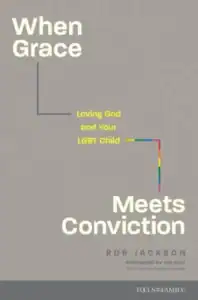
He’s written a book for Focus on the Family and Tyndale House called When Grace Meets Conviction: Loving God and Your LGBT Child. And we’re gonna have information about Rob and this resource at our website.
Jim: Rob, welcome back to Focus on the Family. It’s been 20 years since you’re on the program, but what have you been doing?
Rob Jackson: You know, I’ve been aging.
Jim: (laughs).
Rob: And I’ve been learning and, um, been doing life.
Jim: I so appreciate you being part of the counseling team here at Focus.
Rob: Thank you.
Jim: There’s over 20, there’s 22, 23 people-
Rob: Right.
Jim: … that are doing that all day long.
Rob: Yeah.
Jim: Often for the viewers and the listeners. You know, when I leave for lunch or something, I’ll see one of the counselors walking the property.
Rob: Yeah.
Jim: I’ve been told that the team is just getting a break, br- fresh air, just trying to clear their heads because for eight hours, they’re talking to people that are in some very difficult situations.
Rob: That’s right.
Jim: Not just the LGBT issue, but, you know, affairs and other things.
Rob: Yeah.
Jim: You know, as we tip in now to sexual issues, and as John said, good to move little ones away and, you know, put your earbuds on or listen later.
Rob: Yeah.
Jim: Uh, you can do that by getting the app to Focus or go to the website, et cetera.
Rob: Mm-hmm.
Jim: It’s accessible. You just need to find it. Um, sexual issues grip the human condition like nothing else.
Rob: That’s right.
Jim: I mean, you look at Christian leaders who have fallen, let’s be honest.
Rob: Yeah. It is tragic.
Jim: It’s grabbed them.
Rob: Yeah.
Jim: People in the pews, it’s grabbed them.
Rob: Yeah.
Jim: It’s like there’s no immunity in this area of sexuality. We’re all vulnerable to it.
Rob: That’s right.
Jim: And yet, the Lord wants us to discipline our appetites, to put them in the context of marriage between one man, one woman.
Rob: That’s right.
Jim: And to learn the discipline of righteousness in that context, right?
Rob: Absolutely.
Jim: But it doesn’t always work that way. What do you say in your observations of parents who are calling Focus and they’re saying, “My teenager just came out to us and he said he’s gay.”
Rob: Yeah.
Jim: What does that look like in the counseling?
Rob: Yeah. One of the first questions I wanna ask is, “Well, how did that land on you? What’s that doing to you?” Because Jim, what we’re finding is the grief that they’re experiencing is just profound. There’s grief, there’s shock, there’s frustration. And many times, you know, they’re just rattling off, “But we raised them in a Christian home and we took them to church and we homeschooled,” or they were in a private Christian school or they’re attending a Christian university now or they walked the aisle or they were baptized.
Jim: Mm-hmm.
Rob: And it is earth-shattering.
Jim: Yeah.
Rob: Tsunami, earthquake.
John: Mm. Yeah.
Jim: Yeah.
Rob: Tornado.
Jim: The key in that, and I wanna make sure we get this out on the table, for that child, whatever their age, to come to the parent and say, “I’m gay,” takes a lot of courage.
Rob: Yes.
Jim: I mean, think of it from their perspective.
Rob: Absolutely.
Jim: They did grow up in a Christian home. They did go to church.
Rob: Yeah.
Jim: They did get baptized. What is the angst that they’re feeling?
Rob: Okay, that is one of the most important questions I think we’re gonna deal with because many times they’re gonna feel misunderstood. They’re gonna feel prejudged. They will have already been told, “Your parents are gonna kick you out.” And by the way, I have never had a parent tell me, “We kicked our kid out.” You know, that’s not happening-
Jim: Yeah, hopefully.
Rob: … when these first conversations are occurring.
Jim: Yeah.
Rob: They’re telling me, you know, “We’ve expressed that we love our child unconditionally.” You know, they’re saying most of the right things. We can color some of it and tweak some of it, but most of it’s really coming off quite well. And still, it’s like, “What am I gonna do with this? How can I change this? How can I engage my child?” But the child who’s coming out today has been carrying this for days, weeks, months, and years, and are typically further down the road than the parent has any clue of.
Jim: Yeah.
Rob: And they do love their parent in most cases and know it’s gonna break their parents’ hearts.
Jim: Yeah. But to hear that, “Dad, mom, I’m…” Fill in the blank, LGBT, whatever.
Rob: Mm-hmm.
Jim: How do you wrestle that down in that moment to not react with, “What?”
Rob: Right.
Jim: What do you recommend that first word out of your mouth has to be?
Rob: Yeah. Well, unfortunately, some parents get it wrong, okay?
Jim: Yeah, it’s emotional.
Rob: The first, the first word, the first conversation, the first day, the first week, the first month. I mean, for some parents, they will admit, “I really blew this and now I’m trying to backtrack.” But we’re wanting parents to understand that this is difficult for their child, and they also need to have some grace for themselves, realizing, “I’m not gonna do this perfectly.” But one of the things I need to say right off the bat, “Wow, I bet that was hard for you telling me this. You know, I really appreciate the courage it took.”
See, Jim and John, one of the things, when problems are complicated, we need to simplify them and slow them down.
Jim: Mm-hmm.
Rob: But the urge is to just roll in there with the answer that’s supposed to solve this-
Jim: Yeah.
Rob: … in a moment.
Jim: I wanna pick up on something you said to make sure the finer touches are put on this. When you talked about the kids going to Christian school, private school, what have you, going to church, Sunday school, getting baptized, the rhythm of that, we as parents tend to think formulaically.
Rob: That’s right.
Jim: I’ve tried now to be consistent saying these are predictive things to do-
Rob: Yeah.
Jim: … so that you have a predictive outcome. And it works sometimes, but it’s not a formula.
Rob: It is not.
Jim: You can’t say A plus B plus C equals a great Christian-committed child. I mean, think of the Lord creating Adam and Eve.
Rob: Exactly.
Jim: It was all perfect. And then they chose sin.
Rob: Absolutely.
Jim: So there’s so many things at work in this. I mean, even the Lord’s dealing with your child.
Rob: Mm-hmm.
Jim: What valley are you allowing them to go to so that they might meet Christ there?
Rob: Perfect.
Jim: I mean, and so how do we, how do we have that long view as a parent when our 15-year-old is experiencing this and we’re thinking, “Okay.” I mean, the pillow talk between husband and wife has to be stressful.
Rob: Well, I’m always asking, you know, where are the two of you as parents? And then where are you as brother and sister in Christ?
Jim: Hmm.
Rob: I’m not gonna assume you’re absolutely on the bullseye with each other because you’re two separate people.
John: Mm-hmm.
Rob: So let’s talk about that. Is one of you tending towards being a little more conservative? Is one tending to be a little bit more liberal? Are you finding a way to meet in the middle without compromising your convictions, without compromising the Word of God? And do you realize this could make or break your marriage?
Jim: Yeah.
Rob: This is huge. It will unsettle you, you know, before you find peace.
Jim: In that regard, it’s important, I would think, for that couple to get some support and help.
Rob: Oh, absolutely.
Jim: Counseling is a good thing-
Rob: Yeah.
Jim: … so you can bounce ideas off one another, the counselor, talk about biblical understanding.
Rob: That’s right.
Jim: I mean, a Christian counselor is what I’m talking about. Somebody who knows the Lord.
Rob: Yeah.
Jim: But you would say, “Amen. That’d be really good to go.”
Rob: Amen. And one of the first places for the parent is to work through their grief. And of course, theoretically, there are stages of grief, but I’ve had parents who say things like, “You know, my child told me not to call him by his dead name.”
Jim: His dead name.
Rob: His dead name.
Jim: Wow.
Rob: And then the next sentence or two is, “And it really does feel like there’s been a death in the family. I mean, he’s asked me to take all the childhood photographs, all the family photographs of him down.”
Jim: Oof.
Rob: “Remove them from the home.”
Jim: So it’s aggressive.
Rob: And then they say, you know, “This is harder than when I lost my mom or my dad to cancer.”
Jim: Mm.
Rob: Okay? “I never knew this was gonna be so hard.” And then some will go on to say, “You know, it’s like I’ve had a loss and there’s a funeral, but there’s not a body to bury.”
Jim: Mm-hmm. Mm-hmm.
Rob: And then, “But what about Christmas?”
Jim: Do we invite both of them? I mean, all that with the adult.
Rob: Yeah. Yeah.
Jim: Um, in that context as a counselor again, what is that grief source? The loss of hopes and dreams, the loss of what you thought the future would be, the loss of your child?
Rob: And sometimes the loss of how I have viewed God.
Jim: Mm.
Rob: Kinda like, “I thought if I did all of this, He would do that.”
Jim: Yeah.
Rob: And it’s unfortunate that our faith sometimes is transactional.
Jim: Yeah.
Rob: But in the American evangelical culture, it is. “You know, I’ve done the right things, God. I feel like you owe me.”
John: Mm-hmm.
Rob: And so that’s always the time that I get really concerned because now it’s not just about a child, but it’s about the interior-
Jim: Yeah.
Rob: … and the spiritual formation of that Christian parent.
Jim: Rob, as a counselor, people might say, “Well, that’s good. You’ve read some books, Rob, and you’ve got a degree and that’s all good. But you’ve never had this happen to you.” But you have.
Rob: Yeah.
Jim: You had an extended family member who-
Rob: Yeah.
Jim: … came out and your family had to deal with it.
Rob: Yeah.
Jim: Putting that hat on, family member, not counselor-
Rob: Right.
Jim: What did you go through?
Rob: Well, that story started back when I was, uh, in middle school and high school. And there was so many times, you know, like, “I wonder, is he gay?” You know, we just really didn’t know.
Jim: So you had doubts before you even-
Rob: Had doubts before.
Jim: Yeah. Yeah.
Rob: There were, um, some signs, if you will. And then eventually by the time I was in college, he told me, you know. And so with great respect, um, it had to be incredibly difficult for him, but it was difficult for me.
Jim: Mm.
Rob: And of course, back in that day, I mean, we’re talking 40 years ago.
Jim: Yeah. I mean, it wasn’t as acceptable.
Rob: 45. It wasn’t as acceptable. And also, I, I didn’t have the books that I had been reading, right? I didn’t have the degree.
Jim: Right.
Rob: You know, and so I was really pressured to how do I respond biblically? And I wished I had known, and this is an important thing. I wished that I had known how to respond in the spirit of Christ, not just with the Bible.
Jim: Huh. Explain that.
Rob: Well, we can go just with the Bible and have all the right answers and not have a great posture. And so while I didn’t say horrible things, I think the division was greater than it would have had to be if I had been able to say, “You know, I don’t know what this is like to be you. Thank you for telling me. I’m not sure how this is gonna impact our relationship. Let’s sort it out.”
Jim: Hmm.
Rob: Now, it got complicated over time, and I owned that I was a part of that. You know, this is never about one person, right? But for those who, you know, haven’t read the books, haven’t gone to college and grad school to deal with this, my heart is for you. I know this story is difficult.
John: Mm-hmm.
Rob: It’s always been difficult to find yourself at odds with someone that you love.
John: Hmm.
Jim: Yeah. Yeah.
John: Our guest today on Focus on the Family with Jim Daly is Rob Jackson, and we’re so glad to have him here, uh, talking about his experience and story. And he’s captured much of this in a resource that is called When Grace Meets Conviction: Loving God and Your LGBT Child. And, uh, of course, this is going to be a very helpful resource, uh, for each of us to have at hand, uh, because these moments do, uh, come up in families, uh, around us, and perhaps in your own family. So get a copy of the book from us today.
We also have a free download you can get called “When a Loved One Says I’m Gay,” and, uh, you can access both of these resources and more when you stop by focusonthefamily.com/broadcast.
Jim: Rob, again, setting the picture here, we’ve been deep, we’ve been personal. I so appreciate that vulnerability. Um, I wanna speak just to the issue. Uh, when you look at research, for example, I think just back, uh, recently, uh, the UK-
Rob: Uh-huh.
Jim: … ages 18 to 24, 50% of that age group said that they were not 100% heterosexual. 50%. Now, before your jaw goes down, a third of that same age group, 18 to 24, in the US said they’re not 100% heterosexual.
Rob: Mm-hmm. Mm-hmm.
Jim: Dr. Dobson had a PhD from the University of Southern California in child development. He and I talked often about this dilemma. And he said one of the things that is an outlier for homosexuality, LGBT issues, is it becomes episodic in culture. In other words, you have-
Rob: Mm-hmm.
Jim: … decades of this kind of promiscuity, the Roman Empire, the Greek Empire.
Rob: Right.
Jim: The US now, the West is experiencing it. He said if it was genetic, it wouldn’t have that episodic feature.
Rob: Good point.
Jim: It would be like a normal 2%, 3% of the population. It’s genetic. Twin studies show, identical twin studies, one is gay, one is not.
Rob: Mm-hmm.
Jim: Same DNA material.
Rob: Mm-hmm.
Jim: So there is evidence, mounting evidence suggesting that this is not a genetic issue.
Rob: Right.
Jim: Where is the science today? And what is, for us as Christians, as we try to look at causality-
Rob: Mm-hmm.
Jim: … what should we know?
Rob: Yeah. Well, it’s a great question, and you’ve set it up so well from both Dr. Dobson and the studies that you’re talking about. So yeah, there’s no science really bearing out that there’s a gay gene, right? And instead of talking about what causes this, we need to talk about what’s correlated to it or with it.
Jim: Mm.
Rob: And so from the cause, we can go back to the fallen nature of humanity. We can say there’s a cause for all of our sin, right? It’s rebellion. And so we have a need to work with the rebellion, but then we get into a need to work through the woundedness. And the woundedness is where so many of these people are struggling. And so it can be the child who wasn’t maybe masculine enough and was called gay, or maybe he was a musician. You know, I was a piano player in the sixth grade and so forth and not the football guy. And so I know some of that. And like, “I don’t want anybody to know that I play the piano.” And then by high school, I was known for playing the piano.
Jim: Right.
Rob: Right? But it, it was difficult at times to not have that, you know, macho athletic reputation. Sometimes it’s the girl, you know, she’s a little tomboyish, not as feminine as some, and she gets labeled.
Jim: Mm-hmm.
Rob: And so we’ve got a lot of peer pressure, a lot of bullying that’s going on. And some of that is correlated to how a person comes to see himself even at a young age. And this goes to the heart of who am I?
Jim: Mm-hmm.
Rob: And that raises the question, “Who am I in relationship to God?” Getting down to the basis of what is a Christian identity, of what does it mean to be created by God who made the male and female and said, “Go be fruitful, go bear children,” right? And then find ourselves in a fallen world with desires that are not only deceitful because of original sin, but disordered further and wounded further by the culture that we live in.
Jim: Yeah. When I think about this, and I’m not a scientist, I did my MBA, so I wanna make sure everybody… You are the scientist. You did your counseling background. In that context, are we talking more about compulsions? I mean, even uncontrollable compulsions.
Rob: Yeah.
Jim: And what’s that distinction? I mean, let’s face it, everybody. The church has its issues as well. Leaders in the church-
Rob: Mm-hmm.
Jim: … people in the pews, like I said, you hear too regularly of Christian leaders-
Rob: Oh, absolutely.
Jim: … having affairs, et cetera. It does a lot of damage. And the question is here, it’s all compulsion.
Rob: Yeah.
Jim: I mean, if we were logical spiritual, we would not do those things.
Rob: That’s right. And that’s Paul. Why do I do the things that I do because I’ve come to hate them? But here’s the thing. I agree with you. It is a compulsion, but let’s back up. Every behavior can become a habit if it’s repeated enough.
Jim: Wow. Why is it becoming a habit though?
Rob: Right. What is it feeding? Okay?
Jim: Mm-hmm.
Rob: What is it doing inside, even neurologically? But get this, every habit can become a compulsion if it’s repeated enough.
Jim: Sounds like a cul-de-sac you can’t get out of.
Rob: But we’re not through. What if every compulsion is repeated? Now we’re looking at an addiction.
Jim: Mm.
Rob: And so sometimes we talk about, you know, I have a, uh, fallen nature. I have a besetting sin, you know, we use the language from our Christian faith. But by the time this begins to really, you know, roll and turn over and morph and increase, we’re moving from behavior to habit to compulsion to addiction. And it’s moving into even the brain and the nervous system.
Jim: Now, this is true across the board.
Rob: For every behavior.
Jim: That’s why I’m concerned that we create a super sin out of LGBT activity.
Rob: Okay. Got it.
Jim: You know, it’s sin.
Rob: It’s sin. It’s sin. But here’s the thing, sexual sin, and let’s talk about sexual sin broadly, heterosexual, for example.
Jim: Yeah.
Rob: We have no reason to pick on the LGBT community, but sexual behavior impacts the whole person differently than anything else. Even 1 Corinthians 6:18 speaks to how sexual sin is different. It’s a sin against the body.
Jim: Yeah. What does that mean?
Rob: It’s different than if I go to my neighbor’s house and I break in. I do that with my body, but it’s not happening inside me.
Jim: Right.
Rob: It’s not becoming all of this neurochemistry of making attachments and bonds and those kinds of things. It’s not leaving me with body memories, good and bad.
Jim: Right. It’s just an act.
Rob: It’s just an act.
Jim: Right.
Rob: But when we have something go off sexually, it accumulates. Like, I believe that God is so faithful to forgive us when we have sin of any kind, including sexual sins. He’s faithful to forgive us. Jim, I believe that our sexual behaviors accumulate.
Jim: Mm.
Rob: Good and bad. They can accumulate well and make for a loving husband and wife marital relationship. They can accumulate poorly in the life of an individual who’s looking at pornography and self-gratifying and so forth. And then it becomes like a Trojan horse. It gets inside the person and begins to take over.
Jim: Yeah. I mean, it’s powerful. But the question I think is, we need to show love to our kids in that moment.
Rob: Mm-hmm.
Jim: They’re not mature. For the LGBT child, 15, 16 coming out, 23-year-old coming out, how do we do that effectively? We kind of started here-
Rob: Mm-hmm.
Jim: … but I wanna end with hope for day one here. We’re gonna come back next time. But what’s the long view?
Rob: Right. Well, you know, God did not raise us on a formula either.
Jim: (laughs) Right.
Rob: You know, God who’s omniscient.
Jim: He had a plan.
Rob: He had a plan. And He did it through a person.
Jim: Mm.
Rob: God himself, Father, Son, and Spirit, even before Jesus becomes flesh is relational. Community. And so I think the parent who overreacts and regrets it, the parent who really loses it and hurts the child-
Jim: Mm.
Rob: I mean, I’ve made mistakes with my own children. I can’t even think about the topic without realizing some of my mistakes, right? But we go back and we apologize and we say, “You know, I wish I could do that differently because I, I would like to have met you with, with greater love. I think I treated you like a project, and I’m sorry.”
Jim: Mm. Boy, that’s all of us in our parenting though.
Rob: Yeah. And so those who react the most may have really a very deep, deep love for the child.
Jim: Yeah.
Rob: They just haven’t yet done the interior work to realize, “My Father is not treating me like a project. He is not raising me up in Christ with a formula.” And I’m messing up in so many ways that I can’t even know because there’s this thing called sins of omission, right?
Jim: Yeah.
Rob: I don’t even know all my sins. And yet He meets me relationally where I am. And that is the goal that I have as a parent toward my children.
Jim: Yeah. That reminds me in the scripture where it refers to the lavish love of God.
Rob: Yeah.
Jim: We don’t really think about that.
Rob: Yeah.
Jim: But it says the lavish love of God.
Rob: That’s right.
Jim: That to me becomes almost incomprehensible because all of my wounds, all of my sin. Really? You could love me lavishly?
Rob: Well, the father of the prodigal son in his return home, I mean, the story never ceases to teach me something new. It’s so full of hope.
Jim: It is. And Rob, this has been a great start, man. This time has gone by.
Rob: Mm-hmm.
Jim: I hope you have, uh, appreciated the heart and the tone in which we’ve approached this. We’re sinners saved by grace. Uh, we wanna express love and hope to everybody we can. We wanna be true to scripture and not bend on those principles that God has clearly laid out. Uh, we’re not gonna go back and say, “The Greek and the Latin actually said it’s okay.” And I would caution people, Christians, not to embrace that because the withering effect of culture in our direction right now, we gotta stand firm.
Rob: That’s right.
Jim: But you can stand firm and still be loving and kind. And, uh, man, this is so good.
Uh, Rob’s book, When Grace Meets Conviction: Loving God and Your LGBT Child, you need to read it. And certainly, if you have friends or the, that are in this spot, get a copy from us. Your church library probably needs a few copies just so people, parents, grandparents can get better equipped on what to do. People are crying out for help right now. Just put your ears up and you’ll hear it.
John: Well, and Jim, part of our mandate here at Focus on the Family is to equip believers to live out their faith in a culture that has turned away from God’s design for sexuality and his moral laws. And thanks to the generous support of our donor community, we’ve helped three quarters of a million people in the past 12 months to help elevate biblical pro-family values.
Jim: It’s amazing. And that’s what happens when we work together to transform single adults, dads, moms, and children for Christ, right?
And that’s why I wanna invite you to make a monthly pledge to Focus on the Family today. All year long, people are contacting us for help, and that’s a great thing with their marriages, with parenting issues, spiritual growth, and so much more. And thanks to our monthly sustainers, we’re able to respond and provide the resources these families really need.
By giving to Focus on the Family today, you’re able to do ministry through us. Think about the tremendous impact we can have, uh, through that partnership. So please, donate today with a monthly pledge or a one-time gift. Whatever you can afford, everything helps.
John: When you make that contribution to this ministry, we’ll say thank you by sending a copy of Rob’s book, When Grace Meets Conviction. Our number is 800, the letter A, and the word FAMILY, or donate at focusonthefamily.com/broadcast.
We also mentioned our counseling team, and if you’d like to speak with one of our caring Christian counselors, we can set up that call for you when you get in touch.
Jim: Rob, thanks again for being with us. We’ll come back and keep the conversation going.
Rob: I look forward to it, Jim. Thank you, John.
John: And on behalf of the team, plan to join us next time as we once again help you and your family thrive in Christ.
**********
Part 2:
Preview:
Rob Jackson: What am I gonna do with this? How can I change this? How can I engage my child? But the child who’s coming out today has been carrying this for days, weeks, months, and years, and are typically further down the road than the parent has any clue of.
Jim Daly: Yeah.
Rob: And they do love their parent in most cases and know it’s gonna break their parents’ hearts.
End of Preview
John Fuller: That’s Rob Jackson describing some of the challenges families are facing in today’s LGBT-affirming culture. And we’re gonna explore this topic further on this episode of Focus on the Family with Jim Daly. I’m John Fuller, and this content is obviously not gonna be suitable for younger listeners. So, uh, direct their attention elsewhere or listen later on the app.
Jim: There you go. I love that warning, John. Thanks. And so many stations appreciate it too.
John: Mm-hmm.
Jim: But it’s important to talk about these things.
John: Yes.
Jim: You know, we need to equip the church to understand what’s happening and how to hopefully deal with it in an honest, truthful, but kind way. Um, we had some great insightful conversation last time with Rob who serves on our counseling team here at Focus on the Family. Um, we have a team of more than 20 counselors that take calls to help listeners, viewers sort through issues going on in their life.
In this case, we’re talking about a son or daughter who affiliates with LGBT issues or identity. And then we, as Christian parents, how do we react to that? Maybe grandparents. Uh, there are going to be many people in the audience that are experiencing that. So how do you respond? We spoke about it last time. Get the app, uh, go to the website. You can hear that conversation. We’re gonna-
John: Mm.
Jim: … pick it up today and continue to discuss how we equip ourselves to be unconditionally loving, unconditionally truthful (laughs) and do that in the Spirit of Christ.
John: Yeah. And we mentioned last time that Rob has written a book for Focus on the Family. It’s called When Grace Meets Conviction: Loving God and Your LGBT Child. And, uh, we also have a free download. It’s called “When a Loved One Says, ‘I’m Gay.’” Learn more about these resources and our guest at our website. And Jim, here’s how you started part two of the conversation with Rob Jackson on today’s episode of Focus on the Family with Jim Daly.
Jim: So your 16-year-old says, “Mom, dad, I’m gay.” What’s the first word out of your mouth?
Rob: We want the first word out of your mouth to be thank you, but it’s gonna take some time to get there because you’ve been caught off guard.
Jim: You haven’t been processing it.
Rob: You have not been expecting this. And you may have gotten this information via a text-
Jim: Mm.
Rob: … maybe over a telephone call. They may have just left, you know, for the Christmas holiday and got back to school and texted you on the way home and you don’t even have a good way to respond. That’s happening a lot.
Jim: So would it be good to say, “Honey, I love you. I need time to process what you’re saying. It’s catching me off guard. I didn’t understand-”
Rob: Yeah.
Jim: “… what was going on. For that, I apologize.”
Rob: Absolutely.
Jim: “But let me come back to you. Give me just a little bit of space and time to kind of process-”
Rob: Yeah.
Jim: “… what you have courageously shared with me. And I appreciate that.”
Rob: Yeah. We can say to our parents, you know, more than likely your child has been anticipating this for days, weeks, months or years, but it’s new to you. And so you can say, “This did catch me off guard. I really appreciate you for telling me, but I’m gonna need some time to get caught up and I need some time just to reflect. I need some time to be quiet.”
Jim: Yeah.
Rob: Just really-
Jim: I’ll tell you for, for, again, the parents, the grandparents, doing it that way, you won’t have a regret in the weeks and months ahead.
Rob: Right.
Jim: If you are volatile, um, it will cause additional barriers to be engaged with your son or daughter.
Rob: That’s right. And the conflict between you and your son or daughter is going to spread into the total family. Extended families get all kind of crossways on this topic.
Jim: (laughs) Oh, yeah.
Rob: So it’s gonna be really important when your child comes to you for you to be able to respond rather than react.
Jim: Yeah.
Rob: And of course I teach that just as a Christian principle anyway, help us to respond in the Spirit of Christ rather than react according to my human nature.
Jim: I think that is a demarcation that’s so critical. Uh, loving somebody unconditionally, your child-
Rob: Yeah.
Jim: … is not giving into their sexual temptations.
Rob: That’s right.
Jim: You’re just acknowledging that “I love you.”
Rob: Yeah. Yeah.
Jim: “Regardless of what is going on in your life, I’m still your mom or dad and I love you.”
Rob: Yeah. Yeah. You know, the, a road has two ditches, one on either side, and one is to get all bent out of shape and reactive and angry and inappropriate. And the other’s to come over here and say, “I affirm everything about you.”
Jim: Yeah.
Rob: “Everything now and even in the future. You know, anything you bring to me, I will guarantee you I’m gonna affirm it.” That’s the other ditch.
Jim: Right.
Rob: Well, I think the middle way here is, “I am so comfortable telling you I love God and I love you,” and this is not in conflict, you know? So I’ve been thinking through this now for years. I mean, basically how we come to the conclusion is my allegiance is to God. My love to God and you, they’re very compatible.
Jim: Yeah.
Rob: But I have only one allegiance.
Jim: Yeah. And that’s, man, that’s gotta feel good to the child and the siblings if you have more than one kid.
Rob: Yeah.
Jim: I mean, the idea that, wow, you, we talk about being unconditionally loving, this will test it and you’re either gonna end up a hypocrite or real.
Rob: Yep.
Jim: And they won’t be able to deny that.
Rob: Yeah.
Jim: That if you continue to love them even during this time or through this, they will hopefully won’t be able to say, “Yeah, my, my dad’s a hypocrite.”
Rob: Right. And I think the challenge too is in a family, you know, more than two people, of course, everyone’s gonna have a different opinion on what this is supposed to look like.
Jim: Yeah.
Rob: Whether we’re talking about acceptance or whether we’re talking about affirmation.
Jim: But the Word of God is what we need to lean into.
Rob: That’s it.
Jim: Yeah.
Rob: Because the Word of God is our foundation. He alone is our foundation.
Jim: Yeah.
Rob: But as I mentioned in the first broadcast, it’s leaning into the Word of God with the help of the Holy Spirit.
Jim: Yeah.
Rob: Not just reading the Word of God with me, myself and I.
Jim: Right. Don’t take things out of context or don’t lean into one scripture.
Rob: Don’t weaponize ’em.
Jim: Right.
Rob: Yeah.
Jim: Let me ask you this. Uh, I do want to bring some reality to the social issues that we’re facing today.
Rob: Mm-hmm.
Jim: I, uh, we’re not saying be, you know, this pushover as a Christian.
Rob: Right.
Jim: When Christians don’t accept or affirm LGBT values, we’re accused of being unloving, homophobic-
Rob: Mm-hmm.
Jim: … uh, just to use a word. But in reality, you know, LGBT and their movement has kind of skewed or changed the cultural definition of what love is. Um, can you explain what’s going on with that? How they’re moving that language, that vocabulary, which is powerful?
Rob: Yeah. Thank you for the question. We’re gonna have to go back and say the Christian worldview recognizes there are many definitions of love in the biblical language. And so love in the biblical language would include agape, for example. Loving unconditionally, loving as God loves us. When someone’s speaking of a sexual love, that’s eros, that’s a different word. And I’m not wanting to get bogged down in the biblical languages, but I’m just trying to emphasize when someone says, you know, “Well, you love who you love.” Well, yeah, there’s some truth to that, but how are we gonna be defining that love?
Jim: Mm.
Rob: Are we talking about agape? Are we talking about eros? Are we talking about some of the other, other forms of love? And so the Christian is trying to extend the agape love toward any child, any neighbor, any person on the street, everybody being treated with an agape kind of love.
Jim: Sinner or saved.
Rob: Sinner or saved.
Jim: Yeah.
Rob: Sinner or saved sinner.
Jim: Yeah. There you go.
Rob: (laughs) Right.
Jim: Even better. So that, in that context, yeah, I mean, that’s really critical to realize that we have a war of words and understanding in the culture right now.
Rob: Yeah.
Jim: And here’s the problem though, Rob. When we get hit with that label, we back up and we go quiet.
Rob: Right. Right.
Jim: And I think many churches, many pastors are feeling that pressure socially to not put your head up.
Rob: Yeah. Well, I think the LGBT community has done a great job of causing conflict and confusion with language.
John: Mm.
Rob: Words really, really matter. And we’ve not been playing catch-up until just recently. So to your point, Christians who are convictional hardly know what language I’m supposed to use.
Jim: Mm-hmm. Yeah.
Rob: Even about my own convictions.
Jim: Right, right. Rob, probably one of the main questions we will get here at Focus-
Rob: Mm-hmm.
Jim: … on the Family from viewers and listeners will be a phone call to counseling saying, “I have a, a gay child and they’ve invited us to the wedding.”
Rob: Yeah.
Jim: “I don’t know what to do.”
Rob: Yeah. Well, it’s the most difficult question I get-
Jim: Hm.
Rob: … from these callers. And I’m sympathetic because, I mean, a wedding is supposed to be a great celebration. People are coming from everywhere, you know, that we haven’t seen in years and we’re celebrating this couple. But I remind myself and the caller, you know, in the marriage of Adam and Eve in Genesis, the Bible begins with that wedding.
Jim: Right.
Rob: And then in Revelation, it ends with a different wedding, the wedding of Christ and the church. And all throughout the 66 books, there are different marriages, but they’re always a heterosexual marriage.
Jim: Right.
Rob: So there’s-
Jim: The bride, the bridegroom.
Rob: Exactly.
Jim: Yeah.
Rob: There’s the marriage metaphor, there’s a spousal analogy, whatever you wanna call it. We can’t get away from it. It’s baked into the Word of God and anything else is counter to God’s design. Now, if we think of God as a designer, He knows how we function best. And I think that when we say, “No, I know better,” that’s going back to the Garden.
Jim: Mm-hmm.
Rob: That original temptation. “God really doesn’t know best for you. Here, take this. You’ll know better than God.” And so I’m encouraging people to say as you did, “I love you. I wanna respect you. I know this is an important day for you, but I’m not gonna be able to endorse it with my presence.”
Jim: Yeah. I think that is the best biblical spot you can land on. But again, you know, talk to others, talk to your pastor and see what they say.
Rob: Yeah. And to the point, I mean, you know, when I started writing the book, uh, there were times that I would think, “I’m gonna offend, you know, half the people or everyone, you know, because who can get everything right-”
Jim: Mm.
Rob: “… let alone if there’s a hundred questions in this book.” And, you know, a year from now I may look at it and think, “Wow, I could’ve done a better job with that question and answer.”
Jim: Mm-hmm.
Rob: But it’s trying to think through how do we, how do we go to God and His Scripture first instead of going to the culture? Or instead of even placing our loved one as an idol between us and God.
Jim: Mm-hmm.
Rob: I mean, I don’t want to offend anyone, but I certainly don’t want to offend God.
John: Mm-hmm. Yes.
Jim: Yes. Start there.
Rob: And if I do-
Jim: (laughs)
Rob: Yeah. And if I do offend you or someone else, let it not be by my disposition or my character. Let it only be on the basis of my conviction and the truth that God has given us.
Jim: Yeah.
Rob: But let me get me out of the way.
Jim: Because then it’s about us.
Rob: Exactly.
Jim: And not about the Gospel.
Rob: Well, and that’s what I try to help parents understand, don’t make this about you.
Jim: Yeah. But it’s so hard. Let’s be real. It’s so hard because it’s-
Rob: Well-
Jim: … maybe embarrassing. It, it … “Man, what have I done wrong?”
Rob: In my own-
Jim: All the guilt.
Rob: In my own life as a parent on any number of topics, I have made things about me more times than I can count.
Jim: (laughs) Right.
Rob: And then I thought, “Rob, you teach this stuff.”
Jim: Yeah.
Rob: “Why have you blown it like this?” And so it’s even more difficult to go back and say, “Oh, you know, I teach this stuff. I am sorry. I really blew this. Would you forgive me?”
Jim: Mm-hmm. Powerful.
Rob: I hope.
Jim: Yeah.
Rob: Because, you know, all we can do is repent.
Jim: Mm.
John: This is Focus on the Family with Jim Daly, and our guest today is Rob Jackson. And, uh, we’re covering some of the content and his excellent resource. As he mentioned, it’s, uh, really a, a Q&A formatted book with lots of questions and lots of solid biblical answers. The title is When Grace Meets Conviction: Loving God and Your LGBT Child. Get a copy of that book from us here at the ministry.
And, uh, when you’re online, also look for the free download we have for you. A little article that is chock-full of insights. It’s called “When a Loved One Says, ‘I’m Gay.’” You’ll find these and other helpful resources at focusonthefamily.com/broadcast.
Jim: Rob, pro-LGBT activists believe we should allow, enable, empower young children to make decisions about their identity, their biology, even to get medical help. Some states are aggressively blocking parental control of those decisions.
Rob: That’s right.
Jim: And even excluding or prohibiting schools from engaging a parent so they can whisk a child off to get gender change. I mean, it, it’s like they can’t get a tattoo. They can’t get an aspirin without parental approval, but they can go change their gender.
Rob: Right.
Jim: It’s ludicrous.
Rob: It is.
Jim: And the damage being done, uh, you know, many people may not realize this, but in the UK, for example, they had a hospital there called Tavistock. It was geared toward minor gender change, hormone treatment, surgeries, et cetera. They had over a thousand lawsuits and eventually shut it down.
Rob: Mm-hmm.
Jim: Sweden, Finland, all the countries we think-
Rob: Mm-hmm.
Jim: … are so progressive, likewise looked at the science and said, “We’re doing more harm than good.”
Rob: That’s right.
Jim: And basically, they still do small trials now, but basically shut down their aggressive, uh, trans engagement in terms of medical intervention.
Rob: Yeah.
Jim: The US, because it’s so political, has lagged-
Rob: Mm-hmm.
Jim: … state by state when it comes to getting control of this so that minors are not harmed.
Rob: Yeah.
Jim: I mean, you can’t get a tattoo until you’re 18.
Rob: Right. Right.
Jim: But they can remove your genitalia. I mean, it’s ridiculous.
Rob: It is.
Jim: In that context, sorry, there’s energy around that-
Rob: Mm-hmm.
Jim: … because I’ve met the detransitioners, Chloe Cole-
Rob: Right.
Jim: … being one. She was in our film Truth Rising.
Rob: Yeah.
Jim: She was 13, 14. She got onto the internet, social media. She began to identify with tran-
Rob: Yeah.
Jim: … the trans community.
Rob: Right.
Jim: She found acceptance, she said. She felt loved. This is a big part of it.
Rob: Huge.
Jim: But here’s the point, and you can speak to the whole thing. She then in school saw a woman breastfeeding in a film, I think, about being a mother. I don’t recall-
Rob: Mm-hmm.
Jim: … exactly what took place.
Rob: Mm-hmm.
Jim: But what is true is she saw a woman breastfeeding for the first time. She had already had a double mastectomy. They were already giving her horm- hormone treatment-
Rob: Yeah.
Jim: … at 14, 15. She’s now 16 or 17. And like a bullet between the eyes, she went, “Boom, I said, ‘What have I done to my body?'”
Rob: Yeah.
Jim: She grew up in that moment. She matured. She knew what she was. She said, “All of a sudden I realized I am a woman but look at the damage I’ve done.” And I would say, look at the damage those doctors, psychologists, all of whom said to the parents, “You’ll have a dead daughter or a live trans son, you choose.”
Rob: That’s right.
Jim: And to Chloe’s credit, she does not hold her parents accountable.
Rob: Right.
Jim: ‘Cause she said it was like they had a gun to their head.
Rob: Yeah.
Jim: What were they going to do?
Rob: Yeah.
Jim: “And now, I’m in trouble the rest of my life. I gotta deal with this.”
Rob: Yeah.
John: Mm-hmm.
Jim: There’s a story, what do we do?
Rob: It’s a big story. And Jim, we’re gonna see more and more and more of this. And there’s gonna have to be more help for those who are detransitioning and even fam-
Jim: There are thousands of them.
Rob: Thousands. And even families who are gonna need to be reunified and reintegrated, you know, with hope and help. And even when someone says, you know, “I made a mistake,” that’s not necessarily the moment they say, “And I also love Jesus.”
Jim: (laughs) Right.
Rob: It’s a process.
John: Right.
Rob: That’s another long game to be played, a long road to be walked.
Jim: Yeah.
John: Mm-hmm.
Rob: But it is so crucial that we understand how devastating it is. And, you know, I’m, I reflect on Oswald Chambers. He said that sin is wild and irrational.
Jim: Hmm.
Rob: It’s wild and irrational that states would allow minors to do such things when your point is they can’t get a tattoo, they can’t get a driver’s license. There’s any number of things they can’t do until they’re adults.
Jim: Right.
Rob: But this, that’s life altering? Oh, sure.
Jim: And it’s so blatantly ideology.
Rob: Absolutely.
Jim: It’s politicized.
John: Mm. Mm-hmm.
Jim: And that, that is not good for young kids.
Rob: No.
Jim: Yeah. And it, uh, just, that’s the one that as I engage LGBT leaders, I’m saying, “You gotta back off on children. Leave children alone.”
Rob: That’s right.
Jim: There was, uh, survey work that was done that showed that 90% of gender dysphoric children correct themselves.
Rob: Yeah.
Jim: 90%-
Rob: Yeah.
Jim: … will self-correct by the age of 19.
Rob: That’s right.
Jim: Just leave them alone.
Rob: But here’s the thing to consider. There’s four stages to transitioning. And so one is social, that’s where the child says, “I’m this and call me that and use these pronouns, and I’m gonna look this way.” It’s social. That can all be reversed when the child chooses to do so. The second stage would be puberty blockers for some. That’s difficult. Now, we’re really intervening on the body, okay? And then we get into cross-sex hormones, that’s the third. And then the fourth, of course, would be the surgeries.
So my point is, when a parent says yes to stage one, we’ll call you this, the child is gonna expect them to say yes to stages two, three, and four, or to whatever degree they choose to transition. And so I’m just wanting parents to be very cautious. Don’t affirm what God cannot bless-
Jim: Mm.
Rob: … in the life of your child.
Jim: Mm. Yeah, that’s good. That’s really important.
Rob: Yeah. It’s that simple. Simple is never easy.
Jim: Yeah.
Rob: But just don’t affirm what God can’t bless as you are still learning to love your child and relate in a better way.
John: Yeah. Yeah. You know, Rob, I’m thinking about your book title and, um, you, we’ve talked about being convictional-
Rob: Yeah.
John: … uh, (laughs) in our beliefs-
Rob: Right.
John: … and not backing off from the truth. Jim, you talk about this a lot. How do we have the conversation with either a child, uh, who is now part of the LGBT community or is affirming them?
Rob: Right.
John: You know, the various symbols, um, in my face perhaps-
Rob: Mm-hmm.
John: … as a parent saying, “Hey, you’re so intolerant. Why don’t you just love these people?” How do we have those conversations?
Rob: Yeah. Well, I think it’s gonna be important for us to think about some basic communication skills, for one. And so I’m a big fan of questions rather than making statements.
John: Yeah.
Jim: Yeah. Jesus did that, didn’t He?
Rob: Yeah.
Jim: (laughs)
Rob: You know, make a statement and suddenly, you know, you’re presenting yourself as the expert and you’re giving them something to really react to. But it’s, you know, “It seems to me it’s this way. What do you think about that?” Or, “I’ve struggled with this. I’ve never encountered something as difficult as what you’re bringing to me.”
John: Mm.
Rob: “And so I wanna be quick to listen and slow to speak, and I wanna be here for you.” I wanna be asking, “What’s this like for you? How did you get here?” And this is not like an interrogation. “How did you get here?”
John: Yeah.
Rob: “Tell me more. How did you get here? What was I missing along the way in your development that I just didn’t see, I didn’t know?”
Jim: Yeah.
Rob: “Could we have that conversation?”
John: Mm.
Jim: No, I appreciate that. You know, even my intensity there describing that, it’s my angst toward big pharma and the medical community.
Rob: Oh, yeah.
Jim: That’s where that energy is coming from for me, that we no longer have the, the virtue, the moral clarity to look after the most vulnerable-
Rob: Yeah.
Jim: … our kids. We’ve got to do that. I mean, as a culture, we’re in trouble.
Um, in addressing a few more of the challenges right at the end here-
Rob: Mm-hmm.
Jim: … uh, surrounding LGBT ideology, some people claim, you know, they’ll be born this way.
Rob: Mm-hmm.
Jim: “Um, don’t confront me. This is how God made me.”
Rob: Right.
Jim: Will be something that’s said. How does a parent step back from that and say, “Well, let’s do some digging on that.”
Rob: Mm-hmm.
Jim: “Let’s talk about that.” Where does a parent go for that kind of help?
Rob: Yeah. Well, we’ve got great resources. So they can always call our counseling center, you know, 800-A-FAMILY, right?
Jim: Right.
Rob: And we’re gonna offer consultations to that end. We’ve got our website with numerous resources, but I think it’s important to think, you know, uh, there’s a lot of complexity in a human being’s experience, and there’s a lot that we don’t fully understand and can’t know. And this thing called original sin really complicates the story. And so you feel you were born this way. There’s no evidence really scientifically to bear that out. But even if it were true, I wonder what it would be like if, if you surrendered to God and worked this through. Would you be willing to surrender to God what you can’t understand? Because honestly, that’s where I find myself most days. There are any number of things I don’t understand.
Jim: Mm.
Rob: But I can surrender them. God’s enough.
Jim: Yeah. No, I mean, it’s good. We’re right at the end. I, I wanna get this question in because it’s critical. Um, there’s a bottom-line message in your book that-
Rob: Mm-hmm.
Jim: … I picked up When Grace Meets Conviction. And it’s that some parents are gonna struggle. I mean, that’s just the reality.
Rob: Mm-hmm.
Jim: And you refer to Matthew 10 and Luke 12, where Jesus describes how He came in part to bring division.
Rob: That’s right.
Jim: It’s not gonna be all lovey-dovey.
Rob: No.
Jim: And we’ve gotta realize that when people reject God and His principles, it creates division.
Rob: It does.
Jim: And yes, we create division by saying we’re gonna follow those principles. I remember speaking at a, uh, progressive left-leaning, uh, city councilman’s bookstore here in town. I wrote ReFocus. He invited me there.
Rob: Mm-hmm.
Jim: I got into it. I told him why I wrote the book, the concepts of the book.
Rob: Mm-hmm.
Jim: A gay activist raised his hand. There’s probably 60 people at this little book signing.
Rob: Mm.
Jim: And this guy said, “When are you Christians gonna catch up to the 21st century sexual ethic?”
Rob: Mm-hmm.
Jim: “I mean, you’re just archaic as you view human sexuality.” And I’m smiling. He finishes. I said, “You know what? Thank you. Thank you for wanting to make me either the author or the editor of the Bible.”
Rob: Mm-hmm.
Jim: “I would love to do that.”
Rob: Mm-hmm.
Jim: “I’m not allowed to do that.”
Rob: Mm-hmm.
Jim: “I’m a follower, and you can be angry at me for following it well, for reading it and applying it to my life, but your issue is with God, not with me.”
Rob: That’s right.
Jim: I’m a follower. And I think that’s kind of the attitude we need, right?
Rob: I do too. And, you know, that’s what we have to bring home. Sometimes spiritual persecution begins at home.
Jim: Hm.
Rob: And we don’t really look to that in the American culture, but I’ve read where the Puritan parents actually anticipated having prodigal children.
John: Mm.
Rob: It seems like in our day, we expect to have perfect children.
Jim: Wow.
Rob: Maybe that’s a reflection because we think ourselves to be perfect.
John: Mm.
Rob: We need to hold all this very, very gently looking to God and trying to be the parent to our child that God is to us.
Jim: Wow, Rob, that is so good. It’s wisdom. What you’re saying here is wisdom. Rob has said it. John has said it. I have said it. If you need help, call us. We’re here for you. I would love to see a great, uh, increase in the number of calls-
Rob: Mm-hmm.
Jim: … over these next couple of days, because we want to help you. Don’t be embarrassed. We’ve been at this almost 50 years now, and I think we’ve, uh, learned some things biblically that can really help you.
And, uh, in addition to that, obviously, we wanna get Rob’s book into your hands. If you can make a gift of any amount, uh, monthly or one time, we’ll send it as our way of saying thanks for being part of the ministry. I say this from time to time. If you can’t afford it, this is so critical. We’re a Christian ministry. We’ll get it into your hands. Just call us. Let us know you need it, and we’ll trust others will cover the cost of that.
John: Mm-hmm. Yeah. And Jim, here’s the evidence that donations are transforming lives. Uh, we had a listener named Dustin who shared that “Focus on the Family is the place I turn to for discipleship training. The conversations and resources have been so impactful for my journey with the Lord.” And then a pastor named Greg told us, “Focus on the Family has continually been a helpful, wholesome, godly, reliable ministry that has helped us personally and countless others that we’ve ministered to.”
Jim: Well, that’s the whole point, isn’t it? When you support Focus on the Family, the impact is exponential. I can say this until my face is blue, (laughs) but I hope you catch it. Um, you know, let’s do this together. Let’s change people one at a time, helping them as they need, and that eventually will change culture.
John: Yeah.
Jim: And that’s what I’m excited about. And, uh, for Dustin and Greg, man, what a great testimony.
John: I’d agree. And, uh, we hope you’ll join our support team with a monthly pledge, if possible, or a one-time gift. Uh, whatever you can afford, everything helps. Our number is 800, the letter A, and the word FAMILY, or donate and get Rob’s book, When Grace Meets Conviction: Loving God and Your LGBT Child at focusonthefamily.com/broadcast.
By the way, at our website, you’re gonna find the free download I’ve mentioned earlier, “When a Loved One Says, ‘I’m Gay.’”
Jim: Rob, again, thank you for your great work in, uh, this discussion (laughs) and for the years of preparation, and for all the great work you do on the phones as a counselor here at Focus. Thank you.
Rob: Well, Jim, thank you. One of our counselors in the department says, “You know, it’s incredible. We get to do this.” Uh, it’s not like we have to, but we get to.
Jim: Well, it’s a privilege but a load, right?
Rob: Thank you.
Jim: You, you carry a good emotional load, but I appreciate that with all the counselors.
John: Mm. And certainly, we wanna thank you for listening in as well. Thanks for listening to Focus on the Family with Jim Daly. I’m John Fuller, inviting you back as we once more help you and your family thrive in Christ.