

Preview:
Day One:
Dr. Gary Chapman: You know, I think if we understand this concept, and we communicate love, it is true. We cannot change our spouse. That’s true. But we can influence our spouse. And we do every single day. We either have a positive influence, or we have a negative influence every single day. And the most powerful influence you can have on the positive side is to be communicating love to that person in their love language, in a dialect that’s meaningful to them, that’s filling up their love tank. That doesn’t make them change, but it’s a positive influence on them. They’re far more likely to change you if, if you’re doing that on a consistent basis.
John Fuller: Yeah. That’s Dr. Gary Chapman joining us today on Focus on the Family with Jim Daly and, uh, he’s not alone. We also have Les, and Leslie Parrott in the studio with us. Thanks for being here. I’m John Fuller.
Jim Daly: John, marriage isn’t about romance, or routine. I mean, those things are evident. Uh, it’s about learning to love your spouse in the way they understand love. Now, the disclaimer for me is, Jean, are you listening? (laughs) I hope not. (laughs) Because I’m still working at this. We’ve been married 39 years, and I think Jean would say, “Yeah, there’s still room to grow.” So, I wanna have that confession. But every expression of love is definitely a choice. Uh, some days that choice feels easy. Other days, it may take a sense of sacrifice. But in God’s design, marriage isn’t meant to make us happy, it’s to make us holy. That kinda changes your entire perspective on what marriage is about. And I’ll tell you, this is why Focus on the Family exists. We wanna help you have the best possible marriage you can have. And with close to 50 years of family ministry, we’ve heard a lot of complaints, and questions that couples have, and how to help them have that thriving relationship. As part of that, we’ve invited, uh, marriage experts, literally experts, Dr. Gary Chapman, and Drs. Les, and Leslie Parrott to help us all learn to recognize our spouse’s love language, and to become fluent in expressing it. And Gary, I’m still telling you, I don’t know mine. When I do that survey, I’m like, uh, I could be any one of the five. I love them all. So, we’ll have to work on that.
Dr. Chapman: Well, we got a new survey for you now. (laughs).
Jim: Okay, good. Excellent. I’m looking forward to it.
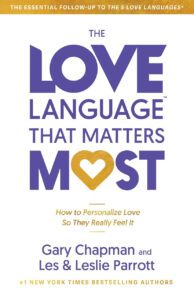
John: Uh, well, Dr. Gary Chapman is a pastor, author, speaker, counselor, radio host. He’s been here a number of times and, uh, you probably know him best, uh, because of the series of books he’s written, The Five Love Languages, although a number of books cover other topics as well. Uh, Les, and Leslie Parrott have been married over 40 years. They have two sons, and Les is a clinical psychologist. Leslie is a marriage, and family therapist, and they’re very popular conference speakers, and relationship experts, as you said, Jim, and bestselling authors as well. They’ve collaborated with Dr. Chapman on a new book called The Love Language That Matters Most: How to Personalize Love So They Really Feel It. And we wanna encourage you to get a copy of this book and, uh, to learn more at our website, and that’s FocusontheFamily.com/broadcast.
Jim: Gary, Leslie, and Les, welcome back to Focus on the Family.
Dr. Les Parrott: Thanks.
Jim: You all been here before. Now, I gotta start with this, Les, and Leslie. You’re from Seattle. So-
Les: Mm-hmm.
Jim: …were you at some coffee shop before you guys met, and you guys were in line together, and you said, “Hey, my name’s Les.” And you said, “My name’s Leslie. Maybe we should get married.” (laughs).
Les: Close.
Jim: Is that how that worked?
Dr. Leslie Parrott: Yeah.
Les: But, uh, yeah, it’s even more, uh, contextual to Colorado.
Leslie: That’s right, because you actually got the vignette right, but we were on a ski slope.
Jim: Oh, is that right?
Leslie: Yeah. And somebody hollered out-
Les: It was a youth trip.
Leslie: That’s right. (laughs).
Jim: Les, and Leslie. It’s just so close. It had to be a topic of discussion.
Les: She was 14, I was 16. We were, somebody hollered out Leslie. We both skied over to that person, and discovered each other.
Leslie: (laughs) The rest is history. Yeah.
Jim: I never knew that story. That is so funny. Gary, of course, welcome. It’s great to have you back.
Dr. Chapman: Thank you.
Jim: Let me ask you a question. Uh, the, you know, there is brilliance. You’re always humble about this, but, you know, the, every once in a while, an author-
Les: That’s so interesting because he’s always bragging around me. (laughs)
Jim: You know, an author will hit on something that’s so, feels so God ordained. And love languages, is one of maybe two, or three things that I could think of. Maybe like Kevin Leman with birth order would be another one, but man, you really hit it. What gave you the insight about the five love languages? What were you seeing that developed a pattern in your observation to say, “There’s something here.”
Dr. Chapman: Well, it actually grew out of my counseling in which they would sit in my office, and one of them would say, “I just don’t feel any love, you know, coming from him, or her.” And the other one would say, “I don’t get it. I do this, and this, and this. Why wouldn’t you feel loved?” And I realized that they were sincere. In their mind, they were loving them, but the other person wasn’t getting it.
Jim: Yeah.
Dr. Chapman: So, eventually, I just went back through my notes, and asked myself, when people said, “I just don’t feel any love”, what did they want? What were they complaining about?
Jim: Mm.
Dr. Chapman: And the answers fell into five categories.
Jim: Just hit those really quick, and then we’ll move.
Dr. Chapman: Yeah.
Jim: But I want people to just have the idea of what, uh, if they’ve never heard a love language, what are the five?
Dr. Chapman: And these are no particular order. Uh, one is words of affirmation, just affirming them verbally. One is acts of service, doing something for them. Remember the old saying, actions speak louder than words. That’s true for these people. Another is giving gifts. It’s universal to give, and receive gifts as an expression of love. And then there’s quality time, giving the person your undivided attention-
Jim: Hmm.
Dr. Chapman: …and then physical touch. We’ve long known the emotional power of physical touch. So, those are the five love languages.
Jim: Leslie, let me ask both of you, and Les teach-
Leslie: Sure.
Jim: …at the college level, university level. What are you seeing amongst young people, the 20 somethings when it comes to this whole area of love language? I mean, what, what happens in a classroom that catches your attention?
Leslie: Yeah. Well, let me tell you, this concept is pretty ubiquitous in society.
Jim: Mm-hmm.
Leslie: I mean, you can’t turn on a current comedian without seeing this in the language.
Les: You see it on the side of, uh, a truck, you know, next day delivery is our love language-
Leslie: Right.
Les: …or whatever. It’s just like-
Jim: See what you started, Gary? (laughs) But, so yeah, so the students are expressing it probably most-
Les: And, and they’re familiar with it.
Leslie: Mm-hmm.
Les: They may not know where it came from. It’s just part of the lexicon, uh, love language. And, uh, I, I always find it fascinating when we can actually educate them on, there’s actually five, and they’re like hearing it for the first time. Now this, Gary, this book’s been out for what, the original book?
Jim: Years.
Dr. Chapman: 30 plus years.
Les: 30 plus years and-
Leslie: And sold one, or two copies. (laughs).
Les: Yeah. (laughs) 20 million copies.
Jim: We say bazillion. (laughs).
Leslie: Bazillion is right.
Jim: When… He’s, he’s reached the bazillion level.
Les: But it’s accessible. Everybody gets it, like you said, there’s some intuitiveness to it. Um, we’re gonna talk about this new book, and how sometimes our intuition on it maybe gets the better of us, uh, because we don’t understand what we call the dialect of your love language, but it, at any rate, it’s, it’s the proverbial cookies on the bottom shelf.
Jim: Yeah.
Les: It could be easier to learn how to love someone when you know their love language.
Jim: And I would think, uh, Gary, that’s success. You’ve seen it in the counseling when you’ve applied this, and people actually grab it. You know, there’s two kinds of couples, people that actually will work on their marriage, and others who won’t.
Dr. Chapman: Yeah.
Jim: Uh, but those that actually apply these principles of the love languages see improvement in how their spouse feels loved, which is the key, back to your point.
Dr. Chapman: Yeah, ab-absolutely. And it goes back to attitude. You know, I’m giving you information, you know, on how to effectively love the other person, and meet that emotional need, but you have to choose, you know, even if you know the dialect, you still have to choose to speak it, or not to speak it.
Jim: Yeah.
Dr. Chapman: Because love is a choice.
Jim: We’re gonna go deeper into all of that, but there’s some groundwork I really wanna cover, and Les you, and I tease each other mercilessly, (laughs) and I love that. And this is not geared towards you, but, uh, why do you think we’re so quick to overestimate ourselves? (laughs).
Les: Well (laughs) You, and me, or just-
Jim: No, no, just human beings in general.
Leslie: Wait, I think I know his love language. It must be sarcasm. (laughs).
Jim: That’s probably-
Les: …one of the five.
Jim: That’s not fruit of the Spirit, is it? I’m hoping the Lord might add that one.
Les: I know you overestimate yourself, but yeah. (laughs) Um, no, you actually, there’s some incredible research on this.
Jim: Yeah.
Les: Uh, we do overestimate how good we are at things.
Jim: Mm-hmm.
Les: Take empathy, for example, most people will say, “Oh, I’m above average on that.” But we do this exercise, we’ve done it with, I don’t know, countless students in big classrooms-
Leslie: Right.
Les: …where we will, uh, have them fill out a little questionnaire on how adept they are at interpersonal skills.
Jim: Mm-hmm.
Les: And, uh, guess what? Out of 300 students, every single one of them is above average, and I think about 38% on average will say I’m in the top 1%.
Jim: Yeah.
Les: Which 38%-
Jim: …by the definition of average is not computable. (laughs).
Les: You don’t have to be a statistician to know something’s off there.
Leslie: Yeah.
Les: (Laughs) So, and, and, uh, we always just have so much fun with this because we get the results back, and we put it on the screen, and we go, “Isn’t it incredible that we got, just out of this university campus, we just happen to get all the people that are the best at relationships right here in this classroom.” And of course they, they see the irony of it, right.
Jim: And hopefully score themselves a little more accurately in the future.
Les: Exactly.
Jim: But, you know, that role of humility in us as human beings, made in God’s image, you know, it always, it pauses me to think about God’s nature being one of humility.
Les: Mm-hmm.
Jim: I mean, He created the universe.
Les: Yeah.
Jim: Really?
Les: Yeah.
Jim: He’s a God of humility-
Les: Yeah.
Jim: …and we’re created in His image. But I guess the question there, even in that example is why is humility so elusive for us as human beings?
Les: Uh, because-
Jim: We, we all struggle with that.
Les: Yeah. It comes out of insecurity.
Jim: Mm-hmm.
Les: Um, you know, one of the basic, uh, kind of fundamentals of anyone that’s a good listener is curiosity.
Leslie: Mm-hmm.
Les: In fact, do you know what the single most important question is that we ask in a conversation? This has been, uh, I think I saw this first at, at Harvard University’s, uh, uh, Journal of, um, uh, something, or other. (laughs) And, uh, I can’t remember the name of it.
Leslie: That sounds very official.
Les: Yes. Yes. (laughs) Um-
Jim: Let’s just call it the regent. (laughs) Sounds good.
Les: Okay, sounds good. And, uh, but they said the single most important question that you can ask in a conversation is, ready?
Jim: Mm-hmm.
Les: The follow-up question.
Jim: Mm-hmm.
Les: Because most of us, “Hey, what do you do for a living?” “Oh, I’m, I’m a lawyer.” “Oh, hey, I have a cousin who’s a lawyer.” (laughs) And blah blah blah blah blah.
Jim: Let me tell you my story.
Les: (laughs) Yeah, exactly. Rather than saying, “Well, you must enjoy that. Tell me, where’d you go to school?” Or whatever the, the follow-up thing is to it. But it’s curiosity, that is the, the antidote to that kind of, uh, lack of humility interpersonally. When you’re curious, genuinely about another person, the, um, kind of sense of, uh, having it all together, and I’m really good, I’m in the top 1%, that, that, uh, goes away.
Jim: Leslie, I’ll confess this since you’re res- representing all wives here at the table. (laughs).
Les: Way to go.
Jim: Four against one. (laughs) I would say four for one.
Les: Mm-hmm.
Jim: But, uh, in that-
Leslie: Thank you.
Jim: …in that regard, Jean, and I, our point of pain is I’m pretty quick verbally.
Leslie: Mm.
Jim: So, I tend to like to complete her sentences.
Leslie: Love it.
Jim: I think that’s engagement.
Leslie: Yes.
Jim: I feel like that’s engagement. I’m showing you, I am with you.
Leslie: Yes.
Jim: And I know the end of your sentence before you do.
Leslie: Right.
Jim: She doesn’t see it that way.
Leslie: Doesn’t feel that way to her.
Jim: Yeah, she doesn’t feel connected like that.
Leslie: I mean, I don’t know how he knew that we had this very issue, but let’s flip it around because in our home, I was the one that had to be confronted about that.
Jim: Right.
Leslie: I thought, you know, “I’ll finish your sentence, and you’ll know I’m with you before you even get it out.”
Jim: It’s a compliment. (laughs)
Leslie: Oh, I’m so here. And you felt shut down. And a lot of times the end of the sentence wasn’t exactly what you had in mind.
Les: Yeah. It’s like, do you, okay, if you want to tell the story now, and change the narrative of everything I was getting ready to share with you-
Leslie: Right.
Les: …go ahead, and finish the sentence. It’s not a-
Leslie: When I was confronted, this was a point of humility for me because I thought everyone in my life thinks I’m the best listener. This is the gift the Holy Spirit has literally given me, and my husband, the person I love the most isn’t feeling listened to. (laughs) It was, it, talk about humility, and then I, I was defensive, and then I started noticing. So, yeah.
Jim: You know, filling your spouse’s fuel tank is the concept, not filling yours.
Dr. Chapman: Yeah.
Jim: Which I think I’m describing filling mine.
Dr. Chapman: Yeah.
Jim: Um, how do we identify that? How do we learn to fill their tank in the language, like you said earlier, that, that fills them? Um, how do we get to know them well enough to do that?
Dr. Chapman: Well, you know, I think by nature we’re all self-centered. There’s a good part to that. That means we take care of ourselves, but when it becomes selfishness, and we’re thinking in terms of what am I getting out of this, this is the problem. And that’s why through the years I’ve had people say, “You know, Gary, we read the book, we took the quiz, I know her, his love language, or her love language, and, and I’ve started speaking it to them, but they’re not speaking mine.” And I said, “Well, let me make sure I understand you. You’re speaking their love language in order for them to speak your love language? That’s manipulation. That’s selfishness.” You know, the Bible talks about unconditional love. You’re gonna love them no matter whether they love you, or not, and that’s the most powerful influence you can have on them. And what I’m excited about is this new book is gonna help them be more effective in communicating love to the other person, because in the Bible, the challenge is that we’re to love others (laughs), you know?
Jim: Yeah.
Dr. Chapman: And so when you know not only the primary love language, but you know the dialect, or dialects that are most important, and you also understand how the personality interfaces with that, it just gives you a better understanding of how to effectively communicate love to the other person.
Les: Which is how we came to this whole thing, right?
Dr. Chapman: Yeah.
Les: You, and I were talking on the phone, I, you know, Leslie, and I would counsel a couple and, and we would talk to them about five love languages, and then every once in a while we would get a couple and, uh, one of them would go, “Hey, I’m, I’m speak… I know her love language. I’m speaking it, but her love tank is not full. What’s going on?” And I would go, “Just a minute, I’m gonna call Dr. Chapman (laughs), and find out what’s going on here.” (laughs).
Jim: Dr. Chapman, line one. (laughs).
Les: And, uh, we had enough of those conversations to finally kind of do some research together, and begin to figure out that so often that was the case, because they didn’t understand the dialect within that love language. And it was true in our own relationship too, because I knew Leslie was words of affirmation, but sometimes I would encourage her, and I would really pour it on, but it just wasn’t filling up her love tank. And that mystery was, uh, solving that mystery is the result of this new book, The Love Language That Matters Most.
Jim: Just give us one, or two points there.
Les: Yeah, well, her-
Jim: And quickly. (laughs).
Les: …her, her…
Leslie: Right now, are you taking notes?
Jim: Jean is words of affirmation as well, so…
Les: Yeah. So, well, it was encouragement-
Leslie: Yeah.
Les: …I thought was what words of affirmation was about.
Leslie: So, he would pour, he would literally pour it on.
Les: Yeah.
Leslie: Because he know words matter to me, right? And he would say, “I believe in you. I know you can do this.” Whatever it was. Well, instead of feeling loved, I just felt pressured. Like, I didn’t even wanna do this. You know, why, why are you cheering me on like that? We discovered that he thought encouragement was my pathway, my dialect, but I really respond to compliments, um, speaking of humility.
Jim: No, no. But, but help us husbands-
Leslie: Yeah.
Jim: …because we’re going-
Les: When I can say to her, uh, instead of, “Hey, you wanna write a children’s book, you’ll be great at that. You should get on that right now, and get…” Like-
Jim: Yeah, that does sound like pressure. (laughs) Sorry. (laughs) [crosstalk] But what were those words that did mean something-
Leslie: Yeah.
Jim: …That did fill your tank?
Leslie: You know, if, if he would say… I mean, it could be the most, uh, ridiculous thing like, “Oh, your eyes sparkle when you wear that sweater.”
Jim: Yeah.
Leslie: Watch out, I’ll be wearing it for the next month. (laughs) You know what I mean? Because that made me feel it just totally loved. And, and everyone knows what it’s like when that reservoir in your soul fills up.
Les: Yeah. So, for everyone-
Jim: Well, everybody, but I think husbands do struggle with that gauge.
Leslie: Yes.
Jim: I don’t think we read it as effectively maybe as wives. I don’t know if you agree with that.
Les: I, I don’t know. Yeah. I think it’s wives, and husbands myself because it doesn’t matter.
Jim: Well, it is.
Les: Yeah. It, it, it, but what we discovered, Jim, is that there’s three dialects within words of affirmation.
Jim: And we’re gonna cover those next.
John: Okay. So, this is just a quick note that the book we’re talking about is a terrific resource, uh, kind of a follow-up to Dr. Gary Chapman’s, uh, groundbreaking books about the five love languages. This is co-written with Dr. Les, and Leslie Parrot called The Love Language That Matters Most: How to Personalize Love So They Really Feel It. Uh, get your copy today, uh, at our website, and the link is at FocusontheFamily.com/broadcast.
Jim: Leslie, let me start with you. Uh, speaking the different love languages that Gary’s outlined, words of affirmation, quality time, gifts, acts of service, and physical touch. Um, you guys now in this book go down deeper, as you just said, less into dialects, and give us an example of what a dialect looks like within a love language, just stick with yours, which is words of affirmation. What do the dialects of words of affirmation look like?
Leslie: Oh, yeah, you bet because it, everything is in those dialects, right? It’s all hidden there. The key to filling that love tank of the person you love the most, um, because nuances are what speak love. You know, you can’t just get in the big category, like words of affirmation, and you can get a little bit of traction, but it’s when you really figure out this is the pathway right to the center of my loved one’s heart, that’s when everything explodes. And that’s what dialects do. So, for instance, my dialect in words of affirmation is compliments. Um, Les thought that encouragement was gonna be the thing, but there’s also appreciation. You know, some people just revel in feeling like, “Oh, you noticed what I did, you saw me, you saw the contribution I made, you called that out, you see I’m working hard?”, and they’re, they just light up with appreciation. Um, but of course they’re all lovely, we all-
Jim: Yeah.
Leslie: …love to receive them, but there is one that will really, really have the effect.
Jim: And that’s what I love about this deeper dive-
Dr. Chapman: Yeah.
Jim: …Because I, I think that’s true. And I, again, uh, you have done all, three of you have done so much counseling with couples, you’ll resonate with this, but just, for example, the, the wife, and the husband in that counseling room, and the wife is saying, “I don’t feel seen by him.” Or, “I, it, it’s like he doesn’t know me.” Th-Those are cries for fill my love tank.
Dr. Chapman: Yeah.
Jim: Right?
Dr. Chapman: Absolutely. Absolutely.
Jim: And in that context, I mean, is that a direction to go at that moment to say, “Honey, sit down, read the book, get a better understanding, and, and be able to have that conversation.” What fills your tank specifically?
Dr. Chapman: Yeah. I think if they read the book, they’re gonna have much more information than they had, uh, just simply knowing what the primary love language was, because it’s gonna give them more specific ways to express that particular language, and really communicate to them at a heart level, which is what we’re really trying to do.
Jim: You know, uh, Les, let me aim this at you, the skeptic, you know, going, “Really, this is, this is psychobabble.”
Dr. Chapman: Mm-hmm.
Jim: I mean, seriously, there are some people that will think that, but I’m sure Gary, when you did this, and formulated this, you could see Christ doing these things with those He encountered-
Dr. Chapman: Yeah.
Jim: …I would assume.
Dr. Chapman: Yeah.
Jim: And in that context, Les, uh, you know, when we do these things, we’re called as Christians to be deeply loving. We should be known in the way we love one another.
Les: Sure.
Jim: That’s what the Lord said.
Les: Yeah.
Jim: And, uh, in doing so, this is a mechanism for us to understand how to go deeper in love.
Les: That’s exactly right. And that’s why this is a follow-up to, I affectionately call it the purple book, The Five Love Languages. (laughs) Um, but, uh, what Gary did 30, how long ago was it? 33 years ago?
Dr. Chapman: Yep.
Les: Yeah. That book, this is the true follow-up to that. Now, Gary has had lots of other books that have kind of come out of that from military families, blended families, and teenagers, and so forth, but this is truly the next step. Why? Well, look at the title, The Love Language That Matters Most. I-I had a manuscript sitting on a table at a restaurant where I frequent in Seattle, and it had that title real big, and the server came up, and she said, “Oh, the love languages, what is the one that matters most? Is it words of affirmation? Because that’s mine, right? Is that the one that matters most, right?” (laughs) And I said, “Well, they’re all important, and they all matter, but the one that matters most is the love language of the person that’s in front of you.” And that really comes back around to empathy, that capacity to recognize what fills their love tank. And when you can do that, and, and like Gary said, so much, so many times the focus is on, “Hey, this is my love language, so everybody love me this way,” right? But when you can begin to really put yourself in another person’s shoes, and understand their love language, their dialect, uh, the world doesn’t get much sweeter in that relationship because now you’re speaking each other’s love language fluently.
Jim: Yeah.
Les: That’s the goal.
Jim: That’s so good. Let’s cover at least one more of the dialects, and I think physical touch might be a good one. You know, I talked about my son, Troy. Even at night, he, whatever he’s doing, he’ll come to me to say goodnight, and to hug me. That’s how intense his physical touch love language is.
Leslie: Mm-hmm.
Jim: I mean, I don’t know if he has any of the others, but he’s got this in the highest dose. (laughs) So, even now uh, you know, early 20s. Yeah. And, uh, he’ll come, and give me a hug, and say, “Goodnight, dad. I-I’ll see you in the morning, whatever.”
Dr. Chapman: Yeah.
Jim: But it’s important to him, and I know that. And he gets really disappointed if we don’t take that time at the end of the day-
Dr. Chapman: Yeah.
Jim: …to hug each other, and say, “I love you.” And-
Dr. Chapman: Yeah.
Jim: So, with that, what are those dialects for the, uh, physical touch person?
Dr. Chapman: Well, there’s more dialects on this one-
Leslie: That’s true.
Jim: Really?
Dr. Chapman: …than any of the others.
Leslie: Yeah.
Jim: Well, that’s interesting.
Les: Seven.
Leslie: I, I actually love your question because you’re, uh, you’re talking about your son.
Jim: Yeah.
Leslie: Right? And so often we think physical touch is all about romance, and there is romantic touch involved, but there’s so many other kinds of touch that convey love, and there is a sort of protective touch, you know, when someone just makes sure you’re safe in a, you know-
Jim: Yeah.
Leslie: …in some kind of a setting. There’s, there’s a playful touch, you know?
Jim: Right.
Leslie: It, there’s like a, a celebration touch, someone who’ll give you the high five.
Les: Yeah, on that playful touch. Gary, and I, remember we were in Nashville just a few weeks ago together speaking to a group, and this woman came up to us afterwards, and she said, “My husband, uh, knows that physical touch is my primary love language. And for him, he thought that meant tickling me.” (laughs) And-
Jim: Well, it could be, it was a good test. (laughs) And then when she said, “This isn’t the way to do that.”
Les: (Laughs) Right. But it is, that’s playful touch.
Leslie: Right.
Les: Yeah. But she says, “That is not, that drains my love tank.” (laughs) So, that’s a great example of how dialect is so important to this.
Leslie: It’s everything.
Jim: So, what was her dialect then in her context?
Les: Hers, hers was comforting touch.
Leslie: Yeah.
Jim: Oh.
Les: She wanted a soothing touch on the back after a long day.
Jim: Right. Comfort.
Les: Right? We, we were counseling. We did an intense… Leslie, and I did an intensive with a couple just this last week, um, I think it was 15 hours we spent with this couple-
Leslie: Correct.
Les: …in two days. And physical touch was her love language. And do you remember what she said about going to church, and how he, if he didn’t touch her?
Leslie: Yeah. And, and, you know, if he’d be, uh, totally absorbed in the moment listening to a sermon, but didn’t have just a way of connecting them with physical touch, she would feel a sense of loss.
Les: If they weren’t holding hands-
Leslie: Yeah.
Les: …or put his hand on her knee, or whatever.
Leslie: Yeah.
Les: So, it’s a really powerful thing for people that have physical touch, and to understand that dialect because you may think tickling (laughs) is the way that person’s heart, and it is not.
Jim: Yeah.
John: Yeah. We’ve certainly had some great insight today from Drs. Les, and Leslie Parrott on Focus on the Family with Jim Daly and, uh, having Dr. Gary Chapman here. My goodness, what a powerhouse of, uh, marriage experts.
Jim: Yeah. And all three of them share so much solid biblical wisdom regarding relationships. And looking at the love languages, and the various dialects is always a good reminder of the variety of ways God gave us to love our spouses, right? And I hope you know Focus on the Family is here for you. As I said at the top of the program, we want you to have the best marriage you can have with your spouse, and that’s a good goal, and we have lots of great resources to help you get there. You can take our marriage assessment, it’s a free online quiz, personalized just for you. It will give you a sense of your strengths, and as the coach always says, some areas to work on. Another solid place to start is the book we talked about today, The Love Language That Matters Most: How to Personalize Love So They Really Feel It. And we’ll make it easy for you. When you give a gift of any amount to Focus on the Family, we’ll send you a copy as our way of saying thank you for supporting the ministry. Your continued prayers, and financial support allow us to provide much needed help to individuals, couples, and families. Over the past 12 months, through the research we do, more than 530,000 couples tell us that we have helped them build stronger marriages. That’s what we’re doing. Be a part of it.
John: Mm. Yeah, we can’t do this without you, so please, uh, donate today when you call 800, the letter A, and the word FAMILY, 800-232-6459, and, uh, ask for your copy of the book, The Love Language That Matters Most. And then, uh, if you wanna go online, you can, uh, donate and, uh, get the book, and also take that free marriage assessment. It’s all right there for you at FocusontheFamily.com/broadcast. On behalf of the entire team, thanks for listening to Focus on the Family with Jim Daly. I’m John Fuller inviting you back as we continue the conversation with Dr. Gary Chapman, and Drs. Les, and Leslie Parrott, and once again, help you, and your family thrive in Christ.
Day Two
Preview:
Dr. Les Parrott: I had a manuscript sitting on a table at a restaurant where I frequent in Seattle, and it had that title real big. And the server came up and she said, “Oh, the love languages. What is the one that matters most? Is it words of affirmation? ‘Cause that’s mine, right? Is that the one that matters most, right?” (laughs) And I said, “Well, they’re all important and they all matter, but the one that matters most is the love language of the person that’s in front of you.
John Fuller: That’s Dr. Les Parrott, and he and his wife, Leslie, join us today on Focus on the Family with Jim Daly, along with Dr. Gary Chapman as we talk about the love languages. Uh, thanks for joining us. I’m John Fuller.
Jim Daly: I so appreciate what these three marriage experts said last time about being intentional in speaking your spouse’s love language and even getting into the dialects of their specific language. And we’re gonna dig into that more today. If you missed any part of that conversation last time, get our app. That’s the best way to be connected to all the content, actually. And we know marriage can have its challenges, believe me. Uh, Jean and I have our challenges from time to time. But let me just remind you that Focus on the Family is here for you. It’s a privilege for us to be there, and that’s our mission. If you need to talk with someone, get in touch with us, you won’t be embarrassed. We want to help you have the best relationship possible. And learning to speak your spouse’s love language is a great way to refresh, sustain, and I would say build your thriving marriage.
John: Hmm. And let me quickly introduce our guests. Uh, they’ve all been here with us a number of times before. Dr. Gary Chapman is a pastor, author, counselor, speaker, radio host. You probably know him best for his bestselling series, The Five Love Languages. He and his wife, Karolyn, have two adult children. And Les and Leslie Parrott have been married for just over 40 years, and they have two grown sons. Uh, Les is a clinical psychologist, and Leslie is a marriage and family therapist. And they’re relationship experts, bestselling authors, conference speakers, and they’ve teamed up with Dr. Chapman on a new book that really elaborates on his original concept, The Love Language That Matters Most: How to Personalize Love So They Really Feel It. And, uh, that’s the book we’re talking about again today. Contact us to get your copy of the book, uh, just stop by FocusontheFamily.com/broadcast or call 800, the letter A, and the word FAMILY. And as we pick up, Jim, um, we’re gonna listen as you talk with Dr. Chapman about going, uh, beyond just knowing about your spouse’s love language.
Jim: Gary, knowing your spouse’s love language is a great start. And, uh, of course, reading the original book is a great idea, or this new one. But real connection does take practice, and we can understand it intellectually, but then doing it is sometimes a stumbling block for people. How can couples move from knowing, uh, to actually speaking each other’s language? I mean, what are those mechanisms?
Dr. Gary Chapman: Well, if they’re Christians, I’d say pray first.
Jim: Hmm.
Dr. Chapman: “Lord, you know I’m married to this person, and I know they have the emotional need to feel loved, and I know their love language and their dialect, so help me, because this doesn’t come natural for me.”
Jim: Do you say, “God, help me”?
Dr. Chapman: (laughs)
Leslie: (laughs)
Les: Sometimes, maybe, yeah.
Dr. Chapman: And God will help us. He will help us.
Les: Yeah.
Dr. Chapman: Let, let’s face it, if you didn’t receive growing up, the primary love language of your spouse and the dialect that they want, dialect or dialects they want to receive it in, it’s a learning curve.
Jim: Yeah.
Dr. Chapman: You know? Uh, so, uh, a man said to me, he said, “Dr. Chapman, her language is words of affirmation.” And I know that, he said, “But I can’t, I don’t know how to say that. I never received positive words growing up.”
Jim: Yeah.
Dr. Chapman: “And I don’t know how to say it.” I said, “Well, you, you know, you can’t erase your history.”
Jim: Right.
Dr. Chapman: “But you can start now learning.” And I said, “Tell me three things your wife is good at.” He said, “Well, she’s a good cook and she’s a good school teacher and she’s a good mother.” And I wrote three sentences out beside each one of those. I said, “Here’s your homework. You go home and twice a day this week, you get in a room by yourself and say these words, read these sentences out loud. You hear yourself saying these. And when you come back next week, I hope you can say them to me without looking at your list.” He said, “Well, I’ll try it.”
Jim: (laughs)
Dr. Chapman: You have to start where you are, you know.
Jim: Yeah. No, that’s good.
Dr. Chapman: But we can learn these, but it means we have to want to do it, choose to do it, and God will help us, b- because God wants us to love our spouse.
Jim: Yeah. Les and Leslie, that answer actually sparks something in my mind. We’ve had a number of guests that talk about family of origin issues-
Les: Hmm.
Jim: … the Yerkoviches, the way we love, for example.
Dr. Leslie Parrott: Hmm.
Jim: That formative time really does shape so much of who we become.
Leslie: Yes.
Jim: And it’s rare that we get an opportunity unless there’s a need, a deep need that you say, “I need help figuring this out.” And you go to counseling and they begin to put these pieces together.
Leslie: Mm-hmm.
Jim: But in this area of love languages and the idea of family of origin and things you did or did not receive, can we overcome those things if, if they’re so deeply rooted in us that, that we haven’t been loved in the right way-
Leslie: Yeah.
Jim: … that we can overcome these things?
Les: Most definitely. And that’s why, I think that’s why The Five Love Languages is such a success-
Leslie: Mm-hmm.
Les: … because it is so tangible and it speaks to that person, uh, in, in such a unique way.
Leslie: Yeah. Here’s the thing, you know, we all have a story that shaped us. It is so helpful to think of that having shaped our own love tanks and the love tank of the person. You know, we, it’s not a one size fits all. You know, it’s like every different kind of car has its own tank and runs on its own fuel. And how our families loved us, how they failed us, you know, our own personality, that all goes into creating our love tank and it-
Les: Yeah.
Leslie: … it’s helpful to realize, oh, okay, well, some love tanks drain faster than others. Some hold more fuel. You know, maybe if I grew up in a home, you described it earlier, Gary, you know, where I got all these love language, love languages spoken to me, then my tank is fueled up and doesn’t drain as fast. But some of us have love leaks. You can siphon our tank really fast. And I think that’s why recognizing, especially if you recognize, wow, my spouse speaks what I would consider a foreign love language to me. Like, it is awkward learning a foreign language for most of us. Some of us are great at that. I’m terrible. I remember we were gonna take a trip to, uh-
Les: It was France.
Leslie: … France and I-
Les: Yeah.
Leslie: … you know, ordered one of those kits and I was convinced I would be, you know-
Jim: Fluent in four days.
Leslie: Yeah.
John: (laughs)
Leslie: It was the most embarrassing, ridiculous thing. It felt clunky, whatever. Your love language is a foreign one for me. I had to treat it the same way in our marriage.
Les: Yeah. But it does, the family of origin has a lot to do with that. In fact, in this new book, we have a whole chapter on your love tank and how your family shaped that. Some of us have big love tanks. Some of us are pretty small with our love tanks and they need frequent fueling. Um, others can live on some, you know, spoken word of affirmation because that’s our love language for a longer time than other people can. So that’s a really important insight that you have, Jim. The love tank is homegrown in so many ways.
Jim: Interesting. That’s so interesting. What, what about the perspective of how you prioritize your own life? I mean, first it’s the Lord. It’s your relationship with the Lord. So many experts have been at this table talking about you don’t have the capacity to change your spouse. You have to work on you. And often what happens in that setting is the Lord shows up and starts working on your spouse. But this idea of your love tank from God, you know, filling your love tank with the Lord’s love and understanding that deep, unconditional love as best as we can, and then the love tank with our spouse. Gary, speak to those expectations. I, I’m just thinking of the man saying, “You know what? I told her I loved her at the altar and we love the Lord, and that’s good enough.”
Les: Yeah.
Dr. Chapman: (laughs)
Jim: Right? That’s an extreme-
Dr. Chapman: Yeah. Right.
Jim: … but it proves the point.
Dr. Chapman: Yeah, right, yeah. You know, I think if we understand this concept and we communicate love, it is true, we cannot change our spouse. That’s true. But we can influence our spouse, and we do every single day.
Leslie: Mm-hmm.
Dr. Chapman: We either have a positive influence or we have a negative influence every single day. And the most powerful influence you can have on the positive side is to be communicating love to that person in their love language, in a dialect that’s meaningful to them, that’s filling up their love tank. That doesn’t make them change, but it’s a positive influence on them.
Les: Hmm.
Dr. Chapman: They’re far more likely to change if, if you’re doing that on a consistent basis.
Jim: Yeah. So Les, here’s the question. Uh, you’re all doctors, you’re all in this every day. Why as a human being do I push purposefully Jean’s hot buttons? I mean, where, where in my head is it rational for me to say, “Well, if I say this, boom, I get a spark.” It’s so stupid of me.
Les: Well, sometimes you do it and, and she’s told me you do this quite frequently.
Jim: (laughs)
Dr. Chapman: (laughs)
John: (laughs)
Leslie: (laughs)
Les: Um, and, uh-
Jim: I’m just, I’m speaking, I’m speaking on behalf of John. Just teasing. This is true. I mean, it, it, it is such an odd thing in human behavior-
Les: Yeah.
Jim: … in married couples.
Les: Well, here’s one reason, we’re oblivious to it sometimes because we all live with an agenda. You have an agenda about what you’re going to do when you get upstairs to your office after this or a group you’re gonna speak to or whatever, uh, we have an agenda about where we’re gonna go for lunch. We have all kinds of agendas, right?
Leslie: Hmm.
Les: And it takes a conscious effort to temporarily set aside my agenda to recognize your needs. That’s when we speak that person’s love language. That’s when we’re able to really understand their heart and have presence with them.
Jim: Hmm.
Les: And by the way, this whole thing, this whole enterprise, uh, with what Gary has come up with, with The Five Love Languages and this new concept, The Love Language That Matters Most and the dialects that’s truly revolutionary. This whole thing is not about perfectionism, it’s about progress, right?
Jim: Hmm.
Leslie: Yeah.
Les: Right? It’s not about being perfect, it’s about making progress.
Leslie: Persistence.
Les: And you will fail.
Leslie: (laughs)
Les: You’re gonna say stupid things. Jim, Jim, look at me.
Jim: No, no, no, no, no, no, no.
Les: Yeah. (laughs)
Leslie: (laughs)
Dr. Chapman: (laughs)
Les: But when you do, you can recover. I’ll give you a, a, a really fresh example in our own marriage that happened within the last 48 hours.
Leslie: (laughs)
Dr. Chapman: (laughs)
Les: And it makes me look like an idiot.
Jim: Pause, think about this.
Leslie: (laughs)
Jim: Are you sure you wanna do this?
Les: Keep moving. Go ahead. Next question.
Jim: No, now you got me. (laughs)
Les: So Leslie was, was, uh, in the middle of kind of just ramping up in a mea- really meaningful conversation.
Leslie: Ramping up. (laughs)
Les: Well, you were on the front end. What I knew was gonna be a longer conversation.
Jim: I think I know where this is going.
Leslie: (laughs)
Les: And… I don’t think you do ’cause this was so stupid on my part.
Jim: (laughs)
Les: And it, it had to do with, with one of our boys and, and so forth. And, and she was, you know, kind of pouring out her heart on that. And in the, in the middle of her doing that, so I have this little obsession with this new vacuum cleaner that we got, and this vacuum cleaner has this light on it that shows you where the dirt is.
Jim: Oh.
Les: You know what I’m saying?
Jim: It’s a smart vacuum cleaner.
Dr. Chapman: (laughs)
Les: It’s, it’s incredible. I mean, it’s, it’s become my therapy.
Dr. Chapman: (laughs)
Leslie: Could we do a, a session on, on the Dyson vacuum?
Dr. Chapman: (laughs)
Les: (laughs)
Leslie: (laughs)
Jim: (laughs) There you go. We just did the ad. Everybody’s gonna get one.
Les: I hope they send me one for free.
Jim: (laughs)
Les: But anyway, I don’t know what… I had it in my hand, and in the middle of her talking, I just turned the thing on because I saw a hair-
Leslie: Yes.
Les: … loose on the floor.
Leslie: That really happened. (laughs)
Les: And I thought, I’ll just get that real fast because-
John: It’ll just take a second.
Les: Yeah.
Jim: I feel so much better right now.
Dr. Chapman: (laughs)
Leslie: (laughs)
Les: I was so distracted by that, that, what I needed to do, I couldn’t really be present with her, but I didn’t say anything. I just did it.
Jim: Yeah.
Les: It was just so… I mean, talk about a love leak, her whole love tank was just-
John: (laughs)
Dr. Chapman: (laughs)
Les: … like, completely empty and, uh, so… And by the way, when you do something like that, here’s what we know from research from John Gottman. When you do something so stupid or you say something so stupid, it takes five times the positive to get back to where you were.
Jim: Well, going back to the leaks in the tank, that’s true.
Leslie: Right.
Jim: All those things are those leaks in the proverbial tank, so you have to-
Leslie: Right.
Les: Yeah.
Jim: … now double, quintuple-
Les: Yeah.
Jim: … your effort to fill that tank up.
Les: And, and, and getting that dialect dial in is what matters.
Leslie: Right. That’s right. But I love your, I love your insight that we do know how to, how to nudge each other and touch those tender points.
Jim: Yeah.
Leslie: But I think if you spin that, we’re pretty bright, and we also know how to do the thing that makes them feel most deeply loved. It’s that same intuitive understanding that we can just flip on its head-
Jim: Yeah.
Leslie: … and be brilliant at loving.
Jim: Yeah. You know, again, quality time, we get into that-
Leslie: Hmm.
Jim: … one as well. But quality time is that being present. And how can couples cultivate that kind of intentionality around quality time? I think Jean, again, uh, an example there, she would feel quality time praying together, reading the Word together, sitting together too, but it’s like the, the pressure of the gas hose, if we’re talking about putting fuel in our tank. If we’re doing those spiritual things together, it’s like fully squeezed, and that gas is pouring in the tank. For us sitting together, it might be halfway, in terms of her receiving the benefit of that, she’s more into, let’s develop our relationship spiritually.
Leslie: Mm-hmm.
Jim: So is that an insight? Is that a dialect? Is that knowing what fuel really fills her tank?
Dr. Chapman: I think our relationship with God impacts everything. And I think the more we share our relationship with God in terms of praying together or reading the scriptures together or discussing a sermon together that we’ve just heard, uh, it has a positive impact on speaking any of these languages because when we feel, you know, our hearts are beating together and our relationship with God, we’re far more likely to really give attention to how to communicate love to each other.
Jim: Absolutely. And maybe that’s the question, uh, Les or Leslie in terms of the dialects of quality time, what are they?
Leslie: Yeah. No, I love this one. This one’s kind of fun because we all experience time differently and we even think of it as a resource differently. One of the qualifiers, and I’ve heard you say this time and time again, Gary, and it’s so true, is quality time isn’t just about being together, it’s undistracted, full presence.
Jim: No iPhone.
John: No vacuum cleaner.
Leslie: (laughs)
Les: No. Oh, this is revolutionary.
Dr. Chapman: (laughs)
John: Yeah.
Jim: There’s no evil-
Les: You should get some points for that, you know.
Jim: There is no evil eye bigger than if-
Leslie: (laughs)
Jim: … Jean’s talking to me and I, ping, the phone goes and I check it out and I look back at her and she’s got that eye like-
Leslie: (laughs)
Jim: … like I just committed a, the p- you know, the, the bad sin.
Leslie: And we’ve all committed that sin.
Jim: Yeah.
Leslie: We all have, so.
Jim: And it’s, you know what, she’s right-
Leslie: Yeah.
Jim: … to be honest.
Les: So let me ask a question for us and everybody that’s listening to us, are you more scheduled or unscheduled?
Leslie: Hmm.
Jim: In what area of my life?
Les: Your whole, just in general.
Jim: (laughs)
Leslie: Your preference.
Les: If, let me say, hey-
Jim: Well, eight to five, I’m highly scheduled ’cause of what I do here at Focus on the Family. And then at home I tend to be far less scheduled.
John: You’re spontaneous.
Jim: Yeah. So I can operate in both worlds.
Les: And what about Jean?
Jim: Highly scheduled.
Les: All the time?
Jim: All the time.
Les: Yeah. She likes to know what’s gonna happen and-
Jim: Three list to every item.
Les: Okay. And then the second question is, are you more future oriented or more present oriented?
Jim: That’s interesting.
Les: Are you energized by the here and now or the there and then, what’s about to happen?
Jim: Vanilla. (laughs)
Dr. Chapman: (laughs)
Jim: What’s your favorite ice cream?
Dr. Chapman: Yeah.
Jim: That’s what that sounds like to me.
Dr. Chapman: (laughs)
Jim: I, you know, I think, again, I think in my role that helps shape some of your, you know, the demand of your vocation can shape some of these things, I think.
Dr. Chapman: Mm-hmm.
Leslie: For sure.
Jim: So I think I’ve got to be thinking future-
Les: How about Jean? Is she more f- future?
Jim: Um, I, I would say present.
Les: Okay.
Jim: She’s more present. I tend to be more future. I think that’s probably accurate.
Les: So i- if she is present oriented and scheduled, that shapes her dialect for quality time.
Leslie: Mm-hmm.
Les: Is quality time an important thing to her?
Jim: Very.
Les: Yeah. So what she will like is something that is paced and punctual.
Jim: Yeah.
Les: She wants to know here’s when it starts, here’s how it’s gonna go and I can, she can now relax in that.
Jim: How about this insight?
Les: Okay.
Jim: Never surprise me with a trip.
Dr. Chapman: Hmm.
Leslie: Hmm.
Dr. Chapman: That will not be my favorite thing.
Les: Right.
Jim: Tell me ahead of time so I know how to pack. (laughs)
Leslie: Yeah. Yeah.
Les: Where, whereas if you’re unscheduled and future oriented, surprise me every day.
Leslie: Yeah.
Jim: Yeah, yeah.
Les: Right? So you get the idea?
Jim: Yeah, and I tend to be the other.
Les: So-
Jim: Throw some clothes in the bag. Let’s go.
Les: Yeah.
Dr. Chapman: (laughs)
Leslie: Yeah.
Les: Absolutely.
Leslie: Don’t even tell me where we’re headed.
Jim: Yeah.
Dr. Chapman: (laughs)
John: Well, you’re listening to Focus on the Family with Jim Daly and we’re talking about the love languages with Drs. Leslie Parrott and of course Dr. Gary Chapman. Uh, they’ve written a book, The Love Language That Matters Most: How to Personalize Love So They Really Feel It. And we’ve got that here at Focus on the Family. Get in touch for details, uh, when you call 800-A-FAMILY or stop by FocusontheFamily.com/broadcast. And this is such good stuff and I appreciate, Jim, your vulnerability ’cause I-
Jim: (laughs) Yeah, I’m-
John: … I’ve worked closely with you. I think they got a, I think less you, you nailed it in terms of the expectations and that’s, that’s important.
Dr. Chapman: (laughs)
Les: I mean, I’d like to be paid for that, you know?
Leslie: (laughs)
John: Well, we listened to you about the vacuum-
Les: (laughs)
Leslie: (laughs)
John: … so it’s kind of-
Jim: Yeah, yeah. I’ll give you my vacuum.
Leslie: Thank you.
Jim: You go get therapy.
John: Can we talk about gifts-
Leslie: (laughs)
John: … because, uh, especially in some of my kids, I see gift giving and gift receiving, it’s, it’s thoughtfulness, um, apply this to the marriage relationship because there are nuances here that I have not really understood until I’m starting to read some of this book. Th- Gift giving isn’t just a, “Here’s a gift, I was thinking of you.”
Dr. Chapman: Yeah. I think this is really important that we understand the kind of gifts, you know, that’s important to them. Like, fanciful gifts-
Leslie: Hmm.
Dr. Chapman: … is one of the dialects. And this can be fancy things. It can be jewelry. It can be a amazing flower arrangement that it just blows her away.
Jim: Mm-hmm.
Dr. Chapman: Uh, so it’s, it’s those, that’s, that’s one of the dialects within this. Another one, of course, is functional gifts, like vacuum cleaners.
Jim: (laughs)
Leslie: (laughs)
John: (laughs)
Les: Wow- [crosstalk]
Jim: We know you’re love language.
Dr. Chapman: (laughs)
Les: (laughs)
John: See that’s functional.
Jim: Clean!
Dr. Chapman: Yeah. So if you, but if you’re giving them a functional gift and their, their dialect is fanciful gifts and they don’t have to be expensive fanciful gifts, you know, then you’re, you’re not hitting them where they really need to be hit in terms of receiving it. And then, uh, there are sensible gifts, things that you’ve talked about that, you know, you’d really know that they would like to have because they’ve talked about that, you know, and sentimental gifts, things that remind you of, “Remember that time when we were here,” and all that, that kind of thing.
Jim: You know, so often we’re thinking expense.
Leslie: Hmm.
Jim: You know, you might be newly married, people are listening and they’re going, “Wow, we can’t afford to do some of this. I can’t afford a blender-”
Leslie: Right.
Jim: “… even though my wife would love a blender.”
Leslie: (laughs)
Dr. Chapman: (laughs)
Jim: But Gary, you, you, you said in the book, one of the most precious gifts you received from Karolyn, your wife, was what?
Dr. Chapman: It was a little piece of paper that I actually have with me today.
John: Oh.
Jim: Yeah, you carry it.
Leslie: Okay.
Dr. Chapman: I carry it with me everywhere-
Leslie: Are we all just swimming?
Dr. Chapman: … everywhere I go.
Leslie: (laughs)
Dr. Chapman: And… Now my language is words of affirmation, so this is a gift of words.
Jim: This was a home run.
Dr. Chapman: Home, hand printed.
Les: Look at his face lighting up.
Leslie: I know.
Jim: No kidding.
Dr. Chapman: “My sweet Gary, I do love you. I shall pray for you. I am so blessed to live with you. I’m proud of you. (Thankful, excited, biblical, proud, grateful) Life with you is beyond belief. Have fun. Bear fruit. Enjoy and return. Stay warm.”
Jim: Oh my- (laughs)
Dr. Chapman: Whoa. My love tank fills up just reading it.
Jim: I love it. I love it.
Leslie: (laughs)
Dr. Chapman: (laughs)
Jim: I love your tank expression more than anything. Wow.
Les: I think his tank is gonna explode.
Jim: It’s overflowing here.
Dr. Chapman: (laughs)
Jim: But that’s beautiful.
Leslie: Yeah.
Jim: And that’s the point.
Dr. Chapman: Yeah.
Jim: And she hit it. She knows it and she really fed you.
Dr. Chapman: Yeah, that’s-
Les: But that’s a great example of how these, these, uh, love languages sometimes blend into each other because words of affirmation, but it was a tangible gift.
Dr. Chapman: Yeah.
Les: It’s, it’s something you’re carrying. How many years ago did she write that?
Dr. Chapman: Oh, I don’t know the dates not only, but it’s been a long time ago.
John: Yeah.
Les: And you’re still carrying-
Dr. Chapman: But I carry it with me everywhere I go.
Jim: Yeah.
Les: It’s still in his, his leather notebook there.
Leslie: Right.
Dr. Chapman: (laughs)
Les: And, and that’s the value of this love language that it is a tangible representation and whether it’s sensible or whether it’s fanciful or functional, the point is that it represents that you love me and I can see this.
Leslie: It’s a, it, it’s a visible symbol-
Les: Yeah. Yeah.
Leslie: … of your love for me.
Les: That’s right.
Leslie: Yeah.
Jim: So when you’re on that airplane with a five-hour delay, you pull that out and read it?
Les: (laughs)
Dr. Chapman: From time to time, I do. Yeah.
Jim: I believe you would-
Dr. Chapman: (laughs)
Jim: … ’cause it would lower my blood pressure, right? Sitting on the tarmac for five hours. Um, acts of service. This is one that for me trips me up ’cause I, you know, again, it’s functional. Acts of service probably is not my first, second, third, fourth love language.
Leslie: (laughs)
Jim: It may be the fifth.
Les: It seems like you’re looking down on those of us that have this as our primary love language.
Jim: I, I know.
Leslie: Can, can you tell him why?
Jim: I’m expressing that. I’m so sorry.
Les: Right. Yeah.
Jim: But it’s like that’s called life.
Dr. Chapman: (laughs)
Jim: Do good things to other people and do ’em now.
Dr. Chapman: But-
Les: I, I love, we put it in the, in the new book, The Love Language That Matters Most. Uh, we wrote this story of Seth Meyers, the comedian who (laughs) he says, “I don’t know who this guy is that came up with the five love languages, but it had to, his love language had to be acts of service because my wife’s love language is acts of service. And I come home and I want quality time and say, ‘Do you wanna take a walk?’ and she’ll say, ‘Yeah, after you clean the gutters.'”
Jim: (laughs)
Leslie: (laughs)
Les: You know?
Jim: That’s my point.
Les: (laughs)
Leslie: (laughs)
Dr. Chapman: (laughs)
Jim: Exactly. Really. Acts of service. Give me the dialects. What are they?
Les: Well, there’s, there’s four of them. And I, I really appreciate all these ’cause this is my number one love language.
Jim: Oh, excellent.
Les: Yes. Acts of service.
Jim: I’m actually talking to somebody where acts of service-
Leslie: (laughs)
Jim: I’ve never met one like you.
Les: Yes. And that’s, that’s why I felt insulted-
Jim: (laughs)
Les: … that you were looking down on this.
Jim: It’s my gift.
Leslie: (laughs)
Dr. Chapman: (laughs)
Les: Well, I’m, I’m gonna list them off and then we can come back to some. But saves time. That happens to be my primary dialect. When she can do something that saves me a little bit of time, that fills my-
Jim: Hold on. Is that hard for you to do?
Leslie: Oh, that, that was, this is my foreign love language.
Jim: Okay, good.
Leslie: Yeah.
Jim: I’m just affirming that-
Leslie: Yeah.
Jim: … ’cause that would be difficult.
Les: But I gotta tell you, she has mastered it.
Jim: Good.
Les: She is fluent in this.
Jim: Good, good, good.
Les: I mean, like nobody’s business. She has grabbed onto this idea of how can I help less save sometimes. If I have something and I have to go wait in the line to, I don’t know, drop off a package or whatever, she knows that is gonna take care of it. And sometimes our friends almost are like, “W- why is she doing that all for you? ” I said, “That’s her, that’s my love language.” And then they suddenly go, “Oh, okay. All right.” Yeah. Um, but right?
Leslie: Yeah. Yeah, you’re specifically talking about a warm day on a trip. We were sharing-
Les: In Washington DC.
Leslie: … in D.C.
Les: Yes.
Leslie: And-
Les: We had two other couples.
Leslie: … I, he took off a layer and without thinking about it, I just carried his extra layer around-
Les: Yeah.
Leslie: … and people were feeling oppressed by all that.
Les: Yeah.
Leslie: And I said, “What do you-”
Les: Th- they were like, “Why are you making her carry that?”
Leslie: I’m like, “I’m getting so many points today. You don’t understand.”
Les: (laughs)
Jim: (laughs)
Dr. Chapman: (laughs)
Leslie: “This is my moment.”
Jim: I would’ve been saying that.
Leslie: Yeah.
Jim: “Why is Leslie carrying Les’s sweater?”
Dr. Chapman: (laughs)
Leslie: (laughs)
Les: And I’m going, “I am gonna go home and listen to her while I vacuum. That’s all I’m gonna do.”
Jim: (laughs)
Leslie: (laughs)
Les: But saves time, alleviates stress, instills security, and then conveys care.
Jim: Hmm.
Les: Some acts of service convey care.
Leslie: Right. And they, these are all nuances. Instill security-
Jim: Yeah, talk to me about-
Leslie: … that’s a little mysterious.
Jim: Yeah.
Leslie: But that’s where you, you really lean in. Like, acts of service are your thing. So you know you can, you can depend on your spouse. They’re going to do the thing they promise to do-
Jim: Hmm.
Leslie: … and you’re not gonna have to worry. You’re gonna, you know, they promise to pick up the dry cleaning and it’ll be done.
Jim: Well, Gary, Les and Leslie, this has been so much fun and, uh, very in depth and conversational taking a look at the love languages and this deeper view into how to dial in your spouse’s love language and fill his or her tank. It, this is terrific.
John: Mm-hmm.
Jim: I mean, these are kind of the practical tools that we need. So thank you for being with us today.
Les: So good to be with you-
Leslie: I enjoy it.
Les: … as always.
Jim: And let me turn to the listener. Here at Focus on the Family, we’re standing for your marriage, trying to help you build the strongest, healthiest marriage possible. And we have so many great tools to help you get started. One of them is our free online assessment and, uh, that’s a quick, easy way to just see what you’re doing well and what you need to perhaps work on a little bit, that old encouragement to try harder.
John: Mm-hmm.
Jim: Another great resource is the book we’ve talked about today by Gary, Les and Leslie, uh, The Love Language That Matters Most: How to Personalize Love So They Really Feel It. It’s a powerful way to learn how to love your spouse most deeply.
John: Mm-hmm.
Jim: And here’s some good news when you support the work of Focus on the Family with a gift of any amount, we’ll send you a copy of the book as our way of saying thank you for being part of the ministry. Uh, we heard from a recent contributor to Focus and here’s what Margo said. “I just want to take a moment to say thank you.” We appreciate that.
John: Mm-hmm.
Jim: “Uh, your programs have truly strengthened my marriage and helped me and my husband connect in ways we hadn’t before. The insights, encouragement and practical advice you share have made a real difference in our daily life together. We’re so grateful for the work you do and the support you provide to couples like us.” And I think it’s really important since the three of you are representing all the great authors and content people. Thank you for that assist. I mean, you are coming and talking about your heart and what the Lord’s laying on it and what you’ve poured your labor into a- and bringing that to the table as well. So she’s saying that to all of us.
John: Hmm.
Jim: So thank you.
Les: Thanks, Jim.
Dr. Chapman: Well, thank you.
John: And, uh, you can donate and be a part of this great effort to support marriages and to help families by, uh, making a contribution today, and we’ll send that book, The Love Language That Matters Most to you. Our number is 800, the letter A, and the word FAMILY, 800-232-6459. Or online, you can donate, take our free marriage assessment and, uh, get this terrific book. Uh, we’re at FocusontheFamily.com/broadcast. Thanks for listening to Focus on the Family with Jim Daly. I’m John Fuller inviting you back next time as we once again help you and your family thrive in Christ.