




Day One:
Preview:
Rhonda Stoppe: I wanna walk in a manner worthy of my calling. As a mom, I know I have been called to the ministry of motherhood. You know, they, moms these days, they pee on a little stick, they put the picture on social media so everybody knows they’re expecting and they go buy all the cute maternity clothes and they decorate the, you know, nursery. And that’s how they prepare for motherhood.
End of Preview
Jim Daly: Yeah.
Rhonda: But they don’t prepare for the ministry.
John Fuller: Hmm. Well, that’s insight about the tasks of motherhood and the calling as well from Rhonda Stoppe, and she has a really powerful challenge for moms today, uh, as we’ll learn on Focus on the Family with Jim Daly. Moms, you have a critical role in raising your own children and also impacting the culture. Thanks for joining us. I’m John Fuller.
Jim: You know, John, that clip, the mention of the Ministry of Motherhood, I’ve not heard it like that. That’s powerful. And, uh, we wanna encourage moms, of course, and we can’t understand everything that a mom goes through, you and I, John, but our guest certainly can. She is a mom. And I’m looking forward to this discussion. And for the most part, it’s encouragement to you to know that God knows you, He sees you, and that we, as a culture, need to honor what it is that you do by raising the next generation. We’ve gone decades now where we’ve demeaned mothers-
John: Mm-hmm.
Jim: … in their role as moms, especially those that are working in the home and not outside the home. And you see it throughout the culture, just how demeaning the culture can be toward raising children. And it is the most important job anyone can do, but particularly for moms to do.
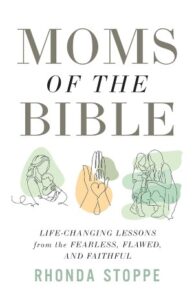
John: Yeah. And, uh, Rhonda Stoppe has been here before. We’re so glad to have her back in the studio today. She’s an author and speaker, a mentor, a podcast host, and we’re gonna be hearing about a book she wrote called Moms of the Bible: Life Changing Lessons from the Fearless, Flawed, and Faithful. And of course, we have copies of that for you here at the ministry.
Jim: Rhonda, great to have you back with us here at Focus on the Family.
Rhonda: Thanks. Always good to be back with you guys.
Jim: Yeah, it’s so much fun to see you. And, you know, Moms of the Bible, great theme, you know, one of those ones that we haven’t thought about really. And you start with Rahab. (laughs) I mean, Rahab is known for, you know, being a prostitute, maybe twisting the truth, not being a godly woman, but God does honor her. How does He do that?
Rhonda: Well, she was a shady lady with fearless faith.
Jim: Wow.
Rhonda: And I love knowing that about Rahab. And what is interesting is, you know, women deal with shame. And I mean, even as I say that, I’m thinking of shameful things in my own past that I’m like, “Ugh.” It just-
Jim: Do you deal with shame or you load yourself up with it?
John: Mm-hmm.
Rhonda: You ignore it, try to make it go away, try not think about it. I think what is even harder is women who were believers and made shameful choices and then repented and come back to a place of obedience to the Lord. I feel like that shame beats up Christian moms in a way that maybe someone who had a shameful past, came to Christ and moved forward, doesn’t have to deal with that same struggle.
Jim: Oh, interesting. Yeah.
Rhonda: They should have known better. I was raised better. Uh, you know, I, I was raised in, in the church, I went to Christian schools, all those things, and I still made these choices. So this chapter is about a shameful woman who God drew.
Jim: Mm.
Rhonda: And what I love about her story, the spies come in, right? She lives in Jericho, and if you don’t know your Bible history, oh my goodness, read this, it’s so good. The spies come in, they’re checking out the land, and she lives on the wall. And you know what? She was a prostitute. And so that was like the, you know, best place for you to live because men could come and go as they please. And, and so they snuck into her house and she hid them. And then the, uh, the magistrates come to her house, say, “Hey, we heard they were here.” And she lies.
And she says, “Oh, you know, they, if you go now, you’ll be able to catch them.” And the point of that story is, uh, so many things. Number one, God had already been preparing Rahab’s heart to meet Him through these faithful witnesses, these spies. Because what she says, and I love it, she says to them, “We already heard about your God. We heard from when you guys came out of Egypt, we heard that He parted the Red Sea. Did not our hearts tremble within us? We know the God of Israel is the God of heaven and earth.” I have to stop there because I’m an evangelist at heart.
Jim: Uh-huh.
Rhonda: And the gospel message is what sets us free from shame. It’s what breaks those, those shameful, uh, burdens that we place on ourselves. And sometimes we meet someone like a Rahab and we think, oh, she wouldn’t even want to know about Jesus, but you don’t know that the Holy Spirit might have been keeping her up at night, whispering to her heart, “There must be more.”
Jim: Yeah.
Rhonda: Whispering to her heart, “Is there a way to break free from these choices I’ve made, this shame that I have?” And as these spies stepped into her life, this woman, this shady woman knew that’s the hope. And then they said, “Okay, let us down, put a chord,” all that thing. I’m skipping the story. If you haven’t read it, you’re gonna have to go back and read it. But then she says, “Can my family be saved too?”
Jim: Mm.
Rhonda: And in that, when someone genuinely gives their life and heart to Yahweh, to God in salvation, repentance, the first act is to say, “I’m gonna tell somebody.” I think of the woman at the well. Jesus needed to go through Samaria to find her.
Jim: Mm.
Rhonda: And where was she? In the heat of the day getting water at the well. Not when the other women were going early in the morning or later in the evening when it would’ve been more comfortable. Her shame was like, “I would rather bake in the Middle Eastern sun than bake under the stairs and gossip of those women.” And Jesus needed to go find her. And then when she realizes He is the Messiah, what is the first thing she does? Leaves her pots, runs back into the city, and she says, “I found the Messiah,” and this is what was the most important thing to her. “He told me everything I’ve ever done, all the shameful things. And He came after me anyway.”
Jim: Mm.
Rhonda: Mom, if you’re listening and you have a shameful past, God’s coming after you. And it’s Satan wants to keep us stuck in our shame so that we don’t proclaim boldly the gospel, but you have the hope and you have the word of life to someone that God just might be wanting to send you to set free from that shame.
Jim: And I just, uh, Rhonda, I just wanna punch the point you made that the Lord, there’s nobody, we as Christians limit what we believe the Lord can do in terms of salvation, like, “There’s no way that person’s coming to the Lord.” Just put the application of politics over that-
Rhonda: Yeah.
Jim: … and you think that way. So that should kind of catch our attention that nobody is beyond the reach of God. And, uh, that, that story is a good reminder to the point that it even appears in the Word of God, then it’s in the genealogy of Jesus, Rahab.
Rhonda: Mm-hmm.
Jim: That God wasn’t embarrassed by her. I mean, of course, that activity is not condoned. That’s not the point, but that a person’s heart who changes toward God, I don’t think there’s much that He will not forgive you for, right?
Rhonda: Right. Yeah.
Jim: Blasphemy says it’s the only thing. So just a good reminder for people to press toward God.
Rhonda: Yeah. And He promises to take our sins as far as east is from the west.
Jim: Yeah.
Rhonda: He doesn’t say north from south because north meets south. East, you can travel all day long and it never meets west. And when God says, “I take… Though my sins are as scarlet, I’ll wash you whiter than snow,” and then Rahab, who was a Gentile woman who marries, and then later she becomes in the heritage with Boaz-
John: Mm-hmm.
Rhonda: … who ends up marrying a Moabite woman, and that’s in the lineage of David. So it’s just her legacy carries on.
Jim: You know, uh, this isn’t part of what you described, but what’s interesting with the Bible, and people need to know this, it fits right here. God’s not using perfect people.
Rhonda: Mm.
Jim: There are no perfect people. Jesus was the only one.
Rhonda: Mm-hmm.
Jim: And the Bible, to your great observation, is full of people that are not perfect.
Rhonda: Right.
Jim: And you name a lot of them in this, uh, in this mom observation. Let’s move to the next one. Uh, I think it’s Jochebed. So what happened with Jochebed? Who is she and what was her story?
Rhonda: Jochebed was fearless. The Bible talks about she lived in a time when the Jews had moved into Egypt and that Pharaoh that had passed away and another pharaoh who did not know Joseph rose up and all these Jews are taking over Egypt so they suppress them and they become their slaves. And then there’s so many of them that they’re telling the midwives, “Kill the baby boys,” and the midwives don’t do it. And that Puah, and I can’t remember the other one’s name, those midwives, you know, they’re, “Oh, the Hebrew women, they just have their babies so fast.” I, my first labor was 52 hours of labor with no pain meds, thank you very much.
Jim: She’s pointing to her husband in the audience. (laughs)
Rhonda: And, and they’re saying they preserve these babies. And I think of the women who are advocates for pro-life. And I just spoke at one in Sacramento and it was the alternatives pregnancy center and it was just packed with women that are so passionate about saving the unborn.
Jim: Yeah.
Rhonda: That’s what these women did. And God blessed them for that and gave them their own families. But the Bible says that Jochebed saw that Moses was a beautiful baby and she hid him for about three months. Now, in that time, if she had been found out, she would have been put to death. That baby would have been put to death. She courageously, fearlessly hid that baby ’til she could hide him no more. And then somehow God put into her heart the plan, like, “Okay, Lord, what do I do?” And all of a sudden she’s putting pitch in a basket and lining it so it would float in the water and she walks down to the Nile and she puts that baby in the ba- oh, three months old, smelling his little head for one more time, kissing him, praying over him for one more time, and then putting that sweet baby in the basket and then letting go of the basket and trusting God’s plan. When God did not give Jochebed charts and graphs, “Trust me, I got this,” right? How many times as moms do we have to let go of our baby?”
Jim: Mm-hmm.
Rhonda: Some moms that are listening, you may be in a marriage where the father of your child is not in the home, he’s not a godly father, and you have to let that child go to visitation. The hardest thing is to drop them off and drive away and just pray for the Lord’s protection. Miriam, the daughter, followed her mom, which you can only imagine, you know, she’s like, “Mom, what are you doing?” Lets go of the basket, and then Miriam exercises the same fearless faith that she saw in her mother to stay behind and watch to see where that basket ends up and to watch and see Pharaoh’s daughter and she comes out. I, I picture her coming out of the reeds and saying, “Hey, I know somebody that could nurse that baby for you.”
John: Right. Yeah.
Rhonda: And of course, that was God’s plan all along. And so Jochebed got to nurse her very own child for however many years. They say three to four years was culturally how long. And it’s interesting because that’s such an important season in our children’s lives to pour into them. And I can only imagine Jochebed nursing that baby, singing songs to him of deliverance, songs of Yahweh and imprinting on him a love for her God, even in the short season she had him.
Jim: You know, so often we concentrate on the, I would say the masculine aspects of scripture, you know, David and courage and, you know, warrior. It’s really interesting to hear you talk about the women and particularly the moms of the Bible because we don’t explore that very much. But what amazing stories like the one you just shared. Uh, why do you believe moms need to parent with urgency, which is part of what you say in the book? And I think your son, Tony, this was in part an example that you had with your son, Tony.
Rhonda: Well, there’s an urgency that we all need to realize. And I, my kids are all grown. I have 15 grandchildren. Yes, best season of my life.
Jim: (laughs) Go, go.
Rhonda: Yeah, so much fun. Uh, but when you are raising your kids, you’re in survival mode. And I start out this book and I say, I remember going to bed at night and just saying, “I’ll be a better mom tomorrow.”
Jim: Mm. Now, where was that coming from? I mean, that thought everyday.
Rhonda: Losing your temper, not playing with them, not enjoying them.
Jim: Mm.
Rhonda: Just there’s a lot of work involved. You’re literally wiping boogers and bums all day long.
Jim: And then it’s the guilt of that feeling.
Rhonda: And, and then you feel like you’re so tired and, and they spill something and you get irritated, and tomorrow, I’m gonna be that fun mom. I’m gonna be a better mom tomorrow. And I know when I, I have a message I share that’s called I’ll Be A Better Mom Tomorrow. And it resonates with moms because we all wanna do better and we beat ourselves up and we’re gonna try harder. And there is an urgency, but the urgency comes in knowing the, the Lord has given us a short season to live genuinely our love for Christ, not just to homeschool them. I schooled some of my kids. It’s the hardest job on planet earth, I’m pretty sure. Uh, but sometimes it’s just not pounding into them all of the religiosity, but living in a way that’s genuinely loving God with all of our heart, soul, mind, and strength. That is the light that draws our kids to our Savior. And that Jesus said as protos, the priority of life is to love God with all of our being. And then what flows out of that is to love our neighbor as ourself. It’s not us trying harder to love our kids better, us loving the Lord by washing our mind with the water of the Word, by, uh, memorizing scripture, by fellowshipping with others. So the urgency in Tony’s story, he didn’t come to our family ’til he was 15 years old. Steve was his youth pastor, and he came to Christ, he was in a very troubled home, and he just became our son.
Jim: Ah.
Rhonda: And I know you have a similar story. Uh, when you, uh, Steve was a youth pastor for 18 years, we meet a lot of kids that were troubled and we never took one of them into our home, but Tony was definitely supposed to be ours. And in that very short time, we wanted to show him… He had come to Christ, we wanted to discipline him in truth, but we wanted to show him what genuine faith lived out in a family looked like. So it was a very short season. But I just got back from their house. They live in Hawaii. I just got back visiting them, and I’m watching him raise his family in truth, finding a good fellowship for his kids to go to church, uh, raising them in the nurture and admonition of the Lord. It was a very short season, but it was genuine and it was purposeful.
Jim: Yeah. That’s a great story, Rhonda.
John: Yeah. Rhonda Stoppe is our guest today on Focus on the Family with Jim Daly. And, uh, Rhonda’s sharing her perspectives and the, really the results of her searching out the scripture for this great book, Moms of the Bible. We’ve got that, uh, here for you. We also have a great resource for anyone raising children. Uh, the program is designed for zero to 18. So if you’re parenting in that space or maybe you’ve got grandkids, uh, sign up for our Age and Stage e-newsletter. It’s gonna offer you a, a deep dive into where your child is at and then drip irrigation throughout the year with a weekly newsletter full of great insights about where you’re at in the journey of raising this child. Uh, all those resources and more are available at FocusontheFamily.com/broadcast. And Rhonda, I love how you’ve taken a look at the whole of scripture and you’ve already shared, uh, Rahab who we don’t know much about her mothering journey. You also share some, like, negative examples, some people to avoid. So you said that, uh, Herodias, um, was a, an example of bad mothering that we want to-
Jim: (laughs).
John: … Not, not follow up on.
Jim: Bad mama.
John: What was her story?
Jim: (laughs).
Rhonda: Oh, Herodias was a flawed mom in scripture. And why do I say that? Because if you know her story, because people are like, “Wait a minute, I don’t remember Herodias being in the Bible. Where is she?” Well, she’s the woman who hated John the Baptist so much that when her daughter, Salome, danced before the King Herod, and he’s applauding and everyone’s cheering and she’s holding that final pose of her dance, my grandkids do ballet, and I can just see them on stage during their dance recital and holding that pose and the applause, and then the king says, “That was so good. I want to bless you with anything you want, up to half my kingdom.”
Jim: (laughs) Uh, yeah.
Rhonda: Okay. Maybe it’s a-
Jim: Seems a little irrational, but okay.
Rhonda: Maybe it… Yeah. It, what a gift, right?
Jim: Yeah.
Rhonda: Instead of saying, “Okay, I’ll take a new chariot. I want a new palace. I want some pretty dresses.” Instead of saying that, she decides to run to mama and say, “Mom, what do you think I should ask for?” What kind of a mom says, “Oh, ask for John the Baptist’s head on a platter.”
Jim: Yeah.
Rhonda: Her daughter had this wonderful opportunity, and because of Herodias’ anger, bitterness, resentment toward John the Baptist who had questioned her integrity, Herodias’ integrity, because she had left Philip to marry Philip’s brother, Herod, she was looking for a way to get him killed. And Herod didn’t want to kill him because he was afraid of the people. But in public, in front of everyone, he had to keep his promise. And so Herodias took the opportunity and basically stole an opportunity from her daughter in order to act out her vengeance upon John the Baptist.
Jim: Huh.
Rhonda: And the daughter, wanting to please her mother, runs to Herod and goes, “I want his head on a platter.” And then they bring it to her and she carries a gruesome bloody head to her mom. What kind of a mom does that? What kind of a daughter is so, what, fearful of her mom’s wrath or just so wanting to please her mother at any cost? That’s a flawed mom.
Jim: Mm-hmm.
Rhonda: I mean, that’s, that’s a problem, right?
Jim: Yeah.
Rhonda: And so some of us have been raised with Herodias. Some of us have had those flawed mom experiences. And so this whole chapter talks about what do we do? Uh, in the story in this chapter, I share, I was speaking at a woman’s conference and I was talking about forgiveness and I was talking about the power of forgiveness, how we can be set free from even a mom who has not been the best mom in our lives. And a woman came up to me afterward and she wanted to talk and she shared her story. And basically the story, I won’t tell the whole thing, it’s in the book, but she said, “My mom made me get an abortion when I was 15.”
John: Mm.
Rhonda: And the, it went badly. She no longer could have children ever.
Jim: Oh.
Rhonda: They did a full hysterectomy. She was so angry and resentful toward her mother for ruining her life and her mother was long dead and gone. And she said, “How can I forgive someone who’s dead?” And I was able to explain to her that this woman, even from the grave, has a hold on you-
Jim: Yeah.
Rhonda: … because love and hatred both tie us to a person. And so her unforgiveness was still tying herself to a Herodias-type mother. So this whole chapter’s talking about the freedom that we can have when we can forgive a flawed mother, or even if we ourselves have been a flawed mom. Maybe you’ve been a mom who has asked your daughter to have an abortion and now you regret it. There’s freedom in the forgiveness in, in Christ.
Jim: Yeah. Oh, it’s powerful.
John: Well, that’s a really profound, uh, application from, uh, as you put it, a very flawed mom. Another one of the bad moms that you identified, uh, Rhonda, is the wife of Lot, and many of us know that story from the Old Testament, but what’s the story and what was her, uh, negative example, if you will?
Rhonda: Oh, boy, Lot. (laughs) Abraham, Abram was his uncle, and he journeyed with Abram and became, you know, he was his nephew, but he was like a son to him. And he ends up moving to the city of Sodom where there is all kinds of awful things going on. And he marries a woman who basically is an idolater, who basically loves the treasures of this life more than anything. The angels come and they say, “We’re gonna destroy this city. Get out.” And they have to literally snatch them by the arm to say, “Let’s go.” Uh, we had our, the fires in California, everything was burning around our ranch, everything was burning. Our, it burned right up to our house. We had to that fast decide what was important, get it and get out. And they didn’t wanna go. And when they finally left, God said, “Don’t look back.” And of course, Mrs. Lot looked back. I gotta say, I would’ve looked back. Her sons-in-law were there, either her daughters who were married to those sons-in-law were there, or some historians believe that the daughters were only engaged, and those were the daughters that fled with them. Either way, her affections were behind her. But this is the point of that. Looking back is not what made her an idolater. It revealed her heart.
Jim: Mm.
Rhonda: Remember, God requires undivided devotion. He wants us to treasure Him more than all the treasures of this life. And in her moment of looking back, it reflected her idolatry. That story is a flawed mom who raised her daughters in this culture, and so much so that when they were out, they decided to have incestuous relationships with their dad so that they could reproduce with their dad. That’s how distorted the thinking was of their children. And for all of us, we all are raised in this kind of a culture right now. I mean, I’m raising my kids in California, so I get it. We have to be intentional to love God more than the treasures of this life and live with an urgency that the King of Kings is coming and the urgency… Why do we bring that up? Because Jesus brought it up. When He said, “I’m coming back,” He talked about, in the days of Sodom, how they were eating and drinking. We, the urgency is the King is coming and we wanna live in light of that urgency.
Jim: You know, Rhonda, that whole story is interesting because they’re living in a culture in Sodom and Gomorrah that’s very anti-biblical, very anti-God. How do you help your children understand the environment we’re in, how to live in this world, but not become part of this world?
Rhonda: Yeah.
Jim: But how do we as Christian parents show loving kindness and maybe not allow our kids to do things all their friends are doing?
Rhonda: Yeah, that’s a good question.
Jim: (laughs).
Rhonda: Very carefully. (laughs)
Jim: Yeah.
Rhonda: Uh, we were-
Jim: Without alienating your children.
Rhonda: Yes. Right. And-
Jim: You know, because, “You’re the worst mom.”
Rhonda: Yeah.
Jim: “You’re horrible.”
Rhonda: And we can be so fear-driven-
Jim: Yep.
Rhonda: … that we wanna put them in a safe bubble, but we’re not trying to raise perfect kids. We’re trying to raise kids who know how to recover from their mistakes.
Jim: Right.
Rhonda: We wanna raise children who know, you are gonna fall, and this is how you repent. It’s two steps forward, one step back. It’s the normal Christian life, and it’s exhausting, but so worth it.
Jim: Yeah. Uh, right here at the end, let me ask you about Esther, because you included Esther, and we’re gonna continue tomorrow if you can hang with us, and we’ll go through some more moms of the Bible. Esther wasn’t a mom as far as we know, but you included Esther. Maybe she’s the mother of the nation. Of course, she, uh, kind of was forced into being part of, I think it was King Xerxes’ harem of wives, and she was picked as the most beautiful of the women. But explain why you included Esther and what was her story?
Rhonda: Well, first of all, I love Esther. And when I was 10 years old at a youth camp, the youth… If you think your youth ministry, your children’s ministry doesn’t impact lives, it does. I heard him every night at the campfire tell the story of Esther, and I was like, “That’s a normal woman. I wanna be her.” I needed someone to relate to in scripture-
Jim: Huh.
Rhonda: … a hero of the faith for my female heart. And Esther, if I die, I die. And what I love about Esther’s story is here she is married to Xerxes, who was not an amazing guy. He was horrible. If you study him historically-
Jim: Pagan.
Rhonda: … he was just murderous. He was an awful king. So Esther was encouraged by Mordecai to go back to the king. Maybe you’re there for such a time as this.
John: Mm.
Rhonda: Older mentors are so important. The name of my podcast is Old Ladies Know Stuff-
John: (laughs).
Rhonda: … because I know old ladies poured into my life and that’s my heart for this season of my life in my senior years. But the point of her story is this, who was watching all of that? Well, Artaxerxes, the son of Xerxes, was raised in the same palace. He would’ve known Esther’s story. She was his stepmom. If you’re a stepmom, listen up. Those kids that are yelling in your face, “You’re not my mom. I don’t have to do my homework.” You live out your faith. You love Jesus. You love them with Christ’s love. And Artaxerxes one day was so influenced by his stepmom that he had a heart to let Nehemiah go back and build the wall-
John: Mm-hmm.
Rhonda: … and let them go back into the land. Uh, stepmom-ing is a difficult season and it is a unique calling, but it can have an influence far beyond anything you can imagine.
John: Mm.
Jim: Uh, that is so good. And again, what a great perspective, uh, to think of moms of the Bible, or stepmoms in this case of the Bible and, uh, what they can teach us. I hope you’ve enjoyed this. Uh, let’s come back next time, Rhonda, and keep the discussion going because there’s more moms to talk about, and what a great legacy of motherhood you’ve shared with us today. I think moms everywhere will benefit from this wonderful book, Moms of the Bible: Life Changing Lessons from the Fearless, Flawed and Faithful. I love that title. Make a monthly pledge of any amount to the ministry, and we’ll send you a copy of the book as our way of saying thank you for partnering with us to support and strengthen families, especially moms in this case.
John: Yeah, and we welcome that monthly pledge. Of course, if you’re not in the spot to make that monthly commitment, a generous one-time, uh, donation also helps a great deal. Either way, call us. Our number’s 800, the letter A, and the word FAMILY. 800-232-6459, or donate and request your copy of Moms of the Bible at FocusontheFamily.com/broadcast. And another terrific resource we have for you is our Age and Stage program. Uh, you tell us the age of your child and we’ll send weekly updates through email, uh, addressing their specific needs and development. It’s personalized, it’s designed to strengthen your child’s faith and your relationship with them.
Jim: And here’s the thing, John, over the past 12 months, get this, Focus on the Family resources have equipped more than 360,000 moms and dads to improve their parenting skills, build closer family bonds, and provide important faith lessons for their children. That is great. That’s a big number. That’s what your support of Focus on the Family pays for. So donate today, um, so that you can help join us in ministry.
John: Yeah. And again, our number is 800, the letter A, and the word FAMILY, or stop by FocusontheFamily.com/broadcast. And thanks for joining us today for Focus on the Family with Jim Daly. I’m John Fuller inviting you back as we once again help you and your family thrive in Christ.
Day Two:
Rhonda Stoppe: Mom, if you’re listening and you have a shameful past, God’s coming after you. And it’s Satan wants to keep us stuck in our shame so that we don’t proclaim boldly the gospel, but you have the hope and you have the word of life to someone that God just might be wanting to send you to set free from that shame.
John Fuller: That’s Rhonda offering insights from God’s Word about how you can step up and be a more effective, godly mom. And what a great message for this Mother’s Day weekend. Rhonda’s back with us today on Focus on the Family with Jim Daly. I’m John Fuller, and we’re so glad you’ve joined us.
Jim Daly: John, it was a great conversation last time. I’m so looking forward to this one. You know, you think about it, especially as guys, we’re going, “Okay, Moms of the Bible.” But there was great content in there. And you know, so often I mentioned it last time. We’re looking at David and his courage and all the kind of masculine attributes of people in the scripture. It was actually really insightful to hear about a woman’s heart in the Bible-
John: Mm-hmm.
Jim: … how she was doing what she was doing for the reason she was doing it, whether it was Rahab, whom we started with right on through to Esther, who wasn’t a mom, but she was a stepmom. And, you know, the application of that was eye-opening for me.
John: There was good application, certainly.
Jim: If you didn’t listen last time, get the download through our website or get the app for your phone and you can listen to every program and podcasts that we do here at Focus on the Family. It was just really good. And, uh, I’m looking forward to getting back into it today.
John: Mm, I am as well, Jim. And, uh, the title of the book that we’re really covering here is, uh, written by Rhonda, Moms of the Bible: Life-Changing Lessons from the Fearless, Flawed, and Faithful. Give us a call. We’ll tell you more. 800, the letter A, and the word FAMILY.
Jim: Let me just say, how many of you moms feel fearless, flawed, and faithful? (laughs)
John: Mm.
Jim: I mean, that, that’s a great draw just to pull you into the program. Rhonda, good to have you back.
Rhonda: Yes. And moms on one any given day feel fearless, flawed, and faithful as the-
Jim: Depends on the hour. (laughs)
Rhonda: … rise and the fall of our hormones, of the hour-
Jim: Yeah.
Rhonda: … of how much sleep we didn’t get the night before.
Jim: You know, I appreciate that. And again, I appreciate the fact that g- we’re made in God’s image, and we really do concentrate on the masculine attributes of God. We don’t concentrate on the feminine attributes of God, and He’s all of it, right? He presents as the Father, but we’re made in His image. You’re made in His image. So how you think as a woman is as much a part of God as how I think as a man, right? I don’t know. Uh, maybe I’m the only one having this epiphany.
John: (laughs)
Jim: But it just, to me, it seems like pop. You know that it matters.
Rhonda: Yes.
Jim: How your wife thinks-
Rhonda: Yeah.
Jim: … matters, how your mom thinks matters. So, explain that to us. How does a mom think? (laughs)
John: (laughs)
Rhonda: A thousand things going a thousand-
Jim: (laughs)
Rhonda: … different directions all at once.
Jim: That’s the best part of mom.
Rhonda: And doing a thousand … It’s funny because now that I’m a grandmother of 15 mostly very small grandchildren-
Jim: Now you’re bragging. (laughs)
Rhonda: And no, well, and they’ll say, “Nana this, and Nana, can you do that, and Nana, can you this?” ‘Cause, like, Steve and I will watch all of them. And now that he’s retired, he’s really been amazing how much we’ve watched all the grandkids. But they’ll say, “Nana, I need this …” And I’m like, “Nana does one thing at a time. I know your mommy does a lot. Nana used to do a lot at, but when you get to be this age and you’re not in that frame of mind, you gotta wait in line. I’ll do one thing at a time.” But when you’re in the thick of it, you are literally trying to keep all those things going and you do sometimes just feel overwhelmed.
I can remember being hormonal. I had postpartum depression after my third child. I did not know what it was. I didn’t identify it because I’d never had it. The women in my family had dealt with hormonal imbalances, but I never had. In fact, I wrote an article for Focus on the Family, and I think it’s called “When Hormonal Imbalances Affect Your Marriage.” So, look that up.
Jim: Yeah. Quick.
Rhonda: (laughs)
John: We’ll link over to that article.
Rhonda: But-
Jim: No, it’s good.
Rhonda: But, but it’s a very difficult season because especially when you’re a believer and you’re like, “I need to take every thought captive to the obedience of Christ. I need to handle these emotions and I’m having a really difficult time.” And then trying to pretend like you’re okay. Go to church on Sunday, everything’s fine, smile. The kids know you just yelled at everybody in the car before you got into church. So when we are hormonal, when we are, you know, we snap, we lose it, going back to that child, or if you, you know, undid yourself on dad in the car and the kids listened, going back and asking their forgiveness, you want forgiving people raise forgiving people. So, when you teach your children how to ask forgiveness and to forgive, that becomes a normal part of their life too.
Uh, you know, the world changers in history that God used, their first teachers were not theologians, they were moms-
Jim: Mm.
Rhonda: … in history for their time-
Jim: Yeah.
Rhonda: … who got handpicked for those children. And that’s who we are and we are flawed and we are fearful, but God can make us fearless.
Jim: You know, and that’s a good thing to emphasize. I think as parents, um, we tend to want to project perfection. We’re people of faith, God expects or we expect that God expects, if I could say it that way, this ability to live a perfect life, you’re never gonna see that. What you’re gonna see is we’re sinners saved by grace, and to be able to get that into the hearts of our children is so important, but it comes with communication. You have to be able to express that. “I’m not a perfect father. I’m sorry I did this or that,” or “a perfect mom, and I’m sorry how I responded.” It, it feels like we’re jumping hurdles to have to express all that, and we become a little lazy, I guess, in our communication, but man, is it critical so your kids have a context for who we are so they don’t walk away and say, “You’re just a hypocrite, or my mom and dad were hypocrites.” Start with, “Yeah, that’s why we need Jesus.” (laughs)
Rhonda: Right.
Jim: ‘Cause we’re all hypocrites. We can’t live a perfect life. I mean, but you gotta communicate it, is my point.
Rhonda: And it’s relational.
Jim: Yeah.
Rhonda: And it knits their hearts to our hearts. So, like, I can remember growing up, my parents were both teenagers, and they just learned on the fly. I mean, and they weren’t believers until later.
Jim: They were teenagers when they had you.
Rhonda: When they-
Jim: Okay.
Rhonda: … had me and got married.
Jim: ‘Cause I’m sure they were both teenagers at some point. (laughs)
Rhonda: Yes. There you go. Thank you. Yes. They were teen- they were, my mom was a teen mom and my-
Jim: Okay.
Rhonda: … parents were teenagers. But what I needed was real examples from real people that were gonna help me in my journey of motherhood and, and marriage. And, you know, Steve was in youth ministry. I looked around at the teenagers in our youth department who had a good relationship with their parents.
Jim: Oh, that’s good.
Rhonda: That invited friends over to their house for all the things, and I was like, “I need to know what those ladies know. I want to be friends with those older women.” And like I mentioned in the last, uh, episode, old ladies know stuff. They are the ones that God calls in Titus 2 the older women to teach the younger. That’s the journey woman teaching the apprentice.
Jim: Yeah.
Rhonda: So, they invited me to a Bible study. I’m like, “I don’t need another Bible study. I just wanna be a better mom.” But what I realized when I went to that study, and I was the only young mom in there, these women were real and they were genuine and they talked about in scripture what we were studying, what they were at, in that moment being convicted of, and they shared from their successes and their failures. I can write a letter to my younger self. It does no one any good. But if I write it and give it to the next generation, which is what I attempted to do with the book, Moms of the Bible, now my stories, the stories of moms in the Bible, the stories of moms in history can mentor the next generation and it’s relational and it’s real. And when I watched these women have relationships with their kids and their kids wanted to follow the God of their mother because they had a relationship with her and they wanted the God she served, that impacted me more than a list of do’s and don’ts as a mom.
Jim: Yeah. You know, when we’re looking at the perfect mom and we’re saying there, there isn’t one, no one’s gonna be perfect, but actually there was one until the fall, Eve. And, uh, you know, here she is, a beautiful home, I’m assuming, and a loving husband and would walk in the garden with the Lord. It doesn’t get much better, right? There probably wasn’t … Well, there wasn’t sin in their lives at that point, but she and Adam gave that all up for some reason. What was your observation with the perfect wife and mother up until?
Rhonda: So, you know how when people say, “What do you think you’re God’s gift?” She was. (laughs)
Jim: Yeah, right.
Rhonda: She was God’s gift to Adam. She was perfect. She was beautiful. Uh, she didn’t worry about her image. She was made in the image of her God. She knew who she was, and yet one day she wanted a little bit more. Man, that brings tears to my eyes. That lie from Satan, “Just a little bit more, you’re missing something. This is something God’s withholding from you.” He caused her to question God’s goodness. And there are seasons in our lives, especially when we’re not content, because the Bible says godliness with contentment is great gain. Satan knows that. So, if he can steal away our contentment, he can wedge in where we start questioning God’s goodness. “This marriage isn’t what I had hoped it would be. I deserve better. This, uh, child that I have isn’t measuring up to my expectations. I need to press them harder because I’m a people pleaser, and I want people to think I’m a good mom, so I’m gonna make my kids measure up to my expectations so people will think well of me.”
Jim: Yeah, look out.
Rhonda: Right? People pleasing is not pleasing, and yet it’s so easy, especially in this social media world where everybody posts the most beautiful picture of their family. “Look what I made for dinner last night, and we’re all eating keto now, and I have an Etsy store, and I’m making little dresses out of pillowcases on my side hustle and look how perfectly dressed my kids are at church.” And you’re like, “My kids had Cheerios for dinner last night. I’m hanging on by a thread.” And we feel like they have something we don’t have. We don’t see the whole picture, but we get discontented. And that’s what Satan did with Eve, “Just a little bit more. See this fruit? Just a little bit more. Just to, just to touch it, just to nibble at it, just a taste of it.” And she bought Satan’s lie, and in it, the world just came crashing all around her.
And then she offered it to her husband who partook of it also. The Bible says Eve was deceived. Adam knew what he was doing and willingly ate of the fruit, but as wives, we can be so easily deceived by a little bit more that we press our husband, work, put in more hours. I want a nicer car. Uh, do this or do that. We can push our husbands toward something that maybe they wouldn’t pursue. Uh, in, in the book, I tell a story, um, after my first daughter was born. I left corporate America. We lived in San Francisco Bay Area. I was working, got dressed up for work every day, hair, makeup, the whole thing, and I became a stay-at-home mom. It was boring.
Jim: (laughs)
Rhonda: And lonely. I didn’t have social media back then, so we weren’t, like, on, you know, in contact with each other. And I was frumpy, and I felt unattractive, had some weight from the baby, uh, just didn’t, you know, my … Oh my goodness. My first daughter was a puker. She would puke on what, down your back, on your clothes. My laundry load was incredible, and I smelled like eau de puke all day long.
Jim: (laughs) Eau de puke.
Rhonda: But Sunday morning, I got dressed up for church. And it was like, I’m gonna wear my clothes, and I’m gonna do my hair, and I’m gonna do my makeup. And I would go to church like that was-
Jim: Altogether.
Rhonda: … social, like I felt like my old self, right? ‘Cause like motherhood, you kind of forget who you are. You lose yourself in that.
Jim: But that could be a good thing, can’t it?
Rhonda: It, once you figure out what, where you’re headed, but in the middle of it, you’re trying to wrestle, especially first-time moms, you’re trying to wrestle with, how does this merge?
Jim: Yeah.
Rhonda: So I went to church, and I was pretty well-dressed, and I felt like I was myself. And a man at church complimented my, you know, “You look pretty today.” And I’m like, “Oh, thank you.” And then the next Sunday, the man said, “Oh, you look so pretty today.” And I’m like, “Well, thank you.” The third Sunday, I was getting ready for church, putting on my hair and makeup, and this was in the 80s, so I’m talking about putting on your hair (laughs) and your makeup.
Jim: I remember the big hair.
Rhonda: And I thought to myself, “I wonder if so-and-so will tell me I look pretty today.” And it scared me. And I went out and I found Steve and I said, “Babe, I gotta tell you what I just thought.” And he’s like, “Are you telling me you have feelings for so-and-so?” I’m like, “Not at all, but I’m telling you I liked the compliment.” And so, I was making myself vulnerable to my husband and saying, “I need you to tell me when I’ve made the effort.” “I always think you look pretty, babe.” I’m like, “Maybe you do. I don’t feel pretty. I need you to tell me.” But that’s-
Jim: That’s good coaching.
Rhonda: Right. (laughs)
Jim: No, that’s good.
Rhonda: It is. But that’s where Satan gets a foothold in so many of our lives. It’s just a nibble.
Jim: Yeah.
Rhonda: I just enjoy the attention from that man at work who is complimenting me.
Jim: Well, it’s good coaching in that if we’re not doing what is needed, that helps. And don’t discount it. Uh, the fact that I had to say it kind of erases it. Don’t do that.
Rhonda: Right.
Jim: Just say, “I need a compliment here and there.”
Rhonda: Yeah.
Jim: “‘Cause it’s, you know, when others compliment me, it’s distracting.” That’s a good thing.
Rhonda: And when they forget, don’t give them the silent treatment-
Jim: (laughs)
Rhonda: … and they’re going, “What’s wrong?” And you’re like, “If you don’t know, I’m not gonna tell you.”
Jim: (laughs)
Rhonda: That doesn’t work. They are gonna forget. So, then you say, “I got a new dress. Do you like it?”
Jim: Yeah, looks great.
Rhonda: “How do I look today?” You coach them because the Bible says that men are to live with their wives according to knowledge, and you’re the coach. They, we don’t even know who we are every 28 days. How are they supposed to keep up?
Jim: (laughs) That’s a good-
Rhonda: We tell them what we need as we need it.
Jim: That’s a good point.
John: Uh, we’re talking with Rhonda today on Focus on the Family with Jim and, uh, she’s captured, uh, her insights in a book called Moms of the Bible. And we have that, of course, here at the ministry. I’ll also encourage you to sign up for our Age and Stage eNewsletter and, uh, there’s a whole program to help you, uh, more effectively show up as a mom and know what you’re getting into with your children as they, uh, grow up. So, uh, sign up for that today, get a copy of this book when you call 800, the letter A and the word FAMILY, or stop by focusonthefamily.com/broadcast.
Jim: Rhonda, one of the things that I found with Jean is the need for community. Uh, you know, sometimes, uh, people will describe, and I’m talking about people that know, social scientists. Men are kind of loners. You know, we certainly will go out and hang out with guys, but usually we’re doing something, we’re going to play golf. We don’t sit around and have just a cup of tea and talk about what’s going on in your life. It’s just not what we do. We got to be doing something so we can isolate very easily.
Women need community. They thrive in community. I love the fact that my wife has two girlfriends from kindergarten and they still get together and that’s amazing. Uh, I have one friendship from college (laughs) that I stay in touch with, but, you know, it’s just, that’s the epitome of what I’m talking about. Speak to the importance and, you know, Bible moms, but the importance of women and community and what you need, not just what you, uh, maybe want to do, but, but the need for a woman to be connected.
Rhonda: Well, let’s talk about Naomi. Naomi’s husband was like, “Babe, I got a great idea. We’re gonna leave our home among our people, among our community, and it’s, there’s a famine here. So, we’re gonna go to Moab ’cause it’s better there, and I can make a living there, and we’re gonna stay there for a while. We’ll come back, but we’re gonna go there for now.” And Naomi trusted her husband’s dream. “Okay, we’ll do it,” and pulled her away from her people.
Jim: Mm-hmm.
Rhonda: And put her in a community of idol worshipers who literally sacrificed babies on the altar and burn their babies to the God of Chemosh. How lonely for her.
Jim: Yeah.
Rhonda: And she had her two sons, and then her husband dies once they’re there. So, she doesn’t even have her companion, her best friend. And then her sons marry Moabite women, not Israelite women, which is what was the command for the Jews. And then she doesn’t even have that community with her Moabite daughters-in-law, but she’s there for them, and then her boys die. And in between that time, the daughters-in-law can’t conceive, so she deals with infertility. I understand infertility. I have eight grandchildren in heaven. And then finally, Naomi’s like, “That’s it. I’m going home. I gotta go back to my God. I gotta go back to my people.” And she says, “It’s time to go back to my community,” right?
Jim: Yeah.
Rhonda: And she goes back and she stops and she says to Ruth and Orpah, “Go back to your people. I have nothing for you where I’m going.” And Orpah’s like, “Peace out. I’m going back, going back to my God, going back to my family.” But Ruth says, “Mm-mm. Your God will be my God. Your people will be my people.” Think about what triggered Ruth to make such a covenant to God.
Jim: Mm-hmm.
Rhonda: She watched Naomi go through the most destitute, lonely, heart-wrenching experiences that a woman will ever walk through, and in those trials, she wanted to go back to her God and her people. And sometimes your trial’s not about you. Sometimes your children are watching you go through something that you never, ever dreamed you would have to endure, but that trial validates your testimony to them. And that trial is what brought Ruth to want to follow Naomi’s God.
Jim: It didn’t end there though, uh, because of course Ruth is being courted by Boaz and Naomi becomes kind of a very specific mentor to Ruth during that time. Describe that relationship and reaction, what was happening.
Rhonda: Well, she brought a Moabite woman first into a people of Israel who did not like the Moabite people, so she has to coach her how to live in that community without offending and, you know, go here, glean in this field, and the Lord so providentially puts Ruth right in the field where Boaz is. And Boaz sees her and he’s an older guy and he’s like, you know, protecting her and he’s her kinsman redeemer. And Naomi’s like, “Oh my word, he’s the one who can marry you and get all this, buy us back, all the things. I don’t have time to tell the whole story.” But Naomi walked her through all of that. Older women who have walked through the deepest sorrows of life, their value of their advice because they’ve lived through those trials, uh, we suffer sometimes, you know, it’s not for our own story, but it’s to help someone walk through their story.
Instead of just shaking your fist at God and saying, “If You love me, You would not have let this happen.” Sometimes our trial’s not about us. It validates our testimony to a watching world and especially to our children and our grandchildren.
Jim: Yeah. In Moms of the Bible, uh, you recognize unnamed moms. Um, every young man in the Bible has a mom, right? So, you talk about the mother of David. And we don’t know her name, but you believe she was a great mom. What gives you that conclusion? He was a crazy man. He’s out there fighting lions and bears at what? 11, 12? You sure she wasn’t a crazy mom?
Rhonda: She doesn’t get a shout-out in scripture.
Jim: (laughs)
Rhonda: I’m like, “Wait a minute, you’re David’s mama and we don’t know your name?” That to me blows me away. I can’t wait to meet her in heaven one day and introduce myself. The man after God’s own heart.
Uh, not long ago, Steve and I had gone to Hawaii where my son was still in the military. He was a fighter pilot in the Air Force, and we went on the base, and we were in the truck. I was sitting in the back, and Steve was in the front next to Tony and he cut, pulls into the military base and he shows his ID. And as soon as he shows his ID, he’s a lieutenant colonel, the young man, he wasn’t in uniform. The young man started saluting and all the things that they do, you know?
Jim: Yeah.
Rhonda: And I was in the back seat like-
Jim: Yeah.
Rhonda: … “I’m his mom, you know?”
Jim: (laughs)
Rhonda: No, nobody cares. Nobody cares.
Jim: Oh, you meant that back.
Rhonda: Mm-hmm.
Jim: I was thinking they put you in the back of the truck.
Rhonda: No.
Jim: What … (laughs)
Rhonda: In the back seat. It was a four … No. That would’ve been, that would’ve been not okay.
Jim: Okay, good. They put mom in the back seat.
Rhonda: In the back seat.
Jim: That’s good.
Rhonda: But the point of that is we raise our kids in a w- to send them out into the world. We launch them into the world. And for most of us, our names will never be known, and that’s okay. God calls us to live in the, uh, anonymity of motherhood and letting God be glorified in the, in the lives of our child. I think of in the Bible, I also talk about Moms of the Bible, Daniel, Shadrach, Meshach, and Abednego.
Jim: Yeah.
Rhonda: These boys were young, teenage boys, and they get taken into captivity, along with all of Israel, into the Babylonian captivity, and they’re chosen out to be special, attractive, smart, we’re gonna make you some advisors to the king, change your name, and we want you to eat the king’s food. And those four boys say, “Mm-mm, that’s not food that God allows us to eat.” I’m just thinking they’re piling on the bacon and all the thing.
Jim: (laughs)
Rhonda: And they’re like, “No, we’re not allowed to eat all that.” Everybody else ate it, but those four boys told the person in charge of them, “We’re not gonna eat that.” And he said, “No, you have to, because you’re not gonna put on weight, and if you don’t look good, I’m gonna look bad, and I’m gonna suffer the king’s wrath, so you gotta eat this food.” And they were like, “Give us an opportunity to just eat what we’re asking you to let us eat, and if we don’t look better at the end of that season, then, you know, we’ll talk about it, I guess.” And they were great. So, what gave those boys that courage to stand up when-
Jim: Yeah.
Rhonda: … all of the people in their generation that had been taken into captivity were going, “God doesn’t care about us. Why do we even wanna hold those standards? He let us come into Babylonian captivity.” Those four men stood up and said, “Nope, I would love to know who their moms were.”
Jim: Mm.
Rhonda: Because there was a foundation there, and I’m sure their dads poured into them also, but this is a book about moms of the Bible. I am not discounting the influence that dads have. My husband was an amazing father and, uh, grandfather, and I know the impact that fathers have. But those people were so strong that when Shadrach, Meshach, and Abednego later were like, “We will not bow. Even if you put us in the furnace, and even if we die, the Lord could rescue us, but even if He doesn’t, we will not bow.” Wow. What an influence someone had on their youthful years and on Daniel too, who became an advisor to so many of those, you know, the Babylonian king and the Persian king and just, who was their mom?
I don’t know. But one day, we’re gonna meet them in heaven, and we’re gonna celebrate the influence that they had not only in their generation, but in my generation because of the influence that their sons had in history.
Jim: It’s just, uh, it’s funny to humanize them that way. I’m thinking of what you said about meeting David’s mother and she goes, “Oy-
Rhonda: Oy. (laughs)
Jim: … he gave me so many ulcers out there in the wilderness. It was terrible.” (laughs)
Rhonda: Oy vey. Well, and he fought a lion and he fought a bear.
Jim: (laughs)
Rhonda: And I’m thinking, if my son came home and said, “Hey, dad, so cool today. I was taking care of the sheep, fought a lion, fought a bear.” I’d be like, “Awesome.” And then I’d tell my husband, “He don’t work for you no more.”
Jim: (laughs)
Rhonda: “Get somebody else.”
Jim: It’s funny to think outside of the box, as we say.
Rhonda: And yeah, because she wasn’t a helicopter mom-
Jim: Yeah.
Rhonda: … and didn’t rescue him from those battles.
Jim: He learned the skills.
Rhonda: God was using those to give him-
Jim: Mm-hmm.
Rhonda: … the courage to one day say to Saul, “I don’t need all your armor. God gave me victory over a lion and a bear, and I know He will give me victory over this giant.” Don’t rescue our kids. When God sends the trial, we get mad at God, we shake our fist. If You love my kid, trust the Lord has a process and He is refining them and us for a purpose that we don’t know anything about.
Jim: Rhonda, you have landed the helicopter, as we say right there, because that’s the best modern-day advice is, uh, encourage, teach, and then let your kids experience life so that they can honor the Lord. And that, that’s a good parenting job when you can do all of that. So, thank you for being with us. This has been great.
Rhonda: Thank you.
Jim: I’ve really enjoyed this.
Rhonda: I have too.
Jim: I wasn’t so sure coming in going, “Okay, Moms of the Bible.”
Rhonda: (laughs) Boring.
Jim: John and I have to connect somewhere.
Rhonda: (laughs)
Jim: But again, I just have love the insights, and it’s just really good.
Rhonda: That, that’s-
Jim: So, thank you for doing the mom thing.
Rhonda: I’m excited.
Jim: (laughs)
Rhonda: Uh, this is the last of the book. My heart is so filled with hope for the next generation when I consider the influence that you, moms, will have as you raise your children and nurture them in the Lord. The influence of unnamed mothers have shaped nations, inspired leaders, nurtured artists, motivated ordinary children to accomplish extraordinary things.
Jim: Mm.
Rhonda: Let’s go forth, arm in arm, moms, in our ministry of motherhood for His kingdom and for His glory.
Jim: Great place to end. Thank you for being with us, Rhonda.
Rhonda: Thank you.
Jim: This has been great.
Rhonda: Thank you.
John: And if you’re a mom or you’re married to a mom, we hope you’ll contact us to get a copy of Rhonda’s wonderful book, Moms of the Bible: Life-Changing Lessons from the Fearless, Flawed, and Faithful. And, uh, Jim, I tend to think that we can all learn from this content that Rhonda has shared on the show and also in her book. Uh, and so we, we all have room to be better parents, uh, make a monthly pledge or a one-time gift today. We’ll send Rhonda’s book to you as our way of saying thanks for joining the support team and to equip you to be stronger as a parent.
Jim: And let me mention, uh, your generosity to Focus on the Family is helping moms in powerful ways. A woman named Grace said this, uh, “Thank you for all you do. You’ve provided me with wisdom and hope along the path to becoming a woman and mother of three young children.” Kelly said, “You’ve helped me as a single mom raising kids on my own. I had so much to learn and so much that I didn’t realize until I heard your program. I’m so grateful.” And finally, I love this comment from Nancy. She said, “Focus on the Family has been faithful through the years to bring our family back to faith and hope in Jesus. We are grateful for your message of forgiveness and the Father’s love.”
John: Mm-hmm. God has been so good to work-
Jim: (laughs) Yes.
John: … through this ministry in such fantastic ways.
Jim: Yeah. And we want to invite you to join us in this work as well. Give to Focus on the Family today, a monthly pledge or a one-time gift, whatever you can afford, and we’ll continue to help moms and dads and families to thrive in Christ.
John: Donate today. Request Rhonda’s book when you stop by focusonthefamily.com/broadcast, or call 800, the letter A, and the word FAMILY. 800-232-6459.
By the way, on our website, we’re gonna link over to our new Mother’s Day podcast series called Mom’s Legacy of Love. Please share that with the moms in your life today.
And if you’re traveling this summer, anywhere near Colorado Springs, stop on by. We have a wonderful Welcome Center where you can learn about the ministry and God’s work here through Focus on the Family and a great play place based on Adventures In Odyssey for kids, and of course, our Whit’s End Soda Shoppe and a world-class bookstore. It’s all here waiting for you, so please come on by.
And on Monday, we’ll hear some heartfelt encouragement for husbands and wives.
Pastor Doug Fields: So, tension and conflict is not a sign, friends. It’s not a sign that your marriage is broken, it’s a sign your marriage is real.
John: Thanks for listening to Focus on the Family with Jim Daly. I’m John Fuller inviting you back as we once more help you and your family thrive in Christ.