




Preview:
Darby Strickland: I know when I was 10, I had to move from, um, Illinois to New Jersey, that was just devastating. Two different cultures, it was fifth grade, you know, that prepubescent.
John Fuller: Mm, yeah.
Darby: Everything about the move was really awful, right? And going back and thinking about how the Lord was so faithful to me, and then reiterating, be able to tell that story for my children. There was some really hard days.
John: Yeah.
Darby: But this is how the Lord showed up.
End of Preview
John: That’s Darby Strickland describing how change can affect children in some negative ways and what can we do about it as parents to help shepherd our kids through the inevitable changes of life? Well, that’s our topic today on Focus on the Family with Jim Daly. I’m John Fuller and we’re glad you’ve joined us.
Jim Daly: Uh, John, we all have different reactions to change. I think we understand that better as adults when you make a move or you go off to college or whatever you might do. Uh, there’s even times then when that change is impacting us. I mean, I remember going to college. I felt… In my sophomore year, I was really in a bad place. It was just-
John: Mm.
Jim: … you know, kind of funky. I didn’t feel like I was fitting in. I didn’t know if I was after the right major. My friendships weren’t that strong, you know? And you just get into this place. So you have to manage that. But for young children, that becomes far more difficult. And I’m so looking forward to talking with Darby today because this is important. We often, as adults, kind of look over those changes-
John: Mm-hmm.
Jim: … and miss the cuing that our kids are giving us that they’re struggling with a change of school, et cetera. And we need to be in tune with that.
John: We do. And Darby is positioned well to guide us through this topic. She’s a counselor and author, and she’s written a number of books about abuse and trauma. And, uh, she’s got some resources now about how change impacts children. We’ll hear more about those.
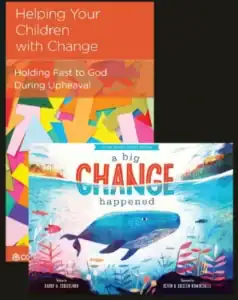
One is called Helping Your Children with Change: Holding Fast to God During Upheaval. It’s a very short, quick read. And it’s gonna equip you as a mom or a dad to really get a handle on this.
The other is a children’s book called A Big Change Happened: Helping Children Through Upheaval. It’s a delightful book, uh, wonderfully illustrated and really powerful for younger children. Learn more about Darby and her other books and these two in particular on our website.
Jim: Darby, welcome to Focus on the Family again. It’s so good to have you back.
Darby: Thank you.
Jim: Yeah. And you know, that’s so interesting, that setup there. I think you would agree with what I was saying in terms of managing change. It is so true that as adults, we get more proficient at it as we get older, more-
Darby: Absolutely.
Jim: … capable.
Darby: Yep.
Jim: But then we’re not seeing it through the eyes of a three-year-old, a five-year-old, right?
Darby: Correct. Yeah. They… Everything overwhelms them.
Jim: Right.
Darby: Yeah.
Jim: And it can be just that, overwhelming. And we’re gonna… We’ll say things like, “Yeah, okay, it’ll be okay.” And then we keep moving, but the kids are stuck.
Darby: Yeah.
Jim: They’re like, “What?” You had a funny opening, uh, that I wanted to capture because you said you had this, you know, kind of remorse to change when your minivan died.
Darby: Yes. (laughs)
Jim: Okay, so how are you attached to the minivan?
Darby: I know, right? I, you know?
Jim: (laughing)
Darby: I think it’s, I’m a – was a homeschooling mom, raising three kids, driving them everywhere in the minivan to go see my parents, trips to Florida, just really sentimental.
Jim: Yeah.
Darby: Um, I was speaking at a conference, came home. And it stopped working. So I left it at a dealer. My husband came, rescued me, praise the Lord.
Jim: (laughing)
Darby: Drove me home. And two days later, we get a call saying, you know, “It’s not worth repairing.”
Jim: (laughing).
John: Oh.
Darby: And it was-
Jim: That’s a well-used minivan.
John: Oh.
Darby: It was.
Jim: Yeah.
Darby: It was. Um, but just like the lump in my throat of, I’ll never see it again.
Jim: Yeah. All the memories.
Darby: All the memories. Yeah.
Jim: Hmm.
Darby: And it was…
Jim: (laughing).
Darby: (laughs) And I think what it was, was actually the realizing of the transition. My children don’t need a minivan anymore-
Jim: Ooh.
Darby: … right? Like-
Jim: So that was much deeper.
Darby: Yes. Yes.
John: Mm.
Jim: That was like a episodic thing, that-
Darby: Yes.
Jim: … “I’m not that mom anymore-”
Darby: Yeah.
Jim: … “I’m another type of mom,” right?
Darby: Yeah. My children are launching. The Lord is doing-
John: Yeah.
Darby: … great things, there’s exciting things happening, but my life is rapidly changing. And the death of the minivan just was this huge symbolic moment for me.
John: Mm.
Jim: Yeah. And it’s so, you know, kind of winsomely, uh, insightful about change. But on the more serious side explain how children, young children particularly, process change differently than adults. And how we have to be careful not to look past it.
Darby: Yeah. Well, young children don’t necessarily understand how the world works-
Jim: You think. (laughs).
Darby: … right? And so they rely heavily on routines.
Jim: Yeah.
Darby: And we see that when we put our kids to bed and they want the same book every night, right? You deviate from their routine, and they let you know about it-
Jim: Yes.
Darby: … right? And so change involves their routine being upset in a multitude of ways, if it’s a change of school or home or-
Jim: Mm.
Darby: … family dynamics, right? So they don’t have those routines. They don’t know what to expect. They can’t predict what’s coming next. And that really ties into their sense of safety. Sometimes it goes to the level of belonging. So, they come with, I think, a set of questions that when you’re three or five, they can’t articulate, but-
Jim: They feel it.
Darby: They feel it, right?
Jim: Yeah.
Darby: But they don’t, can’t necessarily talk about it in the way that you and I… Like I could talk about the minivan.
Jim: Right.
Darby: This was really hard and I could understand why I got really emotional.
Jim: Yeah. What’s the book, the children’s book about the moon? What, do you guys remember?
John: Yeah.
Darby: Goodnight Moon.
Jim: Goodnight Moon.
Darby: Yeah.
Jim: Oh my- I can’t believe I can’t remember the title because I read that thing a thousand times.
Darby: Yes, yes.
Jim: To where it got to the point where I was trying to hurry along.
Darby: Yes, yes.
Jim: You know how dads do, right? And we changed the words-
Darby: Mm-hmm.
Jim: … a little because we’re getting a little bored.
Darby: Yes.
Jim: But even that kind of, uh, redundancy-
Darby: Mm-hmm.
Jim: … gives a child a sense of security-
Darby: Yeah. Structure, right?
Jim: … right?
Darby: Yeah.
Jim: They know they got that story coming, and we would laugh at the same points. I mean, I would sit there and go, “My goodness,” you know, I had to change it from comb to something else-
Darby: Mm.
Jim: … from porridge to oatmeal-
Darby: Yes.
Jim: … just to keep the-
Darby: Just to keep… Yeah eng-
Jim: … boys engaged, you know? Keep, maybe keep me engaged.
Darby: Yeah.
John: Yeah. That might be it.
Jim: But there is… We think maybe too lightly about some of those things-
John: Mm.
Jim: … right? And I go back, and I think as a father, I was probably a little too flippant with some of that, not really capturing the importance of those things.
John: Mm.
Jim: Speak to that need for moms and dads to think about what you’re doing for that three-year-old, and what it’s providing them.
Darby: Yeah. I think we have to recognize that it’s our job to kind of shepherd them through it, right? Oftentimes when there’s a big change, there’s big things happening in our world. We’re packing up a house or maybe we’re going through a separation or we’re having to make a big decision about where we’re sending them to school, and we’re not sure. So we’re attending to all these multitude of details, and our children often get lost. And they’re often reaching out to us with you- maybe their behavior is regressing or maybe they’re asking us a thousand questions-
Jim: Yeah.
Darby: … right? And they’re very repetitive. And we’re looking at that as a behavior, right, when we’re forgetting to say, “Oh, what’s going on within them? Where do they need me to help shepherd them through this?”
Jim: And in that context, I mean, there’s gonna be degrees-
Darby: Mm-hmm.
Jim: … of change. I mean, there are lighter issues, but still being attentive as a parent is important because you don’t know where your child’s gonna get stuck.
Darby: Right.
Jim: I can remember, oh my goodness, I did not wanna go to school, kindergarten.
Darby: Mm-hmm.
Jim: Alhambra Elementary School for all those people in Southern California.
Darby: Mm-hmm.
Jim: We lived on 5th Street, right, a block away from the school. I don’t know why I had such a fear of going to school.
Darby: Mm-hmm.
Jim: I don’t know if it was I love my freedom, you know, or whatever it was. I like to play Batman and Superman-
Darby: Yeah.
Jim: … and fly around the neighborhood with towels with, uh-
Darby: (laughing).
John: (laughs) Clothes pins?
Jim: Clothes pins around it. I mean, I did. And then I had to go to school.
Darby: Yeah.
Jim: My mom literally had to drag me-
Darby: Mm-hmm.
Jim: … my heels in the ground.
Darby: Yeah.
Jim: And then I went to school that first day. Fell in love with my teacher-
Darby: Mm-hmm.
Jim: … Mrs. Smith. And I loved it, and then I didn’t wanna go home.
Darby: Right.
Jim: That very-
Darby: Well that was the imaginary to the concrete, right?
Jim: Right. That very-
Darby: Yeah. Yep. Yep.
Jim: That very afternoon-
Darby: Yeah. Yes.
Jim: … the same afternoon that mom drug me to school-
Darby: Yeah.
Jim: … I didn’t wanna leave school.
Darby: Right, right.
Jim: But even that, to be in tune-
Darby: Yes.
Jim: … that’s a fairly light degree. It was great. I’m sure my mom was over the moon that I enjoyed school-
Darby: And you adjusted.
Jim: … wanted to go back, and I adjusted in one day.
Darby: Yep. Yep. Yep.
Jim: But when we start looking at more difficult things-
Darby: Mm-hmm.
Jim: … big moves to a different city, different state, maybe divorce-
Darby: Yeah.
Jim: … if we can touch on that.
Darby: Absolutely.
Jim: Those are far more emotional and deeper-
Darby: Mm-hmm.
Jim: … wounds for children to figure out how does this change impact me?
Darby: Right. Well, a lot of those changes that you’re naming actually come with a sense of loss, right? And so we actually have to grieve things that we lose. Whether it’s my parents living together, the idea of what God ordained as a family is breaking up or, um, the- just, “My friend,” right?
Jim: Yeah.
Darby: “I’m… my friend group is gonna change.” So there’s so many losses and micro losses in some of those bigger changes.
Jim: You know, and the thing we do as adults, we’re moving.
Darby: Mm-hmm.
Jim: You know, and even in those big things.
Darby: Yep.
Jim: I’m afraid to say, we don’t stop and take account of what impact this is gonna be on us-
Darby: Right.
Jim: … let alone our children.
Darby: Right.
Jim: Think of divorce in that context.
Darby: Yes.
Jim: And we tend to say things as adults like, “Well, kids are resilient. They’ll manage it.”
Darby: Mm-hmm.
Jim: “They’ll be able to survive. They’ll get through it.” Uh, you can fill out all of those things that we say to rationalize our behavior.
Darby: Correct.
Jim: What we’re about to do.
Darby: Yes.
Jim: How do we get ahold of that as a parent to make sure emotionally our kids are safe?
Darby: Yeah. I think the first thing is actually to realize, it’s okay if your children are sad. There’s something in us parents that we wanna rush our children through the hard parts of life. We don’t wanna see them in pain. “I don’t wanna cause my children a little heartache, let alone a big one. So, I wanna, I don’t… It’s uncomfortable for me to see them sad.”
So, I think the response is we rush them through that. Instead of sitting with them in the sadness, being willing just to take the time and say, “This is really hard-”
Jim: Yeah.
Darby: … “but God can help us here. We are not without hope even in the hard.”
Jim: It’s kind of an indication of our unhealthiness as adults too-
Darby: Mm-hmm.
Jim: … right?
Darby: Uh, yes.
Jim: That we’re not slowing down.
Darby: Yes.
Jim: Think of Jesus when the disciples were like, “Keep those kids away.”
Darby: Yeah. Yeah. He lingered.
Jim: And Jesus going, “Hey, wait a minute.”
Darby: Yeah.
Jim: “Don’t get in between me and the kids.”
Darby: No.
Jim: “The kids are like the kingdom of heaven.”
Darby: Amen. Yeah.
Jim: I mean, there was something there that-
Darby: Yeah.
Jim: … I mean, even that, that Jesus was in a position, obviously, being the Son of God-
Darby: Mm-hmm.
Jim: … He knew it.
Darby: Yeah.
Jim: But He knew to slow down and to… I- what a day that must have been, to just sit around Jesus, sit at His lap-
Darby: Yeah.
Jim: … these little five, six, seven-year-olds.
Darby: Yeah.
Jim: Wouldn’t that be awesome?
Darby: It would. Just have someone delighting in you-
Jim: Yeah.
Darby: … being willing to be interrupted by your needs.
Jim: Yeah.
Darby: Yeah.
Jim: You know what’s interesting to think about, is that they wanted to see Him and talk to Him-
Darby: Yes.
Jim: … as a little child.
John: Mm-hmm.
Darby: Yes.
Jim: What was He portraying-
Darby: Yes.
Jim: … that was so attractive to the kids?
Darby: That was so inviting.
Jim: Yeah. So inviting.
Darby: Yeah, yeah.
Jim: That’s what I wanna peer into.
Darby: Yes.
Jim: I would love to have seen that. It’s, it’s without words. We don’t have that description.
Darby: Mm-mm.
Jim: But something, to get my attention when I was five, it would have had to have been pretty good.
Darby: Yes.
Jim: I mean, a smile or whatever it was, a good story.
Darby: Mm-hmm.
Jim: I mean, I don’t know, but something grabbed those kids that Jesus was doing or expressing, right?
Darby: And- well, we would have to assume it was some way that He was expressing love-
Jim: Yeah.
Darby: … whether towards them or others that just mesmerized them.
Jim: Warmth.
Darby: That’s… Yeah. Mm-hmm.
Jim: And, who knows? Yeah. Let me ask you, you’ve identified, uh, ways that children can react to change. Let’s start with preschoolers. Uh, how does change affect that age group? And this is good for the parents, uh, just before they’re in school. How does adopting or not adopting to change, uh-
Darby: Yeah. Oftentimes with preschools, you’ll see them being really clingy, right? They’re gonna want more of you, more of your time, right?
Jim: Hanging on mom’s leg.
Darby: They might take longer at bedtime, um, in all the ways-
John: Mm-hmm.
Darby: … that frustrate us. Also, there can be behavioral regressions, right? There can be returning- sucking on the thumb or-
John: Mm.
Darby: … um, yeah, bedwetting. So we just wanna be curious anytime our child has mastered a skill in their growing up and then they regress. It’s then it’s just asking, “Yeah, what’s going on with my child? Why am I seeing this behavior?”
Jim: I mean, hopefully Focus on the Family can be a place for that resource, but a parent being attentive-
Darby: Mm-hmm.
Jim: … um, you know, and I can… All of us as adults, we’re moving fast and it’s kinda like your minivan.
Darby: Mm-hmm.
Jim: I mean, maybe we shoulda changed the oil a little sooner.
Darby: (laughing).
Jim: But when it comes to parenting, those cues are important, and we can blow right by them.
Darby: Yeah.
Jim: Like the thumb sucking, for example. If your child hasn’t been doing that, all of a sudden-
Darby: Mm-hmm.
Jim: … is doing that. That could be a… It is a cue-
Darby: Yes.
Jim: … that something is occurring emotionally.
Darby: Yeah. And it’s just a great moment. And sometimes as a parent, we don’t know, right? And that’s what brings us to our knees, and we’re asking the Lord for help. We’re making time for our children. Like, that’s when you have to kind of slow down and spend an extra 20 minutes with them, eyeball-to-eyeball, get on the floor and be playing with them. Just try to draw out from them, “What’s going on? What you been thinking about?”
John: Mm-hmm.
Jim: Yeah that’s good.
John: Our guest today on Focus on the Family with Jim Daly is Darby Strickland. And, uh, she’s speaking out of her, uh, expertise about helping kids change. And she has two delightful, uh, resources that we wanna point you to. One is a small little booklet called Helping Your Children with Change: Holding Fast to God During Upheaval. It’s very quick read. It’s gonna give you some good things that grab onto as you’re, uh, moving through some changes with your child.
Another would be this children’s book that is, uh, wonderfully illustrated and has a really powerful message. A Big Change Happened: Helping Children Through Upheaval. We’ve got the books available for you. Find out more at our website.
And also sign up for our Age and Stage newsletters. This is a way for you to get kinda drip irrigation for your child. Sign up, you tell us their month and year of birth, we’ll send custom material to you every week. And, uh, around the time of their birthday, you’ll get kind of a deep dive of what to expect in the coming days and months.
So, that Age and Stage resource is something, Jim, you worked on for a long time to get, uh, pop in here, and it’s available to you now and it’s free. Sign up today. Uh, the link for the Age and Stage newsletter and these two books by Darby are right at focusonthefamily.com/broadcast.
Jim: Darby, that’s great for kind of that two to five-year-old-
Darby: Mm.
Jim: … perspective, and be engaged and notice behaviors and, you know, talk to people who know. And if you don’t have that resource, call us, we’ll help you with that. And give you some ideas on how to, uh, notice things and what they may mean and how to talk to your child about it. Of course, these books by Darby will help as well. 6 to 11, uh-
Darby: Mm.
Jim: … this gets a little more serious because they’re starting to form and kind of finalize their cognitive abilities.
Darby: Mm.
Jim: By 9, 10 years old, a child truly does understand the world they’re in, at a fairly adult level and can begin to think about things in adult ways. So, what kind of change management are you looking for there to help your child?
Darby: Yeah. Well, I really want them to take what’s going on in their heart and be able to understand that in light of what God’s doing in their life. And so, in that age group I’m spending more time narrating, and I might do that as a mom saying, “Yeah, we’re moving and I’m really nervous about who I’m gonna meet at this new church. And I’m praying that the Lord’s gonna bring me friends, and He’s gonna replenish some of these really important relationships.”
Jim: You’re saying that as mom and dad.
Darby: Yeah,
Jim: Yeah. That’s good.
Darby: Because I’m showcasing how I’m dependent upon the Lord.
Jim: Yeah.
John: Mm-hmm.
Darby: And it teaches them that.
Jim: Yeah. So, slow down to understand. Is this marriage or are we talking parenting?
John: (laughing).
Jim: Oh, I’m j- (laughs) I mean, that’s true in life, right?
Darby: All of it. All of it. Right. Yeah. Yeah.
Jim: I mean, how many of our spouses would say, “If you could just slow down and listen to me.”
Darby: “Or put the phone down and look at me.”
Jim: Okay.
Darby: Yeah. Yeah.
Jim: Fair enough-
Darby: Yeah.
Jim: … I think I made the point. The next in that category was-
Darby: Mm.
Jim: … be a safe space.
Darby: Mm-hmm.
Jim: I think, you know, Jean really helped me with this because I think my size, I’m a ex-football player guy.
Darby: Mm-hmm. Yeah.
Jim: I’m a fairly big guy. And Jean would say, when my boys were two and four, “When you’re talking to them or you’re, you know, verbally disciplining-”
Darby: Mm.
Jim: … “I think you should get down on your knees-”
Darby: Mm.
Jim: … “so you’re a little more eye-to-eye.”
Darby: Wise, yeah.
Jim: ‘Cause I think what she was observing that I didn’t see, was that they were kind of cowering because I was big and in their face-
Darby: Yeah.
Jim: … right? And she said, “I think they’re intimidated. They’re not really hearing you. So get down on your knees-“
Darby: Mm-hmm.
Jim: … “and speak to them.”
Darby: And s-
Jim: That was good coaching, wasn’t it?
Darby: Yeah. Very good coaching. Very wise woman.
Jim: She’s good. She’s so smart.
Darby: Yeah, yeah. But I think just even slowing down. As parents, we have lots of explanations and lots of words, and our children need us to speak slower-
Jim: Yeah.
Darby: … um, and convey more simple thoughts and to be reassuring. And as they’re sharing hard things, acknowledge them and really slowly with them.
Jim: You know, it’s so important because again, kids, especially the older the child at that 10, 11-year-old age, they get it.
Darby: Mm-hmm.
Jim: So they know when you do that, when you slow down and you listen, they feel like you hear them.
Darby: Mm-hmm.
Jim: I mean, they are mini-adults-
Darby: Yes.
Jim: … and they’re getting it.
Darby: Yeah.
Jim: Um, also affirm your love and protection.
Darby: Mm.
Jim: This is one I think it- and again, the gender stereotypes, I get that. I tend to talk in those terms, but dads can be very inadequate at this. You can learn it. I’ve tried to learn it, and I think I do much better than I used to, but that affirming your love and protection-
Darby: Mm.
Jim: … what does that sound like, both for a mom and a dad. Moms get it naturally, you guys. Ah!
Darby: Yeah, my husband’s quite good at it. He usually does it through play with the children.
Jim: Mm.
Darby: It’s like even if they’re, we’re talking about something hard, he might bring it up through a silly lyric or a movie-
Jim: Oh, I like that.
Darby: … a clip that he can remember. And he’s always just thinking about them, “How can I connect with them?” Men tend to do, women tend to speak, right?
Jim: Yeah.
Darby: And so for guys, I think even if maybe it’s taking a walk or when you’re out back throwing a ball around, having those conversations, again, because you’re focused on activity.
Jim: Yeah.
Darby: Women, I think it’s more natural to give the physical… They’re- tend to be more present with the physical affection and the words.
Jim: Yeah. Let me ask you this, uh, you know, this affirmation of your child, giving him the hug, those are really important things to do. It may not be your natural instinct, like-
Darby: Mm-hmm.
Jim: … love languages, right?
Darby: Right.
Jim: And again, it could be either the mom or the dad. And how do we overcome those things in us to make sure we’re giving our children maybe the things we didn’t possess-
Darby: Mm.
Jim: … and we’re repeating out of our family of origin, like the mom that didn’t get hugged a lot.
Darby: Yeah.
Jim: So she’s not a hugger and it feels cold-
Darby: Mm.
Jim: … because most people get a lot from their moms when it comes to physical encouragement, you know? Running your hand through the hair and brushing the back-
Darby: Back, yeah.
Jim: … with the nails and-
Darby: Yeah.
Jim: … but a mom that didn’t get that may not be giving it. And how do we say, “Okay. I didn’t get… I gotta remember to do that.” How do you do it?
Darby: I do. I think prayer’s really important there because it does probably come from a place of hurt-
Jim: Mm-hmm.
Darby: … right? If that is something that you are starved as, as a child, there’s a vulnerability to offering it. There’s probably emotion attached to giving hugs for-
Jim: Yeah.
Darby: … because you do long for them or they feel awkward to you and that feels bad. Um, so I think one, is just speaking to the Lord. It’s like, “Lord, I want to be, um, nurturing. And that might look different with me but help me understand why extending physical affection. Where have I been hurt by that?”
Jim: Yeah.
Darby: I think that’s important to pause there for yourself. But ways to do it, I mean, the beauty of the Google Calendar, sometimes people have to actually set reminders to ask themselves questions-
Jim: Mm.
Darby: … “Where have I showed my children physical affection this week?”
Jim: Um, when you look at that comforting of a child, um, you coach us to be consistent, to role-play scenarios, kind of like what you mentioned with your husband. You also mentioned “rejoice.” Tell me about that. That’s not gonna be in everybody’s vocabulary. What does that look like?
Darby: I think there’s something in scripture that’s just, we see it all the time. We probably don’t even notice it. But when the Lord is calling them to something hard or when His people are suffering, He’s constantly saying, “Remember, remember, remember. I am the Lord your God and I brought you out of Egypt,” right? And He’s saying, “Rem- you have to remember your faithfulness by remembering the hard, and how I’ve been faithful through the deliverance.”
Jim: Mm.
Darby: And so, I think that’s the rejoicing, it’s the recalling. “When was the last time we moved or see how God met us in this last change.”
Jim: yeah.
Darby: I know when I was 10, I had to move from, um, Illinois to New Jersey that was just devastating. Two different cultures. It was fifth grade. You know that prepubescent-
Jim: Mm. Yeah.
Darby: Yeah. Everything about the move was really awful, right? And going back and thinking about how the Lord was so faithful to me, and then reiterating, be able to tell that story for my children. There were some really hard days.
Jim: Yeah.
Darby: But this is how the Lord showed up, and that’s what I’m talking about, recalling the Lord’s faithfulness.
Jim: Well, and the other thing is, uh, those changes feel… It’s like the first pimple on your face.
Darby: Yes. (laughs).
Jim: It’s devastating. And it’s always gonna be there, and “Mom, look at me, look at what’s happened to me,” right?
Darby: Yes, yes.
Jim: And somehow you gotta convince that child, “It’ll be okay-“
Darby: Mm-hmm.
Jim: … “there will be a day where that’s gone-“
Darby: Mm-hmm.
Jim: … “and everything is okay.”
Darby: Yes.
Jim: Right?
Darby: Yeah, absolutely.
Jim: And, you know, that’s part of it.
John: Yeah.
Jim: Everything’s devastating, especially in the teen years-
John: Yes.
Darby: Yeah.
Jim: … right?
Darby: For sure.
Jim: “Nobody loves me-“
Darby: Yeah.
Jim: … “nobody cares about me.” All those good things.
Darby: Yes.
John: Mm-hmm. Well, Darby, um, there’s something that our viewers are seeing. Our listeners are unaware, but you brought a little stuffed blue whale-
Darby: Mm.
John: … that is on table.
Darby: Yes.
Jim: That’s a humpback.
John: Is it a humpback whale?
Jim: (laughing)
John: I don’t know my whales very well-
Darby: There you go.
John: But, uh, tell us why. And this leads into, I think, some of the, some of the things we’ve talked about with regard to your books.
Darby: Yeah. One thing I think is so important just for parents is to help make the Lord concrete, right? We’re dealing-
John: Mm-hmm.
Darby: … with hard realities. And so I wanted to write a children’s book that showcased the Lord’s care.
Jim: Mm-hmm.
Darby: So, this is little Mr. Wallace the Whale. Um, and he is our star in A Big Change Happened, and he faces a migration. He’s happy where he is. He’s in the warm seas, and he’s with all his whale friends.
Jim: Mm-hmm.
Darby: And his mom comes to him one day and says, “We have to move north. That’s where the food is. We all gotta go.” And Wallace has a ton of questions. You know, “Will I be okay? Will I like it there? I don’t even know what cold water is.” And his mom just patiently shepherds him through this migration. She explains to him that the Lord is always with you-
John: Mm-hmm.
Darby: … He always sees you. And the book is based on Psalm 139-
John: Yeah.
Darby: … which I think is just such great promises for children, right? ‘Cause it says explicitly, like, “The Lord sees you. He knows when you stand, when you sit-”
John: Mm.
Darby: … “He knows what’s in your heart before you even speak it. He surrounds you, right? There’s nowhere you can go.” So, you know, Wallace dives high. He dives down to the depths of the sea. And the- his mom is telling him, “The Lord is with you-”
John: Mm.
Darby: … “in your joys and with your sorrows.” And just the idea that God writes your story, right? And so these are just the truths from Psalm 139 that I think are-
John: yeah.
Darby: … comforting. They can be told in a playful way through the book, but they really help a child by anchoring them by knowing God’s presence, right? He’s the thing that isn’t changing, but He’s also with them in the change.
John: Mm-hmm.
Jim: Darby, in addition to Psalm 139, it’s so beautiful to think of our relationship with the Lord-
Darby: Mm-hmm.
Jim: … and our children’s relationship with the Lord. And describing God with His presence as big, loving, uh, that big hug that never ends.
Darby: Mm-hmm.
Jim: I mean, trying to get that into your seven, eight, nine-year-old’s mind and soul-
Darby: Yeah.
Jim: … about their relationship with the Lord, that’s so important, right?
Darby: It is. And I think scripture uses a metaphor of the Lord taking us by the hand, is a great, again, concrete place in scripture to show them that closeness. “The Lord is that close. He’s guiding. He’s tender. He’s right there.” The idea of, you know, “He’s before us. He’s behind us. He’s all around us.” Um, and just, yeah, helping your children understand that is, it’s-
Jim: And that can become… It, you know, it’s a little hard-
Darby: Mm-hmm.
Jim: Because you’re saying, you know, you don’t see the Lord-
Darby: Yeah.
Jim: … in that direct way. So, to get your children to understand those scriptures that help reinforce God’s presence-
Darby: Mm-hmm.
Jim: … His knowledge of you-
Darby: Mm-hmm.
Jim: … that He knit you together in your mother’s womb-
Darby: Mm-hmm.
Jim: … that’s a good one-
Darby: Yeah.
Jim: … you know, that “God knew me then?”
Darby: Yeah.
Jim: Yeah.
Darby: Yeah.
Jim: And you know, “He’s got a plan for you.” And those are all reassuring things, uh, for those children.
Darby: Yeah. And it’s just, even your story, I often say to my children, “Your story gets wrapped up in Jesus’s larger redemptive story.” So, sometimes it’s really important for us to talk about, “Where have we seen God this week? Where has He been on the move? Where haven’t you seen Him? Where do you need to ask Him for help?” And then over months just reflecting on that, of saying where over time we see it, right? “I’ll, I didn’t know, like, when I walked into ballet, I was so nervous. But mom, this girl introduced herself to me, and that was a moment I knew God saw me because I was really nervous walking in the door.”
Jim: Yeah, that’s so good.
Darby: Just having those little micro conversations.
Jim: Isn’t that good?
Darby: Yeah, it’s so fun.
Jim: Well, Darby, this has been so good. Thank you for being with us.
Darby: My pleasure.
Jim: Yeah. And what great resources that you’ve provided here. The children’s book, A Big Change Happened, and this booklet for parents, Helping Your Children with Change. You know, our goal is to equip moms and dads with resources just like this, so you can become the best parents you can be. The book and the booklet are available for a gift of any amount. But would you consider becoming a monthly partner with Focus on the Family? And what that means is joining our friends of Focus on the Family community. Jean and I support the ministry that way. You and Dena do as well.
John: Mm-hmm.
Jim: It’s a commitment to help strengthen families in Christ all year long by being a monthly giver.
John: Yeah, and evidence of how that works is, uh, shared through this woman who wrote us and said, “Focus on the Family has helped me become a strong mom, and given me the strength and courage to stand by my true convictions, even when that wasn’t the popular thing to do.” Your encouragement and advice just keeps coming every day.
Jim: That’s what happens when we work together. Parents feel empowered to raise healthy and happy kids and who love the Lord, which is most important. And that’s what your monthly pledge is paying for.
John: And this reminder for our friends that today is the last day that we’re offering a special incentive for those who can give $30 a month to the ministry.
Jim: That’s right. Uh, we’ve had fun with this campaign over the past several days, and this is the last day. If you make a pledge of $30 or more per month, we’ll say thank you by sending you a Focus on the Family branded coffee mug, just like the ones that we use here in the studio. And also, uh, one of John’s blends-
John: (laughing).
Jim: … it’s called Jim’s, but it’s really John. But it’s, uh, a 4-ounce packet of a special blend coffee that we use here in the studio as well.
John: Yeah. We’d love to hear from you today. Our number is 800, the letter A, and the word FAMILY, or donate online and check out those resources and that special coffee and mug at focusonthefamily.com/broadcast.
We hope you have a wonderful weekend with your family and with your church family as well. And join us on Monday for an important conversation about how we can share our faith with others.
Preview:
Ashley Holleman: At some point, we are gonna leave this Earth-
Jim: Right.
Ashley: … and be with Jesus. And if that’s, that’s gonna be an amazing, better life even than this, why not take us now? I mean, if God wants the very best for us, maybe it’s because He has really great things for us to do here.