




John Fuller: Imagine being in the woods and you’re all alone and there’s no moon, just shadows everywhere you look. And it’s totally dark. The night is filled with strange, unsettling sounds. You’ve got no light, no map, no trails to follow, and you are lost.
Well, I’m John Fuller, and today on Focus on the Family with Jim Daly, we’re gonna hear about the difficult journey that many married couples face when they have a child with special needs. Uh, it’s a lot like being lost and alone in the woods. But we have good news for you, a message of hope and help, and we’re so glad you’ve joined us.
Jim Daly: John, that’s a great way to describe it. I don’t think I need to say much more. I’m looking forward to the discussion. It’s not a lighthearted discussion. I mean, when you get married, you say the “I dos.” Of course, we have the wonderful vows that we give each other, you know, for better or worse, for richer or poor, in sickness or in health.
And then things begin to happen. You know, you stand at the altar that day and nothing can conquer the two of you. You’re going for it, you have your dreams, and this is what life is gonna look like, and it begins to unfold. And as any mature person knows who’s been married for a while, it doesn’t unfold the way you envision it in those early days.
John: Mm-hmm.
Jim: There’s different things that happen. And, uh, one of the things that can happen is when you have a child, uh, with special needs. There are many people that experience this, and we want to encourage you and help you, uh, do the best job you can do, especially as believers in Christ, and to be able to honor that life that God has placed in your care.
John: Mm-hmm.
Jim: And it’s a big challenge in people- It’s a burden too, but can we find the joy in the journey?
John: Yeah.
Jim: And we’re gonna talk about that today.
John: And we’re gonna talk specifically about marriage. And Jim, as you know, for 20 years now, we’ve had a special needs journey that has required hundreds- actually thousands of hours of meetings and appointments and therapists in the home to do, you know, occupational and physical therapy and paperwork. Oh my goodness. Pa- we have boxes of paperwork. All of that is just kind of under the surface of normal life.
Jim: Mm-hmm.
John: And so what we find is that we’re exhausted and emotionally just, it’s very difficult to come together. And so there have been times we’ve been pretty empty as a couple, which is why I’m glad we have our guests here today because they’re really dialed into this topic.
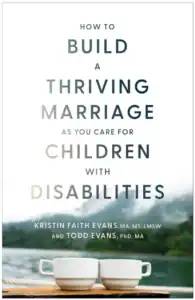
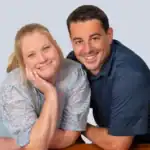
Dr. Todd and Kristin Evans join us and, uh, they’re authors and speakers and entrepreneurs and they’re parents who are passionate about helping other parents who have special needs kids. And Todd and Kristin have a book that really forms the basis for our conversation today, How to Build a Thriving Marriage as You Care for Children with Disabilities.
They also have a website that’s very helpful, disabilityparenting.com.
Jim: And let me say this, we’re gonna say it a couple of times, John. If you are in this situation or know somebody in this situation, let’s get this content to you and we’ll talk about that throughout the program today.
John: Mm-hmm.
Jim: Uh, let me say welcome to both of you. It’s good to have you here.
Kristin Evans: Thank you so much.
Todd Evans: Hi. Thanks so much, Jim.
Kristin: We’re excited to be here.
Jim: You describe in the book, uh, and this is the opening, which was so cleverly done by the team, but, uh, you describe this moment as a survival internship I think you’re doing in grad school.
Kristin: (Laughs).
Jim: Did you do this together?
Todd: Yes.
Jim: Oh, great.
Todd: We did it together.
Kristin: We, we…
Jim: It sounds like something every married couple should do.
Todd: (laughs). I know.
Kristin: It was a test-
Jim: I was reading, I was going-
Kristin: … on our marriage.
Jim: “This should be our marriage counseling effort.”
Kristin: It, it was-
Jim: But describe what happened and why you apply it to this parenting moment that you guys experienced. And we’ll get into more of the details of that, but what was this outdoors adventure all about?
Kristin: Well, it was part of our… the first thing you do in this graduate year-long internship. Um, and we were with a group of eight other people, but I think every couple thinking about getting married should do this actually-
Todd: Mm-hmm.
Kristin: … (laughs) um, because it was a test on our marriage. And basically we were dropped out in the middle of the wilderness with a topographical map, not a trail map, a compass, and… anything else?
Todd: Our backpacks.
Kristin: Uh, basic supplies. Basic supplies.
Todd: We knew they were gonna take us at some point. Um, so they had us pack bags and all that.
Kristin: Drop us off in the middle of the night and-
Todd: But pretty light. Uh, I mean, a full backpack and guide.
Jim: Okay. All right.
Kristin: For 14 days.
Todd: So, we, we-
Jim: 14 days. Okay.
Todd: So it was a 14-day experience.
Jim: Isn’t there some kind of a-
John: There’s a reality TV show about this.
Jim: A reality TV show like this, right? Survival.
Kristin: (laughs) Yeah.
Jim: Whatever. So-
Kristin: Yeah.
Jim: Okay. So tell me about the experience.
Todd: So yes, they just dropped us off, um, in the middle of the wilderness. So we had to kind of find our bearings, figure out where we were on the map. Um, we argued a lot as a group, as a couple-
Kristin: As a couple.
Todd: … as well. (laughs) And, um, trying to figure out, “No, we should go this way. No, the river is showing us this, you know, and let’s climb a tree and see what’s over there.” You know, all these ideas.
Jim: (laughs).
Kristin: We wandered in the same circle for a whole day.
Todd: Yeah. Or, or-
Jim: Wow.
Kristin: Yeah. Ended up without water one night. Uh, uh, you know, it was really fun.
Jim: Yeah.
Kristin: (laughs).
Todd: And, uh, we-
Jim: But it gave you some insights into communication, I’m sure, and you-
Kristin: Working together.
Jim: You saying at one point you were lost. I mean, that kind of summarizes the comparison, I think. Uh, parenting with special needs kids. You’re not expecting this. You’re kind of lost in an emotional fog, a spiritual fog. Describe that comparison now.
Kristin: Well, you just feel stressed. You know, fear and anxiety starts, you know, we didn’t find the water that, you know, one night. And you’re like, “Are we ever gonna get out of here? Are we…” And then you quickly learn, and similar to parenting a child with special needs, you have to quickly learn advanced skills, wilderness survival skills.
Jim: Mm.
Kristin: You’re isolated out there. Um-
Jim: Yeah.
Todd: The consequences of your choices are so much more, uh, impactful on your life that, you know, if you’re out in the wilderness, you know, there’s no water hose. There’s nowhere to go get water. If you don’t have water and you’re not prepared, right? You’re gonna suffer.
Jim: Right.
Todd: And potentially, you know, end up in a terrible place.
Jim: Yeah.
Todd: And I think the same kind of thing with our, um, family. The consequences of not being able to take care of our child literally every day was life or death decisions and how we chose to care, uh, for her and for what we did and the choices that we made. And that level of impact… that’s stressful. It wears on you.
Jim: You know, and I think for those of us that haven’t experienced that, it’s hard to imagine what that would feel like where you’ve got that constant pressure that you could lose your child if you’re not hypervigilant. And to be hypervigilant all the time wears you down in so many ways, relationally with each other and just running a business.
I mean, Todd, I can’t believe that you were running businesses at this time too, trying to keep that all moving. Your first date night though had some issues related to it. Am I right?
Kristin: (laughs) We didn’t wanna be in the same room with each other at that point.
Jim: Oh, well that’s an issue. (laughs).
Todd: (laughs).
John: (laughs).
Kristin: Let alone the same car, or-
Jim: Describe that. Okay. So why? I mean, here you guys are, you’re in the fight of your life trying to get it together. You’re, some people are thinking you’re back-to-back, you’re bound by your marriage covenant. You guys are Christian believers, and you couldn’t do a date night with each other.
Todd: That, what you described is really true the first three or four months. We had, we’re back-to-back, we had each other.
Kristin: We grieved together, which is a-
Todd: Um, we started grieving together the initial loss. Uh, but then as time grew on, this is a year and a half into our daughter being born after, at this point, we had the first date night. Um, by that time, we had almost drifted apart. Um, our grief journeys were different. Our needs were different, our focuses. Um, I became very fixated on just survival of the family and finances. Um, she was still caught up in a lot of the emotions and the grief and-
Kristin: Trauma.
Todd: … trauma of it all. Um, so at this point, we weren’t really together as a couple. We were functioning-
Jim: Yeah.
Todd: … as caregiving parents that were partners.
Kristin: Business partners.
Jim: Yeah.
Todd: Business partners.
Jim: Describe your daughter’s ailments, her difficulties, just to give a picture for the audience-
Todd: Mm-hmm.
Jim: … because we haven’t really touched on that.
Kristin: Mm-hmm.
Todd: Mm-hmm.
Jim: So what were you dealing with day to day? And describe that stress that it added to you.
Kristin: Um, she came home from the NICU after three months on four machines. And it was 24 hours, um, taking care of her before we finally got nursing help.
And she would go into medical emergencies at an instant and have to, you know, go back to the hospital. Sometimes I ended up, you know, at a hospital four hours away. And so he’s, you know, trying to work and so we’re separated. And then that chronic stress, you know, like you mentioned-
Jim: Yeah.
Kristin: … that begins to impact the marriage in so many ways.
Jim: And these were, I mean, she had difficulties with just about every organ.
Todd: Mm-hmm. Yeah, breathing. So we had breathing machine and oxygen.
Kristin: Feeding tube.
Todd: A feeding tube.
Jim: Feeding, yeah.
Kristin: Heart rate.
Todd: Uh, we had a little NICU bed I built that was at the foot of our bed.
Jim: Yeah.
Todd: So it was 24 hours. We know we couldn’t go away from our room.
Kristin: Looking at the machines, the heart rate and the-
Jim: Right. The beeper goes off.
Kristin: Yeah.
Todd: The beeps went off.
Jim: 2:00 in the morning. You got to-
Todd: Had to wake up every two hours-
Kristin: Oxygen, yeah.
Todd: … to change, um, her formula and things. So very little sleep (laughs).
Jim: Let me, let me take us back to date night.
Todd: Mm-hmm.
Jim: You don’t wanna be in the room together. Describe emotionally where you guys were at that that’s where the stress was coming out. I mean, all of us in marriage, we have things that happen. It may not be this circumstance, but something will happen where there’s stress, a loss of life in the family. Something is introduced into the-
Kristin: Uh-huh.
Jim: … marriage relationship that creates this stress. And so often the way we deal with that, I think, correct me if I’m wrong, but I think the way we deal with it is we feel safe with our partner.
Kristin: Mm-hmm.
Jim: And so, that stress comes at you, the spouse. And that’s the way the other spouse is dealing with it. It’s not helpful, obviously, and it’s hurtful and all those things. But just describe that in your own personal way, how that played out to where you didn’t wanna be in the room together.
Kristin: I would say very deep hurt and mistrust.
Todd: Yeah. She was looking to me for, for help and emotional support. Um, I was at my emotional threshold. I could not take anymore. So it’s kinda like I had my shield up just blocking everything she threw at me-
Jim: Mm-hmm.
Todd: … for emotional support and said-
Kristin: (laughs).
Todd: … “I can’t deal with this.”
Kristin: “Get over it.”
Todd: “Get over it. Deal with it on your own.”
Kristin: He literally said that (laughs).
Jim: Can I ask you as gently as possible though-
Todd: Mm-hmm.
Jim: I think for men, we don’t know where to go. And we want to be someone who can solve this for our wives.
Todd: Mm-hmm.
Jim: And we don’t have the answer, and we do not do well when we don’t have answers.
Todd: Absolutely.
Jim: It’s the way we’re wired.
Todd: Mm-hmm.
Jim: So we tend to pull back to withdraw. Is that what you did?
Todd: Withdrawal into work, into, um, caring for the family. Um, looking over the finances, the day-to-day medical stuff. You know, that was all I had. You know, it was the last bit of energy. No energy left over to care for my wife. And so, that built up resentment and hurt for her.
Kristin: But I, in the beginning, came to him and would say, “I’m just having a hard time. Um, and depression, you know, I’m having postpartum depression.” He’s like, “Oh, you don’t need help.” And then I’d say, “You know, it was a really sad day at the…” I did most of the doctor’s appointments-
Jim: Yeah.
Kristin: … where I got devastating news.
Jim: Right.
Kristin: You know, and I would come home and say, “The doctor’s just, they said she’d never walk, never talk, never get off the feeding tube.” And-
Jim: So you’re taking all this initial emotional trauma.
Todd: Mm-hmm.
Kristin: The grief and the trauma-
Jim: Yeah.
Kristin: … and the daily. And he said, “Okay, um, I’ve had a really stressful day. What do I need to do? Does she need medicines?” Solution-focused.
Jim: Right.
Kristin: Never heard me say, “I am sad. I am struggling.” And he’s like, “We just gotta, we gotta move on.”
Jim: Yeah.
Kristin: I felt so invalidated. Probably invalidated-
Jim: Mm.
Kristin: … is the word that, that the hurt-
Jim: So that first date night you guys were doing to try to get healthier, did you end in a better place? Or was it the second date night? How, how did your date night experience go from there on out?
Kristin: I’m talking too much. (laughs)
Jim: No, I mean, this is good. I appreciate, man, people are going, “Are you… You’re really digging in here, Jim.”
Kristin: Yeah.
Todd: Yeah.
Jim: But this is for all of us, you know?
Todd: Right. I think-
Kristin: We want people to know.
Jim: Yeah, and I so appreciate that.
Kristin: If you’re struggling, I’d be surprised if couples weren’t struggling, honestly.
Jim: Oh, of course.
Kristin: And we can feel so alone in that.
Todd: Even without children with disabilities.
Kristin: Yes.
Todd: It’s such a hard learning-
Jim: It’s obvious that you stayed married. So I’m just, that’s the question before we go to break here.
Todd: Mm-hmm.
Jim: Just, you know, when did you see that change in your heart when you said, “I’m looking forward to date night this week?”
Todd: It was probably the third or fourth date night, I guess. I can’t remember exactly which one. But we, um, said, “Let go do something together.” And-
Kristin: Eh, we just drove (laughs).
Todd: And said, “Let’s just drive. See where we end up.”
Jim: Right.
Todd: “Um, let’s just drive.” And she was kinda like, “Ah, I don’t really want to.” And I was like, “No, let’s just, let’s just go. And let’s, you know, see where we end up.”
So we started driving, um, heading out and ended up at a lake, uh, in our area that we were at about 25 minutes away or so. And just got out, you know, water and nature have always been a big part of us and our, um, time together and just stood there on the dock, just looking out over the water, just that reflective moment, um, a little bit. And just started talking and-
Jim: Wow, that’s a pretty picture though.
Kristin: Yeah, we actually talked.
Todd: That was the first time in a long time we’d really taken the space and the time to talk, um, and look at it and you know, you said, you know, you put your words.
Kristin: Um, I was, “I don’t wanna be married to you anymore.” I was that hurt.
Jim: Wow.
John: Wow. Yeah, this is Focus on the Family with Jim Daly, and our guests today are Kristin and Todd Evans. And, uh, they’re being very candid about the challenges in their marriage and kind of the emptiness and the aloneness they felt.
And here at Focus, we have great resources for you, including a counseling team that we’d be, uh, very honored to connect you with. Our number is 800, the letter A, and the word FAMILY. And you can also find resources like that counseling team and, uh, this book that the Evanses have written, How to Build a Thriving Marriage as You Care for Children with Disabilities, which obviously has application to most of us as married couples.
Get the details about these resources and more help for you and your family, uh, at our website. And that’s focusonthefamily.com/broadcast.
Jim: Kristin, that is a serious thing to say to your husband. “I don’t want to be married to you anymore.” I mean, that would catch my attention. Um, what was the next thing that happened? Todd, how did you respond to that?
Todd: Well, I mean, it… somewhat kind of already knew that she had those feelings because it’d been the distance between us for months and months now. Um, so it was just crushing to, to hear-
Jim: Yeah.
Todd: … you know, the person you love say those kind of words to you. Um, and-
Jim: Did you hear it as a cry for help or a, a verdict from a judge?
Todd: I wouldn’t say necessarily either one of those. It was more, um, of, “I have to do something.” Uh, again, somewhat, it wasn’t really the solutions focus of men like you were talking about earlier. This was, um, “I hear her deep soul. I hear her calling out saying this, and I’ve got to do something different. I want something to be different. And this has to be the moment that things change and change directions, um, tremendously.”
John: Mm-hmm.
Todd: And so, I just had to look at her and say, “Kristin, I’m not gonna give up on us. I haven’t given up on us. I wanna be married to you and we can do this. Let’s try to make this work.” Um-
Jim: And Kristin, I mean, in that moment, how did you feel? That- was that enough? Obviously you’re here, so we know the rest of the story, as Paul Harvey would say.
Kristin: (laughs).
Jim: But in that moment, there was no concreteness.
Kristin: Mm-hmm.
Jim: There was no- nothing guaranteed, obviously. So when Todd expressed that, how did your heart feel?
Kristin: I felt heard for the first time in a very long time. And I was amazed that he was going back to our wedding vows. And he said, “I don’t know how we’re gonna do this with God,” who, you know, was holding us together with that third strand, even though, you know, there’s no way we coulda kept ourselves together-
Jim: Yeah.
Kristin: … at our marriage at that point. And I felt like after all we’ve done, we’ve hurt each other, all we’ve gone through, all we’re going through, we don’t even know how we’re gonna survive, you know, my mental health, our daughter’s life, our marriage. And he’s saying, “I’m not giving up on us. I hear you.” He didn’t say, “I hear you.” That came later.
Jim: But you felt it.
Kristin: I felt it.
Jim: Yeah.
Kristin: And that recommitment of knowing what our vows meant now, knowing what faithfulness meant, that was the turning point.
Jim: Which was the way I read it, you know, a good foundation because it didn’t just get better. I mean, that’s part of it. And Kristin, you mentioned it, the mental health, uh, wall that you hit.
Kristin: Mm-hmm.
Jim: Begin, of course, because you’re standing in despair-
Kristin: Mm-hmm.
Jim: … and this grief that you’re describing and taking the brunt of things.
And Todd, I’m sure, doing the best you can, limited, you know, trying to keep all these plates spinning, your special needs daughter. And I… those of us that haven’t gone that, through that experience can only imagine the pressures you’re feeling. But there was a pretty dark day. Can you describe that?
Kristin: There was a dark half a year, and it just got to the point I just felt so alone and hopeless. Um, and, you know, we’re able to talk about this now, but at the time, this was part of the hurt.
You know, I told Todd, “I’m, I’m struggling. I think I need to go to counseling. I’m reliving the trauma of the pregnancy over and over.” And he was like, “We don’t have the money. We don’t have the time.” You know. And so that just built to the point, and we know that the sooner you seek treatment, the better, you know, your health outcomes.
Jim: The outcome tends to be.
Kristin: And so I got to the point, I just, the chronic stress, I couldn’t get out of bed. I wasn’t eating. Couldn’t care for my children. You know, my parents practically moved in. They were without their love and support this whole time.
Jim: Yeah.
Kristin: Um, and I just, I didn’t see another way out, and-
Jim: So what happened?
Kristin: I made a serious suicide attempt. Woke up in the ICU four days later. Todd found me. So he’s, you know, got that trauma of that.
He just happened to find me, um, you know, I was sleeping in and he felt like, “I just need to go up and check on her,” uh, and found me just in time. And the doctors couldn’t explain how I survived.
Jim: Yeah.
Kristin: It’s a medical miracle.
Jim: They, they said, “You should have died.”
Kristin: Mm-hmm.
Jim: Yeah.
Kristin: Yeah. So-
Jim: I mean, Todd, your life at that point, you had to be swirling. Like, I got the kid situation. I’ve got- you know, which is severe. I’ve got my wife now in the hospital ICU after attempting to take her life.
Todd: Mm-hmm.
Jim: I mean, what was going on for you?
Todd: I think I blocked a lot of that. (laughs) It was just a move forward-
Jim: Well, there is a warrior mentality.
Todd: Yeah.
Kristin: Yeah.
Todd: It’s a move forward. “I have to keep doing what I can, um, to help.” This was, of course, after that night on the lake. Um, so it, something important for couples to hear-
Kristin: Mm-hmm.
Todd: … is that it’s not an immediate fix. You just saying something isn’t gonna fix it immediately. It’s a long-term commitment to building back.
And so, all the pain and hurt that we’ve gone through in that previous year and a half, um, this was the result of it. Even though we were trying to build our marriage back, working together, it’s still days that are overwhelming. And so, it was just too much for her at that point, and she didn’t think she could take it.
You know, I feel guilt that I didn’t relieve enough maybe, or, “What could I do?” And definitely a hopelessness that there’s not much I can do, that we’re working on it. The fact she survived was just incredible, um, and amazing and in a godsend blessing, um, that that happened.
Jim: Yeah. Let me pull that aspect into this-
Todd: Mm-hmm.
Jim: … because we’ve talked a lot about what you’re going through as people living in a fallen world, right?
Todd: Mm-hmm.
Jim: So give me the spiritual dynamic of all this. I mean, there had to be some sense of guilt as well. Like, Jean would feel that to be honest.
Kristin: Mm-hmm.
Jim: I mean, if we’re… We did. We went through stuff that she had to go through. Uh, her two brothers committed suicide, you know, and I was the, “Let’s go.” And she’s going, “I can’t.”
So even though you’re describing this, this is what’s so interesting right now. You’re describing your context having a special needs child. Ours was this other thing. But the dynamics were quite similar in terms of despair.
Kristin: Mm-hmm.
Jim: “I’m not being heard.” “Pick up yourself. Let’s go.” I mean, wow, it’s given me some chills because I made similar mistakes to you, Todd.
Todd: Mm-hmm.
Jim: I wasn’t paying attention. I wasn’t listening. I was like, “Let’s go.” And so this is touching a lot of people in all of their marital ways.
Todd: Mm-hmm.
Jim: It doesn’t necessitate a special needs child-
Kristin: Mm-hmm.
Jim: … to fall into this situation. But let me ask you, where’s God in this? Did you have it out with Him saying, “Lord, why? Why did you put us here? Why is this happening to us? This was not part of the plan. Lord, we’re good, faithful people to you.”
Kristin: Mm-hmm.
Jim: I can fill in those blanks but tell me. Uh, and then the spiritual lessons that God taught you through this.
Kristin: You know, a lot of special… Well, a lot of people feel guilt and shame if they’re struggling in their faith. And now we know, I know now, that if you’re struggling in your faith, mental health, it’s so intertwined.
Jim: Mm-hmm.
Kristin: And my guilt, uh, and shame of, one, grieving, almost wishing things would have been different with our daughter. Maybe it would have been better if she hadn’t have survived, angry at God, which of course I couldn’t admit, you know? I felt like that was a sin.
And that was a lot of my problem. And a pastoral counselor and my therapist said, “You have got to talk to God. You have got to.” And I just couldn’t. Um-
Jim: Huh.
Kristin: And I just felt abandoned by God and watching our daughter suffer, you know, that was… And so, it just began to spiral in this depression and then the spiritual and the guilt and the shame. And it was all wrapped up for me.
Jim: Let me ask you because we’re, you know, we’re getting close to the end. And I just think, um, especially for moms that are listening, how did you close that gap? I mean, there wasn’t a miracle. Your daughter still struggles.
Kristin: Mm-hmm.
Jim: But you’re in a different place.
Kristin: Mm-hmm.
Jim: You can feel it. I hear it in your voice. How did you get there from that conversation with God to something, “Okay, Lord, I get it. And I’m gonna keep going and be spiritually confident in that.”
Kristin: Mm-hmm. I think it was coming to the point to say, “I don’t get it.”
Jim: Mm.
Kristin: I just, I ha- I was agonizing over I just can’t understand how God could be good and allow this to happen. And it was at the point, at a lake again, myself-
Jim: Yeah.
Kristin: … um, where I was just, “How could He create this much beauty and yet this suffering?” And I finally said, “I don’t understand. I don’t understand, God. But I’m choosing to trust you and I’m choosing to have faith.” And that was also a turning point for me to begin to live my day waking up expressing gratitude.
Jim: Yeah.
Kristin: Uh, and faith and choosing joy. It’s a choice. The choosing joy, choosing, um, to trust God and find our joy in Him.
John: Well, isn’t that a profound conclusion from our guest, Kristin Evans, uh, along with her husband, Todd. They’ve been with us today on Focus on the Family with Jim Daly.
And Todd and Kristin’s remarkable story is captured in their book. It’s called How to Build a Thriving Marriage as You Care for Children with Disabilities.
Jim: And John, I’m certain this discussion has touched many people today, including couples and families who are struggling to care for someone with special needs. If that describes you or someone you know, I hope you’ll contact us here at Focus on the Family. We wanna help in any way we can. So just get ahold of us.
We also touched on the topic of suicide, and I know there may be one or more people listening right now who feels alone and abandoned and hopeless like Kristin did. If so, uh, reach out for help today. Don’t stay alone. Uh, God wants to share His hope and love with you. And we have Christian counselors who are available to talk with you and pray with you about whatever challenges you may be facing.
John: We’re a phone call away. The number is 800, the letter A, and the word FAMILY. Just ask to speak with a counselor when you call. Or stop by focusonthefamily.com/broadcast for more details.
Jim: I’m so thankful for the donors who support Focus on the Family, allowing us to provide these resources like counseling and books and other things to help at your point of need.
And I’m inviting you to join this support team as well. Send a gift of any amount to Focus on the Family, and we’ll say thank you by putting a copy of Todd and Kristin’s book into your hands. Maybe you know a family who needs this kind of encouragement, or you can get a copy for your church library.
John: And Jim, the response we’re getting from families who have benefited from Focus resources generally is just amazing. A woman named Bridget has been listening for more than 35 years.
Jim: (laughs) That’s great.
John: And she said this. “Your guidance became light unto my feet since I came from a traumatic background. God is on the move through your ministry, planting seeds for His glory. My children and my grandchildren listen daily now too.”
Jim: That’s wonderful. Thank you, Bridget, for sharing that comment. That’s the kind of impact we can have together when you support this ministry today.
John: Yeah, we’d love to hear from you. Uh, call today, 800, the letter A, and the word FAMILY. Or you can donate at focusonthefamily.com/broadcast.
And if you’ve got a story or a comment about how Focus on the Family has impacted your life, like Bridget did, let us know. We have a link actually at our website, uh, in the show notes as well, where you can leave a message for Jim and the team, and we welcome your encouragement.
Coming up tomorrow, the incredible power of doing brain surgery on yourself.
Preview:
Dr. W. Lee Warren: That’s the bad news, so to speak, that your kids can be born with some burdens that they didn’t want, didn’t need to have. But the good news is we know now that you can reverse all those things. If you figure out how to manage things well in your life, all those genetic starting points can be switched off, and you can develop a more healthier and longer life.
End of Preview
John: Thanks for listening to Focus on the Family with Jim Daly. I’m John Fuller, inviting you back as we once more help you and your family thrive in Christ.