




Dr. Gary Chapman: But if you don’t speak the primary language, chances are, in my heart, I’m asking, “Are you really sincere?” I mean, “I’m sorry” is not enough for me.
John Fuller: Today on Focus on the Family with Jim Daly, Dr. Gary Chapman explains the importance of knowing the different apology languages. Thanks for joining us today. I’m John Fuller.
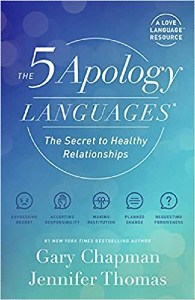
Jim Daly: Dr. Gary Chapman is well known for his bestselling books based on The 5 Love Languages. Now, in his research for this newer book on The 5 Apology Languages, Dr. Chapman and his co-author, Dr. Jennifer Thomas, did a two-year study asking thousands of people two questions. When you apologize to someone, what do you typically say? And number two, when someone apologizes to you, what would you want them to say? The answers fell into five categories, which became The 5 Apology Languages.
John: Yeah, it’s really, uh, great stuff and most of us tend to apologize the way our parents taught us to as we were fighting with siblings probably-
Jim: (laughs)
John: … uh, I certainly know that from experience.
Jim: That sounds like your experience.
John: (laughs) But this is a much more comprehensive, uh, approach that can make a difference in all of your relationships. And here now, Dr. Gary Chapman speaking at a Focus on the Family Marriage Conference just a few years ago.
Dr. Chapman: So the question is, what does a sincere apology look like? Let me share with you the five languages of apology. I wanna suggest you jot these down because chances are, you and your spouse have a different apology language and I’d like to help you make this whole process of apologizing and forgiving easier for both of you.
The first apology language is expressing regret, typically expressed in the words, “I’m sorry.” This is an emotional aspect of apologizing. It is trying to communicate to the other person how deeply you feel about what you did, how much you regret what you did or what you said. Now, let me just encourage you that if you use this language, “I’m sorry,” always tell them what you’re sorry for. “I’m sorry that I came home an hour and a half late. I know we’re late for the program now, and I know you don’t like to go in in the middle of things, and I really feel badly that I didn’t pay more attention to what I was doing and I came home an hour and a half late.” Tell them what you’re sorry for.
See, if you simply say the words, “I’m sorry,” your spouse may well be thinking, “You certainly are.” Is there anything else you’d like to say?
Audience: (laughing).
Dr. Chapman: So you tell them what you’re sorry for and you don’t put a “but” on the end of the statement. “I’m sorry that I lost my temper, but if you had not, then I would not…” And it ceases to be an apology and you are now blaming them for your losing your temper. So, eliminate the buts, okay? “I’m sorry.”
Let me give you a biblical example of this. Luke 15:21, the prodigal son. Listen to what he says, “I am no longer worthy to be called your son.” You feel the regret in that? You feel the emotion in that? “I’m no longer worthy to be called your son.” Psalm 51:17, David says, “A broken and contrite heart, oh God, you will not despise.” It’s regret. It’s recognizing that what you said or did has deeply hurt the other person and you are asking them to forgive you because you’re expressing regret, okay?
A second, uh, apology language is accepting responsibility. Accepting responsibility. “I was wrong, should not have done that, no excuse for that. I was wrong.” I remember years ago, before I was as spiritual as I am now. I said to my wife one morning, uh, “Honey, where’s my briefcase?” And she said, uh, “I haven’t seen it.” I said, “It was in there by the dresser, you must have moved it.” She said, “Gary, I haven’t seen your briefcase.” I said, “Karolyn, think. I know where it was. Who else would have moved it?” And I did about two more rounds of that. Every round, I got higher, higher, higher. I was screaming at my wife. Can you believe that? Me?
Audience: (laughing)
Dr. Chapman: Well, I got the kids in the car and I was nice to the kids. “Have a nice day, da, da, da, da, da, da.” But when I left the kids off at the school, I drove to my office feeling angry toward her. “Very idea. Lost my briefcase. Don’t even know what my schedule is today. Don’t know who I’m seeing, what I’m doing. Irresponsible woman.” And all this stuff run through my mind.
When I got to church, I didn’t walk in by the secretaries. I went in the back door to my office. Folks, when you have sinned, you don’t want to be around people. I went in the back door to my office, and I opened my door. And I went into my office, and there was my briefcase.
Audience: (laughing)
Dr. Chapman: Now I have an option. I can say to myself, “I’m not gonna let her know it was out here,” or I could practice what I preach. And if I had done the former, I obviously would not be using this for an illustration.
Audience: (laughing)
Dr. Chapman: So I called her. I said, “Hi, honey. I found my briefcase,” and I said to her, “I was wrong. I should not have talked to you the way I did.” I did not say it was easy to say I was wrong, I said, it’s right to say I was wrong. In fact, some of you have not said those words in a long, long, long time. Let’s just do a dry run, okay? Let’s just say it out loud together. I was wrong.
Audience: I was wrong.
Dr. Chapman: See, some of you had trouble even on a dry run.
Audience: (laughing)
Dr. Chapman: Accepting responsibility. Again, Luke 15:21, the prodigal said to his father, “I have sinned against heaven and against you.” 1 John 1:9, “If we confess our sins, God is faithful and just to forgive us our sins.” It’s acknowledging and agreeing with God and with our spouse that what we did was wrong.
Third apology language: making restitution, or offering to make restitution. “What can I do to make this right?” In the personal relationship, we’re simply offering to make things right. Now, I know you guys would never do this, but let’s say that you forget your anniversary. No card, no flowers, no dinner, no nothing. And so you’re sitting there at night and you look up and she’s crying and you say, “Honey, what’s wrong?” And she said, “I can’t believe you don’t know what’s wrong.” And then it dawns on you. I doubt that “I’m sorry” is gonna hack it.
Audience: (laughing)
Dr. Chapman: But chances are if you say to her, “Honey, what could I do to make this up to you? I know we can’t do anything today, it’s gone, but what can I do to make this up to you?” Chances are she’ll have an idea.
Biblical example of this is Zacchaeus. Remember what Zacchaeus said in Luke 19:8? “If I have cheated anyone, I’m gonna pay them back four times what I took from them.” That is making restitution. And when you offer to make restitution for some people, this is what they’re actually waiting for, to know that you are sincere is because you’re offering to make restitution.
A fourth language of apology is genuinely repenting or expressing the desire to change, which is what the word repentance means. Acts 2:38, Peter is preaching and he says, “Repent and be baptized every one of you in the name of Jesus Christ for the forgiveness of sins.” Repentance is a part of the whole apology, confession process.
So, this is saying to your spouse, “I know I did this last week, and here I have, I’ve done it again. I don’t want to keep doing this. Can you help me? Can we talk about this? Can we come up with a plan where I won’t do this again because I don’t like this about me. I don’t want this to be a part of our relationship. I don’t want to continue doing this.” It’s expressing the desire to change.
I was sharing this when we were writing the book with a couple in my office and, uh, the lady said, “Oh, I can give you a perfect example of that in our own marriage.” She said, “Several years ago, uh, our, our baby was about two years old and my husband, who is not typically an angry man, lost his temper with our two-year-old. And he picked up the two-year-old and started shaking our baby. And when he did, I grabbed the baby and said, ‘Don’t you treat our baby like that.’ And I ran into the bedroom just bawling with my baby.'”
And she said, “It was about 20 minutes later, he came in and said to me, ‘Honey, I am so sorry. I cannot believe I did that. I don’t ever want to do that again. Can we talk? Can you help me? I don’t ever want to lose my temper like that again.’” And she said, “We sat there and talked and came up with a very simple plan that if he ever saw himself about to lose it with our child, he would simply say to me, ‘Honey, I’ve got to take a walk. Will you take over? I’m getting hot.’” She said that was seven years ago. He has never done anything like that since then. She said, “He’s taken a few walks through the years, but he’s never done that again.” You see, he expressed the desire to change, they got a plan, and he followed the plan and he never did it again. And she said, “I forgave him because I really believe that he was sincere and he really did want to, uh, never do that again.”
Number five is requesting forgiveness. “Can you find it in your heart to forgive me?” David did this in Psalm 51:2. Listen to what he said to God. “Blot out my transgressions, wash away all my iniquity, and cleanse me from my sin.” Three different ways he asked God to forgive him, but he’s requesting forgiveness. Now, some of you have never even thought of this because your mother never taught you this one at all to actually say, “Will you forgive me?” And consequently, you probably have never said those words.
What’s very interesting, when Dr. Thomas and I were writing this book together, she shared this concept with her mother and her mother said, “Oh, I can give you a perfect example of that last one.” She said, “I have a friend at work, we’ve been work colleagues for 15 years,” and she said, “I consider us to be good friends.” And she said, “I noticed that, uh, my friend was rather cold toward me. And so I said to her one day at a break time, ‘Uh, is everything all right between us?'” And she said, “My friend said to me, ‘You know what I don’t like about you? You don’t ever apologize.'”
And she said, “What do you mean?” And she said, “You remember the other day when you did da, da, da, da, da, da?” And she said, “Yes, I remember that, but I told you I was sorry.” And she said, “I know, but you never asked me to forgive you.” And her mother said, “Well, then let me ask you to forgive because I value our friendship.” And she said, “My friend said, ‘Sure, I’ll forgive you.'” You see, it’s not that she was having a hard time forgiving, it’s in her mind her mother had never asked for forgiveness, and that was her apology language.
So what I’m suggesting is this: that each of us has a primary apology language. One of these five speaks more deeply to us emotionally than the others. Now, we would appreciate any of these, but if you don’t speak the primary language, chances are, in my heart, I’m asking, “Are you really sincere?” I mean “I’m sorry” is not enough for me, or whatever you’re saying is not enough for m- are you s- I don’t know if you’re really s- We may not say that, but inside we’re thinking, “Are you really sincere?”
So let me give you three ways to discover your own primary apology language. One, here’s the first question. When I apologize, if, if you apologize, when I apologize, what do I typically say or do? Because probably what you’re saying to others is what you really would like for them to say to you. So just look back on your apologies. What do you typically say when you apologize? And for some of you, I can guarantee you, it’s simply, “I’m sorry.” That’s all you’ve ever said because that’s all your mother ever taught you. You never knew there was anything else to say.
John: You’re listening to Dr. Gary Chapman on Focus on the Family with Jim Daly. And if you’re taking notes, you can relax because you can find all the content and more in his book called The 5 Apology Languages. I will send that to you for a donation of any amount today. Uh, make that gift and we’ll include a free audio download of the entire presentation as well. Donate and request those at focusonthefamily.com/broadcast or when you call 800, the letter A, and the word FAMILY. Let’s return now to more from Dr. Gary Chapman.
Dr. Chapman: Now, second question. What hurts me most deeply about this situation? What hurts me most deeply? And if you say, “You know what really hurts me about this, is that they won’t admit that they’re wrong.” Then you’re identifying that your language is accepting responsibility. You’re waiting to hear them say, “I was wrong. I should not have done that. It was my fault.” So what hurts you most deeply? If you say, for example, “You know what really hurts me about this, is that my spouse never offers to do anything. It’s just like I’m supposed to forget it. They don’t ever try to do anything to make it up to me. It’s like I…” And, and they’re telling you that their, their apology language is, uh, doing something to make restitution.
Question number three. What could they say or do that would make it easier for me to forgive them? And your answer will tell you what your apology language is. So, what I’m suggesting is this. In a marriage, if you’ll discuss this concept and each of you discover your own apology language and share it with each other, you make it easier for your spouse to forgive you because now in their heart, they can see that you are sincere because you’re expressing your apology in their language.
Now, let’s turn to the forgiveness side of all of this because these must always go together if we’re gonna deal effectively with our failures. Not enough to apologize. There has to be forgiveness on the part of the one who was offended.
I wanna suggest to you that our model in forgiveness is God. Ephesians 4:32, many of you know this verse, “Be kind to one another, forgiving one another.” Now listen to this. “Just as in Christ, God forgave us.” God is our model. We’re to forgive each other in the same way that God forgives us. How does God forgive us? 1 John 1:9, the verse I quoted earlier, “If we confess our sins, God is faithful and just to forgive us our sins and to cleanse us from all unrighteousness.” What do we have to do to receive God’s forgiveness? Confess. To use our word, apologize to God. Confess our wrong to God and then God forgives us. That’s the same pattern on the human level. They come and make an apology to you and then you choose to forgive them.
Now, what is forgiveness? Because I think we have a lot of fuzzy thoughts about what forgiveness is. There are three Hebrew words and four Greek words in the Old and New Testament that are translated forgiveness in English. The most common concept of those words are to pardon or to take away. So, forgiveness is a godly response to an apology that our spouse or anyone else offers. It’s choosing mercy and grace over justice. It’s letting God be responsible for justice and we’re gonna show mercy and grace to our spouse.
Now, to help us remove some of the fuzziness of this, let me give you some statements on what forgiveness does not do because I think a lot of people condemn themselves and feel like they haven’t forgiven, but there’s some things that forgiveness does not do.
First of all, forgiveness does not destroy our memory. You probably have heard people say, “Well, if you haven’t forgotten it, you haven’t forgiven it.” That is not true. Everything that’s ever happened to us in our lives is recorded in the brain. And from time to time, those memories come back. And you can forgive a person and still remember what they did.
Secondly, forgiveness does not remove all of the painful emotions. When the memory comes back of what your spouse did, the pain comes back. What do you do with those memories and those emotions? You don’t deny them. You don’t say, “Oh, I shouldn’t be thinking this.” You take them to God and you say to God, “Lord, you know what I’m remembering and you know what I’m feeling again, but I thank you that’s forgiven. Now, help me to do something good today.” And you don’t allow the memories of the past and the pain from the past to mess up today. Look, this is the only day we have. The best thing we can do with past failures is to let them be history. Yes, it happened. Yes, it hurt. It still hurts when you remember it, but it’s forgiven. And now let’s do something good with today.
Third thing, forgiveness does not remove all the consequences of sin. Here’s a husband who leaves his wife and children and is gone for 10 years. And then somewhere along the line, he encounters God and he repents and he returns and confesses to his wife and to his children. They can forgive him, but it doesn’t bring back the 10 years that was lost. You see, forgiveness never removes all the consequences of sin.
Number four, forgiveness does not rebuild trust. I’ve had people say to me, “Well, you know, Dr. Chapman, I told my spouse that I’ve forgiven them, but I have to be honest with you, I don’t trust them.” And they’re feeling guilty because they don’t trust them. Well, forgiveness does not automatically restore trust. How did you lose trust? You lost trust because they were untrustworthy. How do you regain trust? By them being trustworthy. Certainly trust can be reborn, but forgiveness alone does not restore trust automatically.
And number five, forgiveness does not always result in reconciliation. Sometimes there’s, unfaithfulness in a marriage, there’s divorce in a marriage, and one of them remarries someone else. Well, even if there’s confession and even if there’s forgiveness, it’s not gonna reconcile that relationship. It does sometimes, uh, and many times open the door to reconciliation, but it doesn’t always equal reconciliation.
Having said that, I wanna ask the question. What if the person does not speak your apology language? They apologize but they don’t speak what, the language that touches your heart. Well, by nature, we’re going to question their sincerity. But by faith, I hope you’re going to choose to forgive them. And I hope, now that you understand that there’s more than one way to apologize, that when your spouse does apologize to you, even if they’re not speaking your language. I hope you’re gonna say in your heart, “You know, that’s what his mother taught him and he’s doing all he knows to do and I’m gonna forgive him.” We’re called upon to forgive.
Now, what if your spouse does not apologize? This is a question often raised when we talk about confession, apology, and forgiveness. What if they don’t apologize? What if they just act like it’s all right or they deny that they did wrong? Well, let me give you the biblical pattern and I just have time to outline it for you.
Number one, we lovingly confront them. We go to them in a loving way and we say to them, “You know, I share this with you because I value our relationship and I hope you understand what I’m trying to say,” and we lay it, lay it on the table how we feel about what they’ve done and how deeply it’s hurt us. We lovingly confront them. And in Matthew 18, Jesus said, “You confront them once, you confront them twice, you confront them three times.” You don’t give up on the first time and you’re hoping that you can be reconciled to them. You’re hoping that they will acknowledge and apologize and you can forgive them.
Number two, if they don’t apologize, what Jesus said in Matthew was, “You treat them as a pagan.” He didn’t say, “You forgive them anyway.” He said, “You treat them as a pagan.” And then in, uh, in 1 Peter 2, you have the example of Jesus releasing the people to God. Listen to what it Peter said about Jesus. “When they reviled him, he did not revile in return.” Now listen to this. “He,” Jesus, “committed Himself to the one who judges righteously.” He released the person to God. God is the judge. God is both just and God is both loving and God can take care of your spouse who is unrepentant. You don’t spend your lifetime trying to take revenge on them, you release the person to God.
Number three, we pray for them and stand ready to forgive them. If Jesus said, “You treat them as a pagan,” what do you do for pagans? You pray for pagans. You want to see them converted. And so you pray for your spouse who is unwilling to deal with their failure.
And then number four, and this is the ultimate in Christian response to a spouse that’s not repentant, we return good for evil. Romans 12, Jesus said, “Do not take revenge on the contrary. If your enemy is hungry, feed him. If he’s thirsty, give him something to drink. Do not be overcome by evil, but overcome evil with good.” You’re never gonna hear that outside the Christian framework. You return good for evil. And many, many times when we do this, we find that that person will come to a place of repentance and when they do, God forgives them. And when we do, we forgive them, and we can go on at that point.
Now what I’m saying is this: every single one of us here today has failed and will fail our spouse. You don’t have to be perfect to have a good marriage, but you do have to deal effectively with your failures.
John: Well, what a good spot to end this presentation from Dr. Gary Chapman on Focus on the Family with Jim Daly.
Jim: That is great stuff, John. And I really appreciated Gary’s final points there on how to deal with someone who refuses to apologize. And if that’s your spouse, that can be a very difficult situation.
So let me remind you that we have, uh, caring Christian counselors here at Focus on the Family who would be honored to listen to your concerns and pray with you. And if needed, they can refer you to a like-minded counselor right in your area for an ongoing relationship.
And I would strongly recommend that you check out our Hope Restored four-day intensives, which have an 80% success rate. With Hope Restored, you can disconnect from the busyness of life and learn how to reconnect with your spouse. We have locations across the U.S. and Canada and scholarships are available for couples who need financial assistance.
John: Mm-hmm. Yeah, learn more about Hope Restored and, uh, if you need, request a call back from one of our counselors when you call 800, the letter A, and the word FAMILY, or stop by focusonthefamily.com/broadcast.
Jim: Let me also remind you that we are able to help strengthen and save marriages, almost 600,000 in the past year, thanks to donors like you. You’re the fuel that puts it in the engine here. The best way to help us is with a monthly pledge that helps even out our budget over the year. It doesn’t have to be a large amount. It’s the consistency that really helps us as donations ebb and flow with the seasons.
And if you can make a monthly pledge of any amount, we’ll send you a copy of the book, The 5 Apology Languages, as our way of saying thank you for joining the team. And if you can’t make a monthly commitment right now but you need the book, just send a one-time donation of any amount. Either way, we’ll also include a free audio download of Gary’s entire message with extra content.
John: Yeah. So donate today at focusonthefamily.com/broadcast or give us a call to get the book. And when you’re online, be sure to look for a free PDF that we have with additional content from Dr. Chapman about next steps you can take in prayer for your marriage.
Now, next time, Dr. John Townsend joins us talking about setting boundaries with your children and keeping your cool.
Dr. John Townsend: If you get frustrated, go take a walk, go pray, go do something with your spouse. Don’t do that with the child.
John: Thanks for listening to Focus on the Family with Jim Daly. I’m John Fuller inviting you back as we once again help you and your family thrive in Christ.