




Preview:
Julie Lowe: I start often by just asking open-ended questions of my kids like, “Hey, do you know anybody in school that gets bullied?” Or, “What’s it like? How do, how do kids treat each other, mistreat each other?” ‘Cause it feels safe when you start out here and it’s not personal. So my kids might be afraid of opening up about what’s going on in their hearts, but they’ll tell about what’s going on in everybody else’s lives. And so I just start asking thoughtful questions. And as much as I’m trying to gain entrance into their heart, they’re also watching and observing how I’m responding to them. And they’re seeing, “Do, do mom and dad understand? Are they responding well? Uh, is it safe to open up and share that I’ve experienced this?” And so our responses really do matter and that they’re seeing compassion and understanding and, uh, care.
End of Preview
John Fuller: That’s Julie Lowe, and she joins us today on Focus on the Family with Jim Daly. Thanks for being here. I’m John Fuller.
Jim Daly: You know, John, bullying is one of those things every parent hopes their child never has to face. I mean, it, it happens sooner or later, and most kids will encounter that unkindness, exclusion, teasing, or even outright intimidation. I did, third grade.
John: Mm-hmm.
Jim: I know exactly when it happened and where and what school I was going to. The truth is our children need more than those quick-fixes. You know, it’s not something you just say a little clip and then keep moving ’cause they’re in a tough spot often. They need that wisdom and courage and the confidence to know that their values come from God, and their identity comes from God.
Here at Focus on the Family, we are here to help you navigate those difficult moments with grace and clarity and equip you as a parent to help engage with your child to find solutions.
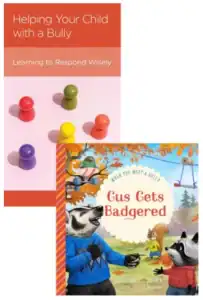
John: Mm-hmm. And Julie Lowe is our guest. As I said, she’s a faculty member and licensed professional counselor at Christian Counseling and Educational Foundation. She’s written a terrific children’s book that helps your child, uh, and you understand bullying and how to handle it well. Uh, the title of the book is Gus Gets Badgered: When You Meet a Bully.
Jim: Julie, welcome to Focus on the Family.
Julie: Thank you for having me.
Jim: This is a great kid’s book, Gus Gets Badgered. What were you trying to accomplish here with the book?
Julie: Well, we know that bullying is a problem that happens often among young people, and unfortunately, not just young people. We’re seeing it across the board, right? Um, and-
Jim: Why is it so prevalent? I mean, we’re all talking about times that we were bullied.
Julie: Well, it, it always has been. I often say though, with the, uh, emergence of technology in social media, it’s 10 times worse. Because it used to be you could walk away from the bullying, you would get on your bus and go home and get away from the bullying, right? It was the, uh, the schoolyard bully or the in-school bully. But now, unfortunately, it follows with you wherever you go-
Jim: Yeah.
Julie: … with, with the use of social media. And it, uh, it’s just a lot more difficult with the cyber bullying.
Jim: What ages is this book geared for?
Julie: So that’s geared for elementary ages-
Jim: Okay.
Julie: … for a younger group, but it introduces the idea of how do you think about it, how, how do you help a child think about being bullied, and how they should respond.
Jim: Tell us the story of how Gus Gets Badgered.
Julie: Yeah. So Gus is the main character and, um, in this series, it’s forest animals who are often dealing with different issues. And this is the issue of bullying where a new kid or new animal comes to town and begins picking on Gus, um, and Gus has to struggle with how to handle being mistreated.
Jim: Yeah. Is there a distinction between the, what I would call the typical un-kindnesses that kids can fling each other? You know, it, it-
Julie: Yeah.
Jim: … appearance is something that kids cling onto.
Julie: Mm-hmm.
Jim: When people look different, they’ll say something out loud-
Julie: Mm-hmm.
Jim: … that when you, hopefully, become an adult, those things are kept to yourself typically. You may think it, but you don’t speak it. Kids just say it.
Julie: Yeah.
Jim: So that can be an unkindness. It, what kind of line is there between that, what might be normal observation and growth of a child and then, crossing the line into bullying?
Julie: Yeah, that’s the challenge, I think, all the time with parents and kids, especially when you use the language of bullying, some kids can weaponize that and they come across somebody who says something unkind, hurtful, or just immature and foolish and they call it bullying when perhaps it’s just immaturity-
Jim: Yeah.
Julie: … or an unkind moment. Where I think of bullying as something where it’s more targeted and habitual in nature, but for sure, there could be incidents of bullying as well.
Jim: You know, so often the bullying by the parents’ observation can be kind of obscured, unseen-
Julie: Mm-hmm.
Jim: … the child might not be talking about it. You just see behavioral change.
Julie: Yeah.
Jim: So for the parent, what are those things we need to be looking at to at least tip in and investigate?
Julie: Mm-hmm. When you start to notice a change in your child’s behavior, right? When they’re coming home from school and all of a sudden hating school or don’t wanna talk about it or they’re withdrawing, um, or you start seeing anxiety. Uh, so I’m always looking for, do my children have a change of behavior and it’s all of a sudden it seemed like overnight they don’t enjoy school, or they don’t wanna participate or be involved. So you’re looking for noticeable change often.
Jim: Yeah. You were a pastor’s kid-
Julie: Yeah.
Jim: … and that brought some bullying, it sounds like, out of your own experience.
Julie: Mm-hmm.
Jim: In that context, what was it like for you? And then, how can parents avoid the dismissive nature? I mean, I think a lot of dads, you know, maybe with our sons we’ll say, “You know what, it’s a tough world kid.”
Julie: That’s right.
Jim: “You gotta get over it.”
John: “Deal with it.”
Julie: Yeah.
Jim: Just, you know, “Throw a punch and run.”
Julie: Yeah.
Jim: Or something. I mean, you know, I wouldn’t say that, but I’m just saying this is what some dads might say.
Julie: Right.
Jim: Speak to that whole thing, the bullying situation you had and then, how do we not be so permissive or passive about it?
Julie: Sure. Yeah. I joke I was a PK, I was a pastor’s kid briefly, but I was, for a longer period of time, a principal’s kid. And I used to joke with my friends who were pastor’s kids and say, “You only got it one day a week, I got it five days a week.”
Jim: Hmm.
Julie: Um, and it was sometimes just as a result of being connected to your, your parents in ministry or they were angry at something your parents did and you would hear about it. And, um, you know, growing up, I, I don’t know I thought of it as bullying, but I think anybody would have called it that or it was on occasion enough and it wasn’t consistent enough, but it was for sure mistreatment, it was for sure being targeted for your family or somebody being angry at you. Um, and being in ministry, there was almost this expectation that, yes, you’re a ministry, this will happen to you. And to this day, being in ministry, I probably still think that way to some degree-
Jim: Mm.
Julie: … um, which doesn’t excuse it, but it, it’s almost like you accept it as part of the struggle.
Jim: Your son was bullied. What happened with him?
Julie: Yeah. So he was in elementary school at the time in an afterschool care and, uh, a child that was actually known to be a bully to other kids just started picking on him that day, had never done it before but walked up and knocked over some Legos. And so, my son was upset. He got up, he went and told an adult because we had taught them that if somebody’s mistreating you or people around, you go tell an adult and you keep telling adults until somebody listens, keep pursuing help. And so, he did that. In this moment, he went and he told a, uh, an aide. I think the aide addressed it briefly and then just went on their way.
So my son went about doing something else and this boy followed him and again was knocking over what he was doing, was intentionally mistreating him. My son got up and went and told another adult. Went to three adults and it continued until eventually, I forget how, but they ended up in some kind of tussle, shoving match or hitting or something. Both ended up in the principal’s office. And when he relived the story to me, I got a call from the principal, and it was totally out of character for him. And I’m not sure how most parents would respond to this, but we’ve completely supported him. He did everything we told him to do. We said, “Go, keep telling adults.” The adults didn’t stop the behavior-
Jim: Mm-hmm.
Julie: … until he was defending himself. And we stood in front of the principal, who was gracious enough to also agree and say, “We support our son. He did the right thing. He tried to get help. The adults did not intervene and help, and the behavior continued.”
Jim: Yeah. Was there resolution?
Julie: Uh, there was. I don’t think it happened again. And my son, thankfully, did not get punished. We didn’t punish him. And it was this great teachable moment of saying, “Buddy, you did the right thing and we support you.”
Jim: That’s a good thing. You know, Julie, uh, again, you’re a counselor for those that might just join us here, but the, you know, the one thing that I’ve seen with marriage counselors, as we’ve sat here, you all sound so reasonable.
Julie: (Laughs).
John: (Laughs).
Jim: You say, you know, the next time-
Julie: Meet my children here.
Jim: … The next time, Jim, you’re talking to Jean, just say, “Honey, did you have a rough day ’cause I’m feeling some emotion from you right now that I don’t know where it’s coming from.” Now, we don’t typically, in the real world, react like that.
Julie: Right.
Jim: If she says something and pushes my button, I go, “Okay, I can push another button. That’s gonna be your button.”
Julie: Mm-hmm.
Jim: And here we go. The same can be true in the parenting sphere here.
Julie: Yeah.
Jim: And that circumstance can push our buttons as parents to require us or command of us to react in a way that we now are acting like the child.
Julie: Yeah.
Jim: How do you coach a parent in this kind of difficult spot to be the adult and to really look for the right wins with that bullied child of yours?
Julie: Well, for sure. I mean, that brought up all kinds of emotions where I would’ve been the, the parent in the school yard losing it-
Jim: Yeah.
Julie: … because I can’t stand seeing people mistreated, you know. So we, even just being aware of our own triggers and the things that would get a rise out of us, but I’m also aware I wanna model to my kids the way, right way to respond. That mistreatment will happen. That doesn’t mean you just have to tolerate it. That wisdom says how do you respond in any given moment to being mistreated, which means I better model it to my kids. And sometimes I think actually modeling I’m mad on their behalf isn’t unhealthy either. The problem is I need to not sin in my anger. So be angry for them and then to feel like, “Mom and dad really care, they’re for me,” I think is a good thing.
John: Mm. This is Focus on the Family with Jim Daly, and our guest today is Julie Lowe, and she’s got a book we’re talking about. It’s a great book. And, uh, the cover, I think, Julie, is really wonderful because, uh, you’ve got this sense of the bully is reveling in the fact that “I’ve got the power” and here’s poor Gus getting pushed around.
Uh, the book is called Gus Gets Badgered: Good News for Little Hearts, When You Meet a Bully. It’s a terrific resource, uh, to go through with your child. We’re bundling this, uh, when you get the book from Focus on the Family with a very small, but rich little booklet that Julie has written called Helping Your Child with a Bully: Learning to Respond Wisely. So contact us today, get, uh, both of those books, an exclusive from Focus on the Family, if you will, uh, from us when you call 800, the letter A, and the word FAMILY, or stop by focusonthefamily.com/broadcast.
And Julie, I love how you equipped your son. I’m not sure we ever did anything quite like that. Um, how do we help our kids stand up and be assertive for their safety and wellbeing and kind of share their voice, uh, without being aggressive?
Julie: Well, as a parent, one of my first thoughts is I want to raise my children to know right from wrong, good from evil, wise from unwise, which means I’m always role-playing, I’m always teaching them. So before they end up in the bullying position or being bullied or being tempted to be the bully, we’re role-playing. We’re teaching them to observe the world around them and people and when they’re mistreated or they’re interacting with their own siblings, which is where the bullying can start, right-
John: Yes.
Julie: … or the mistreatment. So there’s so many lost opportunities we have in not teaching our kids to say, “How does love respond? How does wisdom respond? Uh, when is it right and good to stand up to somebody? When as a bystander should you intervene? When as a bystander should you get help because it’s too serious for you to intervene?” And as you can imagine, that takes a lot of role-playing. That’s not just a, “Let me give you a 30-minute devotional on how to do this and then expect you to remember it for the next 15 years of your life.” I think that’s what Deuteronomy 6 says where we’re teaching our kids whether they’re sitting at the dining room table or walking along the way, whether we’re having a meal or in the car, that we’re using teachable moments to, to teach them lessons.
John: Yeah, this is an ongoing conversation-
Julie: Right.
John: … not a once and done.
Julie: Right.
John: Yeah.
Jim: You know, Julie, one of the most damaging effects of being bullied, I think, is that loss of identity that’s potentially there. Especially in Christian families, we’re trying to encourage them that their identity comes from Christ, et cetera, which are all healthy things to actually buttress them in a culture that is constantly attacking identity, right?
Julie: Yeah. Yeah.
Jim: So that’s important how do we teach our young children that they’re made in the image of God-
Julie: Yeah.
Jim: … that He sees them, that He has a plan for their life. All those things are building that identity, but that bullying can really go after them like, “Nob- God doesn’t see me. Why did He let me get picked on today?”
Julie: Mm-hmm.
Jim: “Why did that boy attack me today, right?”
Julie: Yeah.
Jim: And you can start to kind of doubt those things as a little child, like “where’s my protection?” So how can parents use Scripture, reinforce those things? Even if bad things happen, God still sees you. He’ll give you a way through.
Julie: Yeah.
Jim: And, you know, how do you speak to your child to give them that kind of balance between the real world and the spiritual dimensions of what they face?
Julie: Yeah, I think it’s twofold. So one is, I hope my children always see compassion from me when they are being mistreated, that I don’t just respond with, “Oh, just deal with it,” or, “You’re okay, brush it off.”
Jim: Right.
Julie: That they actually hear me say, “I’m so sorry that happened, that was wrong.” That I’m, I’m affirming what was wrong about it and why it wasn’t kind and gracious.
I think the other thing is that they’re seeing in Scripture stories like Joseph, when you’re mistreated and when you’re harmed over and over again, that God is still in the midst of that, that He’s up to something, and God can take even the evil in your life and do something good with it. And so what I’m doing is I’m not just affirming that what happened is wrong and leaving it there, I’m pointing them to a God that is not gonna waste anything in their life. And I’m pointing them to Scripture where story after story shows flawed, fallible human beings who are mistreated, um, but God also used them. And God often uses the weak, the unassuming, those who have speech impediments, those who are least expected. And to even instill that when I, we have a child with a vision disability and to be able to say, God specializes in using the people we least expect to use in Scripture, um, so take heart.
Jim: Yeah.
Julie: God’s up to something good in your life.
Jim: That’s a great way to buttress a person’s sense of worth-
Julie: Yeah.
Jim: … is that God sees you no matter what the impediment.
Julie: Yeah.
Jim: And He will use you if you yield to Him and ask Him to, to be part of your life, right?
Julie: Yeah. We as adults need that.
Jim: (Laughs) We do. You know, one thing I did, which I thought was good, I’ll get your grade on this, but, uh, with my boys when they were in elementary school, I would regularly, not every day, but regularly kind of drip-irrigate into them, “You know, at recess, if you see somebody by themselves, go play with them. If you see somebody eating lunch by themselves, go be with them, especially if that child is not well accepted by everybody else. Be different. Go, go and make a friend.”
Julie: Yeah.
Jim: They did that a couple of times that I know of and, um, that was good. But they also had the other expression of laughing at somebody who spilled a drink or something-
Julie: Mm-hmm.
Jim: … you know, so that’s normal behavior.
Julie: Right.
Jim: But in addition to doing something like that, what are some other ideas that you might have to, to help equip a child to look for somebody who they can buttress, they can lift up?
Julie: Well, it’s the whole idea that love moves towards, right? We don’t just remain passive. And that’s what I love about what you said, we try to teach our kids so that when you see somebody hurting, just don’t say, “I’m not gonna hurt them,” or, “I feel bad,” or, “I’m gonna stay out of it.” Be willing to proactively move towards being protective or offering even just words of encouragement, like to go up to somebody afterwards and say, “I’m sorry they did that. I, I really appreciate what you said.”
Jim: Yeah.
Julie: Or, “I thought what you said was smart.” You’re saying something to affirm. And then, the wisdom to know when do I need to go get an adult to say this kid’s hurting and they need an adult to, to help them.
Jim: Yeah. You know, one of the experiences, and I had this when I was bullied in third grade, I had a, a, a sixth grader who was chasing me home every day and threatening to beat me up. And I was smart enough, I didn’t wanna be beat up.
John: Yeah.
Jim: I knew that much. My only saving grace is I was faster than him, so I could outrun him on the way home. But it went on for like a couple weeks and I was stressful-
Julie: Mm-hmm.
Jim: … you know, because I’m thinking this kid’s gonna pummel me, right?
Julie: Mm-hmm.
Jim: And he was much bigger. He was three grades older than me. And, uh, but I didn’t share it with anybody except later in that two-week period, I remember talking to my sister about it who was 14 and she came to my rescue. And I think my question is this, why do we, even as children, why do we try to hide what’s happening? Are we embarrassed by the fact that we’re being targeted by a bully?
Julie: I think it’s a shame that maybe, like you said, identity, maybe I am deserving, maybe I-
Jim: Huh?
Julie: … am not worth this. So to admit that somebody’s doing this, admits something is, uh, defective about myself.
Jim: Wow. Yeah.
Julie: We see that online all the time.
Jim: Mm.
Julie: I mean, just to, to take it up a notch, you see teenagers who are being extorted online.
Jim: Yeah.
Julie: And-
Jim: Some taking their own life.
Julie: Some taking their own life. And they never tell anybody why. If one adult or one parent or one person had said, “Your life is worth it more than this extortion or whatever’s happening or the cyber bullying, your life is worth it,” and I think because we don’t have these kind of conversations with young people, they’re left to their own devices, they’re left to their own perspectives. And if they feel like they are deserving of it, that nobody loves them, then they’re, they’re on their own trying to figure out what to do and it never ends well for them.
Jim: And again, the parent has to find a way to draw that out.
Julie: Right.
Jim: If you notice behavioral changes, they’re not wanting to eat dinner with the family, whatever it might be, you gotta go investigate.
Julie: Well, this is where, as a parent, I take responsibility, say I don’t even wait to see changes, that I wanna proactively prepare my kids and to even say, I mean, I hope my kids would never send inappropriate texts or a photo they shouldn’t send, but to proactively say, “Hey guys, if you are ever to do this, I hope you won’t, but if you were, just know that there’s nothing we can’t forgive you of. There’s nothing we can’t work through. Your life is more important than whether you get caught up in something and somebody tries to use it against you. We love you. Anything’s workable.”
Jim: Yeah, that’s so, so good.
Julie: And that message is so important for kids.
Jim: And so true.
Um, Julie, in the book, Gus’ dad writes a note. And then, this is another brilliant thing you can do. I think communicating, especially when that elementary school child can read, you know, fourth, fifth, sixth grade-
Julie: Yeah.
Jim: … um, it’s a powerful reminder of identity and worth. H- how can parents intentionally speak truth into their children’s lives so that they can feel secure? What do you put in the note, for example? How would you write that note?
Julie: Yeah.
Jim: We need a paragraph.
Julie: Yeah. Or in today’s language, it would be texting our kids, right?
Jim: Yeah. Of course.
Julie: If you’re writing a note-
Jim: Although a handwritten note is pretty cool.
Julie: It is pretty cool. Yeah.
Jim: I wrote a journal for both my boys and they love it now.
Julie: That’s wonderful, yeah.
Jim: But they’re in their twenties.
Julie: Yeah, they’re memories-
Jim: Yeah.
Julie: … and it’s looking back and seeing how my parents thought about me, how they affirm me, they were for me. And you can do that in tons of different ways, but there’s something about our kids regularly hearing your life has meaning, you are worthwhile, you are loved. And that ultimately, I wanna point my kids to their Creator who loves them, because if not, it’s good that my kids know that mom is for me. But a 13-year-old doesn’t often feel encouraged when they’re being bullied and picked on by school, that you go home and say, “Well, mom loves you.” Um, I’m just exchanging one human’s acceptance or rejection for another human’s acceptance and rejection. So ultimately, I wanna say, “You have worth and value because of who God made you.”
Jim: Yeah.
Julie: Um, and that we’re finding creative ways to do that in our words, in our speech, in our writing.
Jim: You know, it’s so critical to do this. It’s something we mentioned in Truth Rising, a documentary that we did on the culture, but it’s applicable at every age. And one of the powerful statements in that film was, uh, a British, uh, baroness who said, “The Western civilization, the differentiator was the Western civilization captured that idea that we’re made in God’s image.” So now all of a sudden with child labor laws, the oppression of women, that began to lift. It didn’t lift in a moment. It took time for the Western culture to really embrace those themes and lift everybody up from what wasn’t there, that we could exploit people. It’s the same concept with this, right?
Julie: Yeah.
Jim: It’s that same kind of idea that we have to find ways for our children in age-appropriate ways to get that message across-
Julie: Right. And you don’t-
Jim: … that you matter.
Julie: And you don’t wanna wait until they’re being mistreated.
Jim: Right.
Julie: You want that to happen well before they’re being mistreated, so there’s that foundation to help them go through the hard times.
Jim: You know, Julie, I’m thinking the mom that’s so stressed out. She’s got a lot on her plate, and so does dad, you know. And you almost have to have a checklist of all the things I have to say today to help my child. And then on the other hand, some of it, it’ll come naturally, just go with your heart. How do you do the things to remind yourself as a parent, you wanna be responsible, you want to regularly, not every day, to where the kid tunes it out-
Julie: Uh-huh.
Jim: … but to be intentional about saying, “God sees you today. Look at that sunset.”
Julie: Yeah.
Jim: “I think He made that for you.” I mean, things that really drive their heart toward a relationship with Christ.
Julie: We get caught up in the tyranny of the urgent, don’t we? And we forget the more meaningful that, uh, sustenance doesn’t equal nourishment. Like you can have fast food, but that’s not a sustenance, it’s not nourishment. And too often in our relationships, that’s true as well. We can have sustenance like, “Did you do your homework? How was your day?” “Fine.” “Uh, did you have a good day? What are you doing now?” Instead of saying, “Tell me about yourself. Tell me what ninth-grade boys are going through. Tell me what fourth-grade girls are going through. How are you doing?” Um, and we’re speaking life, nourishing words into our kids’ lives, and even into our marriages, right? It’s an important thing you’re bringing up that I’m intentional about looking for those moments.
Jim: Yeah. Which is so good. All right, for that parent, uh, who says, “Wow, you guys are alerting me to something I’ve not been paying attention to, and I think my child might be bullied or being bullied right now,” what are some things that that parent can do today-
Julie: Mm-hmm.
Jim: … to engage their child age appropriately, elementary school, in that conversation? W- how do you get that started?
Julie: I start often by just asking open-ended questions of my kids, like, “Hey, do you know anybody in school that gets bullied?” Or, “What’s it like? How do, how do kids treat each other, mistreat each other?” ‘Cause it feels safe when you start out here, and it’s not personal. So my kids might be afraid of opening up about what’s going on in their hearts, but they’ll tell about what’s going on in everybody else’s lives. And so, I just start asking thoughtful questions, and as much as I’m trying to gain entrance into their heart, they’re also watching and observing how I’m responding to them, and they’re seeing, “Do- do mom and dad understand? Are they responding well? Uh, is it safe to open up and share that I’ve experienced this?” And so, our responses really do matter and that they’re seeing compassion and understanding and, uh, care for our kids.
Jim: Yeah, so important.
And let me turn to you, our listener. I hope you know Focus on the Family is here for you. As you’re raising the next generation, we’re here to help. Uh, we can answer your questions, offer trusted guidance, and walk with you through the parenting journey. That’s our goal. That’s our ministry.
One helpful resource we’d love to share with you is 7 Traits of Effective Parenting Assessment. It’s free. It’s an online quiz. It’ll give you an idea of your strengths and some of the areas you might wanna improve in. It just takes a few minutes to complete, and it’s very helpful, so take it today.
We also have Julie’s terrific book for kids, Gus Gets Badgered: When You Meet a Bully. And, uh, we’re gonna bundle that with a small booklet to help you as a parent. It’s called Helping Your Child with a Bully: Learning to Respond Wisely.
Uh, you know, the great thing about children’s books is you can take a topic like this and read the story with your child to start conversations, ask questions, and hear their heart. And when you give a gift of any amount, we’ll send you the bundle as our way of saying thank you for supporting the ministry of Focus on the Family.
Let me share this note from Pam who wrote in to tell us this, “I’m so grateful for the work Focus on the Family does to strengthen families, support our country, and advance God’s Kingdom. From marriage resources to Adventures in Odyssey, your ministry was a constant encouragement in our home growing up and later helped my husband and me build a strong foundation for our own marriage as we prepared to get engaged. As we now hope to start a family of our own, I’m thankful that the same trusted ministry that shaped my life will one day bless my children as well.”
John: Well, that’s wonderful to hear.
Jim: It is. I mean, it actually tears me up.
John: Hmm.
Jim: It’s what we’re trying to accomplish each and every day. And Pam’s thank you extends to you as well because we couldn’t have that kind of outreach without the generous support of our listeners. When you donate to Focus on the Family, you’re helping folks like Pam to strengthen their marriage, raise their children in positive, healthy, biblical ways. So please donate today, be part of the team.
John: Yeah, make that contribution when you call 800, the letter A, and the word FAMILY, or, uh, donate and get your bundle of books, Gus Gets Badgered and Helping Your Child with a Bully.
Also, take that free parenting assessment. It’s all at focusonthefamily.com/broadcast.
And let me mention a fantastic audio collection that we have for you. It’s free. It’s called The Helping Your Child Deal with Bullies Collection. It includes four hours of programs on this important topic with expert parenting advice from guests like Nancy Rue, Dr. Kevin Leman, Cindy Claypool de Neve, and others. And it’s the perfect opportunity to encourage your child in their God-given identity and purpose in Christ. Look for that free audio collection on our website.
And on behalf of the team, thanks for listening today to Focus on the Family with Jim Daly.
I’m John Fuller, inviting you back as we once more help you and your family thrive in Christ.