



Preview:
Lysa TerKeurst: Trust is the oxygen of all human relationships. So, you starve a relationship of trust, and you will starve it of vibrancy and potentially you’ll starve it of life. And it’s impossible to repair trust that keeps getting broken.
End of Preview
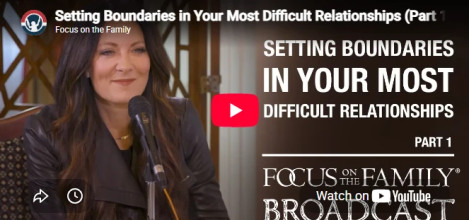
John Fuller: Lysa TerKeurst joins us again today on Focus on the Family with Jim Daly to talk about working through trust issues. Thanks for joining us. I’m John Fuller.
Jim Daly: Well, John, it’s always great to have Lysa here and she’s busy. She runs Proverbs 31 Ministries, and I’m sure that keeps her busy most of the time. So, we deeply appreciate Lysa’s ability to be here. Talk about the pain that she’s gone through with divorce. We covered, uh, much of that last time, but we’re gonna continue that discussion today. And I think the, the benefit for all of us is what she’s learned and how she is applying that to her current marriage and to those relationships around her. I’ll tell you what, just broadly, this life brings a lot of trouble-
John: Mm-hmm.
Jim: … and can bring a lot of pain. I think it’s part of the process so that we are tilted and pushed closer to God. I think that’s the big plan. So it, we’ve gotta be careful as Christians that it doesn’t destroy us, it doesn’t destroy our trust in God-
John: Mm-hmm.
Jim: … and our trust in other people. But how do we get through these cloudy days and emerge on the other side deeper into the Lord, better as our own Christian self, and doing the things that the Lord wants us to do?
John: Yeah. Yeah. And if you missed part one of this important conversation with Lysa, uh, download our mobile app, uh, go back and check it out on YouTube, uh, go to our website. It’s really, really strong stuff. And we’re gonna dive deeper into that today.
Lysa TerKeurst is passionate about helping women navigate relationships and have a strong faith. Uh, she’s very gifted in teaching and storytelling and her latest book is called I Want to Trust You, But I Don’t.
Jim: Lysa, welcome back.
Lysa: Thank you.
Jim: Let me ask you about trust. It’s such an important ingredient in relationship, and yet it ends up being one of the most fragile things. It’s just like the Lord to put this together, right? “This is gonna be the most important thing in your relationship with people, trust, and it’s really fragile.”
Lysa: Hmm.
Jim: (laughs) What do you do with that? How do you, uh, make it not as fragile, I guess?
Lysa: Well, I think trust will always be fragile because, you know, uh… We can freely give trust, but when trust is broken, it’s really hard to repair it. The only recipe that I know for repairing trust is time plus believable behavior to lay down a new track record.
It’s gonna take time, you know? I mean, as much time as it took for this hurt to unfold it’s gonna take that much more exponentially for the hurt to, um, be tended well with. But time plus believable behavior means when someone else breaks your trust, they’re gonna need to make sure to demonstrate for you that they’re not gonna continue to do that and that they’re gonna establish new patterns, maybe new patterns of thought, new patterns of action. And so those instances of believable behavior over a long period of time with humility, and obviously great honesty, can help prove a new track record that can then repair the trust in that relationship.
Jim: I’m sure you’ve had this question before, but, you know, in scripture we talk about the Lord instructing us to forgive 70 times seven.
Lysa: Mm-hmm.
Jim: And, you know, I would think informed Christian counselors who are reading the Word and know the way the human emotions work… How do you not become a doormat in that situation? When does that line occur? And is it, um, reasonable to the Lord that, “Lord, this line is out there? What is that balance in there?”
I’m thinking of that woman that is trying and she’s trying to forgive and the husband’s not changing. And maybe he runs to her and says, “I’m so sorry, this will never happen again.” The next week, it’s the same thing-
Lysa: Mm-hmm.
Jim: … and the same apology. And then the next week, the same thing and then same apology. What do you do with that as a Christian?
Lysa: Well, I think we have to look at the context of who Jesus is and how He has a heart, a compassionate heart, for the person being taken advantage of. And so, when Jesus says forgive 70 times seven, I believe that He’s not saying stay in close proximity with that person who continues to hurt you over and over and over. I believe we have to create enough emotional or physical distance that if the other person never changes, that we can forgive them 70 times seven without getting destroyed in the process.
Jim: Hmm.
Lysa: So I think in order to do this, we’ve got to have really clear boundaries. And so, in that situation you just mentioned, if the husband says, “I promise I’ll never do this again,” and then he does it again next week, it’s going to be impossible to rebuild trust that keeps getting broken.
Jim: Yeah.
Lysa: So there needs to be a protocol. There needs to be a communicated boundary. It doesn’t have to be mean. It doesn’t have to be manipulative. It doesn’t even have … Like, it shouldn’t be to punish the-
Jim: Right.
Lysa: … the person who’s breaking trust. But it does need to be clear. And how you can communicate a boundary is you are free to continue to do whatever it is that you want to do, and I am free to draw appropriate boundaries because I’m responsible to keep myself sane and self-controlled, which is what the Lord has told me is evidence of fruit of the Spirit in me.
John: Yeah.
Lysa: “Therefore, if you continue to do this, then this is what my response will be.” And again, communicate it kindly, but also make sure it’s firm and make sure that you’re consistent with holding fast to that boundary. And remember, every boundary has to have a consequence. A boundary without a consequence is nothing but a poor suggestion.
Jim: Yeah.
John: Mm-hmm.
Jim: No, those are good things to remember.
John: Yeah.
Jim: Let me ask you, you mentioned God’s compassion for the victim. You didn’t say it that way, but I’ll just put it in plain terms. Here’s the thing that’s so difficult, that He has compassion for the accused.
Lysa: Mm-hmm.
Jim: And that, you know, in our humanness, that’s a hard one to grapple with, especially if the offense is proven. In the case of your first marriage where he was, um, having an affair or more than one affair and drug addictions and other things. How do you develop compassion for that broken person that can’t climb out of that sin hole seemingly?
Lysa: Mm-hmm.
Jim: And have some kind of heart still for the brokenness that is that person that you loved at one point?
Lysa: Right. Well, sometimes the line between compassion and enabling is paper thin. So we have to really remember Jesus did lay down His life. He instructs us to lay down our life for those that we love. Um, but Jesus laid down His life to accomplish a high and holy purpose, seeking other people’s highest good. Jesus did not lay down His life to enable bad behavior to continue.
Jim: Wow, that is powerful.
John: Hmm.
Jim: That is really good and very important for us to think through.
Lysa: It is, and listen.
Jim: ‘Cause I think we lean the other direction and-
Lysa: Oh-
Jim: … just take it as Christians, you know, this is what the Lord wanted us to do.
Lysa: Absolutely. Well, listen, I’ll just do personal confession here. I am set up to be a classic enabler because I have so much compassion. And so, the secret for me wasn’t to diminish my compassion, but the secret to me was remembering sometimes the most compassionate thing I can do is to seek the other person’s highest good, and it is not seeking the other person’s highest good to enable destructive patterns, um, and sinful patterns to continue without calling those into question.
Remember, we’re after wise trust here, not blind trust.
John: Hmm.
Jim: Yeah, that is so good. Let’s hit the red flags of distrust. I think you noted 11 in the book. Why don’t you just rattle them off and give us a couple of the ones that stick out for you?
Lysa: Let’s talk about a couple of my favorite ones. Not favorite because they’re good, but favorite because they were eye-opening to me.
Jim: Okay.
Lysa: One is, uh, insincerity. When someone tells you what they think you want to hear, but they don’t really mean it.
Jim: And you can tell.
Lysa: And you can feel it.
Jim: Uh-huh.
Lysa: And it’s like you walk away from the conversation and go, “Huh, did they really mean what they just said? Because I don’t feel like it was sincere.” Okay? So that’s a red flag, right?
Jim: Mm-hmm.
Lysa: Another one is inconsistency. You never know what version of that person you’re gonna get. Like, sometimes they are-
Jim: Mm-hmm.
Lysa: … so uber sweet and other times they are angry and fly off the handle, and that inconsistency can create a lot of tension for you because you just don’t know.
Jim: Right.
Lysa: One minute they’re awesome and one minute they’re super mean. And it’s… that inconsistency is a huge red flag.
Jim: Yeah.
Lysa: Um, another one is self-centeredness. They only think about themselves. Another one is insecurity. They lack confidence in themselves, but not just that they lack confidence in themselves, but they expect you to fill up those holes for them.
Jim: Yeah.
Lysa: In other words, they want you to make them feel more secure. So these people are usually in need of incessant encouragement. They’re-
Jim: Accolades.
Lysa: Yes.
Jim: Yeah.
Lysa: Yes. And the problem with that is you can never fill up the bucket that they have because there’s a hole in the bottom of their bucket. So, um, and of course, immorality. They lack a moral compass. Super alarming-
Jim: Yeah.
Lysa: … in a relationship. Um, insubordination. They reject reasonable authority. That should be concerning too, you know? So it continues to go on. The last one I’ll mention is inflated sense of self. They think you cannot manage without them. So if someone says to you, you know, “I’m the best thing that ever happened to you.”
Jim: (laughs)-
Lysa: “You’ll never find a friend like me.”
Jim: I can’t imagine saying that or hearing that. It’s-
Lysa: Well, it’s said.
Jim: Yeah.
Lysa: Like, or, you know, “You’ll never find another friend like me,” or, “You would be nothing without me.”
Jim: Wow.
Lysa: “You would never be able to do your job without me.”
Jim: Hmm.
Lysa: Those kinds of things, that inflated sense of self, really big red flag.
John: Yeah. This is Focus on the Family with Jim Daly. And our guest today is Lysa TerKeurst. And, uh, she’s sharing from her book, I Want to Trust You, But I Don’t. And we have copies of that book and additional resources here as well. Give us a call, 800, the letter A, and the word FAMILY, or stop by focusonthefamily.com/broadcast.
Jim: Lysa, let me ask you, uh, and we touched on this last time, but I wanna go a little deeper into it. Um, and that is how can trust issues with other humans affect our trust with the Lord? I think the linkage is obvious, but again, give us handles to that concept that when people let us down, we start to doubt that God’s even there for us.
Lysa: Mm-hmm.
Jim: And then what do we do with that emotion, that feeling-
Lysa: Mm-hmm.
Jim: … that sense of betrayal?
Lysa: Mm-hmm.
Jim: It sounds heavy, but it is.
Lysa: Well, what we don’t trust we’ll try to control. So, this can happen when we’ve experienced a lot of broken trust with other people, or maybe not even a lot, but a significant broken trust scenario with another person and we don’t understand why God allowed it. We don’t understand, like… especially if it’s with another Christian, it’s like, “God, whose side are you on here? ‘Cause they say that they’re praying about the situation, but they’re interpreting the situation so much differently when I feel like I’m the one that got hurt.” And it can really feel very, very confusing.
But I think one of the most confusing parts of it is when it appears that the person who hurt us got away with it and God just didn’t address it. And that can be really confusing. So, we have to remember that we don’t always have to see the justice of God to know that it’s in play. Sin comes as a package deal. So when someone sins, there’s a part pleasure to it or part satisfaction to it, but then there’s also, it’s a package deal with consequences are built into sin. So, when someone sins, they start to unleash the consequences that are already built into that sin.
And so, we don’t have to see it to know that it exists. And just because we don’t see the justice of God right away, just have to be assured in his Word He says that we will sow. I mean, whatever we sow, we will reap. So we’ll reap what we sow, right?
Just because we can’t see God’s justice, in our minds, the absence of God’s justice does not equate to the absence of God’s presence. And where God is present, He is working on things, and He will not be mocked.
Jim: Yeah. It, it’s difficult to tolerate injustice. I mean, I think we as Christians have a high sense of justice.
John: Mm-hmm.
Jim: That’s in part why we’ve come to the Lord, I think. It’s in us, it’s part of our spiritual DNA, and the Lord certainly values that, this idea of justice. But when it’s aimed at us and we feel an injustice toward us, and then we don’t even feel like the Lord is vindicating this or making it right, how do we mature to a point where we can manage that? “Okay, Lord, we know that you’ve got it, that if it’s not dealt with this week, this month, this year, this lifetime, that you’ve got it in the long run.” That takes a lot of maturity. I’m thinking of Paul being thrown into prison for proclaiming Jesus-
Lysa: Mm-hmm.
Jim: … as Lord. And, you know, he’s in this dungeon prison and singing songs.
Lysa: Mm-hmm.
Jim: I would say that’s mature Christianity.
John: Mm-hmm.
Lysa: Yeah.
Jim: Um, but-
Lysa: I would too.
Jim: … how much of our life- where we’re falling short in that regard where, you know, we didn’t get the right response from a friend, and it hurts our feelings and we hold that as a grudge. Are we just that much on the milk of the Word that we’re not-
Lysa: Mm-hmm.
Jim: … mature enough as Christians to kind of take that and let the Lord work in that situation?
Lysa: Well, I think it’s natural to feel that way. And I think it’s important for us to express when we go through things that we feel are terribly unfair. It’s okay to express those to the Lord. I mean, if you read my journal, you would see… not only would you see me express what I feel like are areas of time and situations I’ve walked through that are so unfair, but you’ll also see me making so many suggestions to God of how He can right this wrong, of how He can make this better.
But I wanna say this just with so much tenderness. Give it some time. Just give it some time.
John: Hmm.
Lysa: Because the very things that I thought God should do to right these wrongs that I walked through and to make them fair, over a long period of time, years, I can go back in my journal now and I can say, “Wow, God.”
John: Huh.
Lysa: If you would have done that, which in the moment would have given me this feeling like, “Oh yay, God, you’re making this fair.” It would have had dire consequences for me now.
John: Hmm.
Lysa: And I couldn’t have understood that back then. In other words, I was asking God, “God, like, do this. Like, make this consequence come about.” But actually, I can see now God used not allowing that consequence to protect me later in the situation-
John: Mm-hmm. Yeah.
Lysa: … because had that consequence come about, it would have actually had ramifications for me. And so, that’s where we just, we really do need to trust God there.
John: Hmm. Hmm. That’s really profound, Lysa. And it takes a lot of courage to get to that point, to see that. Uh, you mentioned something earlier where, um, that which we fear we try to control, it seems like when trust is broken. Like I… Personally, I trust God. My struggle is, “What am I supposed to do as I’m trusting you?” So how did that look for you in terms of close relationships with that violation of trust? Did you seek to control and-
Jim: (laughs)-
John: … and manage things or did you just-
Jim: Oh, that is so gentle, that’s nicely said.
John: Do a trust fall and say, “Okay, God’s got it.”
Lysa: Yeah. Why don’t we just go right there?
Jim: (laughs)-
Lysa: Okay. Well, I’m not typically a controlling person, but it sneaks in. So, I put this little list of awareness, like, “Let’s pay attention to these things. These might be some indicators that we’re in a situation that we don’t trust, therefore we’re trying to take control.”
John: Mm-hmm.
Lysa: One of those is needing to know every detail. Now, being responsible, being a responsible steward is great.
John: Yeah.
Lysa: But we can easily cross the line from being a responsible steward to being controlling of a situation because we don’t trust, right? So, needing to know every detail, obsessively trying to figure out how to prevent bad things.
John: Hmm.
Lysa: I’m raising my hand really high here. So, remember when we talked about the trauma diamond, the-
Jim: Yeah.
Lysa: … in my brain? Trying to figure out, um, how to prevent bad things is often playing out in my brain by catastrophic thinking because somehow, I feel like if I can run ahead, figure out all the bad things that could happen, figure out the worst-case scenario, then somehow, today, I can prepare myself so that if that happens, it’s… I’m not gonna be as shocked by it, right?
Jim: Yeah. And that’s not unusual.
Lysa: It’s not unusual.
Jim: Catastrophization, I think-
Lysa: (laughs)-
Jim: … is the word. And that’s a coping skill.
Lysa: It is a coping skill. But doesn’t that leave us in a place where we are not looking forward to the future, but we’re always trying to brace for impact?
Jim: Well, fear.
Lysa: Yeah.
Jim: (laughs)-
Lysa: And we’re just, we’re walking in constant fear. Another one is getting annoyed when people deviate from your plan. Another one is having unrealistic expectations of others. Because, again, if we’re not trusting them, we wanna control them. And so, we can have unrealistic expectations of what they should do and what they shouldn’t do because we don’t wanna get caught off guard. And then, here’s a big one. Thinking, really always thinking, your way is the right way and not giving space for other people to express that their way may be different, but remember, different isn’t always bad.
John: Hmm.
Jim: Yeah. Let me ask this. What is it we can control?
John: Huh.
Jim: (laughs) Maybe that’s the right question.
Lysa: Mm-hmm. Well, God calls us and tells us that one of the fruit of the Spirit is self-control. So-
Jim: (laughs)-
Lysa: … you know, it-
Jim: Ouch.
Lysa: (laughs) I mean, we cannot control what happens in the future. We can be responsible. We can do everything today that we’re supposed to do to, um, plan well and to work effectively and all of that, but we ultimately cannot control the outcome of the future. We cannot control other people. We, you know, we can’t control … like, we get on the road today, ultimately we can’t control what the other drivers do or don’t do, right?
Jim: Mm-hmm.
Lysa: There’s so much that we can’t control. So I think it’s important to remember there is a part of this that we are gonna have to accept that. We’re gonna have to accept that there are things we cannot control but take responsibility for what we can control. I can’t control what someone else says, but I can control my reaction to it. I can’t control if I walk into a coffee shop and someone just bumps into me and says rude things to me because the coffee shop frapped their latte and waylaid their whole day, right?
Jim: (laughs)-
Lysa: And now they’re trying to take it out on me. But here’s what I can do. I can look at them and think, “Just because you lay down an offense doesn’t mean I have to pick it up, carry it with me, and let it ruin my day.”
Jim: Yeah.
Lysa: You know?
Jim: Well, that’s so good. And this has been so good, the last couple days. I do wanna take just a minute here at the end and allow you to talk about your new man, Chaz.
Lysa: (laughs)-
Jim: And how long have you been married now and what on the positive side of things for those that are struggling, may not see the light at the end of the tunnel, just what the Lord has done to rescue and save and restore.
Lysa: Mm-hmm.
Jim: What… I wanna see the blossom in your face-
Lysa: Mm-hmm.
Jim: … is what I’m looking for right now.
Lysa: Well, I-
Jim: (laughs)-
Lysa: When I experienced the death of my marriage, I thought that, uh, it was me signing up to not have a partner in life the rest of my life, that I probably wouldn’t get remarried. I couldn’t fathom dating. Um, so it took a long time, and I’m thankful it took a long time because I wanted to heal enough not to need another person to help me walk through what I was walking through. I wanted to heal enough to where I could be freed up and healthy enough to want the right person. Otherwise, if I would’ve jumped into relationships too quickly, I probably would’ve been attracted to what was normal to me. And dysfunction-
Jim: Hmm.
Lysa: … had become normal. And I didn’t want to jump into another dysfunctional relationship.
Jim: Yeah.
Lysa: So I’m thankful I took that time. But eventually, I did meet a wonderful man. His name is Chaz. And do you wanna see my face blossom?
Jim: (laughs) Here it is.
Lysa: Here it is.
Jim: Boop.
Lysa: Um, he is such an unexpected but beautiful and wonderful gift from God. And I am so, so thankful. Um, the thing that I really appreciate so much about Chaz is he spent years tending well to his soul and his emotions and healing from the things that he went through in his life.
I remember when, um, I was first engaging with him he had done his work. And the only way you really know that phraseology is if you have actually really worked on yourself. Worked on the brokenness that we all acquired through life. And that was very attractive to me. So there were many wonderful things about him. But I think my most favorite of all is that I get to see what it feels like to be really loved and adored by a man.
Jim: Yeah.
Lysa: And that is such a gift.
Jim: Hmm. Wow. I do see that in your face now. Let’s go here for the last question. That woman that’s going, “Well, that’s great, Lysa. That’s wonderful. I’m so glad for you,” but in her heart there’s a bit of resentment because that’s not my story. She’s somewhere along your journey-
Lysa: Mm-hmm.
Jim: … but she hasn’t made it through to that blossoming, smiley, uh, effervescence that you’re showing there.
Lysa: Mm-hmm.
Jim: What do you say to her about hope tying this all back together to yesterday?
Lysa: Mm-hmm.
Jim: Um, where does she find her hope? What does she need to do right now?
Lysa: Well, first of all, I wanna tell her I understand. I remember what it was like laying in my bed at 2:00 AM hearing about other people and the good outcomes in their stories and them moving ahead and finding happiness and, you know, all of the things. And I remember thinking, “I don’t think that’s ever gonna be me.”
So, first I wanna say I understand and I just wanna acknowledge that is a lonely, hard place to be. I wish so much that I could run into your future, see all the good stuff that God has ahead of you, and come back and tell you today and let that be the very thing that boosts hope in your life. But that would be me robbing you of the journey with God.
God got me through that season. I went kicking and screaming through a lot of that season, but God did get me through that season. And there’s been enough time now where I can look back on my lonely season and I can just report what I see now. I see that God had a plan for me. It is so very different than what I ever thought that it would be. But the less I resist trusting Him, the less I suffer. The more I resist trusting Him, the more I suffer. Our job today is just to be obedient to God. God’s job is everything else.
John: And that’s how we’ll conclude our conversation with Lysa TerKeurst today on Focus on the Family with Jim Daly. And, uh, her insights about trust and navigating relationships when things are broken, uh, really pierce the heart.
Jim: They do. And, uh, working through our trust issues is essential to our emotional and spiritual health. I think she spoke to that throughout the program. I so appreciate the reminder that we can lean on God and trust in His goodness even when it feels like He’s not moving. Maybe especially-
John: Hmm.
Jim: … when it feels like He’s not moving. And I hope you’ve taken Lysa’s, uh, message to heart. This is why Focus on the Family exists. We want to provide you with biblical principles that you can apply in your life and in your relationships. If you’re needing some guidance, please get in touch with us. We have a team of caring Christian counselors who can pray with you and get you on a path toward health and healing.
We also have, uh, many wonderful resources we can put into your hands to help you go deeper, like Lysa’s book, I Want to Trust You, But I Don’t: Moving Forward When You’re Skeptical of Others, Afraid of What God Will Allow, and Doubtful of Your Own Discernment. It’s full of biblical truth and stories that will encourage you.
And when you make a monthly pledge to Focus on the Family today of any amount, we’ll send you a copy of Lysa’s wonderful book. And it’s our way of saying thank you for standing for families here in the US and even across the globe. In fact, I have a note from a listener named Tatiana who wrote to share this, “As someone from Ukraine, English is not my first language, so I especially appreciate that Focus on the Family’s programs are easy to follow and understand.” Uh, that’s good news, John.
John: Mm-hmm.
Jim: “I listen to the broadcast every day and I’m so grateful for the emphasis on Christ and His presence to help us through life’s challenges. Thank you for the encouragement and hope you bring to listeners around the world.” (laughs)-
John: That is phenomenal. I love the reach that God has enabled us to have.
Jim: It’s amazing. Over a hundred countries air a broadcast in English or another language-
John: Hmm.
Jim: … from Focus on the Family. Well, that’s the kind of ministry impact that you, the donors, are having through Focus on the Family. Yes, you can change lives. As a nonprofit ministry, we depend on your financial support. If you aren’t already a member of our Friends of Focus on the Family program, I wanna urge you to join our membership drive. We’ve set a goal this month to find 1,200 people to join a community of monthly sustainers who care deeply about families. Be one of them. Your monthly gift will help us provide resources to meet the needs of families and help them heal through Christ.
And right now, we wanna say thank you in a kind of unique way. When you commit to $30 or more a month, we’ll send you a Focus on the Family with Jim Daly travel mug along with a four-ounce bag of our very own coffee blend, the same blend we use here in the studio with our guests. So join the support team, and if you can’t commit to a monthly gift, we get that. We’ll send you a copy of Lysa’s book for a one-time gift as well.
John: Yeah, contact us today. Donate as you can. Get that book, I Wanna Trust You, But I Don’t, and, uh, set up a consultation with one of our caring Christian counselors, all when you call 800, the letter A, and the word FAMILY. Or online, you’ll find more details at focusonthefamily.com/broadcast.
Thanks for listening to Focus on the Family with Jim Daly. I’m John Fuller inviting you back as we once again help you and your family thrive in Christ.