


You expected the grief. You expected the attachment struggles. You expected the system to be complicated. But you may not have expected the tension in your own heart when visits with a child’s biological family disrupt routines, when emotions spike after exchanges, when you hear pieces of a child’s story that are painful or frustrating, or when love for a child collides with the reality that they already have parents.
Key Takeaways
- Foster care is about the whole family. When you say yes to a child, you are entering an entire family’s story — not just welcoming a child into your home.
- Birth parents are not the enemy. The true enemy is trauma, addiction, loss, and broken systems. Extending grace to birth families honors a child’s identity and story.
- Boundaries are healthy and necessary. You can extend compassion to birth families while still protecting yourself with clear, wise boundaries around communication and contact.
- Small moments build real trust. A warm handshake, a kind note, or a steady presence during a tense moment can lay the foundation for a meaningful connection.
- You are a bridge, not a barrier. Foster parents who support birth family relationships play a pivotal role in a child’s healing, not an interruption to it.
- Grief is part of the journey. When placements end, the loss is real. Processing those emotions openly with trusted people is essential.
- Your legacy goes beyond the child. When a child returns home carrying the memory that you treated their parents with dignity and love, that is a lasting impact.
Foster Care Includes the Biological Family
Foster care is not just welcoming a child into your home. It is entering an entire family’s story. When you enter a child’s biological family, you help create a pathway for deeper healing, understanding, and wholeness for everyone involved. And that part? It can feel risky, complicated, and even uncomfortable.
Yet it is also one of the most sacred invitations of this journey. Maybe you only entered foster care considering the child and making a difference in their life. To model what family looks like, to influence their belief system about themselves and the world they live in. That is a gift, for sure!
But there is another gift in foster care—one that stretches us deeply: embracing birth parents. This can be challenging, difficult, and vulnerable. I often tell families considering fostering: do not even enter this space unless you are willing to extend yourself to the entire biological family. Think of it as part of God’s design for the assignment
Boundaries When Navigating Relationships With Biological Family
Our foster children come with broken pieces. And often, their parents carry brokenness too. Still, it is important to recognize our own boundaries. For example, I have chosen not to share my personal phone number until a certain level of trust is established.
Another example might be choosing to communicate only through the caseworker in the early days or laying out clear timeframes for messages and expectations for replies. If a birth parent asks for a favor that makes you uncomfortable, you can respond compassionately yet firmly, such as saying, “I’m not able to do that, but I want to help in ways that feel safe for everyone.” Or, when asked to meet outside of supervised visits, you can say, “Right now, I believe we should meet with the caseworker present so we can keep our communication clear and supportive.”
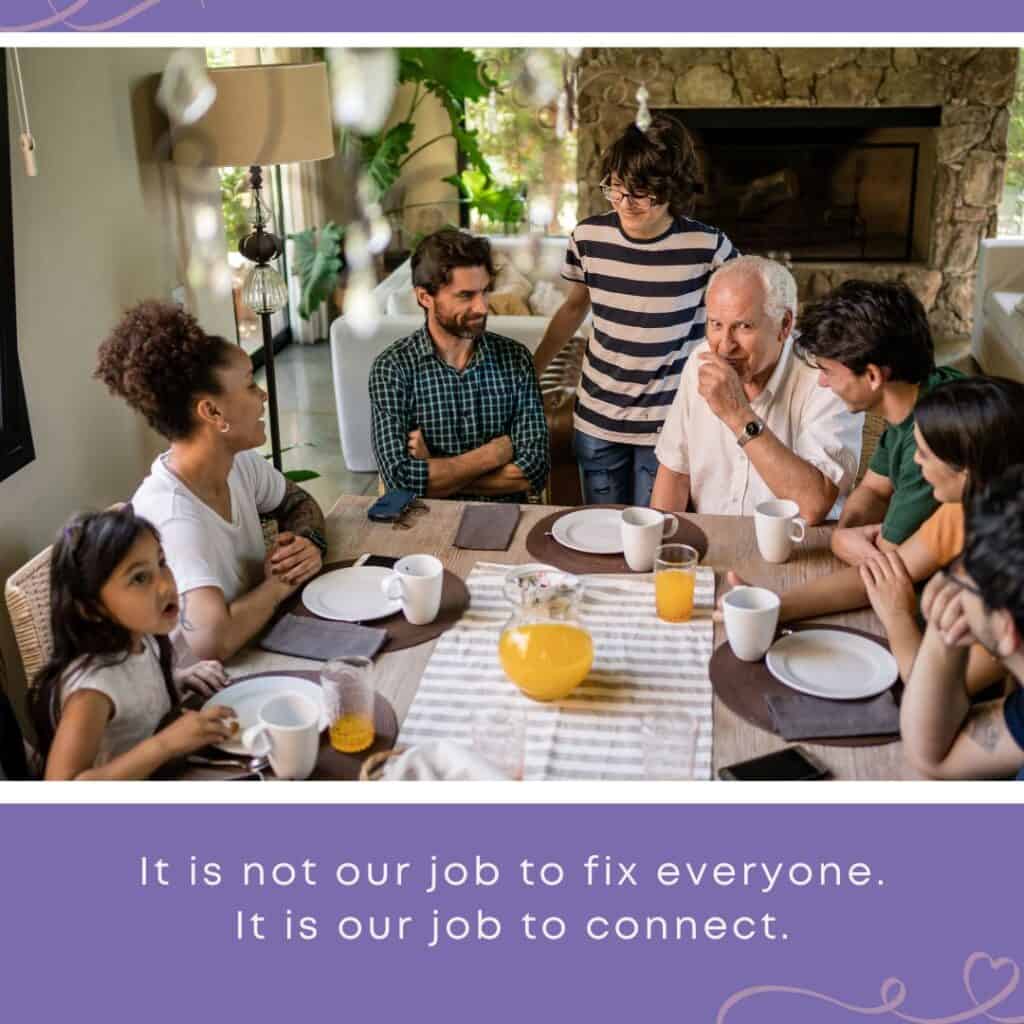
Exchanging these experiences with other foster parents helps normalize the reality that we all have limits, and honoring them can be a healthy and wise element of this journey. It is not our job to fix everyone. It is our job to connect. Sometimes that connection is as simple and real as a warm handshake during a tense meeting, or an exchange of a steady glance across a crowded waiting room, silently sharing one hopeful moment. These small, meaningful moments can help build the foundation for real trust and connection. Leaning into their story while being the hands and feet of Jesus in the middle of complicated narratives.
Our Personal Experiences
Here are a couple of our experiences:
I remember fondly a placement we took home straight from the hospital; the birth mom was finishing out her jail time after she delivered her beautiful baby boy. We had that little guy for the first four weeks of his life. As I rocked him and fed him in the middle of the night, I thought about how he must be longing for his Mama’s voice. Then, I thought of his mom, in her jail cell, missing her baby’s cry. I prayed for both baby and Mom during those wee hours of the night.
I never had the privilege of meeting Mom, but I was able to send that baby home with a long letter from our family- one that shared what he liked, what soothed him when he was fussy, and what formula ended up being the best on his tummy. We also sent him home with bottles, formula, blankets, diapers, and a wardrobe full of clothing. We also committed to praying for him and his mom. She later reached out through Facebook, thanking us for taking care of her baby while she could not. To this day, we are Facebook friends. She knows she can contact us when and if she’s in a tough spot. There is no judgment, just availability.
Stories such as the one I just shared don’t always have a happy ending. Relationships with biological families are risky. But can I say they are still worth taking a chance on! Wrapping your lives around an entire family is part of the foster care path.
A Second Personal Experience
Another placement we had was a four-year-old little girl we had in our home for almost three years. She returned home to her dad. During the placement, we became very close with her dad. He came to our home for meals, birthdays, and visits. We learned his story and empathized with his lack of a parental role model growing up, which made fatherhood difficult.
He did the work and regained custody, assuring us he would stay connected, and we would still be able to spend time with our foster daughter. We dropped her off at his apartment, and we shed many tears as we said goodbye. We never saw or heard from them again.
Grieving these transitions is natural and important. The emotions can be intense: sadness, loss, and even a sense of emptiness in your home. To process these feelings, it helps to talk openly alongside trusted friends or a support group who comprehend the unique challenges of foster care.
Lessons Learned About Relationships With Biological Families
What have I learned?
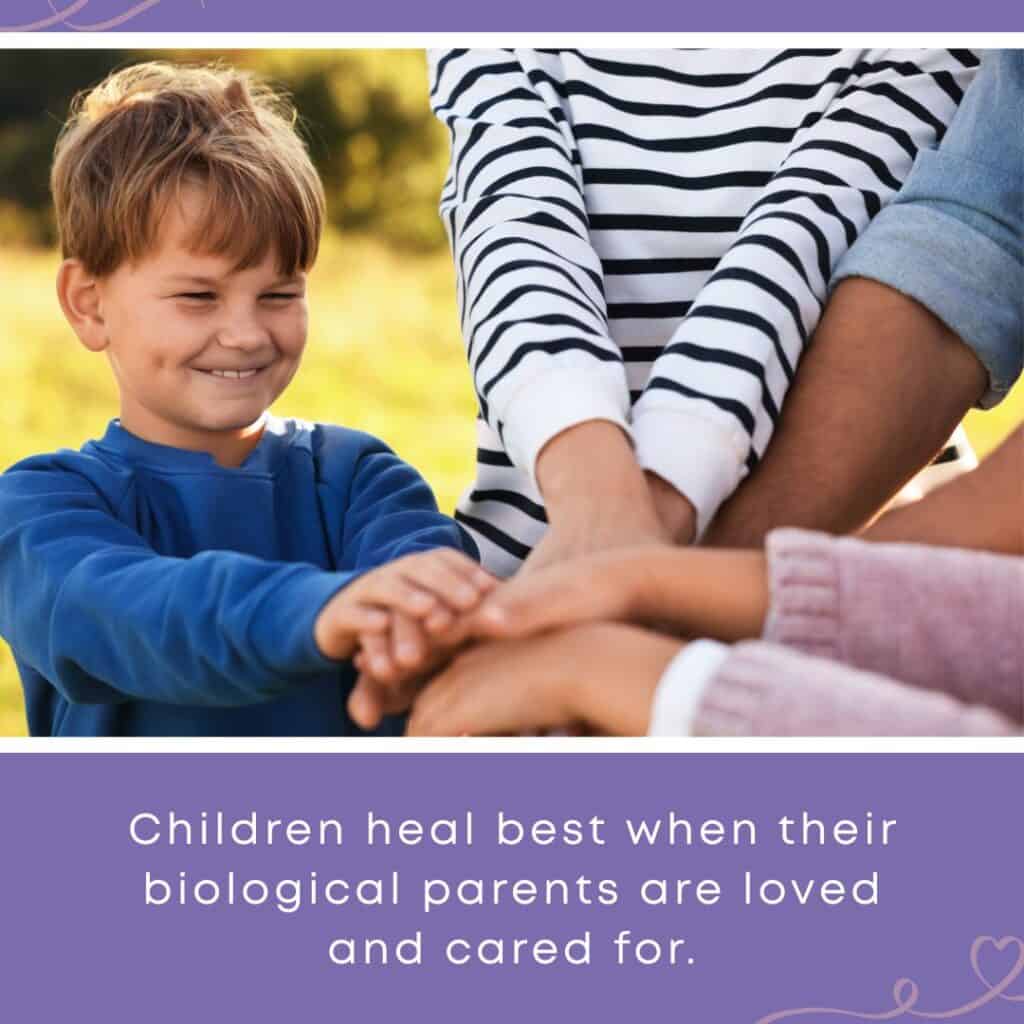
Children heal best when their biological parents are loved and cared for. Birth families cannot be the enemy. We know the true enemy is trauma, loss, addiction, and broken systems. When we accept families, we honor a child’s story and who they are. When we extend a posture of grace that says, “Your story matters and is important to me, even the hard parts.” Grace that says, “I don’t need to agree with your choices to respect your role.” This kind of grace is the “What would Jesus do?” kind of grace.
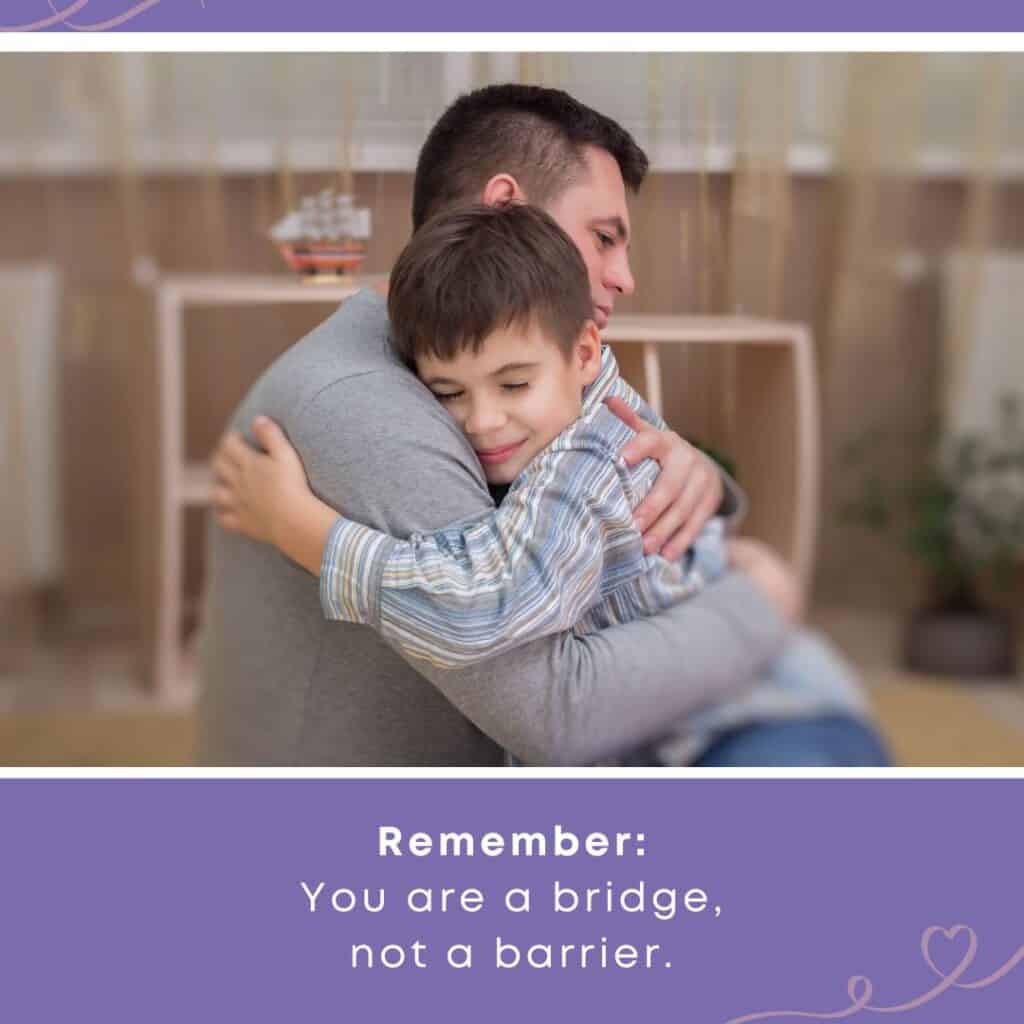
Give reassurance by recognizing their feelings, keeping your words soft, and maintaining a steady presence. Assist by using good listening skills and that our language matters. “Your mom loves you and is working on some hard things.” Or “You can miss your parents and still feel safe here.” And most importantly, “We’re all on your team.”
Lastly, when a child returns home, they carry with them the memory that you treated their parents with respect and empathy. They also felt unconditional love, and that story, their parents’ story, was honored.
That is legacy, that is being a difference maker—not just in the life of a child but the life of a family.
Summary
Foster care asks more of us than we often anticipate. Beyond the joy of welcoming a child, it calls us into something far more complex — the story of an entire family. This article explores one of the most challenging and sacred aspects of the foster care journey: building a posture of grace toward birth parents, even when it feels risky, uncomfortable, or deeply painful. Through personal stories of connection, loss, and unexpected friendship, it reminds foster parents that birth families are not obstacles to a child’s healing — they are central to it.
Learning to hold boundaries while also extending compassion, to grieve real losses while staying open to connection, and to anchor children through the emotional turbulence of visits and transitions — this is the quiet, unglamorous work of foster parenting at its deepest level. When we treat birth parents with dignity and respect, we send a powerful message to the children in our care: your story matters, your family matters, and you are not alone. That is a legacy worth the risk.