




Jordan: I would like just to have a family. Like a mom and dad or just mom or just dad. I don’t really care.
John Fuller: Well, listen to the heart of that little nine-year-old boy. His name is Jordan, and that’s the cry of every person’s heart, to belong, have a family, a mom, or a dad, preferably a mom and a dad. Today on Focus on the Family with Jim Daly, our guest will share ideas to help hurting children who are longing for a place to call home. I’m John Fuller.
Jim Daly: John, because of some good people, uh, that little boy, Jordan, did get adopted into a family out of foster care. Tens of thousands of people responded after that news clip went viral, and that says a lot about, um, the heart of people.
John: Mm-hmm.
Jim: But think of how many thousands of children are still waiting for their forever family, and that’s heartbreaking. I can remember being that little boy and, you know, not having a mom and dad in my life, hoping that maybe I could be adopted. I just didn’t know. I had older brothers and sisters at the time. My football coach asked me if I wanted to live with them and offered to adopt me. But I thought it would hurt my brother too much, who I was then living with.
Um, you know, God has plans for every child, just like Jordan. And at Focus on the Family, we wanna do our part to help hurting kids. Isaiah 1:17 says we’re called to seek justice, encourage the oppressed, and defend the cause of the fatherless.
Through our foster care effort called Wait No More, we’re trying to help the foster care system do the best job it can do. And I’m proud of the work that we’re doing here at Focus on the Family.
John: Mm-hmm. Yeah, learn how you can make a difference. Uh, check out Wait No More at focusonthefamily.com/broadcast.
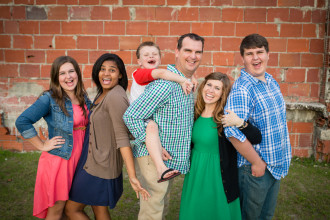
And our guest today is a man with some terrific insights and ideas. Uh, Jason Johnson is a pastor and a director at Christian Alliance for Orphans. He and his wife, Emily, have been foster parents since 2012. And they have four daughters, one of whom joined them through adoption.
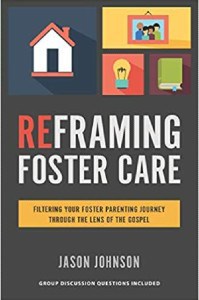
Jason has written a book, uh, called Reframing Foster Care: Filtering Your Foster Parenting Journey Through the Lens of the Gospel. We’ve got copies of that here.
Jim: Jason, welcome to Focus on the Family.
Jason Johnson: Well, thank you for having me.
Jim: I want to call you like super dad, but I think-
Jason: (laughs)
Jim: … your message is gonna be, you know, people that love the Lord can do this.
Jason: Right. Yeah. Just normal, normal dad.
Jim: (laughs) Normal dad.
Jason: Yeah.
Jim: I like that.
John: (laughs)
Jim: Let’s start with your personal story. It’s so compelling. When you were nine years old yourself, you got some news that really changed your life forever. What was it?
Jason: Yeah. So, I learned around that time of my life that my dad was in fact not my biological father.
Jim: That was the first time you’d heard that?
Jason: First time I had become aware of that. And, um, of course, he was my dad, and is my dad-
Jim: Mm-hmm.
Jason: … and, but he just wasn’t my biological father.
Jim: Right.
Jason: And so, that began to unfold a story where as I grew older, I understood the implications of what my dad did at a particular time in my life, my mom’s life, and my older sister’s life.
Jim: Let me ask you, uh, the feeling of that, because, you know, we’re talking to mostly adults. I remember you know, being told my mom had died when I was nine, and then my dad when I was 11 that-
Jason: Mm-hmm.
Jim: … you know, you start thinking, “What’s gonna happen? Where do I go? How do I eat? Where do I sleep?” In this context, just hearing that your dad was not your biological father, what were those nine-year-old feelings like for you?
Jason: You know, there was a little bit of, “Well, why? You know, why has this been necessary, right?”
Jim: Right.
Jason: “Where, where is my biological father? What’s the story there?” And, but also gratitude, um, that this man would step into our story.
Jim: You know, it’s interesting too how these childhood experiences begin to shape your adult-
Jason: Yeah.
Jim: … decision making.
Jason: Yeah.
Jim: And so, you had that idea about adoption. Uh, describe how you and your wife began to talk about that-
Jason: Yeah.
Jim: … and what motivated you to adopt your daughter.
Jason: Yeah, that’s a great question. So, my wife and I had the conversation that I think a lot of people have even pre-marriage, right? As you, as you’re suspecting, “I think this is headed towards marriage.” And I suspected that, actually, the moment I met her, so that’s-
Jim: Oh.
Jason: … a different story.
Jim: (laughs)
John: Yeah.
Jason: Uh, but I, I believe even before we were married, we were having conversations about one day we want to adopt. Um, and so it was kind of the one-day conversation that I think a lot of couples have. Kind of the private, personal conversation of maybe one day when, this is something we’ll do.
John: Yeah.
Jason: Yeah.
Jim: And, and you did that.
Jason: I did.
Jim: Uh, in fact, you point to a parallel, and I’ve used this before as well, um, between what Jesus did for us and what adoption does for a child. And, you know, for every believer, make this connection. Go ahead.
Jason: Yeah. So, you know, I think ultimately our motivation as believers in all of life is we do what we do because of what Jesus has done for us. Um, and that translates into every aspect of our life, in particular, stepping into the lives of vulnerable children and families. And when I think back on what Jesus has done for us, He steps into our story. And He changes our story, past, present, and future. All of it becomes new.
Our past no longer defines us. Our present reality is new and shifted full of security. Our future trajectories are full of hope and on a similar, uh, level we step into the stories of families and children and we say, “It doesn’t always have to be like this. And you can live today with a security of knowing you are fully loved. And you can live today also with a hope for what the future can look like in every aspect of our story together-”
Jim: Yeah.
Jason: “… and that changes.”
Jim: You know, and we’re all working in this area to help improve the lives of these children. And I mentioned Dr. Sharon Ford. She worked here in the state of Colorado.
Jason: Mm-hmm.
Jim: And, uh, thankfully, she’s come on staff here at Focus to lead the Wait No More program. Uh, we started by, uh, just purely encouraging Christians to get involved and to adopt. Uh, she’s now kind of broadened that, I think rightfully-
Jason: Mm-hmm.
Jim: … to encourage families to not only consider adoption, but also wraparound care, to simply become foster parents because the foster system is so overwhelmed right now, and typically always is. You know, they just need more resources. The point of that, and I would like you to speak into this, is adoption isn’t the only goal. I mean, it’s a good goal.
Jason: Right.
Jim: But there are other options. And you even mentioned this in your book that, um, adoption isn’t always the goal for foster care.
Jason: Right.
Jim: What is the goal?
Jason: Yeah. Yeah. That’s a big question-
Jim: Yeah, it is. (laughs)
Jason: … with a big answer. I think the goal is that every believer is empowered with a sense of calling and direction as to what their something might be. So, we often say this, we’re not all called to do the same thing, but we’re all capable of doing something. Everyone can do something.
And we see that reflected in theology, the body of Christ, where Paul says, “We are like ears and eyes and hands and feet, and we all have different functions but for the same purpose.”
And so, as we translate that into the activity of the church in terms of caring for kids and families, we find not everyone will open their home to children, but that doesn’t mean there’s not significant places for other parts of the body to find their something.
Jim: Mm-hmm.
Jason: And to get creative-
Jim: Right.
Jason: … in that.
John: Yeah. Do you think it’s a good starting point to at least take a step of faith and start praying about what God might have for us in this area?
Jason: Absolutely. Uh, to begin to pray, “God, what’s my something?”
John: Yeah.
Jason: And to ask for clarity on that and to be open-minded with that.
John: Yeah.
Jason: You know? Because it could be that my something might be we begin to take steps towards opening our home to children. It could also be, you know what, the Lord has blessed me with a business and maybe I get creative and I find ways to use my business, my restaurant, or my, my repair shop, or my counseling center. How can I use my something for the good of the whole?
John: Yeah. Yeah.
Jason: Yeah.
John: And Jim, as you know, for Dena and me, we started praying, and we thought it was gonna be holding babies.
Jason: Mm-hmm.
John: It turned into something more.
Jason: Yeah.
John: It turned into adoption for us and-
Jason: Hmm.
John: … um, the Lord’s been in and all of that as hard as some of it’s been.
Jason: That’s good.
John: Our guest on Focus on the Family is Jason Johnson and, uh, he’s written this great book, Reframing Foster Care: Filtering Your Foster Parenting Journey Through the Lens of the Gospel, and we’ll encourage you to get your copy at focusonthefamily.com/broadcast.
Jim: Jason, um, this next question is really to prompt people to think.
Jason: Yeah.
Jim: Uh, when you look at the foster system situation, and we have a, you know, about 400,000 kids total in the system. Um, that number fluctuates a little bit, but around 400,000, 420,000. And within that group, you have about 100,000, 110,000, uh, children where the courts have terminated the parental rights.
Jason: Mm-hmm.
Jim: So, they’re wards of the state. I mean, the state really is their mom and dad, unfortunately. And they’re probably in a temporary foster situation until they get a permanent placement and hopefully get adopted.
Jason: Mm-hmm.
Jim: Thinking of those numbers on the 40,000-foot view, I think we have 360,000 churches, and these are 110,000 children that need a place. That is troubling that we in the Christian community cannot do more. I’d love to see a New York Times headline that says, “Christian Church Wipes Out Waiting Foster Adoption List.”
Jason: Yeah.
Jim: Wouldn’t that be awesome?
Jason: It would be. Absolutely.
Jim: Um, and so in that context, now bring it down to the one-foot level.
Jason: Yeah.
Jim: You and your wife deciding to do this.
Jason: Yeah.
Jim: Speak to that couple that’s listening right now that might be interested, but they don’t know how to start. “Is it the right thing to do? We already have children. Can we do it?”
Jason: Yeah. So, there’s a number of things I would say to them. The first would be, um, you know, there’s never a perfect time to do this. And so, if you’re waiting for the perfect time, you’ll likely never do anything.
Jim: There’s always gonna be an excuse not to.
Jason: There’s al- … So, here’s what we say is, um, I think what God is inviting us to do is to find opportunities to say yes despite all the reasons we can come up with to say no, and there’s a lot.
Now that doesn’t mean that we push aside good judgment and wisdom. Um, it doesn’t mean that we say, “You know what? Our family’s in turmoil. We’re in financial crisis, and our marriage is struggling. We should probably open our home up and do something hard.” No, no. We wanna be wise-
Jim: Right.
Jason: … and diligent. But we also wanna be realistic and understand I’m very, very good at finding reasons to say no.
Jim: (laughs)
Jason: Um, and it changes our prayers in a lot of ways. Um, I think we spend a lot of time asking God for clarity when He’s been clear.
John: Mm-hmm.
Jason: And instead of asking for clarity, maybe we spend more time praying for courage.
Jim: One of the big reasons, uh, people don’t foster is because they’re afraid of having to make this attachment with these kids-
Jason: Yeah.
Jim: … and then we’re talking about the other 300,000 kids where they just need temporary placement till their family can get their acts together, etc.
Jason: Right.
Jim: And then the kids are gonna return to their biological parent-
Jason: Yeah.
Jim: … or parents. Um, but that is an excuse that people will use and it’s not a, you know, that’s a fair thing. You-
Jason: Sure.
Jim: … have these kids for maybe six months, a year, who knows, and you bond.
Jason: Yeah.
Jim: And then they’re gonna be ripped away from you.
Jason: Yeah.
Jim: How do you respond to that caution?
Jason: Yeah, so I’m glad you brought that up. It is likely the number one reason that people won’t foster is that fear acts as a-
Jim: Is that right?
Jason: … as a deterrent. We hear it all the time. And so, I like to legitimize it. It’s real. It’s- what we don’t say to people is, you know, if you really love Jesus, you wouldn’t be concerned about that at all. No. It’s real, and it’s raw. And we’ve experienced it ourselves, but it, it also requires a reframing, which is why we named the book the way that we did. The reframing the way that we think about things. And so, we can’t let the fear of loving a child that might leave deter us. Instead, let’s let the fear of a child never knowing our love drive us.
Jim: Mm-hmm.
John: Yeah.
Jason: So, it’s just a reframing. It also maybe comes from a slightly flawed understanding of what the purpose of foster care is. You know, foster care is less about getting a child for your family, and it’s more about giving your family for a child and embracing the implications that come with that.
John: Yeah.
Jason: And some of those implications are hard, and they require great sacrifice. And if the goal is reconciliation and renewal in their families and with their moms and dads, then it will likely mean that we grow close, and we attach. And then we have to say goodbye, but we have given our family to this child-
John: Mm-hmm.
Jason: … um, for their renewal, and we got to participate in that with them. It doesn’t make the goodbyes easier. It just gives purpose and meaning to the goodbyes. It was not in vain, right? We also say this, you know, if you’re afraid of getting too attached and you’re using that as an excuse-
Jim: Not to attach.
Jason: Not to attach.
Jim: (laughs) Right.
Jason: Then perhaps it’s better understood in this context. The fact that you know you will get attached doesn’t disqualify you from becoming a foster parent. It might be one of the things which qualifies you the most-
Jim: Yeah.
Jason: … because that’s exactly what these kids need.
Jim: That’s so true.
Jason: Yeah.
Jim: Jason, this next objection, uh, we lived this one, so I’m gonna speak from that personal experience we had when our boys were younger, probably-
Jason: Hmm.
Jim: … at nine and 11, we did have two boys that were eight and nine. So, it was a bundle of close-
Jason: Yeah.
Jim: … little boys. I mean, and-
Jason: Yeah.
Jim: … it was tough. It was really rough. I think they were with us for six, seven months. And it really had an impact on one of my sons in a very negative way.
Jason: Hmm.
Jim: Later, we, uh, did have a long-term placement with two much younger children, four and two, when my boys were 15 and 13. That worked beautifully.
Jason: Hmm.
Jim: I mean, they really took them on as, you know, siblings and-
Jason: Yeah.
Jim: … they loved on those kids. There wasn’t competition. There wasn’t, uh-
Jason: Mm-hmm. Yeah.
Jim: … as much fighting about things. But speak to that as well because that can be an objection. You know, “My kids are that young age.”
Jason: Yeah.
Jim: “I don’t wanna put them in an environment that’s gonna be harmful.”
Jason: Yeah.
Jim: Um, those are really legitimate. I’m telling you because we lived it. And if I look back on it, I would’ve waited for my kids to be a little older and had the experience that we had with the, the second set of long-term placement-
Jason: Yeah.
Jim: … children that we had.
Jason: Yeah. Yeah. So, our encouragement to families, and that was my number one hesitation as well. Our girls were six, four and two at the time. And, um, questions of is it an injustice to them, and the time that they’re due from us, and the attention that they are due from us? Would it be taking that away from them?
And, and I’ll never forget sitting in an orientation class at a local agency in Houston. And the instructor comes in and even before she gets into the orientation, she starts sharing … She had, you could tell she had a tough week as most agency caseworkers do. And she begins-
Jim: Yeah.
Jason: … to share a story of a little girl’s file who came across her desk that week. And the little girl happened to be around the age of one of my little girls. And some of the things that she was sharing about what this little girl experienced that week were horrific, as you can imagine.
Jim: Mm-hmm. Yeah.
Jason: And I found myself sitting there using the age of my daughters as an excuse as to why it wasn’t the right time. And then listening to the story of this little girl getting angry inside and feeling the sense-
Jim: Yes.
Jason: … of righteous anger. Why wasn’t anyone there-
Jim: Mm-hmm.
Jason: … to protect this little girl? I would give my life to-
Jim: Mm-hmm.
Jason: … protect my little girls from … And then you know, God’s up there kind of going, “Ah, is it connecting now, Jason?”
Jim: (laughs)
Jason: Right?
Jim: Right.
Jason: Um, and so here’s my point in that is God took the very thing that I was using as my excuse, the age of my kids, and turned it into actually the very thing which began to compel me the most.
Jim: Mm-hmm.
Jason: I want someone to be there for these kids just like I know I would be there for mine. Now, there’s no script for this. There’s no prescription for this, right? Everyone’s family is different and unique-
Jim: Mm-hmm.
Jason: … and their own kids and their temperaments and their needs is all different. And so, my encouragement to families is, yes, be very in tune with the effects that it will have on children that are already in your home. Uh, and also understand that we have found foster care has given our daughters a gift that we as mom and dad likely would have never been able to give them on our own.
John: Mm-hmm.
Jason: It has opened their world up to a perspective, uh-
Jim: Without a doubt.
Jason: Without a doubt. They’ve seen another side of things that I don’t know they would have seen if it was just us.
Jim: Yeah.
Jason: Um, has that always been easy? No. Have there been police officers at our home late at night? Um, yes. Have they seen things that maybe we would have normally gone to great lengths to, you know, uh, insulate them from? Yeah. Do we believe it has made them stronger and more grounded? I do think so. Not because it’s been easy, but because it’s been-
Jim: Yeah.
Jason: … difficult. And so, I have found through our journey, maybe my job in my case with four girls isn’t so much to raise safe girls as much as it is to raise strong girls.
John: Mm-hmm.
Jim: That’s beautiful.
Jason: Yeah.
Jim: That is really, really beautiful. You have a story I want to get to-
Jason: Right.
Jim: … which is the handprint story.
Jason: (laughs) Yeah.
Jim: So, set that up and-
Jason: Yeah.
Jim: … how profound was that for your family?
Jason: Yeah. You know, it ties right into that where the effects, you know, initially being concerned about the effects it would have on our girls opening our home to this and would it deprive them? Would it take away from them? But we began to see early on some fruits of this in their own minds and their own hearts.
Jim: Right.
Jason: So, maybe we’d walk in, and they’ve pulled all their baby dolls and the paraphernalia out into the living room. And we say, “What are you doing?” And they’re saying, “We’re taking care of babies that don’t have mommies and daddies, right?”
Jim: Yeah.
Jason: Or when we were building a new home and we did the typical, uh, put your hands in the cement of the driveway before it dries, right?
Jim: (laughs) Right.
Jason: And we, and, uh, there were all six of us there. And, uh, one of our little girls, I can’t recall who, uh, became highly concerned about when the cement dries, how are we going to get any new future sisters’ handprints-
Jim: Yeah. Beautiful.
John: Yeah.
Jason: … into the hard cement, right? And I assured them, you know, we could like cut out a square and re-patch it. But again, it was just one of those little pieces, little glimmers-
Jim: Right.
Jason: … of this has planted something in their hearts and in their minds, and we see little evidences of that-
Jim: Yeah.
Jason: … um, which are encouraging.
John: Mm-hmm.
Jim: Jason, that’s such a beautiful portrait.
John: Yes.
Jim: Let me end with this question though. Uh, you say you struggled with wanting to fix each child-
Jason: Mm-hmm.
Jim: … that came into your home. I need to ask this question because that’s where I would be, you know.
Jason: Yeah.
Jim: What do we gotta do to fix and fix … We’re fixers, right?
Jason: Yeah, that’s right.
Jim: What’s the problem and we’ll give you a solution.
Jason: Right.
Jim: How did you let go of that, and what did you learn in that process?
Jason: Yeah. This has probably been the biggest learning curve for me because like you said, I’m a fixer. And I think a lot of people that get involved in this they, they have a vision for what can be.
Jim: Right.
Jason: And so, we wanna get involved in this because we know what can be. And the question then becomes, what happens when what can be and should be doesn’t become?
Jim: Mm-hmm.
Jason: Or more slowly materializes? And so, a couple of points just real quick for me uh, is these feelings of inadequacy, like I don’t have what it takes to do this. And I think that deters a lot of people as well. They see the problem, and they see the need. And they immediately think, “I don’t have what it takes to do that. That’s for special people, spiritually-”
Jim: Gifted.
Jason: … “elite people, gifted people.”
Jim: (laughs)
Jason: “That’s definitely not me. I don’t have what it takes.” And so, point number one for me has been this: embracing the gift of not having what it takes, okay? I don’t find anywhere in scripture where God calls someone to do something with the expectation that they’re going to have everything that it takes to do it. As a matter of fact, I see quite the opposite.
So, the story of the feeding of the 5,000 has been especially important for me. And most of us are familiar with it, but the disciples recognize an overwhelming need that they can’t meet. It’s-
Jim: They’re down to the fix it mode.
Jason: “There’s, hey, there’s thousands of people here that they need to eat, and so our only solution is we need to send them away.” And then Jesus in typical Jesus fashion, rather than saying, “You’re right, guys.” He turns it back around on them. How frustrating would that be sometimes? Like, “Seriously, Jesus, again?”
Jim: (laughs)
Jason: He says, “How about you give them something to eat?” And immediately, they look at what they have. “We don’t have what it takes.” And so, they somehow commandeer bread and fish from a little boy. We don’t know exactly how that happened, but, uh, they stole it or borrowed it or bought it. We don’t know.
Jim: (laughs) Let’s be on the high side. They bought it. (laughs)
Jason: They bought it. Uh, they bought it in a very ethical way. And they bring it back to Jesus and say, “This is all we can come up with. We don’t have what it takes to do what You’re asking us to do.” Jesus does not turn around and say, “Ah, guys, you’re right. I’m so sorry to have put you in that position to make you feel inadequate.”
Jim: Yeah.
Jason: “Um, let’s just send them away. You were right the first time.” No, I think Jesus purposefully, uh, lovingly put them in that position knowing full well, “You don’t have what it takes to do what I’m asking you to do.”
Jim: Mm-hmm.
Jason: And then He says, He essentially says, “Just give me what you got, your few pieces of bread and fish, and watch what I can do with it.”
Jim: Mm-hmm.
Jason: “I can multiply it to the point of abundance where there’s more than enough.” And so, that kind of leads into my final thing, which has been the umbrella over our journey for the last eight years. And it’s redefining what success is for us in the kingdom of God.
You know, in the world, success is defined by things we can measure, accolades and ladders and bank accounts and power and position and all of these things. Uh, it’s quantitative, right? Uh, and in the economy of God, we see it completely flipped upside down in a lot of ways.
And I’ve gone to Hebrews 11 quite often. The first couple thirds of Hebrews 11 is all about people who by faith saw, uh, the walls of Jericho fall, the Red Sea split, kingdoms conquered, uh, the dead raised to life. And we all say, “Yes, that’s the victorious faith that I want. I want for my faith to produce great victories like that, and it will prove that I’ve been successful in my faith.”
Jim: Yeah.
Jason: Right? “I’ve been a successful Christian, okay?” And then the last third or so of Hebrews 11 takes a pretty significant turn. And it starts to say that others by faith were sawn in half. They were left destitute in caves and holes in the ground. They were stoned to death. And we go, “Whoa, whoa, whoa, I don’t wanna read … I want the sermon that talks about the first part of Hebrews 11, not being sawn in half and stoned to death.” And then the end of Hebrews 11 says this. It says, “All of them were commended for their faith.”
Jim: Interesting, yeah.
Jason: So, here’s what I find. And here’s what’s been especially powerful for us on this journey is that God is far more concerned with our willingness to be faithful than He is concerned with our ability to produce a certain set of outcomes through our faithfulness. Sometimes, faithfulness on this journey will feel like the walls of Jericho are falling, the Red Sea is splitting, we’re seeing great breakthrough, great healing, great connection happening with these children and these families. And sometimes faith is going to feel like we’re being stoned to death and sawn in half and left in caves and holes destitute.
Jim: Yeah.
Jason: And in all of that, God says, “Well done. Well done.” Our journey has been one where we’ve seen the walls of Jericho fall in some cases, and it’s also been one where we felt like we have been stoned to death.
Jim: Mm-hmm.
Jason: And I can’t put my head down on the pillow without holding fast to the truth that God is in the business of producing outcomes. All that He asks of me is to be faithful, to give Him what I got, and watch what He can do with it. It doesn’t mean that we don’t fight hard. It doesn’t mean that we don’t advocate hard. It doesn’t mean that we don’t push, but it does mean that we rest in the fact that only God can do what only God can do, and only I can do what I can do. And what He asks of me is to be faithful and to trust Him.
Jim: That’s it. Well, Jason, you and your wife, Emily, and your family have done such a wonderful job. Well done.
And this is a wonderful book, Reframing Foster Care. If you’re considering helping in the foster care effort, there’s great information in this resource for you. Uh, for a gift of any amount we’ll get a copy to you as our thank you for supporting the ministry.
And then let me invite you to become part of our suitcase bundle program. You might scratch your head and say, “What is that?” Most foster kids, when they’re moved by, uh, the Department of Family Services or the police, they usually show up to the foster home with a Hefty bag, a trash bag of their clothes. It’s such a poor … I did that when I was nine. That’s what I had. I had a box of clothes and a Hefty bag of clothes, uh, to take to the foster family.
I mean, what we saw there is we can give these children some dignity by providing a suitcase bundle, that is a suitcase, a teddy bear, and a Bible, and a handwritten note by a volunteer or a staff member here at Focus or churches that help us put these bundles together. Imagine getting a handwritten note, “We haven’t met but we care about you. More importantly, God cares about you. We hope you enjoy this.” I mean, what a thing to say to a child and, uh, we’ve distributed 51,000 so far. Let’s do 100,000 more. Join us today to provide more of these kits for these kids.
John: Yeah. Uh, support the work of Focus on the Family and that suitcase bundle. Uh, request your copy of the book, Reframing Foster Care, all when you call 800, the letter A and the word FAMILY.
Or we’ve got details about that bundle program and Wait No More at focusonthefamily.com/broadcast. While you’re there, look for articles and videos from Wait No More to help inform your understanding and hopefully engage you in foster care, in kinship care, adoption, or supporting other families who are fostering or adopting.
Jim: Jason, again, thank you for everything you and Emily have done and thank you for being with us today.
Jason: Yeah, well, it’s been a pleasure. Thank you.
John: Hmm. And on behalf of the entire team, thanks for joining us today for Focus on the Family with Jim Daly. I’m John Fuller, inviting you back as we once more help you and your family thrive in Christ.