




John Fuller: Today on Focus on the Family with Jim Daly, you’re gonna hear about God’s redemptive work through adoption. Thanks for joining us. I’m John Fuller.
Jim Daly: John, the one thing here at Focus on the Family that we wanna be about is helping families to do the best job they can do in their marriage and their parenting. And that also means then those families that have adopted or doing foster care, I mean, they have really unique challenges as well. And so today we’re gonna spend time talking about how the Lord is using you in that context or maybe how He wants to use you in that context of foster care or adoption. Uh, you and I have both done a portion of that. Jean and I fostered for about 15 years. In fact, we’re about to swoop in with our Tennessee foster kids who are now, oh, eight years older, 10 years older than when we had them at our home.
John: Yeah.
Jim: And we’re gonna take them on a little vacation together. So we’re still involved with many of those kids.
John: And that’s really fun to see.
Jim: Yeah.
John: ‘Cause you didn’t, you didn’t plan that.
Jim: No, we’re like the new grandparents.
John: Yeah.
Jim: (Laughs).
John: That’s awesome. And of course we, we adopted back, uh, in the early 2000s and that remains a very, um, interesting, always, always interesting journey for us.
Jim: Yeah. And you know, there’s so many benefits that come from that. And it is what the Lord calls us to do and to consider. And we are adopted into His family. And it’s been not always an easy journey. It takes some unique, uh, loving on these kids because they’re coming from such brokenness many times. So we’re gonna discuss that today and tomorrow actually and give you some of the insights just in case the Lord might be nudging you.
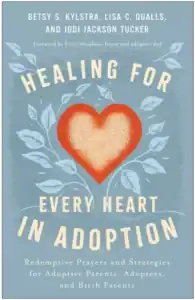
John: Yeah. And we have a great panel of guests today. We have Lisa C. Qualls, uh, Jodi Jackson Tucker, and Betsy Kylstra. And together, uh, from very different perspectives and different experiences, they’ve written a terrific book called Healing for Every Heart in Adoption: Redemptive Prayers and Strategies for Adoptive Parents, Adoptees, and Birth Parents. It’s a terrific resource, and you can find out more about our guests and this book, and all the help we have here at the ministry at focusonthefamily.com/broadcast.
Jim: Ladies, welcome to Focus on the Family. Good to have you.
Jodi Jackson Tucker: Thank you, Jim.
Lisa C. Qualls: Thank you.
Jim: Yeah. There can be a diverse range of experiences surrounding adoption. I think I’ve heard those stories. And John, you have too. Uh, but these wounds are always, are often, uh, going to be a factor. And it is not because of a flaw in those adoptive parents. These kids are coming in with great needs. I can remember filling out the foster form. I mean, it’s, are you able and willing to have a child in your home that is a headbanger, a food hoarder? You know, there isn’t no normal box to check because most of these kids are trying to cope somehow with their environment. So in that regard, uh, what does research show about child development that explains these wounds that adoption is, uh, both causing and helping?
Lisa: Well, we know from research that the bond between the mother and the baby begins prenatally. It’s-
Jim: Prenatal?
Lisa: Yes. It’s already happening. They’re already experiencing their mother’s movements and her voice. And she begins to experience the baby as well because the baby is moving and there’s this beautiful almost communication, you know, that, that they experience together that’s very, very special and very, very sacred. And so when a baby is born, they are looking for that mother. You know, this is the-
Jim: That voice.
Lisa: Yes, for their voice. They’re looking for their touch. And so if a baby is separated from their mother, even just shortly after birth, that is a trauma. Change in primary caregiver is a trauma. And when we’re talking about children in foster care, they have often been with their parents for a period of time, and they’ve experienced a wide range of things.
Jim: Yeah.
Lisa: Probably neglect, abuse, things like that. So there are significant wounds that happen-
Jim: Yeah.
Lisa: … you know, with abandonment and sometimes a sense of rejection, even though their birth mother may have actually even made a beautiful plan for them, but deep within themselves, “Why would someone give me away?”
Jim: You know, it’s almost, it makes me a little uncomfortable that way because with our Wait No More program, we’re encouraging parents to adopt and think about adoption and, but we’re talking about acknowledging the wounds that can be caused by adoption. Um, why is naming those wounds so important?
Jodi: I think it’s important for our families and for our children that we recognize that for adoption to be possible, a loss has taken place for the child. Now, many adopted children do beautifully, uh, grow up and do amazing things and are incredible overcomers, but we still need to acknowledge that God’s design was not for a family to be broken. Uh, He has a redemptive story in adoption, but in God’s perfect design, the family remains together. And so we need to acknowledge that loss if we’re going to move towards a redemption story.
Jim: Yeah. Betsy, you’re the adopted person. So in that context, uh, I think going back, I mean, it was a few years ago that you were in that situation.
Betsy Kylstra: Yes, sir.
Jim: But those, those feelings of something’s not quite right. Um, speak to the hope people affected by adoption can have in healing through Christ.
Betsy: Okay. I think what you said, the feeling that something’s not quite right has many faces. It has many pieces to it. You know, many fears, anger, rejection, shame, so much. And yet we have a God of redemption who begins very early if we’re in a Christian home to restore that brokenness that we were all just talking about. And, um, so many things, I mean, I could tell you how that happened for me.
Jim: Yeah, that was the next question. I was gonna start the other direction now and start with you.
Betsy: (Laughs) Okay.
Jim: But what was your story? How old were you when you were adopted?
Betsy: Yeah.
Jim: And what happened?
Betsy: I was two months when I was adopted. And I remember the first six years as being, you know, pretty peaceful. But I had an experience of two little neighbor children saying to me one day, “Well, your parents are not your real parents.”
Jim: Wow.
Betsy: “You don’t have any real parents.” You know, “We have real parents.” And it was like all of a sudden something that was deep, deep inside just came to the surface with this whammo kind of feeling and kind of knocked me off my pathway and began to bring to the surface that the feelings of abandonment, loneliness, separation, “I’m different in some kind of bad way.”
I remember the first time I heard that He knit you together in your mother’s womb. It wasn’t this random egg and sperm that came together that was meaningless and chaotic. It was God’s hand was on me even before I appeared. And as those things came, they began to fill that dark place in my soul. But this was also there.
It was like a war was going on inside of me because I felt the depth of that abandonment and that brokenness, but I was also hearing God’s word and God’s truth. And I guess the abandonment was like a stomach ulcer (laughs).
Jim: Mm-hmm.
Betsy: Sometimes it was just oozing and not too painful and other times it was bleeding and it felt just like, “I don’t know if I can stay in this pain.”
Jim: In that context though, you’re in a good environment. You’re in a Christian home. This is why Christians should be involved.
Betsy: Yeah.
Jim: But even with all that, buckets of identity and love and trust and you still had doubts and you still had this-
Betsy: I still had doubts.
Jim: … sense of shame and I would imagine-
Betsy: Yes. And I think if I could say one thing to the adoptive parents is that the issues are not yours, that you can pour so much love, pour Scripture, pour everything you have into a child, but that child still has to struggle with that basic feeling of loss, that basic feeling of abandonment. And that’s, um, parents, you need to release yourself from all that weight of, “I haven’t done enough. I haven’t done it well enough.” And just face the fact that your child has to go through that struggle.
John: Mm-hmm. Yeah. And this is Focus on the Family with Jim Daly. And today we’re talking about healing from the wounds of adoption. And our guests are Lisa C. Qualls, Jodi Jackson Tucker, and Betsy Kylstra. And the book is called Healing for Every Heart in Adoption: Redemptive Prayers and Strategies for Adoptive Parents, Adoptees, and Birth Parents. Get a copy of the book from us here when you stop by focusonthefamily.com/broadcast.
And Jodi, I think one of your adopted children struggled. Uh, it was a college story I think, that you had in the book about ongoing abandonment issues, uh, despite having a, a Christian foundation in the home. Tell us about that.
Jodi: Yes. Our daughter was older when she was adopted and she is a lovely child. She, um, was an excellent student. We had a close relationship or so I felt. And, um, it was just such a gift being her, her parents. And when it came time for her to go to college, our relationship started to struggle. And even each year around the time that she would leave for college, things would get very difficult. And it actually took her three years of college to admit to me one day on the drive there that every time we bring her to college, it was about two hours from our home … Um, sorry, it’s, it makes me emotional to think that she went through this. Um, she was worried that we would never come back-
Jim: It was a trigger.
Jodi: … and pick her up.
Jim: Yeah.
John: Mm.
Jodi: And the dorm actually reminded her of the orphanage that she grew up in.
Jim: Wow.
Jodi: And because of some things that had happened to her in her childhood and experiences that she had had, it had deposited that fear of abandonment in her soul. So while there was no evidence that we would ever just leave her there, that was a struggle that she had to overcome. And I was so grateful when she finally shared that with me so that we could make the extra effort to remind her, “Of course we’re coming back. This is when we’re coming back. We will always come back for you.”
You know, Jesus said that to His disciples, “I will not leave you as orphans.” And there’s a beautiful scripture in Psalm 27 that says, “Though my mother and father abandoned me, the Lord will care for me.” And I was already an adoptive mom when I heard that scripture. And I just thought, “That is so magnificent. And that’s what I need to be telling my children. No matter what they went through, no matter what any of us goes through, Jesus was always there.”
Jim: Mm-hmm.
Jodi: He was always there in those moments, even when we felt lost and abandoned.
Jim: Yeah. And it’s such a normal thing to feel-
Betsy: Mm-hmm.
Jim: … when you’re abandoned, to feel abandoned.
Jodi: Yeah. Yeah.
Jim: I mean, that’s completely normal and all those things that can happen.
Jodi: Yeah.
Jim: It’s-
Jodi: But we’re not really alone.
Jim: No, we’re not.
Jodi: Yes.
Jim: But it feels that way.
Jodi: Yeah.
Jim: You know? So it’s, it’s tough. And boy, just acknowledging that for that child and, and being able to talk that through.
Jodi: Yes.
Jim: “You know, this is probably why you’re feeling that way, but we’re gonna be here for you.”
Jodi: Yeah.
Jim: Man, what a great message that had to be and that sense of security that she had after that. Even with lingering doubts, “Maybe they won’t show up,” right?
Jodi: Well, right.
Jim: But they get lesser and lesser.
Jodi: It’s part of her journey.
Jim: Yeah.
Jodi: It’s part of her journey.
Jim: Lisa, let me ask you, you’re, as a birth mother, you dealt with a lot of emotional wounds. Um, tell us about your story and what happened for you.
Lisa: Hmm. Well, I became pregnant sort of in this era between maternity homes and, uh, a lot of young women keeping their babies.
Jim: Mm-hmm.
Lisa: And so my parents did not know what to do. And they ended up putting me in foster care, which is sort of stunning. I think they had really no idea what they were doing, but they put me in foster care, and I was removed from everybody I knew and loved and moved from a small town to a big city.
Jim: Yeah.
Lisa: And it was, I felt very, very deeply abandoned.
Jim: Well, let me just clarify that-
Lisa: Yeah. Okay.
Jim: … for the listener, the viewer. I mean, again, you’re 17 and pregnant?
Lisa: I was a little younger.
Jim: Okay.
Lisa: Mm-hmm.
Jim: A teen pregnancy?
Lisa: Yes.
Jim: And your parents got advice that the best option here would be to put you into foster care.
Lisa: Mm-hmm.
Jim: Which, you know, that just kind of is amazing when we think about it today.
Lisa: Yes.
Jim: It was like move the problem outside of your home. I-
Lisa: Yeah.
Jim: I mean, did you ever come back to reconcile that with your, your parents?
Lisa: Yes. We have reconciled over the years. The Lord has done so much healing. And I think it took me a long time to realize that, honestly, I think they were trying to protect me.
Jim: Yeah. No, I can understand that.
Lisa: You know, they were removing, moving me far away from my boyfriend, for one.
Jim: Right.
Lisa: Um, moving me out of our community and, um, protecting themselves a little bit too, you know? There was a lot of shame there.
Jim: Yeah. Well, that’s true.
Lisa: Mm-hmm.
Jim: And you had the child and you put the child up for adoption.
Lisa: Yes. Not because I wanted to.
Jim: Correct.
Lisa: Yeah. But because I had truly no other option.
Jim: Yeah.
John: Mm.
Lisa: Even my foster mother was told she could not offer to help me.
Jim: Wow.
Lisa: Yeah.
Jim: Under that banner of grief and loss, I mean, how did you cope with that decision? I mean, this is big.
Lisa: It was very, very big. The only thing that got me through was the Lord. I was not a believer when I became pregnant, and I came to know Jesus. I kept hearing more about Him. I kind of thought my foster mother and her friends were a little strange because they were really, really into Jesus. But I feel like the Lord captured me, you know?
Jim: Huh.
Lisa: And it wasn’t-
Jim: Didn’t repulse you?
Lisa: No.
Jim: You kind of leaned in.
Lisa: No, I was-
Jim: No, that’s good.
Lisa: I think the Holy Spirit was preparing my heart, you know?
Jim: Yeah. No, that’s great.
Lisa: But it wasn’t until I was actually in labor and the most profoundly alone that I’d ever been in my life and so desperate. I was scared. I was in pain. My foster mother was sleeping. And, um, I cried out to the Lord. And I just said, “I can’t do this alone.” I, I feel like I was truly lost and then found. I felt the presence of the Lord with me. It was powerful and it changed my life forever.
John: Mm.
Jim: That’s, that’s good.
Lisa: Yeah. All eternity.
Jim: Yeah.
Lisa: And future generations, you know? So I’m very, very grateful for God showing up so powerfully for me.
John: Yeah.
Jim: So for that teen girl who’s pregnant right now, she may, may be listening, may not, but her mom might be listening. What advice would you give both of them?
Lisa: I would say if I were that mom, I would surround my daughter with so much love and so much support. No mother should be separated from her baby out of desperation. No mother should be abandoned. So I think whenever possible, we help that young mom parent her baby. I always think to myself, you know, I lost my son because of my age and my youth. And you know what? I overcame that because I got older. I just needed some help right then-
Jim: Yeah.
Lisa: … to have been able to parent my son. But sometimes circumstances don’t allow that. And then I think in that case, we need to be prepared for the grief and be ready to support her through it.
Jim: Yeah. A- again, a question I’m sure people are wanting me to ask is did you ever connect with your son? Was there-
Lisa: I did.
Jim: Tell us that because that-
Lisa: Okay.
Jim: That’s important for our emotional wellbeing right here.
Lisa: Okay. Yes. Well, he found me when he was 16.
Jim: Wow.
Lisa: And we had, I would say, a fairly rocky reunion because he was young and his parents were not prepared for it. I wasn’t quite prepared yet either.
Jim: Yeah.
Lisa: It was definitely the longing of my heart to know my son again. But he also didn’t know his story. He had no idea why I had given him up for adoption. It was very healing for him to learn that, that I loved him so much and that I never, never forgot him. And it was also great for him to learn his heritage, you know? And so it was beautiful. He also, uh, reunited with his birth father.
Jim: Okay.
Lisa: Yeah.
Jim: Betsy, in the book you share prayers for healing. Um, what are the key parts of those prayers to heal a broken heart?
Betsy: Mm. Well, there’s repentance of what has gone wrong and what, how we’ve responded wrong. There is forgiveness because so much forgiveness is needed, including forgiveness of ourselves. And there’s also a place to just release the heaviness and the burdens that we’ve carried to the Lord. And so those are essential parts of the prayer.
Jim: You know, I think just generally for all three of you to, to give a perspective on this, there’s, all of this is gradation. And what I mean by that is some children will respond well with a light loving touch that have come out of this situation. I feel like I was in that spot. I didn’t really own my dad’s bad decisions. I never felt like that was my fault that he and my mom divorced. And of course my mom died when I was nine. My dad when I was 11. I ended up in foster care.
Betsy: Wow.
Jim: Um, not a very good positive foster experience. But there was something in me that really put the blame in the right place. I never felt like I owned it as a child.
Betsy: Mm-hmm.
Jim: And I, I just thank the Lord for that grace, right?
Betsy: That’s huge. That’s one of the most important things that can happen.
Jim: How does somebody, and this is the question, how does an adult in that child’s life help them get there so that they’re not feeling all the guilt and all the-
Betsy: Yeah.
Jim: … you know, sins of your fathers and that kind of thing. But h- what do you say? What do you do?
Jodi: I think this is a central theme that all of us have come to in our journey, which is the most important thing we need to communicate in our families is an identity in Christ. You know, as an adoptive mom, I was very focused on, uh, “Am I doing enough to make sure my children feel their cultural identity, the identity of their birth family, letting them feel that connection, making sure they felt connected to our family, to their new family?” But ultimately, Jim, at the end of the day, we’ve all come to realize it’s that identity in Christ that is the central healing issue.
And that’s why all three of us, I think, are so focused in our, uh, respective ministries on this idea of healing. We’ve all gone through therapy. We’ve all read books. We’ve all listened to wonderful Focus on the Family materials and podcasts and all the fantastic things that you all provide. But in the end, it’s being with Jesus, rooting our identity in Him that is the most significant. And that’s where the healing ultimately comes. That’s the moment of healing.
Jim: Would you, would you say that that can be like a progressive kind of thing? I mean, it, where you’re getting healthier day by day?
Jodi: Yes.
Jim: And then other people might have that experience where it just hits them, where it’s a, a monumental moment.
Jodi: Mm-hmm.
Jim: Is that a fair description?
Jodi: Yes. Um-
Betsy: Could I bring in a, a monumental moment-
Jim: Sure.
Betsy: … that I had? And I, of course, I was in a, the context of a Christian family. But when I was about nine, it was Easter and we were in a little town, and we all went to the football field, and we had an Easter sunrise service. And, um, I just asked my parents, “Would it be all right if I just walked home?” Well, this was 1950 and it was safe to walk three blocks for a little child. And so they said, “Sure, honey. We’ll … You know, oatmeal will be ready when you get back.” And I was walking along and all of a sudden superimposed on the neighborhood scene was this picture of Jesus on the Cross.
Jim: Mm.
Betsy: And He looked at me with tears in his eyes and just said, “I did this for you, and I love you so much.” And I just had this overwhelming sense of belonging to Him and that He knew right where I was in my little neighborhood.
Jim: Mm.
Betsy: And it just began to let me know that not only was I, did I think that I was learning to know Him, but that He already knew me. And the whole thing of being taught that He knew me from the foundation of the world-
Jim: Yeah.
Betsy: … just hit. And it’s like it was a life-changing moment. And I felt received, I felt understood, I felt loved. I just felt like, “Jesus, you’re really there for me. And there’s a lot I don’t understand. There’s a lot I struggle with, but you’re there for me.” And that was a turning point in my life.
Jim: Yeah, that is beautifully said. I, I think that’s it. Um, you know, the scripture says that He’s a Father to the fatherless.
Betsy: That’s right.
Jim: There’s something about the Lord’s heart for people in that spot.
Jodi: Mm-hmm.
Betsy: Yeah, there really is.
Jodi: Definitely.
Jim: You know, the parents and the children. I mean, Lisa, I’m thinking of you and-
Lisa: Mm-hmm.
Jim: You know, just that teenager who’s pregnant and scared.
Lisa: Yeah.
Jim: “What do I do? Now I’m getting shipped off to a foster family-”
Lisa: Mm-hmm.
Jim: “To hide my thing and my sin.”
Lisa: Mm-hmm.
Jim: I mean, just powerful. But the Lord’s in it all.
Lisa: Yes.
Jodi: Yes.
Jim: You know, and He-
Jodi: And He wants to heal our hearts.
Jim: Absolutely.
Jodi: And that’s what’s so central. Um, I wore this necklace today. I had a, a similar experience. I was at my lowest point as an adoptive mom and, because of the brokenness and challenges with my children. And I found myself in a very dark, uh, low place spiritually. And then one day I actually was in a very dark, low place. Physically, I was swimming under the water, and I was deep in the water. And in that moment, I just cried out to God. I said, “Lord, you have to heal me. I cannot continue to live with my heart this broken. Either take me now, take me home with you, or heal me.”
Jim: Mm.
Jodi: And when the Lord was speaking through Ezekiel, He said, “I will take your heart of stone, and I will give you a heart of flesh.” And in that moment, I felt the Lord reach toward me and heal my heart. And as I came up out of the water, I knew I was starting on a healing journey. So I had that moment like you described, Jim, where, and like Betsy and Lisa have both described that were the turning point. And when I came up out of the water, I encountered this lady who was selling these necklaces that she makes. And this is a stone heart, and it’s covered with the tree of life.
John: Mm.
Jodi: And there’s no way that I could not believe that that was a wink from God-
Jim: Yeah.
Jodi: … that He had taken my stone heart, but He was putting the tree of life over it and that our family could thrive in the future.
Jim: Boy, that’s beautiful.
Jodi: And that we could bring fruit.
Jim: Yeah.
Jodi: And so I, I was so excited when you said a key moment because, um-
Jim: You had it.
Jodi: You know, I still needed a lot of support. I still went through a lot of counseling. There was a lot that still needed to heal, but that was the moment where I realized helping people heal needs to be the central message of what we do.
Jim: Well, that is so good. And unfortunately, we gotta land here, but let’s come back next time, continue the discussion and learn more about loving these kids, loving these moms, and really doing what we need to do to be the body of Christ. Can we do that?
Lisa: Yes.
Jim: All right. Let’s do it. Um, this has been such a moving conversation, and I hope you’ve been encouraged today and that you feel empowered to pursue the healing that Christ offers for your entire family. As I mentioned earlier, we help foster and adoptive families thrive in Christ through Wait No More. It’s a wonderful program. John will tell you where to find that link in a minute. And I also wanna recommend that you get a copy of the book, Healing for Every Heart in Adoption.
Now, when you make a gift of any amount to Focus on the Family, we’ll send it to you as our way of saying thank you for being part of the ministry. We are a nonprofit ministry, and so everything you donate goes right back into helping others. If you aren’t called to foster care but still want to support foster families, you can help meet their needs by partnering with us in ministry.
Last year, we helped 480,000 families who were engaged in some way with foster care. Maybe they are the foster parent or they’re providing respite care, that wraparound family, or somehow they’re engaged at a church, et cetera. But that’s a big number, and we want to continue to encourage people to get engaged. You can do that through Wait No More. And with your help, we can make that number even bigger next year.
John: Mm-hmm. Yeah. Find resources, uh, and ways to plug in, donate, and get a copy of the book when you call 800, the letter A, and the word FAMILY. Or stop by focusonthefamily.com/broadcast.
And on behalf of the entire team, thanks for joining us today for Focus on the Family with Jim Daly. Plan to be with us again next time as we continue the conversation with our guests, and once more, help you and your family thrive in Christ.
************
Part 2:
John Fuller: Today on Focus on the Family with Jim Daly, we’ll be hearing more from our panel of guests, Jodi Jackson Tucker, Lisa C. Qualls, and Betsy Kylstra, about God’s redemptive hand and how we can bring healing, uh, to and through adoptive families. Thanks for joining us. I’m John Fuller.
Jim Daly: John, our goal at Focus is simple. It’s to help families. I think people get that. If you’ve listened regularly on YouTube or a podcast or the broadcast.
John: Mm-hmm.
Jim: And we’re here for you. And, uh, we started a conversation last time about adoption and foster care work, and we have three special guests with us that really have been impacted in their lives by those, uh, contours of the family.
John: Mm-hmm.
Jim: And it’s just part of what God does to pick up the pieces, to mend us back together and move us toward a healthy, whole life in Him. That’s the goal. And we are gonna pick up that conversation. Uh, adoptive families have some very specific needs, and I would say emotional and spiritual needs, and we’re going to continue talking about those today.
Yesterday, we talked about healing from the wounds of abandonment and grief and loss, and I, uh, would recommend that you go back and go to the website, pick that up. You can get the, uh, app for the phone.
John: Mobile app. Mm-hmm.
Jim: And you’ll have access to all the broadcasts there. So, uh, do listen to our last conversation. I think you’d be blessed by it.
John: Mm-hmm. Yeah. And our guests have, uh, together written a really great resource. Uh, this book is called Healing for Every Heart in Adoption: Redemptive Prayers and Strategies for Adoptive Parents, Adoptees, and Birth Parents. And you can learn more about, uh, our panelists and, uh, the various works that they’re involved in. They do some terrific things, and this book at focusonthefamily.com/broadcast.
Jim: Lisa, Jodi, Betsy, great to have you back. Thanks for being with us.
Lisa C. Qualls: Sure.
Jodi Jackson Tucker: Thank you.
Jim: Um, Jodi, let’s pick it up from where we left off last time.
Jodi: Mm-hmm.
Jim: And again, people need to go back and listen to that. But you left us with both a tough story and then a beautiful little God wink at the end about your necklace.
Jodi: Yes.
Jim: Uh, your scripture, the scripture that talks about God replacing a stony heart with a heart of flesh.
Jodi: Yes.
Jim: And that’s what that is. But you found that jeweler on the beach after you were swimming, and it sounded like you were there in desperation.
Jodi: I was. I was. You know, as an adoptive parent, it can be easy to fall into the lie that we are responsible for the healing of our children.
Jim: Sure.
Jodi: There are so many good materials now. We’ve all learned about trauma-informed care and attachment parenting, and that’s also a heavy weight to carry when you’re an adoptive parent. When, when you see the brokenness and the suffering that your children have experienced, and you’re carrying the weight of that. And I had to realize that it was Jesus who could heal me and my child, and release that entirely to Him. You know, there can be talk in our adoption community about how challenging it is in an adoptive family, and it can be difficult, but as a mother, I’ve come to realize it’s obedience over outcome.
I stepped into this life out of obedience to Jesus. He called me to it, and I did it out of obedience to Him, but then I started to forget that He was also the author of the outcome. And so while my child may be struggling, Jesus has a plan, and it’s through our suffering, as each of us has shared. It’s through our suffering. It’s in those moments where He meets us, and so we cannot shield our children from everything that they must go through, but He has a plan. He’s in charge of the outcome.
Jim: Yeah.
Jodi: And that’s why I appreciate so much, uh, particularly Betsy’s work with, um, these prayers that she has blessed my life with, of how I can pray for myself and pray for my children, whether they’re still in the home or not, that redemption is there through prayer.
Jim: You know, Jodi, that applies to bio kids too.
Jodi: Yes, absolutely.
Jim: I mean, this is any kind of situation where your children, whether bio or adopted-
Jodi: Yes.
Jim: … are struggling. And I, I, if you allow me, I just wanna dig in a little more to understand that feeling. I mean, the desperation of a mom whose child is not behaving. When you say outcome, they’re not moving in the direction that you desperately want them to move in.
Jodi: Mm.
Jim: Whether for them it’s self-harm or just that continued affliction of where they’re coming from, and they’re not getting over it and you’re at your wit’s end-
Jodi: Mm-hmm.
Jim: … to figure out, “How do I help?” And then, and I’m making those assumptions, and then it turns, you turn it on yourself-
Jodi: Mm-hmm.
Jim: “… that I’m no good, that I’m inadequate, I’m not equipped.”
Jodi: Yes.
Jim: “I’m not the mother I thought I was. I don’t have the capacity.” You get the idea.
Jodi: Yes, absolutely.
Jim: Speak, speak to that desperation because I think many moms listening and watching are gonna say, “That’s me. I’m right there right now.”
Jodi: Yes. Well, first of all, we have to think of it not as how the child is behaving, but that the child is suffering. They’re continuing to suffer from the circumstances that created them to need to come into your family.
Jim: Now, in that context, and I experienced this with Jean and I both with foster care, you’re at your wit’s end.
Jodi: Mm-hmm.
Jim: And then you start, you know, doing things that aren’t in line with loving that child. I’m not talking about abuse, but it’s attitude, little things like, “Man, could they not get over this? What’s happening?” You’re talking about flipping the script there so that you get away from that kind of if-then outcome, and you just start loving them.
Jodi: I think as adoptive parents, it’s easy for us to try to be looking for the next tool, the next resource, the next therapy program, and sometimes that’s enough and all those things are good, but really, every single day, I just have to put my child at the feet of Christ.
Jim: Yeah. Do- You have to do that with what they’re doing though. That’s what I’m-
Jodi: Yes.
Jim: … I’m getting at. You have to become comfortable with the mess.
Jodi: Mm. (laughs) Yes.
Jim: If I could say it that way and that’s a hard thing to do.
Jodi: Mm-hmm.
Jim: ‘Cause we wanna tidy the mess.
Jodi: Yes.
Jim: We, as parents.
Jodi: Well, Bible stories are quite messy, I’ve learned.
Jim: (Laughs).
Jodi: And there’s a lot of stories about foster care and adoption in the Bible that I, I came to see when I was in seminary. And so when I see how God wrote about those stories, they’re long stories. We have to take the long view.
Jim: Yeah.
Jodi: Moses was 40 when he killed the Egyptian. Moses, an adopted child, was 40. I thought he was a rebellious teenager. And when I learned he was 40, I thought, “Lord, this is gonna go on forever.”
Jim: (Laughs) Yeah, right. I can’t get on top of this.
Jodi: Yes. But look at the story that God was writing with Moses’ life.
Jim: Yeah.
Jodi: And that’s one of my favorite Bible stories. And it encourages me that in our families, we have to take the long view. And I think it’s important also to recognize that I don’t just want healing for my family, I want healing for the birth family of my children as well, and that’s why it was such a joy and blessing to collaborate with Lisa and her courage in sharing her story.
Jim: Yeah.
Jodi: Because we are all connected. We’re all connected. We have been connected by a sovereign God. I will always be connected to my children’s birth family, and I want that healing and that knowing of who they are in Christ as much for them as for our family.
Jim: Well, even with the Moses story, of course, him being cast down the Nile, and in essence, being adopted, right?
Jodi: Yes. Exactly.
Jim: That whole component, and then-
Jodi: Exactly.
Jim: … what he was dealing with.
Jodi: Yes.
Jim: Not really being Egyptian, but being-
Jodi: Correct.
Jim: … exalted in that culture.
Jodi: The same identity struggles that we see in our kids.
Jim: Yeah. Right.
Jodi: Exactly.
Jim: Lisa, let me ask you. Uh, adoption is difficult for the whole family, and I would say foster is as well as we’ve experienced, so I put these two kind of together. Adoption is a much longer, obviously, commitment, a lifelong commitment to these children, but you have elements of it with foster care as well. But, um, there can be some damage done to your bio family, uh, and you have to take that into account and manage it as we were just talking about. Now you’re feeling bad that your bio son doesn’t feel like he’s getting your attention because the adopted child needs so much time and attention, but just speak to all the dynamics of that and how we find healing, whether we’re mom, dad, adopted child, bio-child who now has a new, you know, roommate in his bedroom and he’s trying to figure out what’s going on here, but speak to all those realities.
Lisa: Well, speaking as an adoptive mom, I think the experience of the siblings, I call them the unseen siblings, is really significant.
Jim: Yeah.
Lisa: And, you know, often these kids, they make a lot of sacrifices. Sometimes some real suffering comes because, you know, we’re bringing children with significant wounds-
Jim: Yeah.
Lisa: … into our families. And I always tell people that we didn’t do it very well. You know, we were so consumed by the needs of our new children, because we adopted four children from Ethiopia.
Jim: Mm.
Lisa: We were so consumed by their needs that we sort of lost sight of the needs of our other children. And we had to refocus and really seek our kids’ forgiveness, actually, and make a new start with a lot of things to put more, um, support around them.
Jim: Yeah.
Lisa: When we couldn’t give it, we actually changed to a new church that had a really strong youth program where-
Jim: Oh, interesting.
Lisa: … where the youth pastor could support our kids. There were so many different things that we did.
Jodi: Jim, you and I both have been involved with a national adoption conference, and that’s where I first met you, and, um, one time, they asked my biological daughter if she would serve on a panel to talk about what it was like being in an adoptive family. At this point, she was in college and she had five younger siblings who had all been adopted, and a lady in the audience raised her hand and asked my daughter, uh, “We’re thinking of adopting and we’re worried about how it will impact our biological children,” just what you’re bringing up and what I’ve learned a lot, uh, f- through Lisa’s work about. And I’ll never forget, this is what my daughter said. She said, “Remember, your job as a parent is not to make your children’s life comfortable. Your job as a parent is to make your children more like Christ.” And I thought, “Okay, that’s a wrap. I’m done here.” (laughs)
Jim: Yeah. Well, the fact that she caught that-
Jodi: She got it.
Jim: … showed a lot of maturity-
Jodi: She got it.
Jim: … for her age.
Jodi: Yes. And even though she had experienced some of the same things that Lisa’s kids had experienced and, um, gone through a lot with her parents and with her family, she reminded us, this is why we do this. We’re trying to make our families more like Christ.
Jim: Yeah.
Lisa: Mm-hmm.
John: This is Focus on the Family with Jim Daly, and our guests today are, uh, obviously speaking right from their hearts. Uh, Betsy Kylstra, Lisa C. Qualls, and Jodi Jackson Tucker, and they’ve, uh, pulled together their collective experiences and insights in a terrific book called Healing for Every Heart in Adoption: Redemptive Prayers and Strategies for Adoptive Parents, Adoptees, and Birth Parents. And you can learn more about that book. Get a copy from the ministry here when you stop by focusonthefamily.com/broadcast.
Jim: Uh, Betsy, we talked yesterday about identifying the wounds caused by adoption. How would you define the wound of shame?
Betsy Kylstra: Well, I think shame is feeling like you are permanently and hopelessly flawed, that it’s very different from guilt where you’ve actually done something wrong and you can repent of that and get it all clear, but shame is like this horrible thing that sticks to you, that affects your identity.
Jim: Mm-hmm.
Betsy: This is like who I am is a shameful person, and I can’t somehow get rid of it. So it sort of becomes a lens through which you see life is just as a shameful person.
Jim: What was your journey, you know, in experiencing that? How did you overcome that? How did you do self-talk to say, “Okay, Lord, I know this is not who I am.” It’s hard for many people to simply do that.
Betsy: Mm-hmm.
Jim: How did you get from that shame, the feeling of shame being part of your identity to being able to better understand it was not your fault.
Betsy: Mm-hmm.
Jim: The fact that you were adopted was not your fault. I mean, you’re a little baby.
Betsy: Right. Yeah.
Jim: I mean, what, what could you have contributed to that?
Betsy: What could I have contributed? Yeah.
Jim: But how do you get there when that voice of shame has been ringing in your head for years?
Betsy: Yeah. It’s a great question, and it, it’s a painful journey. A lot of times, we, in our society, have labeled it more low self-esteem than we have shame, but they’re different feelings, and shame is really the better word. Um, I think for years, it was like just a dark shadow that affected my life, like “I’m never good enough. What do- I don’t belong,” all of those messages that the enemy tells you and you, and you agree with because you don’t know any better.
And little by little, as the Word began to get into me, and then I had this encounter when I was about 10 or 11 years old, just, um, walking home, and I just saw Jesus on the Cross. And it was like He was just there saying, “I did this for you. You’re okay. You’re mine,” and that just changed for me-
Jim: So that’s when it made sense.
Betsy: That’s when it made sense, and it changed for me the way I felt about ours- myself. All of a sudden, I felt like I am going to be okay.
Jim: Right.
Betsy: This was a turnaround in my identity. Um, and so that was the beginning. And then the Word, of course, fed into my life. Um, and I just began to… There were ti- many times I cried out to Him.
Jim: Yeah.
Betsy: Um, shame, I didn’t quite know how to identify it. I just felt like there’s something wrong with me.
Jim: Right.
Betsy: How can I ever get right? And it was a little-by-little journey, and I just felt like somehow, I’m gonna make it.
Jim: Yeah.
Betsy: It’s gonna be all right. It was a huge shift for me.
Jim: A turning of the corner. I mean, I like that.
Betsy: It was a turning of the corner.
Jim: That realization that you are loved by God, and you’re seen by God.
Betsy: Yeah. And I’m seen.
Jim: Yeah.
Betsy: And I felt like, oh, He’s written my whole story.
Jim: Yeah.
Betsy: And He’s right here, and He knows me.
Jim: Yeah.
Betsy: And He knows all of my struggles.
Jim: Yeah.
Betsy: He knows all of my ugliness-
Jim: So good.
Betsy: … and He still loves me.
Jim: And it’s so… Boy, that’s where everybody needs to get to. I mean-
Betsy: Yeah.
Jim: Because then you can relax.
Jodi: Every one of us.
Jim: Then when He says, “My burden is light.”
Betsy: Yeah.
Jim: Now you’re feeling a light burden of the Lord.
Betsy: Now, I felt… Yeah.
Jim: And that shame and that guilt is gone and it’s not who you are.
Betsy: Yeah.
Jim: And the deceiver has been whispering in your ear.
Betsy: That’s so well said.
Jim: And he comes to steal, kill, and destroy.
Betsy: Yeah.
Jim: And he’ll whisper all of it into your ear.
Betsy: And that, I’m so glad you said that because that gave me ammo.
Jim: Yeah.
Betsy: That gave me ammunition when those voices came back, and I said, “No.”
Jim: Right.
Betsy: “I’ve seen and heard the Lord.”
Jim: Wow.
Lisa: And, and I think we want to encourage these young pregnant women or, or birth moms that the Lord is looking upon them with love. They are precious to Him, they are loved, and He’s gonna carry them. Whether it was decades ago or whether it’s now, you know?
Jim: Yeah.
Lisa: He’s going to carry them, and it, there will be sorrow.
Jim: Yeah. Jodi, Lisa alluded to this, this idea of isolation.
Jodi: Mm-hmm.
Jim: But what can we practically do? Um-
Jodi: Oh, it’s so important.
Jim: We talk about building a community.
Jodi: Yes.
Jim: How do you… Okay. How do you wake up one day and, okay, I need to build community around me? What does it look like?
Jodi: It, it’s so important to find other adoptive parents who are going through, uh, the same experience, for your children to know other adopted children, for your foster kids to hang out with other foster kids. Both Lisa and I lead communities that are welcoming to these parents, and we would welcome you in. It’s incredibly important, and even for biological children in an adoptive family.
But at the end of the day, I would just, I want to make sure to say that while we’ve talked about a lot of the challenges, and we do talk about the challenges in those communities, what we share in those communities is adoption has been the greatest gift to my life. I wouldn’t change it for anything. God adopted me and becoming an adoptive parent and my children are treasures. They’re treasures, and they’re treasures to our biological children as well. We wouldn’t be who God meant us to be-
Jim: Huh.
Jodi: … without them. And so coming into those communities, you can find other people who can reframe the hard, help you take the long view, get the support you need from someone who truly understands. And there’s retreats available now, uh, for foster and adoptive parents. Get that community you need so you can, uh, flip the script and start to see the beautiful redemption that’s being written through your story.
John: Mm-hmm.
Jodi: Um, our families are biblical families.
Jim: Oh, sure.
Jodi: They are-
Jim: We’re all adopted into the kingdom of God, right?
Jodi: Yes, yes, exactly.
Jim: So we’re all, we’re all in that spot. Lisa, we’re nearing the end here, and I just wanna make sure, uh, people have a, a good idea of what do I do? Uh, speak to those listening who were never a part of adoption and aren’t feeling called to adoption. How can they come alongside adoptive parents to help them be successful in this endeavor? This is the one thing that, man, the early church, this is what they did.
Lisa: Mm-hmm.
Jim: Um, they picked up those babies at the Roman dumps. They brought them home. Yeah, guess what? There were unwanted pregnancies 2,000 years ago. Some things are not new under the sun, right?
Lisa: Mm-hmm.
Jim: And it was the Christians who went, gathered those children who were just left there to die through exposure, brought them home. I’m quite certain the church came around those families to say, “Okay, let’s take care of these kids.” But speak to what do I do if I’m living in a normal, normal biological family?
Lisa: There are so many things that people can do to support adoptive and foster families, from the small things to the big, you know? Uh, I always tell people, think about what is a life-giving way that you like to serve? Maybe you have a child who’s playing soccer, and you can pick up this other kid and take him to every practice because those parents are too overwhelmed, they cannot sign their kid up for soccer. It can be that easy. It can be doing someone’s laundry for them. It can be mentoring one of the biological children in the family, coming alongside them. I mean, the options are endless, and I think it can be super practical. It can also be financial. Foster and adoptive families are tapped out financially.
Jim: Yeah.
Lisa: We’re seeking so much-
Jim: Time and treasure.
Lisa: … help for our kids. Yeah, and so I think the options are endless. So it’s important though to serve in a way that actually, you can sustain.
Jim: Yeah.
Lisa: You know? Something that you can do for the long haul, and that’s what people did for us. We had people who… I had one friend who picked up one of my adopted daughters every Tuesday after school.
Jim: Oh, wow.
Lisa: Took her home, fed her dinner, and was like her special person, and everybody at home got a break too.
Jim: Yeah.
Lisa: So it can be… It doesn’t have to be hard, but it can be profoundly important for that family.
Jim: Let me throw this out to everybody, this concept of forgiveness. I mean, it’s running in every direction in this context.
Lisa: Mm-hmm.
Jim: So, you know, uh, parents forgiving their daughter, perhaps. Uh, Lisa, your position.
Lisa: Mm-hmm.
Jim: Daughters forgiving parents, uh, adoptive children who are struggling forgiving their adopted parents. I mean, you can run all of the various needs for forgiveness.
Lisa: Mm-hmm.
Jim: What do you say about the power of forgiveness in this moment?
Betsy: Okay. Well, Jodi and Lisa are looking at me. (laughs).
Jim: Here you go.
Betsy: So I’ll take off. But first, you know, forgiveness is mentioned from, you know, even in the Lord’s Prayer. Forgive us for what we have trespassed as our debts, as we forgive others, so it’s non-negotiable. And so we get in there and we realize, okay, I will have to deal with this. It’s the hardest thing we have to deal with, I think, and we’ve written it into every prayer through every chapter of this book to help people realize, okay, what, what is this really and what do I need to forgive?
But I’d like to speak just a minute to what forgiveness is not, because I think sometimes that’s a big block for us, we think. And I just wanna say to my brothers and sisters out there, forgiveness is not saying that what happened is all right. It’s not saying it’s okay. It’s saying, “I’m taking myself out of the judgment seat of judging what has happened, and I’m letting the Lord, I’m turning that over to the Lord, and I’m withdrawing my judgments.”
Forgiveness is also not saying you’ve gotta be back in relationship with whoever has wounded you, you know? And it’s also not saying that it’s a feeling. It starts as a very difficult decision that we choose because we honor God, and we know that’s His way, and so we choose to do it, and we cry out, “God, help me. Help me to forgive.” And so it’s a decision that leads into a process that takes some time and takes God’s help to do it. (laughs).
Lisa: Mm-hmm.
Jim: Jodi, um, you have mentioned, I believe this comes from your area of the book, and it sounds odd to even say this, but how do you respond to the idea that love is not enough? Because in Christian circles, we think love is enough. Forgiveness is enough.
Betsy: Mm-hmm.
Jim: How could that not be enough, love and forgiveness?
Jodi: God’s love is enough.
Betsy: Amen.
Jodi: My love will never be enough. I’m a weak, frail, flawed person.
Betsy: Mm-hmm.
Jodi: I will never be a perfect mother.
Betsy: Mm-hmm.
Jodi: And I always have to remember to apologize to my children.
Jim: (Laughs).
Jodi: I’m not going to get it right.
Jim: That’s good.
Jodi: But that teaches us who is really the source of all love, and that’s Jesus Christ, our Savior, and His love is enough. His love is what can heal our families.
Jim: And that’s what you’ve all found-
Jodi: Yes.
Jim: … is the love of God.
Jodi: Yes.
Jim: And I so appreciate the way you’ve expressed it. What a good discussion we’ve had, and I’m so thankful for each one of you, the lives that God has given you. You’re here today because of what has happened to you and what you’ve done to heal those wounds and to help others, so thank you for the whole kit and caboodle.
Jodi: (Laughs).
Jim: Uh, we so appreciate it. Thank you.
Betsy: Yeah.
Lisa: Thank you.
Betsy: Yes.
Jodi: Thank you for having us.
Jim: And if you’re struggling with pain from the wounds of adoption and you need someone to talk to, we have a team of caring Christian counselors available for that purpose. It’s absolutely free, so take advantage of it. We want you to.
If you want to get involved with adoption or foster care, you can find those resources through our Wait No More program. John will have the details in just a moment for both the counseling and for Wait No More.
And if you or someone you know has been affected by adoption, I recommend you get a copy of the book, Healing for Every Heart in Adoption. When you give a gift of any amount to Focus on the Family, we’ll send you a copy of that book as our way of saying thank you for being part of the ministry, and when you donate to the ministry, you partner with us to keep providing resources.
Jessica, a listener from Australia, told us, “I regularly thank God for Focus on the Family. I grew up in a non-Christian home, and your daily broadcast and resources have given me so many tools and ideas. My husband also listens, and God has definitely used your ministry to orphans to touch our hearts. As a result, we have signed up to be foster parents.” Man, that’s awesome.
John: Mm-hmm. Yeah.
Jim: “Thanks, Focus, for all your amazing work.” Uh, wow. Well, thank you for your amazing work and your commitment to these children.
John: Yeah, get in touch today. Uh, our number is 800, the letter A, and the word FAMILY. 800-232-6459, or schedule that consultation, donate, get your copy of the book, and learn more about Wait No More at focusonthefamily.com/broadcast.
And coming up next time, uh, how and why you need to pray for your marriage.
Preview:
Jodie Berndt: Prayer can help. Prayer really does open the door to that intimacy, and I think it helps, as we talked earlier, um, you know, because there are gonna be times when we can’t love each other well.
End of Preview
John: Thanks for listening today to Focus on the Family with Jim Daly. I’m John Fuller, inviting you back as we once again help you and your family thrive in Christ.