



Preview:
Lisa Steven: People need to know that God still does miracles, not just across the ocean or back in the Bible. Like, He does miracles today in our own backyard. And it’s incredible to be a part of watching Him do that.
End of Preview
John Fuller: Lisa Steven is here with us today on Focus on the Family with Jim Daly to talk about the hope that teens and young adults have in their fear and uncertainty of unexpected pregnancy. She has a miraculous story. And thanks for joining us, I’m John Fuller.
Jim Daly: John, I’m actually looking forward to this discussion. You know, Focus on the Family, we do take hits from time to time because we’re discussing hard topics.
Lisa: Mm-hmm.
Jim: But man, if we can’t talk about hard things within the church, within the community of believers, where do you talk about them? In the world and you get the world’s impression and the world’s influence?
So today, the tough topic is teen pregnancy. It happens. And, uh, I think the testimony of our guest, along with how she has turned that pain into passion and what she does now to help teen moms, is incredible.
John: Mm-hmm.
Jim: And I’m looking forward to sharing that with everybody. And, uh, also how this is an example of what about me, Lord? I mean, stepping up from obscurity, you’re just a person waking up every day doing the day-to-day things, and then you make yourself available to the Lord.
John: Mm-hmm.
Jim: And He says, “You don’t even know what I’m gonna do with you, but here we go.”
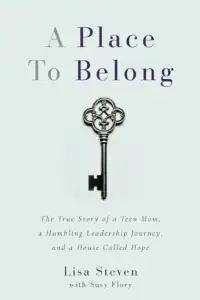
John: Mm-hmm. Yeah. And Lisa Steven was a teen mom and, uh, she’s spent the past 25 years or so supporting women through Hope House, which is a residential facility for young moms here in Colorado. And she’s turned her experiences and captured those in a book called A Place to Belong: The True Story of a Teen Mom: A Humbling Leadership Journey and a House Called Hope.
Jim: Lisa, it is great to have you here. Welcome.
Lisa: Thank you. I’m so excited to be here with you guys today.
Jim: You know, I wanna start with something as heart-wrenching as I read through the material, read the book. And you said, uh, that God, when you were a young child, you said, “God didn’t live at our house.” Whew! As a parent, I mean, that brings me to tears, just thinking that my child would even feel that.
John: Mm-hmm.
Jim: But many of us kids, I grew up in a similar household.
Lisa: Yeah.
Jim: And it, I guess it gripped me because I thought to myself “that’s something I could have said for myself,” but I never put it in that context. Tell us what you meant by that and why you said that.
Lisa: Yeah. Thank you for asking.
Jim: Yeah.
Lisa: So, um, uh, yes, I grew up in a household that was… I described it as often walking on eggshells. Everybody was just sort of waiting for a big fight to happen between my parents. Um, my dad was an alcoholic and sort of worked sometimes and didn’t work sometimes. Um, and so, there was just a lot of tension in our household, uh, a lot of fights between my parents. And so it’s very chaotic.
But when we would go visit my grandma and she would take us to church, she had went to this little Lutheran church in Colorado Springs, and she would take us to church, and everything was so orderly. Like, everything happened in an order in the service.
Jim: Peaceful.
Lisa: It was so peaceful. And I thought, “Wow, God must live at my grandma’s church. And I really wish God would come live at my house and make it peaceful and orderly and not chaotic.” Um, so I just, as a six-year-old kiddo, thought God only lived in certain places where there were peace and order.
Jim: You know, I think that’s exactly why Jesus said, “Don’t get in the way of kids coming to me.”
Lisa: Yeah.
Jim: ‘Cause children have a way of feeling it, of expressing it.
Lisa: Yeah.
Jim: Oftentimes with greater clarity than adults.
Lisa: Yeah.
Jim: Like the older we get, the more obscure it gets for us.
John: Mm-hmm.
Jim: But a child saying, “Yeah, God doesn’t live at my house.”
Lisa: Yeah.
Jim: It meant the presence of the Lord was not in your home.
Lisa: Right.
Jim: That’s a good definition-
Lisa: Yes.
Jim: … of being far away from God, right?
Lisa: Yep.
Jim: You, uh, are the teen mom. Let’s get into that.
Lisa: Yeah.
Jim: I appreciate that vulnerability. Um, you know, I can remember being in high school, and I knew friends that were in that situation.
Lisa: Yeah.
Jim: Both men and women, we’re gonna concentrate on the girls.
Lisa: Yes.
Jim: Obviously, it takes two.
Lisa: Right (laughs).
Jim: And we’re not ignoring, uh, the boy or the man’s role in this. We get that. But let’s talk about that teen girl, which you were-
Lisa: Right.
Jim: … who feels isolated, separated, desperate, um, maybe especially in your home, uh, it created greater dysfunction now. I mean-
Lisa: Sure.
Jim: So describe the setting. How old were you? What, you know-
Lisa: Yeah.
Jim: … what was happening in your life?
Lisa: Well, I… So, my parents divorced when I was 13, which was a good thing. I was not that kid that wanted their parents to get back together ’cause they needed to not be together. And so I lived, uh, primarily with my mom. We didn’t see our dad a lot. And by the time I was a sophomore, I think I was a sophomore in high school when I met John, my boyfriend, and now husband for the almost last 40 years.
Jim: Huh.
Lisa: Um, we met cruising the mall. There was a mall in Westminster called Westminster Mall, and it was square.
Jim: (laughs).
Lisa: And all the kids would, like, drive around the mall in opposite circles. And if you liked someone, you’d wave at them and tell them to pull over. And so we… I… here I am in this giant sea green Buick with my friend, Liz. We would beg her mom to let us borrow this car. And we were not cool, let me just say.
Jim: (laughs). But being not cool was kinda cool.
Lisa: Uh, maybe.
Jim: (laughs).
Lisa: Uh, but a very cool car went by the other direction. Um, my soon-to-be boyfriend wa-… had a 1974 Chevy Nova-
Jim: Oh, yeah.
Lisa: … that was rust-colored and souped up and pushed up in the back and it just roared. And it drove by and we waved and I’m, you know, elbowing my friend Liz and saying, “If they stop, I get to talk to the driver,” ’cause she always got the cute boys.
Jim: (laughs).
Lisa: And so-
Jim: You guys are making a deal here.
Lisa: Yeah, we’re making a deal. So they pulled over, much to my surprise. And, um, and I met John and he was kind and sweet. And we started dating and he took me to meet his family. And his family home was so very different from mine. It was… they ate dinner together as a family.
Jim: Mm-hmm.
Lisa: His mom had a kidney disease and required dialysis, and she did dialysis at home. And his father would do the dialysis. He would, you know, put the needle in and start the machine and they would sit together and he cared for her.
Jim: Wow.
Lisa: Um, and she cared for her family so well and introduced me to the Lord in a different way than I had, um, known the Lord before. And so just being in their home was like, “This is what I want. This is what I think family is supposed to look like.”
Jim: So it’s like your grandma’s house.
Lisa: It was like my grandma’s house.
Jim: Interesting.
Lisa: And so I joked to John that I married him for his family. But we, you know, a year actually almost to the date, a year later after meeting one another, we’re sitting in that same Chevy Nova outside of a clinic having just gotten the test results that we were pregnant. Um, we were 17 years old and John’s response, to his credit, was to turn to look at me in the seat of the car and say, “Well, what are you doing two weeks from Friday?” And that was my marriage proposal.
Jim: Yeah.
Lisa: And so, we, um, you know, of course had to then go home and tell our parents that we were pregnant, and I wasn’t too worried about telling mine.
Jim: Yeah. I wanna get into that because we’ve, you know, we’ve had, uh, people on the program talk about, uh, that experience-
Lisa: Yeah.
Jim: … both from a parent side and the teen girl’s side.
Lisa: Right.
Jim: I mean, how did that go when you went and told your mom, and then you must have had a separate discussion with your dad?
Lisa: Yep, exactly. Separate conversations. I think primarily with my parents, I didn’t have a, much of a relationship with either one of them by that point. Um, my… I did a lot of caring for my younger siblings and lived pretty independently from them. My mom worked all the time because my dad didn’t pay child support. Um, not that I wanted to tell her this, but it wasn’t… she wasn’t terribly, I don’t know if I would say interested, but she wasn’t terribly interested. And so, really, the big deal was telling his parents because I did not want them to be disappointed in me. I respected them and looked up to them.
Jim: Hmm.
Lisa: And I didn’t want them to be disappointed in John. Um, so telling them was much harder. And my soon-to-be husband, in his infinite 17-year-old wisdom, decided that we should tell them while my mother-in-law, future mother-in-law, was doing dialysis. So we’re standing there in-
Jim: Oh, wow.
Lisa: … the basement of their home watching a movie and she’s doing dialysis and her blood’s going through a machine next to her. I’m like, “Can this kill her if we tell her this news?”
Jim: Wow. Yeah.
Lisa: Um, I will say that their reaction was probably the single greatest act of parenting that I had experienced to date. Um, they could have been and maybe were, but they didn’t express it to us, angry or shouting or-
Jim: Or disappointed.
Lisa: … super sad. Super disappointed. I’m sure later there were probably tears and conversation. It’s not something any parent really wants for their child. But their response was to say, “All right, let’s sit down and have a conversation about this. What… let’s talk about what marriage looks like.” And not in a judgmental way like shotgun marriage, like “you two have to go get married.”
Jim: But supportive.
Lisa: But supportive.
Jim: Yeah. Wow.
Lisa: Um, they’d been married for many, many years at that point and just imparted some wisdom on what this is gonna look like.
Jim: You know, in the book, you talk about situational poverty-
Lisa: Mm-hmm.
Jim: … and generational poverty-
Lisa: Mm-hmm.
Jim: … the distinction between those two.
Lisa: Yeah.
Jim: Tell us what you mean by that.
Lisa: Yeah. So, I did not know until we started Hope House, um, that there was such a thing as situational or generational poverty. And so, I kind of learned along the way in our journey of opening a nonprofit.
So, situational poverty, essentially, we were a middle-class family with middle-class background, even though my dad had a situation, alcoholism, that caused us to be in poverty a lot of the times. What I mean by middle-class, uh, values, we still valued education. We value middle… In the middle class, we value saving money. We value getting an education and completing further education and having a career, uh, eventually owning a home, and at some point in your life, retiring.
When you grow up in generational poverty, which is about 95% of the moms we work with, um, their value system is different than that. They’ve never experienced family members gradua- typically not even graduating from high school, certainly not graduating from college. They’ve often experienced domestic violence and abuse in their homes.
Almost all of our moms have experienced some form of abuse, whether that’s, uh, physical abuse or emotional abuse or sexual abuse. Unfortunately, their homes are like mine, highly chaotic, but it’s a given that highly chaotic is the norm-
Jim: Mm-hmm.
Lisa: … and it’s been the norm for generations. Where, in my family, it… We knew it was not the norm. Our grandparents hadn’t lived that way.
One of the primary things we do at Hope House is model for our mamas, um, what it looks like to live a healthy, stable-
Jim: Yeah.
Lisa: … life in connection with God. They’ve never experienced that. It’s really hard to do something you’ve never seen done. Um, small example, if you’ve never been read to as a child and you have no idea that reading to your children will help them to prepare for school, you just don’t read to them. And as soon as we let them know that reading to their children helps them, they’re like, “Where do I get books?” Because they’ve never been inside of a library.
Jim: Wow.
Lisa: They don’t even know how to get books.
Jim: Yeah. Uh, your mother-in-law also got you engaged with MOPS, which is a wonderful organization.
Lisa: Mm-hmm.
Jim: Uh, Mothers of Preschoolers.
Lisa: Yes.
Jim: They’ve been on the broadcast many times. And, uh, they’re right here in Colorado as well.
Lisa: Yep. Yeah.
Jim: But describe that MOPS connection and then Teen MOPS.
Lisa: Yes.
Jim: I didn’t even know that existed.
Lisa: Yes. So my mother-in-law was in the very first group that was the first MOPS group ever. They were called the Fenton- still are called the Fenton Street Gang. They all lived on Fenton Street in Wheat Ridge, and they started meeting at a little Baptist Church there in Wheat Ridge and on six or eight little Sunday school chairs. And it was revolutionary to have their children in MOPPETS, or childcare, learning about Jesus while they got to finish a whole entire adult sentence.
John: (laughs).
Lisa: And needless to say, MOPS, or now MomCo, went viral (laughs). ‘Cause like they’re all over the world now, as you know.
Jim: Yeah.
Lisa: Um, and so I, however, when my mother… Uh, you know, as a teenage mom, my husband and I had gotten married. I didn’t have a lot of… Well, I had no friends. I was very isolated. I was home with my baby. My husband was working. My mother-in-law said, “You need to go to MOPS.” And the last thing I wanted to do was walk into a room full of women who all did it right. They got married before they got pregnant.
Jim: So a little shame.
Lisa: Yes.
Jim: Yeah.
Lisa: Oh. The one thing that does not change throughout the years in terms of teen pregnancy is there is always, 100% of the time, shame. Just attached to being a teen mom. 100% of the time.
Jim: That it happened that way.
Lisa: That it happened that way. Um, it’s everything from you walk into the grocery store with a baby on your hip and people are kinda looking at you funny, like, “Are you the babysitter or is that your baby?”
Jim: Right.
Lisa: Um, all the way to being in a doctor’s office and being truly shamed or treated very poorly or having a call made to social services when one is not warranted. Lots of really hard stories of judgment and shame that teen moms face. And I was pretty sure if I walked into a room full of women who all got married and did it the right way in my mind, um, that that would be what I would experience. But I was no way gonna say no to my mother-in-law, who was my greatest influence in my life and still is.
And so I went to MOPS and those women just welcomed me with open arms and, um, treated me like I was any other mom and treated my son like he was worthy. And they valued him and they valued me. And it was a wonderful experience. And within about a year and a half, they asked if I wanted to help with volunteering with the MOPPETS, which is the ch- was what they called the children’s ministry in those days.
Jim: The MOPPETS (laughs).
Lisa: MOPPETS. Um, and I was stunned. I was like, “Maybe they wanna check my driver’s license.” I was maybe 20 at that point.
Jim: Yeah.
Lisa: I’m like, “You want me to be in a leadership role? I don’t even know what that means.”
Jim: (laughs).
Lisa: And had never been in a meeting, had never seen an agenda.
Jim: Yeah.
Lisa: You know, I didn’t have any clue what leadership meant, and they gave me an opportunity that really led to where we are today.
John: Mm-hmm. Our guest today on Focus on the Family with Jim Daly is Lisa Steven, and we’re, uh, really enjoying the conversation with her about her story. And, uh, that’s captured in the book, A Place to Belong: The True Story of a Teen Mom, a Humbling Leadership Journey, and a House Called Hope. Uh, get a copy of the book from us here. The link is at focusonthefamily.com/broadcast.
Jim: Lisa, Hope House, to dig a little deeper there. I mean, it had a very difficult start.
John: Yeah.
Jim: Uh, you mentioned the book someone named Tracy.
Lisa: Yeah.
Jim: So tell us that story and then the origin of Hope House.
Lisa: Yeah. So my, um, involvement in MOPS, my experience in MOPS, led to me being a part of Teen MOPS, which at the time was groups that MOPS had started for teenage mothers. Uh, we started the very, I think it was the second Teen MOPS group at Arvada Covenant Church. And one of the young ladies who attended that group, uh, Tracy, was just so dear. She had twin one-year-old girls when she joined our MOPS group. And she came to a Bible study that we did on the off weeks. She ended up accepting Christ. Um, sadly, about a year into her time with us, she was killed by her boyfriend.
John: Hmm.
Lisa: Um, they had, she had tried to separate from him, and it did not go well and he… yeah he beat her to death, frankly, and it was a terrible thing for all of us. Of course, her family. But honestly, she just had nowhere to go. I mean, we- our moms-
Jim: She had no relief.
Lisa: She had no, no relief, and there were no resources for-
Jim: Yeah.
Lisa: … a young teen parent who already had children. So, at that point in time in 1997-ish we had several maternity homes in the Denver metro area where you could go if you were pregnant and trying to make a birth decision. But there was no home where you could go if you were a teenager with a child.
Jim: Mm.
Lisa: Um, and all of the transitional housing and shelters were for 18 years old and up, oftentimes 21 years old and up. So if you were 17, 16, 17 years old and had a child, there was literally no resource for you. And so, many of our teen moms in the Teen MOPS group were coming to us asking us for, “Hey, can I stay at your house?”
And one of our leadership members tried that. It was not a great idea. Teen moms are absolutely amazing, but they come with a lot of not amazing folks in their life that are around them. And it wasn’t a great idea for one of them to move into one of our private homes. Didn’t go well. And we just started looking for what’s out there, what is available to these girls. And when we found that nothing was, um, someone in that leadership group had the idea, it wasn’t me (laughs), that said, “Hey, we should open a home for teen moms.” And I was like, “Well, that sounds super exciting. And I really wanted to be a part of it.”
Um, I also had plans for my life. I, you know, I’d, we’d had two more children. Now my husband and I have been married for a number of years, have three kids. My kids are finally all in elementary school. I’m planning to go to college and, you know, get a degree. I thought I maybe wanted to be a teacher. And saying yes-
Jim: (laughs).
Lisa: … to God, being a part of this thing that He was calling into being was exhilarating and terrifying all at the same time. It meant setting aside my own plans for my life and I knew that. And it meant jumping into something that I had no experience doing. I still, today, never been to college, don’t know how to type, I type with three fingers. I have no business degree or business background, no social work background, but I was willing to say yes to God.
And I think that’s part of the point of the book is what can happen and what you said in our introduction, like, what can happen when you are willing to say yes to something that’s too big for you, and then God gets to do it and you get to go along and be a part of the adventure. It’s pretty incredible.
Jim: And then with Hope House, you know, the idea that it all goes well, but it doesn’t. And you have opportunities where God will show up-
John: Mm-hmm.
Jim: … to deliver a miracle.
Lisa: Yeah. So much.
Jim: Describe some of those things that you knew you were right where you needed to be-
Lisa: Yeah.
Jim: … ’cause God showed up.
Lisa: Yes, so much. Um, I often will look back and… Because now we’re in a different financial position than we were in for the many years that we were building Hope House.
But when we first started Hope House, it was just a group of people who had a heart and a passion and not a background in doing this type of work. And we were offered the opportunity to move into a home that was at 69th and Sheridan. And the folks who owned the home were going to develop housing there, uh, town homes. They offered to give us the house with the provision that we pick it up and move it off their property so they could develop the property.
John: Oh.
Lisa: Um, subsequently a church, literally four blocks down and one block over, donated land for us to put the house on.
Jim: Mm-hmm.
Lisa: So I marched down to the city with my program director at the time and go to the city planning office and ask them, “How does one go about subdividing a piece of land from this church who’s very generously going to donate this piece of property?” And they just laughed at us and said, “This is not going to happen. The folks who are doing their development have two months until they start digging. It’s going to take you a whole year to rezone that property.”
And we, I just stood there and argued with God and said, “Really, God? You give us house and land, but we can’t put it together.” And my sweet program director just says, “Can you just check what the zoning is?” And we needed an RL zoning. So the planner rolls her eyes, goes back to this file cabinet in the back, pulls out this huge plat map. And right down in the corner was a big green stamp, RL.
Well, it turns out that that church, 25 years prior, had zoned just that one little portion of their land-
Jim: Huh.
Lisa: … for a maternity home and then never put ministry on that land.
So long before I was ever a teenage mom, God knew what He was gonna do in my life. He knew what He was going to do with that land. He moved through a group of people at a church who, many of whom were, had passed on by that point.
Jim: Yeah.
Lisa: It’s a fairly elderly church.
Jim: Well, they did do ministry with that land, didn’t they? In the end, they did.
John: Yeah (laughs).
Lisa: Boy, did they. They sure did.
Jim: Thank the Lord they zoned it that way. That’s crazy.
Lisa: Thank the Lord. It was a miracle that still gives me goosebumps. And, um, and one of the reasons that I felt like we needed to write the book was people need to know that God still does miracles, not just across the ocean or back in the Bible. Like, He does miracles today in our own backyard. And it’s incredible to be a part of watching Him do that. And that house literally, from the basement to the roof, once it was moved, was completed all through donation.
Jim: Yeah.
Lisa: Um, I didn’t even know what a capital campaign was at that point.
Jim: Yeah.
Lisa: So-
Jim: It’s so sweet.
Lisa: It was, it was a miracle.
Jim: I mean, it’s so innocent the way you approached it. You were helping maybe dozens of girls at the time, but now you’re helping 250 women a year.
Lisa: Yeah. Yeah, 280.
Jim: 280?
Lisa: Yeah, it’s crazy. Um, and about 340 kids this year.
John: Mm. Wow. And you have, uh, literally so many stories. I mean, you’ve captured so many in the book, but one or two stories that come to mind, Lisa, about what God has done through Hope House in the lives of the people you serve.
Lisa: Oh, gosh. I just got off the phone with Alondra yesterday, one of our mamas, who is an alumni. She’s now in her early 30s and is moving to North Carolina. She came to us completely, truly homeless, um, when she was 17 years old with a one-year-old little boy and moved into our residential program.
She had a big dream of being a nurse, which is a stretch when you’re a single teenage mom, and going to nursing school is very difficult. She lived in the residential program for about a year. She came to know Christ while she was in the program, joined a church, earned her GED through Hope House, and we were able to help her move on to college. And it took about six years-
John: Mm.
Lisa: … but I got to sit in the auditorium as she got… It was the pinning ceremony where nurses get pinned. And she had her then, at that point, eight-year-old son come across the stage, uh, to pin her nursing pin on her. And I talk about in the book how no single biological family member was there present at that ceremony, but an entire row full of Hope House family was there jumping up and down and cheering and shouting for her when she got pinned.
And I often say, what I hope that people can hear is that “when you’re so brave to say yes to God and then you get to experience what He does through that, it’s incredible to see the fruits.” And to get to watch Alondra walk through… across that stage was a celebration for her and it was a celebration for me.
John: Mm-hmm.
Lisa: Um, it was just a, it was a miracle.
Jim: You know, we talk a lot about grace in the church and the Lord’s love, and we use words like unconditional love.
Lisa: Mm-hmm.
Jim: Sometimes we don’t see it-
Lisa: Mm-hmm.
Jim: … in terms of how we, His creation, express it.
Lisa: Mm.
Jim: ‘Cause it’s hard to do.
Lisa: Right.
Jim: And I think in this place of teen pregnancy, right from the parents, through the friends, through the churches even, that struggle to express God’s love for those people in trouble. What’s the last word from you about that experience which you had as a 17-year-old?
Lisa: Hmm.
Jim: Um, what can we learn from all of that and what you do day to day at Hope House to make sure these women, and in some cases the boys or men that are part of it, feel the love of Christ even though they’re in a disaster?
Lisa: Well, if you ever have the absolute pleasure of meeting a teenage mom, the best way to connect with her right off the bat is just ask her her little one’s name and then tell her how cute that name is and she will open up and, um, start to respond to you.
I often say there… out there somewhere is a new teenage mom curled up with a baby in a place where she doesn’t feel safe, and she doesn’t know how to get out of the situation she’s in. And right there next to her is God whispering in her ear, “Just hold on. I’m sending my people.” And we are His people. Um, and if we say yes and we go, great miracles can happen and she can be changed and saved and so can her little one.
Jim: I mean that’s the story. That’s where the Lord moves and works and redeems and saves a life from disaster, right?
Lisa: Yeah.
Jim: Which all of us could have been in that space of disaster. And, uh, your story’s powerful, Lisa. Thank you for coming and sharing it with us and all the listeners and the viewers. Uh, it’s really quite a story.
Uh, let me turn to the listeners because we know there are women listening and they’re saying, “That’s me.”
John: Mm-hmm.
Jim: “That was my situation.” And I hope you know, Focus on the Family is here for you. We do have those caring Christian counselors available to hear your story, pray with you and provide additional resources to help you heal and connect to resources hopefully near you.
Um, we received a letter from a woman named Kimberly who was kicked out of her house as a pregnant teen because she refused to get an abortion. Think of that. And I know a lot of girls face that pressure.
And as she was attending college classes, Focus on the Family came on the radio. And she wrote this, quote, “Well, lo and behold, Focus on the Family was on. I cried. I cried because I knew God had answered my prayer. He was telling me that I could raise a godly child and here’s how it’s done. I was hooked. I even scheduled my classes so I could listen to Focus on the Family every day. That was in 1986. Over the next years, I would be encouraged by the broadcast, books, resources. Thank you for being hope to a single 18-year-old mother. And my daughter is now a beautiful young woman who loves the Lord. Praise God.”
Lisa: Mm-hmm.
Jim: That is your story.
Lisa: Praise God. Absolutely.
Jim: And that’s an amazing story and, uh, that reflects what ministries like Hope House and Focus on the Family are attempting to do every day. Supporting struggling moms like Kimberly, strengthening marriages in crisis, and coming alongside families who need help today.
This month, the month of July, we’re asking for 1,200 people to step up and support the ministry of Focus on the Family on a monthly basis. This broadcast and every ministry effort by Focus on the Family exists because of generous donors like you. That’s what makes it possible, either monthly or in a one-time gift.
According to our research, a monthly gift of $15 puts biblical resources into the hands of six families each year. So you might not even think $15 is much, but when you add it together, it really goes a long way. Imagine what your monthly support could do to strengthen families, strengthen our communities, transform this country. And that’s exactly what we’ve been talking about today. So please consider making that monthly donation to help strengthen families, and let’s do ministry together.
John: Mm-hmm. Yeah. Your support really does make a huge difference as we help families across the country and around the world. We’re a phone call away. Our number is 800, the letter A, and the word FAMILY. Or of course, you can donate online and get a copy of Lisa’s book and, uh, find other Focus on the Family resources, they’re all there at focusonthefamily.com/broadcast.
And next time, Tim Shoemaker shares how small faith lessons can change your child’s life in a big way.
Preview:
Tim Shoemaker: There’s worse things than our kids thinking, “Learning about God is fun.”
Jim: (laughs). Yeah.
Tim: I mean, when, when, when Jesus sent Peter to go get the temple tax, go fishing, and look in the fish’s mouth. Come on. He was having some fun with him, wasn’t He?
Jim: (laughs) It was a little weird.
Tim: I would think so.
Jim: (laughs).
Tim: You know, He’s just, He’s messing with them a little, having fun.
Jim: Yeah, I love it.
Tim: And Peter learned a lesson he never forgot. God can provide in ways we can’t imagine.
End of Preview
John: On behalf of the team, thanks for joining us today for Focus on the Family with Jim Daly. I’m John Fuller, inviting you back as we once again help you and your family thrive in Christ.