




Preview:
Dr. Kevin Leman: We tend to marry outside of our birth order, and that’s a good thing because simply marrying outside of your birth order increases the probability of success in marriage.
End of Preview
John Fuller: You’re going to hear more from Dr. Kevin Leman today on Focus on the Family. Your host is Focus president and author Jim Daly, and I’m John Fuller.
Jim Daly: Every time Dr. Leman’s with us, I mean, he knocks it out of the park. Uh, his sense of humor, his stories, his practical applications, uh, all make for a great conversation. He’s known as the “birth order guy” and he has some, uh, strong insights on how the order in which you were born affects your personality.
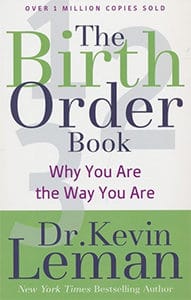
His groundbreaking book The Birth Order Book, uh, really helps you better understand yourself and how birth order plays a role in who you are. Today we’re coming back to a program with Dr. Kevin Leman about improving your marriage relationship by knowing more about your birth order and your spouse’s birth order. Uh, this was really fun and eye-opening.
John: It was. And on previous programs, as we’ve talked with Dr. Leman about birth order and how it influences us as individuals and as parents, this was the first time we talked with him though about how that birth order affects the marriage relationship. And Dr. Leman is an internationally known psychologist, radio and television personality, educator, speaker. Uh, he’s written over 50 books on parenting, marriage, and family living. And we’re gonna pick up the conversation as he describes how he developed an interest in this concept of the birth order.
Dr. Leman: Well, I was sitting in a college classroom and my professor, uh, was talking about the firstborn child, and he described the firstborn as organized, doesn’t like surprises, reliable, conscientious, a list maker, an achiever, “there’s a right way to do things.” I said, “Oh, my goodness, he just described my sister.” And then he went to the middle child. Opposite from the firstborn. Yeah. Check. Uh, hard to pin down, plays off of what’s ever above him in the family, a mediator, a negotiator, huge with loyalty and friendships. And I thought, “Oh, my goodness, he just described my brother.” And yet my brother was an A student like my older sister, okay? So he was the firstborn male, let me point that out, as well as the middle child.
Jim: So both attributes.
Dr. Leman: Yes. And then he went to the baby, and that was the clincher for me.
Jim: (laughs)
Dr. Leman: Attention-getting, uh, fun, loving, never met a stranger, could sell dead rats for a living.
Jim: (laughs)
Dr. Leman: Well, listen, one of my claims to fame is I talked my way into Disney World.
Jim: (laughs) That’s pretty good.
John: (laughs)
Dr. Leman: Now, check this out. Not one ticket, not two, but nine.
Jim: Don’t tell Disney World.
Dr. Leman: I won’t. I… Let’ keep this a secret, but I’ll tell you-
Jim: Okay. Have you ever paid them back for that (laughs)?
Dr. Leman: (laughs)
John: A lot of publicity right there in the mention of it.
John: (laughs)
Dr. Leman: Well, really. I mean, uh, babies have the skill to sell dead rats for a living. In the business world, your CEOs or your presidents, your accountants, your engineers, are your firstborn children. Anything where technology pays off huge, you’re most likely to find the firstborn. Your entrepreneurs in the business world, Donald Trump, uh, Steve Forbes, Bill Gates Jr. I mean, I know he’s a college dropout, but the guy did pretty good. He’s middle child.
So middle children tend to roll differently than the rest of the flock. Babies: charming, could sell dead rats for a living, like I said, uh, got away with murder, most likely to retain their pet name. Her name might be Mary Lou, but everybody still calls her Buffy, you know?
Uh, so it’s interesting to me how all these cubs come out of the same den, and yet they’re all unique. Now, today, we’re having smaller families so we have a lot of only children who are stepcousins, so to speak, to the firstborns. They’re everything we said the firstborns are, only put the word “super” in front of it. Super conscientious, super reliable, super… You know, they’re little adults by age seven. And so, a lot of families, like we have five kids, but we’ve got an only child in that five. Well, how do you do that? Well, there’s variables that affect birth order.
Jim: Well-
Dr. Leman: Big age gaps, for example, set that up.
Jim: Right. Let me ask you this question, that 80/20 rule. Do you find that, um… Because some people will say, “Well, that’s not me. I’m firstborn, but I act like a lastborn.” Is… Does that happen, and how frequent is that?
Dr. Leman: It happens all the time. And the variables of birth order, you really have to understand the variables or you won’t grasp what we’re talking about today. The variables are sex, number one. You have five kids in the family, one of them is a male. There’s something special about one child in the family, so that kid could be in the second, third, fourth, or even fifth position and still have firstborn-like qualities.
Jim: Because of his or her gender?
Dr. Leman: Because of their gender.
Jim: Right.
Dr. Leman: Okay. Then you have age gaps. A five-year age gap between same-sex kids, you would draw another line in a family. So that’s where it splits off, okay?
Jim: Well, let me ask you about that. So there’s five kids in my family, I’m the fifth born, the last born-
Dr. Leman: Uh-huh.
Jim: … but I’m six years from my closest sister.
Dr. Leman: Right.
Jim: They’re all one year apart.
Dr. Leman: Yeah.
Jim: So what category would that be?
Dr. Leman: You’re a firstborn son. Are you the president of Focus on the Family, or- or did I not hear John Fuller right?
Jim: (laughs)
John: (laughs)
Dr. Leman: Are you the boss?
Jim: Okay. Yeah.
Dr. Leman: Are you the boss?
Jim: Uh, well-
Dr. Leman: Well, are you the boss? Answer the question. You’re under oath.
Jim: I’ve got the title, I’ve got the title (laughs). I don’t know (laughs).
John: Actually, Jean’s the boss.
Dr. Leman: But do you see what I’m saying?
John: Yeah.
Dr. Leman: The gap sets those things up. Our youngest, little Lauren, is very creative, uh, and very detail-oriented, and she’s the baby of the family. But she’s a functional only child. So again, only children do logarithms in their head at age seven. I mean, they’re advanced from the rest of us.
Jim: But I would think, especially, you know, in my case, I would say I’m average in those kind of discipline categories, but I’m more extroverted, I like, uh, people.
Dr. Leman: But that’s the influence of those sisters above you.
Jim: Okay.
Dr. Leman: We’re always affected by what’s above us in the family, not what’s beneath us.
Jim: Well, let me say publicly, thank you, Kim and Dee, for that influence (laughs).
John: (laughs)
Dr. Leman: Well, and here’s the other thing. Twins.
Jim: Yeah.
Dr. Leman: Twins break up the birth order. If you wanna pray for a kid, special prayer, pray for the kid that follows the twins-
Jim: (laughs)
Dr. Leman: … because the twins, whether they’re fraternal or identical, get an awful lot of attention. So people who say… I get letters from people, “Oh, this is non-biblical.” I say, “Well, yeah. Okay, mm-hmm. Okay.” Cain and Abel. There’s a lot of things where brothers or sisters are diametrically different personalities.
Jim: Well, that gives us, uh, kind of a good background. Let’s dial it up now when those, uh, firstborns, middleborns, and lastborns get older and now they’re gonna marry somebody. We often talk about how opposites attract. I think in our marriage counseling here, uh, similar to what you experienced, Kevin, you see that that 80/20 rule usually applies. About 80% of us are attracted to people who are different from us. Talk about that magnetism and talk about how birth order plays into that attraction.
Dr. Leman: Well, let’s start with if both of us were the same, there’d be little use for one of us.
Jim: (laughs)
Dr. Leman: Okay?
Jim: Well, some opposites may have that thought (laughs).
John: Yeah (laughs).
Dr. Leman: But opposites do attract. I mean, as a baby of the family, I can tell you, I married Mrs. Uppington. Now, Mrs.-
Jim: And where is she?
Dr. Leman: Mrs. Uppington, of course, is my pet name for my firstborn wife who loves restaurants with four and five forks. There’s a right way to do things. She was color-coordinated at birth, I believe. But, you know, I can still remember as a young husband to be standing at that aisle as she walked down the flower-strewn aisle. We spent $29 for flowers on our wedding. It was a big affair. And I remember looking at her little daisy she had. To this day, she hates daisies, but I didn’t realize that underneath that bouquet was a rule book. And firstborns tend to be the rulemakers.
Jim: Mm-hmm.
Dr. Leman: Firstborns are good at spotting flaws. That’s why they’re good engineers and good accountants, astronauts in outer space. Of the first 23, 21 firstborns, two only children, not a middle or a baby in sight. So here I am, baby of the family. Now, I knew nothing about birth order at that point, very, very little. But I didn’t realize that what happens in marriage is that when two people marry, it’s not two, it’s at least six.
Jim: How do you get that math?
Dr. Leman: Because you marry your in-laws, and you either reap the benefit of what happened in that family or you pay for it. So it’s not only your bride or your groom’s birth order, but what kind of family did they come out of? Was there a critical-eyed parent there? Now, we talked about age gaps, gender. We didn’t mention physical handicaps or mental handicaps, but that’s part of the variables.
But put a critical eye, and that means a person who can spot a flaw at 50 paces in the marriage, and you got trouble because they’re gonna be a flaw-picker. That person is gonna feel like they’re loved. Women in particular who thrive on affection need to know that their husband has their back at every moment of their life, okay? And many of us as men who aren’t great wordsmiths but we’re great critics can take the spirit of a woman and just level it with just a word or a look. So-
Jim: That’s a majority of the relational component, isn’t it?
Dr. Leman: It is.
Jim: When you describe that. That’s most marriages.
Dr. Leman: I wrote a book called Smart Women Know When To Say No. In a contrast, the controlling male and the pleasing female, it’s a very neurotic relationship. And like a moth to a flame, these people find each other out.
So, there’s opposites that attract that aren’t good healthy marriages because one person does all the controlling and the other is beaten over the head like a baby seal.
Jim: Let me ask you this. Some people are listening thinking, “Okay. This sounds good, this sounds psychological, and I get it. Where is God in this whole thing? Why did He design us like this?” There’s only so many emotions that we can feel, there’s only so many attributes that we have, there’s only so many positions in birth order that you can be, and He puts that all together and then you’re attracted to your spouse, and yet in most marriages, you have to learn to be selfless. Is it fair to say that if you put Christ at the center of your relationship, He can, um, smooth out some of those rough edges?
Dr. Leman: Well, that’s what you hear all over the Christian kingdom, “Just put Christ at the center of your life.” The problem is if you’ve married a woman who came out of a very dysfunctional family, who didn’t have a loving father, number one, she’s got all kinds of issues with God. Because she doesn’t-
Jim: Those can take a lot of sandpaper (laughs).
Dr. Leman: She doesn’t even see God as the loving Father; she sees Him as the critical-eyed person. She runs on guilt. Now, I know I’m stepping on some toes when I say these words, believe me. But we tend to, in the kingdom of God, come up with these little platitudes. And so, yes, you want to rely on God for all things. If anything is gonna overcome this great dysfunction in a family, it’s the love of Jesus Christ in one’s life. What I’ve learned is it takes people sometimes decades to get to that point where they really understand that the sin I’m gonna commit next week, you know what, Jim and John? It’s already forgiven.
See, God… Jesus came to this Earth to put an end to religion, to put an end to religion, not start a religion. You know, it’s all about a relationship. So yeah, I mean, I can tell you, I don’t know how people make it without God in marriage, if that’s the question. I know people do, but I don’t know how they do it.
John: Well, Here at Focus on the Family, we wanna help you in your marriage, we wanna help you thrive, and, uh, Dr. Kevin Leman is our guest today on the program. And if you’d like to find out more, we do have details about his book The Birth Order Book: Why You Are The Way You Are over at focusonthefamily.com/broadcast.
Jim: Uh, Kevin, let’s get practical. Let’s talk about those combinations and put some meat on the bones of what we’ve talked about. Talk about two firstborns who marry. Um, is that typical? What percentage of the population would that represent?
Dr. Leman: Not typical.
Jim: Okay.
Dr. Leman: We tend to, uh… Now, I’m speaking in generality. We tend to marry outside of our birth order, and that’s a good thing because simply marrying outside of your birth order increases the probability of success in marriage.
Jim: So opposites attract really does apply.
Dr. Leman: Oh, they do. Yeah. Now, when you have firstborns and firstborns together, they spend a lifetime, it seems like, “shoulding” on each other.
Jim: (laughs)
Dr. Leman: “You should do this, you should do that.” They’re the great improvers, okay? They see something that’s out of place and they immediately go over and straighten it up.
Jim: So what are some tools that you would recommend that they could, uh, do it better?
Dr. Leman: Well, the division of labor is really important. “I’m gonna take care of this and you take care of that, and we’ll report back and trade notes.” I always tell women at my seminars, “Where’s the firstborn women?” And I see all these hands go up. I say, “I got a great suggestion for you. Have a wallpaper party and just invite your firstborn girlfriends to help you wallpaper a room. And here’s my prediction. By 11:00 in the morning, you’ll have blood on the floor.”
Jim: (laughs)
Dr. Leman: Why? Because you have all these people who know exactly how life ought to be. So, you’re a firstborn and you’re talking to your firstborn wife, okay? Now, lots of times you might just say, “All right, listen, this is what we’re gonna do.” Bingo.
Jim: (laughs)
Dr. Leman: The hairs go up. I mean, the ears are back. “Hey, honey. Um, I’d like to ask your opinion about something that I’ve really been struggling with.” Now, the ears are open, the heart’s open, you’re on the right track. So when you say, “Put some meat on the bone here for us,” those are the kinds of things you learn to say to your bride or to your groom.
Jim: Well, there’s so many combinations, Kevin, and we can’t cover them all, but, uh, let’s go through a couple of more.
Dr. Leman: Yes.
Jim: Let’s talk about firstborn and middleborn.
Dr. Leman: Pretty good match. Why? Because middle children never had their way at anything. No one ever said to a middle child, “Honey, what do you think we should do?” They were submerged by the firstborn, “Little Miss Bossy,” “Little Ms. Goody Two Shoes,” or “Mr. Great Student in School,” and “Little Schnookie,” the baby of the family that got away with murder.
Jim: (laughs)
Dr. Leman: So middle children are a little bit like going down to the blood bank and find a universal donor because they go with about everything. A middle child is a good match for a baby. A middle child, uh, is a good match, a great match, for either an only or a firstborn. They add balance in a very natural way. They never had mom and dad to themselves. They negotiated for everything they ever had in life. So-
Jim: And they’re comfortable with that.
Dr. Leman: So that’s a good skill to bring into marriage, so hooray for the middle children.
Jim: They’re the ones that keep peace.
Dr. Leman: Right. They’re the peacemakers, they are.
Jim: Let’s talk about the other combo, the oldest and the youngest.
Dr. Leman: Well, that’s a naturally good combination, it really is. Uh, firstborn and baby, uh, and only born and baby are very good. I remember coming home from CBS Television in New York, and I said to Mrs. Uppington, I said, uh, “Hey, you never said if you- you liked my spot or not,” and she said, “Oh, you were good.”
Jim: (laughs) That communicates the message.
Dr. Leman: Oh, yeah. That’s what you call a spit in your soup, by the way. Oh, you were good. So that just sets me up to say, “All right. What’s the problem?” And she’s… This is a quote. This is so embarrassing to say. She says, “Did you have to blow your nose in your tie, really?”
Jim: (laughs) My goodness.
John: (laughs)
Dr. Leman: She says, “People read your books, they look up to you, you’re a respected psychologist, and there you are blowing your nose in front of Harry Smith at CBS.” I said, “Well, honey.” And I explained to her, I said, “The floor director was giving us the wrap, okay? I know Harry did not see that signal.” And so, Harry went to ask a question. In fact, we were talking about birth order that day. He said, “Dr. Leman, we never got to your birth order. What’s your birth order?” Well, the guy’s counting down with fingers, you know? I mean, we’ve got 10 seconds. So I took my tie and feigned that I was blowing my nose in it to communicate that a baby of the family would do anything for a cheap laugh.
Jim: (laughs)
John: (laughs)
Dr. Leman: Well, Mrs. Uppington did not appreciate her husband’s humor, let’s just put it that way. But she straightened me up lots of times. But I would tell you in reverse that a Saturday night dinner at our house starts on Thursday, and I’m the one that helps lighten her up with things because she takes things way too seriously.
Jim: Yeah.
Dr. Leman: Okay? And, uh, she needs me, to put it bluntly. And I think that’s the message with the firstborn and the baby, that we really need each other because the firstborn can be too perfectionistic, and remember, perfection is slow suicide.
Jim: Mm-hmm. So let’s also include some of those things. We talked about firstborns who marry, and some, uh, things they can do intentionally to communicate better. Uh, talk the other birth combos. How does a lastborn and a middle child in a marriage, how do they communicate better?
Dr. Leman: Well, lastborns have to understand one thing, that they’re not the only person in the union.
Jim: (laughs).
Dr. Leman: And I’m here to tell you, that’s what us babies are good at. There’s times I’m ashamed of how I think, ashamed of how I act, because it’s so easy as a baby to think about only yourself.
Jim: Center of the universe.
Dr. Leman: We practice what we call natural tithing in the Leman family, which means if we see a need in someone’s life and we can help meet that need, we do that. That’s really good therapy for me, just to give things to people without anything coming back. And I think babies in particular have a harder time being a good husband or a good wife because they tend to be, by their nature, too self-centered. And you have to be other people centered.
Middle children are great at other people centered, and that’s why I mentioned earlier, middle children are tremendously loyal, they have friends outside of the family, which is key, outside of the family.
Usually if there’s a kid that’s ostracized in some way from the rest of the family, your best guess is it’s that middle child. So, you learn to communicate like a youngest to a middle. No one ever asks a middle child, “What do you think?” So, you always wanna be making sure that you’re tapping into the feelings and ideas and concerns that your middle child spouse has.
On the other hand, as a middle child, you have to understand this spouse needs a few, uh, fish thrown their way like a, like you throw a few fish to a seal, arf arf, and us little babies need strokes.
Jim: Kevin, that is good advice. Let me ask you this. So many, uh, young people are waiting to get married, um, so we have more 20-something singles and 30-something singles. Uh, they’ll hear this too. Thankfully, they’re listening to Focus on the Family and I’m grateful for that. How do they apply that? I would think a firstborn applying what they’ve heard in the broadcast, uh, could take a real technical approach and begin, uh, their search for a spouse, and that could be the topic of discussion. “Where’s your birth order?” (Laughs)
Dr. Leman: Listen, that is such a good question. For all of you who are looking for Mr. or Mrs. Right. Listen to what this old man has to say. This one ought to get right to the heart of the matter. Does this person love God? If a person really loves God, if they really love God, they’re gonna do what the Bible tells them to do, and they’re gonna be a good husband and good wife. You’re already on first base.
Now, does this person you’re marrying have a temper? Uh-oh. Yellow flag big time. Now, why would I pick on temper? Because temper equals control. And that’s why I say to all you parents who are listening, you got kids who, when they lose, they throw temper tantrums and stuff. You better deal with that stuff right up straight right now, quickly. And so, it really gets back to, “Does he love God? Does she love God? Does this person have a temper, and what’s the relationship like between this woman you’re gonna marry and her father?” “Well, he was abusive.” “Well, get ready for a long road, a tough road in that marriage, okay?”
Jim: But understand it. That’s a good thing.
Dr. Leman: You have to understand it, yes, but it’s like making a cake, Jim. In one of my books, I talk about daddy attention deficit disorder, and it’s like making a cake. If you make a… I’m not much of a cake maker for sure, but if you make a cake and you leave out one major ingredient, I got news for you, the cake is gonna fall. It’s not gonna be a good cake. Now, again, I’m stepping on a lot of toes here because there’s a lot of women and men who have grown up in a home where the critical eye reigned and you were put down, you were discouraged, you weren’t encouraged, you were just hammered. In fact, in many cases, you were at least verbally abused, but sometimes physically abused. Think of the kind of husband you need to have.
You wanna pray for something? Pray for a husband that’s near superhuman because he’s gotta come around and just love you. He’s a guy that needs not ever demand anything from you and just to accept you so that you have a chance at loving this husband that you’ve fallen in love with.
I mean, we come broken, and when you reach for imperfection and understand how broken you are, and “I need this man, I need this woman in my life,” that’s the point where you have the intimate connection. To realize that this person loves you whether you have morning breath that could kill a cockroach at four and a half feet, or whether you have a habit that drives you up the wall. I mean, that’s what’s great about just being thoroughly married and thoroughly connected.
Jim: Well, and that’s what’s so wonderful. We have to… Especially, again, I would say to the Christian community, we have to celebrate our differences and understand how to deal with the, uh, the noise and the pain of being different. So, Dr. Kevin Leman, author of the book The Birth Order Book, uh, we’re grateful to have you here. Thank you for being with us.
Dr. Leman: Oh, my pleasure. Thanks.
John: And that was Dr. Kevin Leman here on Focus on the Family with Jim Daly. And, uh, his insights about your birth order and your family of origin really are so fascinating. They can help you as a couple, uh, really grow stronger together.
Jim: Talk about the power of observation. Man, he had that observation and it is so accurate. It’s amazing.
John: (laughs)
Jim: You know, it’s just finding that thing that God does in our lives, right? And birth order plays a role in how we develop. I know with Jean and me, yeah, she’s a number five out of six, while I’m number five out of five, but she’s the last daughter, but she definitely acts like that middle child negotiator, peacemaker. You know, she’s the one that is always trying to bring consensus and peace to the family. It fits. And my spontaneity drives her crazy, man.
John: (laughs)
Jim: I learned early, although I still make mistakes at this, but I learned early not to just say, “Hey, let’s go to a concert tonight.” Like, she… It blows her mind. Like, “How- how could we do that? I gotta do this and I gotta do that.” I’m, “Okay. Well, let’s not do that.” But it… I need to respect that, and I need to honor the fact that she processes those things differently.
Uh, here at Focus on the Family, we care about you and your marriage. We want your relationship with your spouse to be thriving along with your relationship with Christ, and that is why we do what we do.
John: Indeed. And that’s one reason our marriage team created the Marriage Assessment, which is a free online tool for you. It’s, uh, a little quiz you take, maybe 10 minutes of your time. Uh, you’ll get immediate results that show where your wins are happening in your marriage and maybe a place or two that needs a little bit of work. Great conversation starter. It’s the Marriage Assessment.
Jim: Another great place to start is to get a copy of The Birth Order Book by Dr. Kevin Leman. It’s packed with solid insights and wisdom, uh, like you heard today. When you make a monthly pledge today of any amount, we’ll send you a copy of The Birth Order Book as our way of saying thanks for standing with families just like yours.
Let me share this message we received from Mindy. She wrote, “My husband and I have supported Focus on the Family for years, but we never imagined God would use one of your broadcasts to help save our marriage. On the day we separated, we heard a program that gave us hope, and three months later, we were reunited. Today, God is restoring our relationship, and we’re so thankful for the way He worked through your ministry.”
John: That is so encouraging.
Jim: It is, and I’m so proud of the different teams here at Focus on the Family who put out content to help couples and parents with a whole host of situations, and the team that takes the calls and offers direct help, and our counselors, of course. This kind of family ministry takes many hands. And Mindy, none of it would be possible without generous friends just like you. We’re so grateful for the support that keeps us going, and I hope Mindy’s example will inspire you to join our support team as well.
Do ministry through Focus on the Family. It accrues in the kingdom account to you, not to us, and we need 1,200 more monthly partners. We’d love to hit that number. When you commit to that monthly pledge, and no amount is too small, families like Mindy’s receive trusted marriage and parenting resources, Christ-centered encouragement, and life-changing broadcasts each and every day. So please consider being one of those 1,200 to help strengthen families like yours all year long.
John: Right. And if a monthly pledge isn’t possible right now, we understand. Uh, your one-time gift of any amount goes a long way, and we’ll send you a copy of Dr. Leman’s book to say thank you as well. Donate today, get your copy of The Birth Order Book when you call 800, the letter A, and the word FAMILY, or go online and, uh, there you’ll find our Marriage Assessment as well. We’re at focusonthefamily.com/broadcast.
And plan to join us next time. We’ll have practical advice from one mom about how to prioritize your family.
Preview:
Jessica Smartt: And I think it starts a lot of times with the marriage and just allowing seeds of discontentment or, you know, just being distant or whatever to tear down the house on your own. It’s… I think the biggest threat to families comes not from the outside, but maybe from the inside.
John: Thanks for listening to Focus on the Family with Jim Daly. I’m John Fuller inviting you back as we once again help you and your family thrive in Christ.