




John Fuller: What comes to mind when you think of home? Today on Focus on the Family with Jim Daly, we’re talking about practical ways that you can bring more peace and joy and connection into your home. I’m John Fuller and thanks for joining us.
Jim Daly: I like that idea of peace and connection. Um, you know, Jean and I, we have visitors to the house now and again, but it is, it’s nice to live in a home of shalom.
John: Yes.
Jim: God’s peace. And you feel it and that’s something to aim at. And today’s guest is gonna help us to better understand that. It’s good to think that through before the chaos (laughs) happens.
John: Yes.
Jim: That way we won’t react in a way that would be unpleasing or displeasing to the Lord. So stick with us. This is gonna be a great discussion on bringing that kind of peace to your home and allowing your kids to experience it as well.
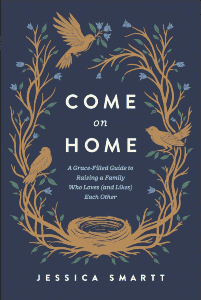
John: Mm-hmm. Yeah. And Jessica Smartt is an author and mom of three. She’s written a really remarkable book for parents. It’s called Come On Home: A Grace-Filled Guide to Raising a Family Who Loves (and Likes) Each Other.
Jim: Okay, that’s it, right there.
John: (laughs)
Jim: (laughs)
John: It’s a great title.
Jim: Likes each other.
John: Yeah. And you can learn more about Jessica in this book at our website.
Jim: Okay, really? A family that loves and likes each other? Jessica, is that possible?
Jessica Smartt: I mean-
Jim: (laughs)
Jessica: … that’s the goal, right? That’s what we’re going-
Jim: That is the goal.
Jessica: Yeah.
Jim: It’s a good goal.
Jessica: Yes. I feel like, um, I was the recipient of this. My grandmother did an amazing job of just raising… I’m closer to my cousins than probably some people are to their siblings. And then my immediate family, we live on a family compound, we-… Farm, compound; you can call it which one.
Jim: Yeah.
Jessica: It’s my-
Jim: We like the word farm.
Jessica: Yes, yes.
Jim: Compound sounds a little restrictive.
John: (laughs)
Jessica: It’s a little weird. You’re right.
Jim: Yes.
Jessica: Um, but my parents live there and my two sisters, we’ve got 10 grandkids running around, lots of cats and dogs and horses and, um, it really is a very special and unusual thing. A lot of people are like, “You guys like each other that much that you’re there all the time?” And it’s not that there’s not conflict.
Jim: Yeah.
Jessica: There certainly is. But there is this deep sense of we like being together. And as you were saying, Jim, that it’s a safe place. The world right now is so crazy. And just the culture that we’re raising kids in, it’s just such a gift for them to have-
Jim: Oh, yeah.
Jessica: … that soft place to land.
John: Mm-hmm.
Jim: You know, not everyone can do that. I get it. You know, there’s people that live in cities and, you know, suburbs and, uh-
Jessica: For sure.
Jim: … it sounds like a really unique environment.
You know, your grandmother, I wanna dig in a little bit more, because your grandmother’s story is certainly an interesting one, but she lived in a double-wide trailer, right?
Jessica: Exactly. Um, in earthly terms, she had nothing. She died and had very little money. She was a bookkeeper for their family horse farm, but she died with a legacy.
Jim: Yeah.
Jessica: And so many of us, her grandkids, and then great-grandkids know Jesus because of her and what she did, and we knew that she loved us. It was… Family was the most important thing to her. So I have that role model, and my mom was that too. Um, and yeah, it is just such a gift we can give our kids.
John: Mm.
Jim: So the kids grew up, your mom and siblings, right? Uh, from that household. But your grandma said something to you and to the other grandkids all the time, which was the title of the book, Come On Home, right? How did she stress that to you guys?
Jessica: Yeah, my mom, actually. Um-
Jim: Was that your mom?
Jessica: Yes, my mom. And, uh, that was just a phrase that she would often throw out. You know, if life was hard or you had a lot you were dealing with, just come on home and we’ll figure it out. Come on home. And that has just been kind of the theme of our childhood is that home is that safe place, that you’re accepted, you’re loved. The world out there might be throwing nonsense at you but come on home and we’ll figure it out. And so-
Jim: Yeah.
Jessica: … that’s what I’m seeking to model to my own kids too.
Jim: Yeah. Uh, what a great legacy again.
Jessica: Yeah.
Jim: I mean, what a beautiful attitude. “Come on home. We’ll figure out what the, what we can do together.” I love that.
John: Mm-hmm.
Jim: I’m gonna start using that with my boys because they’re in that place right now in their 20s where we need those conversations from time to time. “Oh, come on home and we’ll talk about it,” right?
Jessica: Mm-hmm.
Jim: I like that. Um, speaking of that, uh, when your kids were a little smaller, things were maybe chaotic, more chaotic then. That tends to be the case with smaller kids. Moms tend to feel that burnout. But you hit a point, you’re doing vacation Bible school, you’re doing all these things. Maybe in many ways, like so many moms, you’re trying to find that worth and being the best mom you could be, the best wife you could be, and you’re really busy doing all these activities. But what happened in that case for you when you hit the wall?
Jessica: Well, I think moms today feel this pressure to do so many things in so many different arenas.
Jim: Yeah.
Jessica: You know, we have to work out, and our houses have to be great, and we have to be volunteering and doing all the stuff, and we can’t. And when I look at my mom and my grandmother, what they did was home. And they were able to do that well. And certainly, there’s nothing wrong with having hobbies or interests or working out. Um, but I, at that point that you were referencing, was just so many things on my plate.
While I’m raising little kids, while I’m, you know, nursing a baby, my son had severe life-threatening allergies, and I’m trying to feed him and keep him alive and taking all these volunteer roles. And so, it was just a complete state of burnout.
And I think my, my point and what I’ve slowly learned is, you know, there’s that analogy of putting in the big rocks first. You can fit everything in if you put the big rocks in first.
And I literally have a piece of paper in my office that says, “Here are the big rocks. Love the Lord. Be a good daughter. Raise your kids. Be a good wife. Spend time with God. Keep my body healthy.” Those are the big rocks. And then the smaller rocks are all of those other bonuses that I can fit in if I have the margin and the bandwidth.
And so my clarion call, I hope, to moms is, uh, that all these things we’re putting on ourselves, especially the young moms.
Jim: Mm-hmm.
Jessica: When you are a young mom, sometimes it is all you can do to just raise babies. And it feels like such a long period of time, but it is not. You know, we have the rest of our lives to do those big dreams and do the traveling and whatever. It’s just such a short period of time that we have little ones in the home.
Jim: So what was that, I guess, revelation-
Jessica: Mm-hmm.
Jim: … that caught your attention? Because I would think every mom listening that’s taxed to the max is going-
John: Mm-hmm.
Jessica: (laughs)
Jim: … “Yeah, but what do I do to wind it down a little bit?”
John: Mm-hmm.
Jessica: For sure.
Jim: That’s the secret. So what page number is that on in your book?
Jessica: Right, exactly.
John: (laughs)
Jim: No. (laughs) But what is that, what is that thing? So moms are listening and going, “Yeah, I’m right there now.” What do they do?
Jessica: Well, I stumbled on the book, Essentialism, which is not a Christian book per se, but his main point is, “Strip your life down to what only you can do. There’s a limit to what you can do.” Which seems like it should be obvious, but it’s not to us. So he made a list of all the things you were doing and then, “What can only you do on that list. What is essential to your list?”
Jim: Yeah.
Jessica: Um, so I just-
Jim: I think even that definition could be hard. I mean, because I can do a lot.
Jessica: Mm-hmm.
Jim: But that’s not the point. It’s not how much can you do, it’s what is healthy to do.
Jessica: Yes.
Jim: And then what can you do at that time to concentrate on those things that continue to make you healthy?
Jessica: But as I said, again, and you guys can probably testify to this. That period when you have kids in the home is really actually pretty short.
Jim: Oh, yeah.
Jessica: It feels so long.
Jim: Yeah.
Jessica: What do they say? It’s the longest days in the shortest years of your life?
Jim: Right.
Jessica: It feels that way, but it’s over in a blink. And I’m now at that midway point. I have two teenage sons and then an 11-year-old daughter, and I can see it.
Jim: Yeah.
Jessica: The window is closing.
Jim: It’s a-comin.
John: (laughs)
Jessica: Yes. So I feel this now. I understand what I didn’t in those early years, which was, “I will have time to do the rest of those things.”
Jim: Yeah.
Jessica: “Right now, my purpose is with my children.” And you spoke about my grandmother and strong families. That’s the theme of this book is building strong families. Uh, I basically just did a ton of research. I interviewed people. I did book research. What are the common themes of those awesome families? Like, we all know those families that are just, you know, amazing. And I kind of boiled it down. We can unpack it as we go on. But one of the points is, um… And this was just my research, that strong families have one person, at least one person that has made the family their highest priority. And I saw that to be true in my own-
Jim: Yeah.
Jessica: … family as well. A lot of people said to my mom, like, “You should get out more. You should have hobbies. You should have friends.” And I kinda look back now. She’s got this wonderful life with her grandkids and her daughters on the same lane, I think, which again, to your point, is not everyone, but I think it worked out for her in the end.
Jim: Yeah.
Jessica: You know, maybe she should have had other stuff. But, um, this was a theme I saw that one person saying, “The family’s important. This is gonna be my thing that I’m gonna do.” And that was my mother.
Jim: Yeah.
Jessica: My dad was-
Jim: Well, you’re making choices in that. And I think-
Jessica: Exactly.
Jim: You know, the one thing that all of us get trapped in is we, you know, get a certain identity, a certain, uh, comfort from the things we accomplish, the things we do.
Jessica: Yes.
Jim: It gives us a sense that we’re a good person, that we’re doing (laughs) the right things. And I think for a lot of women, that’s very important. Especially, you know, if they’re working at home, let’s call it that. It is a, it is a big job.
Jessica: Yes.
John: Mm-hmm.
Jim: But they’re at home and husband’s going off and doing, you know, his work and he comes home at whatever time in the evening and, you know, you can feel like “I’m not as significant as people around me.”
Jessica: It’s not as much fun.
Jim: So the more you do, the more you volunteer, the more you, you know, then you’re at the dinner party going, “Oh, yes, I volunteer at such and such thing and I do VBS. And, of course, I take care of kids on the side and …” Uh, yeah, I mean, there’s a certain-
Jessica: Exactly.
Jim: … feeling like I’m being a good person when I do all this. How do you counterbalance that with you need oxygen too? You can oversubscribe to “doing.”
John: Mm.
Jim: And I just wanna press on that, because I’m sure many women listening are going, “Yeah, but here’s my schedule.”
Jessica: Uh, yes. And I can’t speak to what the Lord’s calling is for everyone. That’s what’s so cool is He’s uniquely gifted us and put us in homes and passions and all of those things. But I do think… I was talking to a friend, literally what you’re saying, Jim. She kind of is like, “I’m not doing enough. I have four kids, but I’m not involved in it. I’m not doing anything of importance.”
And I kind of pitched to her, like, “Aren’t so many ministries out there and organizations simply filling in gaps of where the family didn’t do what I believe God-“
John: Mm.
Jessica: “… created it to do?” Not all ministries, but so many-
Jim: Oh, yeah.
Jessica: … are stepping in. I’m sure you can speak to that because of your story. Like they’re stepping in where family didn’t do what God created it to do. And so, when we do family well, and of course there’s no formula, it’s not a vending machine. But when we invest in our kids, we build healthy people that can go out into the world-
Jim: Right.
Jessica: … and give and serve. And they’re not crippled by trauma. I mean, I’m, I joke, “I’m sure my kids will have some counseling, but maybe just not as much as they-“ (laughs)
Jim: (laughs)
Jessica: “… might have otherwise.” So to do that right is a huge significant purpose.
Jim: Yeah.
Jessica: To equip children to go out in the world healthy. I’m able to do so much because someone took the time to give me a healthy childhood.
Jim: Well, and it’s all buttressed by the research. I mean, we have-
Jessica: Exactly.
Jim: There’s a new report I read this morning of some research that came out that said a child predictably, your, to your point, it’s not a formula, but it’s a predictive model. And they can see that in social science now. Very much so, a child will do far better in every category if they’re coming from biological mom and dad loving home. I mean, they are doing so much better, finishing school, they’re not doing drugs, that kind of thing. They’re not doing at-risk behavior at the same rate as their peers who have more home struggles. That’s a good goal.
John: Mm.
Jim: And, uh, I so appreciate the emphasis that you’re putting on this.
John: Yeah, and that’s why Focus on the Family is here, is to help families thrive in Christ and stay, uh, as strong as possible. And, uh, we’re talking today on Focus on the Family with Jim Daly, with Jessica Smartt. And, uh, we’re covering just some of the, uh, wonderful content in her book, Come On Home: A Grace-Filled Guide to Raising a Family Who Loves (and Likes) Each Other. And you can get your copy of the book when you call 800, the letter A and the word FAMILY, or stop by focusonthefamily.com/broadcast.
Jim: Jessica, you dedicate a whole chapter in your book to time, and I totally agree with that. I mean, that’s kinda one of those big rocks you were talking about, right? Make sure you’re spending time together. But speak to that idea of dedicating time, recognizing that time. You’ve kinda touched on it, but I wanna go a little deeper with the fragility of that. You look up and it’s over.
Jessica: It is overwhelming. And I don’t wanna cast a bunch of guilt on parents as like, “Here’s one more thing you need to do.”
Jim: Oh, I do.
Jessica: (laughs)
John: (laughs)
Jim: No, I’m kidding. I’m kidding.
Jessica: Yes, exactly. But all good relationships take time. And some of that time is just boredom time.
You know, I think about before iPhones were invented and we went on car trips and you were just together. Like, what did we even do?
Jim: (laughs)
Jessica: We just sat and talked and played dumb games. And that’s where true friendship is forged in those moments. So a family needs time to develop itself, to develop relationships. And, um, I think one of the big enemies of that, to be perfectly frank, is sports.
John: Mm.
Jessica: The other, of course, is technology and phones, but-
Jim: That sports analogy was a good one. You had your two boys going separate directions, right?
Jessica: Exactly. And I look back, it’s fine. I mean, you know, sports in general are great for kids. There’s tons of research about that. And we do have our teen boys playing sports. I think especially our kids homeschool. And so, as they get into the teen years, having that outlet is important. But it’s starting earlier and earlier where parents are, you know, opting in, spending so much money and every weekend away playing these tournaments that, I think, surely there are kids good enough in your own town to be playing. You don’t need to be driving four hours away, but this is the culture. And not only within the, you know, outside culture, but in the church it’s very common. And I think it’s quite detrimental to families and we’ve-
Jim: So how, how do you process that? I mean, this is a good example. Uh, thankfully, our boys didn’t do that, so we didn’t have that struggle. Um, but for those families like yours where you have two boys in soccer, whatever it might be, but they’re going literally different directions is what you described. And your husband took one of your boys and you took the other boy and you’d go off on, you know, these excursions in different directions. How does a family say, “Okay, we wanna pull this in a bit.” The kids may be disappointed. They also may be elated.
John: (laughs)
Jessica: They were. That’s the crazy thing.
Jim: Yeah, they were-
John: Mm.
Jim: Yeah.
Jessica: Yeah. Um-
Jim: So how do you manage that practically?
Jessica: Well, there’s no, you know, one size fits all and God is so good and gives wisdom to us when we ask. He promises that and have, we’ve never seen Him not show up and give us direction.
Jim: Yeah.
Jessica: But I talk in the book about different questions to kinda process this. So the interest question is, like, “Does your kid actually really want to do this thing?” (laughs) Um, because like you said-
Jim: Right. Yeah.
Jessica: … we realized our kids got cut at one point and one kid broke a bone. They were not even that devastated.
Jim: Yeah.
Jessica: We thought this is gonna be the, they’re gonna be so upset. They were like, “Oh, oh, well, season’s over.” (laughs) So really-
Jim: (laughs)
Jessica: … thinking through, like, “Is my kid into this, or is it just me thinking they should, quote unquote, do this?” And I think we have to ask ourselves as parents a tough question and say, “Am I getting something out of this? Is it fun for me to see my kid be successful?” ‘Cause that’s maybe never a guiding principle to make a decision on is what it’s giving me as a parent.
Jim: That’s probably your first check.
John: (laughs)
Jessica: Exactly. Right.
Jim: Should be. Your first flag should be, “Okay …”
Jessica: But it’s fun to see your kid successful-
Jim: Oh.
Jessica: … and everybody tell you, you know, “Oh, they’re so great.” Even if it’s not-
Jim: Yeah.
Jessica: … they’re nine and, you know, whatever. Um, but two other questions real quick to ask yourselves: the mealtime question. You know, “Is this activity allowing us to live out our values for family meals?” Whatever those are. “Or is it interfering with that?” Because meals have been shown over and over to be so important.
And then the second question is the whole family. Um, I’ve seen also that some of the younger siblings or older get kind of dragged along as they’re watching an, a different successful sibling go on their little adventures.
Jim: Oh, interesting.
Jessica: And that’s, again, not helpful for the family. So looking and saying, “Yeah, it may be great for this kid.” And we’ve made several decisions where it was like, “This particular kid may have really thrived, but there’s more here to the story, bud.” But isn’t that an important life lesson, right? If we’re raising kids that think, uh, the whole family is about them, they’re not gonna make terrific husbands or wives later on, right?
Jim: That’s a good point.
Jessica: Part of it is learning the whole family works together cohesively.
John: Mm. Yeah.
Jessica: So those are just some questions to talk through about sports or whatever the activity is. It doesn’t need to be sports.
John: Mm-hmm.
Jim: Yeah.
John: Yeah. Now, Jessica, earlier, um, you mentioned technology and I wonder if we can wade into that. Just, uh, there’s a whole dark hole-
Jim: Yes.
John: … that, uh, captures people.
Jim: Yes.
John: You mentioned, uh, in the book that your son is somewhat of a unicorn, uh-
Jim: (laughs)
John: … (laughs) in that he doesn’t have a phone or didn’t have a phone at age 15. And that’s great for you, but, um, somebody’s thinking, “Well, my kids have phones.” So how do we manage this?
Jessica: So-
John: How do I take care of this?
Jessica: Yeah. I would say two things. Number one, um, I have a fancy parenting philosophical phrase called “back the bus up,” and that means it is never too late. So they may have phones, but they don’t need to keep having them.
Jim: (laughs)
Jessica: And I think parents just need to be encouraged that if there’s something off in the family, you can come to your child, you are the parent, and you can say, “I made a mistake here. I realized that I did something and we are going to right the situation.”
And that is so hard, but if there’s a parent listening right now that has allowed something, particularly a technology, into the home that they don’t feel good about, they, through the Holy Spirit’s strength, they can back that bus up and make changes in the family. So that’s number one.
Number two is if you’re on the fence about bringing a technology into the home, please wait as long as you can. There is so much data to wait as long as you possibly can. And to your point, when I wrote this, my son was 15. He’s now 16, almost 17, and he’s driving, and we did get him a phone. And I drove home from the Verizon store thinking, “His childhood is over. This is so sad he’s gonna … I’m giving him a stinking phone and-“
John: Yeah.
Jessica: “… you know, things are gonna be old.”
John: Lost the battle. Yeah.
Jessica: But you know what was really cool? It really wasn’t. It, he had been, up to that point… we had built his character in such a way that the phone really just revealed what was already there. And we’d spent a lot of time emphasizing things that we felt were important: boredom, relationships, real life, uh, discipline, faith.
And by the way, the phone is super stripped down. It’s like basically a calculator that can call people and get directions. No social media and all that, but it didn’t really change him because we had spent 16 years forming that character, um-
Jim: That’s good.
Jessica: … that … Yeah, that was encouraging to me. But again, that proves, I think, wait as long as you possibly can. And I think parents are asking the wrong questions. They’re saying, “When can I give the phone?” That’s wrong. Instead, think, “What traits does this child need?” And I need to get those first, and I’m not giving any technology until I see these traits.
And by the way, a lot of these things are not things that 9, 10, 11, 12-year-old kids are going to have by definition. I hate my phone. It is very hard for me, you know? So if I, as a grown adult, am struggling with it, how do we expect children to have self-control? We’re not doing our job, I would say, as, uh, the gatekeepers by giving them these things.
Jim: Well, let’s dig into that.
Jessica: Yes.
Jim: You did have that revelation that as mom, you were kind of-
Jessica: Yep.
Jim: … connected to the phone perhaps a little too much. What did that look like? And then you realized you’re kind of modeling.
Jessica: Well, being a mom is boring. Okay?
Jim: (laughs)
John: Oh. (laughs)
Jessica: So the phone gives you a distraction. And especially if you’re tired.
Jim: It’s an engagement tool.
Jessica: Exactly.
Jim: Yeah.
Jessica: And I felt bad about it, but it was like I was just checking to, again, you know, back to your earlier point, to looking for self-worth and identity in other places because you’re not getting it in your home. You’re taking care of people and you’re giving all the time and it’s hard-
Jim: Mm-hmm.
Jessica: … and it’s boring. Um, so the phone offers a temporary outlet. Uh, but through God’s grace and a really cool app (laughs) that I found, I have been able to kind of strip it down. And it’s, again, it’s not fun, right? Being in the moment isn’t always fun, but that is where real life is. And I think the phone numbs things and makes you just check out, but that’s not really satisfying.
Jim: Yeah.
Jessica: Really what’s satisfying is being present with whoever is in front of you.
Jim: Right.
Jessica: So being authentic in, if I’m gonna set up all these rules for our family, I can’t be hooked on my device. Like, authenticity is so important throughout all of these things.
Jim: Yeah, that’s good.
Jessica: If I’m asking you to forgive, if I’m asking you to show grace, if I’m asking you to be self-disciplined, are you seeing me work through those things?
So, I was amused the other day to see my son had chucked his phone in my closet. And I realized he was doing schoolwork and he’s like, “I just had to get it out of there. I just checked.” But he’s seen me, like, lock the phone up and put it… So, that’s kind of a cool-
Jim: Yeah, totally. That’s really good.
Jessica: And again, they’re not, those are not always parenting wins every day, every hour in our home.
Jim: Yeah.
Jessica: But it was a cool, like, he’d seen that modeled. But, yeah, it’s a fight we cannot get … I think it’s the most important thing facing families right now is technology.
Jim: I agree.
Jessica: I absolutely do.
Jim: I agree. That’s why those things that we can do are so critically important. And, uh, you know-
Jessica: And I-
Jim: … and then sticking to it.
Jessica: And I just wanna reiterate again, it is not too late that, through the Lord’s strength, parents can remake this road and begin to … God is a God of new stories and of redemption. And if He can redeem all the stories in the Bible, He certainly can redeem a family that’s gotten off track with technology.
Jim: Yeah.
Jessica: So-
Jim: It’s always good to go the right direction. And we’ll link to an article that our Plugged-In entertainment team wrote about the app you mentioned. It’s called BePresent. And I think it’s a great tool for parents who wanna be present with their kids and disengage from their phones, which is good.
You also have a chapter dedicated to making memories, which I think is really good. And again, you know, that’s something you can find in a variety of ways. We did it through camping and making memories through camping. And the boys now, you know, they’re in their 20s saying, “Those are the best family memories that we have, or were those camping experiences where everything went wrong and-“
Jessica: (laughs)
Jim: “… it was hilarious and thankfully nothing caught on fire, but it got close.”
John: Mm-hmm.
Jim: (laughs) So what were those making memory things that you did?
Jessica: Yeah, we’ve done some camping too.
Jim: (laughs)
Jessica: Um, that’s what’s cool is, like, each family gets to choose your own adventure. And so, one thing I say to families is, um, to choose some core values because I have … My first book is Memory-Making Mom, so many ideas. No one could ever do all of those ideas, right? You can’t do all of them that you see out there on Pinterest or Instagram or whatever but choose what’s important to you.
And so, obviously, to your family, camping was one. And to us, nature is one and music. And so I kinda give suggestions of core values. And then out of those values, that’ll tell you what traditions are worth embracing. There’s a lot of things we say “no” to-
John: Mm.
Jessica: … Because we just can’t, but we know what our core values are. Uh, my husband and I now are 45, 46, and we’re kinda doing some financial planning at this stage. And what’s interesting is, um, your financial planning is a reflection of your values as a family. And we’ve kinda come to the determination that we could be saving every scrap that we’re making, but a value of ours is making memories.
And I’m looking at this beautiful picture in the studio of mountains. National parks are something that’s been really cool to our family. So it’s a little bit of a risk, but we’re deciding instead of taking this money and investing it, you know, (laughs) in a stock market, we’re investing in it in our family, and we’re gonna plan a couple more trips to go see some cool parks.
Jim: Yeah.
Jessica: Um, but again, that’s a use of resources that could be going elsewhere, but we’re believing that we’re planting something there.
Jim: Yeah.
Jessica: That we’re doing something important.
Jim: Which is good. That’s, again, that’s assessing the scene and making those decisions based on what you need to do as a family. And that’s kinda the theme of the whole book. And you’ve done such a beautiful job today talking about that. Let’s come back next time if you’re willing-
Jessica: Absolutely.
Jim: … and keep the conversation going. And we’ll give more tips and ideas to folks listening, moms particularly on, uh, again, what a great title. Come On Home: A Grace-Filled Guide to Raising a Family Who Loves (and Likes) Each Other.
John: (laughs)
Jim: Uh, that’s a great title and this content has been, has been terrific, so thanks for being with us.
Jessica: Thanks so much.
Jim: And let me turn to you, uh, the listener and viewer, and ask you to support the ministry at Focus on the Family. I mean, this is how we get it done. Great book, just chock-full of ideas on how to make memories, how to really prioritize your family so that you have a predictive outcome that you raise kids that are going to be good, strong, believing adults.
And Jessica mentioned right there at the end, the importance of the foundation of faith in Christ being at the core. We certainly believe that, and we want you to have that relationship. If you don’t have that relationship, get in touch with us, and we’ll talk to you about that, and John will give those details in a minute. But again, if, uh, you’re feeling your family’s a bit knotted up and we’re not going in the right direction, get in touch with us. We have counselors. We have Jessica’s great book. Make a gift of any amount. We’ll send it to you as our way of saying thank you. It’s all right there.
John: Mm. Yeah, help is a phone call away, 800, the letter A, and the word FAMILY. Make a donation when you call and request Jessica’s book, Come On Home. You can also, of course, connect with one of our counselors.
Jim: All of the resources we’re able to offer here at Focus on the Family are possible because of our generous donors, many of you. Your financial gifts keep our caring Christian counselors on the phone lines. They provide support to families who are struggling. They help moms to choose life for their child. Man, over 560,000 babies have been saved-
John: Wow.
Jim: … because of the work we’ve done together, but we cannot do it without you. When you give a gift of any amount to the ministry, we’ll send you a copy of Jessica’s great book, Come On Home, but consider giving a monthly gift. That really helps us.
During the month of July, we’re looking for 1,200 new monthly donors to support the ministry. This provides the fuel we need to strengthen families each and every day. And we believe a strong family is the bedrock of a healthy community and culture and a healthy country. Please consider making a donation so we can help more families through Focus on the Family.
John: Yeah, make that contribution and access all the resources we’ve talked about today at focusonthefamily.com/broadcast. On behalf of the entire team, thanks for joining us today for Focus on the Family with Jim Daly. I’m John Fuller, inviting you back as we once again help you and your family thrive in Christ.