




Preview:
Pastor Kevin Thompson: This is one of the powerful things I think about marriage, is that as God pours His love through Jenny and that love heals me, our love for each other can begin to flow out and impact other people. So either you will be living out your wounds and hurting others from your pain, or you will be living out God’s grace and having healing from the healing that He has given to you.
But you can’t have that unless you’re curious about, “Who am I, why do I respond that way, who is she, what is it that triggered her right there?”
End of Preview
John Fuller: That’s Kevin Thompson, and he’s our guest today on Focus on the Family with Jim Daly. Thanks for joining us. I’m John Fuller.
Jim Daly: John, I think every human being is wired for emotional connection. You know, I’ve met some crusty people in my lifetime, uh, especially as a Christian. And when you scratch the surface, typically what you find underneath is deep wounds of a crusty person, something that happened to them.
And, you know, God created all of us to connect emotionally, relationally. That’s what the scripture says, why we were created, right? To be in relationship with Him.
John: Yeah.
Jim: And so, those are basic understandings of how human beings operate. A lot of people refer to that as attachment theory, and, uh, you know, this is how we form relationships.
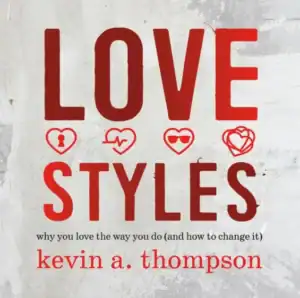
And today we’re gonna talk with someone who has looked and thought about this very deeply. He’s written a great book, Love Styles: Why You Love the Way You Do and How to Change It, uh, I think for the better. And so, I’m looking forward to today’s discussion.
Remember, Focus on the Family is here for you. We have a… just a treasure trove of resources to help you in your marriage, help you do relationships better, help you be the best parent you can be. And, uh, we’re here for you.
John: Mm-hmm. And Kevin Thompson is, uh, the married life pastor at Bayside Church in Roseville, California, just outside of Sacramento. And he and his wife, Jenny, have two children, Ella and Silas. And he meets with and counsels a lot of couples and families.
Jim: (Laughs).
John: And he’s written a number of books. Today, we’re covering, as you said, Jim, this really great little book. It’s full of insights. Very quick read. It’s called Love Styles: Why You Love the Way You Do and How to Change It. Uh, learn more about Kevin and get a copy of this book at our website, and that’s focusonthefamily.com/broadcast.
Jim: Kevin, welcome back. It’s good to have you here.
Kevin: Oh, thanks for having me. Great to be here.
Jim: You know, someone listening right now- one of the things I’ve learned sitting in this chair talking to experts and people that think deeply about marriage and parenting and relationships, et cetera, how many little things add up in our lives, especially when we’re children that shape the way we see the world and the way we process things.
And that attachment theory I talked about a moment ago is, you know, it sounds… it’s a psychological term for what we observe in human development. And so much of what we learn is in our childhoods, and it can be positive or it can be negative or everything in between. Um, speak to that idea that, you know, “The way I respond to my spouse today was something rooted in my childhood.” That sounds like psychobabble.
Kevin: Yeah. Psychologists have been talking about the last 50 or 60 years, this idea of attachment theory. But what I love about it is they really have discovered what Genesis 2 and 3 has long taught us.
Jim: Yeah.
Kevin: And the reality that when sin entered the world, it deeply impacted our lives. And sin entered into the family. So it shouldn’t be surprising to us that family is the most difficult place for things to be, because it separated the marriage immediately. And think about what happens in Genesis chapter four. Immediately, the family is rocked in unimaginable ways.
But I always think if family is the first place that sin entered the world, isn’t that the place that God’s grace could make the greatest impact?
Jim: Boy, that makes sense.
Kevin: And so, the truth of the matter is this. A majority of the time, the fight I’m having with Jenny, the fight I’m having in the present is actually a fight with my past.
Jim: Yeah. You know, for the person that may struggle to connect those dots, let’s just look at an example of how that can happen. Uh, do you have an idea that, or an example that pops up? Like how… For me, for example, I did… I went through a lot of trauma as a child. You know, I lost my mom at nine. My mom and dad divorced when I was five. She remarried and then he left after her funeral. I was in foster care. I mean, there’s just a lot going on for a nine-year-old at that point.
And I think if, you know, for Jean and I, where that would crop up is emotional attachment for me. I’d rather just avoid the pits, you know? I just wanna pick myself up by my bootstraps and get moving. Who wants to wallow in grief? It’s no good.
And, you know, Jean’s helped me to be better in that way where she says, “You know what? Not everybody can do that. I’m not one of those people. You need to figure out how to sit with me in my grief.” That freaked me out. But that’s an example-
Kevin: Yeah.
Jim: … of what you’re talking about, the things we learned in childhood, which for me was “cover up the bad stuff and let’s just go have fun.”
Kevin: Yeah, no doubt. So we were in the house the other day, have a couple people over, and in the midst of conversation, Jenny said something I didn’t necessarily like. I didn’t say anything in response to that, but there was a look that was given of, “Hey, let’s not go there in that moment.”
Friends left, and I could tell she was upset. We began to talk. And thankfully, 25 years into marriage, we can have some very deep conversations that years ago, this would’ve just been the cold shoulder for a while and tension for a while until something kind of broke. But now we just dive in. “Hey, what, what is it? What’s going on?” And she very clearly and compassionately told me, “The look you gave me, whenever you give me that look, I feel like I’m four again and I’ve disappointed my dad.” That’s what it goes to show of how the wounds that we have from our past.
Here’s the truth, Jim and John. The greatest wounds that we have in life are most likely caused by somebody who was supposed to love us and didn’t.
Jim: Yeah.
Kevin: Now, here’s the thing. That’s not necessarily a lack of intention. You could be like me, have these wonderful parents who would never do anything in the world to hurt you. But here’s the truth. Love is more than just intention. It’s skill, it’s ability, it’s availability.
Jim: Communication.
Kevin: And the truth- communication. The truth of the matter is in those earliest years of life when our brains are being formed, and before we even know what love is, we’re determining and learning what love is supposed to feel like.
The truth of the matter is our parents are busy. Life is demanding. Think about my youngest child. He’s born and the first six years of his life- he has two parents who are working. Jenny owns an advertising company. I’m running a church. I’m writing. I’m doing all those things. He has an older sister with down syndrome that’s obviously gonna demand more of our attention.
During that time span, our next-door neighbors, my grandparents both die. Jenny’s dad gets a glioblastoma brain tumor, dies within eight weeks. Is it possible that as much as Silas’s parents loved him, that he had needs that went unseen? Obviously so.
Well, his brain is gonna make an interpretation of what that means. So what attachments theory says is how our needs were met in the earliest years of life shapes how we view ourselves, others, and God. And that really becomes the autopilot of how we run all relationships until we recognize the autopilot. Then we’re empowered to change it.
Jim: Right. No, that’s a great way to look at it. Those are the imprints that we’re given. It’s the operating system that we learn quickly what life is about.
And, you know, to move away from this idea that it’s simply psychology, this is God’s pattern in us. This is how He created us. Sometimes those are coping skills. You know, some of the funniest, humorous are people that came from really bad traumatic childhoods-
Kevin: Mm-hmm.
Jim: … because they used humor to lift their spirits out-
Kevin: Yeah.
Jim: … of really bad circumstances.
Kevin: Mm-hmm.
Jim: And so again, it’s how do we see all these things? How do they operate in us? How do we function day to day?
Kevin: Yeah.
Jim: Uh, you have a story in the book that I thought was amazing. First, I can’t even believe you did this, but in a remodel, it sounded like with your house, you dry-walled over a thermostat.
Kevin: Well, thankfully, this is never me because I- these hands have not seen that kind of work ever. Now, Jenny could do that, right?
Jim: (Laughs) Yeah, right.
Kevin: So this is a, a couple, uh, early on, uh, they’re gonna get married and they … So they bought a house and they were gonna renovate the house, flip the house basically during the engagement process. And it actually worked out very well for them. I was kinda worried about that as an engagement (laughs) process, right? But it showed the relationship was really strong.
But in the midst of the process, one of the things they did is at some point, they kinda took the old thermostat off the wall, but they- just the facing of it. And so, they never did unhook it or unwire it. (laughs) And then before long, something got hung over it. And the next thing you know, they don’t realize that there’s a thermostat in their house that they’re not operating off of.
And so the one they think is working actually isn’t what’s determining what the air feels like in the moment. And so, in that first year of marriage, they can’t figure out the bedroom is hot in the winter, it’s cold in summer. They can’t figure out what’s going on. Well, what’s happening is what’s reading the room is actually not working properly.
Jim: Yeah.
Kevin: And what they think is reading the room is something completely different. And I think that’s a great metaphor for what happens in marriage. That our past wounds… and we all have them. This is not a book for, just for somebody who had a horrible childhood and upbringing. I had a great upbringing. Now, my parents did divorce, so there’s some wounds that are there. But two parents who love me to this day immensely.
We all have these wounds. And until we confront those wounds, until we deal with those wounds, they’re gonna deal with us. ‘Cause the truth of the matter is, you love today the way you were loved yesterday.
Jim: Mm.
Kevin: Because that’s just what feels natural to you, what seems right to you. So why is it that you probably think Jim, to some extent of, “Oh no, let’s just move on. Let’s go have the fun.”
Jim: Yeah.
Kevin: “Let’s go do the fun stuff. Ignore the, the pa- oh, oh, you were hurt. Okay. Let’s make it better.” Instead of sitting there in the midst of it. Well, you probably came from a house in which that was kind of how you learned to adapt. “That if I can do this, I can move on. Maybe my needs won’t be totally set and met if I express this pain. And so let’s not express it.”
Well, that creates in your brain now the pathway that feels natural to you. And you just think that everybody views life that way. And then we get in relationship and we realize they don’t.
Jim: Mm-hmm. You know, Kevin, the longer you live, hopefully the more you realize it’s like this is so baked into this life’s experience. You got half a loaf. (laughs) I mean, it’s like the Lord has totally set this thing up to where you’re not complete.
And, you know, sin entering the world, I think, has created that. So we are literally like half a loaf. Yeah. We think in one specific way. And even in marriage and the courtship idea, we’re attracted to that person typically because they possess things that we do not. So my wife’s an introvert. I’m the extrovert. But this idea of the Lord saying the two shall become one flesh, it is. It’s like two halves come together to be whole. And how do we open our hearts up to appreciating that rather than it irritating us?
Kevin: Yeah. Well, that’s the fun-
Jim: (Laughs).
Kevin: … that’s the funny thing here. It’s the beauty of how God uses our brokenness to actually be the process to heal us, right? And so, our greatest wounds in life were most likely caused by people who were social to love us and didn’t, not a lack of intention, but just, uh, availability. But God so often heals us by pouring His love through somebody who didn’t have to love us and yet chose to do so.
Jim: Mm.
Kevin: First and foremost, that’s Jesus.
Jim: Mm-hmm.
Kevin: And then for me, secondarily, that’s Jenny. So as Jenny is loving me when she doesn’t have to, it begins to play a healing role within my own lives. And what she’s doing is she’s wooing out of me now the fullness of who God created me to be.
Jim: Yeah.
Kevin: But you think about, think about the guy- let’s go gender stereotypes.
Jim: Uh-huh.
Kevin: So you have a man and a woman, a man who’s very kind of avoidant, a woman who’s more anxiously attached, kind of run, uh, by her emotions, right? Why is it that they’re drawn to each other? Well, they’re drawn to each other is this man created with emotion sees her and how free she is to express it. And internally, he desires that, but he doesn’t know it, but he desires that.
Jim: Right.
Kevin: She can kind of feel maybe sometimes overrun by her own emotion, sees his stability and he’s a rock. “Oh, I wish I could be like that.” And they’re drawn toward each other. But here’s the problem. As soon as they’re in relationship now, uh, those pathways, if they don’t heal them, those pathways actually set them up for what’s gonna happen.
So here’s what happened. She’s prone- Now, the genders here could switch very easily. I’m more anxiously attached, so I play that role in our relationship. But let’s go gender stereotypes.
The anxiously attached spouse is prone to see any form of separation or as abandonment. So they’re always kind of attuned to, “Are you, are you upset with me? Are you mad at me? Are you doing something like that?” Right? Somebody with an avoidant pathway now is always afraid of being encroached in upon, that you’re gonna hinder my freedom, right?
Jim: Mm-hmm.
Kevin: And so they’re always looking for you trying to get too close to me, too much intimacy. So now this couple is in a relationship and one of them is triggered in some way. He could walk in just tired and she goes, “Oh, he must be upset with me.”
Jim: (Laughs) Yeah, right.
Kevin: So now she needs reassurance.
Jim: Yeah.
Kevin: Well, that scares him. That’s gonna be too demanding. “I’m already exhausted. That’s gonna be too demanding.”
Jim: Smothering.
Kevin: So he takes a step away, which causes her to spike emotionally to chase after him. And now they’re in this pattern of pursue and withdrawal that could happen for a day or two weeks or whatever.
Well, fin- that’s exhausting. But finally they reconnect. And the moment they reconnect, she thinks to herself, “Oh, we’ve had an emotional breakthrough. It will forever be this way.” And he thinks to himself, “Oh, I appeased her. I’ll never have to do that again.” And they’re already set up for the next fight.
Jim: Mm.
Kevin: That’s the danger that’s here. Mm. Is what attachment theory does is it explains why you keep on having the same fights over and over again.
John: Mm-hmm.
Jim: Right.
John: This is Focus on the Family with Jim Daly, and our guest today is Kevin Thompson. And we’re talking about his, uh, really small but very impactful book called Love Styles: Why You Love the Way You Do and How to Change It. Uh, there’s so much good stuff here. Get a copy of the book today, uh, at focusonthefamily.com/broadcast.
And Kevin, this is such fascinating stuff. And you had a story in the book about how these early childhood memories get stored, even in our bodies, just physically, and the way they can come out sideways without us even knowing it.
Jim: Yeah.
Kevin: Dan Siegel down at UCLA tells the story of him working with a young child that was brutally abused as a child. And, uh, the father went to prison rightly so. And the child did so good, flourished in so many ways, until finally he got into upper elementary school and school started and things went horribly.
And so, he got back involved, was trying to figure out everything. They couldn’t figure out what was going on until finally Siegel actually went to the prison to interview the boy’s father and gave him this lengthy questionnaire. And that’s when they found it, that the father wore Old Spice aftershave-
Jim: Huh.
Kevin: … whenever the little boy was little. The teacher for that year for the child wore Old Spice aftershave.
Jim: Mm.
Kevin: And so, long before that child ever had the ability to store an explicit memory in his brain and know, “I’m remembering,” the body, as van Kolk says, the body keeps score.
Jim: Mm-hmm.
Kevin: The body had associated that smell with danger. And so, the moment that boy walked in that classroom and smelled that smell, he didn’t know it. His body knew it that he was in danger. And the truth of the matter is, that’s an extreme example of what we all have.
So here’s the great danger. What that young boy saw as the teacher as his threat, the teacher wasn’t his threat. It was his father from years ago.
Jim: Yeah.
Kevin: But he didn’t know it. So whenever implicit memories are at play with us, we view the danger as the person in front of us. Mm. When in reality is we’re dealing with the past. And so, how many times am I frustrated with Jenny when in reality, I’m actually frustrated about something in my past and I don’t recognize it?
Jim: No, absolutely. Boy, that’s, uh, eye-popping actually when you think about it in the context of your marriage and maybe those things that you do or your spouse does that you actually scratch your head and go, where did that come from?
Kevin: Yeah.
John: Yeah.
Kevin: That probably is a common phrase.
John: Well, and even just broadening that out. I mean, that could be an employer. It could be any person you meet, uh, in a public setting. Those triggers are built in-
Kevin: Yes.
John: … until you recognize it.
Kevin: I love the question.
John: Yeah.
Kevin: “Why? Why do I do that?”
John: Hmm.
Kevin: “Why do I respond that way? Why do I think that way?” ‘Cause think about it. Literally, a coworker can walk in. An employee can walk in one day and say one thing and you laugh and think it’s hilarious, and the next day it frustrates you.
Jim: Huh.
Kevin: The context is the same. So what’s the difference? Well, the difference is whenever we feel seen, known, valued, and loved, we interpret things in life through that frame. But whenever we feel unseen, unloved, unvalued, then everything begins to touch on that.
And so, the truth of the matter is, if your wife, if your husband has their attachment needs met, they’re probably very open and receptive and have tremendous grace with you and a wide strike zone of what you can say before it’s offensive. If those needs are unmet, it doesn’t matter what you say. It’s gonna trigger them because what they’re doing now is they’re protesting.
Here’s what happens. When we feel unseen, unknown, unvalued and loved, that is such integral to who we are as a human being, that we have to get those needs met. So a secure approach would be, I could express that. I could say, “Jenny, I just don’t feel seen, known, valued or loved right now.” But we tend not to respond in secure ways.
Jim: Right, right.
Kevin: So what do we do? We raise a finger of protest.
John: Mm-hmm.
Kevin: And here’s what we have to do. We actually have to up the ante to get the situation to match what’s going on. So in the book, I tell the story, uh, about Jenny walking in and seeing a sink overflowing with dishes and me on the couch watching Arkansas lose a football game. Hypothetically.
Jim: Hypothetically. (laughs).
Kevin: This is totally hypothetical. This would never happen. Only a decade of watching Arkansas lose football games.
So in that moment, if her attachment needs are met, she can put on her AirPods, start cleaning the kitchen and think, “Man, I love my husband. He works hard. Man, what a great family I have. This sink is overflowing with dishes. What a great life I have.” She can sing worship music to God as she cleans the kitchen. If she walks in feeling unseen, unheard, unvalued, unloved, and she sees the exact same scene, she might be asking-
Jim: “Where’s the exit?”
Kevin: No, that’s exactly right!
Jim: Yeah.
Kevin: And so, here you have the exact same scenarios, but radically different responses. And so, if your spouse is not responding in a way that makes sense to you, you need to be start asking the question, not “What’s the issue that’s presenting. What’s going on underneath? How does that person feel unseen, unheard, unvalued, unloved? And how can I meet that attachment need?” And then we can deal with the issue that’s presenting itself.
Jim: You know, you offer simple questions in the book that I think are so powerful. You’re touching on it right now, but that idea of opening up your spouse’s heart, which is so critical. You point to curiosity and humility being critical to being able to do that. Speak to the reason why those tools are so important.
Kevin: Yeah. Humility, first and foremost, I mean, Jesus starts the Sermon on the Mount, “Blessed are the poor in spirit.” It’s the very beginning point of our entire Christian lives. If we don’t understand that we are fallen people that live in a fallen world, good luck.
Jim: Right.
Kevin: Right? And so, no place more should that be more seen than in the midst of marriage that I know I’m not the husband, fully the husband Jenny needs me to be. I know that she has to put up with things. I know that she is gonna be dealing on her own issues.
That alone should create this humility that- not excusing bad behavior. I’m not saying that. But this just grace and mercy that we are two sinners trying to figure this out. But then that should lead us to some curiosity because God doesn’t wanna leave us there. His grace now wants to penetrate every aspect, every nook and cranny of our lives in this world to transform it for His glory, which means whatever wounds I have, God wants to heal. Uh, whatever negative pathways I have, He wants to transform. And then He wants to use me to be a transformation to others.
This is one of the powerful things I think about marriage, is that as God pours His love through Jenny and that loves heals me, our love for each other can begin to flow out and impact other people. So either you will be living out your wounds and hurting others from your pain, or you will be living out God’s grace and having healing from the healing that He has given to you. But you can’t have that unless you’re curious about, “Who am I? Why do I respond that way? Who is she? What is it that triggered her right there?”
And so, what would it look like if the next time your wife raises a finger, a protest? “How dare you do this?” What if instead of raising a fist of defense… Well, I might say, “Well, I was gonna clean the kitchen. I’m just tired. You know, the golf course was hot today. I was gonna take a break,” right?
So a finger raised to protest tends to respond with a raised fist of defense. Do you know the problem with a finger of protest and a clenched fist of defense? You can’t hold a hand with either one.
Jim: Mm.
John: Hmm.
Kevin: So what would it look like if when Jenny protests, if instead of me getting defensive, what if I got up, started cleaning the kitchen and said, “Hey, what are some other times I make you feel taken advantage of? Hey, what’s it like living on the other side of me? Hey, how does that speak into old wounds that you can feel? What’s the need that’s underneath that? What’s another time in your life which you felt taken advantage of?”
John: Huh.
Kevin: And what begins to happen is instead of speaking to the issue, you speak below the table to what’s unseen and the heart that is actually there. And if I can woo Jenny’s heart out onto the table, here’s the amazing thing to me. When I start asking her questions like, “Hey, what’s that like? What are other times that I do that to you? What’s the worst that you’ve ever felt about that? What are times I’ve gotten it right? How does that trigger other things?”
Whenever I woo her heart out onto the table, eventually, she then turns and goes, “Well, tell me what it’s like for you.” And isn’t it funny that the raised finger of protest is an attempt to get ourselves seen and it doesn’t work? Because if I protest and you defend, I’m protesting to get you to see me. But when you’re defending, who are you seeing? Yourself.
John: Mm.
Kevin: Which makes me feel even more unseen, unheard, unvalued, unloved. Well, when I’m getting defensive, what do I… I just want peace. But that raised fist of defense doesn’t give me peace. What does? An open hand of curiosity and kindness.
And so, the irony is, and this is what I love about love styles, is the very outcomes we’re trying to avoid, our actions are causing. And the very outcomes we desire, our actions are preventing because our autopilot is not wired properly. What saved us in the past is killing us in the present.
Jim: Mm.
Kevin: But here’s the good news. You love today the way you were loved yesterday, but you will love tomorrow the way you choose to love today. And you can love in a different way.
Jim: Yeah. Which is so good. You know, the one thing we haven’t explored, and all of that is wonderful, but I wanna make sure we get in right at the end here. Secure attachment.
Kevin: Yeah.
Jim: And even the way God pursues us and how that’s a model for the way we need to do it in a healthy way when we become securely attached.
Kevin: Yes.
Jim: So connect those dots for us, what we see in scripture, the way God pursues us. The prodigal son, I’m sure is a part of that piece. But that whole picture… and that is healthy, secure attachment. God is demonstrating this to us, even in a fallen world. “Here’s my nature. Here’s my way of bringing healthy love and vibrancy to your life.”
Kevin: Yeah. Well, so whenever we look at these four different love styles here, one the secure attachment, the three non-secure attachment of anxious, avoidant, and disorganized.
It’s not that I am one of these things. It’s that I have these pathways in my life and different relationships are different. And so, I might have a very secure- I have a very secure relationship with Jenny, but I’m more anxiously attached to some of my coworkers, to maybe my parents and those kind of things. And so, transformation can begin to take place. And the beautiful thing is that God can change us. We’re not stuck now. Uh, modern psychology might think that we’re kind of stuck based on your biology, based on your genetics.
The Gospel says, no, you can change. A secure attachment is the epitome of what love is. It’s truth, it’s respect, it’s honesty, it’s value. It’s the ability to explore new things because the security you have now in yourself. You think about what we want love to be. That’s what secure attachment is.
And the good news is it’s available to all of us as we allow God’s grace to penetrate our hearts. But here’s the bad thing. The problem is we can’t truly become who God wants us to be until we look at to see how we become who we are right now. And somebody with an avoidant attachment wants to go, “Well, my past doesn’t matter one bit.” I guarantee you it does. Somebody with an anxious attachment goes, “Oh, but I don’t wanna blame my parents.”
This isn’t about excuses. This is about explanations to empower us of how we can move forward. And Jesus can transform you in ways that you’ve never even began to imagine to such an extent that this more anxiously attached guy can now have this securely attached relationship with his wife and begin to pour that out into the lives of other people. God has used her to change me.
Jim: Wow, Kevin, this has been so good. I- you know, it just feels like we could roll for another five hours-
Kevin: (Laughs).
Jim: … on this topic. But I think we’ve given folks enough to pique their curiosity, and hopefully to desire to move from what was to what can be.
John: Mm-hmm.
Jim: Which is really the goal, to go deeper into a relationship with Christ and to let that affect the way that we operate in our marriage and our parenting and our friendships, et cetera, which is how God brings heaven to earth, right through us.
Kevin: Mm-hmm.
Jim: Shalom, how He brings God’s peace through us. So this has been great. Thank you for being with us.
Kevin: Oh, thank you.
Jim: And let me turn to you, the listener. Focus on the Family is here for you. As I said at the top of the program, we want you to enjoy a strong, thriving marriage. We all wanna enjoy that. If you’re not sure where to begin, we have many, many, many great resources to help you.
Our website is full of wonderful articles and insights to help you be more intentional in your relationships. We also have our free online marriage assessment, a short, personalized tool that highlights your relationships, strengths, and points out a few areas where you probably can grow. Again, that’s completely free. You just need to go take it.
Another great resource is Kevin’s book that we discussed today, Love Styles: Why You Love the Way You Do and How to Change It, which walks you through these attachment styles and ways you can grow. We’ll send a copy of that book to you for a donation of any amount. And again, nothing is too small. Just engage with us. That’s what we’re going for.
When you give to Focus on the Family, you’re reaching other couples just like you. We’ve done the research. Every year we do the research. And over the past 12 months, more than 440,000 couples express that Focus on the Family has helped them build stronger marriages.
John: Oh, that is outstanding.
Jim: It is. And, uh, this kind of ministry is only possible with support from friends like you. You can provide much needed support by doing your ministry through Focus on the Family. So please donate today.
John: Call us and request your copy of Love Styles. Make a generous donation as you can. Our number is 800 the letter A and the word FAMILY. Or online, we’re at focusonthefamily.com/broadcast.
On behalf of the entire team, thanks for listening to Focus on the Family with Jim Daly. I’m John Fuller, inviting you back as we once more help you and your family thrive in Christ.