




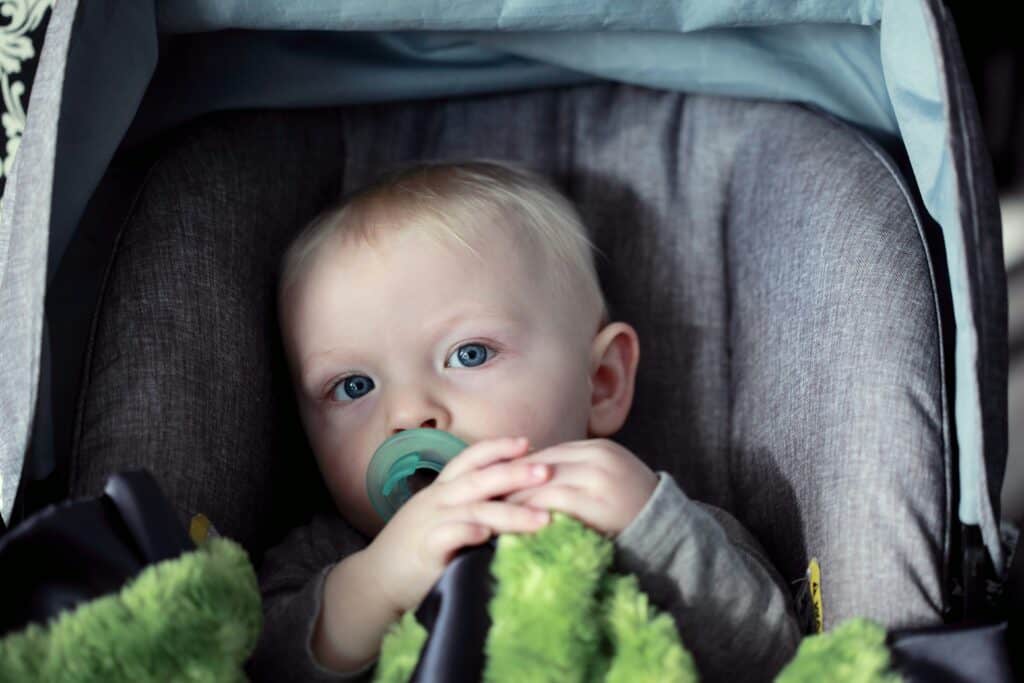
It’s best if a child can be weaned from attachment to a pacifier somewhere between the ages of 2 and 3 – in other words, when he or she outgrows the bottle and starts learning to drink from a cup. This is about the same time most children get their first set of teeth.
Generally, we believe it is wisest if parents avoid turning this into a major point of contention until they are prepared to make an all-out, concerted effort to help their youngster drop the pacifier for good. Leave the issue alone until you’re ready to take action, then pull out all the stops. There is a good reason for this. Quite often, parents have a tendency to talk a great deal about this problem without taking decisive steps toward changing the behavior. They drag the process out until a child develops a complex about it. When this happens, the situation becomes all the more difficult to handle.
It’s also advisable to take an incremental approach to the problem. In other words, don’t take the pacifier away in one fell swoop. Instead, make it available for shorter periods of time each day. In the meantime, provide alternatives. Give the child other options, other activities with which to occupy his or her attention. Get out some modeling clay or Play-doh. Encourage him to paint or draw or play a game. Buy him a squeeze ball that he can manipulate. The possibilities are almost endless.
Our perspective is similar where blanket attachment is concerned – though, on the whole, we tend to regard this as a less formidable problem. Most children derive a sense of comfort, reassurance, familiarity, and order from clinging to a favorite blanket or stuffed animal. In our view, a child can continue sleeping with an object of this kind almost indefinitely with few negative consequences. If, on the other hand, a blanket becomes a social problem – if other youngsters are beginning to ridicule a child for dragging around this symbol of infancy – then it should probably be taken away by about 4 years of age. Here again, the key is to come up with a strategy that involves replacements, distractions, and acceptable options. If you’re going to take the child’s blanket away, you need to help him find other ways of soothing anxious feelings and coping with the challenges of his environment.
If you’d like to discuss these suggestions at greater length with a member of our staff, we hope you’ll feel free you to call Focus on the Family’s Counseling department.
Resources
Focus on the Family Complete Guide to Baby & Child Care
The Christian Mama’s Guide to Parenting a Toddler
Articles