


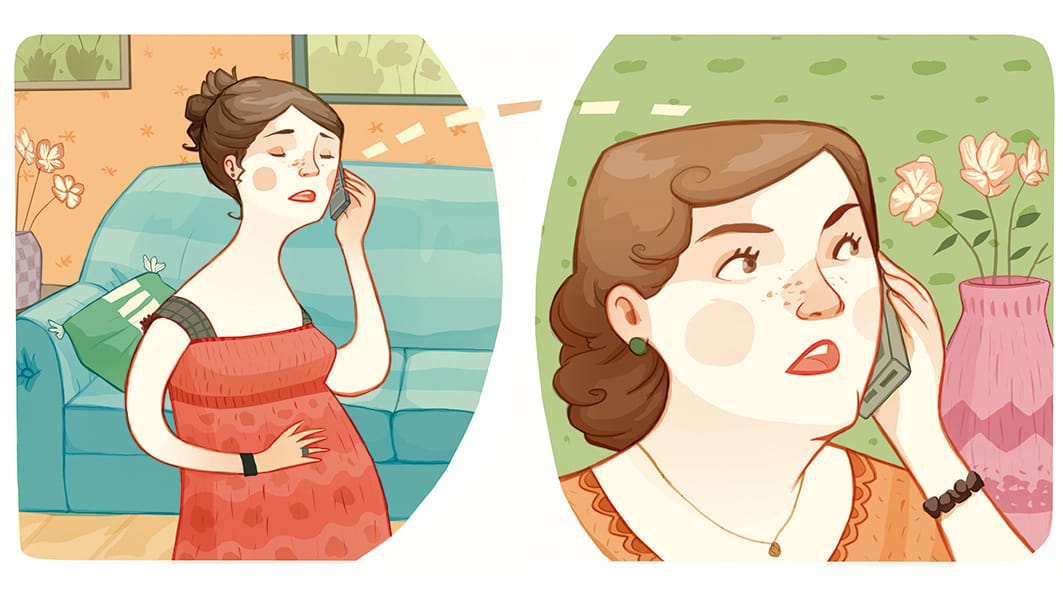
“What’s wrong?” my aunt asked. “I hear something in your voice.”
Balancing the phone on my shoulder and dinner on my pregnant belly, I told her how I had shopped all day for a diaper-changing table, only to discover that my husband, Dan, refused to buy one.
After my rant about how wrong Dan was and how mistreated I felt, she interrupted.
“Buy one anyway.”
I laughed, and we spent the rest of our phone call feeling sorry for me.
I forgot about that conversation until months later when my aunt visited. She walked in as I was kneeling on the floor, diapering the baby. My aunt frowned and began freely airing her concerns about my marriage.
“It’s not just this changing table situation that worries me,” she said. “Dan is controlling. I don’t like the way he tells you what to do.”
That’s when I realized the damage I had done by so carelessly venting my frustration.
I tried to correct her misconceptions by explaining how I respected Dan’s leadership and wisdom. Dan didn’t mean to override my input as a mom or make my life harder, I said. He simply thought we could put our money to better use. Actually, once the baby arrived, I found I didn’t need or want a changing table.
Regrettably, our talk did not change my aunt’s perception of Dan. Even after my 14 years of marriage, my aunt still encourages me to hide things from him and make decisions without asking his opinion.
I’m thankful this incident happened early in my marriage because it showed me the importance of guarding what I say about my husband.
When I’m tempted to complain or ask for advice, it helps to remember how hurt I’d be if the situation were reversed and Dan’s family disapproved of me. Now, I pick my words carefully, and when I have an opportunity to brag about Dan, I do. I hope eventually my aunt will understand that Dan and I are a team, and when we do disagree, it’s my choice to trust him.
How to Know if I’m Badmouthing My Spouse
Before sharing details about my marriage, I ask myself the following questions to check whether I’m badmouthing my spouse:
1. Would I want someone to say this same thing about me to someone I want to impress?
2. Does this person see my spouse and me interact often enough to realize that part of the problem is my fault?
3. If my spouse were standing beside me, would I still say these same words?