




Why is the gift of respite care so valuable for foster families? Caring for children in out-of-home care is a calling that can be very meaningful while also draining emotional and physical reserves. Foster parents show up daily, meeting the needs of the children in their care. Their responsibilities are varied and include providing a therapeutic home environment to provide healing opportunities for children with trauma histories. They also transport children to varied appointments, advocate for their foster children in educational settings, and work with caseworkers, therapists, probation officers, or other professionals involved in the welfare of the children in their care. As a result of these varied roles, foster parents can feel fatigued, overwhelmed, and emotionally drained.
In an effort to preserve foster parents’ ability to parent, the concept of respite was developed. Respite can be an accessible option to give foster parents the opportunity to recharge or to address familial emergencies. When foster parents can utilize respite care, they are more likely to continue fostering from a place of hope and resilience.
Key Takeaways: Respite Care for Foster Families
- Foster parenting is exhausting. Therapeutic care, appointments, advocacy, and coordination with professionals drain emotional and physical energy.
- Respite is temporary care by certified caregivers, ranging from hours to overnight stays.
- Regular respite prevents burnout and helps foster parents stay energized and effective.
- Respite has many forms: In-home care, other foster families, day programs, or informal support.
- Plan ahead. Find providers early, introduce them to children beforehand, and create transition rituals.
- Communicate clearly. Explain that respite isn’t punishment, give specific return times, and always keep your word.
- Be mindful of the messages you give. Don’t exclude foster children from family vacations or traditions, as this implies they don’t belong.
- Balance family needs carefully. Traumatized children need extra reassurance that they’re safe, valued, and part of the family.
What is Respite Care?
Respite care provides a pause or space for foster parents to practice self-care. Due to the nature of foster care, which is 24 hours per day, foster parents need opportunities to take a break. Most parents take a night out or a weekend away to create a time of rejuvenation. It is more difficult for foster parents to create time away. Respite care is temporary, short-term care provided by a certified caregiver, approved by the licensing agency. Respite comes in various forms that range from a short
span of a few hours to an overnight or longer stay. This time and space allow the foster parents to tend to their physical or emotional health while ensuring that the children in their care are safe and well cared for. For respite care to be effective, some guidelines exist.
The Importance of Respite Care
Taking a break is important for all of us. Foster parents need this option even though they may hesitate to use it. They might be afraid that others will think they aren’t coping adequately. Concerns about the child’s adjustment to change may also be a contributing factor that prevents utilization of respite.
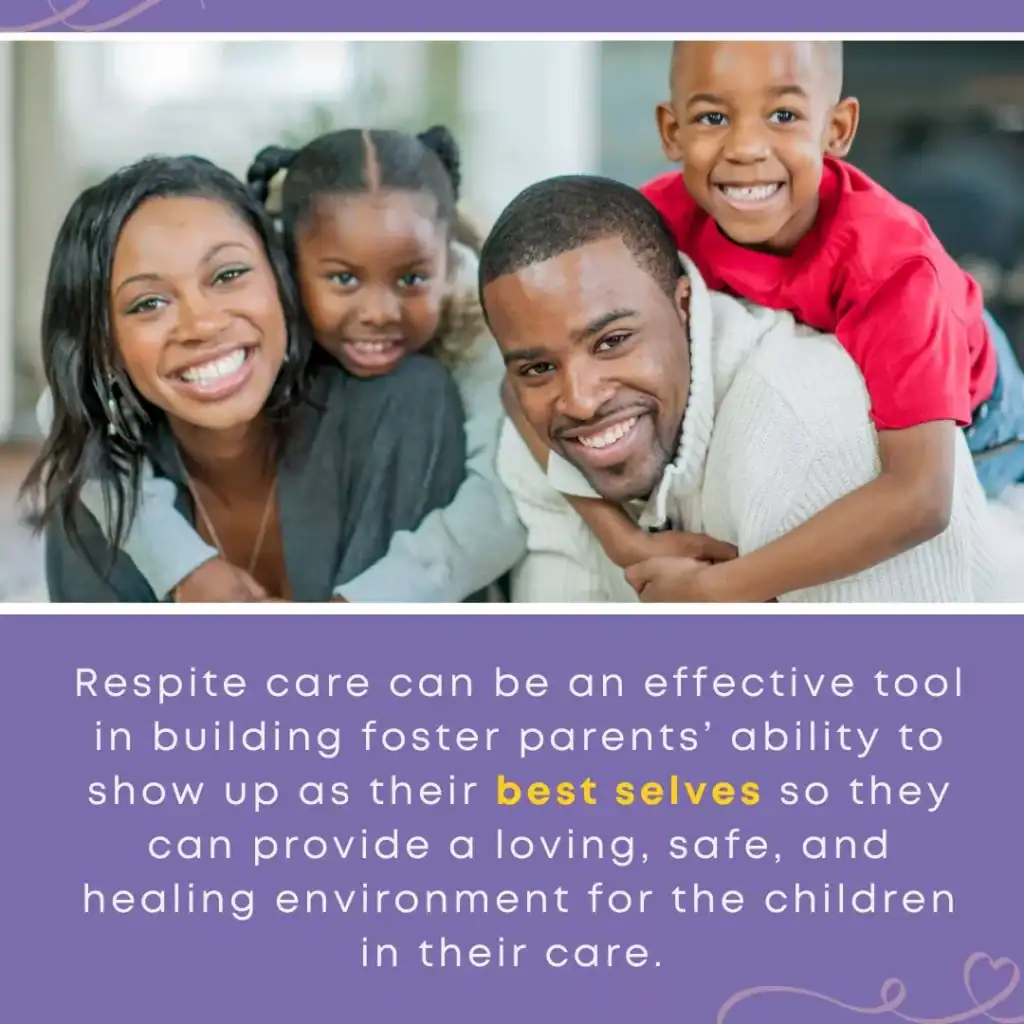
Perhaps a reframe of the purpose of respite is needed. It’s not about pushing the child away or giving up; rather, it’s about trying to stay the course as healthy, capable, and resilient foster parents. Respite can be an effective tool in building foster parents’ ability to show up as their best selves so they can provide a loving, safe, and healing environment for the children in their care.
Respite Care Provides Benefits
Through respite, family members are given time to rest and recharge or to focus on their personal or familial needs. When they can get their personal needs met, they can show up with energy and commitment to meet the needs of the children in their care. Regular respite can also diminish the risk of caregiver burnout.
Types of Respite Care
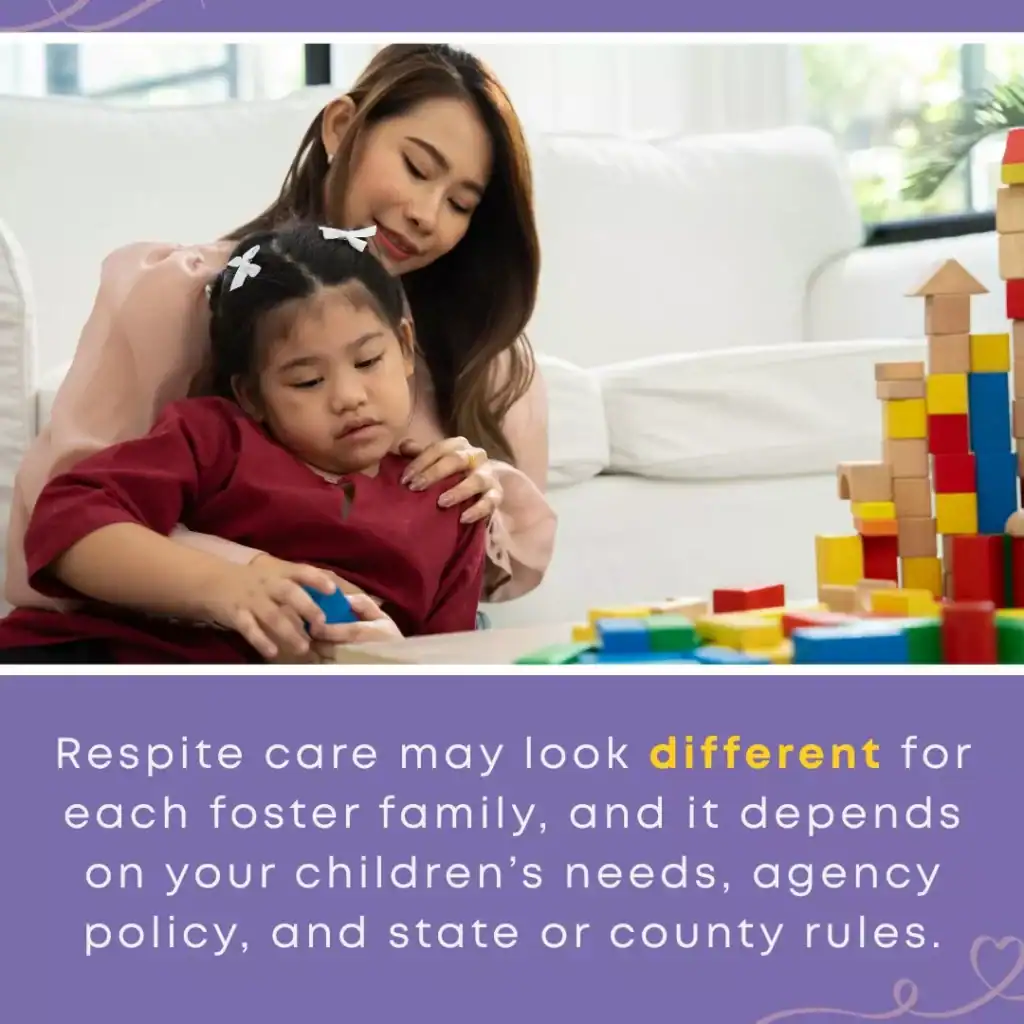
Let’s get practical. What does respite look like? It depends on your children’s needs, agency policy, and state or county rules.
Perhaps you need to keep your child in a stable environment, so you need a specially trained caregiver to come to your home to care for your child. This could be for regularly scheduled times, such as when you play in a volleyball league or a special time when you need to visit an ailing parent.
Or you could use another licensed foster family to care for your child while you go to an evening event or a weekend commitment. There might also be times when day programs are appropriate. Foster parents can provide informal support for each other, such as picking up a child from school by a foster parent who lives close by.
Another role that respite can play is to step in during times of crisis. Foster parents may experience a health challenge, the loss of a family member, or another emergency, and need respite care. Find appropriate resources so that when a crisis occurs, you are prepared. Find respite providers that are a good fit for your family’s culture and your child’s needs. This may take some time, effort, and intention to accomplish; however, the benefits will be very apparent.
Balancing Needs
Important to note is that the needs of the child need to be balanced with the foster parents’ needs. If respite is planned, begin to predict the event and plan for it. Create rituals for the transition periods. Perhaps the child can take a favorite toy, food, or belonging with them if they leave their home. A clear plan about the time of return should be in place and communicated clearly and consistently to your children. And the timelines need to be met; if you say you will be there to pick up your child at 6 pm, you need to be there no later than 6 pm. The predictability will help your child to feel safe.

Find respite providers before they’re needed. Let your child meet the provider before any planned respite or crises. Be as clear as you can with your child that the respite isn’t about their behaviors, it’s about providing care for them while you are unavailable. Sometimes, a picture of the respite provider’s home or a calendar with the date of your return may be helpful to address the child’s concerns or fears.
Think about creating a comfort bag that contains items that are familiar and create routines (their pillow, favorite snacks, or a book
to read at bedtime). Personal information should also be included: favorite foods, bedtime routine, calming strategies, and your child’s allergies or anxieties.
Reflection for Foster Parents
Identify when and how you will use respite. Plan accordingly. Create strategies to ease the transitions.
Remember, your child may need extra affirmation during this time of transition to respite. Additionally, the child may act out due to their stress. Their behaviors may escalate as they feel fearful or dysregulated. When you see acting-out behaviors, your goal as caregivers is to meet the child’s needs so their behaviors will diminish.
Let the child know they are safe, belong, and cared for. Be sure to reinforce these concepts consistently and repeatedly. Due to the child’s trauma history, they may feel as though they are being punished or abandoned when respite is used. You can pay special attention to meeting your children’s needs so that they feel seen, heard, and valued.
Summary
Respite can play an important role in fostering. Pray about how to use it and who you will use. Additionally, make certain that your child knows how special they are to you, that you want them in your home, and that you are there for them.
One last caution: Consider the impact on your foster child when you use respite so that you can go on vacation with your other family members. While this is not an uncommon practice, we need to seriously consider the implied message your child may receive-that they aren’t good enough or not really a part of your family. This is also true when family traditions don’t include your foster child. They are already working hard to process their trauma, grief, and loss. Let’s be careful about the implicit messages that we might create by our choices.
One of our greatest needs is to know that we belong. Caregivers need to take care of their own emotional and physical needs so that they can provide the love and support their children need and deserve. Respite plays an important role in creating calm and regulated caregivers so that foster children can heal and thrive.