




Lee Strobel: And it came to the point of November the 8th of 1981 where I reviewed all the evidence and I said, “Wait a minute. In light of this avalanche of evidence that points so powerfully toward the truth of Christianity, it would take more faith to maintain my atheism than to become a Christian.”
John Fuller: Lee Strobel is here to encourage you as a mom or a dad to help foster your teen’s belief in the Creator of the universe. Stay tuned for a vibrant discussion today on Focus on the Family with Jim Daly.
Jim Daly: You know, today’s teen’s world is so, um, I think the right word is bombarded. They are bombarded. You know, Trent, my, not teen, but 20-something said to me the other day, “Dad, I think we’re hungry for truth because we swim in a cesspool of lies.”
John: Ooh.
Jim: What an amazing statement. And, uh, I think that’s true. You know, social media, all the advertising and things that hit them that, um, some might be true, some are mostly are not true about them and what their identity is and who, who am I as a 17-year-old young man or young woman? Uh, it’s a really important topic. And they’re on top of things more than I think we as parents give them credit for. They know the world at that age. They’re already shaping their opinions-
John: Yeah.
Jim: … and know what is right and wrong and all those things. And so now, we need to help build that faith structure in there. I’m sure you’ve been doing that for many years, but, uh, with Lee Strobel’s help, we’re gonna talk specifically about teens and it probably tips into 20-somethings too-
John: Mm-hmm. Yeah.
Jim: … about their faith in Christ.
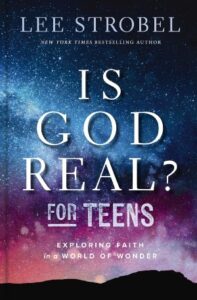
John: And Lee has written a great book for teens to, uh, help them in their journey of faith and, uh, exploring who God is, who they are in relation to God. It’s called, Is God Real? for Teens: Exploring Faith in a World of Wonder. And Lee serves as founding director of the Lee Strobel Center for Evangelism and Applied Apologetics at Colorado Christian University, and he and his wife, Leslie, have two adult children.
Jim: Lee, welcome back to Focus.
Lee: Oh, it’s always great to be with you guys.
Jim: Yeah, it’s good.
Lee: I really enjoy it.
Jim: And, uh, it’s always fun. And, uh, I think the topics we get to talk about together-
Lee: Yeah.
Jim: … are things that certainly sparked interest for me.
Lee: Me too. Right.
Jim: And you know, I- I’m thinking of this thing right now, there seems to be a resurgence-
Lee: Yeah.
Jim: … of seeking young people.
Lee: Yeah.
Jim: I mean, I think the death of Charlie Kirk-
Lee: Yes.
Jim: … at a Turning Point has been a turning point for so many college aged kids-
Lee: Yeah.
Jim: … who are saying, “Why did this guy get assassinated for expressing, you know, what he believed the Bible to say about life?”
Lee: Yeah.
Jim: Right? It, and I think that’s part of it, but it’s also, it was already happening-
Lee: Yes.
Jim: … I think where the Holy Spirit was moving on young people. You had the various college revivals that are-
Lee: Right. Yeah.
Jim: … taking place both-
Lee: It’s very seminary.
Jim: … secular and-
Lee: Yeah.
Jim: … Christian colleges. Bible studies at these colleges are really on fire right now. I thought this stat was really interesting. Uh, they’re reporting that Bible sales in the US have increased 41%-
Lee: Yeah.
Jim: … since 2022.
Lee: Yes.
Jim: And, uh, you know, there’s just something-
Lee: Yeah.
Jim: … with young people and spiritual truth that seems to be connecting right now. Are you seeing it?
Lee: Absolutely. I have a friend named Shane Pruitt and his ministry is to travel the country and to speak to groups of young people, high school or college students. And he said, “Lee, in the last three years, I’ve seen more young people come to faith in Jesus Christ than in the previous 18 years of ministry combined.”
John: Mm-hmm.
Jim: So what’s happening from your perspective as an apologist, what’s going on?
Lee: I, I thought your son’s comment was, was-
Jim: (laughs)
Lee: … brilliant, um-
Jim: Yeah.
Lee: … because, uh, you know, this generation, young people have been misled, lied to. Who knows what’s true on AI anymore?
Jim: Mm-hmm.
Lee: You know, I’ll retweet a, a video and then I’ll get people saying, “Well, no, that’s AI.” You know, that-
Jim: (laughs)
Lee: “I don’t know, really? Oh my goodness.”
Jim: Yeah.
Lee: And, and advertising misleads folks and so forth. I think they’re looking for something solid, something true, something they can hang their hat on and build their life on. And, uh, of course, Christianity provides that. Now, there are some negative stats too.
Jim: Right.
Lee: Uh, the percentage of, um-
Jim: And-
Lee: … Generation Z that-
Jim: Mm-hmm.
Lee: … call themselves atheist as twice as many as in my generation.
Jim: Now, to put that in perspective, that’s 13% over-
Lee: Yes.
Jim: … 6%.
Lee: Right.
Jim: So it’s still a relatively small number.
Lee: Yes.
Jim: But it’s a growing number.
Lee: Growing and there is-
Jim: If you keep doubling every year, it’s not long before that dominates the perspective.
Lee: Exactly. And, and it seems to be growing to some degree, like on both ends of the spectrum there, there’s an increased, uh, openness to God, and also it seems to be an increased hostility toward God. I, I was, um, interacting with a grandfather online who said that his six-year-old granddaughter, uh, was a kindergarten student in a public school, and the other students were taunting her and making fun of her, uh, and mocking her at recess because she believes in God.
Jim: Ugh.
Lee: “Oh, oh, you believe in fairy tales. You believe in make believe.” And, and this is, you know, this is a six-year-old getting taunted because she believes in God.
Jim: Wow.
Lee: So our kids and our grandkids are gonna face things that previous generations did not face in our country.
Jim: Yeah.
Lee: They’re gonna face hostility, they’re gonna face, um, challenges, they’re gonna face, um, counter arguments to the Christian faith. We need to help them understand not just what we believe, but why we believe it. Give them a rock solid faith.
Jim: You know, another Gen Z stat that I’ve seen from demographers is they’re much more like the builders.
Lee: Mm-hmm.
Jim: That’s the, the baby boomers’ parents.
Lee: Yes.
Jim: This is the World War II generation.
Lee: Yes.
Jim: Kind of, uh, people of deep conviction tend to be more traditional.
Lee: Yeah.
Jim: I was floored by that.
Lee: And, and the number of men who are coming-
Jim: Yeah.
Lee: … back into the church, that’s a huge trend.
Jim: A huge increase in young men, 20 something-
Lee: Yeah.
Jim: … and teen, young men coming to church now, all on the uptick. See, how do we process this, Lee? I- is this the hand of God turning the hearts of people and do we understand what that means? Is that why He says fear not? Like you guys-
Lee: Mm-hmm.
Jim: … I’ve got this because He can do that. He can illuminate the mind of any human. He can give a dream to Nebuchadnezzar.
Lee: Yeah.
Jim: He can give a dream to any foe of biblical truth.
Lee: Right.
Jim: So those things rest with Him.
Lee: Yeah.
Jim: But we tend not to rest with that.
Lee: Yeah, (laughs) right. Exactly.
Jim: So, so, you know, in that bigger piece as an apologist again, Lee, how, how do you see the moment that we’re in right now? Let’s be the Bereans in scriptures saying-
Lee: Yeah.
Jim: … “Here’s the assessment.”
Lee: I think the assessment is this is an opportunity that God has put before us and He’s doing things in our midst that we could, we could seize this opportunity to take the gospel to more and more people to, uh, see more and more young people come to faith. And then when young people come to faith, guess what? They marry other Christians. They teach their children, uh, the Christian faith as they … It changes future generations, it changes tomorrow and the next day and so forth. So this is a, a tremendous opportunity that God has given us. And I, I think we need to not squander it-
Jim: Mm-hmm.
Lee: … but strategically say, “How can we get behind what God is doing and, uh, take this generation that is being pointed away from Him?” When I think how I became an atheist, it was in three steps as a young person. The first step when I was about 12 years old, I began asking those embarrassing questions that 12-year-olds asked like, “Well, gosh, if God exists, why is there so much suffering?” And, and things like that. And nobody was willing to engage with that. And so-
Jim: Mm-hmm.
Lee: … I thought, “Oh, I get it. There are no good answers. That’s why they don’t wanna talk about it.” Second step was in high school when I studied science, biology. And I learned that biology puts God out of a job. Evolution explains the origin and diversity of life. God is no longer needed. That was the second step into atheism.
Jim: And let me just add in that place-
Lee: Yeah.
Jim: … when you and I went to school-
Lee: Yeah.
Jim: … that was dominant.
Lee: Oh, sure.
Jim: There wasn’t, uh, kind of a creation orientation.
Lee: No.
Jim: Now, mathematics departments and biology departments at elite universities are all saying, “Yeah, it probably didn’t happen that way.”
Lee: Yeah.
Jim: I mean, that’s what’s going on behind the scenes.
Lee: It’s true. There is a, a counter revolution going on.
Jim: Yeah.
Lee: And then the third step was as a freshman at the University of Missouri, uh, I took a course on the historical Jesus from a critic, uh, who convinced me, “Well, you can’t trust the Bible. You can’t trust what the gospels tell you about Jesus.” So that was kind of the, the three steps I took into atheism. And I think, you know, when we have young people, 12-year-olds, uh, middle school, even younger, asking questions, we have to create an environment in our families where it’s okay to ask questions.
Jim: And it’s okay not to have the answer.
Lee: It, that’s right.
Jim: (laughs)
John: Mm-hmm. Yeah.
Lee: You know, I, I was just reading, um, a woman who said that when her, she was taking her family to church and she had a four-year-old son and as they were getting in the car, the four-year-old son said, “I hate God.” And she kind of, “Whoa, whoa, whoa, you can’t say, that’s blasphemous. You’d never say that again.” She just reacted so strongly. And then later she thought, “I gotta figure out what’s going on here.”
Jim: Yeah.
Lee: So w- w- what … And she, she found out he didn’t really hate God. What he didn’t like was his Sunday school class at church, a lot of the kids would kind of dance around during the worship time and he didn’t like that.
Jim: Yeah.
Lee: You know, he was just expressing himself. So, but we react sometimes when a young person asks a question, we react negatively and say, “Oh, don’t ask that question or don’t … You know, it, it, you’re, you’re out of bounds there.”
Jim: (laughs)
Lee: That’s blasphemous even to raise that issue.
Jim: I’m thinking, how do you explain denominationalism to a four-year-old.
Lee: Yeah. (laughs)
Jim: (laughs) But, hey, let me ask you this.
Lee: Yeah.
Jim: In this great book, Is God Real? for Teens.
Lee: Yeah.
Jim: You talk about, uh, faith being like drinking from a water bottle.
John: Mm-hmm.
Lee: Yes.
Jim: H- what’s that connection?
Lee: Well, you know, um, you’ve all here at Focus on the Family given me a-
Jim: (laughs)
Lee: … a container of water. How did I know that it wasn’t poison?
Jim: Mm-hmm.
Lee: Seriously, how do I know? Well, number one, you don’t have any motivation to hurt me. Number two, the water is clean, it’s clear. I don’t see any problem with it. I see other people drinking water around here and nobody’s falling over dead.
Jim: Mm-hmm.
Lee: And based on that evidence, then I, what do I do? I, I taste and see that it’s good. And that’s what the Bible says, to taste and see that the Lord is good. To look at the evidence, what is the evidence-
Jim: Uh-
Lee: … from science, from the arguments from philosophy, the arguments from history and the resurrection of Jesus and so forth that point powerfully and compellingly toward the fact that Christianity is true. Because here’s the deal, and I talk about this in the book, I have chapters on areas of science where we’ve had discoveries in just the last 40, 50, 60 years that make belief in God more rational today from a scientific perspective than any time in history.
Jim: Uh, Lee, again, y- these are all the, the brilliant things that you’ve discovered over time. And I gotta take the listeners and the viewers back to the fact that you were an atheist.
Lee: Yeah. Yeah.
Jim: I mean, some people may not know that, that story-
Lee: Yeah.
Jim: … but you were working in Chicago Tribune-
Lee: Right.
Jim: … and your wife, Leslie, became a Christian.
Lee: Right.
Jim: And you said, “Okay, I’m gonna disprove this so that I can have harmony in my home.”
Lee: Exactly. (laughs) I wanna rescue her from the cult.
Jim: Usually … Can I just tell you from a marriage standpoint-
Lee: (laughs)
Jim: … that disproving your wife-
Lee: (laughs) Is not smart.
Jim: … is typically not a good tactic for a healthy marriage.
Lee: That’s funny.
Jim: But in this case, you were moved.
Lee: Yeah.
Jim: You looked at it as an investigative journalist-
Lee: That’s right.
Jim: … and said, “The evidence is overwhelming.”
Lee: It was so powerful, uh, that I spent almost two years using my journalism training, my legal training to systematically investigate the evidence, especially the evidence for the resurrection of Jesus. And it came to the point of November the 8th of 1981 where I reviewed all the evidence and I said, “Wait a minute, in light of this avalanche of evidence that points so powerfully toward the truth of Christianity, it would take more faith to maintain my atheism than to become a Christian.”
Jim: Which is a great statement.
Lee: I mean, it’s true. Yeah. I mean, as the scales just went like that.
Jim: Now, in that context, translating that vibrancy, that emotion, that illumination that you had-
Lee: Yeah.
Jim: … and helping parents-
Lee: Yes.
Jim: … to help their teens.
Lee: Yes.
Jim: Let me ask you that parenting attitude-
Lee: Yes.
Jim: … with your 14, 15-year-old, talking to them, encouraging them-
Lee: Yes.
Jim: … to read things that are outside the Christian sphere, and I think for the most part, a parent would be very fearful about that.
Lee: Yeah.
Jim: But on the other hand, it exposes them like an inoculation to say-
Lee: Mm-hmm.
Jim: … “Talk to me about what you’re reading.”
Lee: Yeah.
Jim: “Wh- why don’t you read this and then let’s talk about it.”
Lee: Yes. I, that, and the talking about it is a crucial thing.
Jim: Yeah.
Lee: You don’t, you don’t want to make them, uh, to have a situation where you’re just reading contrary material. You want to give them some Christian materials like my book, you know, Is God Real?
Jim: Right.
Lee: … for Teens and so forth. But yeah, to expose them to other things. And then, you know what a fun thing to do with them, especially when they get to be 15, 16, 17, um, and they’ll read something, um, that will be a little bit challenging, uh, to their faith. And then a thing I like to do would be to say, “Well, why don’t you research that?”
Jim: Yeah.
Lee: “And let’s talk about it then.”
Jim: Yeah.
Lee: And it put, it kind of puts the onus on them to say, “Oh, okay. I’m gonna, I’m gonna check that out.”
Jim: That’s brilliant.
Lee: And, and, and it, it, it helps them kind of learn how to research these issues. But I think the environment begins even earlier than that. I believe it begins when the kids are four or five and six years old because, uh, we need to create an atmosphere where they feel comfortable in being honest about the troublesome feelings that they sometimes have-
Jim: Yes.
Lee: … about faith. And so what we did, and we were of course pretty new Christians, um, when our kids were little, but we, we did, um, is create a safe spot every night before they went to bed. So we’re putting them to bed and they knew at that time, it’s okay to ask any question, to express anything that’s bothering you, that’s niggling at you, that’s, uh … You know, this is a time.
Jim: Yeah.
Lee: If you hold that in, it can erode your soul.
Jim: Mm-hmm.
Lee: But if you talk about it and discuss it, it loses its power over you.
Jim: And the key there, and I wanna press this is, is sometimes they’ll ask questions that are hard for parents to answer.
Lee: Yeah.
Jim: If God is a good God, why is there suffering in the world?
Lee: Right.
Jim: The num- … Why do children suffer in the world?
Lee: Right.
Jim: The number one question.
Lee: That’s right. And that’s why the book deals with that.
Jim: Yeah.
Lee: It has a chapter on that.
Jim: And, and I’m just, I just wanna reinforce, don’t back away.
Lee: Yeah.
Jim: Sometimes temperamentally we as parents, maybe we don’t feel we have time for this right now, you know, I’m in the middle of paying the bills-
Lee: Right.
Jim: … or whatever it might be, and my goodness-
Lee: Yeah.
Jim: … that is the moment-
Lee: Exactly.
Jim: … to be the parent and to engage that and say, “Well, let’s talk about that.”
Lee: One thing I like to do, uh, like to do with my kids, my kids are now grown and serving the Lord, thank goodness. My son’s a professor of theology at a seminary.
Jim: Well done.
Lee: (laughs) So he turned out all right. Um, but, um, one of the things we like to do is ask a specific question from time to time. The question is, uh, if you could ask God any question at all and He’d give you an answer right now, what would you ask Him?
Jim: That is good.
Lee: Now, here’s the problem. The first thing they say is not their real question.
Jim: Mm-hmm.
Lee: They’re sending up a trial balloon. “How are my parents gonna react?” So often they’ll make a joke. “Yeah, my question for God would be, why did you make the platypus so weird, you know?” And, and you laugh and you say, “Okay, but that’s not the real question. What is the real question you would ask God?” And because you were willing to engage, they’ll go deeper. And your child might say, “Well, you know, I have a friend at school and their mom is dying. She’s in a hospital and, and why does God allow that kind of thing to happen?” Um, now you’re getting at the real issues that are bothering them. And, and I like to ask a follow-up question often, because they’ll ask the question, “Um, why does God allow suffering?” But then I ask, “Okay, of all the possible questions, why did you ask that one?”
Jim: Mm-hmm.
Lee: And now they mention the mother of the friend at school who’s in the hospital or they’ll talk about something. Now, you’re getting to the emotional side, and that’s so important because these questions don’t come in a vacuum. They’re not just intellectual conundrums. They’re often attached to emotional issues. Uh, a, a, a child may feel isolated for some reason, and they wanna know, why does God seem so hidden? Oh, well, I’m so glad, that’s a great question, but why would you ask that one?
Jim: Mm-hmm.
Lee: I said, “Well, because I kind of feel alone. I, I feel like I, I wish He would talk back to me.”
Jim: Mm-hmm.
Lee: “I wish He would hold my hand sometimes.” Y- you know, so we gotta ask these follow-up questions to get to the point where we’re really connecting at where the issue is.
Jim: Great insight.
John: Yeah. This is, uh, Focus on the Family with Jim Daly and our guest today is Lee Strobel and we’re covering some of the content in his excellent book Is God Real? for Teens: Exploring Faith in a World of Wonder. And, uh, we’ll encourage you to get a copy of that book from us here, stop by our website, that’s FocusontheFamily.com/broadcast.
Jim: You know, Lee, a- as that young atheist, you got a, an assignment as a journalist to, uh, write about destitute families. How did that cause you? So you’re in your 20s, I’m imagining.
Lee: Yeah. Right.
Jim: So you’re, you know, not that old.
Lee: Right.
Jim: And here you are, you don’t believe in God-
Lee: Right.
Jim: … and you get this assignment to go write about destitute families.
Lee: Yeah.
Jim: I would think your mentality would’ve been, “Okay, good assignment, we’ll go check it out.”
Lee: Exactly.
Jim: In Chicago.
Lee: Yeah.
Jim: South side of Chicago.
Lee: Yeah.
Jim: What happened?
Lee: Yeah. Uh, several things happened to me at that point. I was new at the Chicago Tribune. I’m doing these articles. I meet the Delgado family, which is a family totally destitute. They had no possessions virtually. Um, the m- the grandmother was arthritic, she couldn’t work too. An 11-year-old and the 13-year-old granddaughter she was raising.
Jim: No mom in the scene, no dad.
Lee: No mom at the sc- or dad, and they lived in a hovel. They had nothing. The only thing they had was one cup of rice and, um, a, a-
Jim: Amazing.
Lee: … rickety card table. And, um, the girls had one dress between them, short sleeve, and only one sweater, and one would wear the sweater halfway to school while the sister shivered beside her-
Jim: Wow.
Lee: … and then take off the sweater and give it to her sister. So they had nothing.
Jim: Mm-hmm.
Lee: I do an article about them, and then on Christmas Eve, I decided to visit them and see what was going on, because the article came out on Thanksgiving Day. So I go in and The Tribune readers had showered them with unbelievable gifts. I mean, their, their place was filled with, with, um, uh, everything. I mean, uh, Christmas tree and gifts under the tree, a refrigerator full of food, food all over the, uh, uh … Clothing in the closets, all this stuff.
Jim: The exact response you were hoping for.
Lee: Exactly. But then I interrupted them. I said, “What are you doing?” They were packing up much of this newfound wealth to give it away.
Jim: Mm-hmm. Wow.
Lee: And I said, “W- w- what are you doing?”
Jim: (laughs)
Lee: And she said, “Oh, well, this is wonderful. This is a gift from God, but, um, we cannot have plenty while our neighbors have nothing. Uh, this is what Jesus would want us to do.” And, and she said, “This is wonderful, but, you know, this isn’t the greatest gift of God.”
Jim: What struck you-
Lee: It’s tomorrow. It’s Christmas, it’s Jesus.
Jim: Yeah, Christmas.
Lee: Yeah. And I thought-
Jim: What caught you?
Lee: … here I am. I have everything I need. I’ve got a Ivy League education. I’ve got, um, you know, a good job in a major newspaper and my soul was as barren as their hovel had been.
Jim: Mm-hmm.
Lee: And here are these people who had nothing, and yet they never lost their faith. They still were positive and joyful even when they had nothing. And it just, I said, “What have they got that I don’t have?”
Jim: Yeah.
Lee: And I realize it’s that Christmas gift, it’s Jesus.
Jim: That was a, a chink in your atheist armor.
Lee: It was.
Jim: Right?
Lee: It was. And I, and I, I remembered them for years. It didn’t cause me to come to faith, but it was like a seed that God had planted at that time. The other seed was, I went to the Salvation Army emergency, um, shelter in Chicago to find destitute families and, um, I observed the Christians there who were serving these people who were homeless and they were helping them get jobs. They were getting them sober. They were getting them off drugs. They were taking care and loving their children. They were helping them get an education. They were, they were serving selflessly. These homeless people who nobody in Chicago cared about. And I remember going in after I finished my research for the article and talking to the woman that ran the facility and she said, “By the way, I, I know you’re an atheist. You had told me that. Um, who do you think Jesus is?”
Jim: (laughs)
Lee: And I had seen Jesus in the volunteers who had served the homeless there-
Jim: Mm-hmm.
Lee: … and had loved them sacrificially and helped them when nobody else cared. And that was another big step-
Jim: Yeah.
Lee: … to see the, the way that Christians reached out in love to people everybody else ignored.
Jim: Lee, this is a tough question, but it’s an important one, I think, for us as parents. You’re exactly right. The thing your teen will see the most and believe the most is what they see in you-
Lee: Boy, absolutely.
Jim: … as a parent.
John: Mm-hmm.
Jim: I’ve tried to be very intentional with Trent and Troy to say, “Boys, I am not perfect.”
Lee: Mm-hmm.
Jim: “I will make mistakes.” I wanted that groundwork laid-
Lee: Yes.
Jim: … so that I didn’t become their stumbling block-
Lee: Right.
Jim: … in their faith journey to say, “I am just your dad.”
Lee: Yes.
Jim: “But there’s a father much bigger than me who loves you more than I do.”
Lee: Yeah.
Jim: I don’t, I can’t believe that, but it’s true.
Lee: Yeah.
Jim: He cares about you and loves you more than I do.
Lee: Yeah.
Jim: And I love you a lot.
Lee: Yes. (laughs)
Jim: And, and yet I’m gonna make mistakes.
Lee: Yeah.
Jim: I might get angry.
Lee: Yeah.
Jim: And you’re gonna observe these things and that’s not the attitude of Christ. So-
Lee: See, that kind of honesty-
Jim: Yeah.
Lee: … with children i- is huge because it, it says to them, “None of us is perfect.” And by the way, that’s why we need forgiveness through Jesus-
Jim: Yes.
Lee: … (laughs) and so forth. So it, it just sets the stage to say, “Hey, we’re in this together.” And you’re not gonna be perfect either, kids.
Jim: Correct.
Lee: And you know what?
Jim: That’s the other half. I’m okay.
Lee: Yes.
Jim: Because Jesus, that’s the price He paid. This-
Lee: Yeah.
Jim: … begins to lay the en- entire bedrock of their faith.
Lee: Yes, absolutely.
Jim: But it is important that they’re watching you as a more mature believer.
Lee: Yes.
Jim: How do, how do you treat your neighbors? What do you do-
Lee: Absolutely.
Jim: … to treat your neighbor well, to love your neighbor?
Lee: And, you know, there’s times when we lose it-
Jim: Mm-hmm.
Lee: … and we do from time to time, and they see us lose it-
Jim: Mm-hmm.
Lee: … what’s important is for them to s- to see us later praying and repenting and saying, “Lord, I’m sorry.”
Jim: Yeah.
Lee: “I should not have reacted that way to that situation. Uh, help me in the future to be more like you as I interact with other people.”
Jim: Uh-
Lee: And I see that-
Jim: Yeah.
Lee: … and that’s helpful as well.
Jim: And those are, you know, those are things sometimes we’re moving so fast.
Lee: Yeah.
Jim: It’s not that you have a hard heart as a parent, you just didn’t think about it.
Lee: Yeah.
Jim: I’ll give you the benefit of the doubt. I’m just telling you, put that idea in your head.
Lee: Yeah.
Jim: If you need to apologize to your kids, apologize to them.
Lee: Yes.
Jim: I remember the first time I did that with Trent and he looked at me and said, with a big smile on his face.
Lee: (laughs) Yeah.
Jim: He goes, “I didn’t know parents had to apologize.”
Lee: (laughs)
Jim: I said, “Oh, buddy, we gotta-
Lee: Oh, boy.
Jim: … apologize a lot-
Lee: Yeah. (laughs)
Jim: … because you do this onetime, right?”
Lee: Yeah, that’s right.
Jim: We don’t get to do parenting again.
Lee: That’s right.
Jim: We got one shot at it and we’re not experts, but that’s a good thing to remember. Y- you mentioned the book, uh, uh, I believe a philosopher, uh, Chad Meister-
Lee: Yes.
Jim: … in a conversation you had with him. What, what was the evidence about or the fruit of it?
Lee: Yeah, I have a chapter in the book. Uh, Chad is a brilliant philosopher, um, and professor of philosophy at a major, uh, school, and he created what he calls the apologetics pyramid, uh, which is to say, let’s start at a basic … The picture of pyramid, let’s start at the broadest issue, which is, what is truth?
Jim: Mm-hmm.
Lee: Well, what is, we gotta start somewhere, let’s start, what is truth? That’s what Pilate asked. What is truth? Well, truth is that which corresponds to reality. And if we accept that definition, which I think makes sense, then we can go on to the next step. And so each step of the pyramid is kind of crystallizing and looking at, uh, different worldviews and so forth until you get to the peak, which is the gospel of Jesus. And, uh, it’s a, I think it’s a fun chapter that you can work through with your kid-
Jim: Yeah.
Lee: … and say, “What is truth? Let’s talk about that. What do you think truth is?” “Oh, golly, I don’t, I never thought about that.” And so here we get, as you complete that book, you say, “Wait a minute, I’ve got all these arrows that point in a direction of Christianity being true and if it is true, then when Jesus says, ‘I am the way, the truth and the life, no one comes to Father but through Me,’ we can believe Him.” And then I deal with the two toughest questions. If, if God is real, why does He allow suffering? And here’s the new one that young people are asking more and more. This is really emerging as a, a dominant objection raised by young people. Why does God seem so hidden?
Jim: Mm-hmm.
Lee: They wanna know why, why doesn’t God make Himself more obvious? Why doesn’t He just appear?
Jim: Mm-hmm.
Lee: It’s like, boom, here I am, it’s true, and shake our hands and hold our hand when we’re sick or whatever and just make Himself obvious. Why doesn’t He do that? And so I have a chapter that deals with that issue to help analyze those.
Jim: The idea of faith.
Lee: Faith is exactly. And you look at the Israelites, um, the, uh, the times that God did make Himself so readily obvious, like during the, um, parting of the Red Sea, for instance, uh, did that lead to more godliness from the Israelites? No, they fell into apostasy again. So who’s to say if God made Himself more real today, we wouldn’t fall back into apostasy too?
Jim: I mean, Lee, uh, this is just full of good stuff and the excitement. You can tell when we get together, we just share an evangelistic heart. And I mean, wham, we just get out there. So, you know, it’s wonderful. And I, I can’t imagine a parent of a 12, 13, 14-year-old that wouldn’t want, and I’m telling you, even 20-somethings-
John: Mm-hmm.
Jim: … to get a copy of your book Is God Real? for Teens: Exploring Faith in a World of Wonder. It’s a great roadmap for the parents to better understand the issues and how to address them. So thank you for the hard work of putting it together.
Lee: Oh, I had so much fun. There is an adult version called Is God Real? So-
Jim: Yeah.
Lee: … for adults, but gosh, I wanna reach out to the … I know you love young people and, and, and Focus on the Family, it’s all about the family and how do we, how do we create a, an energetic and alive and deep and robust faith in our children and-
Jim: Yeah.
Lee: … so I wanted to-
Jim: No.
Lee: … write it for their, from their perspective.
Jim: It’s so good. And let’s make it easy just if you can make a gift of any amount, we’ll send it to you as our way of thanking you for being part of the ministry. If you’re a grandparent listening and, uh, you’re saying, “Boy, my adult children need this, let’s get them a copy, uh, just let us know and we’ll get it to them.” And, uh, you know, that way we’re accomplishing ministry together.
John: Yeah. Contact us today, donate as you can and request this terrific book from Lee, Is God Real? for Teens. Um, it’s a terrific resource and, uh, we’ve got it right here at FocusontheFamily.com/broadcast. And next time, British evangelist J.John and his wife, Killy, shed new light on what it means to love your spouse.
J.John: And I remember Killy going, “Well, should I tell you what my life was like while you were away?” I had three screaming children in the car driving to church, and I was shouting-
Killy: (laughs)
- John: … at them in the car, “Stop doing that. Stop hitting each other.” And then getting three children out and saying, “Hello-
Killy: (laughs)
- John: … God bless you. God bless you.” And she said, “That’s my world.”