




Rich Griffith: We’re asking the wrong question. We should not be asking children six to 12, “What do you wanna do?” We need to ask the question, “Who do you wanna be?”
Jim Daly: Yeah, I love that.
Rich: And it’s character issues, right? ‘Cause if you… Look, you can do any career. Uh, you can develop any career, but developing your character is really important. So in this path goal, we try and find out what our kids excel at and do well that brings out character, not a product.
John Fuller: That’s Rich Griffith, and he joins us today on Focus on the Family with Jim Daly, and he’s gonna be talking about how to disciple your children using different leadership styles as they grow. Uh, it’s gonna be really fascinating, and we’re glad you’ve joined us. I’m John Fuller.
Jim: John, you know, one thing that is so true about parenting is oftentimes I felt behind the curve. You know, Jean tended to be a little ahead of the curve, which was great. But as your children grow, you, as a parent, have to grow as well. And how are you gonna engage that eight-year-old and then that 10-year-old, 12-year-old, 15-year-old? It’s very different, or it should be. And if you’re still parenting that 15-year-old like an eight-year-old, you’ve got some problems around the corner. And, uh, that’s part of it, how to learn how to be ahead of it and make sure that your kids are getting the kind of parenting that the Lord has set up for you to provide.
John: Yeah.
Jim: And I think it is not complicated. Man, we try to make it like a protractor event when it’s a compass event.
John: Mm-hmm.
Jim: Move them north to the North Star.
John: Yeah.
Jim: Don’t worry about what degree they’re on, but just gently continue to move them to the North Star. You know, one thing that we’ve developed here at Focus, which is so important, is something we call Age and Stage.
John: Mm-hmm.
Jim: This developed out of Trent as a young boy going to the pediatrician, and the pediatrician gave me a sheet saying, “Here’s the behavior you can expect at this age.” And I was like, “Why aren’t we doing this at Focus?” So now, you can sign up at our Age and Stage, uh, location on the website. You put in your children’s birthdates and we will send you e-newsletters every week about how to do that parenting journey a little better and things to be mindful of at two years old.
John: Mm-hmm.
Jim: And we will age that record and we’ll let you know what to think about when they’re six and 10 and 15. And it’s all free. So, uh, do take advantage of that. We want you to.
John: Yeah, that Age and Stage e-newsletter also has an annual kind of bucket of information that you get just to reset and to reframe so that they can-
Jim: That 13-year-old e-letter is really good. (laughs).
John: Yeah, yeah. This is… It really is good stuff.
Jim: Look out, mom and dad.
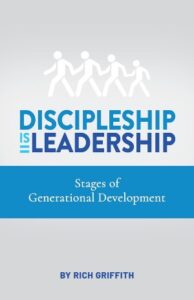
John: So sign up at FocusontheFamily.com/broadcast. Uh, and our guest is Rich Griffith. As I said, he’s a part-time pastor and associate professor of youth ministry. He’s a single dad of three adopted sons. And, uh, we’re gonna be talking about a book he’s written. It’s small, but it’s really got some great principles in it. It’s called Discipleship is Leadership: Stages of Generational Development. Uh, learn more about Rich and this excellent resource at our website.
Jim: Rich, welcome to Focus. Welcome back to Focus on the Family. It’s good to have you here.
Rich: Thank you. Privilege to be back. Thank you.
Jim: You know, let me say this and then ask you a pretty tough question, if I could do that. One, I admire what you’ve done. There’s so many kids in foster care who are waiting to be adopted. Their hearts yearn for that mother and father. So way to go as a believer in Christ, you’re stepping up and you’re doing it. And that’s something we promote here at Focus on the Family. Let me ask you this little tougher question though. Um, we’re working with Katy Faust. There’s a documentary coming later this year. And in there, she’s really talking about every child deserves their biological mother and father. Things happen to where it breaks down. But that idea as a single man adopting, you know, just by doing that, they’re not gonna have that mom. I just want that perspective from you that you didn’t do it with that purpose, but these kids need a home.
Rich: Yeah, absolutely. And, and I would say, look, as a single dad, it’s not the ideal situation. I think, you know, we have the ideal, which is a mom and a dad, but then there’s the real of life. And so I fought that call to adopt for four years. Uh, last year I mentioned this.
Jim: Interesting.
Rich: Uh, I, I thought, a single guy? Uh, particularly in youth ministry, that, uh, look, let’s be honest, that looked weird.
Jim: Yeah.
Rich: Um, and then I could not fight that call anymore. And there’s lots of things that circumstantially God spoke into, and I won’t get into all that. Um, but what I do for my sons, realizing that I can’t provide femininity to my sons, so I have godly women from my church who mentor them.
Jim: Yeah. Yeah.
Rich: And, uh, I think last time I shared a story about Ms. Harriet and Jamie and, you know, Ms. Harriet, I’m not gonna say her age, uh, (laughs) did some really tremendous things.
Jim: A wise woman.
Rich: Right, exactly. (laughs) She’s very… Yeah. And so they just, they… It’s what the church should do. It is be- being a family to each other beyond biology.
Jim: And I, you know, again, you can be critical. Our critical spirit goes there. You know, they should have a mother and father, but my goodness, they’re languishing in the foster system. So you have to kind of build a pyramid of call, right?
Rich: Yeah.
Jim: At the bottom line, they need a home.
Rich: Yeah.
Jim: They need somebody to call dad-
Rich: Yeah.
Jim: … or mom, or mom and dad. All is good. And all is certainly better than being in, changing foster homes and never feeling like they belong. So-
Rich: Yeah.
Jim: … again, well done, and I appreciate you answering that.
Rich: Well, I think the research that really, after the four years of fighting it, and of course I research a lot, and you probably are aware of this, but maybe your listener’s not, uh, 50% of kids that age out of the foster care system, which by the way, if they’re age eight, which is second grade, they have a 90% chance of aging out of the foster system.
Jim: Never being adopted.
Rich: Never being adopted.
Jim: Yeah.
Rich: And of those children, 50% of them will wind up homeless, incarcerated, sex-trafficked, or dead.
Jim: Yeah.
Rich: And when I came across that research, sorry, emotional, I was like, I cannot not do something. I gotta do something.
Jim: Yeah. Yeah.
Rich: And it wasn’t ideal.
Jim: Think of the intervention of, and the benefit of that spiritually speaking, where you know a predictable feature like that where 50% are not gonna do well.
Rich: Yeah.
Jim: And the Lord’s saying, “Can you help them?”
Rich: Mm-hmm.
Jim: Body of Christ, this is us.
Rich: Right.
Jim: Let’s go, team. Jesus.
Rich: Yeah.
Jim: And it’s not easy. I mean, we fostered for about 15 years and there’s a lot of trauma and it pushes all your parenting buttons, you know? Just do what I tell you to do.
Rich: Yeah.
Jim: Doesn’t work.
Rich: No. It’s like every time-
Jim: It’s different.
Rich: … you, you push on a fresh wound you never knew was there.
Jim: But the parenting principles are so true. We did 40 hours of parenting training to become a foster parent.
Rich: Yeah.
Jim: It was actually really good material. It didn’t have the spiritual d- uh, edge to it, but we can bring that, you know? We don’t have to be void of that.
Rich: Yeah.
Jim: But it was just good kind of basic parenting material. And 40 hours of training, I would say every parent should go through that-
Rich: Absolutely.
Jim: … kind of training, and hopefully through church-
Rich: Yeah.
Jim: … a biblically-centered parenting training. Yeah, you’ve done that.
Rich: Yeah. And the spiritual part is what brings the ho- healing holistically. We can do the parenting part and the secular perspectives, which there’s social sciences, but the, the bringing people to Christ and modeling that, that’s where they get their healing.
Jim: Yeah. Now, you’ve adopted these three boys, and I want you to tell us about how parenting changed your perspective on discipleship. Is it really… Man, I, I don’t know that many of us think of it that way, that parenting is discipleship. Rich, parenting is parenting. (laughs) You gotta bring the wood.
Rich: Yeah, uh, that’s a funny quote. Uh-
Jim: (laughs) Not very helpful in parenting, actually.
Rich: No, no. Well, especially if you have kids with trauma. And so I’ve been writing on some things too right now of generationally culturally-induced trauma. And so even kids that come from loving Christian homes, uh, they are swimming upstream and they are getting damage and wounds from the culture that is a whole ‘nother issue. So you’re right, I think Christian parents want to do what’s right and they have to do what’s right. Um, but there is no manual. I mean, most of us, when our kids go to school, uh, we don’t know what they’re facing, we don’t know the things that happen and it, it can trigger a little bit trauma there, uh, with, you know, bullying or whatever.
Jim: I would say a litmus test of that in terms of your parenting is how your children come to you with those problems actually. Is it safe? Can they trust bringing something to you that, you know, maybe is outside the pew-
Rich: Yeah.
Jim: … and they experienced something, or they did something-
Rich: Mm-hmm.
Jim: … and now they’re feeling something about that action, bullying somebody or, you know, maybe they’re on the other end of receiving that bullying.
Rich: Sure.
Jim: But man, the relationship with you as a parent is so critical, and it’s a great measure of how much they believe they can come to you with anything, hopefully, and say it to you without-
Rich: Yeah.
Jim: … you know, kind of the overdramatic response that we as parents so often have. Let’s start with that.
Rich: Yeah.
Jim: Why do we as parents respond to outside the boundary activity viscerally and, and how we’re not aware how that can damage our relationship with our children?
Rich: I think most of us, um, as we parent, we tend to be a little more reactionary. Uh, and so there’s a word that’s been pressing on my heart for the last about 10 years, and its intentionality and being in tune with our children. And listen, we live in a busy, busy culture. I mean, how many parents… Oh, you’ve probably seen it, you go out to a restaurant and people are supposed to be spending family time together at a meal, and what are they doing? They’re on their phones, on their devices, and we are missing such good opportunities to be attuned with our, our children, our spouse, you know, whoever we’re with. And so I think it takes that intentionality, and I think intentionality means it, it avoids a lot of reactiveness.
Jim: Right.
Rich: In other words, it’s intentional, it’s planning. We know kids are gonna get bullied, right? Our kid, we don’t like to think our kid’s getting bullied, but we might sit down and say, “So how did school go today?”
Jim: Right.
Rich: And especially if you’re at- attuned with their emotions, something’s off. You know your children better than anybody. Seems like something’s really bothering you. You know, you don’t have to talk about it now, but let’s talk about it. And I do have a rule because sometimes kids don’t want to disappoint their parents.
Jim: Yeah.
Rich: Right? Or hurt their parents or get their parents afraid. So we have a rule in our house. You don’t have to talk to me, but you have to talk to somebody.
Jim: Mm.
Rich: And it’s typically their mentor. So Ms. Harriet, if there were issues, Jamie would go talk to Ms. Harriet. And her rule was, our rule was, like a counselor, “You don’t have to tell me anything. He needs to have you as a safe place, unless he’s gonna harm himself or harm someone else.”
Jim: Yeah.
Rich: So I think being attuned and having, building a scaffolding system for our children, because we can’t do it all as parents.
Jim: Yeah. I think Christians that get into that environment with foster, for example, you learn a lot about what you should do with your bio kids.
Rich: Yeah. Yeah.
Jim: You know, those kinds of little things and, and building that relationship. Uh, what impact does a child’s age make on what kind of discipleship they need? So give us a little Age and Stage insight here.
Rich: Sure. I do have my little cheat sheet here, so just in case folks are looking, uh-
Jim: (laughs).
Rich: … because I may have wrote it, but it’s like, I don’t remember everything. If I could say where this came from, when I, when I finished my doctorate in youth, family and culture, I was a glutton for punishment, I went back and got another master’s in organizational leadership. And so as I was looking at these leadership models, I’m like, “This sure does sound like discipleship.” And so I was looking at it. So I’m gonna give you an example. I’ll talk about one of the easiest age and stage that really is foundational for everything we do. Uh, and while it’s a stage and kids navigate it, we navigate it with them. There might, you might have to go back to it sometimes, but you don’t have to rest there, if that makes sense.
Jim: Mm-hmm.
Rich: So, uh, this is based on Erik Erikson’s, uh, psychosocial development model. So in zero to about a year and a half, 18 months, there’s this platform called trust versus mistrust, right? And that’s the attachment part where families really do attach with that infant and the infant trusts the parent if the needs are met. You guys know. This is basically psychology, right?
Jim: No, but not everybody swims in this area, so…
Rich: Yeah, it’s true. It’s true. And so your, to your point about everybody should take classes, amen, uh, because, you know, if you just have to have this information that you usually get this in college. Not everybody goes to college and not only be- everybody remembers it. My undergraduate degree, special education. We went through this. I didn’t remember it. I had to go back through it, right? So this stage here, and what I love about this book is it gives a biblical model of who this is, right? Now, in, in danger of being a Sunday school answer, the first model of this, the, the parent role model is you’re modeling Christ. So if you think about it, so the first model is servant leadership. And the reason being is because you gotta meet the needs of that child. Uh, other than the, the cuddling and the warm fuzzies you get and stuff like that, the reality is that baby’s not gonna do a whole lot for your… I, I don’t know what to call it, you know-
Jim: They’re not taking the garbage out soon.
Rich: (laughs).
Jim: Maybe hopefully by eight.
Rich: Right, but even then.
Jim: But we got eight years of, uh, ramp up on that, yeah.
Rich: Right. But they’re, they’re, they’re, you know, the sleep deprivation, the changing diapers, you mentioned this too, John, about one of the basic tasks, right? But those are how, even changing a diaper, how you interact with that child, how you serve that child, how you nurture that child, that is that trust versus mistrust, the eye contact. You know? There’s more and more being learned about, you know, literally that saying about the eyes are the window of the soul.
John: Mm-hmm.
Rich: And it’s true. And the facial expressions. They did a whole experiment about moms who kept the blank face and the baby, would just look at the baby. And when the baby would start out laughing and, you know, try and get the mother’s attention to laugh and stuff and the mom just kept a blank face, the child moved from a happiness to distress.
Jim: Wow.
Rich: And then the child’s… It’s heartbreaking for me to watch it. If you watch the clip, it’s heartbreaking.
Jim: Yeah.
Rich: And then the child would start crying, literally go to a point of distress. The mother, you could tell it was hurting her to do it.
Jim: Mm-hmm.
Rich: She had to look away and then she reengaged with the baby and gave the facial expression back. So that trust versus mistrust and leading as Christ would serve us, to wash our feet, to change the diaper, to do whatever, it’s so instrumental. Now, obviously, if your child is 12 years old and they’re in the middle school and you have to go to school to feed them (laughs), there’s an issue. (laughs).
John: Yeah.
Rich: So, you know, it’s moving out of these stages too, but trust is always gonna be the foundational stage.
Jim: Yeah. Well, and that servant leadership, just so the viewer and the listener connects to this, I’ll just, if I can rattle through that list-
Rich: Please.
Jim: … that’s out of your book, it’s listening well, empathy, healing, awareness, persuasion, conceptualization, thinking beyond daily, uh, realities and dreaming-
Rich: Yeah.
Jim: … is part of that. I love this.
Rich: Yeah.
Jim: Foresight, stewardship-
Rich: Mm-hmm.
Jim: … commitment to the intrinsic value of people-
Rich: Yeah.
Jim: … and building community. You’ll find those threads, certainly through scripture-
Rich: Amen.
Jim: … but in human experience too. And if you’re doing these things well as a parent, your kids are, we always say, you don’t fall far from the tree, right?
John: Yeah.
Rich: Yeah.
Jim: That’s the tree you don’t wanna fall far from.
Rich: Absolutely. Yeah.
Jim: And, uh, you know, hopefully you can do that well. Now, some parents, Rich, maybe go, “Wow, yeah, okay, be Jesus to your kid? I can’t be Jesus in my life.”
Rich: (laughs).
Jim: Because that’s perfect.
Rich: Right. Right.
John: Yeah.
Jim: What about that guilt thing and shame thing?
Rich: Yeah.
Jim: We’re not saying you gotta be perfect to do this-
Rich: Right.
Jim: … but generally, be good.
Rich: Right. Yeah.
Jim: Be healthy. Be spiritually in tune.
Rich: Yeah. Mm-hmm.
Jim: You don’t have to be perfect.
Rich: Yeah. I love that. We don’t think about this in Genesis. Even in Genesis, God says, “Be fruitful and multiply.” Well, what does that mean? It doesn’t mean… Pardon me. It doesn’t mean like being rabbits and just multiplying, right? Being fruitful means make wise decisions, bear fruit in your life, fruit of the Holy Spirit, right? And when you do that, then you can actually propagate.
Jim: Yeah.
Rich: Right? Because then your children are gonna be, benefit from fruitful decisions, be fruitful, and then or and multiply.
Jim: Mm-hmm.
Rich: So, and the perfection thing, I like to remind people, and I have to remind myself, Adam and Eve had God as the perfect father and they still blew it.
Jim: Yeah. Yeah.
Rich: We’re gonna make mistakes, but here’s the good question. Are we better off as a parent now than we were five years ago?
John: Hmm.
Rich: Have we learned and have we grown?
John: Yeah.
Rich: And have we been humble and admitted that to our children?
John: Hmm. Well, that really puts our responsibility as parents into perspective, Rich. And, uh, this is Focus on the Family with Jim Daly. Rich Griffith is our guest today, and you’ll find more of his insights on discipling your child, uh, really, uh, whatever age your kids are at in Rich’s book, Discipleship is Leadership. And we’ve got copies of that here at the ministry. When you’re getting that book, don’t forget to sign up for our free Age and Stage newsletters. We’re gonna send free resources straight to your email inbox that are tailored to the Age and Stage your children are at. It’s free and you’ll find details for the book and that Age and Stage newsletter at FocusontheFamily.com/broadcast.
Jim: You know, I, I like that admonition about, you know, uh, be fruitful and multiply, but in that context of a God-centered home, I mean, right?
Rich: Yeah.
Jim: And what that means to me is, right, trust the Lord for the outcomes and-
Rich: Mm-hmm.
Jim: … be the best parent you could be. Talking about discipleship for toddlers, now, again, I think you’re stressing a very important point, and science is proving this. I think scripture backs this up, obviously, but children are learning things at a very early stage.
Rich: Yeah.
Jim: I don’t think we comprehend that as adults, that these are kind of just, you know, little cute puff balls that eat a lot-
Rich: (laughs) Right.
Jim: … and poop a lot and… But in reality, those transmissions are occurring and their brain is developing at a rapid pace.
John: Mm-hmm.
Jim: Like a million brain cells a day are formed and, you know, all of it. And in that context, I mean, how do we pay attention at a young age-
Rich: Yeah.
Jim: … to be doing the right things that help that development?
Rich: Yeah, I think, again, as you mentioned too, there’s two times in our life that the brain grows most rapidly and learns quickly. Uh, it’s adolescence, when you start hitting adolescence, and then infancy. It’s even more in infancy. So I think again, that mindfulness of just paying attention. And, and look, so here’s the funny thing about, I wrote this in the previous book, your infant is learning in the womb. Uh, you can sing songs, and if you sing praise songs, there’s a marked response on how that child interacts even in the womb.
Jim: Mm-hmm.
Rich: So they are learning. And so it, I, again, I point this to being mindful. I think it’s a shame that when our children at their most critical stages of formation, we’re actually surrendering them to daycare.
Jim: Right.
Rich: And look, I know there’s a need. I understand the financial need, but most parents will spend most of their money doing childcare. Now, if you could put them with a loved one who shares the same attributes and, uh, Christian worldview and all that, that’s even better. And I understand people have to work. But I also wanna say, is it worth sacrificing that first year to year and a half to even six years when you realize that you’re developing such a critical character and learning in that child? And again, I, I will take it back all the way to mindfulness. It is not about us even having this cute little child. It is about the child. It is about developing- developing a Christ-centric nurture.
John: Mm-hmm.
Jim: Yeah. Rich, you talk about the impact. And science, again, we’re digging deeper and deeper, and the deeper it goes, in my opinion, it’s proving scripture. So one of the amazing statements I heard recently, I heard a rough cut of a documentary that’s coming out, This is a Child, that we’re gonna be producing and releasing. But we have a medical doctor in that footage who is saying the telomere, which is the, the length of your chromosome, if a dad is present in the home, think of this, if a father is present, they’ve done the research, those telomeres are longer, and it actually determines your wellbeing throughout your life.
John: Mm.
Rich: Yeah. Yeah.
Jim: Uh, health-wise.
Rich: Yes, absolutely.
Jim: If those telomeres are longer, you live longer typically.
Rich: Right. Right.
Jim: If they’re shorter, your life is shorter, and they see an impact with a father in the home. Whoa.
Rich: Yeah.
John: Mm.
Jim: Now we’re starting to connect these dots. It’s not just physical, but spiritual in what a dad brings to a child.
Rich: Sure.
Jim: And it’s related to stress.
Rich: Right. Absolutely. And stress, the cortisol, the things that it produces actually rewires the brain and then they… So here’s the other thing about science. What I love about this, scripture already validates science before science got there.
Jim: Right.
Rich: So for instance, you look at the verse in Romans, “Be transformed by the renewing of your mind,” right? Uh, professionals used to think that your brain was set by a certain age, right? But now science says, “No, there’s neuroplasticity,” that your brain can change, and it does-
Jim: That’s how you get over addictions.
Rich: It’s exactly right. And it’s, but it’s all based on nurture, right? There’s a great study, trust-based relational intervention that comes out of the Karyn Purvis Institute, Texas Christian University-
John: Mm-hmm. Yeah.
Rich: … right? TBRI. And it talks about how you can rewire the brain. This is my hope for adopted kids, even if you adopt them older, there is always hope in Jesus Christ because He wrote the DNA.
John: Mm-hmm. Mm.
Jim: Definitely.
Rich: Yeah.
Jim: I mean, that’s truism.
Rich: Yeah.
John: Yeah.
Jim: And, uh, that’s so good. Rich, modeling the traits you wanna instill in your kids is important for your children at any age obviously, um, not just toddlers. Um, how did you see that come into play with your sons and board games?
Rich: Yeah, uh, we get so busy in our culture as parents and we’re so, you know, hooked to our digital devices and stuff that sometimes God can give us great blessings by simply having the power go out. Like we get off of the TV, we get off of the computers, we get off of work. And in this particular case, the power had gone out in our house, and my kids, because we had this habit of playing board games and things like that, and play is so critical for kids with trauma, right? So teaching them how to play, play for fun, not competition. So they came in-
Jim: I’m sorry, what? (laughs)
Rich: I know. It is hard, right? So you probably have some competitive kids.
Jim: You play for fun, not to win?
Rich: Right. Yeah. Well, Monopoly, boy, it’s blood draw right there, right? (laughs) Um, but yeah, my kids were the ones who came to me and said, uh, we had these old-fashioned oil lamps and they came to me and said, “Dad, let’s just play some board games.” And more than playing board games, what that told me is they have an opportunity, they see it, they wanna connect.
Jim: Yeah.
Rich: And so we sat around and we played board games and, and it is amazing b- how you connect with people just by play. And like I said, kids especially come from hard places, they have to learn how to play. But let’s face that, as adults, we get so busy, how often do we forget the older we get, we need to play?
Jim: Yeah. We love board games at our house.
Rich: Yeah.
Jim: And we do it e- every Sunday, the boys are over, we’re playing a board game. And there’s one that you have to, it’s, you make up a fib and, you know, the other person’s trying to catch you. And they keep telling me, “Dad, you’re so bad at it.”
Rich: (laughs).
Jim: ‘Cause they like, they could see in my eyes-
Rich: Yeah.
Jim: … that I’m struggling. Which I think is a good thing.
Rich: Yeah.
Jim: I’m saying, “Well, maybe I’m not a good liar for a reason.” But it’s so funny because I, I’m never getting off the start square and they’re already finished. They’re like-
Rich: Right. Like they’re playing Sorry, they keep bumping you back.
Jim: “Dad, you’re a terrible liar.”
John: Oh my goodness.
Rich: Well, what’s fascinating about that too, and I’ve seen this in my kids’ life, when they first came to me and we were playing board games, boy, they would fight or they’d be angry or whatever, and to see the progression of nurture, what nurture and care does, that they could play a game now with not being upset.
Jim: It’s a good thing to do.
Rich: It really is.
Jim: Moving beyond toddlers, I mean, now we can talk and we can begin to, uh, understand. And at about 10 years old, they have, you know, a good part of their judgment portion of their brain is intact. And they, you know, Chuck Colson of the Colson Center used to tell me, and he did a lot of reading of research, you know, by 10 years old, your, your son or daughter’s moral compass is pretty much formed-
Rich: Right, right.
Jim: … by 10.
Rich: Wow.
Jim: So that means you got a short period of time to really work with that child-
Rich: Sure.
Jim: … to set that compass and to help them set their compass.
Rich: Mm-hmm.
Jim: Speak to the older, beyond toddler, uh, age and stage, and what do we need to be mindful of as parents there.
Rich: Sure. So like six to 12, that’s a age stage called, Erikson called industry versus inferiority, right? And so that leadership model is called path goal leadership. In other words, you’re helping your children already think about not what they wanna do. I don’t think we wanna ask the question of, what do you wanna do? Like how many, what do you want… When I was born and, you know, man on the moon and stuff like that later, I was still young, but, you know, what do you want to do? Ev- how many kids said, “I wanna be an astronaut, I wanna be a firefighter,” right? We’re asking the wrong question. We should not be asking children six to 12, “What do you wanna do?” We need to ask the question, “Who do you wanna be?”
Jim: Yeah, I love that.
Rich: And it’s character issues, right?
Jim: Mm-hmm.
Rich: ‘Cause if you… Look, you can do any career. Uh, you can develop any career, but developing your character is really important. So in this path goal, we try and find out what our kids excel at and do well that brings out character, not a product, right? So in this one, it’s Mo- the leadership model is Moses with Jethro, right? And this whole thing about I belong to God. So look at, look at, um, Moses, you know, he had great leadership ability. Stumbled a lot though, right? And we know this too as leaders and his parents. Think about this, as a parent, if you’re exhausted, how intentional are you being with your children?
Jim: Right.
Rich: And so Moses is exhausted by seeing the Israelites from morning to night, right? Jethro comes in and he literally says, “What you’re doing is not good.” And he has to learn how to delegate, right? Why did he do that? Because there’s this concept of learning, teaching our children how to develop their character, find the things that they enjoy. And here’s what I tell my students older, I wanna know, tell me what your passion is and then you will find your purpose.
John: Mm-hmm.
Rich: So when ages six to 12, one of the things that we’re trying to teach our kids is we’re no longer being that cop, we’re trying to develop character more. It’s not about the rules and regulations about who are you and who you’re becoming. And so we do more coaching. Well, why is that? Because we’re preparing our children. It takes a long time to prepare our children for healthy, what I call interdependence. I don’t like the term of saying, “Oh, we’re supposed to raise healthy, independent children.” No, that’s narcissistic, right? We have to learn to be not codependent, not independent, but interdependent.
Jim: Yeah.
Rich: And that takes a lot of coaching.
John: Mm-hmm.
Jim: It does. And Rich, I’d love to have you come back next time. I’ll look forward to that. And to those of you listening, I hope this conversation has equipped you to lead your younger kids. That’s the goal. And I wanna recommend you get a copy of Rich’s book, Discipleship is Leadership, so that you can do the best job possible in your parenting journey. We have copies for you here at Focus on the Family. Make a monthly pledge of any amount, and we’ll send it as our way of saying thank you for being part of the ministry. And when you donate on a monthly basis, you make it possible for us to create new resources to reach more families for Christ. Last year alone, we helped prepare 470,000 parents for the transition to their kids’ next stage. That is awesome. And we need your continued financial support and prayers, uh, to keep walking alongside these parents. Uh, but if a monthly pledge is a little much right now, we get it. Uh, if you can make a one-time gift, we’ll send you the book as well.
John: Yeah, donate today and get your copy of Rich Griffith’s book when you call 800-232-6459. That’s 800, the letter A, and the word FAMILY. Or contribute to the ministry and get the book when you stop by FocusontheFamily.com/broadcast. And then while you’re online, sign up for our free Age and Stage e-newsletter. Uh, you’ll get free resources straight to your inbox, tailored to the age and stage that your children are in, uh, each one of them, by the way, as they grow up. And you can sign up at the website. And thanks for listening to Focus on the Family with Jim Daly. I’m John Fuller, inviting you back as we continue the conversation with Rich Griffith, and once again, help you and your family thrive in Christ.