


Opening:
John Fuller: It was a typical night at Mother Emanuel AME Church, one of the oldest black churches in the South. And a small group ranging in age from 26 to 87 had gathered for their weekly Bible study. A young white man unexpectedly entered and was welcomed by the group. And almost an hour later, when everyone had just closed their eyes for prayer, Dylann Roof began shooting. He fired 77 bullets at point-blank range, killing 9 people. And his intent was to start another race war.
This is Focus on the Family, and we’re gonna hear about this catastrophic and the aftermath where God showed up in some rather unbelievable ways. Your host is Focus President and author, Jim Daly, and I’m John Fuller.
Jim Daly: John, it’s difficult to describe the pain, the grief, the loss that uh, you or I will experience when a beloved friend or family member dies. And it’s part of life. We’re going to lose those around us at some point. It feels like a part of you is missing and your life will never be the same because that person is gone. And you may wonder, “How can I move on from this point?” Um, I experienced this as a young boy when I lost my mom at 9 to cancer. It’s painful enough to lose someone you love because of an illness or an accident or some natural disaster – that certainly happens – but when they’re taken from you by an act of evil, um, by someone else, there’s no words to describe the grief and loss and hatred that you can have for that person. It’s hard to imagine how you or I would respond to a situation like what happened on that fateful night at Emanuel Church that you described.
What we do know is that this world can be a very evil place. Um, evil that is the result of sin. And because of sin, we are more likely to respond to evil with more evil. It’s our human nature. Um, that’s our sinful human nature – apart from God. But God can change that. And as Christ-followers, that’s why I’m so grateful today on what we’re gonna hear.
Romans 12:21 says, “Do not be overcome by evil, but overcome evil with good.” So often, we – we read these words and we just run right through it, thinking that we’re doing that well. But it’s when you’re tested, when something happens, that you really know who you are inside – the character that you actually possess, not the veneer that you project. And today’s story is gonna be about – powerful story about the character of some wonderful people.
John: Mmhmm. Yeah, we have Polly Sheppard with us. She’s a retired nurse and survivor of the Emanuel Church shooting in Charleston, South Carolina. And uh, Polly is joined by Reverend Anthony Thomas, whose wife, Myra, was killed during the attack. Uh, their stories – Polly and Anthony’s stories are reflected in a new movie called, Emanuel. It’s gonna be shown in theaters next Monday and also on Wednesday – June 17th and 19th. And that first date happens to be the four year anniversary of the shooting at Mother Emanuel Church.
Jim: And, John, I’ve seen this film. It is powerful. It is worth everybody’s time to go, because it provokes such emotions in you. And it is such a wonderful illustration of God’s forgiveness expressed through human beings. And it’s profound. Uh, Brian Ivie, who directed our film, Dropbox, about the South Korean pastor, is the director of this film. And we’re proud to once again, uh, make everybody aware of Emanuel, a wonderful film that everyone should see.
Body:
Jim: Anthony and Polly, you have been sitting so graciously. Thank you for that. But welcome to Focus on the Family.
Anthony Thompson: Well thank you for having us.
Polly Sheppard: Thank you.
Jim: Let’s start by describing your hometown of Charleston, South Carolina. You know, a lot of people haven’t been there. I’ve never had the chance to be there, myself. Um, it’s a history that a lot of people may not know about – the history of slavery. Describe that history for us.
Anthony: Well, we’re very hospitable people. Of course, we have the undertone of racism, which derived from slavery, ‘cause two-thirds of the slaves came to Charleston, South Carolina, being that it was a port city.
Jim: So two-thirds of the slaves in the United States back, you know, 150 years ago, came through Charleston?
Anthony: Yes.
Jim: That was a processing center, if I could say it that way.
Anthony: It was.
Jim: That’s amazing. And today, I mean, where are we at today? Is there still that undertone of racism and is it evolving in terms of its attitude toward each other?
Anthony: Well, since the tragedy, you know, some miraculous things have happened thanks to God’s intervention. The city has come together, you know – united Blacks, Latinos, Whites, Mexicans, uh, different denominations, different cultures. You know, and we are trying to uh, focus on ra – racial reconciliation. And right now, the mayor’s office – our newly elected mayor, Mayor John Tecklenburg – uh, formed an advisory council of maybe 500 pastors all over South Carolina, and the focus is on racial reconciliation, repentance, and forgiveness.
Jim: Yeah. Well, and we’re going to talk about your story that uh, again, is remarkable. How have you come to terms with the hatred and violence that Dylann Roof perpetrated against you and – and the church? I mean, um, I guess the big question is, how have you processed this?
Anthony: Well, when it happened, it was hard to process. We had no idea who committed the crime. As a matter of fact, the night of the tragedy, I was on the street, city of Charleston, just uncontrollably crying. Had no idea who committed it. Only thought by mine was, was my wife fine? Was – was she suffering? Was she dead? Had no knowledge of what was going on…
Jim: Yeah.
Anthony: …until maybe um, maybe 15 hours after the tragedy had happened.
Jim: And your wife was leading the Bible study? Myra?
Anthony: Yes. She was leading the Bible study. She was um, very – worked on it very diligently.
Jim: Yeah.
Anthony: She is a perfectionist, and she wanted to do 100%.
Polly: That’s true.
(LAUGHTER)
Anthony: And always – it is true.
Jim: Polly, let me ask you, because you were there that night.
Polly: Yes.
Jim: Uh, how many people were in the room? Paint the picture for those of us that may not have all the detail and we didn’t follow the story too closely.
Polly: It was 12 of us in – in that um, room.
Jim: 12 people?
Polly: 12 people. Three of us survived out of that room, and the other nine died. Um, we started Bible study with Myra, and about 15 minutes into the Bible study, Dylann came in. Well, we were used to um, students coming in, because we are near the college to Charleston. And they would come in – plus our parking lot was rented out to the college at Charleston – so they would come in periodically. So it wasn’t nothin’ strange…
Jim: Okay.
Polly: …having him come in. But he sat through the Bible study, and he was kind of blank – blank stare. But it was like he was listening. And when we stood for the benediction, he started to shoot.
Jim: Oh.
Polly: He shot Reverend Pinckney first. And Reverend Simmons jumped up to see about Reverend Pinckney.
Jim: Oh.
Polly: So he shot him. And it startled him when he jumped up, so he just turned the gun, and – and, you know, that gun can shoot 14 bullets at one time.
Jim. Oh.
Polly: So I think it caught everybody in the first round. But he had like, a laser on that gun so he could see – see the people under the table. Because when he started shooting, Felicia yelled, and all of the ones that were standing hit the floor.
Jim: Yeah.
Polly: So – but he had laser on – on that gun, where he could see them under the table. So he shot them over and over again.
Jim: Mmm.
Polly: That’s the scene.
Jim: Very few people will ever experience that kind of violence. I mean, what was going through your mind? I mean, you’re in the room. You’re hearing the gun.
Polly: I was waiting – I was waiting for the bullet for me. But when he got to me, um, picture this: I was under the table – about like this round table – but my head was facing out.
Jim: Uh-huh.
Polly: Everybody else’s head was facing in. So I could see his feet coming toward me. He had on um, Timberland boots, and they were very dirty.
Jim: Yeah.
Polly: But I’m watching them, and I’m wondering, “Could I take him down? Could I catch his legs?” And I could hear (unintelligible) in my mind, God saying, “Be still. Be still and know that I am God.” Right?
Jim: Wow.
Polly: But when he got to me, he started talking, and my body just relaxed. I had relaxed and was waiting for the bullet. As I said, “Lord, if this is really happening, way You want me to go, this is the way I’ll go.” Um, but he started talking to me, asking me, “Did I shoot you yet?” And I said, “No.”
Jim: He said, “Did I shoot you yet?”
Polly: Yeah. At first, he told me to shut up, ‘cause I was praying.
John: Oh.
Polly: And he – he heard me praying up this, so he knew I was still alive.
Jim: Yeah.
Polly: So that’s why he came walking this way. But he came walking that way, too, because the young man – he was after the young man on the other side of me, which is Felicia’s son. But Felicia’s son rose up on his elbows as he um, was talking to me and asked him why he was doing this. And he said, “I have to. You’re raping our women, and you’re taking over the country.” So Tywanza said, um, which is Felicia’s son, “You don’t have to do this. We mean you no harm.” He said it two or three times, but he shot him and then he came back. And he was still talking. He said, “I’m 21, and my life is over.”
Jim: Wow.
Polly: But I – I never heard him say he was gonna – trying to start a race war, because he didn’t mention that in there.
Jim: He said it later?
Polly: That was on his manifesto.
Jim: Yeah.
Polly: Yeah.
Jim: And Felicia’s son’s name?
Polly: Tywanza Sanders.
Jim: Tywanza. To honor him. But he also said to you, “I’m not gonna shoot you because I want you to tell the story.”
Polly: Tell the story.
John: Mmm.
Jim: What an amazing…
Polly: I think he meant what happened in that room, but my story is how good God is.
Jim: Okay that – that right there is amazing.
Polly: Yeah, when your back is against a wall…
Jim: Yeah.
Polly: …He’s got you. He never retires. He is always with you.
John: Mmm.
Polly: And so that’s the story I’m telling.
Jim: Polly, um, many people listening to this, again to frame it, you’re in the room, people are being shot right in front of you, you’re under a table, you’re praying out loud for this situation, he confronts you, he says to you, “I’m not gonna shoot you ‘cause I want you to tell the story…”
Polly: Yes.
Jim: …many people hearing this now are thinking, “You must hate this person. You must have this incredible bitterness because he took your friends.” He took that young man right next to you, who was trying to be kind in even confronting him, to say, “We’re not trying to bring you harm.”
Polly: Yeah.
Jim: How – this is the question: how does a human being do that? How do you forgive like that?
Polly: Well, I never had hatred for Dylann. I felt sorry for him. This is a 21-year-old young man – his life is – his life is over. But I’d say if he repent and ask for forgiveness, God would forgive him. That’s His command. You have to forgive in order for Him to forgive you for the things you do. You have to forgive other people.
John: Mmhmm.
Jim: We – we read that, we know that, very few of us will be tested the way you were tested in that.
Polly: Yeah. That’s our faith.
Jim: But that’s what we need to do.
Polly: That’s our faith. We have to believe in God, believe in that Word…
Jim: Yeah. Yes.
Polly: …and then He’ll save you every time.
Jim: Well, again, I mean that’s a powerful story. I’m sure everyone’s leaning in, listening. Anthony, your wife was leading the Bible study. Um, you had a – kind of a tradition, I saw in the film, that you guys would try to hug each other before, uh, you’d leave the house. What happened on that day, particularly?
Anthony: Well that particular day, Myra and I were still in our uh, pajamas…
Jim: (Laughter).
Anthony: …which was very unusual because normally we get up and we’re gone. But she was still at the dining room table, working on her Bible study lesson.
Jim: Oh.
Anthony: And uh, she wanted me to help her. And I was, “No. I’ve had enough. You know, we worked on this for two months. You’re on your own.” Yeah. Yeah…
John: (Laughter).
Anthony: …like I said, she was a perfectionist. She wanted 100%.
(LAUGHTER)
Jim: She wanted two months for a Bible study. Wow.
Anthony: And I told her, I said, “Well, imperfect world. We’re getting 99, but not a hundred.” She said, “Well, I’ll do 99.” However, there was some strange things happening just watching her. She was very happy that day.
Jim: Huh.
Anthony: I mean, just bubbling over with joy.
Jim: Why do you think that was?
Anthony: Well, I discovered later, it had something to do with where God had her at the time. At first, I didn’t understand…
Jim: Wow.
Anthony: …because uh, I know I hadn’t made her that happy.
(LAUGHTER)
Jim: Well all of us husbands understand exactly what you’re saying.
Anthony: Yeah, and so I wanted to talk to her about it…
Jim: Huh. Oh.
Anthony: …but I said, “I’ll wait ‘til she gets back from Bible study…”
Jim: Oh.
Anthony: …’cause I just didn’t want to ruin that moment.
Jim: Wow.
Anthony: And of course, after the tragedy, a few days, few months, I figured it out. You know? She was already there. She was – she was already in her glory.
John: Well, is that what you mean by where God had her?
Anthony: Yeah. I mean, ‘cause she was glowing. I mean, her – her – she just had this glow about her that day. And I just – just kept watching her.
Jim: It caught your attention?
Anthony: Yeah. I was…
Jim: Isn’t that something?
Anthony: Yes.
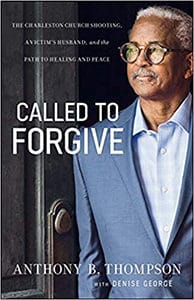
John: Well this is Focus on the Family with Jim Daly. I’m John Fuller, and our guests today are the Reverend Anthony Thompson and Polly Sheppard. Uh, what an incredible story they have to tell. It’s captured in the new film, Emanuel, which is out in theaters next Monday and Wednesday. And then Anthony has written a book that’s just come out that captures um, his perspectives, Called To Forgive. And of course, we have that here. Details about the movie and the book at focusonthefamily.com/broadcast.
Jim: Polly, let me turn back to you, and I’m sure people – I know people are gripped by what they’re hearing. Um, you have been so eloquent to talk about your forgiveness toward Dylann. It sounds like it was almost instantaneous that you had this pity for him, this poor soul, a wretched soul who would do something like this? Did you have to process that at all, or was it just present?
Polly: No, I had to process it. I – I didn’t speak for about three months. I didn’t talk about it.
Jim: Huh.
Polly: Um, I didn’t go to the bond hearing, and I wasn’t – wasn’t talking to people…
John: So you weren’t processing with anybody else?
Polly: …to the things that I was processing. You know how you go through the grief process?
John: Sure.
Polly: It’s denial and all those things. But I knew I had to get up and go the way God was directing me.
Jim: Yeah.
Polly: So…
Jim: In that context, again, I’m thinking of people listening that may not have gone through something as horrific as what the two of you and the others went through, but maybe there’s some other form of unforgiveness, whatever it might be. They’ve never really processed it, as you’re saying.
Polly: Right.
Jim: Yet, I would think this kind of an event is right there in your face. You gotta do something with it because of all the emotion that you’re feeling. But the unforgiveness between a spouse, the unforgiveness of unfaithfulness, whatever it might be, what word do you have for them going through this? I mean, what would you say?
Polly: You forgive and there’s so much peace.
Jim: Huh.
Polly: Once – once you forgive each other, it’s peace. It’s a pardon. Un – unforgiveness is like drinking poison and waiting for somebody else to die.
Jim: Right.
Polly: So…
Anthony: So true.
Polly: And you’re only harming yourself. When you forgive, actually it’s a good healing for you.
Jim: Yeah. We have a clip from the movie that I want to play and then get your response. Um, again, it speaks for itself.
(Start MOVIE CLIP)
Anthony: You know, I forgive you and my family forgives you. But we would like you to take this opportunity to repent. Repent, confess, give your life to the one who matters the most: Christ.
(End MOVIE CLIP)
Jim: Anthony, that was you speaking at the bond hearing. Uh, the judge did something very unexpected, and that was to ask for the families to address uh, Dylann Roof. Which doesn’t typically happen. That usually happens in the sentencing phase. Did he ever – the judge – did he ever explain why he did that? And in that moment, what was your mindset and then those words you spoke?
Anthony: Well the judge never mentioned that to us. It was just done instantly.
Jim: So you didn’t expect it?
Anthony: Didn’t expect it to happen.
Jim: He didn’t prep anybody?
Anthony: No.
Jim: He just was moved to do it?
Anthony: Mmhmm.
Jim: And in fact, if I remember correctly, you just had your head down. You didn’t really – it sounded like, and I want you to say this, but it sounded like you didn’t want to participate. You were still angry, obviously. But in that context, you felt the Lord speak to you, and what did He say?
Anthony: Yes. Well, He said, “Get up.”
Jim: Wow.
Anthony: “I have something to say.” And I recognized that voice. You know, if you have a relationship with the Lord, you know when He’s talking to you. And so I got up, and I said, “Now Lord, You have something to say, You need to say it. ‘Cause I don’t have anything to say.” You know, first of all, I didn’t want to be at the bond hearing. It was not – not my desire (unintelligible) to be there. However, I just – just opened my mouth and said, “I forgive you. My family forgives you. But you need to repent. We want you to take this opportunity to repent. Confess, repent, give your life to the One who matters the most: Christ. And if you do that, everything else will be okay.”
Jim: Wow. I mean, that is true for every human being that walks the face of this earth, right?
Anthony: Yes. That is.
Jim: And that’s – that’s the Christian message.
Anthony: It is.
Jim: Repent. Turn from our wicked ways. Um, but so dramatic.
John: Anthony, how were your words received by both um, the perpetrator and the people around you?
Anthony: Well, the perpetrator – he only glanced, you know the – ‘cause they had his head down the entire time. And God was telling me somehow to get his attention. And I’m like, “How do you do that?”
Jim: Yeah.
Anthony: And – but when I said “Christ,” he did lift his head up. And for about a few seconds, we glanced each other. So I know he heard it.
John: Mmm.
Anthony: Uh, other people felt like it was too soon. Um, felt like it was uh, the, uh, slave mentality. You know, forgiving somebody so no harm will come to you.
John: Mmhmm.
Anthony: And uh, some really ridiculous things. Yeah.
Jim: What – let’s unpack that a little bit…
Anthony: Yeah.
Jim: …’cause in that context, um, I – I thought about that a lot in preparation for this. Because that was a message that your concern – I think, Polly, you would agree with this – that people would feel like easy forgiveness isn’t dealing with the issue. That you have to go hard, and then if God puts that in your heart to forgive over time, that’s more uh, reasonable. But again, um, people are missing the point, aren’t they? That we don’t have to harbor hatred in our hearts as a uh, a part of justification, right?
Anthony: Right.
Jim: God can, instantly or over a short period of time, give you that forgiveness for somebody.
Polly: Oh yeah.
Jim: And it’s not cheap grace.
Anthony: And that’s what a lot of people don’t understand. They believe that forgiving the person is letting the person off the hook, when actually, you’re letting yourself off the hook. Because you’re receiving that peace…
Jim: Yeah.
Anthony: …that you need from the burden of bearing anger and hate and rage, which is sin. And uh, Christ died on the cross to release us from that burden – that burden of sin, which is anger, hate, racism, discrimination, all those things which we harbor sometimes, and it leads us to acts of violence. You know, it makes our lives more miserable. And a lot of that is going on today in the world…
Jim: Yeah.
Anthony: …a lot of shoot – a lot of violence, a lot of shooting, ‘cause somebody’s mad…
Jim: Yeah.
Anthony: …at somebody who offended them.
Jim: Yeah.
Anthony: And when all you need to do is seek God, ask Him to forgive you, help you to forgive the person who offended you, and the peace you’re trying to seek with other means, you’ll receive that peace immediately.
Jim: And it’s so true, and I think, you know, that’s one of the core things I want people to hear today is it’s possible to forgive in Christ.
John: Yes.
Polly: Yes.
Jim: Polly, I know we mentioned this, but I want to play the clip that you described from the movie, where the shooter confronted you. I know we described that, but I – I want to hear it from the movie’s perspective. So let’s listen.
(Start MOVIE CLIP)
Polly: When he spoke to me, I was on the floor, looking up at him from under the table. His eyes were very dark – like dark pools. Um, but he just stopped and he told me – he said um, “Did I shoot you yet?” And I said, “No.” And he said, “I’m not going to. I’m gonna leave you here to tell the story.”
(End MOVIE CLIP)
Jim: I just – it’s so moving, again, um, that here you are in a dialogue with the Lord in the – probably the most horrific scene you’re ever gonna have in your life. And I – that just moves me. I’ve always thought if I were in an airplane that was going down, if I were in a catastrophic event, how would I behave? If I were asked to give my life for the Lord, how would I behave? And you know the answer to that question – it gives me tears thinking about it – because you, unlike me, you have faced it.
Polly: Yeah.
Jim: I haven’t had that gun to my head.
Polly: Yeah.
Jim: You have. That gives you credibility.
Polly: Yeah.
Jim: And I just so admire the fact that you said, “Jesus, that’s the answer.” And to be able to pray for him, to encourage him, I would only hope I had half that ability. And I – man, I don’t know what to say other than I love to see Jesus in you. Huh.
Polly: It’s heavy.
Jim: But it’s real.
Polly: Yeah, yeah, yeah, yeah.
Jim: How do you…
Polly: I think the Bible’s talking to Dylann too.
Jim: The – how? How?
Polly: That’s why he left me. Right? When he got to me, he just couldn’t do it. See, what you don’t know is he told the agents he couldn’t shoot me because I was lookin’ at him.
Jim: Wow.
Polly: So what did he see when he was looking at me?
Jim: Wow.
Polly: That’s the thing.
Jim: Boy that’s something. That is something. Anthony, as a pastor, um, where is uh, Charleston today? Is there hope? We started there, but now that we know the full story, is there hope in Charleston? And not just Charleston, is there hope in this country that we can actually move in a better direction, that we can put these things behind us so everyone is feeling like that’s over? Can we ever get there and what does that place look like?
Anthony: Yes, there is hope in Charleston, and uh, it’s very evident right now. People are just coming together in a city where we never talked about racism and now the focus is on racial reconciliation. We have forums on racism. We’ve had several. We’re reaching across our cultural barriers and denominational barriers. We have three predominately white churches in Charleston. With my church, it was predominately black. We come together, exchange pulpits. We – our congregations exchange Bible studies, and we talk about, you know, how can we help each other? How can we get to know each other? And we’ve come to the conclusion that we have to start at – at home.Starting in our own neighborhood.
Jim: Yeah.
Anthony: You know, knock to your neighbor’s door and introduce yourself, find out who they are, don’t look at the color.
Jim: Yeah.
Anthony: Don’t think about the culture or the denomination. Just say, “I’m Anthony, and glad to meet you, Bill.”
Jim: (Laughter).
Anthony: “How many children you have?” So that’s what we’re doing.
Closing:
Jim: Yeah. That’s a beautiful start to move in that direction. Let me – let me say something that might be a bit provocative, but when you look at the culture today, it catches my attention. The Christian experience has been one of persecution for two thousand years. You know, we’ve had this carve out, you might say, where we have religious freedom and some other things, but that’s not been the typical story of the Christian church. And in fact, even now when you look around the world, Christian persecution is kind of – certainly on the rise and is the most persecuted religion in the world today.
Here’s a – an interesting thought, and I’d love your response to it: as a white man in America – and I think of the black church and what you have experienced – isn’t – isn’t it interesting that we all will learn, I think, so much about how to behave when people mistreat us, from you, as we move forward in a culture that no longer really likes us? No longer really, uh, sees it the way we see it. Maybe we need to turn to the black church and say, “How do we operate when people, um, show ill will toward us?” Isn’t that interesting?
Anthony: It is interesting.
Jim: I mean, I think you’re in the moment of teacher, and we need to be in the moment of student. How do we survive? How do we thrive? And man, you have given us a great example today. So thank you for the start of that dialogue.
Anthony: You’re welcome.
Jim: Thank you, Polly.
Polly: Thank you. Thank you for having us.
Anthony: Yes, yes. Thank you for spreading that gospel of forgiveness.
Polly: Yeah.
Jim: Amen. Well thank you for living it. And let me, again, encourage people to see the movie this coming Monday and Wednesday, Emanuel. It is a must-see for every believer, and I’m telling you what, unbeliever too. This will show you the true heart of God.
John: Mmm. We’ll have details about how you can get tickets for the movie, Emanuel, and how you can get a copy of Anthony’s excellent book, Called to Forgive, stop by focusonthefamily.com/broadcast or call 800, the letter A, and the word FAMILY – 800-232-6459.
And when you get in touch, please consider a generous donation to the ministry of Focus on the Family so we can continue to um, produce programs like this and reach out and help families wherever they are around the world.
Well, on behalf of Jim Daly and the entire team, thanks for joining us today for Focus on the Family. I’m John Fuller inviting you back as we once again, help you and your family thrive in Christ.