




Excerpt:
Steve Arterburn: The second most dangerous thing you could carry in your pocket would be plutonium. But the most dangerous thing is justifiable resentment. And you look back and you say, yeah, look what they did to me and all this. And you’re justified to stay in that bitterness and anger. But you have to work through that, and you have to say, this is killing me. It’s destroying my soul.
End of Excerpt
John Fuller: We’ve all been wounded by some other person or haunted by, perhaps, by sad memories, but God doesn’t want us to be paralyzed in the past, living in fear and regret. This is Focus on the Family and your host is Focus president and author Jim Daly. I’m John Fuller. And I’ll encourage you, stay tuned for some help with your past wounds to find purpose and meaning and vision. That’s what we have for you today.
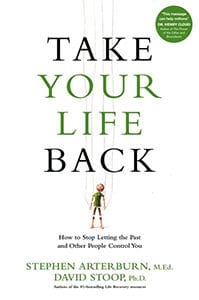
Jim Daly: John, this is such a big issue, and, uh, we’re gonna talk about it. There are wounded people walking around this planet every day. I mean, all of us, because we live in a sinful world, right? And we’re all sinners, saved by grace. And we’re gonna probably peel some scabs back for you today, but in the hopes of bringing healing and restoration and giving you the tools to reallyTake Your Life Back, which is the title of the book of our guests. And I am looking forward to providing, um, help to you today to think differently about what you’ve done or what you’ve been living with, or what you’re living in, and giving you some practical advice to say, OK, we can take different steps moving forward.
John: Mhm, yeah. And Steve Arterburn is the founder and chairman of New Life Ministries and the radio host ofNew Life Live. He’s a teaching pastor at Northview Churchin Carmel, Indiana, and is also the founder of Women of Faith, and a lot of our audience members…
Jim: Yeah.
John: …Have been to those conferences. Five million folks went to those, mostly women.
Jim: (Laughter).
John: Dr. David Stoop is also with us. He’s a licensed clinical psychologist and is the founder and director of the Center for Family Therapy in Newport Beach, California. He’s often heard on theNew Life Liveradio program, and is an ordained minister as well.
Jim: Welcome to both of you.
Steve: Thank you.
David Stoop: Delighted to be here.
Jim: Pretty impressive. I’m mostly impressed with the fact you live in Newport Beach, David.
(LAUGHTER)
Jim: Actually, it’s called jealousy (laughter).
David: No, I know you. You get out there every now and then, don’t you?
Jim: Oh, man. It’s one of the most pretty places in the – on the planet, I think.
David: Somebody has got to live there, so I volunteered.
Jim: Yeah, you – you put your hand up for that duty, suffering for Jesus out there in Newport Beach.
Steve: Here’s what I think’s impressive is that Dave’s still working with me.
(LAUGHTER)
Steve: I mean, we have…
Jim: And you’re from Carmel.
Steve: Yeah, I mean, we’ve been through quite a bit together over the years. And, you know, a lot of people that are in partnership and writing partnership, uh, they fall out or don’t work together anymore. And Dave and I, we just keep coming back to each other and doing stuff together–
David: Probably 35 years, 36 years–
Steve: –and I love this man so much.
Jim: That says a lot about David, doesn’t it, Steve?
Steve: It does, a lot.
David: It says a lot about Steve, too.
Jim: I’m teasing. (laughter)
Steve: Oh my goodness.
Jim: You guys, it’s just so good. And you both have given your lives, really, to helping people, and that’s why in that setup just talking about helping people today, that’s what we want to do.Take Your Life Backis such a bold statement. At first, I was a little, you know, wow, OK, God. Is that really what we do – takeourlife back? It’s such a Western thing to think about, you know?
Steve: Yeah.
Jim: I’ve got control.
Steve: Right.
Jim: I know that’s not what you mean. What are you driving at, just fundamentally, at this principle that, hey, you can even have an effort to take your life back.
Steve: Hmm.
Jim: What does it mean to get that life back?
Steve: Well, you know, it kind of comes from 1 Corinthians 7:23, where it says, uh, you know, the Lord paid a very high price for you, and not to be enslaved by anything. And so we’re not taking our life back, because we want to be in control or in charge. We want to have it, so we can give it to the Lord. But, in fact, a lot of people are owned by something – maybe it’s out of their past, maybe it’s something they’ve done. And so, we’ve written this book to help you wherever you are to say, hey, I could be better. I could go from this reactive world, this reactive life, to starting to respond to God, rather than letting this thing control me, dominate me and really veer me off of what God called me to do as a person.
Jim: That’s so good. You know, sometimes we, uh, maybe, overdramatize or spiritualize the encounters Jesus had in the New Testament. I mean, the woman at the well, the woman caught in adultery.
Steve: Yeah.
Jim: But in essence, that’s what He was doing.
Steve: Yeah.
Jim: He was empowering them to take their lives back from their past, wasn’t he?
Steve: Oh, He was. And, you know, was, uh, watching this video of the Exxon Valdez cleanup, and there was this bird that was covered in this black, gummy, oily stuff. And I looked at it, I said, you know, that was me. But the blackness wasn’t oil, it was shame. I was totally covered in shame. And – and I’ve, uh, come here to Focus and worked with pregnancy centers and stuff and – because I paid for an abortion. And the shame from that abortion – I thought it was my job to live in that shame and prove to God nobody has ever felt worse about this than me. And then, I realized that’s exactly where Satan wanted me to be. There was nothing good about that. And I remember hearing Chuck Swindoll say, “Hey, your past just ended one second ago. Why would you live in it?” And that began working out of that shame and believing that God had died for me, that I could be free, and I could actually make a contribution in the world.
Jim: Yeah.
Steve: But as long as that shame was there, it was never gonna happen.
Jim: Hmm.
David: Well, there’s another side to that, too, though, because we – we take Rembrandt’s painting of “The Return of the Prodigal,” and we focus on the elder brother, and the elder brother is on the right side of that painting and looking down in judgment and aloofness and disdain at what was going on. Um, but he was the one of the guys who had it all together on the outside. He – he was in the in-group, he was successful, he did everything right, he was obedient. If you were a neighbor, you probably think he’s the perfect son.
Jim: Mhm.
David: And then the brother comes home from his far-off journey, and the father embraces him and throws a party. And when the brother comes in from the fields doing his faithful duty in working, he says, well, I didn’t know there was a party planned tonight. Go find out who it’s all about. And he comes back and finds out it’s his brother has returned home, and so he says, I’m not going in there. And the father comes out and begs him to come in, and he just, you know, all of the bitterness, all of the resentment, all of the envy, all of the hunger for the father’s love that he never really experienced comes boiling out of him, and you see what was really inside of him.
Jim: Yeah.
David: On the surface, he looked good, and a lot of us, who on the surface look good, but inside we – we’re ready to explode with bitterness and resentment, mostly because neither one of those boys had ever really experienced the father’s love. And now the prodigal has for the first time. The older brother never really – never really got with it. And there’s a lot of us who have never experienced our father – Heavenly Father’s love, and we can’t really experience love any place else, if we can’t experience it from Him.
Jim: The difficulty, David, is the love is there. Obviously, God says, I – I died for you. I love you that much. I mean, it’s there. But what prevents us from embracing it?
David: There’s a French theologian – Andre Gide – who speculates that some couple of weeks later, the two brothers are talking…
Jim: (Laughter) OK.
David: And the younger brother is saying to the older brother, maybe you ought to go off to a far country and live lasciviously, so that when you come home you can understand how much the father really loves us. And I don’t think that means we got to go out and sin boldly so we can understand how much God loves us. I think it means you gotta accept yourself…
Jim: Mhm.
David: A lot of people are trying to relate to God through their false self, through the facade. You call it facade-ification, I think.
Steve: I did.
Jim: Facade-ification, I like that.
David: Yeah, and God just kind of waits patiently, ignoring our efforts, because He’s saying, I’m waiting for you to bring me your real self. And really, let’s have an authentic relationship…
Jim: Yeah.
David: …because, I love the way the New Living translates the unfailing love of God. It’s unfailing – nothing can make it stop.
Steve: And we talk in the book on the side of taking care of all this, that, you know, first of all,you have to become a defender of your value. And so many people settle for so many things happening to them, because they don’t feel like they do have value. They don’t accept God’s love. And, I think some of that is from this false self. If I’m giving you a facade, and I’m living out of my false self, rather than my real self, if you tell me that you love me – and maybe God wants to use you to express his love to me – then I’m going to just discount it completely and say, well, yeah, but if you only knew me.
Jim: If you knewme.
Steve: Yeah, you wouldn’t love me. So you don’t feel it. You don’t think you’re worthy of it.And so, part of our restoration and recovery here is getting people to experience God’s love, maybe for the first time, so that you act as if you were deserving of it, maybe for the first time.
Jim: Right, and, Steve, I want to dig into your story and get, you know, that journey for you and how you came out of shame.
Steve: Yeah.
Jim: But, is there a gender connection here, too? Because, we’re four guys sitting at the table here. Women tend to – they process this a little differently than we do, generally. Uh, speak to that – that gender issue and how a woman’s going to think about it and how a man thinks about it.
Steve: Well, you know, my wife, um, is quite involved in life recovery. She facilitates three recovery groups for women at our church, and one of those groups is for women with sexual integrity problems, which is kind of unusual, that you would have women show up and be honest and – and want to deal with that. But here’s what we’ve discovered. Very few of these women feel worthy to make the choices in their life.
Jim: They’re looking at their own heart and saying, “I’m not worthy.”
Steve: Yeah, and so they’re letting somebody else decide, or they’re waiting for God to do what, probably, God is waiting for somebody else to do. And she kind of sees her role as to model for them. Uh, you can come from this broken place, experience God in a way that isn’t second hand – it’s not through a man. And that’s really, I think, in this day and age, well, that wouldn’t be. But it is so common. And even women that have been hurt by a man through his pornography problems and things like that – these women still aren’t making choices for themselves, not defending their value, not bringing good things into their life.And so what we’ve watched are these lights come on in these women who say, wait a second, I’m not a second-class person, here. I don’t have to, not only feel this inner shame that God died for me to not experience – but I don’t have to be a second-place person in this world. And if you look at Ephesians 5:21, it says that we should be submissive to each other in reverence to Christ. And a lot of times these women are just living out the part where they need to submit to the man, versus he also needs to be willing to die for them.So, taking your life back is becoming an equal player here at the foot of Jesus and giving your life to Him, and not letting somebody else dominate that life.
Jim: Yeah.
David: I saw a lady some years ago who – she said whenever the pastor preaches on Romans 8 she says, “I stay home.”
Jim: Oh, wow. What doesn’t she like?
David: And I said, why, you know? She says, because it’s too good to be true. No condemnation, unfailing love, nothing to stop God from loving…
Jim: All things work for good.
David: And she had a sense that she didn’t deserve any of that. And that’s – women struggle with that. A man may think he deserves it, but he – he’s blown it and, therefore, doesn’t deserve it.
Jim: That’s the difference. That’s what I was driving at. I don’t think men have quite the same instinct to look at their own heart and say…
Steve: No.
Jim: I am failing – because we think more highly of ourselves than we should, right? That’s a man’s ego.
Steve: We’re too afraid to go in there…
Jim: Yeah. But we do it differently. And that’s your story, Steve. And that’s – I want to give an example through your life, really, of what happened and how you had to kind of figure this out as a boy – the things that you, uh – that wounded your spirit, that kind of prevented you from maturing in a healthy way. Describe it.
Steve: Well, you know, I really felt like I was on my own. I had two older brothers, and we were very disconnected. And it was, uh, kind of a disconnected, uh, gotta fight for myself, gotta defend myself against them. And I kind of went into adulthood thinking that if anything was gonna happen, I had to make it happen. And sadly, um, I got into, uh, promiscuous sex as a way of – of just feeling some kind of connection. I know that may sound weird, but it was just a way to feel connected to something or someone, and totally absent of Christ in my life.
Jim: Steve, can I ask you a question there…
Steve: Yeah.
Jim: …Because so, you know, I talk to a lot of marriage experts and parenting experts. When you look at the issue of pornography, or even sexuality, the act has a benefit. It’s a gift from the Lord, when it’s in the right context, right? In marriage, etc. And it’s a beautiful thing and not something to be shameful about. But what is it – and here’s the question I’m always thinking about and asking experts – what is it that they’re actually trying to satisfy beyond the physical experience? There’s more to it.
Steve: Yeah.
Jim: It’s not that simple. It’s far more complex – either power, or control, or something. Through your experiences, did you land on an answer to that? What am I actually going for here?
Steve: Well, let me tell you a little piece of this. When I was growing up, my parents were very strict Southern Baptist, but my grandfather had pornography taped up or tacked up in his office, and I was allowed to go in there. I can still tell you what the images looked like, um, and…
Jim: And you’re 9, 8?
Steve: No, I was 5 and 6.
Jim: 5 and 6.
Steve: And I can still remember that.But, when I started to have an experience with pornography, just like a man who’s married has an experience with pornography, it’s not only a dopamine rush like you’d have from heroin, but also there’s oxytocin that is secreted – a hormone, uh, that is in the brain that’s a bonding chemical. When a mother nurses a baby, she bonds with that baby because of oxytocin. And if she’s a cave woman, and there’s a lion at the cave entrance, she’ll go kill that lion to protect her baby. A man that uses pornography – he’s not just having an experience. There’s a bonding chemical there that not only bonds him to pornography, but makes him aggressive toward any threat– like his wife. And a guy doesn’t understand, I’m using pornography, now I hate this woman that I married. There’s a physiological process there that totally separates us from the spouse and bonds us to this pornography.
So what have I learned? I learned that there was something far beyond my desire to have some kind of connection or some kind of experience of relief, and the same thing would happen with another person. When I was being promiscuous, there was a bonding that was going on there that drove me back to it, beyond just choice. You have to say it was compulsive, obsessive, even addictive. And it wasn’t until I was able to say, you know what, I don’t have a problem, the problem has me, that I could begin to recover from that. I think that this fantastic experience of sex in marriage, which, you know, which finally, I’ve been able to have that kind of experience. But, I think Satan destroys the number one, maybe, invention of God on planet Earth for all of us to enjoy. Satan has so destroyed that experience, and it’s such a joy to see other people finally discover that they’ve been settling for a superficial substitute and get back to trying to develop an intimate relationship with their wife that they’ve never known before.
Jim: Well, in this context of taking your life back – the title of your book,Take Your Life Back– I mean, that’s an area for you that you had lost, right?
Steve: Well, I had…
Jim: And so process – I’m thinking of the person who’s going, “I’m just like Steve.”
Steve: Yeah.
Jim: That’s me. I’m in that bondage.
Steve: Yeah. So, you have to say to yourself…
Jim: What do you do?
Steve: You have to say, I can’t fix this. I’m not able, on my own power, to fix this. And I know God can, and now it’s time for me to do something I’ve never done before. Maybe I’ve surrendered my problem to God, or maybe I’ve tried, but now it’s time to surrender my life. Maybe I accepted Christ as my Savior years ago, and I’m going to heaven, but now it’s time to experience something different, by totally surrendering my life. That’s where it begins. You don’t take your life back, unless you come to that place of total and complete surrender to God.
David: It’s the surrendering of your will as well as your life.When I – Steve and I were talking about this one. When we grew up, we surrendered our lives many times and didn’t know quite what that meant in terms of the outgrowth of that. And so, we’d have to do it over again. And it wasn’t until I was reading the third step, where it says that you turn yourwilland your life over to God. And I thought, wow, that was a piece that was missing for me – the will. If I got my will surrendered, it’s a whole different story.
John: And we will hear more from Dr. David Stoop in just a moment. Our guests are Dr. David Stoop and Stephen Arterburn. This is Focus on the Family, and, uh, we’re digging deep right now, trying to get into some of the past because it so affects the present. And you can find their book,Take Your Life Back, which has a lot of great help in it for letting that past go at focusonthefamily.com/radio, or call 1-800-232-6459.
Jim: And, Steve, just to reiterate for folks, these things are stepping stones. You talked about your upbringing, your childhood. Of course, a lot of people go, oh, yeah, OK, here we go talking about that. But these things are real. I mean, these wounds that you, um, have as a child affect your decision-making even years later. Why do you need this? Why do you compete the way you compete? Why do you hide? Why do you feel shame? Most of that starts in your family of origin.
Steve: Right, and I think Satan uses anything and everything. I didn’t have a horrible childhood.
Jim: Right.
Steve: So Satan uses that, and he kind of convicts you of – you ought to be better than this. You ought to – you…
Jim: Oh, man.
Steve: …had such a great thing. You – you should be ashamed of yourself that you haven’t done more with yourself, having such a great group of parents and all this. And he just…
Jim: The guilt is there, too.
Steve: He will just beat us up, if we listen to him. And so it’s easy to listen, to say – and he’s got so many ways to divert us away. And if we don’t finally come to the end of ourselves and say, everything I’m doing is a reaction to my past and my – my decisions, and I’ve gotta change this, so that I can start to respond to God versus react to some wound or something in my past. And that’s what we’ve tried to do here inTake Your Life Back, is a simple plan. And we were just at a workshop last week that we were doing. And a guy says, you know, I’ve been working on myself for 10, 12 years, and this book showed me this is where I really have to begin. And you do. You have to begin.
Jim: Kind of the battle plan.
Steve: Exactly.
Jim: Well, that’s good. Dave, you also had things happen. I think the relationship between you and your dad was not a healthy one.
David: No, it – he was…
Jim: What kind of course did that set you on and why?
David: Well, he was an Irishman.
Jim: (Laughter) Hey, careful.
David: He was from Ireland. No, I’m a citizen of Ireland.
Jim: I’m Daly, you know.
David: And, uh, he had an Irish temper that – I had an ulcer as a kid from living with his temper…
Jim: Mhm.
David: …Because he could – never knew what would set it off and that. And so I – I had vowed I would be different. When my first son was born, I made – I can remember as if it was yesterday. I can picture myself walking from the garage to the house. That I will be a different father than my father was to me.
Jim: That’s powerful right there. Think of the fact that you had to even think that and say that and feel it.
David: Yeah, that – but it didn’t work. It was the sad part…
Jim: You kind of became your dad.
David: I – no. About the time my oldest son was graduated from high school, I realized I don’t have any different relationship with him than I did with my father. It’s distant. It’s empty. And it was because I had carried all of that resentment and hurt and stuff from my dad kinda in the background. It was still operative in the present, even though it was in – it had happened in the past. And it wasn’t until I dealt with my father issues, which was 20 years after he died that I finally dealt with him. And I grieved for him.
John: And he died when you were a teenager, is that right, David?
David: No, I was 23. And he – when he – when he died, I – I – I didn’t care, really, because he wasn’t there for me in the first place, so what difference is it going to be now?
Jim: Yeah, I know that feeling.
David: And I was in a ministry, and I was – I just went right back to what I was supposed to be doing. And I thought that it’s all on the shelf, forget about it, move on.
Jim: Did you feel guilty about that, not feeling emotion?
David: No, I didn’t…
Jim: Sometimes Idid.
David: I faked it, yeah. I faked it at the wake, you know.
Jim: I remember I was 11 and, uh, I was living with my brother – 11, 12 – and I had just come off of living with my alcoholic father for a year. And I remember he got the phone call that he had died.
David: Wow.
Jim: And I remember watching – I was watchingI Love Lucy, laying on the couch. I mean, these are the old, you know, it was in reruns.
David: Yeah, right. That’s how it impacts you.
Jim: This was in the ‘70s, though, but I was watching that. And I remember my brother putting the phone down, hanging up, and he just looked at me, he said, hey, Jim, Dad’s dead. And I remember looking over my shoulder acknowledging it, and then looking right back and…
David: Yeah.
Jim: …Continuing to watchI Love Lucy.
David: That’s kind of what I did, except at the wake, I pretended to be sad. Twenty years later in a conversation with my sister, she’s talking negative about him, and I got mad at her. I said, I don’t want to hear it. I don’t want to talk about it. And when I hung up, it was like God said, you’re going to deal with this. And 20 years after he died, I finally grieved.
Jim: Twenty years.
David: And I was angry, off and on, I was sad. I wept tears over him. If you were driving next to me, you might have been scared, thinking I was having road rage, because I was raging at my father in the passenger seat, you know, imagining that. And then, when – I did that off and on for about a year and talked with friends, talked with people. And then I said, OK, God, now what? You started this, and He says, you do what I did. You forgive him. And I forgave him. And Pat Conroy has a line in one of his books. He says, “On the day I forgave my father, my life began. “
Jim: Wow.
David: And that was my story. And then 10 years later after that, my three sons and I, we did what we call the Stoop Wild Man Adventure. We took two weeks to get to Istanbul from Germany and just bummed around Europe together. And it was a time of healing and restoration, and I finally had the relationship I always wanted with them because I dealt with the issues of my past.
Steve: And working alongside Dave, and he’s just one of most consistent people ever. But to see this new part of him open up, and it was fascinating. He became this freer, uh, more connected to his sons and fulfilled person. It was just obvious, I think, certainly to me, but to everybody else.
David: We knew each other at that time when that happened.
Jim: To watch that happen. Steve, we’re landing on day one here. We want to come back next time with both of you and continue the discussion. But, um, as we’re landing today, I’m mindful of the fact that you know people who are listening, both men and women, are saying, “Yeah, I can relate to what you just said, Dave. I haven’t forgiven my dad yet.”
David: Right.
Jim: It happened last year, last week, 10 years ago – whenever it was.
David: A lot of our wounds are father wounds.
Jim: Yeah, the father wound. It shows you the power of a father in the family, and we’ve really denigrated that. And, uh, speak to that person who’s hearing us, and he’s not there yet. What can he or she do to say, OK, I’m gonna start that journey? What you’re saying is right. I haven’t been healthy in my relationship with the Lord…
Steve: Right.
Jim: …Because of this. What do they do?
Steve: Well, you know, um, probably the second most dangerous thing you could carry in your pocket would be plutonium. But the most dangerous thing is justifiable resentment.
Jim: Hmm.
Steve: And you look back and you say, yeah, look what they did to me and all this. And you’re justified to stay in that bitterness and anger. People say to you, yeah, I’d feel that way, too. But you have to work through that, and you have to say, this is killing me. It’s destroying my soul. I literally have to forgive this person. I have to grieve that they weren’t who I wanted them to be, or deserve. I have to forgive them. And then, I have to accept, this is my burden.
And you have to pick up that burden, and you have to get on with what God wants you to do. And if you are saturated with guilt, shame, bitterness, anger – all these things, there is a whole other world waiting for you. But first, you got to decide, I’m going to take my life back. And we’re going to help you do that, if you’ll let us.
Jim: Yeah, that’s excellent. Man, this is such a good conversation. Appreciate your vulnerability in this. And this is where people connect. It’s not in the picture of being perfect.
Steve: No.
Jim: It’s in the brokenness of not being perfect.
Steve: That’s right.
Jim: And I so appreciate that. You may feel like your life is out of control, or being controlled by others – maybe those emotions that Steve was just referring to. Man, we are here to help you. We have a counseling group, uh, caring Christian counselors who can start that process and help you think about where you’re at, and even refer you to other counselors around the country. Uh, we have many, many counselors on our data referral list that can help you. And, uh, we want to help you. And I’m telling you, I believe in this so much that for a gift of any amount, even if you can’t afford it, we’ll get the tool in your hand,Take Your Life Backby Steve and Dave, and it is a starting place for you to get serious with the Lord, shake off that bitterness, that anger and those things that we’ve talked about, and start fresh. It’ll be like oxygen coming into your lungs, I’m telling ya. And we want to be able to give that to you. So make a gift for any amount, and we’ll say thank you by, sending the book to you right now.
John: Donate, and get a copy ofTake Your Life Backand perhaps a CD of this broadcast when you call 800-A-FAMILY, 800-232-6459, or stop by focusonthefamily.com/radio, where you’ll find these and other great resources.
On behalf of Jim Daly and the entire team here, thanks for listening today to Focus on the Family. I’m John Fuller, inviting you back next time as we continue the conversation with Stephen Arterburn and David Stoop, and once again help you and your family thrive in Christ.