




Preview:
Russ Crosson: Free up your schedule, live in the older house longer, drive the older car longer, spend less than you make, live on one income, save the second income. All those things help you have more time.
End of Preview
John Fuller: Russ Crosson is here with us today on Focus on the Family with Jim Daly to discuss managing your finances with eternity in mind. Thanks for joining us. I’m John Fuller.
Jim Daly: You know, I think managing work and family is one of the hardest things to do. It maybe shouldn’t be that way. Maybe today Russ is gonna tell us how to do that better. But I can remember that battle all the way along. Jean and I had our children a little later, um, but I was traveling around the world for Focus on the Family. It was exciting. I was helping to build the international effort, but I was gone like two, three weeks at a time. And, uh, you know, it took a lot to do that. Thankfully, the boys arrived just as I was concluding that big adventure.
John: Mm.
Jim: And I was able to be home a lot more often.
John: A lot more, yeah.
Jim: And so that worked out for us. But it was almost just a mistake. It’s like God took us that way. It wasn’t planned.
John: Mm.
Jim: And I’m excited to help others think about it and plan for it rather than rely on just sheer maybe.
John: Mm.
Jim: And, uh, we’ll talk about that with our guest today.
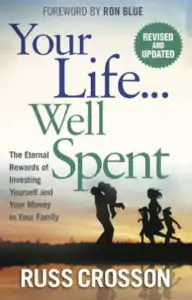
John: Yeah. Yeah. Family, uh, takes a lot of intentionality, and money is a part of that process. And Russ Crosson is passionate about, uh, helping us think through these things. Uh, he’s the chief vision officer and senior partner of Blue Trust, and he’s helped families and couples be good financial stewards for over 40 years. Now, he’s captured some of his expertise and insights in a terrific book called Your Life… Well Spent–
Jim: (laughs)
John: … The Eternal Rewards of Investing Yourself and Your Money in Your Family.
Jim: Russ, welcome back. The folks really loved the last program we did with you on budgeting, but, uh-
Russ: Well, I’m glad this one would be better than that. If they like budgeting, they should like this one. Thanks, Jim. (laughs)
Jim: Well, it is kind of interesting that, you know, there was such a large response. I mean, you’re obviously tapping a nerve just talking about how to budget in a godly way and the things to remember and things to do. And that’s what people responded to. And today we’re gonna talk about much more, but kinda like a life plan. (laughs)
Russ: Well, I think, I think the idea is that was budgeting and, and how to manage your money and make sure you spend less than you make. That was the punchline. But today we wanna talk about why do you even wanna do that? Why is that important?
Jim: Yeah.
Russ: And I would propose to us that what I’ve seen over four decades is that we manage our money not to have more money.
Jim: Yeah.
Russ: We’re not… Julie and I aren’t on a budget to have more money. We manage our money to have more life. So how do we begin to manage and use and spend our money to have more life? I like to say a life well spent is a life that earns and uses money to buy time, to impact people.
John: Mm.
Russ: First and foremost, your family, if you’re married and have kids. Secondarily, other people. It’s a life that focuses on the eternal in the realm of the temporal.
Jim: Mm.
Russ: So, we live in a society that’s just constantly telling us not to be content. And also lying to us about this issue of money, saying things like, “Hey, the more money you have, the more content you’ll be, the more successful you are, the more you’re worth as a person, the more money you have.” And these things get us totally whacked out on balance. You mentioned earlier that it’s issue of money and family is really interesting because you start your career, you start your family at the same time, and it’s interesting. They both require the most time at the same time.
John: Mm.
Jim: Yeah.
Russ: You ever stop think about that? When you finally get the big house and the money, you don’t need it. And when you needed it, you didn’t have it.
Jim: Right.
Russ: So, we have to have the right perspective about this as a journey. And so we spend less than we make, not just to have more money, but to have more time and figure out how I can enjoy the trip. Richard Swenson in his book Margin said, “We need room to breathe. We need freedom to think. Our relationships are being starved to death by velocity.”
John: Mm.
Russ: “And our children lay wounded on the ground run over by high-speed good intentions.” And so, we have to figure out this money thing-
Jim: Mm.
Russ: … so that we can hopefully have a chance to balance life.
Jim: Well, in that context, a pr- give us some practical approaches. In your late 20s, you know, you’re, let’s say you’re the married couple. Maybe kids aren’t here yet, uh, but you’re thinking about what you need to do. You buy the starter home. You already got your eye on what we might be able to buy by 35 or 40. Just describe attitude-wise-
John: Mm.
Jim: … how we get a hold of those appetites so we can live within our means and do the right thing.
Russ: Well the longer term your perspective, the better your decisions. So if you think, “Okay, these decisions I’m making in my 20s.” So you’re both working. Well, one principle, there’s live on one income and save the other. Put some cement in the basement, you know, put some savings down. The other thing is, get used to the fact that, “Hey, maybe we can stay in this starter home a little longer.” I mean, whoever had this idea of starter homes leading into bigger homes?
Jim: Right.
Russ: See, that’s one of the biggest stressors for couples is they gotta get bigger and bigger. And that’s back to some of this self-image, trying to keep up with the Joneses. Hate to tell you, your kids don’t really care where they live. What they care is if you are around a little bit. So, it doesn’t make any sense for me to keep buying bigger homes, buying newer cars.
So, so Jim, I would say practically speaking, I do it different. You know, Julie and I, for example, we didn’t have a dining room table for three years.
John: Mm.
Jim: I can relate. That was Jean and I. (laughs)
Russ: You know, we’d carry our s- we’d carry our sofa table into the dining room. And it was ’cause, you know, we were saving, you know, and trying to manage our money in such a way we didn’t get out over our skis. So, I think this idea that I don’t have to impress anybody.
Jim: Yeah.
Russ: You know, I mean, it’s just, I just need to figure out, hey, how can I put some money in the bank, have some savings, spend less than I make, and not make these decisions? I think the two big ones are the house, you know? You know, where we got this idea of starter homes, we’re going to do a bigger home and then a bigger home and guess what? When you’re 40 or 50, there’s nobody in it but you and your wife. (laughs)
John: Mm.
Jim: Right. I mean, it’s so true. And, uh, you know, why not be satisfied in what you’re at and just see where things go, whether or not you’ll be able to afford that bigger house. I was aware, I was made aware of a, I think it was 60 Minutes clip that was done where whoever the journalist was, uh, had six or seven successful women who had really bought into the feminist perspective. And they had never married. They reached the top of corporate success. And they were sitting in these big homes. And the journalist said, “Can you explain to me-”
Russ: Mm.
Jim: “… you’re in this big home with big yards, but you’re by yourself?” And they cried-
John: Mm.
Russ: Mm.
Jim: The way I understood that story. That’s kind of an exaggeration, but it’s what you’re talking about, right?
Russ: Yeah. I mean, the whole issue of, you know, if you’re blessed to be married, you know, and raising a family, then focus your attention there, not just on the money. I like to equate this to, I call that posterity. Posterity are the generations that come after us versus prosperity. And that’s usually what we think about. Prosperity is all the things we can buy with money. And I think, Jim, one of the things that’s helped me is I never thought about this before till I began to get in this career and help couples, but we need to think about how do I use my money to invest in posterity, not just prosperity?
Jim: Right.
Russ: And that’s a whole different perspective. And the issue is, when you start thinking that way, you will use your money differently and invest it in things that relate to your family.
Jim: And, and, and Russ, this isn’t covered in your book, but I think it’s relevant to culture today. This idea of, for some, not just women, but men too, don’t get married and certainly don’t have kids, have a dog because it’s easier.
Russ: That’s… Mm.
Jim: I mean, it frustrates me, uh, uh, being the head of a family ministry to see so much of culture messaging that. You talk about be mindful of the messaging.
Russ: Right.
Jim: That to me for us is one of the core problems in the culture. That we’ve become so selfish that we don’t even wanna give of our time or our treasure to be married or raise a, raise a child or two or three.
Russ: Well, remember what I said earlier? A life well spent earns and uses money to buy time to impact people. So, and I invest that money. Use it in such a way to impact people. So how do I invest if I don’t have kids? How do I invest it in the people around me and invest in my community and things like this? So, we need to begin to think about using our financial capital to invest in things that are gonna matter ’cause that’s all that matters. It’s posterity. It’s legacy.
Jim: Yeah.
Russ: We’re all leaving a legacy.
Jim: And I don’t wanna lay that all on younger people, but there’s a lot of fear in people too, younger people, you know? The… It’s expensive. $250,000 I think was the last number I saw that you’re gonna spend on a child till they’re 18. And, you know, so the culture is building fear into people like, “I can’t afford that. I’m working at McDonald’s and I’m only making $10 an hour.”
Russ: Well, here’s, here’s what will help you if you change your thinking from that being an expense to an investment.
Jim: Mm.
John: Mm.
Russ: See, this, it’s really helped me to realize that I can invest money in posterity type things. So education for my kids, for example, you just mentioned the cost, uh, to educate my kids. If I could think of that as an investment, not an expense, then all of a sudden it changes my thinking.
Jim: Yeah, I like that.
Russ: And, and so I can put it in retirement. I can put it in another piece of real estate. I can buy a second home. I can, you fill in the blank. But I could also invest in my family. And that’s been a paradigm shift for me. You know, I, I used to consider some of the stuff I did with money as just an expense, but then when I thought, “Wait a minute. No, if I pay for that marriage retreat for my-”
Jim: (laughs)
Russ: “… My, my, um, married son and his wife to go, that’s an investment, not just an expense.”
Jim: Yeah, that’s good.
Russ: Or if I pay for house help when the kids are young, so my wife is not stressed out over the holidays, that’s an investment, not just an expense. And so there’s, if you just change your paradigm to it being an investment and not just an expense, then some of this use of money will give you more time and it’ll help you invest in what’s really gonna account for eternity.
Jim: And you touched on this, but the idea of capital being financial, spiritual, and social.
Russ: Mm.
Jim: Just hit those again. You said it quickly.
Russ: Yeah. Well, most… So I… This whole book came about, Jim, because I sat with people, they’d be in my office, they’re worth lots of money, lots of financial capital, and tears would be streaming down their face. They didn’t know their kids, didn’t know their spouse, they had relational challenges. And I realized that most people just invest their money in financial capital instruments, stocks, bonds, real estate, and so forth. But how do you invest in spiritual and social capital? Well, spiritual capital, it’s, like I said, with my boys, I would pay them to do scripture memory, or I’d pay them to read certain books and get them do a book report.
Jim: That’s an investment.
Russ: That’s an investment in their spiritual capital development.
Jim: Yeah.
Russ: Social capital, how do I help them grow socially and learn a work ethic? Well, when I bought lawn equipment so they could start a lawn business, that was an investment. So now they’re able to start a business and begin to build some work ethic.
So, I just think it’s, now this will be a funny story about my recent posterity investment. I, um, just repurposed my basketball court into a pickleball court.
Jim: That’s what everybody’s doing. (laughs)
Russ: Well, and, and that, that in my old life would’ve been an expense, but Jim, I considered it a posterity investment, investing in not only… But then my neighbor called and said, “Hey, can I use your pickleball court for my 17-year-old son’s birthday party?”
Jim: Mm.
Russ: So wh- I made an investment, but now it’s being able to be used in the community. People come over. I got a text just last week, “Hey, is the court open? Can we come play with my son and his friends from college?” And so I think, Jim, what’s really helped me is to realize that my money can go into my 401(k) and my IRA and, and financial instruments, but I can also use it to build in spiritual and social capital.
Jim: I’m terrible. The first thing I think of is, “Good thing you’re not in the insurance business.” (laughs) Right? “You, you’re gonna use the court. What if you break your ankle, right?” (laughs)
Russ: (laughs)
John: Well, there are liability issues there, aren’t there? (laughs) This is Focus on the Family with Jim Daly, and our guest is Russ Crosson, and we’re talking about some of the concepts in his book, Your Life… Well Spent: The Eternal Rewards of Investing Yourself and Your Money in Your Family. Uh, get a copy from us here at focusonthefamily.com/broadcast.
Jim: Russ, you tell a story in the book about a family reunion, ’cause this caught my attention, just the difference between a family in chaos and a family in Shalom, in God’s peace.
John: Mm-hmm.
Jim: I think the Montague family.
Russ: Yeah.
Jim: What did you observe at this family reunion?
Russ: Well, I flew up to Michigan years ago, and what I observed was four generations of folks that had been intentional about passing on this idea of spiritual and social capital. So obviously there was a lot of food. There were over a hundred people there. They had a jet ski out on the lake that was there. And I just observed that if we’re intentional about passing on and thinking about investing in our family, not just financial capital, then that’s a picture of what it could be for us. And so, I came back from that thinking, “Okay, I’m gonna start managing my money, not just to have more money and to save more, but I’m gonna, I’m gonna send some of it on ahead-”
Jim: Mm.
Russ: “… by investing in some of these things we just talked about.” And before that, I would’ve not thought of those as investments. I’d have thought of them as expenses or budget items. Remember we talked about the B word earlier. These really aren’t budget items. My… I would encourage the listeners to put a posterity investment line in their plan. I think if you just start thinking, “Hey, some of this money I’m gonna use to invest in my family,” then I think it’ll just change your thinking and it’ll hopefully free you up. The other thing here, Jim, is you have to keep a longer perspective to do this. You know, we talked about balance. The other stressor on balance for young couples is they’ve been fed this lie that they have to be in a hurry to quit. So, retirement is, you know-
Jim: The goal.
Russ: “… Hey, sign up for the 401(k). The goal, we gotta retire.”
Jim: Yeah.
Russ: And I would just say that not only are you starting your family and starting your career, being in a hurry to quit doesn’t make any sense. So, we just need to extend our time horizon. That will help you have some balance and help you realize, I’m a… I hate to tell you this, I’m a financial guy and I understand compounding, but there were years I did not fund my retirement. You say, “Wait a minute, Russ. That’s stupid.”
Jim: (laughs)
Russ: But I was paying off my house. I knew if I paid my house off, my expenses would go down. My budget wouldn’t be of stress. I’d have more time to coach my kids’ ball teams and things like that. So, it was intentional. Pay off the debt, lower my expenses, buy more time.
John: Mm.
Jim: Yeah. I do wanna press on that a little bit because I don’t know a lot of people that manage that well, uh, especially in 30, your 30s and 40s, ’cause you do have a lot of expense. You may have bought the house, even if it’s the starter house, you still have a mortgage payment. You start looking at that budget and you’re going, “Wow.” And in addition to that, there’s discussion points where, you know, uh, if, if a mom wants to stay at home, you’re going, “I don’t know if we can do that.”
John: Mm.
Jim: Speak to that whole basket of prioritization. And, you know, again, I’m thinking of the 30-something, 40-somethings, how to find the margin so you can be family.
Russ: Well, it’s like I said earlier, Julie and I just chose to not buy some things. We chose to stay in the older house. We’ve had the 10-year car plan. And so, I think you can find a way. You know, the second income, we’ve bought the lie that we have to have a second income. No, go actually do the numbers and see, ’cause you probably find out it’s really not contributing that much to the spendable income. The other thing is, that paycheck you took home, what I found is most people just automatically have retirement taken out. So, they haven’t realized that they’ve made some decisions that they could go back and maybe cut it in half or cut it back just to the amount being matched. And like I did, just didn’t even fund it for a few years when expenses were high.
So, I think with people will… I’ve noticed that, that people, they just think that’s a given. They think in the retirement’s a given. And that’s one of the first places people can look to maybe get some extra cash flow to do things. Let me just say one thing. I’ve met with more couples, Jim, where they’ll be sitting on our couch and the husband says, “Look at all this money we have in retirement.” And the wife just wants some cash. You can’t buy kids braces with retirement funds.
Jim: Mm.
Russ: And you can’t pay for those sporting event dues with retirement funds.
Jim: Mm.
Russ: And so we, we have to talk about that as a couple, but that’s one of the biggest disruptors is retirement. Uh, because I had people come in with 100,000 in 401(k) and no money in the bank.
Jim: Yeah.
Russ: And so, it’s better to have 60,000 in your 401(k) and 20,000 in the bank, right? A little bit less net worth, you paid some tax. So, I think that one of the biggest places you can get some freedom is to make sure you’re not overfunding retirement too soon.
Jim: Wow, that’s interesting.
Russ: I mean, it… I’ve just seen it. And, and we just think, “Wow, that’s, that’s…” And this is where guys and gals, you know, I’ve seen guys, they’re so impressed. “Hey, honey, look here. I got this money in retirement.” She doesn’t care.
Jim: Yeah.
John: Mm.
Russ: “Show me some cash.”
Jim: Yeah. Or “show me some time.”
Russ: Yeah. “Show me some time.”
John: Mm.
Jim: That’s what we deal with here at Focus on the Family. It’s typically that issue. The couples that, uh, don’t have children, uh, there’s lots of reasons. You know, some might be a decision. I get it. Um, I think you should. But other couples can’t have kids. And, you know, they want kids. For those couples who are in that place, what can they do to invest in posterity when they’re not gonna be able to have children?
Russ: Well, look around. You know, maybe, maybe there’s a parachurch or maybe, you know, Young Life or there’s something at your church. You can invest in people. You can invest, maybe your neighbors. Use some of that financial capital to invest in some… Just keep your antenna up-
Jim: Mm.
Russ: … and ask God to show you. In fact, as Julie and I just had this happen just two days ago. This gal calls and says, “Hey, our septic is out. We’re trying to have this women’s ministry in our home, and I’m just hoping that the toilets work.”
Jim: (Laughs).
Russ: “We don’t have the money.” So just yesterday, Jim, this is a real life story. I told Julie, I said, “Write a check for five grand and send it to them and say, ‘We want you to make sure you can still have ministry, and the toilets will flush.'”
Jim: Oh, that’s great.
Russ: So, when this woman, when these women come over, she has 16 women come into her home.
Jim: Mm.
Russ: So I would just say if you don’t have kids, just look around and be, have this generous mindset-
Jim: Yeah.
Russ: … to where if you have the financial capability to do it, you know, instead of just building bigger piles, invest in stuff. So, we invested in a septic yesterday.
John: (laughs).
Jim: (Laughs) I was gonna give you credit for that. Not many, uh, donors are excited about investing in toilets, so-
Russ: Well-
Jim: … way to go.
Russ: Well, let me say one other thing about that. That’s not deductible, Jim.
Jim: (laughs)
Russ: And I would say that, I would say to donors, it’s okay. Some of the most fun generosity Julie and I do is not deductible.
Jim: Mm.
John: Mm.
Russ: ‘Cause you look around and find needs.
Jim: Yeah.
Russ: Maybe it’s that waitress or the cleaning lady at the… When you pick up your dry cleaning, whatever it is.
Jim: Let me ask you, uh, the one thing that I’ve seen in myself, and I think it’s true of all of us, when you do that kind of giving, that kind of investing in the future, what benefit do you receive for that? I find that far more rewarding than just buying something.
Russ: Well, you know, we won’t know the side of Heaven, all the impact of our generosity, right? But, you know, it’s mostly just knowing that you were obedient. I was sitting there on the couch Monday night with Julie, and we got this call, and I’m like, I said, “I think we need to send them some money.” She goes, “Yeah. What are you thinking?” So anyway, I just think we need to be obedient.
Jim: Yeah.
Russ: Um, I just got a text, my son, um, sent a text that he just shared with somebody who was working out in college and challenged this guy to go to church. So now 14 years later, he got a thing, this guy saying he met his wife there, he knows the Lord, he got direction. So, you just never know.
Jim: Oh, that’s great.
Russ: You just, you just be obedient to where God has you with how you use your money and how you share the Gospel and just see what God does.
Jim: Mm.
John: Mm. Uh, go back a bit, Russ, uh, to an earlier day where you and your wife were raising kids and you, you had those challenges. Um, did you have some bumps that you hit that kind of, uh, through the school of hard knocks, you learned some lessons?
Russ: (laughs) Yes, we did.
John: ‘Cause you’re pretty passionate about this. Yeah.
Russ: Yes, we did. Um, and this is where I… You know, we just got caught up in the, um, just the sports thing for kids, you know?
John: Mm.
Russ: And we find ourselves chasing our tail, right? Running here, running there, running over the place. And so, we finally sat down one day and said, “Why are we doing this? Why don’t we go camping? Or why don’t we spend some time on the weekends with the kids rather than running off to this?” Because we just got caught up in it. So I think, John, we wrote our sports philosophy. And I would encourage folks to really think about that, especially when their kids are younger. Don’t just get caught up in this, um, this youth sports industrial complex.
John: And how did the kids respond to camping as opposed to sports? (laughs)
Russ: They, I mean, they were only doing the stuff ’cause we were taking them. They didn’t care.
John: Oh. (laughs)
Russ: They loved the camping a lot more. I wish I would’ve started it earlier.
John: Oh.
Russ: Um, but, you know, we, our Saturdays, we got our Saturdays back. We wrote our sports philosophy and gave us some more time. And so, I think that was one of the biggest things that we were getting out of balance.
John: Mm.
Russ: Plus, we had to learn to say no to a lot of things. Um, and so that was one that I talk about in the book. No is a perfectly legitimate answer to things. And we talked about time replacement. And one of the chapters in the book talks about time replacement. If we’re gonna say yes to something, what’s going out?
John: Mm-hmm.
Russ: And it took a while ’cause Julie and I are both type A, cleric producer type people. And so, but yeah, saying no to perfectly good things. And then writing our sports philosophy at that stage when they were 5 to 10 really helped us.
Jim: You know, sometimes with travel schedules, one of the things I did years ago when the boys were, you know, probably eight and six, right in that area, I realized I really don’t have to have a busy summer travel schedule ’cause most of the donors at Focus and you can control speaking engagements and things like that. So, I kind of put a hiatus on travel between Memorial Day and Labor Day. And it sank into my boys so well that I remember a March that was very busy. I traveled a lot. I think Troy was probably 11.
Russ: Mm.
Jim: And he said, “Oh, Dad, that’s okay.” ‘Cause I was feeling bad. Like, “I’m not here much right now.” He goes, “Oh, Dad, that’s okay. We got the summer right around the corner.”
Russ: Yeah.
Jim: I was like, “Okay, he got it.” But he felt valued.
Russ: Yeah.
Jim: Even though I was busy in March, he knew that May was around the corner and we’d start doing the family camping and those things.
John: Mm-hmm.
Jim: But finding ways to look through your children’s eyes to say, “How do they know I love them?”
John: Mm.
Russ: Well, and, and you, we talked about the sports things. Most of our education of our kids is as we cart them from one largely irrelevant activity to the next as they look at the back of our heads.
John: Mm-hmm.
Jim: Yeah, right.
Russ: Okay? And so that’s not good. So this, the, you freeing up your schedule. That’s why managing your money is to have more time, not more money. Free up your schedule, live in the older house longer, drive the older car longer, spend less than you make, live on one income, save the second income. All those things help you have more time.
Jim: Yeah.
Russ: And just be in there. Like I said, kids, they’re, they just want… You know, think about it. You go to Africa; they don’t have starter huts.
Jim: (laughs)
Russ: You know, and back, back to your illustration earlier, you know, about the-
Jim: Yeah.
Russ: … playing with the boat. We were over there and they’re, the kids were playing with a battery-
Jim: Yeah.
Russ: … I mean, outs-… And so, I just think that it’s time for a different perspective. And the perspective is, okay, why am I managing my money? To have more life, to get more time so I can focus on spiritual and social capital being developed in my kids, not just financial capital. And the world’s told you, “No, you’re only successful if you have a bigger house and the more you have and all that.” And that’s, that’s the other thing I, I had to learn.
Joshua 1:8 says, “This Book of the Law shall not depart from your mouth, but you shall meditate on it day and night and be careful to do according to all that is written in it and then your way will be prosperous and everything you do will have success.” So Jim, I used to read that and think, “Joshua 1:8, I’m gonna have money.”
But read it more slowly. What’s the Bible say? “Love your wife as Christ loved the church, you’re successful.” Deuteronomy 8. Train up your kids. It says, “Do according to what’s written in here and then you’re successful.” So true success has nothing to do with money.
Jim: Mm.
Russ: It has to do with doing what the Bible says, which is love my wife, training my children the way they should go, work hard, live for my employer. Colossians 3:23. And so we have bought the wrong definition of success, which has really exacerbated the problem of, of balance. And so, once I began to understand, wait a minute, I can be successful and not have money? Yeah. But see, our language betrays us. You go to church; they have a successful business. That person’s successful. Do you ever go up and say, “Man, I’m seeing how you’re raising your kids?” I’m seeing, Jim, you were successful doing that summer thing. That was a real successful move on your part.
Jim: Yeah.
Russ: So that… We have to really realize that we have bought the world’s lie… See, it’s lie or truth. And the world says, “You’re successful if you have money.” No, you’re successful if you do what God’s called you to do.
Jim: So, developing that wisdom to be able to discern those truths as an older man now, talk to your 25-year-old self.
John: Mm.
Jim: What are you saying to that younger appetite? The enticement to make money, which is gonna take time, but realizing that’s not the goal?
Russ: I would just say, “Let me just show you the end of the story.” See, and what I’ve been sharing here, and reason we wrote this book, I wrote this book as a timeout. “Hey, manage your money so you don’t get end of your life and sit like those guys that had $10 million in my office with tears streaming down their face.” Jim-
Jim: No relationship.
Russ: No. Jim, this is why I wrote the book, was to say, “Hey, everybody, time out. You manage your money so that you don’t get to the end of your life and have regrets.” ‘Cause these people had regrets because they bought the lie that “it was all about the money, my self-worth, my success. The more I have, the more content I’ll be.” And they bought that lie.
Jim: Yeah.
Russ: And then, and I’m saying, if you’re 20s, you get a chance to start off on the right path. But guess what? Julie and I didn’t have a dining room table. We lived in an older house longer. You’ll have to do things different than your friends, but you are not gonna regret it.
Jim: Yeah.
Russ: You are not gonna regret it. I can guarantee that.
Jim: I so appreciate that. Uh, that was Jean and I. I mean, we s – we slept on the floor. I’d come back from Japan. We got married. And I threw blankets on the floor (laughs) and I said, “This is our futon.” And we didn’t have a dining room table-
Russ: Mm.
Jim: … for like a year and a half. We found one for $99.99.
Russ: Yeah.
Jim: And, uh, it was just so we could sit and eat together. And, but it was slow growing. And I so appreciate that. And Russ, what you talked about, I… we need to tune down or turn down the world’s voices to us to say, “This is how we gotta do it.”
Russ: This is all about right thinking. And we either get our truth from the world or from the Word of God.
Jim: Yeah.
Russ: And the truth is that money’s not a measure of self-worth. It’s not a measure of success. It’s not a measure of contentment. The truth is retirement is not the goal of working. The truth is your kids don’t need all the stuff you didn’t have. They need more of you-
Jim: Yeah.
Russ: … and less of your stuff. And so, since we’ve bought those lies though, and I talk about that in the book, we get out of balance.
Jim: Yeah.
Russ: And so, the call is, “Hey, wait a minute, everybody. Let’s just slow down.” See, think about it. If you don’t think you’re trying to retire by 55 or 65, you have another 10 years you’re thinking, then you don’t have to put as much in retirement when you’re 30.
Jim: (laughs) Right.
Russ: And, uh, and I would just say that that’s the paradigm shift. I’ve been told, you know, this book’s been out a while, that that’s the paradigm shift. They said, “Wait a minute, this book’s not about money.”
Jim: Right.
Russ: “It’s about my life.” And I’ve had people say that it’s totally changed their paradigm and their way to think because it’s like they never thought that way. I’m a financial guy, right? I’m supposed to be talking about building bigger piles and managing it. No, no. You invest that pile in what’s really gonna count for eternity.
Jim: Mm. Russ, that sums it up. I mean, the title, Your Life… Well Spent is what it’s all about. And I just wanna say thank you for being with us today. Thank you for the reminder to do the right thing and to think the right way. And if you’re in that spot, I don’t care what decade you’re in, the 20s, the 30s, the 60s-
Russ: Yeah.
Jim: … maybe even the 70s, we gotta think differently about spending time. Yeah, as a grandparent, what are those grandkids gonna remember about you? And, uh, this book is a great reminder on the things that we need to say and think about and do to invest in posterity, as Russ has said. So, thanks for being with us.
Russ: Well, Jim, thanks. And I would just sum it up by saying, consider posterity investing in your financial planning, not just prosperity investing.
Jim: I love it. I love it. Get a copy, contact us, make a gift into the ministry here, and we’ll send you a copy of the book as our way of saying thank you for investing in others.
John: You can do that by calling 800, the letter A, and the word FAMILY. That’s 800-232-6459. Or stop by our website, focusonthefamily.com/broadcast. And thanks for joining us today for Focus on the Family with Jim Daly. I’m John Fuller, inviting you back next time as we once again help you and your family thrive in Christ.