




Preview:
Dr. W. Lee Warren: And when you change what you think about, you’re changing what your brain is structurally for the purpose of helping you. And that’s exactly the same kind of thing I do with surgery. So this idea of self-brain surgery is you can change what your life looks like by changing how you think about things.
End of Preview
John Fuller: That’s Dr. Lee Warren sharing about God’s incredible creation of the human brain and how you have choices to literally make your brain better. I’m John Fuller and welcome to a fascinating conversation today on Focus on the Family with Jim Daly.
Jim Daly: John, I’m so looking forward to the discussion today because I think sometimes in the Christian community, we don’t see science for what it is, which is the discovery of God’s creation.
John: Mm-hmm.
Jim: That’s how the early scientists looked at it, how they … Newton and discovering and figuring out calculus and, you know, because he felt if this is a created universe, then there’s a way to know the created universe-
John: Mm-hmm.
Jim: Right? We just need to find out what God intended and how He built it. And today’s discussion is gonna be fascinating because we have a very special guest, Dr. Warren, who’s a neurosurgeon. And that area of brain science, brain research, it is a fascinating field.
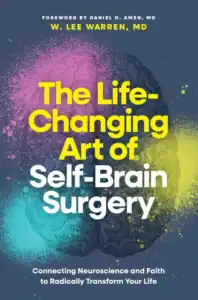
John: It is. And he’s captured some of his insights in a terrific book called The Life-Changing Art of Self-Brain Surgery. Love the title, and we’ll encourage you to get a copy of that today.
Jim: Dr. Warren, it’s great to have you back. It’s been some time, 2021, I think, when we had you here last time.
Dr. Warren: Yes.
Jim: So thank you.
Dr. Warren: Thank you. It’s great to be back with you guys. Thank you so much.
Jim: You know, uh, let’s kick it off right there. Let’s knock this down. So many of us in the Christian community, we struggle a bit with that bridge into science. Uh, to me, it’s exciting because I think more and more right now, science is proving creation, that there is a Creator.
Let me give you one that I found in some of the research and have you respond. The telomeres, and these are the caps of your, uh, DNA, right? And the longer your telomeres, the more likely you’ll have a longer life. You will live a longer life. And they’re looking at that score saying, “What predicts a longer telomere in your genetic makeup is less stress in your life as a child.”
So if you have an absent father and they connected those dots saying, “If your dad is loving in the home, present with you, your telomeres are gonna be longer and you should have a longer life.” This is like right out of scripture.
Dr. Warren: It’s right out of scripture.
Jim: What do you say about that kind of observation that we’re learning now?
Dr. Warren: Well, I think that the thing I’ve tried to sum up and I’ve been looking at for many years is that every time scripture writes a prescription for human flourishing, science eventually comes along and says, “Guess what we figured out?”
Jim: (laughs)
Dr. Warren: And it always lines up. That’s exactly what we see with DNA, you know, stress when you’re younger shortens your lifespan.
Jim: Yeah, it’s so fascinating to me. You know, even in your research, in the book, you mentioned this idea of genetics having a role and brain science having a role in generational difficulty. And you think again of scripture where it says, The sins of the Father will rest upon, you know, the third and fourth generation, something like that. When you read that scripture as a neurosurgeon, knowing the research that you have, how do you translate that?
Dr. Warren: Well, we always kind of talk about that like it’s a threat. Like, right? “God’s gonna do something bad to your kids if you don’t live a certain way.” But what we’ve sort of figured out through the science of epigenetics is it’s really just a warning. Like the things that you do in your life, the things you think about, the way you live your life affects the genetic makeup of your kids when they start.
And that’s the bad news, so to speak, that your kids can be born with some burdens that, that they didn’t want- didn’t need to have. But the good news is we know now that you can reverse all those things. If you figure out how to manage things well in your life, all those genetic starting points can be switched off and you can develop a more healthier and longer life if you get it right in your generation, and that can be passed on to your kids.
Jim: And we’re gonna talk about how you can begin to do that. And I know some people are going, “Oh, wait a minute. This lack of leaning on God.” You’re not saying that at all. This is-
Dr. Warren: Not at all.
Jim: … to lean on God, the Designer, to better understand His blueprint for how life lives.
You know, when we become Christians, and there’s people listening and watching who are not believers, we know that through our research and we’re grateful that you’re listening. And we, with all our heart, want you to come into a relationship with Christ.
Dr. Warren: Yeah.
Jim: But in that context, as a scientist, as a neurosurgeon, when we read those scriptures, it really is, uh, kind of a blueprint for how God intends for us to live a good life in Him, right?
Dr. Warren: That’s right.
Jim: Describe that.
Dr. Warren: So Jesus said in John 10:10, He gave us this dichotomy, “The thief comes to steal and kill and destroy. I came that you might have life and have it abundantly.” And so, that’s this idea that we’re supposed to have a, a life of fulfillment while we’re here, not our circumstances, but the way we feel, the way we manage things.
And so, what we’re learning through science is if you, if you think about the right things in the right way, your brain makes structural changes to improve your physiology, and your life gets better regardless of your external circumstances.
So scripture and science, again, lining up. So the idea that if you come to a relationship with your Creator, you start to see His plan and His design for your life, that turns out to be what science is showing us all along.
Jim: You know, when we get into it now, when you look at brain science, uh, for so long, we’ve been told these things are fixed. In other words, if you have behavioral issues, these are things that are immutable and can’t be fixed. But again, brain science is saying, “Ah, not so fast.”
Um, in that context, what has modern brain science revealed and completely challenged in that area?
Dr. Warren: Yeah, it’s been amazing since the 1950s when they gave us the structure of DNA, the whole prevailing doctrine of science in general, and that leads to psychology and therapy in general, uh, the opinion of everybody in society is that the brain that we have creates the life that we have. The genetics, your upbringing, things that can affect your brain, all determine what kind of capabilities and possibility you have for your life. So everybody thinks that if you get the wrong brain, you get the wrong life.
And then 21st century neuroscience comes along with functional imaging and shows us that your brain is structurally changing itself every second of every day of your entire life. It’s never been the same brain two days in a row. And the primary driver of those structural changes turns out to be the things that you most frequently think about and the perspective from which you think about them.
And that’s why all of a sudden you start reading scripture like Romans 12 about renewing your mind. And you start seeing that the Bible had it right all along again, that what you think about turns your brain into what it is. It’s never been that your brain determines who you are. It’s what you think about determines what your brain becomes.
Jim: You know, those that would preach like this message of positive talk, I mean, it, someone like Tony Robbins, I don’t know him, he’s probably a great guy. But in other words, you can just positively talk yourself into a greater place, greater wealth, greater social skills, whatever it might be, more friends, et cetera.
I would think those people are tapping into a bit of this, but describe the difference, what you’re talking about spiritually and physiologically, the difference.
Dr. Warren: Right. So I wanna make a very clear distinction between this whole, um, doctrine of sort of manifesting a better life and all of that. And what we’re talking about from scripture and science, uh, properly applied, is that there is some truth to the fact that the way you think about things affects the things that happen to you. And there’s all kinds of science around how our brains affect other people, even non-verbally.
So there are mirror neurons and electromagnetic field that we put off and all of that. And you can increase your chances of having better circumstances by changing how you think because it makes your brain and your body and your emotions line up with other people’s in a different way. So there’s, there’s some truth to that.
The real truth underlying all that though, is that the way God made our brains is we have a system called the reticular activating system that actually filters what we see and perceive in the environment around us-
Jim: And say that again, what it is.
Dr. Warren: The reticular activating system, the system of neurons in your brainstem that when you tell your brain that you are gonna look out for something like, “I’m gonna have a lousy day” for example, your brain begins to filter to show you things in the environment, to reinforce what you’ve told it to be looking out for.
This is why scripture’s always telling us to rejoice in all of our circumstances, to keep a positive attitude, to look for things to be thankful for because if you’re looking for things to not be thankful for, you’re gonna find a lot of them because your brain will literally try to show you the environment that you’re looking for.
And so, it’s not magic, it’s the way God made our minds to help us see the world that He’s put out there. There’s always possibility around us and there’s always trouble. He says, “Look for the positive because that’s gonna help you make your brain function as best it can.”
Jim: Yeah. I know you’re a neurosurgeon, a psychologist or psychiatrist. Uh, what they’re dealing with, with high levels of anxiety and depression in the culture right now, uh, how does a person that wakes up already predisposed to kind of thinking fearfully of everything around them?
Dr. Warren: Right.
Jim: Structurally, how do they begin to rethink that when that’s your pattern?
Dr. Warren: So the first thing is to realize that the research shows that a large percentage of the automatic things that we think and feel, so these thoughts that pop into our heads or these moods kind of come upon us, a large percentage of those are not based on anything that’s real. They’re just based on your brain trying to make sense out of the environment or out of your past experience.
And so, if you’re used to feeling a certain way all the time, your brain will sort of wake you up feeling that way. But as soon as you learn that you can start to ponder things from a different perspective, and your brain will begin to reinforce what you’re telling it to focus on, your mood will follow that.
The psychology is very clear now. The people who learn to think more positively, again, not false positivity, but to think more realistically that, “I have some control and some agency in what I feel and what my life turns out to be if I choose to renew my mind like the Bible says.”
So I would say if you’re struggling with mood or affect, like understand that you’re not the victim of that. You don’t have to respond to what your brain and your emotions are telling you. You can literally use your mind to control your brain from the top down and decide rather how you want to feel and begin to make that more real.
Jim: Now in that context, that sounds a bit like rerouting your neural pathways, which is something science is working with people that struggle with anxiety or depression.
Dr. Warren: Yeah.
Jim: Describe what that means, “rerouting neural pathway.” That’s what you’re saying-
Dr. Warren: Yeah.
Jim: But for the layman, what is that really doing?
Dr. Warren: Really important to understand. It sounds like sort of a self-help kind of gimmicky way of thinking about things. It sounds like a metaphor. It’s actually real. It’s that your brain works by connecting neurons to other neurons and then groups of neurons to other groups of neurons. Those are called synapses, these little connections. They’re physical wires, like these wires on these microphones that connect different parts of your brain.
And the science shows now that when you think about one thing and not another thing, you literally degrade the old pathway that was there and lay down the pipes, the wiring for a new connection between neurons that wasn’t there before. So you literally are structurally rewiring your brain in a real physical way that can be measured. So changing how you think, that’s what Philippians 4 is all about, by the way.
Like if you wanna be less anxious, be grateful, think about different things and you, and you be guarded by peace. That literally makes structural changes in your brain. And we know now within seconds to minutes of changing the things you ponder, you’re making new pathways through your brain. So it’s not metaphor, it’s mechanism of how we can create this life that Jesus said He came here to give us.
Jim: You know, I need to ask this question because someone who struggles with anxiety or any, you know, uh, difficulty in their emotional structure, “It can sound so easy, but it hasn’t worked for me. It doesn’t. I mean, I wake up every day fearful, and I live in that place.”
So I just wanna … How would you speak to a patient, in other words, that struggles with that? Uh, and, you know, there is help. There are ways. There’s clinics that people can certainly go to-
Dr. Warren: That’s right.
Jim: … that help them in this regard. But I’m just, I’m mindful of that person that is suffering and feels like this is too thin.
Dr. Warren: Well, let me just, first of all, say, uh, I’m here primarily today, not as an expert, not as a neurosurgeon, not as a, uh, somebody pontificating about this, but as a bereaved father who lost a son, as a PTSD victim from the Iraq War. I’ve been in this place, and the reason I’m doing this research-
Jim: Uh-huh.
Dr. Warren: … and writing this because I resonate with that person that’s feeling that.
Jim: Yeah.
Dr. Warren: And so, it’s not a character flaw to feel bad or to have, uh, emotions that are, that are pushing you around. But the thing you need to understand is the reason you feel that so strongly every day is because your brain has automated that as a pathway.
And the good news is, as soon as you start to pursue a different pathway, your brain will begin to automate that and try to make that new neural environment and neurochemical environment real and more powerful for you.
So this can be managed and can be overcome no matter where you start. If you need professional help, those folks know how to help you get to that new place. God’s given you the mechanism. It’s already inside you. And I think the prevailing thing we need to know is we’re designed for this kind of healing.
Jim: Mm-hmm.
Dr. Warren: We’re not designed to stay broken.
Jim: Dr. Warren, with Mitch, I mean, they will say, they being psychologists, et cetera, that the most difficult experience in life is a parent losing their son or daughter. You mentioned Mitch. What happened? What were the circumstances around that?
Dr. Warren: We don’t really know. Uh, Jim, he and his best friend, uh, were stabbed to death in the same house on the same night. Um, they never solved the crime. They came up with theories, but never gave us any more information other than-
Jim: Oh my goodness.
Dr. Warren: … than that. And so, not only did we lose a child, but we didn’t know what happened. And we never-
Jim: Mm-hmm.
Dr. Warren: … were able to-
Jim: How old was he?
Dr. Warren: He was 19.
Jim: Oh my goodness.
Dr. Warren: And so, you’re right. That remains the most difficult season that we’ve ever been through and then wrapped in all that mystery, it made it harder to process.
Jim: You know, given you’ve experienced something that heart-wrenching, I mean, how did you and your wife just begin to climb out of that place?
Dr. Warren: So it actually turns out that it was kind of brain science and faith working together that helped us navigate that. We were, at the time, working at an Auburn University campus, and the building we worked in was doing this brain imaging, 21st century brain imaging, and we had a chance to watch some of that research one day.
And we went down to the scanner, and they had a woman in the scanner watching- We were watching her brain be scanned. And functional imaging allows you to see what the brain is doing, not just what it looks like. And they spoke into the woman’s ear and they said, “Mrs. Johnson, think about the worst thing you’ve ever felt-”
Jim: Mm-hmm.
Dr. Warren: “… in your whole life.” And we thought, “We know what that is for us.” And we watched the screen change as she thought about the worst moment of her life. We watched the neurotransmitters in her brain change, and the fear center of her brain light up. And then shortly after that, we saw her physiology changes. Her blood pressure went up and her-
Jim: Mm-hmm.
Dr. Warren: … heart rate spiked and all of that. So we watched her thinking turn into brain activity that turned into body activity.
And then they said, “Okay, stop thinking about that and now think about the best day of your life.” And shortly after she changed what she thought about, her frontal lobes came online, her amygdala fear center calmed down, and her blood pressure came down, her heart rate came down.
Jim: Mm-hmm.
Dr. Warren: We saw it in real time, thinking, changing brain, changing body. And Lisa, my wife said that reminded her of Philippians 4 where it says, “If you wanna be less anxious, be grateful.” Like think about something better.
Jim: Yeah.
Dr. Warren: All those different thought transplants you could do. And just as clear as I’m talking to you now, I heard this message from the Lord, like that when I do brain surgery, I’m intentionally making a structural change in somebody’s brain to try to help them.
And when you change what you think about, you’re changing what your brain is structurally for the purpose of helping you, and that’s exactly the same kind of thing as I do with surgery.
So this idea of self-brain surgery is you can change what your life looks like by changing how you think about things. And I realized in that moment, “I can’t change having lost my son. So if I wanna feel better, I’ve gotta change how I think about losing my son.”
Jim: Mm-hmm.
Dr. Warren: “So can I make it legacy? Can I think of some way to make his loss a gain for us, for- not for us personally, but to help other people through it?”
Jim: Mm-hmm.
Dr. Warren: “Can I turn it into some purpose? And so then my life became about like, how do I use this to help somebody find the footing that I was trying so desperately to find? How can I find scripture that reinforces this idea that my brain can change if I change my thinking?”
And that’s really when it began to heal for me, Jim.
Jim: I mean, Dr. Warren, that’s a beautiful example of how to heal.
John: Mm-hmm. This is Focus on the Family with Jim Daly. And today we’re talking with Dr. Lee Warren about his book, The Life-Changing Art of Self-Brain Surgery: Connecting Neuroscience and Faith to Radically Transform Your Life. Get a copy of the book from us here at the ministry, uh, when you stop by focusonthefamily.com/broadcast.
Jim: Dr. Warren, you describe a fascinating experiment with mice and cherry blossoms.
Dr. Warren: Yeah.
Jim: Uh, my son who’s doing his master’s in biochemistry knew about this, uh, research and was really interested in it as well. But describe its outcomes and what caught your attention.
Dr. Warren: Right. This is this theme of epigenetics. The research of epigenetics came out of this type of work. Um, they looked at mice and they, uh, exposed them to a powerful smell. They used cherry blossoms. Apparently, mice like cherry blossoms. And when they could see that the mice, their male mice, were reacting to the smell, they would shock them. So they basically taught these mice to be afraid of the smell of cherry blossoms.
And then they studied their DNA, and what they found is that they made powerful switches in the expression of their fear molecules or stress hormones in the sperm cells of these male mice in response to that threat. And that that could be inherited.
So basically down to four generations, they figured out that shocking the great-grandparent would produce babies born down to four generations with abnormal stress responses, elevated cortisol levels. So these mice were born afraid of the smell of cherry blossoms, even though they had never experienced adversity in response to that threat.
And so, that says, again, things that happen in your life can affect your generations.
That’s been replicated in humans, by the way, in Holocaust survivors. They found that down to four generations, the children or great-grandchildren of Holocaust survivors can be born with abnormally high cortisol and abnormal stress responses. And so, that tells us that things that happened before we were ever born affect how we feel inside.
The good news is in mice and in humans, that’s been shown that you can reverse those changes in one generation.
So if you are born, for example, stressed by things you didn’t experience, and you do the work to learn how to manage that in your lifetime, your children will be born with a more normal stress response than you were. So that means you can fix it.
That’s why God says, “Down to a thousand generations, will get it right, will make it better.” So there’s great hope in learning how to get this right in your lifetime.
John: Yeah. I’m really intrigued, Dr. Warren, by doing the work. Um, and I’m thinking of those of us in the adoptive community or foster care space. Children who’ve gone through deep trauma-
Dr. Warren: Yeah.
John: … and difficulties that they can’t control. These things happen to them. What does doing the work mean for us as parents or caregivers or family members when we have somebody in our life who’s been really traumatized?
Dr. Warren: I think the first thing is to really buy into the truth that your system was designed by your loving Creator to give you an opportunity for your life to feel better than it has felt in the past.
So things that weren’t your fault, things that you went through, things that you experienced, things you inherited don’t have to be the future for you. And so, we’ve learned from the trauma research, for example, that it’s never really been about the trauma that we went through that creates the life that we have. It’s the responses-
John: Mm-hmm.
Dr. Warren: … that we’ve adopted to those traumas. And as soon as you learn that, it becomes good news. Like if it was true that the loss of my son would create the future of despair for me, if it was the loss of Mitch, then I wouldn’t have much agency or hope that I could change that because he’s gone, right?
If you went through something as a child, that thing really happened. And if it was that thing that created your future, then you wouldn’t have a lot of hope. But it turns out, when you understand that you adopted a set of responses that were maladaptive or were not helpful to you, that you believe some things to be true about yourself, that you accepted some labels, that you believe some lies maybe from your enemy even, that the future had to look like the past.
If you believe that, that’s actually what’s been creating the reality that you have. And as soon as you learn that your brain will structurally change when you decide to change how you look at the things you’ve been through, when you decide to change your perspective and look at them in a different way, then you can start creating a brain that will support who you want to be in the future and not who you have been in the past. That’s where the hope lies.
Jim: There, you know, and so many scriptures are jumping into my head that reinforce this very attitude, whether it’s “Fear not.” You know, back to that point in the discussion a little while ago.
Dr. Warren: Yeah.
Jim: The Lord is saying, “Don’t fear. Don’t set up your neural pathways to be fearful.”
Dr. Warren: That’s right.
Jim: “And read my Word so that it gives you hope.” And, uh, man, is it that basic? That’s amazing.
Dr. Warren: It really is that basic. We’re designed to heal and get better.
Jim: Yeah, that is something. Let me, uh, as we’re drawing to a close here, um, let me ask this question on the parenting side. We will joke from time to time again, these are things that us parents say to our kids, “Hey, we probably messed you up, so we’re gonna set aside some money (laughs) for you to get counseling at the right time.”
Dr. Warren: (laughs)
Jim: I mean, we say that in jest, but it sounds like this may be very true. You know, in other words, we’ve participated as parents to either help or not help our children overcome these things.
Dr. Warren: Mm-hmm.
Jim: Let me, let me give you a specific example, like controlling parents, the helicopter parent. It’s tough to build resiliency into your children if you’re saving them from every moment, right?
Dr. Warren: That’s right.
Jim: Speak to the importance as a parent of understanding brain science so you can appropriately, spiritually, in tune with God’s design, uh, raise up your children in the way they should go.
Dr. Warren: That’s right. Yeah. I wrote a whole chapter in the book about pediatric self-brain surgery, because it’s so important to understand that you’re stewarding these little minds who are creating brains that are gonna hopefully support them in a good way for the rest of their life. And it’s incredibly important to understand, just like you said, the best example is resilience.
We all had this idea that if we protect our kids from all kinds of hardship, that they’ll have a better life. But the research doesn’t back that up at all. We’re seeing now kids that can’t launch, they’re taking their parents to job interviews with them. They’re not getting driver’s licenses when they turn 16, because they don’t know that they can survive adversity because we never let them survive adversity when they were little.
The Bible says in Romans 5, “Suffering produces endurance and endurance produces character and character produces hope.” Like we’re supposed to get to hope through the process of surviving some adversity.
And now we know from brain science in the 21st century that the part of your brain that creates resilience and willpower and the ability to shift through hard things gets stronger only when you go through hard things.
And so, that means you need to let your kids experience some hardship when they’re little and they can survive it. Like it’s not the end of the world if they have to sit by a kid that they don’t like, or if they fall off the playground equipment and hurt themselves a little bit.
It’s the end of the world if they grow up to become adults who don’t know that they’re wired to get stronger when they go through something hard.
So the Bible’s been saying it all along. Parents have a responsibility to let our kids grow up in a safe way, understand that God has a plan for them, even though it’s gonna be some hardship, that they’re gonna get stronger. They’re designed to get stronger by going through that hardship, not by avoiding it.
Jim: Yeah. Dr. Warren, this has been so fascinating. I love this stuff, partly because my son is always talking with me and Jean about what he’s learning. So that’s opened my mind up to some of the things that you’re expressing.
And, you know, it’s just far better for us as Christians to understand these things, not to be fearful of them, but my goodness, if we could talk to the Creator and understand His architectural drawings-
Dr. Warren: Yeah.
Jim: Why wouldn’t we wanna do that? And then when it gets to these great scriptures, I am of the opinion that nothing is lost in scripture. That the words that God has given us are very purposeful. And I think, and I hope people today can hear that when the Lord says, “Fear not.” And to trust Him.
Dr. Warren: That’s right.
Jim: That it has this connection into neuroscience. Oh my goodness. But who better than the Creator to give us those words to think about-
Dr. Warren: That’s right.
Jim: … so that we can live a life that is more abundant in Christ-
Dr. Warren: That’s right.
Jim: Finishing the John 10:10 scripture that you gave us. So thank you for being with us. This is so good.
Dr. Warren: Thank you, Jim. Thank you, John.
Jim: And I wanna say to the listeners, why not? You need to get a copy of this book. And, uh, The Life-Changing Art of Self-Brain Surgery written by Dr. Warren, a Christian neurosurgeon. I think you’ll find amazing answers in here about things that you’ve probably thought about but haven’t thought about in this way.
John: Yeah, contact us today. Make a generous donation as you can, either a monthly pledge or a one-time gift, and we’ll send this book to you as our way of saying thank you for being a part of the support team. Our number is 800, the letter A, and the word FAMILY, or stop by focusonthefamily.com/broadcast.
Thanks for listening to Focus on the Family with Jim Daly. I’m John Fuller, inviting you back as we once again help you and your family thrive in Christ.
*******
Part 2:
Preview:
Dr. W. Lee Warren: That’s why all of a sudden you start reading scripture, like Romans 12, about renewing your mind. And you start seeing that the Bible had it right all along again, that what you think about turns your brain into what it is. It’s never been that your brain determines who you are, it’s what you think about determines what your brain becomes.
End of Preview
John Fuller: That’s neurosurgeon Dr. Lee Warren, talking about the brain and how faith and brain science have come together. I’m looking forward to a great conversation today on Focus on the Family with Jim Daly. Thanks for joining us. I’m John Fuller.
Jim Daly: John, this topic of brain science, it fascinates me, uh, how we think, how our minds work and impact everything we do in life, all within a Christian context. We don’t need to shrink back from the science of it all, because as, uh, Dr. Warren’s going to explain, boy, science and scripture are coming together, especially in neuro research.
And as we touched on last time, this is not some kind of new age discussion about positive thinking. As you’ll learn, we really do have some agency and control over how we process things. And how with God’s help as the Designer, we can overcome dysfunction and trauma and choose a healthier path in life. Uh, there’s a lot we can take away from this discussion and apply to our lives, eh, to our marriages and to our parenting.
John: Dr. Lee Warren is a neurosurgeon and bestselling author. His book is called The Life-Changing Art of Self-Brain Surgery. Such an interesting title. Uh, be sure and get the book from us here at Focus on the Family. That helps us continue on in so many ways with this family ministry. Let’s go ahead now and listen to the second half of the conversation with Dr. Warren on Focus on the Family with Jim Daly.
Jim: Dr. Warren, as a neurosurgeon and a believer in Jesus, um, when you look at the anatomy of the brain and this idea in scripture that we’re body, soul, and spirit-
Dr. Warren: Yeah.
Jim: … as both a Christian and a scientist, what does that mean to you? What is our mind? What is our soul? What are those things for you?
Dr. Warren: So, the Bible uses three terms: mind, heart, and soul. And it conflates the terms. They really all mean the same thing. It’s the part of you that is not going to die when your body dies. So, even though society tells us that our brains are us, that everything… In fact, traditional neuroscience says, everything about you is because of brain activity. But 21st century neuroscience is starting to hint at there’s a difference between mind and brain, which is what the Bible always said all along.
So, every Christian that’s listening to our voices today already believes that there’s a part of them that’s gonna live forever, that’s not buried when your brain is gone, right? And so, mind is the part of you that’s eternal, that was made in God’s image. It’s not your body that was made in God’s image. It’s your mind, your spirit, your soul.
And so, mind has controlling influence over what brain becomes. Brain is the hardware through which we project our mental life that God has given us into the world and interact with other humans. So, mind and brain are not the same thing.
What we know now is that we have tremendous control over what our brains do, based on what we think about and what we ponder, how we, how we spend our mental energy. That’s exactly what Ephesians 4 in the Bible’s about. All the trouble the Gentiles have is because of the futility of their thinking, Paul says in Ephesians 4:17. And in 4:23, he says, “But not you. You’re made new in the attitude of your minds.” Your mind is different than your brain.
Jim: Wow, that is fascinating.
Dr. Warren: Mm-hmm.
Jim: Dr. Warren, one of the distinctions many writers, authors have talked about, uh, philosophers, is this distinction between the rest of the created world and us being made in the image of God.
Dr. Warren: Right.
Jim: And I, I think specifically they’ll point to things like music, art, the emotions of the soul, um, love, and greed, and hate, and all those things that we uniquely seem to experience being made in His image. And then, of course, the stain of sin in humanity from the-
Dr. Warren: Yeah.
Jim: … fall of Adam and Eve. How do you process that as a neurosurgeon, and this idea between good and evil and the battle that we have and what our makeup is?
Dr. Warren: We have an easy ability to forget that we’re always in a spiritual war, right? That there’s a spiritual component to what’s going on around us.
And so, you have a mind that’s immaterial, that’s made in God’s image, that is meant to communicate with Him and live with Him forever. And that’s in a body, embodied in a brain that allows that to project into this, to the world. And animals have brains and only humans have minds.
So, the difference between us and the rest of the created order is that we have this immaterial, eternal part that allows… God gave us this gift of selective attention. We, among all the things He created, have the ability to decide to think about one thing and not another, to choose to put our intention and our will and our focus on something and not something else. We don’t have animal instincts. We have the ability to choose.
And then we’re in this spiritual battle where the enemy of our soul wants us to make us believe that we’re just the brains in our head. That we’re obligated to behave certain ways. That we’re required to respond in certain ways. That we’re required to follow our heart or follow our instinct or behave like everybody else does.
And the truth is, if you can understand that there’s an enemy that’s trying to do the steal and kill and destroy part, and your Creator came here to give you the abundant part. And abundance is not about circumstances. It’s about the peace of mind that comes and knowing that you always have a choice in what you get to decide to think about, how you feel inside, and how you interact with other people and with your Creator.
That’s why awe and wonder and music and art and all those things are different for us than they are for the rest of the created order because God allows us to ponder things and decide to choose to think about things. And that changes what our bodies and our lives become.
Jim: The Apostle Paul choosing to sing in jail-
Dr. Warren: Yeah.
Jim: … that’s an interesting thing because you would think a Roman jail at that time was probably pretty bleak-
Dr. Warren: Yeah.
Jim: … dirty, you know, horrifically dirty. And yet, like Paul says, you know, in all your circumstances, you know, rejoice.
Dr. Warren: Yeah.
Jim: And you think of that in modern times, like, “Really, Paul?” And we get upset if we don’t have air conditioning. (laughs)
Dr. Warren: That’s right.
Jim: But in his context, he was trying to say something to us that really is in line with what you’re saying, about being content in all your circumstances. Not letting your circumstances overcome your emotional wellbeing.
Dr. Warren: That’s right.
Jim: Speak to that context of what you’re saying and what Paul’s trying to communicate to us.
Dr. Warren: Well, it turns out he was hinting at something that we know now from neuroscience, that when you can choose joy, when you can decide… again, selective attention, decide to think about one thing or from a different perspective, then you feel obligated by your circumstances to feel. It’s not hopeless positivity. It’s not crazy.
It’s this decision to operate your mind and your brain in a way that’s separate from your circumstances. And what we know from neuroscience now is for… If you look at anxiety, for example, the neurological switch in your brain that allows anxiety to happen, and this fight or flight reflex happen starts in your hippocampus. And the hippocampus is a one-way switch either between anxiety and fear or between gratitude and joy. Like, you can’t be anxious and grateful at the same time.
That’s why Paul went in Philippians 4 and said, “Don’t be anxious for anything, but in everything, with gratitude and thanksgiving, present your request and the peace of God will guard your heart.” We know now that that happens in your hippocampus, and it’s either or. You can’t be anxious and be grateful at the same time.
So, the secret out of anxiety is to make yourself think of something for which you’re grateful. To choose joy, to rejoice instead. That’s what Paul was saying in the Roman prison. Like, in all your circumstances, rejoice because that’s gonna guard your heart and your mind. You don’t have to suffer. There’s an old saying about the difference between suffering and adversity. Like adversity is mandatory. Suffering is a choice.
Jim: Huh.
Dr. Warren: You don’t have to suffer. You can choose a different train of thought.
Jim: You use the example of receiving a letter from the IRS that gives a-
Dr. Warren: (laughs) Yeah.
Jim: … Pavlovian kind of response (laughs). I would say it’s been a while since I’ve had that letter, and I hope nobody’s planning that letter for me.
Dr. Warren: (laughs)
Jim: But speak to that moment when you get that letter that says, “We need to audit you.”
Dr. Warren: Yeah. So, the point of this story is just that we’ve been taught, especially in this generation right now in the culture, we’re supposed to honor our feelings, and believe our heart, and follow our truth and all these things that we’re being taught. And I make the point that research actually suggests that a lot of the things that we feel don’t reflect anything that’s really happening. And the chemicals that create how you feel inside, the anxiety, fear, anticipation, whatever, there’s a small set of neurotransmitters that create all of those things that we can feel.
And so, I use the example of the letter to say that not everything you feel is a fact. It’s a chemical event in your brain.
So, if you imagine going to the mailbox and you open it up and pull that letter out that says IRS on it, all of us have some sort of a physiological response to that.
Jim: If you’re human.
Dr. Warren: If you’re human.
Jim: (laughs)
Dr. Warren: You see that letter and a few things happen to your body. Your- the hair on the back of your neck stands up and your heart rate quickens and your, and your breath gets faster and you feel something physiologically.
Now, I would ask you, is that fear because you’re afraid that the letter contains notification that you’re getting an audit or you have a big fine to pay, or you did something wrong and they’re gonna put you in jail or something, right? Is it fear that you’re feeling? Or have you been anticipating the refund that you need to make a house payment and you’re excited?
But just think for a second about fear and excitement. What do you feel in your body? Your hair stands up, your heart rate quickens, your breath quickens all the… your mouth gets dry, all that stuff.
So, that it’s never been really the thing that has created what you’re feeling. It’s the story that you’re telling yourself about what the feeling means, right? The same set of chemicals are doing the same thing to your body. Now I… In the book, I said this, go look at the envelope again. And now you realize it was addressed to your neighbor. It wasn’t even your letter-
Jim: Yeah.
Dr. Warren: … right? So, it was never true that there was danger or excitement available to you, because it wasn’t for you. And so, until you open the letter and find out what’s in it, the physiological response that you’re having isn’t true. It’s about the story that you’re telling in your head.
And so, if we can all learn that feelings aren’t facts, then we can stop reacting to them automatically as if they are facts. And we can start gathering… being curious about them, gathering some data before we decide how to respond. How much better would our lives be-
Jim: Yeah.
Dr. Warren: … if we just lived in that curiosity, rather than believing everything we feel?
Jim: Well, again, know the truth and the truth-
Dr. Warren: Will set you free.
Jim: … will set you free.
Dr. Warren: That’s right.
Jim: I mean, it is so… It’s almost plainly in sight, but we haven’t seen it this clearly, right?
Dr. Warren: That’s right.
Jim: Like, science is revealing God’s truth.
Dr. Warren: That’s right.
Jim: Which is so exciting, actually, in this moment where science and those that don’t believe in God are trying to trump it that somehow science is the god.
Dr. Warren: That’s right.
Jim: And, uh, it’s woefully inadequate, isn’t it?
Dr. Warren: That’s right. As you said earlier, you were alluding to, uh, Newton, and Copernicus, and Galileo, and Kepler, and all those early scientists. They created Western science and the scientific method for the purpose of helping people to learn a method of investigating what God has done and give Him glory and be in awe of it.
We know now how good awe is for our brain. We’re supposed to be wondering and amazed at the things God did, right?
Jim: Wow.
Dr. Warren: And they actually put on the door of the lab at Cambridge University, where they later discovered DNA… Maxwell, when he was working out magnetism, inscribed on the archway of that door, the verse Psalm 111 that says, “Great are the works of the Lord. They are to be delightful to those who ponder them.”
Jim: Mm.
Dr. Warren: So, like, science was created to expose faith and manifest faith.
Jim: Mm.
John: This is Focus on the Family with Jim Daly. And today, we’re talking with Dr. Lee Warren about his book, The Life-Changing Art of Self-Brain Surgery: Connecting Neuroscience and Faith to Radically Transform Your Life. Get a copy of the book from us here at the ministry, uh, when you stop by focusonthefamily.com/broadcast.
Jim: When you look at, um, neuroplasticity, which is-
Dr. Warren: Yeah.
Jim: … another element that you’re talking about and the need for that. When we’re young, our brains are soft and spongy, I guess. You can give me the medical definition. As we get older, it tends to become harder, literally. Our brains lose a bit of that plasticity. What does plasticity provide us as human beings made in the image of God?
Dr. Warren: Well, so actually there’s newer research that suggests it’s not actually that cut and dry. So, we don’t actually ever get too old for this to work in our favor. The reason it feels that way is because…
So, neuroplasticity is the, is this process we’ve been describing of how brains disconnect old pathways and make new ones. That’s the whole punchline, is that the brain is not stuck. It’s not rigid. It’s not hard. It’s plastic. It’s moldable. It’s malleable. And that process by which it changes is called neuroplasticity.
It’s easier when you’re a child because you don’t have these decades of wires that have been put down and reinforced. The process works by reinforcing things over and over to automate them so you don’t have to think about them as much. That frees up mental resources so your brain can do automated things and your mind can do things you wanna think about actively.
As we get older, we have to make decisions to change that wiring, and it’s more difficult to overcome those years of automation. So, as we get older, we have to sort of do it more diligently. When you’re a child, it’s just happening at a pace that’s phenomenal. When you get older, that old automated pathway seems more insurmountable, but it’s not. We can learn to overcome it.
Jim: We even talk in those idioms, I guess, or sayings like children are like sponges.
Dr. Warren: Right.
Jim: They’re soaking up information and data and details. It just seems like that, again, is how God created a young child, right? Just to absorb all this information.
Dr. Warren: Yeah.
Jim: Other things that we might say are like, you know, that person doesn’t fall far from the tree-
Dr. Warren: Mm-hmm. Yeah.
Jim: … you know, behaviorally, like, yeah-
Dr. Warren: Yeah.
Jim: … well, his dad was an alcoholic or had some family issue. And then, uh, you know, one of the kids, two of the kids end up in that same spot. Speak to that linkage between, uh, you know, that saying, where people say, “You know, well, you know the Daly family.”
Dr. Warren: Mm-hmm.
Jim: You know what I’m saying?
Dr. Warren: Right. Absolutely. It goes back to that epigenetic thing we talked about earlier, that we know now that the way you think about things is what drives these structural changes in your brain. The genetic set point of where you start comes from these epigenetics, which is that happened even up before generations before we’re born.
The problem is, as we’re growing up, we don’t know yet that we have this type of control over what our brains become. And we have been taught by our society that our brains are fixed and formed by our genetics and our upbringing.
So, you grow up in this environment, and before you ever think about it, you’ve automated those pathways for many years. And the society tells you, “Well, you’re gonna be like your family is because you inherited their genetics and you grew up in their worldview.”
And so, by the time we’re old enough to hear somebody say this on the radio, that you have some choice and some agency in this, a lot of those pathways have been automated for decades.
And so, again, as you’re growing up, you don’t know that you’re absorbing worldview. And it’s more about the environment in which you’re raised than it is the fixed nature of the brain because the brain’s not actually ever been fixed.
And so, when you hear that, when somebody listening to our voices today hears, “Wait, I can change these things. I don’t have to be like my dad. I don’t have to be an alcoholic or an abuser just because he was?” That’s a setting free moment. That’s a moment of declaration, of saying, “I can change the future for myself and my family as soon as I learn to think about my life in a different way.”
Jim: But it takes making choices.
Dr. Warren: It takes choices.
Jim: E- Dr. Warren, uh, we develop these patterns that you’re talking about. Uh, many counselors were- they’ll talk about, you know, family of origin issues if-
Dr. Warren: Yeah.
Jim: … you lived under great stress or lived with dysfunctional parents that had addictions or something like that. There is a way that we, um, as children begin to overcome those environments with resiliency, sometimes unhealthy ways of avoidance and things like that. But in marriage, as we grow up and we enter into marriage, we bring some of those features of how to interact with our spouse into the marriage. And that’s where marital conflict can occur, you know-
Dr. Warren: Yeah.
Jim: … and focus on the family. We’re here for you if you’re in that spot. And it might sound something like this, you know, “Every time she says that to me, it triggers this in me.”
Dr. Warren: Yeah.
Jim: Following that is really critical, rather than just moving on to the next disagreement or fight you might get into with your spouse. Understanding why, “Why when she accuses me of something do I react the way I react? And then why is she so quick to accuse me,” is a whole ‘nother thing to look at.
But in this context of neuroscience, how do we understand how that applies to our marriages, to have a healthy, wonderful oneness that God really did create us for as a married husband and wife?
Dr. Warren: Yeah. That’s really, a really good thing to think about because all of us, sort of, think that other people’s behavior has an inherent ability to make us behave certain ways. But the truth is, you use the word trigger, it requires somebody to pull the trigger. Like an external event can’t make me pull a trigger.
So, if you understand that the way you feel inside is built on your whole life and all the things that happened before you got into that marriage, and that the way your spouse behaves is built on their whole life, then you start looking at, “I get to determine my response. And I don’t need to let an automated feeling that I have built a story around determine what becomes true in my world or in my marriage or in my home.”
So, once you understand that you actually have agency, that nobody else can actually make you feel or behave in a certain way, you can- They can trigger a physiological response based on your past, but they can’t actually pull the trigger on what you do or what you become.
And so, then that begins to put us in this driver’s seat over, “I have a mind that God has created and it allows me to renew day by day with the Holy Spirit that’s in charge of my brain.” Once you understand that your mind actually turns your brain into what it is, and that’s what your body becomes, then you start saying, “Wait, I can think ahead of situations where I know I tend to have a stressful moment with my spouse. And I can decide in advance what type of response I’m gonna choose, instead of letting that triggering feeling make me believe I am obligated to behave in a certain way.”
And then what’ll happen is, again, through these mirror neurons and all these other ways that we affect other people, your spouse will begin to change in response to how you’re behaving differently now, too.
Jim: Yeah.
Dr. Warren: And so, the path forward is to reject the pattern of the past and to decide we have control and agency over what the future can become. So, that little bit of gap between stimulus and response allows you to have that power.
Jim: You know what’s so interesting to me… the elements. Uh, what I mean by that, the emotions that God gives us-
Dr. Warren: Yeah.
Jim: … uniquely. This idea of humility. The ability to go to your spouse or to go to your child and say, “I’m sorry.” And the power of that-
Dr. Warren: Yeah.
Jim: … to change their heart and their mind in that way. Isn’t it interesting that God gives us that medical kit, if I can call it that-
Dr. Warren: Yeah.
Jim: … to be able to pull out something like humility, to express to another person-
Dr. Warren: Mm-hmm.
Jim: … which then it kind of evokes from them an acceptance, hopefully, and a forgiveness? And these things are all intertwined.
Dr. Warren: That’s right.
Jim: Helping us.
Dr. Warren: That’s right.
Jim: Oh, it’s beautiful.
Dr. Warren: It is. It’s a beautiful design. And we can engage with God’s help, the design that He gave us. We don’t have to do all that work on our own. But if you start to understand that you actually have a choice over how tomorrow looks, and it doesn’t have to look like yesterday did, it starts to empower you with this feeling that “God has given me a toolkit. If I can just learn how to operate it according to His design, my life can look very different than it has in the past.”
Jim: You know, certainly those, uh, situations where you do have trauma, like a foster child or a bio child who is struggling, um, it can be either one.
Dr. Warren: Mm-hmm.
Jim: Then you move into just day in and day out parenting and either the good or the ill we’re causing our children. And then hearing you, Dr. Warren, about that… uh, my study, that we are impacting our children in the human studies that you talked about. We’re impacting our children, our grandchildren potentially down the line, dependent upon our unbiblical responses, being fearful or anxious or… and how that can go to the next generations.
In that context, what are a few practical steps that we can take to help the outcome of our future generations, those that come behind us?
Dr. Warren: I think it’s incredibly important to set your intention of how you want to operate your mind-brain interface and how you want to operate your interactions with others early in the morning. This is why I love the morning quiet time so much. You have an opportunity to think-
Jim: Mm-hmm.
Dr. Warren: … ahead of times and events where you tend to be under stress. And when we’re under stress is when we tend to make mistakes and the things that we say to our children, or God forbid, things we do to our children.
So, if you think ahead, when we’re late for school, “I tend to yell, I tend to do this, I tend to say that.” And then you think about the fact that you’re not just dealing with your child in that moment, but that you’re changing their potentially genetic structure that could affect their families in the future. Then you can say, “Wait, if I- if every time we’re in this situation, I say the same set of things that hurts my kid’s heart. Instead, I’m gonna prepare a different response and rehearse that.”
You’ll begin to lay down wires like we talked about earlier. You begin to change how your brain is anticipating that moment, which means that you’re more likely to engage with the new behavior than the old. And you can literally start to change the dynamic of how you’re interacting with your kids because you set your intention earlier in the day.
So, be aware that we tend to repeat actions and behaviors and words when we’re under stress. And we do that because we weren’t thinking ahead and preparing a different response. So, I would say for parents, like, set some intentional time. Get up a few minutes earlier.
Jim: Mm-hmm.
Dr. Warren: Make some decisions. Pray through the moments where you know you tend to step off the track and hurt your kid’s feelings or get into a fight with your spouse or something and set a different intention and then mentally rehearse it.
Interestingly, your brain doesn’t know the difference between something that’s really happening and something that you’re just ruminating or anticipating. So, that means you can get… This is why athletes are able to visualize their-
Jim: Right.
Dr. Warren: … performance and get better at it-
Jim: Right.
Dr. Warren: … when they actually perform. So, do that as a parent, too. Visualize those interactions. See them getting better instead of worse. Believe that God’s given you the neural hardware to make that change and make that change real. And then see your great-grandchildren having better lives because you made that choice, and you’ll begin to change the dynamic of your family.
Jim: Man, I so enjoyed that visit with Dr. Lee Warren. And I’m sure there are so many different takeaways that can be of help to you from this discussion. A good place to start is by asking us for a copy of his book, The Life-Changing Art of Self-Brain Surgery. And for a gift of any amount to Focus on the Family, we’ll be happy to send that to you as our way of saying thank you for being part of the ministry.
And let me say how grateful we really are for your support. We’re coming up on 50 years of ministry. And it’s amazing to see the work that God has done in people’s lives over the years because of your generosity.
Maybe your parents raised you on Focus on the Family. I hear that so often. And, uh, of course, leaned into the help that we offer. Or maybe you’re listening for the first time. Welcome! Uh, we’re here to serve you and your family, hopefully for the next many decades together, and provide those timely resources to help meet your needs.
And if you’re struggling in marriage or parenting, or you’ve suffered trauma, as talked about with Dr. Lee Warren today, there is hope for you. Contact Focus on the Family and set up a free counseling appointment on the phone. And you’ll receive a call back soon from a caring Christian counselor.
John: The starting point is 1-800, the letter A, and the word FAMILY. Uh, 800-232-6459, or our website, focusonthefamily.com/broadcast.
Well, be sure to join us next time as Dr. Holly Brand explores ways that you can help your child learn to engage wisely with the culture.
Preview:
Dr. Holly Brand: And the number one influence is how the parents are living. And again, we already knew this by reading Deuteronomy. When God says, you know, speak it all day, you know, write it on your doorframes as you walk, as you lie down. Share this with your children.
End of Preview
John: Thanks for joining us today for Focus on the Family with Jim Daly. I’m John Fuller, inviting you back as we once more help you and your family thrive in Christ.