




Opening:
Teaser:
Mrs. Chonda Pierce: Probably right now in my private life, it’s the worst it’s ever been. And I’m the funniest I’ve ever been. I think I’ve scripted out of my pain some purposeful things and that is, to tell people they’re not alone. You go, wow! I’m … I’m not alone in … in how I feel. So, if she made it through this, then I’ll … I’ll make it through that. If some purpose didn’t come out of my pain, then it would be a really cruel joke.
End of Teaser
John Fuller: That’s Chonda Pierce, sharing very honestly about some of the challenges that she’s faced as a wife and a mom and a Christian comedian over the past couple of decades. And she’s our guest today on “Focus on the Family,” with your host, Focus president and author, Jim Daly and I’m John Fuller.
Jim Daly: John, something I’ve talked a lot about here at Focus on the Family is that power of authenticity, being real about who we are, even when we are filled with mistakes. That is the human life.
Chonda: Right.
Jim: I think that’s what God has intended here for us to realize that we fall short and we need Him as our Lord and Savior. He’s the One who has fulfilled the price of righteousness and we cannot do it. And when we recognize that, that’s grace. That’s a yoke that is light and that is what Jesus is talking to us about. I am so grateful for what He has done for each one of us. And if you don’t know the Lord, you’re gonna want to listen to today’s program, because I think this could be the day where you make that commitment.
John: Yeah, there are a lot of folks who think Christians are perfect and we put our best face on for the world to see Jesus in us and we do want to be good representatives of Him, but we can’t live that perfect life, as you said, Jim. And when we’re honest like Chonda was in that comment about where we’re at and about what God’s doing in our lives, people are drawn to that.
And that authenticity has really been a hallmark of Chonda Pierce’s public ministry as a comedian. She has people falling out of their chairs and wipin’ away tears ‘cause of the laughter. And then she shares very powerful stories about her own life and about the struggles she’s experienced.
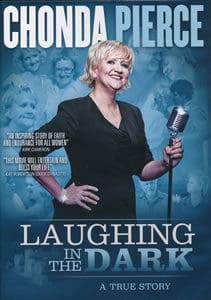
John: And a couple of years ago she came out with a very vulnerable film that revealed a lot about her personal life and her faith journey. It’s a documentary. It’s called Laughing in the Dark and we’re going to explore some of the major themes from that video today.
Body:
Jim: Chonda you were on the program uh … I think back in the spring talking about women and identity–
Chonda: Yes.
Jim: –and how you’ve been rebuilding your life after the death of your husband, David, back in 2014. I wanted to say really right from the beginning, how honored we are here at Focus on the Family to have you.
Chonda: Oh.
Jim: And you have gone through so much and I’m looking forward to delving into the tough things in your life—
Chonda: Right, right.
Jim: –and how the Lord has worked that into light for you and life.
Chonda: Uh-hm. You know, it’s interesting. I think if you talked to a lot of comedians, you will find that in their background is [sic] some dark days. Now I don’t know if we get into comedy because we are … we are the ones needing the laugh first. I think sometimes we get into the comedy world because we are deflecting our pain.
Um … there’s a lot we don’t want to have to face. When you call yourself a stand-up comedian, that means, you stand up alone and you accentuate the … or exaggerate the nugget of truth. And so, for me, who is also a Christ follower, that’s going to change even my approach in comedy. And so, I had to stop deflecting and using comedy as a defense mechanism and truly use it as the treat that Jesus gave us to use it for.
You know, He gave us laughter. He gave us every sense; every emotion we are allowed to express and so, He wants us to use them in a healthy way.
Jim: Well, let’s get to know you better.
Chonda: Uh-oh.
Jim: The difficulties of life—
Chonda: Yeah.
Jim: –the hardship of life—
Chonda: Yeah.
Jim: –which some people don’t experience till later. Others—
Chonda: You know …
Jim: –experience early on and that was you. Early on you were experiencing—
Chonda: I …
Jim: –hardship.
Chonda: –yes, I said in the movie theater when this came out in the theater and I poked my son halfway through and said, “My life is sad.” (Laughter) This is the saddest movie I’ve ever seen. (Laughter) You know, ‘cause when you break … you know, it took me 53 years to live it and then it took 90 minutes to show it on a screen. And so, when it’s condensed like that—
Jim: Yeah.
Chonda: –it does look horrible. And not in deflecting of that, yeah, I have been through some stuff. You know, it’s taken me a while to even say, to be bold enough to say, “Yeah, I’ve been through some stuff.” You know, usually … you can’t turn on the news at night and not find someone in worse shape. And so, you know, so I always hesitate to … I certainly don’t want to glorify my pain.
Jim: Sure.
Chonda: But I always hesitate to think that it’s bigger than what it is. The toughest part for me I think in my life was there were horribly tragic and dysfunctional days in my childhood and there were incredibly glorious fun and days. The having—
Jim: Well, describe both for us.
Chonda: –both … well, for both, for a typical day when I was a kid, you know, we were poor. We couldn’t hardly afford the youth camp that my dad, you know, for the church my dad pastored in. We’d get off the school bus and wonder who it was that was gonna meet you at the door. My father was, I heard the term “manic-depressive” when I was about 14. And his … and his extreme mood swings, you learned to live trying to balance what was goin’ on in your home. And you learned how to how to tap dance and keep everybody happy and joyful or you learned how to be comforting and sweet when he was in a really depressed state.
And so, in that process, I kinda lost who I really was. I think for me, I was … I was the comic relief of the family. I was the middle child.
Jim: So, it started that young. You could see—
Chonda: Yeah.
Jim: –that you were using humor to lighten the load?
Chonda: I … I could see how quickly if you can make the family laugh around the kitchen table, we would forget what we had just experienced before we sat down. And many times what we would experience was horrific. It was a suicidal father with a gun in his hand. It was inappropriate touching and behavior, you know, from a man who would stand in the pulpit on Sunday.
And so, um … and then a mother who was tryin’ to explain it all away. And so, the keeping of that secret um … you begin to wonder what is real? What is not? Did I really remember this? Am I allowed to speak about this? You had to not tell anybody at church what was really goin’ on, ‘cause the church is growin’ and we gotta make Jesus look good.
Jim: That can really mess you up.
Chonda: Oh, it did! (Laughing) Thank you for noticing. (Laughter)
Jim: I mean, how … ?
Chonda: It can also make for a really great comic. (Laughter) So, God works all things for good. There you go!
Jim: Yeah, is that the end of the story? No.
Chonda: No, you know, both my sisters passed away when I was younger and that …
Jim: Well, I was gonna mention that, because—
Chonda: Yeah.
Jim: –again, you said it quickly. You were the middle child.
Chonda: Yes.
Jim: Describe your sister that was older and—
Chonda: Right, I had an—
Jim: –your younger sister.
Chonda: –older brother who is eight, nine years older than I am. So, he would … you know, married and moved off. My big sister was killed in a car accident when she was 20 and about 19 or 20 months later, my little sister came home with a … we thought she had the flu and found out it was leukemia and she died 21 days later.
And so, I was the only child and my father, by the end, had left in this disgraceful kind of a way when your dad’s a holiness pastor. My mother and I had to move into a one-bedroom apartment. I always tell people, you’ll find out how saved you are when you have to share an apartment with your mother—a room, one bedroom apartment.
My mother prayed for me every … out loud and I’m in the bed with her, you know. (Laughing) I always go, have you ever known anybody that confessed your sins to the Lord for you? (Laughter) That was my mother. And … but in that time, a bitterness really took root in my life and I was a little bitter about the church. I was a little bitter about life turnin’ out like it had.
I thought this little family, you know, from the middle of nowhere, was doing all they could to save the world and tell everybody that Jesus is good.
Jim: And it got in return what?
Chonda: Nothing.
Jim: That was the bitterness.
Chonda: Broken heart, yeah, broken hearts, poor. There was no benefit to it, it looked like to me. At 18 years of age, that’s what’s going through your head. And so, then your mom puts you in a Christian college out of desperation. They … maybe they’ll save her, you know. Were you … ?
Jim: So, but with God, I mean, where was God in that picture for you?
Chonda: The great thing [is] that He was patient. He was just so patient. What I had not been introduced to yet at that time in my life was the heavenly Father. You know, the term “father” had been so misused and abused and was not pleasant. And I think when that relationship is not healthy in the early years of our lives, we have no way of understanding what a holy God is and how He allows us to call Him Abba, Daddy.
Jim: Yeah.
Chonda: The um … when … one of the sweetest things that ever happened to me in therapy was to sit down and discover how divine God is. He is the perfect Father. And I had to come to the realization that I either am going to believe the Word of God or not. And I chose to believe it, thank goodness, because the benefit of that is a blueprint for your life that never goes away.
Jim: Yeah.
Chonda: And then studying Scripture for myself and getting, you know, I put that … that rebellious side of me was gonna dig in there and I’m gonna find that, you know, where my mother is messed up all this time and I couldn’t find it, that God’s grace and goodness and mercy was so revealed in the human stories in the Word of God, it made me understand myself even more.
When I found out that my Daddy kissed me on the cheek and loved on me and thought I was amazing and beautiful and then placed me in my mother’s womb, that changed everything for me–
Jim: Yeah.
Chonda: –because He became then this rich, beautiful, loving Daddy that I had longed for, for my whole life.
Jim: You know, Chonda, so many people have that deep wound in their heart—
Chonda: Yes, they do.
Jim: –that their dad was not there and you know.
Chonda: I … you know, I tell the 12 men brave enough to come to a Chonda Pierce concert—it’s usually several thousand women and 12 brave men (Laughter)—I tell them every night very lovingly, you know, I just say, “I can give you one little nugget if you’re here to listen in on what we girls are talkin’ about.
“The man that you are on Sunday really needs to be the man that you are on Monday.” ‘Cause when it is not, the confusion that, that places in that home for those children [is awful]. And even if you think they’re not paying attention, they are. They don’t miss anything and so, it was inconsistency that was the hardest part for me. And I had a therapist tell me one time, if your childhood had been all bad, you could rise above that. You would get fighting mad at it. You would break out of it.
But because there was also this good moments [sic], where everything was even keel for a brief amount of time and the church was growing and you’re singing in the youth choir and everything’s happy, because there was both, that’s what brought the confusion.
Jim: Oh, that’s amazing–
Chonda: Yeah and it’s interesting.
Jim: –when you think about it in that way. Those roots though kept you moving in a more positive direction, right?
Chonda: Oh, most definitely. I … I have to.
Jim: Why didn’t you say, “Forget it, Lord?”
Chonda: The heck with it?
Jim: Yeah, I mean.
Chonda: Well, my mother would’ve chased me down. (Laughter) It’s embarrassing. (Laughter)
Jim: It is fear of your mom?
Chonda: Yeah, right! You know, it was. (Laughing) I used to tell this joke all the time, when you … my mother taught me, “You want the Lord to come back and catch you in the backseat of that car? You want the Lord to come back and catch you at that movie house? You want the Lord to come back …” I said, do you know how hard it is to go on your honeymoon when you’ve been raised like that? (Laughter) I had to put a “Do Not Disturb” sign and a note to Jesus on the door. (Laughter) Here’s the thing. My mother, even in her, you know, brokenness and trying to figure out how to, you know, navigate through this, as well, there was this thread that she kept sewing between the seams of my childhood and the seams of my life. And that thread was to point us to God—
Jim: It …
Chonda: –to keep pointin’ us to a … to a merciful God, yes.
Jim: And that is so amazing to have that kind of support from a parent.
Chonda: Yes.
Jim: So, you’re not totally rejecting her.
Chonda: No.
Jim: In fact, you’re embracing her, but almost oh, without wanting to, right?
Chonda: Oh, absolutely, with such rebellion.
Jim: Yeah, uh!
Chonda: You know, my mother, oh, I … just before she passed, we were enjoying a Mother’s Day and we were sitting and having coffee and just havin’ a great time and I said, “Mother, you’ve been through so much.” You know, I just wanted to honor her. “Mother, you’ve been through so [much]. You lost two children. Your husband left you. It was a public embarrassment, you know. Now you’re going through breast cancer. This is just awful.” (Laughing) And she said, “Oh, no, honey, I have two children that I know are with Jesus, but I know why He still has me here, ‘cause there you.” (Laughter)
John: ‘Cause you ‘re …
Chonda: And I’m like, “Well, mom, I don’t want to rush you out the door, but I’m in and in case you’re wonderin’.” “Well, I know you think you are.” (Laughter) I was just so … “I’m in.” (Laughing) So, she had that way of loving everything I did. You know, gold records on the wall and bein’ in big ti[me]. But she still always had that “one-up.” “Now don’t get too … you know, you …”
Jim: That’s right.
Chonda: She always had … and this is what I would love to have been there when she crossed the Jordan River, is that she was in. I would love to have seen her realize that she was okay.
Jim: We got a clip actually of you—
Chonda: Oh, no.
Jim: –giving tribute to your mom. So, let’s listen to that and have your respond to it.
Clip:
Chonda’s Mom: (phone message) “Hello, this is Chonda’s mama.”
Chonda: This is Chonda’s mama. Like I’m not gonna know! (Laughter)
Chonda’s Mom: (phone message) “Oh, honey, I didn’t want anything important at all. I just wanted to tell you that I love you today and I hope you have a beautiful wonderful day. And that you … I want you to know your mama loves you all day and is prayin’ for you all day and this is your good day. I’ll talk to you later. I sure do love you. Bye, honey.” (Audience: “Aww!”)
Chonda: Everybody goes, “Aw!”
Jim: Ah.
Chonda: But then she calls five minutes later. “Did I call you and tell you that I loved you today?” (Laughing)
Jim: And that was live call-in, huh, that she did? Or …
Chonda: Oh, that … absolutely. That was … well, it was a voice mail and—
Jim: Oh.
Chonda: –that was the last … one of her last messages before she passed away. You know—
Jim: That’s so sweet.
Chonda: –it … the … to know that you know that you know that you were love that heals—
Jim: Could that be—
Chonda: –[to] do a lot of healing, yeah.
Jim: –the difference?
Chonda: I think it is.
Jim: Can that be the difference? I mean—
Chonda: Yeah.
Jim: –that can come from the love of God. It can come—
Chonda: Yes.
Jim: –from His love through a parent.
Chonda: I … and I think, as you said, how important the role of a parent is. When you are trying to discover who God is in your life, what deters that is when there has been such a long lack of love, that it’s hard to understand God as a loving Father.
Uh … now the opposite is also true. When you have been starved for love and then finally you realize who God is and that He is love, there is no way you can understand love or love your boyfriend or love your husband without God. He is love.
John: Well, if uh … if what Chonda Pierce is talking about right there is something that is cutting through into your head and heart, we’d like to talk to you and our number is 800, the letter A and the word FAMILY or you can find answer to your spiritual questions and Chonda’s DVD, Laughing in the Dark at www.focusonthefamily.com/radio . And um … you said something a moment ago, Chonda that you were starving for love.
Chonda: Yes.
John: You did find love and your husband, David is a big part of your story, isn’t he?
Chonda: Absolutely, the love of my life. You know, he was a young boy sittin’ right behind me in speech and drama class in high school and I thought he was … I thought he was a stud. (Laughter) And he was a stud. He was a stud muffin, a little more muffin that stud there at the end (Laughter) though. Aren’t we all?
John: Time to take the toll.
Chonda: That’s right. (Laughter)
Jim: Hey, ouch! You hurtin’ us.
Chonda: That’s right. Thirty-one years we were married. And you know, he came from a … I … you know, when you look back, now of course, you’re young and silly and in love, you know, but I see why we were so drawn to each other. He had an alcoholic father and a very difficult childhood.
Chonda: We were survivor mates, you know what I mean? And we found each other at a young, young age. I’m … I … sometimes I lament that we didn’t get married when we found each other at 18, but if we had done that, we (Laughing) would’ve never gotten these kids through college.
Jim: Yeah, right.
Chonda: You know, we didn’t know what we were doing. And we married at 23 and were married 31 years before he passed away.
Jim: Ah.
Chonda: And you know, dysfunction is the gift that just keeps on givin’ sometimes. I don’t know how or why things turn out like they do, but I do know if I focused constantly on everything that went wrong, how sad would that be to live right now?
I have to focus on every good great day that I had with him and I had so much more joy and fun than I did difficult times. And we had a great marriage. We were fightin’ to keep each other, you know?
Jim: And you had difficulty. Even—
Chonda: We did.
Jim: –you know, David struggled with alcoholism, as well.
Chonda: He did. You know, we never had alcohol in our home till he was about 49, 50 years of age and somebody, you know, brought beer over from a golf match or somethin’. And it was a … and you look back and you go, “Oh, we should’ve known better,” ‘cause it was in his bloodline. It was in his gene pool.
Jim: Right.
Chonda: And I did that. Well, for the first year after he was gone, I was in a pool of shame and regret. And I just realized that’s not helpin’ anybody.
John: What was the shame about?
Chonda: The shame of not standing stronger and more firmly, goin’, “No, we’re … we decided a rule a long time ago. We’re not havin’ alcohol in the house. We need to stick with that.”
John: Hm.
Jim: You were having to battle, I’m sure, this tension between your career and your marriage and—
Chonda: Right.
Jim: –you know, takin’ care of—
Chonda: Everybody.
Jim: –David and everybody.
Chonda: Yes.
Jim: And—
Chonda: The last five years—
Jim: –how did you manage all that?
Chonda: –you know, hard.
Jim: Or did you?
Chonda: Yeah, not very well. (Laughing) You know, I … you’ve known me long enough, Jim to know, I’m not a really quiet, calm kind of a [person]. If somethin’ goes wrong, everybody knows it, you know.
I uh … we have a child that [is] estranged from us. There’s no easier way of sayin’ it, but she got married and the week that she gave birth to our first grandchild, they announced that they want to slow the pace down of, you know, family or friendship or whatever. And that became a bigger wedge and a bigger wedge until they had just disappeared. And …
Jim: They wanted no contact with you.
Chonda: No contact and … and a lot of that I think was, I … I did work too much. You know, you get on a career path and everybody hollers, you know, get it while the gettin’s good and you’re a hot commodity right now, so you go to work.
And at the same time, my job, I am blessed [that] it provided so much for my family and my husband, who loved, you know, retirin’ from teaching and staying home and he was workin’ on buildin’ a boat. You know, and he was just, you know, and he would love it. He goes, “Honey, I’m a well-kept man and I love it,” you know. (Laughter) And he loved takin’ the kids to school. You know, he just loved bein’ that at-home dad. He goes, “Most men never get to see their kids as much as I get to.” And he was always so gracious about it.
There’s a lot of … I’m sure there’s several reasons if she would chat, you know, the … of … of her decision making, you know. But it was um … it’s been the most painful journey of my life.
Jim: And you’re still in that journey.
Chonda: Yes, still in there. I have a 6-year-old grandson and a, I think one is 3. I’ve never known ‘em, so that was hard on David.
He wrote a book about her. As a matter of fact, we’re settin’ here at Colorado Springs. He climbed Pikes Peak four times, you know and they climbed it together and he wrote a book about it. And … and … called [it] Don’t Let Me Go. It was a great tribute to, you know, how dads raise daughters.
Jim: Huh.
Chonda: And that … that was a crushing blow to him. Um … and I think I was gone too much. I’m … my focus was on other things and tryin’ to keep my own head above water and not go crazy, you know.
Jim: How do you pass on what you learned to others then? I know you do it through your comedy.
Chonda: Yes.
Jim: But what’s that lesson for all of us to hear? What would you have done differently?
Chonda: You know, I had a manager one time tell me, you know, your kids are gonna bounce back. They’re gonna really appreciate a new car more than they will you bein’ there for prom. And I listened to him. And deep down inside I knew that, that didn’t sound right, you know? And so I … I … my thought to women all the time, especially we’re in a culture that tells us now, not only you can be CEO if you want to; you should. You should be CEO and Mom of the Year and you know.
Jim: Yeah.
Chonda: And you can’t do it all. A I would tell women, I tell women this every night. Do what you can, but the focus of your entire life needs to be that husband and those kids. And then uh … you know, other things will be added to you. And it’s not a popular message among feminist women.
You know, it’s not a popular message among the women who have to work, if that makes any sense. But there are things that can wait. And havin’ a peanut butter and jelly sandwich is so much better than having a steak with ‘em.
Jim: Well, what about the moms that are working and—
Chonda: You … sometimes you have to.
Jim: –are … are … are the breadwinners—
Chonda: Right.
Jim: –in many ways? That’s the reality of today’s culture.
Chonda: And the single moms, right.
Jim: Single moms, as well. There are single dads—
Chonda: Yeah.
Jim: –but … but in that context, um …
Chonda: I think, you know, what I did, and I look back now, the habit of keeping secrets was so great in my childhood. And I think that’s what bled over a little bit in raising my kids. If I had to do it over again, I would have more … I will say that my son, he’s 27, he totally gets it. He’s seen the days where mom climbed on the bus and was tearing and crying, ‘cause I’m gonna miss soccer. And I would kneel down and talk to him face to face and he’d go, “Mom, it’s fine; it’s fine.” You know.
But I had more honest conversations with him of sayin’, “Mom’s gotta go to work,” you know. And I think that’s what you have to do as a working mother, is sit down with your family and goin’, “Here’s our budget.” And be honest with your kids. Once it’s all out there on the table and out in the open, then they’re goin’, “Oh, okay. You’re not just doin’ this ‘cause you don’t want to hang out with me. This really … oh, ‘cause this is what our electric bill is. Oh, I see. This is what we’re doin’.” And then it becomes a family effort that mom’s workin’ and this is how we pay the bills and this is what … instead of this, you know, you go do your thing and I go do my thing. It … but do it as a unit. Does that make sense?
Jim: It does.
Chonda: Yeah.
Jim: I like what you’re saying there. Have conversations about it.
Chonda: Yeah,
Jim: Be open about it.
Chonda: Yeah, have conversations.
Jim: Be honest about it.
Chonda: You know, we … I grew up in a culture and not just my dysfunction added to it, but my mother, you know, she didn’t even balance the checkbook. You know, she didn’t even know how to write a check when my father first left.
She was raised in a culture where the wife cooks the moo … food. You know, and so, even going out and getting a job for her after my dad left, was such a foreign thing. But I saw her begin to grow as a woman and have some pride in herself that, look what I have provided. Look, we can pay our rent. You know, and that was really great to see that in her. And by then, we were so broken in our grief that we were forced to have conversations. We were all each other had.
Jim: Yeah.
Chonda: And that … that thing right there, God worked for good that I could take into my marriage and go okay, we would have family meetings all the time.
You know, these are the days mom’s gonna be at work. What do you have scheduled? What do you have scheduled? Well, can we move this? Can you have your sleepover on Tuesday when I’ll be here–
Jim: Right.
Chonda: –and can help that? You know, and we would have … and that’s what it requires, is open, honest conversation.
Jim: Well, and you’re describing what most families look like. They’re messy.
Chonda: Yes.
Jim: It’s not a straight line.
Chonda: Right.
Jim: It’s not a uh … you know, a wonderful movie picture that—
Chonda: No.
Jim: –ends perfectly. It’s tough. Life has some stuff in it and …
Chonda: And what a beautiful opportunity to teach people what the grace of God looks like.
Jim: That’s exactly the point and I think we have more to talk about. I want to get in a little further with your relationship with David–
Chonda: Oh, good.
Jim: –and have some more deep discussion about that. I know our listeners are relating to several of the things that you talked about today, Chonda, whether it’s a messy marriage or a prodigal child. You’ve touched on some really important things, a tough upbringing—
Chonda: It is.
Jim: –not having a solid relationship with your own father—
Chonda: Right.
Jim: –and how that can hinder you having a relationship with God. You’re hitting all the big things that we struggle with in life and we’ve got to come back and continue the discussion. Can we do that?
Chonda: Absolutely.
Jim: Okay.
John: And meanwhile, please get a CD; get the download. Get the DVD by Chonda Pierce, Laughing in the Dark. All of these and much, much more for you at www.focusonthefamily.com/radio or call 1-800, the letter A and the word FAMILY. We’ve got caring Christian counselors here that’d be happy to talk with you, have an initial consultation with you that unpack a little bit of what you’ve gone through and what the journey ahead might look like. Again, our number, 800, the letter A and the word FAMILY.
And by the way, support the work here of Focus on the Family. Make a generous contribution today and we’ll send Chonda’s DVD to you, a complimentary copy as our way of saying thank you for your support of what we’re doing and for making it possible for us to provide these kinds of resources.
Jim: Chonda, before we leave, I do have one last question and that is with the joys, the sorrows, the losses in your family, what in the world gets you up in the mornin’?
Chonda: (Laughing) Well, the love of Jesus and 75 milligrams of Effexor does help a little bit. (Laughter) That and if you hot flash enough, your sheets are soaked, so you got to get up, you know? It is um … th … this conversation, this is what gets me goin’, you know. Life is not done with me, even though, oh, gosh, I have … now I have to check my online dating profile, so that gets me up, you know. It is … um … you just keep movin’. You just have to. You just have to.
Jim: This is the real world
Chonda: It is the real world. It is … and it’s all I’ve got, and so … so today we make the best of it. Now tomorrow, if you ask me that tomorrow, it’ll be noon and I’m still in the bed goin’, “Well, I don’t know. I haven’t gotten out of the bed yet,” but …
Jim: Well, let’s hope you wake up, ‘cause we’ll come back tomorrow. (Laughter) We’ll keep talkin’, okay? Let’s do it. (Laughter)
Closing:
John: Well, we sure do look forward to more conversation with Chonda and hope you’ll make plans to join us, as well and don’t miss her insights next time. She’ll continue down this track, talking about what it takes to live out your faith in Christ, even when bad things happen.
Excerpt:
Mrs. Chonda Pierce: You know when you see the big giant wrongs done in your life, you know you gotta find forgiveness for it. You forget that there are these little things that we start pilin’ up with people and it’s those little things that pile up that you have to start adopting a spirit of forgiveness for every day of your life, yeah.
End of Excerpt
John: I’m John Fuller and on behalf of Focus president, Jim Daly and the entire team, thanks for listening. Join us again next time, as we once again, help you and your family thrive in Christ.