


Contemplating the needs of the foster care community was not the first thing on my mind that unforgettable morning during my morning walk with my golden retriever. However, God had other plans. I was getting my steps in while listening to Bible teacher Paige Benton Brown unpack the parables about the Kingdom in Matthew 25. At the end of her message, she said something that stopped me in my tracks:
“Ladies, please don’t sit in Bible studies until the Lord comes again. Oh, be in Bible studies. But don’t ONLY sit in Bible studies. Take all those notes, take all of that learning, and DO something for His glory. We know where we’re going. So let’s start running toward it.”
I literally stopped in the middle of the street with a huge smile and an even bigger “Amen!”
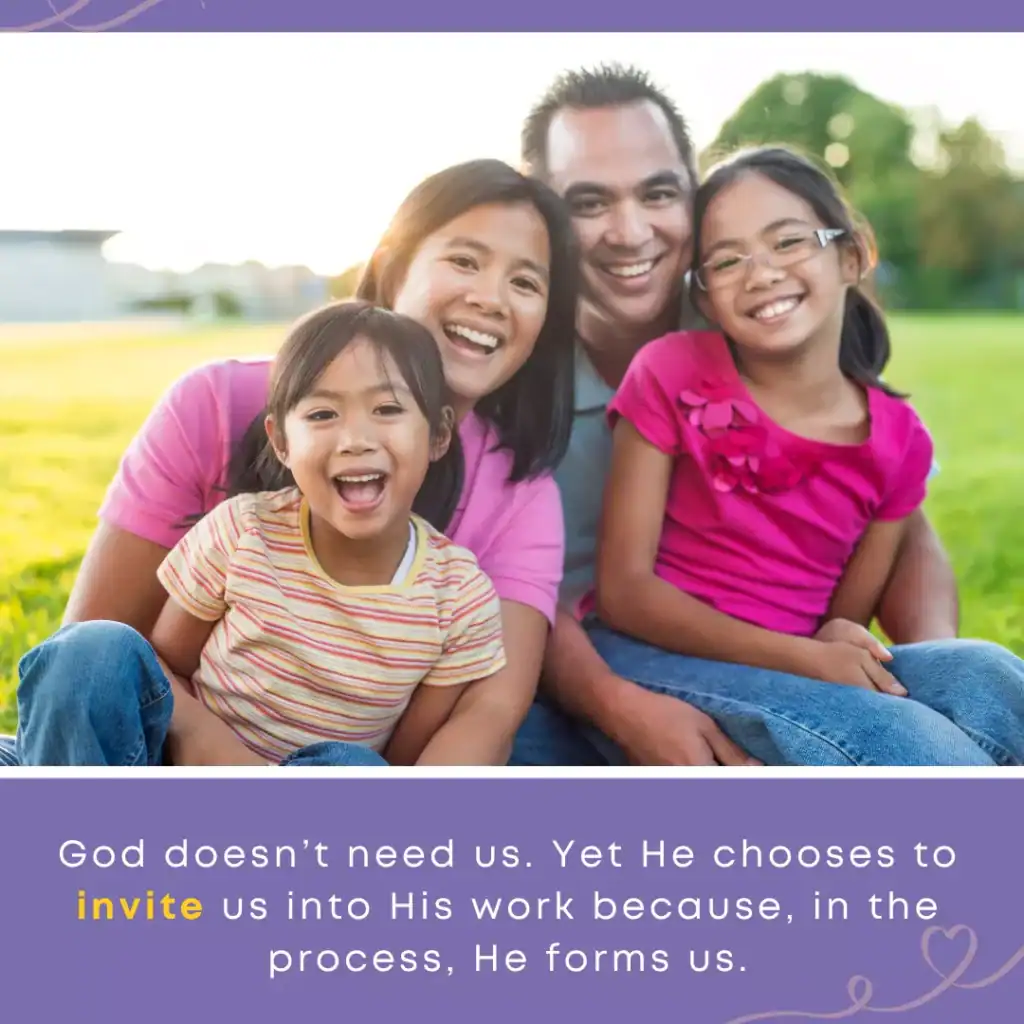
God doesn’t need us. He is the Almighty Creator who speaks beauty into existence. Yet He chooses to invite us into His work because, in the process, He forms us.
Key Takeaways
- God invites us to participate in His work, transforming our hearts as we engage with the Foster Care Community.
- Participating in foster care opened my eyes to the struggles of vulnerable children and the importance of hospitality.
- Building relationships with foster children’s biological families deepened my compassion and gratitude for different life experiences.
- Project Belong helps churches engage with foster care, emphasizing that everyone can contribute, even if they’re not fostering themselves.
- Everyone can do something for the Foster Care Community, whether it’s providing support, understanding trauma, or simply listening.
Participation is Key
I think about “baking” with my toddlers. They “helped” by spilling flour, cracking eggs on the counter, and turning a thirty-minute recipe into an afternoon project. It would have been much easier to bake alone. But I wanted them to learn, and participation was the way for that to happen.
God works similarly. He gives us opportunities not because His Kingdom depends on us, but because our hearts are shaped as we participate in building it. Like the people rebuilding Jerusalem’s walls in Nehemiah’s day, everyone had a section to repair with their unique gifts.
Paige’s spunky challenge resonated because I’ve been both people: the one faithfully filling notebooks in Bible studies and the one stepping out to actually live what I’d learned. I’ve discovered I have grown just as much from obedience as from study. There’s a difference between knowing I should share my faith and actually risking the awkward conversation. One shapes the mind; the other shapes the heart. We need both. And so does our broken world.
Nowhere has God taught me this more deeply than through foster care and the foster care community.
Participating in the Foster Care Community
Years ago, while homeschooling my children, I met an incredible foster mom named Boo Riley. She cared for medically fragile children, and I peppered her with questions whenever I had the chance. I’d known adoptive families before, but Boo was my first foster parent friend. After chatting with her, I asked my husband if he’d consider fostering. His answer was immediate: “Absolutely. It gives legs to what we believe about the dignity of life.”
The seed was introduced. But life was busy. We were planting a church just outside Washington, D.C., and the nudge quietly moved to the back burner.
Four years later, what we thought would be a simple date night changed everything.
A New Perspective on Foster Care
A friend invited us to the launch of a book called Unleashing Opportunity, which explored five major areas of brokenness where Christian engagement could make a tangible difference. One of those areas was foster care. That evening connected the dots. We learned that children who experience foster care face dramatically higher risks of homelessness, incarceration, being trafficked, and mental health struggles. Suddenly foster care wasn’t just Boo’s story. It was a window into an opportunity to love vulnerable children through hospitality.
We walked in curious. We walked out called.
Within a year, we were certified as foster parents in Arlington County and welcomed two little ones into our home—a six-year-old and a nearly one-year-old. They would be part of our family for the next two years.
Building Relationships
One of the best decisions we made was intentionally building a relationship with their biological family. Over time, we grew close. Their mom came to our house for dinner one evening and offhandedly told us she loved that her children were getting to eat around a dinner table because she’d never experienced that growing up. Later, I was with her during the birth of her third child. She nonchalantly shared that no one had ever been with her during a birth before.
Her words stayed with me. When my three children were born, I was surrounded by support. Her journey had been unimaginably different from mine. She herself had grown up in foster care (as had HER father before that).
Those moments discipled me. They deepened my gratitude and expanded my compassion. They reminded me that people often aren’t choosing between good and bad options. They’re choosing from a completely different starting point than I had ever known.
Even simple moments became classrooms for our whole family’s hearts.
At first, when the children visited their grandfather, I wondered about how much sugar they’d eaten or how much television they’d watched during the visit. But God gently redirected my perspective. That grandfather was loving his grandchildren the best way he knew how. Instead of criticizing the donut for lunch, I began seeing the love behind it. God kept exposing this quiet pride in my heart and replacing it with fruit.
Meeting People in the Foster Care Community
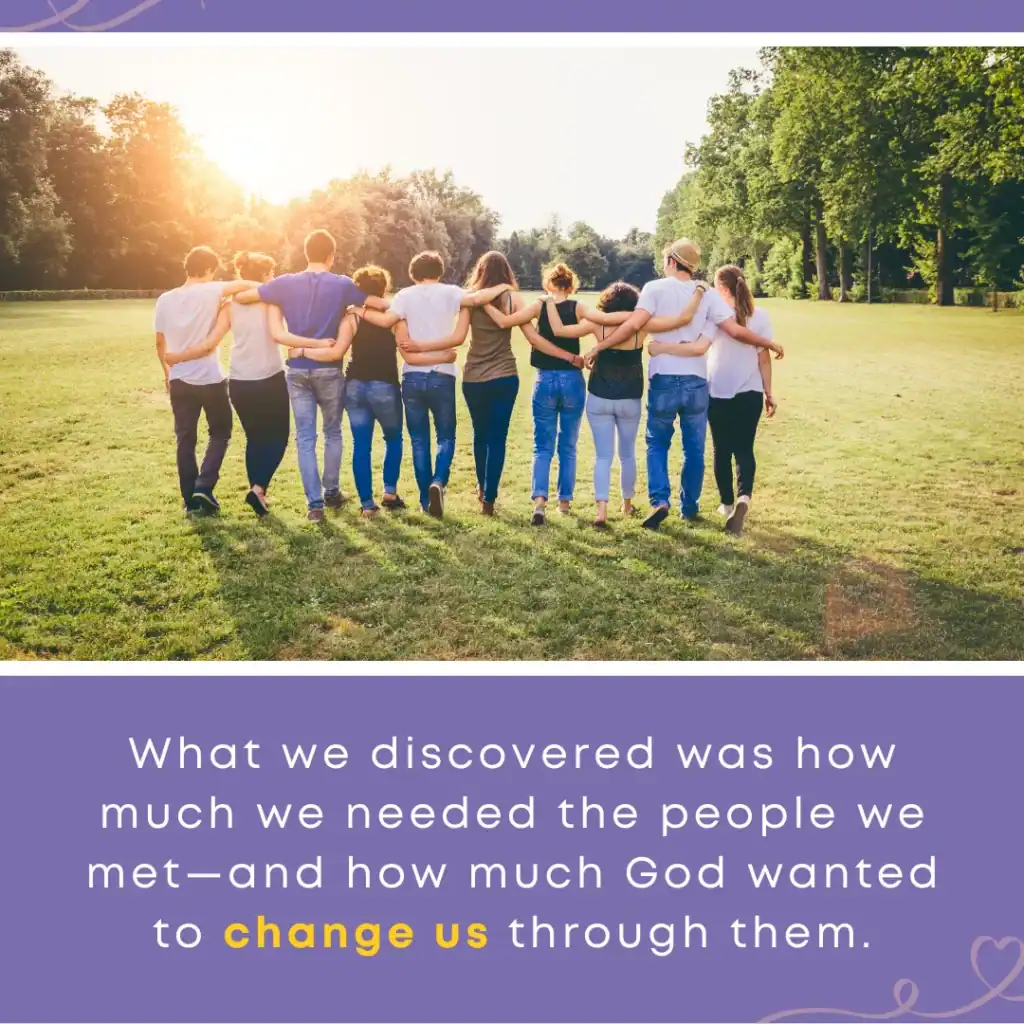
We began this journey thinking the foster care system needed us. What we discovered was how much we needed the people we met—and how much God wanted to change us through them.
At the time the littles came into our home, I had one child in college and a junior and senior in high school. Raising toddlers at fifty felt very different from raising my bio kids through my thirties. Not only was there an age difference, but I was also working full-time while juggling college decisions, court dates, caseworkers, therapies, daycare, and sleepless nights. Our church loved us. They prayed for us and cheered us on. Yet I didn’t invite them into the journey the way I wish I had.
I was hesitant to ask for help. Maybe it was pride. Maybe I didn’t want to admit how overwhelmed we sometimes felt. Looking back, I wonder what discipleship others might have missed because I didn’t do a better job of asking for help.
- What if someone stepped into the piles of laundry?
- What if someone had helped with homework or brought dinner after a difficult visitation?
- What if our church family had grown in understanding trauma simply by being closer to it?
The body of Christ wasn’t meant to applaud ministry from the sidelines. We were designed to share it.
The Church and Project Belong—Stepping in to Foster Care Communities
Those questions eventually became another question that wouldn’t leave me: How might the Church do this work better?
That question became the beginning of Project Belong.
Today we help more than 185 churches across Virginia and Maryland discover practical ways to engage with children, families, and young adults impacted by foster care. Not everyone is called to foster or adopt, but every church—and every believer—has a role to play.
Maybe you’ll meet someone like Boo. Ask them questions. Listen to their stories. Pray for them.
But don’t stop there. Learn about the needs in your community. Offer to babysit. Fold laundry. Tutor the eleven-year-old struggling with homework. Read a book about trauma to become a wiser friend to a foster family. Help your church become a place where children from hard places truly belong.
What’s Your Something?
Friends, everyone can do something.
What’s your something?
When Jesus tells the Parable of the Talents in Matthew 25, the servant who buried his talent wasn’t condemned for doing the wrong thing. He was condemned for doing nothing. Fear kept him from participating in his master’s work, and in the process, he misunderstood his master’s heart.
I don’t want fear—or my own feelings of being comfortable—to keep me from saying yes to the opportunities God calls me to and places in front of me.
So keep studying Scripture. Fill your notebooks. Attend the Bible studies.
But don’t stop there.
Listen for God’s invitation. Clear away whatever keeps you from responding. Make way to run toward the Kingdom.
Because your obedience won’t just bless someone else.
It will transform you.
Summary
So friends, I’ll ask again: what’s your something? Maybe it’s fostering, or maybe it’s simply asking a foster mom like Boo about her story. Maybe it’s folding someone’s laundry, tutoring a struggling eleven-year-old, or helping your church become a place where children from hard places truly belong. The foster care community doesn’t need spectators. It needs people willing to run toward the Kingdom, trusting that as we obey, God isn’t just using us to bless others. He’s forming us in the process.