




Jeff Dillon: And so, it starts with prayer. And one of the challenges in that is simply the question of, do you know your neighbor’s names to be able to pray for them?
John Fuller: Well, we live in a world that seems more connected than ever, but more and more people feel more isolated. And what is that about, and what can we do?
Today on Focus on the Family with Jim Daly, we’ll explore creative ways that you can help combat loneliness, uh, right in your own front or backyard.
Jim Daly: (laughs)
John: Thanks for joining us. I’m John Fuller.
Jim: It is so true, John. We are connected. I think my phone starts buzzing like right at 6:00 AM.
John: Yeah.
Jim: And it just keeps going.
John: Mm-hmm.
Jim: And some of it’s just, you know, the typical robo stuff, but, you know, it’s just a well-connected world, but a super lonely world at the same time. We’re not connected in kind of healthy ways necessarily.
John: Right.
Jim: You know, we’ve discussed the recent U.S. Surgeon General’s report on the show before and uh, the results were sobering. One in two Americans report feeling some level of loneliness. One in two.
John: Mm-hmm.
Jim: Anybody a mathematician? That’s 50%.
John: (laughs)
Jim: And the numbers get even more personal when you look at our neighborhoods. According to Pew Research, about 57% of Americans know at least some of their neighbors. But here’s the surprising part. Over half of those people say they’ve never had a meaningful interaction with their neighbors. Even more concerning, 17% of Americans say they don’t know a single neighbor. And if you’re under 30 years old, that number jumps to 27%.
And that’s the point we’re trying to make today. What a great opportunity for the church to be the church. And today on the program, we’re going to talk about something simple but incredibly powerful: how we can build community right where we’re at.
John: And to help us, uh, really figure this out we have Jeff Dillon and Ty Dannenbring with us in the studio. They came down from Northern Colorado. Uh, they each are married with five children each, and our gallery right now has-
Jim: It’s full.
Jeff: (laughs)
John: … the entire family of both of these guys. It’s great.
Jeff: Yep.
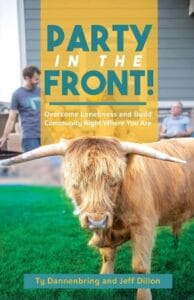
John: Uh, they have a book called Party in the Front!: Overcome Loneliness and Build Community Right Where You Are.
Jim: Jeff and Ty, welcome to Focus on the Family.
Jeff: Thank you for having us.
Jim: You guys came down on Wagon Train?
Jeff: Oh, yeah. (laughs)
Jim: Came down from the north, they did.
Jeff: That’s right.
Jim: And here we are.
Jeff: Oregon Trail.
Jim: You got your kids and your family.
Jeff: Yep. Yep.
Jim: That’s great. Probably 100 years ago, that was kind of it. (laughs)
Jeff: (laughs)
Ty Dannenbring: (laughs)
Jim: But we’re not there. Here we are today.
Jeff: That’s right. That’s right.
Jim: Um, you know, the front cover of your book is interesting and for the viewers, you can see that there. But for the listeners, it’s, I think it’s a Scottish, what is it?
Jeff: It’s a Scottish-
Jim: Highland cow?
Jeff: Yeah.
Ty: Mm-hmm.
Jeff: Yep.
Jim: It looks like it’s got a backward mullet.
Jeff: (laughs) Exactly.
Jim: Along with flat horns, not a Texas Longhorn but kind of straight out. Now, that definitely gets your attention, but why, (laughs) why is it on the cover of your book, Party in the Front!?
Ty: Jeff, you want to take a stab at it?
Jim: (laughs)
Jeff: Yeah. Well, so the Highland has kind of become our mascot, and part of it is that, that reverse mullet. You know, it’s the business in the back, party in the front. The Highland very much has the hairdo that represents this party in the front concept. But, um, we, as we were writing the book, we realized that this cow kind of became our unofficial mascot.
Jim: (laughs)
Jeff: And I think that was because we realized, uh, in fact, Ty was on a trip with your family actually at an Airbnb.
Ty: Yeah, it was an Airbnb. Yep.
Jeff: And saw, like, a piece of artwork of a Highland. Like, they’re becoming this thing-
Jim: Thing.
Jeff: … that, yeah, everybody has hanging on their walls. And, um, it’s amazing to me because they’re kind of goofy looking. You know?
Jim: Oh, I think they’re cute.
Jeff: They, they are.
Jim: My wife would want me to say she thinks they’re really cute.
Ty: (laughs)
Jeff: They’re very cute. But they’re kind of messy, you know, the hair’s all over their face, but that’s what makes them unique.
Jim: Yeah.
Jeff: And so, this whole idea of, uh-
Jim: Kind of like a teenager. (laughs)
Jeff: Yeah.
Ty: (laughs)
John: (laughs)
Jeff: Exactly. This whole idea of building community where you are, it just really started to represent this idea of party in the front that you don’t have to be something special. You don’t have to be all put together to reach the people around you, to be a blessing to your neighbors. You just have to be who God made you to be and be authentic. And so, the Highland became our mascot.
Jim: Yeah, that’s good. That’s a good theme.
Jeff: Yeah.
Jim: Jeff, a few years ago your family moved into a house. You called it, you were like, on an eyebrow.
Jeff: Yeah. (laughs)
Jim: I love the descriptions in this book. It’s a cow. It’s a-
Jeff: Yeah.
Jim: You live on an eyebrow. What does it mean to live on an eyebrow?
Jeff: So, this has become a whole debate, and maybe you guys can help solve this.
Jim: I doubt it. I don’t think we can help them.
Jeff: Everywhere we go to talk about this book people want to talk about that. It’s like, “It’s not an eyebrow. It’s an apron. It’s a this or a that.”
Jim: I live on a mustache.
Jeff: Um, a mustache.
Jim: (laughs)
John: (laughs)
Ty: (laughs)
Jeff: Okay. Well, there you go. Yeah, that’s great. It’s very curvy. Um, but, you know, it’s this separate street off the main street that kind of comes into our neighborhood. And, um, what that allowed us to do was all of a sudden when we moved into this new home, our kids wanted to play in the front instead of the back. So, because there’s, we’ve got this great street to ride bikes on, and they do chalk art. And we’re always playing in the front. And as we made that shift, we realized we were meeting all of our neighbors because we’re always in the front.
Jim: Ah.
Jeff: And so, when Ty came to me about this idea of party in the front, I was like, “Oh, that’s, that’s what we’re living. We’re figuring that out.”
Jim: Now, where is mom in this conversation going, “Hey, there’s too many cars going by?”
Jeff: Right. And that’s where the, the apron or the eyebrow- I actually asked ChatGPT, “What is it supposed to be: apron or eyebrow?” And ChatGPT, which is dangerous, said, “You’re close, but neither of those things are actual terms.” (laughs)
Jim: Yeah. (laughs) We’re making this up as we go.
Jeff: And it said, “It’s a side street.”
John: So, kind of like a cul-de-sac situation-
Jeff: Yeah.
John: … where there’s not through traffic.
Jeff: Exactly.
John: Okay.
Jeff: So, it’s much safer. But yeah, I think sometimes, especially when our kids were a little bit younger, we were, we had to be careful that they were staying in the right place. But what’s cool is our neighbors started to learn that that’s where our kids were going to be, and so they drive slow. They learned all our kids’ names. All of a sudden, the neighborhood started to recognize, like, “Watch out for the Dillon kids (laughs) because they’re out there and their friends.” And, um, it’s become just the place to play.
Jim: Does that neighborhood have, did it have other kids your age, so it was a bigger group than just your kids?
Jeff: So, when we first moved in, it’s changed, when we first moved in, it was a lot of older folks and, uh, empty nesters. Um, but it’s starting to kind of change over.
Ty: Yeah.
Jeff: But I think our presence there, um, that’s where, I mean, people will still stop by. And I had a lady the other day, um, stop by and said, “Now, do you run a daycare here?”
John: (laughs)
Ty: (laughs)
Jim: Oh, is she with the HOA?
Jeff: Yeah. (laughs) I think so. I think so.
Jim: I know that person.
Jeff: Exactly. Yeah.
Jim: (laughs)
Jeff: I was like, “No, these are, these are all mine. These are all my kids.”
Jim: (laughs)
Jeff: But, um, but the folks, especially the older folks in our neighborhood, love seeing our kids out there, meeting them, learning their names. And it’s amazing the way that’s built community-
Ty: Yeah.
Jeff: … just by being out there.
Jim: Let me ask you, in the book, you’ve identified some hindrances to living in community. I think it’s the biggest problem we have. You know, we’re isolated. Most of us, you hit the garage door button, and you go in. And to that data I mentioned at the beginning, we don’t know our neighbors. 58% don’t know a neighbor.
Jeff: Mm-hmm.
Jim: I mean, that’s amazing.
Jeff: Yeah.
Jim: But we’re isolated. We’re in with our computers. We’re doing our thing. We may be busy parents, and the kids may just be coming in and out. If you, you’re the only one on the block with kids, we were like that.
Jeff: Mm-hmm.
Jim: They didn’t have a reason to be at other people’s homes, you know, and there were no kids coming to our house because we were the only ones there-
Jeff: Right.
Jim: … with kids. Um, but there is a deep need. We’re created for a relationship. God himself said, “I’m creating you for relationship with me.”
Jeff: Right.
Jim: That’s how important relationship is. But, um, in that context, I guess you called them party fouls-
Jeff: Right.
Jim: … which is funny. What’s a party foul when it comes to relationship?
Ty: Yeah. I mean, I think we all know the people at a party that-
Jim: (laughs)
Ty: … that say the wrong things, you know, just kind of a buzzkill for everybody. And, um, but so, you know, in the book we mentioned things like busyness and political divide and racial tension, all these things and, um, so trying to navigate those things. But, um, Jeff, what do you want to add about that?
Jim: Yeah, what do you think, Jeff? Party kill.
Jeff: Yeah. Right, exactly. Yeah, I’m the party foul guy. I mean, I think the reality is, is there are things in our culture today that make this idea of building community and knowing our neighbors harder.
Jim: Yeah.
Jeff: Um, I think it’s always been hard. Going back to Genesis 3 and the Fall, and we talk about that in the book. Um, but I do think our culture, you know, specifically thinking about politics, you know, we wrote, started writing this book, um, I think, what, 2022 and, you know, um, as midterm elections were starting to heat up.
And it was just so apparent how divided even our neighborhoods have become over politics. And it’s like you can see the conservative part of the neighborhood and the more liberal side of the neighborhood. And it’s like, man, there’s just no interaction between the two. And it really started to grieve me that we were, um, allowing something like that to become a barrier to community and to relationship. And so, I do think some of those things in our culture have gotten worse in recent years.
Jim: Oh, yeah.
Jeff: And I think you know, our biggest thing in the book is, we don’t have a lot of answers. Unfortunately, we didn’t solve the political divide (laughs) in Party in the Front!, but we need to be aware of those things I think as Christians. And then recognize how in our own lives, in our own hearts, those things can become barriers for us.
Jim: No, it’s funny. We, uh, in our neighborhood- so right across the street from me is a former admiral in the Navy. He was the commander of an aircraft carrier, Rick. Rick listens. So, hey Rick if you’re listening, there you go.
John: (laughs)
Ty: (laughs)
Jim: But every house on our street has an American flag out in it.
Jeff: Yep.
Jim: And people come to our neighborhood and they say, “Is this like an HOA requirement?”
Jeff: (laughs)
Ty: (laughs)
Jim: I said, “No. Actually, it’s everybody’s, you know, individual decision.” But I mean, literally the 20 houses along our strip, everybody’s got a flag.
Jeff: Wow.
Ty: Like, “Did we miss the parade or what’s going on?”
Jim: And people are just like, “We would probably not be welcomed in Portland.” I don’t know.
Jeff: (laughs)
Jim: I’m just saying, people in Portland can send me a note, but I just think you wouldn’t find that block in (laughs) Portland.
Jeff: Yeah.
Jim: You know, even the characters on it.
Jeff: Right.
Jim: But, you know, being sensitive to people that may not be into it is okay.
Ty: Yeah. Yeah.
Jim: But that block is definitely committed to this country.
Ty: (laughs)
Jeff: Yeah. Well, and I think that’s a beautiful thing. I’m all for American flags, you know, I think that’s a great thing.
Jim: (laughs)
Jeff: And I think there was a time where most people had, a lot of people had those flags, an American flag hanging in front of the yard.
Jim: Yeah, like World War II.
Jeff: And it was a sign of unity, right?
Jim: Yeah.
Jeff: It was a sign of togetherness, exactly, when, after 9/11, I remember-
Jim: Yeah.
Jeff: … everybody went out and got a flag.
Ty: Mm-hmm.
Jeff: And yet now you see less and less flags, but more and more political signs.
Jim: Yeah.
Jeff: And I just think that says a lot about where we are as a culture.
Jim: Yeah. So true.
John: This is Focus on the Family with Jim Daly, and we’re talking with Jeff Dillon and Ty Dannenbring. And, uh, we are touching on some of the great content in their book, Party in the Front!: Overcome Loneliness and Build Community Right Where You Are. Get a copy of the book from us here at the ministry when you stop by focusonthefamily.com/broadcast.
And just keeping with that topic Jeff, how do I navigate that? So, let’s just say I have neighbors with some of the signs, and I would, I would not personally agree with them. What do I do to break down the barrier?
Jim: Firecrackers.
John: How do I-
Jeff: Yeah. (laughs)
Jim: (laughs)
Ty: (laughs)
John: Well-
Jim: You’re going to be serious. I know, I’m sorry.
John: … I could be a provocateur.
Jim: Yeah, sorry.
Ty: Right, exactly.
Jim: Are those legal?
Jeff: Yeah.
Jim: I don’t know.
Jeff: I just go in right in with an argument, just try to convince them that they’re wrong.
Jim: (laughs)
John: (laughs)
Ty: (laughs)
Jeff: No. You know, I, it’s hard. And you know, we all have our views on politics, and I don’t think that’s a wrong thing. And I think as Christians we need to vote and be involved and speak up. So, we’re certainly not saying you shouldn’t do that, but I think-
Jim: But wisdom has to draw people in.
Jeff: Yeah, exactly. And I think it’s, like, what do you start with?
Jim: Yeah.
Jeff: Right? What do you start with?
Jim: Yes.
Jeff: And there’s something about putting a political sign in your front yard that becomes the first thing some of your neighbors might know about you. And the problem in our culture, I mean, depending on where you live, but where we live, I feel like it’s pretty well divided. It’s like, almost like putting up a barrier for 50% of your neighborhood as soon as you do that, you know, depending on what the sign is.
Jim: Yeah, that’s true.
Jeff: And I think it’s like I don’t want my first impression, my first introduction to my neighbors to be about who I’m voting for. Um, I want it to be about Jesus.
Jim: Mm-hmm.
Jeff: I want it to be about who I am. I want them to know that I love them. And then, you know, down the road, maybe we’ll-
Jim: Yeah.
Jeff: … get into the politics and why I believe what I believe. But what do we lead with, and what’s out in front for us?
Jim: It’s kind of interesting. I hadn’t thought about that. But, you know, the Oscars that, a while back aired, and I was thinking, you know, do they need to make it political all the time?
Jeff: Yeah.
Jim: And it turns off this 50%.
Jeff: Exactly.
Jim: You know, faith, for the most part, faith people that don’t agree with Hollywood values, right?
Jeff: Yeah.
Jim: But they get up there and they talk about those things and we’re saying-
Jeff: Right.
Jim: … “Hey, just tell me who the best picture is really.”
John: (laughs)
Jeff: Yeah.
Jim: But it’s the same thing in the opposite direction.
Jeff: Right.
Jim: Uh, be careful what you’re projecting.
Jeff: Mm.
Jim: And yeah, it’s nice to have that mirror sometimes, to say, “Oh, how am I coming across? Am I doing something that’s like that?”
Jeff: Mm-hmm.
Ty: Yep.
Jim: So, that’s good. Uh, you shared a story, uh, of a couple named John and Kristen. Uh, I think the story gets right at the, uh, heart of fear or vulnerability. Uh, what happened with them? Why did it catch your attention?
Ty: Mm. Well, it was a couple that was living right next to, um, a widow. I- she was a widow, right?
Jeff: Mm-hmm. Yep.
Ty: Um, it was a gal that was really struggling and, um, she was kind of the black sheep of the neighborhood. And, um, I think as this couple moved next to her, they heard the stories from everyone, like, “Beware, you know?” And they just, they were gentle and kind to her. And eventually, um, she opened up and told them her story, and it was heartbreaking. Um, just, them just being gentle and kind to her, it just really broke down the barriers, and they got to know-
Jim: Yeah.
Ty: … the true, um, the true neighbor and began to love her and just, uh, the relationship formed. Um, but, you know, we all judge people next to us at times and, um, I think they were just really encouraged by the ways that she was vulnerable and opened up.
Jim: Yeah. No, I think that’s so, so good. You used the acronym BLESS, B-L-E-S-S.
Jeff: Yeah.
Jim: I do want to run through this.
Jeff: Yep.
Jim: So, what’s the B for?
Jeff: Begin with prayer. So, um, we think the first step, again, for us as Christians, we wrote this as Christians, it’s very Gospel-centric because we believe that’s really the only answer ultimately-
Jim: Yeah.
Jeff: … to the breakdown in relationship and community that we have. And so, it starts with prayer. And one of the challenges in that is simply the question of, do you know your neighbor’s names to be able to pray for them?
And so, we have a couple ideas that we put in the book and one of them is just kind of making a map, you know. Just draw a little map or print a Google Maps out of your neighborhood and just start writing people’s names of where they live. And, you know, as I’ve thought about that and done that, I’ve realized, man, there’s people that live three houses down, I don’t know their names, right?
Jim: Mm-hmm.
Jeff: And so, it really challenges you. I want to learn people’s names, learn something about them that I can begin praying for them. So, we really believe that’s the first step is just praying. And we believe God, you know, as you do that, starts to give you a heart for those people around you.
Jim: Yeah, it’s so good. And what’s the L? In blessing your neighbor.
Ty: Is just to listen.
Jim: Yeah.
Ty: Um, just-
Jim: (laughs) That sounds so easy.
Ty: Yeah. Well, and I think it’s-
Jim: Just listen.
Jeff: It’s so much harder than it sounds. Yeah.
Jim: Have you heard this story from Bob?
Ty: (laughs)
Jim: (laughs)
Ty: But I think, uh, I forget what the stat is, but it’s like 80 or 90% of people think they’re good listeners.
Jim: (laughs)
Ty: And, uh, you know, I think that-
Jim: And good husbands, and all the rest, yes.
Ty: Yeah. Yeah. And then the other stat is, like, we actually only can retain about 40% of what we hear.
Jim: Yeah.
Ty: So-
Jim: That’s high.
Ty: … there’s a little bit of a disconnect there.
Jim: I don’t think John would say that about me.
John: What’d you say?
Jim: 40%. (laughs)
Ty: (laughs)
Jim: (laughs) Yeah, exactly.
Ty: There you go.
Jim: I thought so. So, listen. And then we move to the E.
Jeff: Yep.
Jim: Not to ping pong between-
Jeff: Yeah, no, it’s good. It’s, that’s-
Jim: … you guys, but what’s the E?
Jeff: … that’s great. So E is a fun one, it’s eat together, right? And we believe that one of the best ways to bring people together is food. Um-
Jim: And your wife, Becca, especially likes that.
Jeff: Becca is amazing.
Jim: Yeah.
Jeff: So, our neighborhood-
Jim: Good answer.
Jeff: … really began to transform. That’s right. Uh, love you, Becca. Our neighborhood really began to transform when my wife, um, one summer day brought up a cooler of popsicles to the front. And our kids were out playing, as normal, and people walking by, kids walking by could just grab a popsicle. Um, regardless of age, people were grabbing popsicles. And all of a sudden, um, after we did that a few times, we realized, like, “We’re having a party out here. It’s a popsicle party.” It was so simple. But we started to meet people and make connections. And that has grown to the point now where in the summer we do a couple of community nights where over 100 people will come.
Jim: Wow.
Jeff: And we’ve got food trucks that come and people-
Jim: (laughs) Food trucks. You went from popsicles.
John: (laughs)
Jeff: Yeah. Yes. I mean, it’s amazing.
Jim: This is why people don’t do this. (laughs)
Jeff: Yeah.
Ty: Exactly.
Jeff: And it, that’s not for everyone. You don’t have to go that far, but that’s what the Lord’s done with just a simple idea-
Jim: Oh, man.
Jeff: … of popsicles in the front and blessing people-
Jim: Yeah, but that’s fun.
Jeff: … and being available.
Jim: Yeah.
Jeff: Yeah. Exactly.
Jim: That, and that’s the point. I mean, it’s good to have fun with your representation of scripture and the Gospel, right?
Jeff: Yeah. Yeah.
Jim: If you’re just reinforcing the stereotype that you’re closed and you never say hi to your neighbor and you’re grumpy, that’s not very good for the Gospel.
Ty: Right, totally. Yeah.
Jim: Isn’t it?
Ty: Trying to be winsome and-
Jim: Yeah.
Ty: … and approachable. Yeah.
Jim: Okay. So, what’s the S, the first of the S’s?
Ty: Serve is the first S. Scripture has a lot to say about that. Uh, 1 John 4:7 says, “Beloved, let us love one another, for love is from God, and whoever loves has been born of God and knows God. Anyone who does not love does not know God, because God is love.” And yeah, I think just trying to not be selfish and to be inward with our homes and, um, using our homes as a tool, uh, for, not isolation, but actually to serve other-
Jim: Facilitate relationship.
Ty: Yeah, mm-hmm. For sure.
Jim: No, I so like that. You know, it’s interesting because when you push the pedal on love, you’re not abandoning truth, but so many people-
Jeff: Mm.
Jim: … in the Christian community, and you know this being a pastor-
Jeff: Mm-hmm.
Jim: … they’ll say, “Yeah, you just can’t be love.”
Jeff: Yeah.
Jim: (laughs) And I get it. But that scripture just said, you better be emphasizing the love of God for people.
Ty: Mm.
Jeff: Yeah.
Jim: That’s like, it’s clearly what it just said. But I am shocked at how many people will turn and say, “Yeah, that, that’s all good, but you better be about truth too.” Of course.
Jeff: Yeah.
Jim: But you better not forget love in the pursuit of truth, right?
Ty: Right.
Jeff: I think love opens the door for truth.
Jim: I agree.
Jeff: Right? And so, yeah, we need both. But I think that, you know, the ability to serve people is where walls really start to break down. When we moved into our neighborhood, again, more older people there, uh, initially when we moved in. And a couple ladies stopped me on the street. I introduced myself, and they said, “Oh, fantastic. He’s tall. That’s really going to come in handy.”
Jim: (laughs)
John: (laughs)
Ty: (laughs)
Jeff: So, I am-
Jim: Light bulbs, light bulbs.
Jeff: … I am the neighborhood light bulb changer.
Ty: Exactly. Yeah.
Jeff: You know, batteries on the smoke detectors? That’s my job.
Ty: (laughs)
Jeff: And so, but, you know, just a practical way has allowed me to be in people’s homes, get to know people, hear their stories.
Jim: That’s funny. (laughs)
John: (laughs)
Ty: (laughs)
Jeff: Because I’m just tall.
Jim: Yeah.
Jeff: You know? So, how has God gifted you? And how can you use those practical things to serve people and show them off?
Jim: That’s really good. And, you know, the other thing is just a joyful spirit, you know, especially with your neighbors.
Jeff: Yeah.
Jim: “Hey, if there’s anything I could do.” I mean, that’s something we’ve tried to do.
Jeff: Yeah.
Jim: You know, scrape the snow off of a widow’s driveway-
Jeff: Mm.
Jim: … those kinds of things.
Jeff: Yes.
Jim: Let me ask you the, you had a comment about Grampy Don.
Jeff: Yes.
Jim: Now, when I first read that, I didn’t know I was dyslexic, I read it as Grumpy-
Jeff: (laughs) Yeah, okay.
Jim: … Dan.
Jeff: Grumpy Dan.
Jim: Yeah.
Jeff: That’s a different character. That’s for, that’s for the next book.
Jim: That’s the other grandpa.
Jeff: That’s right.
Jim: But, uh, tell me about, uh, good old Grampy Don.
Jeff: Yeah, so that’s my dad’s dad, and he was a World War II veteran. He actually, um, uh, was a paratrooper in World War II, jumped into-
Jim: Mm.
Jeff: … France and had, you know, the battle scars from shrapnel hitting him and-
Jim: Wow.
Jeff: … on his arms, and one of those guys that just had incredible stories. We were also all kind of terrified of him as a kid (laughs)-
Jim: (laughs)
Jeff: … because he was kind of grumpy sometimes. Understandably, with some of the things he had lived through.
John: Yeah.
Jeff: Um, but every time we would go, they lived in a small town in Northern Colorado, and we’d go to their house, beautiful old kind of Victorian style house. And he was always sitting on this old, yellow, kind of rusty front porch swing. And we’d love sitting on there with him, you know, and playing around and see if we could fling ourselves off (laughs) um, all the-
Jim: Jump over the banister. (laughs)
Jeff: Exactly.
Jim: Yeah.
Jeff: But Grampy Don, every time you’d pull up to the house, he was just sitting there. And as I got older, I started to realize, I started to pay attention to how he knew all the people in the neighborhood. You know, people would come by, “Hey, Don. Hey, Don.” He knew their names, and he’d just wave. He wasn’t a real talkative guy, but he just knew people.
And some of the stories he could tell about what was happening in the neighborhood, and I remember he could say things about the school. He, the school was just down the road, he’d, “Oh, they’re doing a project down there.” And I realized that Grampy Don had become this known person in the neighborhood and made all these connections simply by being available-
Jim: On the porch.
Jeff: … being out front, just on the front porch.
Jim: Yeah.
Jeff: He wasn’t making a big show of it. He didn’t even have a cooler of popsicles.
John: (laughs)
Jeff: He wasn’t a big popsicle guy, I don’t think.
Jim: (laughs)
Jeff: Um, but he was just available, and it really, uh, gave him an opportunity to know people and to be known.
Jim: Yeah. You know, I was interviewing, uh, African American historian and he was saying to me that one of the big changes, particularly in neighborhoods, predominantly African American neighborhoods, is there’s no more grandpa sitting on the porches.
Jeff: Yep. Yep.
Jim: And it used to be his recollection, when he was growing up as a child, those are the guys that kept you in line.
Ty: Mm-hmm.
Jeff: Yeah.
Jim: And that’s true.
Jeff: Yes.
Jim: I don’t care what the color of your skin is.
Jeff: Yes.
Jim: That’s so true of the old days.
Jeff: Right.
Jim: You know, families sat out on the porch, and when-
Ty: Mm.
Jim: … little Junior, you know, the next-door neighbor’s kid, was acting out throwing rocks at people-
Jeff: Yeah.
Jim: … “Hey, hey, hey.”
Jeff: (laughs) Yeah.
Jim: They’d have you come over, right?
Jeff: Yep.
Jim: “What are you doing? You don’t do that.” “Okay.” “I’ll tell your mother.” “Okay, I won’t do it anymore.” Right?
Jeff: Yep.
Jim: That’s what he’s talking about-
Jeff: Yeah. Yeah.
Jim: … that there was a reinforcement of neighborhood values, good values-
Jeff: Mm-hmm.
Jim: … that, how we treat people, how we communicate with people-
Jeff: Right.
Jim: … that’s just absent today. Again, in all neighborhoods, that’s your point-
Jeff: Mm-hmm.
Jim: … with your book, right?
Jeff: Mm-hmm. Yeah.
Jim: Party in the Front!.
Jeff: Well, and it’s just, it can be so simple. And I think that’s the message that we want to share as much as anything is, you know, one of the things we say in the book and kind of just a line we use a lot is, community is possible and community is powerful. And just this idea that it doesn’t take this huge thing. You don’t have to do the big neighborhood gathering but just be present. Just be out front with a cup of coffee, um, God will use that to make connections with the people around you.
John: Yeah.
Jim: And I guess the, you know, here at the end, the one question is, why do we not see that? That should be as obvious as, you know, our family and spending time with family. To be out there, to be engaged in our neighborhood, they’re the people right next door.
Ty: Right.
Jim: Um, why is it so hard to do it?
Ty: Well, we live in a Genesis 3 world, as we kind of, uh, talk about in the Christian circles and, um, that means we’re fallen people. And, uh, with that came the sin and the shame and the guilt, um, you know, so now things are just exaggerated. And so, I think that, um, people are tired and people are hiding just like Adam and Eve-
Jim: Wow.
Ty: … were hiding. And so, people are also tired of hiding, you know? And so we, you know, I think that, um, without Jesus, we would not feel the freedom to go party out in front.
Jim: (laughs) Yeah, right.
Ty: I mean, you look, you think about, uh, it’s kind of, um, funny, but like, naked and unashamed. Like, obviously we wouldn’t party naked and unashamed right now.
Jim: Let’s hope not.
Jeff: No, that’s frowned upon. (laughs)
Ty: (laughs) But, a little frowned upon, but, uh, but when you think about, um, what Jesus actually does for us and gives us the boldness to be, um, open with who we really are and to be our authentic selves, um, I think that’s what we’re missing in-
Jim: Yeah.
Ty: … in our culture.
Jim: Let me ask you right at the end here, uh, you have something called Jeff and Ty’s Front Porch Challenge.
Jeff: Mm-hmm.
Jim: What is this? Right at the end.
Jeff: Yeah. We really wanted to make this highly practical for people because the last thing we want is for people to read this book and just feel overwhelmed.
Jim: Yeah.
Jeff: Like, “We can’t do this, you know.”
Jim: Another thing to do.
Jeff: “I’m not an extrovert,” or whatever. And so, we wanted to make it really practical. So, this front porch challenge is very simple. We encourage people to sit on their front porch or their stoop, whatever it is, for five nights in a row, uh, for at least 15 minutes, without their phone. And that’s the hard part.
Jim: Now in Colorado, spring or summer works better.
Ty: (laughs)
Jeff: Yes, exactly. That is true.
Jim: I mean, it could be 20 below.
Jeff: That is true.
Jim: And we’re not telling you to go out there and freeze.
Ty: (laughs)
Jeff: Exactly. Yeah. This definitely could be weather-
Jim: Weather permitting.
Jeff: Exactly. Weather, weather dependent. But, um, just this idea of being present and being open to-
Jim: Yeah, it’s good.
Jeff: … any interactions that happen. And we’ve talked to people that live in an apartment or a condo, you know. It might look different based on where you live, but just be out front five nights in a row for 15 minutes, without your phone, without your AirPods in. I love listening to podcasts, you know, um, here we are doing a podcast, but I think it’s so important to just be present and available for conversations. So, we want to encourage people to give that a shot.
Jim: That’s good. That’s really good. You know, one thing, we remember the guests we had from Aurora, Colorado-
Jeff: Mm.
Jim: … and they had a tic-tac-toe diagram.
Jeff: There you go.
Jim: And this was born out of a mayor who went to a mayor’s breakfast and said, “Hey, could you Christians do the love your neighbor thing?”
Jeff: Hmm.
Jim: And the pastors in the audience were really embarrassed.
Jeff: Yeah.
Jim: And they developed this, and they just said, “Put a tic-tac-toe on your fridge and put, start to learn the names-”
Jeff: Yeah.
Jim: … “of the houses around you. You being the center of the tic-tac-toe.”
Jeff: Mm-hmm.
Jim: “And just learn the names and start praying for those people, and then start reaching out to those people.” Same kind of concept.
John: So good.
Jim: And they ended up touching, like, 275,000 people-
Jeff: Wow.
Jim: … in the communities of Aurora by doing that.
Ty: Mm.
Jim: Isn’t that crazy? And people were prayed for that had cancer. People were, uh, helped that needed help with you know, practical things like beds and other things.
Jeff: Mm.
Jim: It ended up being big ministry. And that’s really what you’re talking about.
Jeff: Mm-hmm.
Jim: Just start small-
Jeff: Yeah.
Jim: … but get to know people.
Jeff: Yeah.
Jim: The Lord would want you to do that. Thanks for being with us. This has been great.
Jeff: Thank you, guys.
Jim: Really fun.
Ty: Thank you very much.
Jeff: Great conversation.
Jim: And let me turn to the listener. If you want to strengthen the community around you, which should be a desire for all of us as Christians-
John: Mm-hmm.
Jim: … I want to recommend you get a copy of Jeff and Ty’s book, Party in the Front! (laughs) Give that to your teenagers. They’ll love it.
Jeff: (laughs)
Jim: But, uh, it goes on, the subtitle, Overcome Loneliness and Build Community Right Where You Are. And, uh, in the book, Ty and Jeff include practical examples for creating the party.
John: Mm-hmm.
Jim: Some of us non-party people need that, uh, but there’s just a ton of help to get you going in the right direction.
When you make a gift of any amount to Focus on the Family today, we’ll send it to you as our way of saying thank you for being part of the ministry.
And let me extend the front porch of Focus to you this-
John: Mm-hmm.
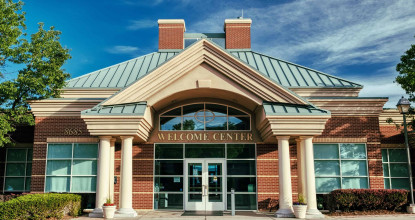
Jim: … summer while you’re out and about. Uh, we’ve got a great Welcome Center. We’d love to have you come and enjoy that. Kids can come. We’ve got a lot to do for kids, including a great, big slide.
John: Mm.
Jim: I have gone down that one time. I shot out the bottom. (laughs) It was pretty fun, but man, that-
Jeff: (laughs)
Ty: (laughs)
John: I’m sorry we didn’t get video of that. (laughs)
Jim: Kaboom. But, uh, ice cream and all kinds of good stuff there, so come and enjoy it. That’s our porch to you.
John: Mm-hmm. Yeah. Donate and get your copy of Party in the Front! when you call 800, the letter A and the word FAMILY, 800-232-6459. Or get all the details including ways you can connect with us on our front porch, our Welcome Center, at focusonthefamily.com/broadcast.
And coming up Monday, you’ll hear one mom’s story about preventing and reversing addiction to technology with their kids.
Melanie Hempe: So, when your child is playing a video game, that dopamine is being triggered. It’s the same dopamine as any drug, and this is why they get addicted. So, as a parent, we’re out there thinking, “Well, surely they would never make something that would hurt my kid.”
John: And thanks for listening to Focus on the Family with Jim Daly. I’m John Fuller inviting you back next time as we once again help you and your family thrive in Christ.