




Teaser:
Speaker 1: Probably when I get up on a Saturday and realize I have a bunch of things to do and I have no idea where to start.
Speaker 2: When I get home and there are shoes in the hallway and there’s dishes in the sink, clothes on the floor, it’s just a nightmare.
Speaker 3: I have like 15,000 emails to answer, and it is crazy.
Speaker 4: I get incredibly overwhelmed when I feel like I cannot take care of everyone and everything all at once.
End of Teaser
John Fuller: Well, I think most of us know that feeling. And today on Focus on the Family with Jim Daly, we’ll explore how stress and feeling out of control could be impacting your life. The good news is you don’t have to remain stuck there. Thanks for joining us, I’m John Fuller.
Jim Daly: That’s a good line. Don’t stay stuck there. John, we’re talking to a lot of busy families who feel overwhelmed and they’re running through life at full tilt trying to keep everything going in the right direction. So, those are, you know, kind of two different things, right? Go fast and make sure you’re pointed in the right direction. It’s my observation, and correct me if I’m wrong, that women tend to feel this the deepest. I’ve seen it in my wife, Jean, when she has a lot of responsibilities to juggle all at the same time. And that can be a real struggle for many wives and mothers especially.
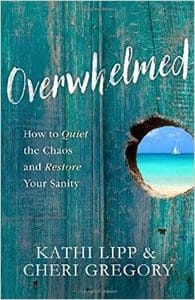
So, our goal today is to give you a game plan for how to better manage your stress and anxiety. And we’re gonna hear from a couple of wonderful guests who know these feelings very well. Kathi Lipp and Cheri Gregory have written a wonderful book called Overwhelmed: How to Quiet the Chaos and Restore Your Sanity. And I think the title says it all.
John: It really does.
Jim: (laughs)
John: And we’ve got more information about this wonderful resource and our guests on our website. Jim, here’s how you began the conversation on today’s episode of Focus on the Family with Jim Daly.
Jim: Uh, let’s start with a word of hope. That might be the better direction because we’re gonna concentrate on a lot of things that are probably broken or feel broken.
Kathi Lipp: Mm-hmm.
Jim: Um, so let’s start with that word of hope. Is it actually possible (laughs) to not feel overwhelmed?
Kathi: I th- well, okay.
Jim: (laughs)
Kathi: So maybe this doesn’t sound super hopeful.
Jim: It’s tripping you already.
Kathi: I would say no, but I believe there’s a game plan to get out from feeling overwhelmed.
Jim: So you, to help manage it better.
Kathi: Right. Because I think that that, overwhelm can come from anything from having to run extra errands that day, to the illness of a parent. So you’ve got the whole gamut in between, but the feeling is overwhelmed. And so, that rises up in a million different ways every day, every week, every month, but there are strategies to not live in that place of overwhelm.
Cheri Gregory: Well, and so many women, I think the overwhelm becomes their identity. They don’t say, “I have overwhelming circumstances.”
Kathi: Mm-hmm.
Cheri: They say, “I am overwhelmed.” And so that’s the hope that we’d like to bring, uh, today and through our book is that it’s possible to go from, “I am overwhelmed,” to, “There are overwhelming things happening in my life, but I am not overwhelmed. I am at peace. I am free and I have hope.”
Jim: Well, let’s start with the basics. What is the definition of being overwhelmed?
Cheri: Well, if you look it up in the dictionary, like a good English teacher, (laughs)-
Jim: Which you are, by the way.
Cheri: Yes. (laughs) You know, the description in the dictionary is a description of a wave coming crashing over and turning you completely upside down. And when I speak on this, I use a slide of an enormous tsunami wave. And that’s what it feels like, whether it’s an external overwhelm because of the outside circumstances, or some of us it’s the internal overwhelm. We have huge emotions. I call it the emotion ocean coming up. But whatever it is, it feels like this force that is absolutely about to come over you and take over you and make it so that … I mean, if you’ve ever been tumbled in a wave in the ocean, you can’t breathe. You c – you don’t. You’re so disoriented, you don’t even know which way it’s up.
Jim: See, and that may point to why I’m a sick person, because I love that. (laughs)
John: (laughs)
Kathi: Wow.
Jim: I love to be turned over in a wave in the ocean.
Cheri: But you then have a much higher need for stimulation and take risk.
Jim: Yahoo, let’s do that again. (laughs)
Cheri: Uh-huh.
Jim: At least that’s true when I was younger. But on the serious side, that is that perpetual sense of being overwhelmed. You’re saying it becomes part of who you define yourself as.
Cheri: And do you like that when it blindsides you?
Jim: No, of course not. It’s when I’m-
Cheri: You like it when you choose it.
Jim: I’m choosing it. I’m in the ocean with my boys.
Cheri: Exactly.
Jim: And we’re body surfing and we’re in eight-foot waves.
Cheri: Mm-hmm.
Jim: And it’s kind of exhilarating and exciting.
Cheri: Yeah. And so you’re on top of it literally.
Jim: Correct. Well, yeah. (laughs)
Kathi: And, and overwhelm is, I think, really at its core is a lot of circumstances and feeling that you have no control over.
Jim: Okay.
Kathi: And so, when you’re caught up in somebody else’s drama or external circumstances or emotions that really you don’t have a way to manage, that’s the overwhelming feeling that tends to shut us down.
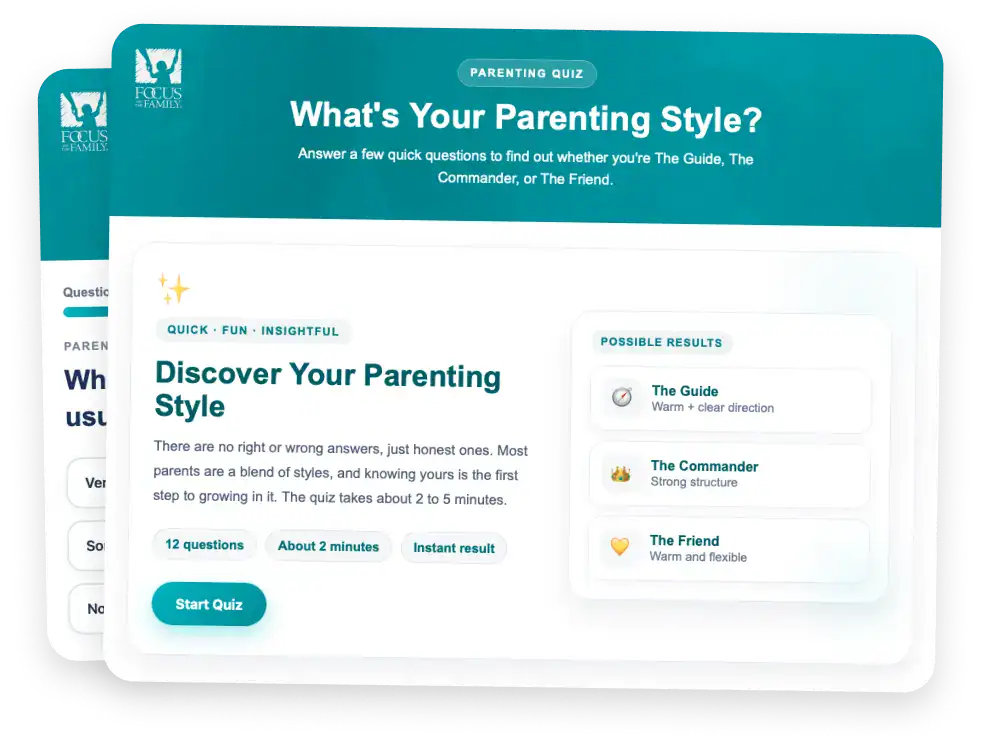
Jim: Now, you have also created in your book Overwhelmed, uh, a quiz.
Kathi: Mm-hmm.
Jim: What does that help you see in yourself?
Cheri: The first quiz in the book, uh, helps them identify what kind of overwhelm they are, whether it’s decision fatigue or maybe they don’t know their true self, or they’re not being true to themself, doing too much for too many for too … With too little for too long, having unexpected emergencies, or being overwhelmed by worry and disappointment. I mean, that was one of the things that you realized early on, Kathi, was that overwhelmed takes on so many different facets.
Kathi: Yeah. What Ch- overwhelms Cheri doesn’t overwhelm me.
Jim: Okay, so it’s individual.
Kathi: Right. But what overwhelms me Cheri can handle with her hands tied behind her back-
Cheri: In fact, I enjoy some of the things that overwhelm you.
Jim: (laughs)
Kathi: Which is just, uh, it’s hard to be friends with somebody like that sometimes.
Jim: Oh, that’s the friend you need though.
Kathi: It is the … And that’s exactly why we’re good friends is because we can talk each other down. We can help-
Jim: Oh, interesting.
Kathi: … unravel some of that. I think it is so valuable to have somebody in your life who can help you identify what your overwhelm is and really help you with a game plan.
Jim: So you would, if you felt overwhelmed, it’s possible you would call Cheri and say, “Help me out.”
Kathi: Um, call, text, Facebook, message.
Jim: (laughs)
Kathi: Yeah, we do it all the time. We … If you look back at like our texting and stuff like that, we are constantly … I just was on a family vacation. I love my family. I love them to pieces. But there were a whole bunch of cries for help, cries for prayer. Um, Cheri calls it praycessing, so it’s processing through prayer, all of that. Because having somebody look from the outside and saying, “I know it feels overwhelming, but here is your next step,” is a huge, huge gift.
Jim: I wanna talk about those personalities in just a minute, but you mentioned decision fatigue.
Cheri: Yes.
Kathi: Yeah.
Jim: And that, I’m just, uh, thinking of people close to me in my life. (laughs)
Kathi: Yes.
Cheri: Mm-hmm.
Jim: And how decision fatigue, I see that one. It’s more, uh, prevalent in, in our marriage. What does that mean, decision fatigue?
Kathi: Well, uh, this came, as we were writing this book, I, I texted Cheri and I said, “I think …” I can’t remember if I said 80 or 90% of overwhelm is just decision fatigue. And she sat with it for a while and she said, “You know what? I think you’re absolutely right. It’s … We have so many more decisions we have to make than we’ve ever had to make before because there there are so many more things that are required of us.” And so, you know, I had a much simpler life when my kids were little, but there were a bunch of decisions that had to be made. But now, you know, doing business, friendship, relationships, online, uh, there are a mul- just look at how many channels we have on TV.
Jim: No, it’s true.
Kathi: Decision fatigue is everywhere.
Jim: It’s true. And I think we all feel it, but again, I think women feel it to a greater extent than men often do because there’s so many things you gotta decide.
Kathi: Well, and I, th- this is so key in our time right now. We have so many more opportunities.
Cheri: Mm-hmm.
Kathi: You know, what were my opportunities 50 years ago for career and what I was going to do with my life? And now I look at, I have, uh, just unlimited opportunities, but it also means unlimited decisions.
Jim: Yeah. Now, let’s talk about those, uh, major personality types that you’ve uncovered. Um, describe each type, and, uh, what overwhelms most women. Again, these things can fit with men as well.
Kathi: For sure.
Jim: But let’s go through the, the personality types.
Kathi: So, uh, the first personality I’ll talk about is the expressive, which is me. And I know we’ve talked about these things.
John: You’re expressive.
Cheri: (laughs).
Kathi: I know. It’s a shocker to everybody who knows me. And so, we are, we’re the starters. We’re the ones who love to get the ball rolling. We have ideas. We’re innovative. But we also, when it comes to overwhelm, we have some really key, uh, issues that overwhelm us.
Cheri: Within expressive, we become overwhelmed when life is no fun. And so, we will start to add the fun to our life-
Kathi: Yeah.
Cheri: … and we’ll start new things-
Kathi: Mm-hmm.
Cheri: … in addition to everything we have-
Jim: Like too many new things?
Cheri: Oh, way too many.
Kathi: Way too many.
Cheri: Because all the things we already started have gotten boring-
Kathi: Or hard.
Cheri: Or hard.
Kathi: And when it’s hard, we don’t, we don’t like hard. Hard is hard.
Jim: So discard hard-
Kathi: Yes.
Jim: … and move on to the next fun thing.
Kathi: Yeah, let’s do the new … ‘Cause it’s fun to start things, but it’s hard to finish.
Jim: So how does that come when it, it’s like paying bills? (laughs)
Kathi: Oh. I, I’m not allowed to pay bills in our house because we, both Roger and I would end up in prison.
Jim: (laughs)
Kathi: I mean, I just know that. And so, it’s good to know what your strengths and your weaknesses are. And it’s great, you know, how, how amazing is it that God often gives us somebody who is completely our opposite, which Roger is to me. He can make sure that bills get paid and we’re not thrown out of our house. I make sure that we have a lot of fun in our relationship, and it’s a good balance for us.
Jim: Okay, so that’s the expressive. What’s the next type?
Kathi: Okay. So, the analytic. And this is more of what my husband is. He’s the one who makes sure the bills get paid on time, but there’s definitely for an analytic, I would say there’s a process and a procedure to everything. And when those don’t go according to plan, that can be really frustrating.
Cheri: Yeah, the analytic becomes, uh, overwhelmed when life is imperfect. And almost always it’s the people in their life that are causing the imperfection.
Kathi: (laughs)
Jim: (laughs).
John: It’s not the, it’s not the process? It’s the people.
Jim: That gives you a little feeling of what Jesus felt like, right?
Cheri: (laughs)
Kathi: (laughs)
Jim: Everybody around me is not perfect. (laughs)
Cheri: Absolutely. Absolutely. And so, um, they have a hard time making decisions because it has to be the perfect decision. And telling them to make a good enough decision, like, their eyes will cross. It’s an, that’s a concept they can’t understand, good enough.
Jim: So how … Let’s, uh, again, putting it in the context of the woman having that analytical gift.
Kathi: Mm-hmm.
Jim: How does that work in the marriage? I mean, what do you do if you’re married to a non-analytic and everything your husband’s doing is irritating you?
Kathi: (laughs)
Jim: ‘Cause it’s not perfect.
John: It’s not perfect, yeah.
Jim: And-
Cheri: You know, I have so much compassion for this particular woman, because in our society the expressive is admired. We want them at the party.
Jim: Right.
Cheri: But who wants the person who’s busy going, “Oh no, honey, that didn’t happen on Thursday, that happened on Friday. Oh no it didn’t, it didn’t happen on, at two o’clock, it happened at 2:07.”
John: Are you saying there’s something wrong with this? (laughs)
Cheri: I’m saying that that person generally is not popular at the party. But when you think about it, this is the woman who gains her sense of peace from having her home look beautiful. This was my mother. And having everything in the right place makes her feel not overwhelmed.
Jim: Right.
Cheri: And when she lives with a bunch of Philistines who could care less-
Jim: (laughs)
Cheri: … she can get that house looking beautiful. Maybe she stays up till 2:00 in the morning and then what happens at 6:00? The people wake up.
Jim: Right. The imperfect people.
Cheri: Yes. And they ruin everything because they don’t care. And so, you know, this is a hard position to be in. And I think, to answer your question, she needs to be really honest with her husband and say, “This is important to me. Just like you having a good time at a party-”
Kathi: Uh-huh.
Cheri: “… fills you up, these things fill me up.”
Kathi: And I think one of the biggest acts of service we can do to our fellow women is tr- understand and recognize the strengths that they bring to the table.
Cheri: Yes.
Jim: Sure.
Kathi: I am about as far from an analytic as you could possibly get. There is no scale for how far I am.
Jim: (laughs)
Kathi: But I so appreciate, and it’s taken me years because I thought they were just fun-quelchers. And what I’ve come to understand is I need those analytics in my life, and they need me. We need each other.
Jim: Well, and, and it’s a great point, you and Roger particularly.
Kathi: Yeah.
Jim: ‘Cause you said he was more the analytic.
Kathi: For sure.
Jim: So the early part of your marriage, what kind of conflict did this create?
Kathi: Oh, my goodness. I made him crazy. You know, to him, it’s obvious when you take the toothpaste, you know, lid off, you put it back. I’m like-
Jim: You’re one of those? You and Jean.
Cheri: (laughs)
Jim: Oh, no.
Kathi: Why would you do that?
Jim: (laughs)
Kathi: ‘Cause you just have to take it off again. You know, I, that’s the most basic example, but I, I know that it was frustrating for him to not do things in a particular way. But I come to understand, I’m one of the most blessed women in the world because my bed is made every day. It’s not ma- made by me, I’ll be honest with you.
Jim: Oh, you are blessed.
Kathi: I am. I am.
Jim: (laughs)
Kathi: I, and so unders- when I learned to call out in Roger, “Thank you so much for taking care of the details because I know that’s what makes our lives run.”
Jim: Do you know how many wives’ elbows just went into the ribs of their husband because of what you said?
Kathi: Yeah.
Jim: I mean-
John: The bar just got raised.
Jim: “Ouch, wha-” “He makes the bed, honey.” (laughs)
Kathi: Well, but you know why he makes the bed? Because I appreciate that he makes the bed. When we look at, you know, it’s the same things that attract us to our spouse that make us crazy later on.
Cheri: Mm-hmm.
Kathi: And so, when I came to understand, I do appreciate all this. I have to learn how to live with it and I have to tell him how much I appreciate it.
Jim: Okay. We’ve only covered the expressive and the analytic. We got a couple more.
Kathi: Okay.
Jim: But, but before you do that though-
Kathi: Yeah.
Jim: … I wanted to ask this. When you realized this, did you begin naturally to create even, um, work lists between each other? So you went to your strengths rather than your weaknesses?
Kathi: We absolutely do. So, one of the things I’ve learned is Roger doesn’t wanna feel like he is doing the bills by himself. He wants to feel like we’re in a partnership. So, he does the bills while I’m sitting in the room, like, organizing papers and stuff. He just needs to know that there’s a team member with him. But bills fall squarely in his bucket. And, you know, it, we, we learned this in the kitchen. He is a master at getting the dishwasher loaded to maximum capacity.
Jim: (laughs)
Kathi: He has this figured out. I hate loading the dishwasher, so I do everything else, you know, putting things away, cleaning the counters. When we understood that, we stopped fighting about cleaning the kitchen. It wa- it’s such a magic key. The dishwasher overwhelms me; the kitchen overwhelms him. Why are we forcing ourselves to do things that overwhelm us when we have somebody who is so much more capable and can just sit in their gifts and do what they’re supposed to do?
Jim: Okay. But in that context, and we will get to the other types.
Kathi: Yeah.
Jim: Uh, what do you do when you come to an impasse?
John: Both of you hate the dishwasher.
Kathi: Then we both have to suck it up and do it.
Jim: (laughs) Okay.
Kathi: And I know that’s hard, but you, but when you see yourselves operating 90% of the time in your strengths, that 10% becomes a lot less contentious.
Jim: That makes sense.
Kathi: Yeah.
Jim: All right. Let’s go to the next one.
Kathi: Drivers. Okay, drivers are the ones who want to get things done. They’ve got a plan. And even if they have to leave dead bodies in the road, they’re going to achieve that plan.
Jim: (laughs)
Kathi: And a driver just, what overwhelms them is when life is out of control.
Cheri: Yeah, drivers do not like surprises.
Kathi: Yeah.
Cheri: Because if there’s gonna be surprised, they wanna be the one who actually causes the surprise to happen.
Jim: (laughs) Okay.
Cheri: A, a driver you do not … S- spontaneity for them is like three weeks of planning.
Jim: (laughs)
Cheri: They do not like to have the surprise.
Jim: I’m thinking of some combos here.
Kathi: Yes.
Cheri: Yes.
Kathi: Yeah. And then finally, the amiable. This is the person who just gets along with everybody. You know, they’re-
Jim: Finally.
Kathi: Yes, I know. I know. We need amiables. They’re the one, they’re the peacemakers, the peacekeepers. These are great people to have in your life. But the amiable becomes overwhelmed when life is filled with pressure from other people.
Jim: (laughs)
Kathi: That’s, that’s a huge issue.
John: So, so is the amiable a people pleaser then?
Kathi: Uh-
Cheri: They can tend towards it.
Kathi: Okay.
Cheri: They lean in that direction. Their downfall is that they tend to make everybody else, uh, make the decisions for them. And they never express what they actually want. But at some point all of that becomes cumulative. And then, then they’ll end up, uh, blowing up and saying, “You never listen to me. You never do anything I want to.” And everybody around them is going, “When did you ever tell us what you wanted?”
Kathi: Okay.
Cheri: “When did you ever give us input?”
Jim: So what should that wife do, particularly, again, talking in the context of women? If she’s an amiable, married to a non-amiable.
Kathi: So she needs to have a safe place to be able to say what she wants. And she needs to get brave and say, “Here’s what I’d like. I’m willing to compromise. I’m willing to come to a consensus, but here’s what I’d really like.” And I think for the amiables, sometimes they still have to figure out what they really want.
Cheri: Oh, yeah.
Kathi: And so that’s a self-discovery process that they have to sit in and pray in.
Cheri: Well, and I think a lot of women, they know what they need, but even the idea of saying, “I will want,” that feels so selfish.
Jim: That’s a hard thing to say.
Kathi: Yeah.
Cheri: We are so culturally ingrained that self is, means ultimately selfish. And yet, what I found with my husband, you know, I’ll, I’ll dance around and never tell him what I need or want, and then I’ll get mad at him when he doesn’t do it. And he’s a good man. If I would just say it in one sentence, “I want this,” most of the time he’ll do it if I can say it clearly to him. But for me, it was years of coded communication. No, it wasn’t really communication, because he didn’t, he could never figure out what it was.
Jim: (laughs)
Cheri: And so, slowly in the last few years it’s been part of the overwhelmed journey, learning to say, and it’s hard.
Kathi: Mm-hmm.
Cheri: It’s hard for me to find out for myself. And then of course, if I don’t know, how is he gonna possibly know?
Jim: Yeah. Oh, that makes such sense.
John: This is Focus on the Family with Jim Daly, and today we’re hearing from Kathi Lipp and Cheri Gregory as they, uh, talked about a book they’ve written called Overwhelmed: How to Quiet the Chaos and Restore Your Sanity. And, uh, we’d recommend you get a copy of that from us at focusonthefamily.com/broadcast. And let’s continue the conversation on today’s episode of Focus on the Family with Jim Daly.
Jim: Cheri, I appreciate that. Um, that knowing. Uh, but are you 10% better at that now or 50% better in terms of expressing your desire to your husband so he clearly gets it? How often are you hitting it?
Cheri: I’m one who has to take the time to be able to think, “Okay, what is going on right now?” And in the past, what I would do is I would just immediately try to change what he was doing. Let me give a quick example. We were driving down from my father’s remarriage, which was already a emotionally fraught event for me. And my husband wanted to take his car in to be washed, and so I offered to do it before we left, and he didn’t wanna do it that way. So, I decided not to get into a big debate about it, but I was like, “Let me take it first so we …” I wanted to leave 20 minutes earlier.
Jim: Hey, I’m impressed you were ready to go, that you could go wash the car.
Kathi: (Laughs).
Jim: That right there gets me.
Kathi: (laughs)
Cheri: Well, I, I just, I was afraid we were gonna leave late, and so I decided I’m not gonna say anything. And I realized after we got there, what my real desire had nothing to do with the car. My real desire was to not be the one to drive the last leg of the trip. I was afraid that I was gonna get stuck driving from nine to 10 to 11 to midnight. And that did not turn into a big argument, but me realizing, “Hang on, I was talking about when to wash the car,” when my real thing that I should have said is, “Hun, I’m really afraid that if you have me driving from nine to midnight, I’ll get into an accident,” because I totaled his car a few months … His other car a few months ago. And so, for me to look at the, I’m talking about washing a car, but my real need is to not be driving at night. And so that’s, I, I’m trying to use that kind of as my template, okay?
Jim: Right.
Cheri: I’m asking him to change what he’s- he said he’s gonna do. What’s my real desire? What’s my real need here in this situation?
Jim: So, you’ve hit the four, the expressive, the analytic, the driver, the amiable, all of them pretty self, uh-
Cheri: Uh-huh.
Jim: … disclosed. Uh, lastly though you have a kind of a nuance for the, for what you almost identify as another, but that’s the highly sensitive person.
Cheri: Mm-hmm.
Jim: But I guess would apply to any of the four-
Cheri: Yes, for sure.
Jim: You possess that, Cheri.
Cheri: Yes.
Jim: Um, what does the highly sensitive person, uh, react like and, and how does it fit with these other four?
Cheri: You know, the highly sensitive person, the first thing is they are very extra easily overwhelmed. And sometimes it can be emotionally overwhelmed, it could be sensorily overwhelmed. It might be the woman sitting in church and she can’t concentrate because the drummer is, is beating s- the drums so loud. It might be the guy who can’t concentrate because the woman sitting next to him, her perfume is just giving him a headache. And so, they also tend to have, be very deep processors, like you’ll say something and forget it. Five days later they’re still mulling over what you meant by that.
Jim: Yeah.
Kathi: She remembers things that I said three years ago. I’m like, “I said that?” But she remembers-
Cheri: I remember where we were when she said it.
Kathi: It, it’s crazy.
Jim: (laughs)
Kathi: And so I’m, I’m a highly insensitive person apparently.
Jim: (laughs)
Kathi: But it’s, it’s true that they have to chew on things for longer. They need to process longer. There’s, it just, there’s more.
Cheri: When I learned about this and I would go to a faculty meeting where they would wanna bring something to an immediate vote, I would s- I started becoming the person to say, “Can we please have 24 hours? Can we please have 48 hours to think about this?” Because I don’t know what I think about something until I’ve, I’ve had some time to praycess it. And usually it is 24 to 48 hours.
Jim: Well, and you talk about in your book, uh, the future you, to aim for that future you. And describe what you are getting at there, the future you. It sounds a little funny. But, uh, what are you aiming for? And then let me have a follow-up.
Kathi: Well, it’s talking about serving your future self. Who do I wanna become? And so, one of the tools we have in the book is a, uh, personal manifesto. And I love this. This is, I’ve written out things, and Cheri has too, about who I am at my best self and who I want to become. And so, things like, you know, I, I love God, I love my people, and I love His people. I tell the truth, but I tell it with love. These are the things that I don’t always do 100% of the time, but it’s what my best self does. And so, what I’m trying to do with God, uh, you know, dir- directing me and guiding me is to become the best version of myself in the future as I possibly can. I’m constantly working for that.
Jim: I would think that creating that future you perspective can be a little bit demoralizing at times. Let me just take an easy one.
Kathi: Yeah.
Jim: You know, I struggle with this as well, but if you look at a year-
Kathi: Mm-hmm.
Jim: Now we’re in January.
Kathi: Yeah.
Jim: I’m sure many people have just set their New Year’s goals-
Kathi: Right.
Jim: … right? “I’m gonna lose 20 pounds.”
Kathi: Yeah.
Jim: And this is a common one.
Kathi: Yeah.
Jim: And you get to December at the end of this year going, “I’ve actually put five on.”
Kathi: (laughs) Yes.
Jim: And, “But that wasn’t my future you.”
Kathi: Right.
Jim: And now you’re already disappointed, in a hole-
Kathi: Yeah.
Jim: … recriminating yourself that you didn’t do what you set out to do.
Kathi: Yeah.
Jim: How do you not get trapped in that vicious cycle?
Kathi: Okay, first of all, I think you know, we have this, these goals, and I think goals are important, but they come second to, who do we wanna become? So, instead of saying, “I’m gonna lose 20 pounds by the end of the year,” I say, “I have to earn health every single day.” So, what that means is today I need to go take a walk. It doesn’t mean I need to go prep for a marathon, but today I need to spend a little bit of time going for a walk. I need to take care of myself physically, mentally, spiritually, and emotionally. And so, when you really see that a lot of this future stuff is really self-care, it really changes your perspective on it. It’s not beating yourself up for those extra five pounds. It’s saying, “What can I do today to take really good care of myself?”
And today, all God is calling me to do is move my body, you know, to go out and take a walk and to go enjoy what He, this whole great world that He’s provided for me. And when you change that perspective, it seems so much more indulgent at first, but it’s actually things you can stick with. What a, what a concept, you could stick with going for a walk every day.
Jim: I really like practical steps like that. And what a great conversation with Kathi Lipp and Cheri Gregory about changing our mindset and understanding the different ways we respond to unexpected challenges in our lives. And I’m looking forward to hearing more of their insights next time.
If this topic resonates with you, we certainly recommend you get this excellent book by Kathy and Cheri, Overwhelmed: How to Quiet the Chaos and Restore Your Sanity. And make a monthly pledge of any amount to Focus on the Family, and we’ll say thank you by putting a copy into your hands. It’s a win-win arrangement. You get a great resource, and we’re able to encourage and support more families because of you all year long.
John: Yeah. And Jim, we hear proof of, uh, how donations to this ministry are transforming lives all the time. A man named Dennis shared this. He said, “When I was traveling on the road, I listened to Focus on the Family. You always had a variety of family topics, and I was a new father and husband, so I gleaned many beneficial ideas that I tried to put into practice. The family is so important to the church, to communities, and to our country.”
Jim: That’s well said, Dennis, and I so appreciate your comment. Strengthening marriages and equipping parents like Dennis is what we do each and every day. And it’s only possible because of listeners like you who provide the fuel we need to produce programs like this one, and distribute resources, providing counseling, and so much more. So, let’s do ministry together. We can be ministered too, and certainly Jean and I have experienced that with Focus resources, uh, meeting those needs within our own marriage and parenting tasks, but we can also give back to others. Uh, so let me encourage you to make a monthly pledge or send a one-time gift, and let’s see what God will do in more families.
John: Our number is 800, the letter A, and the word FAMILY, or donate and get your copy of the book, Overwhelmed, at focusonthefamily.com/broadcast.
By the way, if you have a story or comment about how Focus on the Family has impacted your life or family, maybe you identify with Dennis, uh, and his story, we’d love to hear from you. We’ll have a link at our website and in the show notes where you can leave a message for us, and we hope to hear from you soon.
Thanks for listening to Focus on the Family with Jim Daly. I’m John Fuller, inviting you back as we have Kathi Lipp and Cheri Gregory back next time, and once more, help you and your family thrive in Christ.