




Rod Gragg: And the belief was that you were to be submissive to authority over you unless that authority usurped the higher law. And they believe that’s what occurred and you see that in the language of the Declaration of Independence. And that really was the motivation, uh, throughout the Revolutionary War.
John Fuller: This is Focus on the Family with Jim Daly. We’re looking forward to celebrating our nation’s 250th anniversary this weekend and to commemorate this really, uh, foundational moment in our country’s history, we’re joined today by historian Rod Gragg, who shares about the incredible faith of George Washington and other leaders in the Revolutionary War. Thanks for joining us. I’m John Fuller.
Jim Daly: John, I love reflecting on how God’s hand of Providence has been on this nation from the very beginning and Independence Day is a great time for us to remember all that He’s done for this country. Uh, of course, we know that George Washington and the members of the Continental Congress, uh, were fallible people. We are all fallible. We’re all sinners saved by grace and we get that. But God certainly used their faith and courage in extraordinary ways, and we can learn a lot from them. Our guest today is historian Rod Gragg, as you’ve mentioned, and he’s dedicated a lot of his, uh, time studying the Revolutionary War and the faith of the founders and I’m looking forward to this discussion.
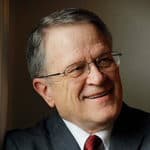
John: I am too. Rod is an award-winning author of more than 20 books. Uh, he has, uh, spoken at many, many different venues. He’s been on national TV shows sharing from his wealth of expertise. Uh, he and his wife have seven children and 14 grandchildren.
Jim: (laughs) Rod, welcome back.
Rod: Thank you. Good to be here.
Jim: So good to have you. Tell me in your words, why is it important for us to talk about George Washington’s faith and the influence that he had on the American Revolution? So often in today’s, you know, lexicon when we raise a Founding Father, good point, people jump on all the bad points, but what was so unique about Washington and his commitment?
Rod: Well, to me, I think what’s distinctive about him the most in terms of faith is that he was really representative in the sense that he was motivated and directed by his personal faith, and that was really typical of what it was like in colonial America. Uh, the Judeo-Christian worldview was really the bedrock foundation, and it really affected everything: American law, culture, government. And Washington really was more typical of his day and then you would think that, uh, you’d see in any other era.
Jim: He, uh, seemed to express in his writings and his diary, et cetera, just how much faith meant to the country and that the events of the Revolution were evidence of why all Americans should have faith. And in fact, he said this in one of those writings, “I am sure there never was a people who had more reason to acknowledge a divine interposition in their affairs than those of the United States. And I should be pained to believe that they have forgotten that agency, which was so often manifested during our Revolution.” I mean, that’s pretty straightforward, right?
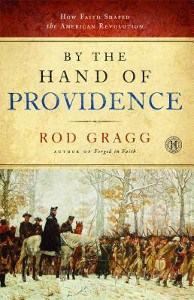
Rod: Right. And he uses the phrase throughout his writings, uh, which were voluminous, uh, “By the hand of Providence,” “Through the hand of Providence,” “The interpositioning of Providence.” He used that a lot and that’s where the title of the book comes from.
Um, but Washington was a very reserved man. He was a low church Anglican and, uh, he really was one, his family said, who wanted to express his faith more by action than by words. Although he wrote a lot and expressed a lot of his faith in his writings, in his leadership, during the Revolutionary War as general, and as commanding general of the Continental Army and all the armies. His particular army that he led himself he encouraged his troops to follow the, what he called, the “character of a Christian and their duties.”
He was very serious about appointing chaplains and chaplains who were serious about their faith. He took a position that after defeats, he would call for a time of reflection and-
Jim: Yeah.
Rod: … and worship and repentance. And what you saw there was in Washington’s influence and how he made sure that his troops treated Loyalists that were near his army. He treated them respectfully and, uh, did not mistreat them and that really attracted them to the Patriot Cause. Particularly in contrast to the British, uh, who so often would fall into this harsh, brutal form of warfare that kind of moved people away from them. And, uh, when you look at the-
Jim: Huh.
Rod: … when you look at the population, Americans at the time of the Revolution, it was really a bunch of thirds: a third Patriot, a third Loyalist, and a third not sure which way to go. And that third really made a difference and because of the, uh, in many ways, I think the conduct of the British, conduct of Washington’s army in contrast, that third moved over to the Patriot side and that made a big difference.
Jim: Yeah, I’m sure. You know, Washington often referred to providence as playing a key role. And, you know, sometimes historians debate, you know, were they, uh, people of true faith, a Christian faith or people of just a greater God. You know, not really narrowing it to Jesus, basically. Speak to Washington’s understanding that way and the language of the day when they talk about providence and divinity and a great God. They’re still pointing to the God that we believe in today.
Rod: Right. The God of the Bible. Washington’s family were insistent that his faith was genuine and deep and, uh, serious. Um, he not only provided leadership in his church, but in the community. He would privately fast at times and his faith, all the evidence shows to it being genuine. And he spoke often of the providence of God working in this time of Revolution. When he resigned his commission at the end of the war, then, before Congress, it was a very moving, dramatic scene, a lot of tears. Washington, who was very stoic about things like that, really struggled to keep his feelings in. But he made the point of saying again that the American, uh, victory and independence came from what he called the “interposition of providence” and also that he trusted the future of this new nation in the hands of God.
Jim: When you look at, um, Yorktown as an example of that providence, as he saw it. What happened in Yorktown in the battle and how did Washington translate that as a divine intervention?
Rod: Well, you really have a situation of the proverbial David and Goliath with the Americans and facing the strongest military force on the face of the earth, at the time. And, uh, European leaders didn’t expect this Revolution to last very long and there are many times where they thought, “Well, now it’s over.” 1777, the British captured, um, Philadelphia, the capital and occupied it and European leaders thought, “Well, that’s all over.” And so, you see that throughout the war, and it really is remarkable and, uh, we can’t know how that happened. But Washington was certain that it was, um, providence that was intervening. And at Yorktown, uh, Washington’s army was in New York surrounding the British. It had gone from a point where the British really controlled everything to a point where the British were on the defensive. And the French sent a French army, uh, to bolster Washington’s troops and then he learned they were sending the French Navy and Washington and the French army made this, um, rapid remarkable march from New York to Virginia aided by the French Navy and bottled up the army.
The British had already a few years earlier, at the Battle of Saratoga, lost an army of 6,000 troops to the Americans and here they were now, uh, losing an army of 7,000. They were surrounded. They were under siege, and they had to surrender. And so, you see this again and again, this David-Goliath thing and this turnaround in the war, uh-
Jim: Mm.
Rod: … that really was remarkable. But at the base of all that was really the American worldview, and the American worldview was Judeo-Christian, the biblical worldview. It affected and shaped everything in the way that Americans thought and acted and responded to all of this. And so it’s, uh, it’s a remarkable Revolution when you think about it in contrast, say to the French Revolution that occurred at the same time where it was really a bloody Revolution against all authority, even Christianity. But the American Revolution was a Revolution of law and the fact that Americans, um, believe that Parliament, and later they believe the king as well, were usurping God-given or inalienable rights.
John: Hm.
Rod: And so it’s no accident, the Declaration of Independence said that “All men are created equal and endowed by their creator with certain unalienable God-given rights, including life, liberty, and the pursuit of happiness.” That’s what they were motivated to fight for.
Jim: Right.
Rod: Not, not taxes, but that.
John: Mm.
Jim: Let me ask you, in that regard, uh, when you look at the freedom of religion, which seems to be under assault today, it’s like we’ve forgotten our way and what our founding was about. Where did the freedom of religion originate and why do we often refer to that as the most core freedom?
Rod: Well, the founding of the 13 English colonies occurred in a remarkable time and place in the wake of what was called the English Reformation where there was, um, an explosion of faith in England that spread across the nation in a great revival. And in that time and place at that moment in time, a very narrow moment, that’s when the English people spilled into the American colonies. And you had a real diversity of faith. You had the Puritans in New England, the Baptists in Rhode Island, the Dutch reformed in New York, you had the Quakers in Pennsylvania, the Presbyterians in New Jersey and Delaware and, uh, the Catholics in Maryland. You had Jewish communities in, uh, New York, uh, Philadelphia and Charleston and then you had the Anglicans in Virginia, the Carolinas and Georgia. So a lot of diversity but all people of The Book.
Jim: Mm.
Rod: And so that was the foundation of American culture and law and government. And so when this Revolution occurred, it really was a Revolution of law where the American people believed that through a series of actions, the British Parliament and later the king were attempting to usurp what was known then as the higher law. And the belief was that you were to be submissive to authority over you unless that authority usurped the higher law. And they believe that’s what occurred and you see that in the language of the Declaration of Independence. And that really was the motivation, uh, throughout the Revolutionary War.
John: That’s Rod Gragg and today we’re talking with him about how the Christian faith shaped the founding of our nation. His book is called By the Hand of Providence, and we’ve got copies here at the ministry, stop by focusonthefamily.com/broadcast to learn more.
Jim: You know, uh, Rod, you mentioned in the book Washington’s perspective on America’s sacred calling as a nation and, uh, I want you to elaborate on that. But also when you, uh, look at that idea of exceptionalism, I think this kind of fits in that area where there seems to be the founding of this country, the Revolutionary War. There is a spiritual overtone to it all. And again, while I’ve traveled, people have said, “America has stood as that beacon of freedom. If we lose America, we lose everything,” because we try imperfectly to stand in that position of freedom through all different kinds of administrations and philosophies and beliefs. But I think at the core, America has always stood for that idea of freedom, democracy, et cetera, imperfectly as it does. But speak to that understanding that Washington seemed to have already that this was an exceptional nation because of its connection to God and then its future was pretty bright if we stood on the right values.
Rod: Well, and that’s, that is how, uh, there’s a good summary of, of what he believed, but again, he was really representative of the general worldview of the American people. And when you look at the Continental Congress, like you look at the American people at that time, you saw in terms of faith, you saw the, those who had little or none. You had the nominal and you had the people who were of a strong faith. But, uh, aside from where they were personally, there was this underlying foundation, this Judeo-Christian worldview and those values and those principles. John Adams said, again, about those signers and those who drafted the Declaration of Independence and he said that, that beautiful group of young men were reunited only by one thing and that was, quote, “The general principles of Christianity.”
So, if you look at how, for instance, Congress provided leadership for that drive for independence and that drive for freedom. Congress, throughout the war, twice a year called, uh, for “days of prayer, fasting and humiliation,” that was the, what they called it.
They actually had the, um, audacity after some defeats to call on American people to repent of their sins. Um, and after victories, they would call for, uh, times of worship. When they wanted to put out a message to the American people, they would send it to two places, and this included the Declaration of Independence. They would send it to newspapers and they would send it to the churches and that’s why it’s a document that’s really laced with the language of faith throughout that. And if you think about it, you know, the US Constitution’s a rule book. Uh, rule books don’t have philosophy in them, they’re the rules. Uh, the mission statement for America was the Declaration of Independence. So, the Declaration of Independence gave you the mission statement, the why, the motivation, the explanation, and then the Constitution is the rule book.
Jim: Yeah, that is really good to think of it that way. Um, Rod, we have to talk about, uh, you know, the national sin, slavery and what was going on at the time. And so often today we place our current cultural perspective, our modern glasses, on the view of those then. Um, although I do like Shelby Steele, who I interviewed and Shelby said, he’s an African American, I think he operates out of Stanford University. But one of the things that he said is, “People need to understand that the Founding Fathers, although they didn’t do away with slavery at the time, they wrote the document that would quickly, compared to how long slavery had been in play.” I think they, he said, it was a 3,000-year-old industry that started in Africa, certainly was used around the world for an economic engine. We get all that, but he said, “If you think about it, the Founding Fathers created a document,” that you quoted a moment ago about all men being created equal, “that within 80, 90 years, it would result in the Emancipation Proclamation, what Abraham Lincoln would do”
So they took a 3,000-year-old industry, created a document that could illuminate people at the right time with the right leadership to end it. And that’s kind of part of our history too. But speak to that idea that everything the Founding Fathers believed is nullified because they didn’t attack slavery at the time, even though George Washington wrote about the growing concern he had about it.
Rod: Well, first of all, you have to acknowledge and understand, come from a point of view, that’s reality that, uh, slavery was the great American tragedy. That in the, often the way the government treated, uh, Native American peoples, great American tragedy. Um, and yet at the same time there was this great debate about slavery with the Founders at the time of the Declaration of Independence and Jefferson’s original draft was stronger about it, language that was taken out. And the big concern was, politically, that it, they felt like that it was so narrow of a vote to be able to pass this Declaration of Independence and it really was narrow. Because they had, it had to be unanimous because you couldn’t have some colonies that were in, some colonies were out. And so the big debate was that finally they decided after dealing with slavery that they couldn’t fix it.
So, they kicked the can down the road because they felt like that they had to have the Declaration of Independence, they had to have a nation and then it could be addressed. So, then it came up again during the Constitution and, uh, it still was not properly addressed, and the can was kicked down the road again. But even with all that imperfection, even with how that all turned out, still the forward motion was put in place. That it was, it’d be such hypocrisy to say in your mission statement that, “All men are created equal by their Creator,” and yet have such inequality with slavery.
And so once that document became the mission statement of this new nation and was expressed through law, through the Constitution, it was like the clock was ticking on the death of slavery.
Jim: Yeah. I mean, in that, you know, it is a scourge. It’s horrific what took place. You don’t wanna minimize that, but like any nation, you hopefully continue to grow in a positive direction and a good biblical direction. Which I think when you look at the arc of history in the US, that’s certainly I think the experience and many people are coming to that same conclusion, including Shelby Steele who just says, “We are so much closer than we were 40 years ago, 60 years ago.” So that continual progress is the key, even though it’s imperfect.
Um, Rod, let me ask you, uh, we have the privilege of celebrating our freedom in America today, largely because of what these people did back then. How did George Washington and the Founding Fathers celebrate their freedom right after their victory over the British?
Rod: Well, for all purposes, the Revolutionary War ended in 1781 with the victory at Yorktown. But it took another almost two years or to work out all the details and come to a treaty at the Treaty of Paris. Um, Washington’s reaction was to call for a worship service.
Jim: Mm.
Rod: Congress did the same thing. Congress called for on these days of prayer and fasting, the Continental Congress, uh, observed those on, uh, typically by assembling together and then marching as a unit to a church in Philadelphia, and in some cases twice at least they went to two different churches for two different worship services. And that’s how they reacted to, uh, the victory. There was this widespread celebration. On July 4th they released the Declaration of Independence.
Jim: Mm.
Rod: And… but Jefferson, Adams, the Founders, they thought the great party day would be on the 2nd.
Jim: (laughs)
Rod: And, uh, Adams said, in fact, he wrote a letter to his wife and said that, you know, “From now on, July the 2nd would be a day of celebration of fireworks, of worship services, of great and glad celebration on the 2nd.”
Jim: Yeah. You know, on this day, we’re celebrating this. This is why we had you here to talk about the founding of America, all of its goodness and all of its imperfection. And I think this will be a little bit of an unfair question, but you’re the historian. So if we could slap the Jurassic Park idea onto the Founding Fathers and somehow we could revive them to come back today and they look at America and they look at where we’re at, what do you think their reaction would be?
Rod: Well, I would say that, and I’ve thought about that. I would say that, and I’m, you know, getting in the ground of speculation here. But I would say first of all that they would be, uh, they would be impressed at the scope and measure of America. They would be, um, impressed to a point with technology. I think they would have a lot to grieve about. I think they would grieve, um, a lot about America and where it is today in terms of its shift in the worldview. Because the … And this is really central to everything that you’re addressing, I believe, but the great influential and under-reported story of our generation to me as a historian is the shift in the worldview, in the Western culture and in America in particular.
You know, everybody has a worldview. It’s how you look at life, it’s how you view the world, it’s at your core values and the traditional historic, uh, Western civilization worldview and the American worldview is a Judeo-Christian worldview, biblical worldview. And in the late, mid-late, 20th century there became a shift from this worldview, the Judeo-Christian worldview holding, um, a view that God is the authority over everything and that God should be the central focus of everything. And the shift over to a view that humanity is the authority over everything and humanity should be the focus of everything. And that’s a, that is a, um, phenomenal shift that has a remarkable impact and cannot do anything but that.
Jim: I think in that context then, right at the end here, you know, what do churches do? Churches played a vital role as you’ve, uh, pointed out in the Revolutionary War. Clergy led people in their theological understanding of what was right and wrong. What about today? How do we apply those principles to our situation today? How do we uh assess our situation and then act accordingly?
Rod: Yeah.
Jim: Uh-
Rod: How should we then live?
Jim: Mm.
Rod: Uh, well I would say that we have to remember that it is a difficult time for people of faith and a particularly difficult time, particularly for Christians who are called on to remain steadfast in the faith and in the truth of scripture. And that at the same time becoming the unpopular minority and also having to show the love of Christ and wanting to show the love of Christ. But I would just say that from a point of view of history that you see, uh, throughout history that the church has flourished under duress.
Jim: Mm.
Rod: So I would say that if we feel pressure as Christians today, and I’m speaking as a, personally now as a Christian, not as a historian, but I think we feel that pressure we have to realize that this is not new for Christianity. This is what we’ve enjoyed as Christians here in this culture over the life of our nation has, has been really unique and, uh, and it’s not typical of what Christians have faced. And yet we see that the church of Christ has flourished throughout the ages.
Jim: It’s a great reminder and I, you know, I think of those scriptures, “Fear not, be anxious for nothing.” I mean, if we as believers believe, I think we should have a sense that God knows what He’s doing and He’s gonna unroll this according to His plan and, you know, I think we need to be projecting the very things the Founding Fathers talked about in terms of a sense of faith, religious freedom, the core beliefs of the Judeo-Christian perspective, the fruit of the Spirit. If we can do those things and remain calm, I think people will wake up when we go into this folly of trying to live life without God, ’cause I think it ends up in a dead end. And I think our culture is experiencing that now.
Rod: Well, always throughout history, if you study church history, the challenge has been, and it is today, that in whatever circumstances we face that we show the love of Christ.
Jim: Do that consistently and God will take care of it. Think of the people in Rome and what-
John: Mm.
Jim: … they faced, like you mentioned, China, where it doesn’t look like the church is gonna flourish or even get out of that decade or that century and then the Lord turns it around and the thing standing in the floor of the Colosseum today is what? Oh, a cross, the cross of Christ. Isn’t that interesting?
Rod, this has been great. Thank you for the conversation. Thanks for re-educating us on what the Founding Fathers, particularly George Washington, was about, what this nation was founded upon, the principles that it was founded upon and the reminder of how do we get back there and concentrate on the core things. “Fear not, be anxious for nothing and love your neighbor and love God” and I think you’ve got the ingredients there for a truly continued great nation. Thanks for being with us.
Rod: My pleasure.
Jim: And if you want to copy this great book By the Hand of Providence, get in touch with us and we will send it to you for a gift of any amount. If you can, make a monthly commitment like Jean and I do and Dena and John do.
John: We are monthly contributors.
Jim: Yeah.
John: Yeah.
Jim: That’s a great way to do it. We’ll send you a copy as our way saying thank you. If it’s a one-time gift, we’ll do the same. We’ll send a copy of the book for you and it’s just a great way to do ministry together.
John: Yeah, donate today and make a generous contribution as you can and we’ll send that book to you, By the Hand of Providence. Our number is 800, the letter A and the word FAMILY, or go to focusonthefamily.com/broadcast.
Coming up next time, an inspirational radio drama about America’s independence.
Irwin Springer: But you’ll be caught. I mean, if you’re caught, won’t you be-
Nathan Hale: Hanged? Yes, in all probability, but if that is the Lord’s will, then who am I to stand in the way? I only regret that I have but one life to lose from my country. Now, up you go.
General George Washington: Godspeed, oh, Irwin Springer. You carry our best hope onward to liberty.
Group: To liberty.
Irwin: To liberty.
Horse: (Horse neighing)
Group: (laughs)