




Effects of Media & Technology
Sexy Too Soon: The Sexualization of Girls
The battle against the sexualization of our children can only be won if we as parents recognize where the battle ground begins.
February 5, 2026
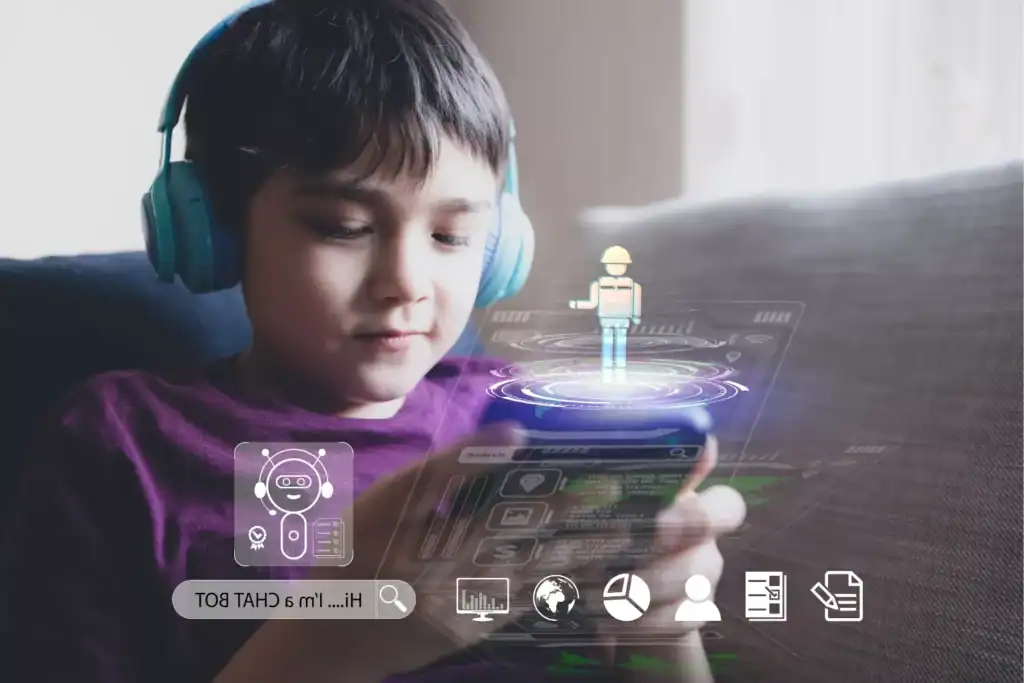
Are screens changing how kids communicate? Strong communication doesn’t appear overnight—it’s taught, practiced, and modeled. In a screen‑first, AI‑shaped world, kids need parents to coach eye contact, listening, and real conversation.
Estimated reading time: 7 minutes
When my daughter Lucy was two, she would scream “MILK!” from her chair like an irate boss. I quickly realized that was not the right way to communicate. I taught her that tyrants don’t get milk, but kids who say “please” do.
Good communication skills aren’t automatic; they must be learned. This takes time, effort, and practice in real life with real people. There’s not an app or AI tool that can teach your kids how to communicate better than you. Today, parents must be more vigilant than ever to protect and promote conversation. How strange that I need to clarify that I’m referring to conversations between humans. Sorry Alexa, Siri, and ChatGPT don’t count.
Now, when kids and teens say “chat,” they don’t mean to talk in a friendly or informal way, to talk about something trivial, or to prattle on. They mean ChatGPT. Isn’t it interesting (and kind of scary) that chatting with people informally as a normal part of life has been replaced with chatting with a computer instead? This is true for kids and adults alike.
Did you know that 70 to 75 percent of teens have used AI companions, with over half using them regularly for friendship, emotional support, and social practice? If your child needs practice with people skills, the fastest and most effective way to improve is to talk to real people–not to practice in the comfort of a bedroom holding a phone.
One in three teens has discussed important matters with AI instead of people. It’s a lot easier asking awkward questions about sex and the meaning of life to a computer versus a pastor, teacher, friend, sibling or parent. You never have to feel foolish talking to AI, nor will you be questioned, corrected, or redirected.
When teens are used to communicating via text, you can see it’s not a stretch to text a responsive, empathetic AI agent who “cares” for you and knows so much about you. Remember that AI is tracking everything your child is interested in. It knows your child’s favorite singer, ice cream flavor, brand of jeans, YouTube celebrity, hobby or sport. It knows what makes your child anxious, and what he or she fantasises about.
One in five teens knows someone who has a romantic AI relationship. At the worst extreme, there are many lawsuits against CharacterAI from parents whose children committed suicide, following the prompts of AI romantic interests. But even if your child isn’t misguided by AI (which is highly unlikely as AI brings sexuality into conversations very quickly), your child is learning how to attach romantically to something that is not even human. This “perfect” boyfriend or girlfriend will be impossible to find in real life.
Using Chat for research purposes may be fine and even encouraged for mature high schoolers (who are ideally using computers in public, open spaces). But using Chat to cheat and do homework robs children of thinking skills, patience, intelligence, and the value of honest work.
Use AI under the rule of silence. In other words, don’t talk out loud to your AI and teach your kids not to talk out loud to AI. Why? If kids grow up talking out loud to watches, tablets, phones, AI-powered stuffed animals, etc., they will grow accustomed to talking with AI. It might become their default and preferred method of communication. We want our kids to feel weird having intimate, personal conversations with AI chatbots and for it to feel natural to talk with a parent or trusted friend (not the other way around).
When I was a little girl, I was shy. I hid behind my mom’s legs when introduced to her friends. I didn’t want to go to the kids’ service at church, and insisted on staying with my parents in “big church.” Finally, my parents forced me to go to youth group in middle school, coaching me to look for one other person who didn’t have a friend and to go be that person’s friend. Walking into the youth group the first few times was super scary for me, but in time, I made friends and within months, was even on the youth leadership team. My parents forced me to overcome my shyness and interact with other kids.
Children who are introverted certainly don’t need to be converted into social creatures who have something going on every night of the week. That is not the goal at all. But all children, whether they are naturally wired to be social or not, need to learn how to communicate and get along with others, making a few good friends along the way.
With the average child spending 7 hours a day on screens, many kids aren’t growing up with a mastery of basic communication skills. They struggle with things like meeting someone new, making eye contact, asking for something they need, starting a conversation, apologizing, or expressing love. Have you ever said something like, “I’m sorry, my child is shy,” when your child didn’t engage?
If so, you’re not alone. Shyness is strengthened when kids are allowed to spend huge amounts of time alone with just their phones or tablets, isolated from others, connected to social media but not to people in real life. Social media is an oxymoron like “jumbo shrimp.” There’s not much social in social media. Kids are growing up very comfortable with texting, posting questionable photos, making mean comments, and being rude to one another to fit in.
Here are a few traits of healthy and unhealthy communicators. Consider which category your child would fit under.
Healthy:
Unhealthy:
Take heart if your child needs to grow a little (or a lot) as a communicator. You can teach your introverted or extroverted child social skills at home and while you’re out. The next time you are in a social setting, and you see a child who is alone, you might say to your child, “Look at that boy. He’s all by himself. Why don’t you go over and talk with him? Why don’t you invite him into your group?” In doing so, you are teaching your child to take the first step to befriend others. You are teaching him or her to overcome nervousness and gain confidence when beginning conversations.
Consider your home as a communication lab. Teach family members to pivot away from screens when talking to each other. Praise your children for making eye contact and being good listeners. Model putting your phone down and ignoring devices when you’re having conversations.
If you want to raise an excellent communicator, scale back on screens. Ramp up conversations and the imaginary play of yesterday. Interacting with screens more than people can foster an unhealthy pattern of isolation and severely weaken communication skills. But you can fight against this, one conversation, one screen-free activity, at a time.
Communication skills aren’t automatic. Children learn how to talk, listen, and relate to others through real‑life practice with parents and peers. Screens, apps, and AI can’t replace human interaction. Parents are the primary teachers of healthy communication.
Heavy screen use can reduce opportunities for face‑to‑face conversation. Many kids become more comfortable texting or chatting with AI than talking to people, which weakens skills like eye contact, empathy, and social confidence over time.
Introverted kids don’t need to become highly social, but they do need basic communication skills. All children must learn how to speak up, interact respectfully, and form relationships. Shyness shouldn’t prevent healthy social development.
Parents can model strong communication by limiting screens during conversations, encouraging eye contact, praising good listening, and creating daily opportunities for face‑to‑face interaction. Treating the home as a “communication lab” helps kids practice safely.






Arlene Pellicane is a speaker, host of the Happy Home podcast, and author of several books including Parents Rising, 31 Days to Becoming a Happy Mom, and Screen Kids (co-authored with Dr. Gary Chapman). Arlene has been featured in places like The Today Show, Fox & Friends, and the Wall Street Journal. Arlene lives in San Diego with her husband James and their three children. Connect with Arlene at the Parents Rising Conference in San Diego, CA, happyhomeuniversity.com/conference. To learn more about Mrs. Pellicane, visit ArlenePellicane.com.
The battle against the sexualization of our children can only be won if we as parents recognize where the battle ground begins.

Instagram and Snapchat may seem harmless and fun, but they can be addicting and damaging for your teens, when these apps are used in excess.

One way to protect our kids from watching harmful things is to restrict which shows are watched by using parental controls on content streaming services. Here is a list of the top 5 streaming services and how to set up parental controls on each.