by...
Age & Stage
Age & Stage






September 2, 2026
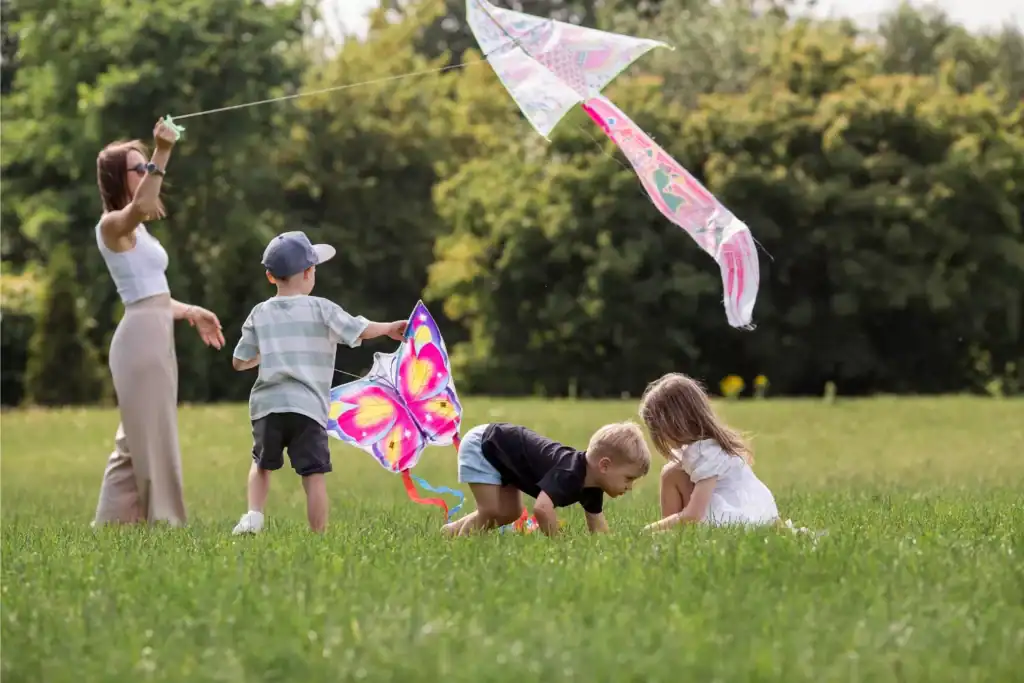
Extraordinary families are shaped through the ordinary rhythms of everyday life.
Estimated reading time: 11 minutes
At the end of some seemingly ordinary days when our children were younger, they would look at us and say, “That was the best day ever!”
What surprised me was that those days weren’t family vacations, amusement park trips, or major celebrations. More often, they were simple days spent with quality time together. We might have played a board game after dinner, played “swing in a blanket,” taken a family walk, built LEGO creations in the living room, or surprised one another with a spontaneous backyard water fight.
Those moments with my kids taught me something important about children: They don’t need elaborate experiences to feel loved and connected. What children long for most is security, structure, belonging, playfulness, and meaningful connection with the people they love. These simple experiences are the foundation of strong families, effective parenting, and the daily Christian family rhythms that help build lasting faith.
Yet many parents feel like they’re barely surviving the day. Between school, sports practices, meal prep, work responsibilities, and church commitments, it’s easy to lose sight of how everyday family routines can become powerful opportunities for family discipleship and building faith at home. After all, many moms and dads are just trying to make it to bedtime.
Kids live in the moment. As parents, if we’re constantly looking ahead to weekends, vacations, and special events, we may miss the tremendous value God has placed in our daily family rhythms. The good news is that Christian family habits don’t require elaborate plans or perfect schedules. Through simple family routines, meaningful connection, prayer, and everyday conversations, parents can build faith at home and create a strong foundation for family discipleship. The truth is that extraordinary families are built in ordinary moments.
One of the most practical and foundational Christian parenting passages in Scripture is found in the Old Testament. The single-minded, first Commandment to love God with all their heart, soul, and strength, is built upon with this clear instruction for moms and dads: “And these words that I command you today shall be on your heart. You shall teach them diligently to your children, and shall talk of them when you sit in your house, and when you walk by the way, and when you lie down, and when you rise. You shall bind them as a sign on your hand, and they shall be as frontlets between your eyes. You shall write them on the doorposts of your house and on your gates.” (Deuteronomy 6:6-9, italics mine)
Notice the rhythm: Not once a week. Not only during family devotions. Not just at church.
God’s Word points parents toward the ordinary moments of life — sitting, walking, waking, eating, talking, resting. Parents are told to teach this as the soul-objective from generation to generation — even to go so far as posting it at the door of the family home and when they venture out in public.
We pass on the love of God through everyday interactions, conversations, routines, and rhythms.
God works through rhythms. He created day and night, seasons, sabbath rest, yearly celebrations, and family traditions. He understands something we often forget: small, repeated actions shape hearts over time.
Christian parenting isn’t built primarily through occasional grand gestures. It grows through faithful daily rhythms that point our children back to God again and again.
Think about Jesus’ life for a minute. Most of His life was shaped by the rhythms of His growing up days in Nazareth. We don’t know much about those early years, however, we can be certain that those years formed Him.
Research continues to affirm what Scripture has taught for thousands of years.
One of the most significant findings in developmental psychology is that children thrive when they experience predictable, nurturing environments.
A comprehensive review of 170 studies found that family routines are associated with stronger social-emotional development, improved self-regulation, better mental health, and greater resilience in children. Consistent family rhythms create a sense of safety and belonging that supports healthy development.
Children find security in knowing what to expect.
A familiar bedtime routine.
A nightly prayer.
Regular family meals.
Weekly church attendance.
Simple traditions around holidays and birthdays.
These rhythms communicate something powerful: “You are safe. You belong here. You are special.” It’s part of developing what interpersonal neurobiologist, Dr. Dan Siegel, calls a M/We identity — a move from an isolated, individual identity toward a relational group identity. Ideally, family relationships build this identity through regular, loving interaction.
For children, routine, even though it can be boring for some, is stabilizing.
When children experience predictable family rhythms, they expend less emotional energy trying to figure out what’s coming next and more energy growing, learning, exploring, and connecting. There is something soothing about these rhythms for young and old alike.
One of the most widely studied family practices is also one of the simplest: eating together. Researchers have repeatedly found that children and adolescents who regularly eat together enjoy a stronger sense of emotional well-being, better communication, and lower rates of depressive symptoms. The greatest benefit may not be what’s served on the plate but what happens around the table — conversation, connection, and shared experiences.
Decades of research led by family scholar Anne Fishel and others has demonstrated that regular family meals are associated with stronger family relationships, improved communication, better emotional health, and positive developmental outcomes.
The benefits are not primarily found in the food.
They’re found in the conversation.
Family meals create opportunities for parents and children to share stories, process emotions, discuss challenges, celebrate victories, and simply enjoy one another.
These moments mirror the relational discipleship we see throughout Scripture. Jesus often taught around meals. The early church gathered around tables. Relationships deepen when people share life together.
The family dinner table remains one of the most powerful discipleship settings available to parents.
Parents are often surprised to learn that every day can contribute significantly to a child’s development.
Emerging neuroscience shows that responsive parent-child interactions actually support healthy brain development. Research on “conversational turn-taking” finds that back-and-forth interactions between children and caregivers are strongly associated with language growth, cognitive development, and healthy brain architecture. In other words, simple conversations matter more than many parents realize.
Healthy conversations help kids grow socially, emotionally, and spiritually, helping them feel seen, understood, valued, and connected. As Christian parents, these moments also provide opportunities to help children interpret life through a biblical lens.
Simple practices such as eye contact, storytelling, reading together, and shared attention activate learning pathways and contribute to language growth. Incorporating these practices into everyday moments will help shape both your child’s heart and mind. Pick one of these opportunities to try:
Instead of waiting for formal teaching moments, we can speak truth and meaningfully connect naturally throughout the day. Ordinary days also give kids the opportunity to grow through boredom, loneliness, and the mundaneness of a predictable day. These feelings are opportunities that ordinary days offer. Boredom often creates space for creativity, while loneliness can deepen their appreciation for relationships and help them learn to enjoy some healthy alone time.
As a child works through these emotional challenges, they learn how to step toward each day rather than trying to skip certain days. They learn that they can choose how to view their ordinary circumstances. You’re teaching your child how perspective influences their decision-making as well as how they can steward their time better.
Do your best to not solve these challenges for your kids. Instead, ask them, “I wonder what you’ll do with this free time you have,” or “Being bored can be an incredibly creative place. I can’t wait to see what you’re going to come up with! Let me know if I’m invited.”
Join them in the struggle, but don’t solve these things for them. The present ordinary days are building blocks for their future ordinary days. What if they learn to see ordinary days as gifts rather than days to just pass in order to get to other “more exciting” days?
Healthy family rhythms begin with healthy relationships.
Focus on the Family’s 2025 Marriage Health in America study found that couples raising children under age 12 often report some of the highest levels of stress and some of the greatest struggles finding meaningful time together.
Many parents feel exhausted. That’s understandable. The early parenting years require tremendous physical, emotional, and spiritual investment. But one of the greatest gifts we can give our children is a growing marriage relationship.
When parents intentionally nurture their relationship with each other, they strengthen the emotional foundation of the entire home. Strong families don’t happen by accident. They are built intentionally, through everyday rhythms, one day at a time.
If you want to strengthen your entire family, start with these core rhythms that can be part of any day:
Children need regular exposure to Scripture. Not merely information about God but opportunities to know Him personally.
Even a few verses discussed together at breakfast or bedtime can create meaningful spiritual conversations. You can send a note with verse in their lunch bag.
“Your word is a lamp to my feet and a light to my path.” (Psalm 119:105)
Remember these words.
Pray with your children. Prayer teaches children dependence on God. Normalize it by praying together in frequent, everyday ways (not just in emergencies) such as when you are in the car, before school, at meals, on a hike, and/or before bed.
Prayer transforms ordinary moments into sacred moments. Prayer also triggers the secure attachment pathways in your brain. (1 Corinthians 10:31)
Children need repeated reminders that their worth comes from God, not performance. Psalm 139 reminds us that every child is intentionally created and deeply loved by God. Call out the character, spiritual fruit, and gifts you see in them. Praise the progress you see in them more than their achievements or outcomes. Doing so helps your child feel seen, known, and special to you and who God made them to be.
In a world full of doubt and identity confusion, you can plant seeds for deep growth and relationship as your child develops.
Healthy families practice repentance, forgiveness, and grace. Children learn humility less from our perfection and more from watching us apologize and seek forgiveness.
Next time you make a mistake, take responsibility to repair what’s been “broken” in your relationship, acknowledge your child’s feelings, and reach out to reconnect with them. This models a humble heart, can strengthen your relationship, and reassures your child that mistakes don’t define your bond.
Helping our kids notice God’s blessings and faithfulness teaches them to pay attention to His work in their lives. As a child sees their parent modeling gratitude, even if life isn’t perfect, God is present. The Bible tells believers to set our minds on things above and be grateful, and to give thanks in all circumstances (Colossians 3:12-15, 1 Thessalonians 5:16-18).
Jesus consistently modeled healthy rhythms of work, ministry, and rest. Many families today are overscheduled and exhausted. Creating space for rest provides family time to reconnect with God and one another.
In Scripture, God calls His people to sabbath — a regular reset designed to allow them to slow down, reflect upon and recognize God’s personal and historical presence. Jesus often withdrew to pray and reconnect with the Father. In our go-go-go culture, this highlights our need for purposeful rest and balance, spurs gratitude, sparks joy in community, and cultivates the opportunity to recharge together.
The good news is that extraordinary impact doesn’t require extraordinary effort. What makes ordinary days powerful is being present, connected, and grateful. Often, it takes just a few intentional minutes to let the mind be present with the moment. If you need some ideas to get you started toward being present, connected, and/or grateful, here are some rhythms our family put in place over the years:
These simple moments strengthen emotional bonds, deepen faith, and create memories children carry into adulthood.
Years from now, your children may not remember every vacation, trophy, or achievement.
But they will remember how your home felt.
The conversations.
The routines.
The laughter.
The prayers.
The thankful hearts.
The sense of belonging.
Those are the treasures hidden within ordinary days.





Vice President, Parenting and Youth
Dr. Huerta oversees Focus’ initiatives that equip mothers and fathers with biblical and research based principles and guidance for raising healthy, resilient children rooted in a thriving faith in Christ.
Dr. Huerta is a bilingual psychologist, licensed clinical social worker, author of 7 Traits of Effective Parenting, and co-author of Focus on the Family’s Age and Stage resource, and various other resources. He is also the co-host and expert on the Focus on Parenting and the Practice Makes Parent podcasts.
For many years, he has provided families with practical, biblically-based, and research-based parenting advice on key parenting topics. He has been interviewed by various media outlets including Fox News, Fatherly, Christianity Today, WORLD Magazine, The Christian Post and CBN, and regularly speaks on Christian radio stations and podcasts across the United States. He’s also written for various publications and is a regular speaker at retreats, conventions, family camps, online events worldwide, and on various social media channels.
Dr. Huerta has maintained a private practice serving families in Colorado Springs since 2003 and has also served families as an employee of Focus on the Family since 2004.
He and his wife, Heather, love the outdoors, have been married since 1997, and love spending time with their two adult children.