Homeschooling
What Is the Make Homeschool Safe Act—and Why It’s a Threat to Parental Rights
A new wave of legislation claims to protect children—but what it really does is place every parent under suspicion.





April 23, 2026
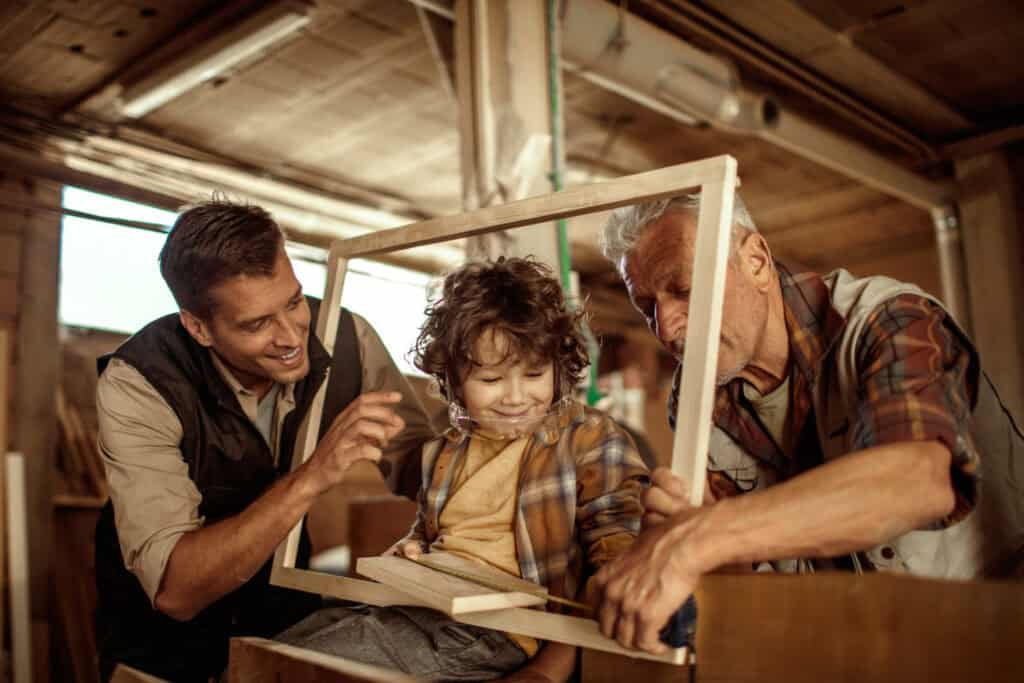
What if one of the greatest benefits of homeschooling has little to do with academics? Emotional intelligence in homeschooling helps children develop resilience, empathy, self-control, and relational wisdom—skills that shape success in life.
Estimated reading time: 7 minutes
Sitting in a wooden chair made for a second grader, I waited. It was the final IEP (Individualized Education Program) meeting of the year. The principal, two of my son’s teachers, and the school social worker came into the classroom together. By the sound of their conversation, it was clear that I had missed the meeting before the meeting. It didn’t take long for me to realize that their decision had already been made. As soon as they were seated, they began setting the stage to announce their verdict.
“Mrs. Robinson, Chris is a delightful boy. It’s just that, well, he didn’t learn anything this year.”
That was exactly what they said last year.
Their plan?
Instead of holding him in second grade for the third year in a row, they decided to relegate him to a classroom for children with learning disabilities, even though he was not learning disabled, but hearing impaired.
Shortly after their pronouncement, in what I can only assume was a feeble attempt to lighten the mood, his teacher piped up with a smidge of pride in her voice and said, “At least he learned to raise his hand this year!”
I’ve never met a homeschooling parent who would consider that a win, let alone any measure of success.
For me, it was a defining moment. It was then, I made the decision to educate our son at home.
That was 1985. And you know what? He must have forgotten everything they taught him—because to this day, I’ve never seen him raise his hand to talk.
Sarcasm aside, what I did not realize at the time was that moment also exposed something far bigger than my son’s struggle in school. It revealed the disconnect between the way traditional systems measure success and what children actually need to flourish in adult life.
Schools are equipped to measure performance, compliance, and academic progress. But many of the qualities that matter most in adult life are harder to quantify: self-control, resilience, empathy, relational wisdom, and the ability to recover from frustration without falling apart. In short, what schools often measure best is not always what predicts real-world success most accurately.
In fact, research points to something many parents already cultivate instinctively—emotional intelligence (EQ). When homeschooling parents understand and actively help their children acquire these skills, it often puts their children miles ahead of their peers.
In short, emotional intelligence is the ability to recognize emotions, manage them wisely, have empathy, build healthy relationships, and respond to challenges without falling apart.
It includes self-awareness, self-management, social awareness, and relationship management. In real life, these skills shape how a person works with others, solves problems, handles disappointment, receives correction, and keeps going when life gets hard.
Research has shown that self-regulation and related emotional skills are among the strongest predictors of future success, outweighing many of the advantages people usually assume matter most.
Yes. Emotional intelligence is not merely an inborn trait. It can be taught, practiced, and strengthened over time.
Emotionally intelligent people tend to have a strong emotional vocabulary, curiosity about others, an understanding of their own strengths and weaknesses, and the ability to let go of mistakes. They also tend to be assertive without sacrificing politeness.
Not only is cultivating these skills within your home important for family life, they have become rare in the job market. Many employers today are not just complaining about a lack of technical knowledge in young workers entering the workforce. They are describing a soft-skills gap: difficulty receiving feedback, weak interpersonal communication, low resilience under stress, difficulty reading social cues and eye contact. Without these skills, navigating team dynamics in healthy and productive ways doesn’t happen.
That is a serious issue, not just for supporting a family, but also for success in adult life. A person must be able to read social cues, work through disagreement, and respond maturely when things do not go his or her way. These are not extra skills for life; they are central skills that affect friendships, marriage, work, leadership, and spiritual maturity.
This is where homeschooling shines, even more than academic excellence. When we take on homeschooling our children, we take on parenting in every aspect. It gives us repeated, natural opportunities to teach the very qualities our children will need long after our planned lessons are over.
Math lessons can quickly turn into opportunities to practice how to recover from frustration. Pesky siblings bring lessons in how to speak with kindness and take responsibility for attitudes and actions—in real time.
These are not interruptions to education. They are the heart of education.
These are real lessons in life preparation.

Ironically, the very traits Chris’s teachers dismissed as merely being “delightful” were the budding traits that would help carry him through the challenge of learning to read words whose letter sounds he couldn’t hear, making up the ground he lost in his early academic years, and, most of all, the storms he would later face as an adult.
In case you were wondering, today Chris is a successful business owner who has faced adversity on many levels. He has pursued his dreams and seen many of them realized.
As homeschoolers, we are often accused of sheltering our kids. However a good homeschool is not a shelter; it is a greenhouse. A greenhouse does not shut out the world. It lets in the right elements—light, air, and water—in carefully measured amounts. In the same way, a thriving home nurtures emotional strength, faith, and resilience in an environment where a child is deeply known.
Our homes are not the backup plan. They are God’s first plan for human formation.
Help your children build an emotional vocabulary from the earliest ages. When a child can name what he or she feels, that child gains one of the first tools for managing it. A feeling named is a feeling that is no longer fully in charge.
The ability to sit and converse with all ages, from small children to aging adults is an important part of a child’s life. If you don’t have that range of ages within your family seek them out in church, in nursing homes, or by inviting other families to come to dinner and visit.
Sibling disagreements and frustrations are not interruptions to your school day—they are the school day. Real-time instruction through conflict builds self-regulation, empathy, and communication skills happens naturally within a home. A parent who helps a child process and react properly through strong feelings is teaching far more than behavior management.
Literature is one of the most powerful tools for developing empathy, letting children safely inhabit other people’s lives. Great books don’t just teach facts; they help form the heart and mind.
Emotional intelligence grows best in the context of relationship. Your modeling emotional intelligence is key. It’s not just about helping children manage their feelings. It is teaching them to how to respond. to the world and people around them by your example.
God did not hand the formation of children’s hearts to institutions. He gave it to parents in the mundane rhythms of living as a family. Deuteronomy 6:6–7 commands us to impress truth on our children as we sit at home, walk along the road, lie down, and get up. That is more than a model for passing on truth. It is how hearts are formed, and the secrets of success are tucked into the ordinary rhythms of family life.






Married to her high school sweetheart, Rhonda Robinson is the mother of nine and grandmother of 39. An award-winning author with over 25 years of writing experience, she currently serves as manager and content producer for the Parenting and Marriage web content at Focus on the Family. Rhonda is also a legacy homeschool mom, her latest book published by Focus on the Family —The Thriving Home School: A Christian Parent’s Guide.
A new wave of legislation claims to protect children—but what it really does is place every parent under suspicion.

If faith and character are part of your family values, homeschooling could be the right choice.

Train up a child in the way he should go; even when he is old he will not depart from it. Proverbs 22:6