




Fun in Parenting
Neglectful Parenting: You’re Not Stuck
Do you feel like your life is mostly chaos? You have an opportunity to overcome neglectful parenting habits to build a strong foundation for your kids and family.
January 1, 2013
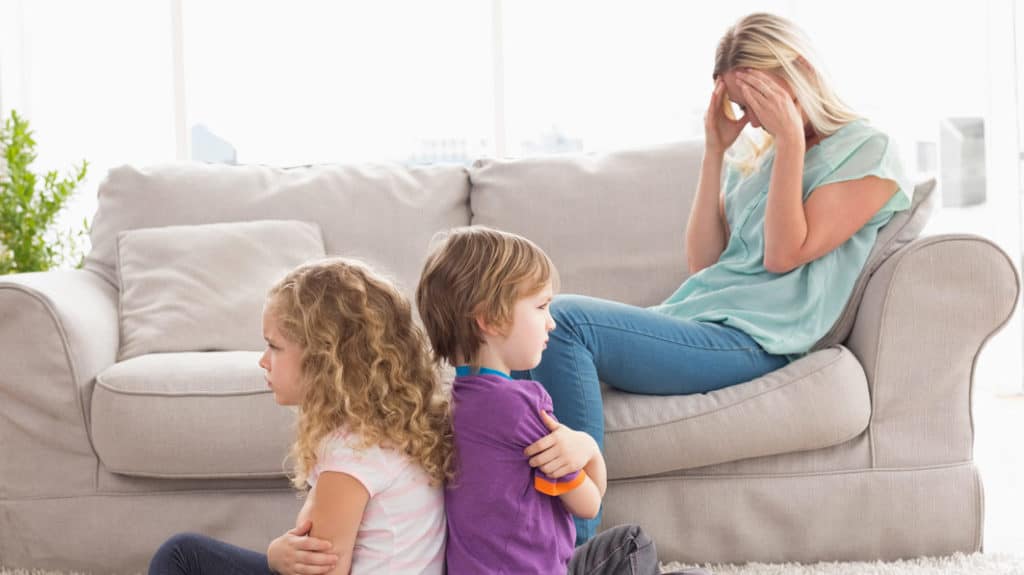
Being the police, detective, mediator and judge for every squabble poorly equips our children for independence. Instead, we should invest time teaching our children to keep the peace.
My preschool-age sons had each decided their individual happiness depended on playing exclusively with our green baseball bat. Every day, I heard them argue over it. I frequently asked, “What’s wrong with the yellow one? Or the red one?” But, no, green apparently hits faster, higher, better.
As a result, I found myself trying to solve every sibling squabble. At the first sound of trouble, I would swoop in and ask questions such as, “Who had it first?” and resort to solutions such as, “I’m just going to take it away.”
As parents, too often we allow ourselves to be ever-present police, detectives, mediators and judges. In the heat of the moment, this reaction is understandable, but it poorly equips our children for independence. Instead, we should invest time teaching our children to keep the peace. In much the same way that parents prepare their kids for “stranger danger” and peer pressure, we can prepare our kids to look for resolutions to conflict.
How I parented sibling conflict changed once I understood that children could be trained in this area. Corlette Sande, co-founder of Relational Wisdom 360, suggested the use of three conflict resolution steps for children: overlook, talk and get help. Corlette says, “Young children can learn how to respond to conflict if we model it and show them how to put peacemaking into practice.”
With my own preschoolers, I began by teaching them to overlook the offense, talk the issue over, and then get help. I first introduced conflict resolution to my children during a quiet moment when they were receptive listeners. We talked about their usual conflicts: toy-grabbing, shouting or throwing game cards. I explained that when a sibling offends them, they first need to try to overlook the offense. Then I gave them a script: Say, “That’s OK,” and stop thinking or talking about it.
If this is impossible (because overlooking an offense takes many tries and much grace), the child has the option to talk about the situation with his brother. He can calmly say: “Please don’t do that” or “May I please have that back?” His brother must answer in a kind tone. The goal of this step is for the children to reach a mutually agreeable compromise.
If my sons can’t reach a satisfactory resolution, the offended child can finally get help. He finds Mommy or Daddy and says: “Would you please help us?” In this step, he knows his parent will hear both sides of the disagreement and then make the final decision.
Sometimes, one of my children forgets the first two steps and immediately runs to me for help. Before intervening, I ask whether he has tried overlooking and talking. If not, I coach him to try again.
With repetition, this process has become a familiar family expression. “What can you do if you have a conflict?” I ask. “Overlook, talk and then get help,” my kids respond.
Following these steps may initially seem unrealistic for preschoolers — a peaceful resolution is not their natural inclination. But with frequent reminders, it’s possible.
I have a son who was adopted shortly after he turned 3. He came to our family trained by orphanage life: uninterrupted squabbling with 30 other children over a handful of toys. Hitting was his conflict-resolution strategy. Mere months later, he could tell me the steps for resolution and began learning to implement them with his siblings.
Teaching conflict resolution to young children is a wise investment of time. This basic, three-step process is not instant or easy, but it has changed my family and how my children relate to one other.






Do you feel like your life is mostly chaos? You have an opportunity to overcome neglectful parenting habits to build a strong foundation for your kids and family.

Does the permissive parenting style work? Learn more about the practical side of this parenting style and its potential risks and pitfalls.

Real love goes beyond getting something in return—it’s about contributing to others’ lives. As parents, we can teach our children to love genuinely by helping them develop empathy, humility, and courage. You can model Christlike love and guide your children toward meaningful relationships built on trust and grace.