






Estimated reading time: 6 minutes
The East German government built the Berlin Wall in 1961, telling citizens and the world that its purpose was to protect against the invasion of fascists. Of course, the wall was really intended to stop massive emigration from East to West Berlin.
Twenty-six years later, in a speech given near the wall, President Ronald Reagan spoke of freedom, reform, and openness. He also spoke some memorable words: “If you seek peace, if you seek prosperity … Mr. Gorbachev, tear down this wall!”
President Reagan did not threaten to tear down the wall, but changes were in the works in Eastern Europe. And in 1989, the wall opened.
Building walls and emotional distance in our own marriages
When we feel emotionally threatened in our marriage, we can build walls, too. These are not physical walls, but relational walls that are expressed in body language, words, and attitudes that help us feel safe. The problem is that those walls don’t allow our spouse into the deepest parts of our hearts and minds, and the emotional distance can cause problems.
What you might see when your spouse is emotionally distant
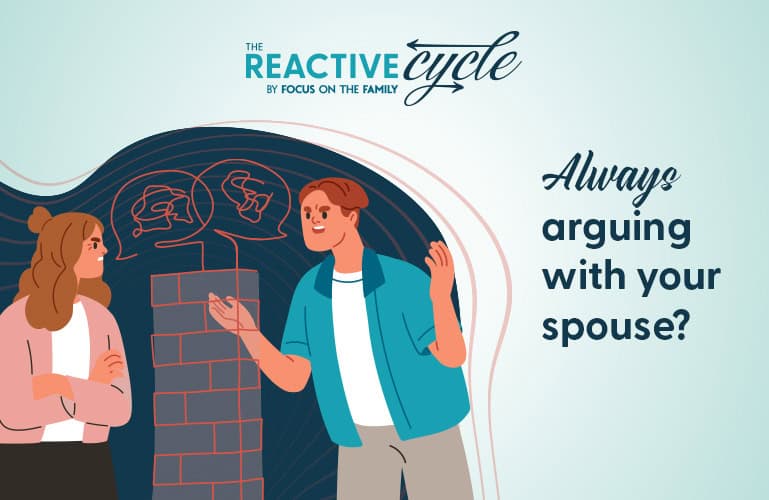
When your spouse feels threatened, he or she may appear confrontational or argumentative. He or she might build a wall by belittling you, using sarcasm, criticizing, or becoming verbally defensive. Some people are aggressive and jealous. They often appear controlling, domineering, and selfish.
What you might feel when your spouse is emotionally distant
Your response to any of the actions above may be feelings of loss, hurt, or anger. If your spouse is working lots of extra hours or overindulging in a hobby, you could feel that your relationship lacks intimacy or friendship.
When your spouse is emotionally distant, checked out, or withdrawn and prone to stonewalling, the situation might feel as if he or she has stopped investing in your relationship. If your husband or wife is no longer open to your influence, you might feel marginalized. When you’re treated with contempt in marriage, your attitude may be one of utter disgust or hatred. If your spouse offers no grace, you could feel that he or she is simply done with the relationship.
Regardless of what you observe or feel, the real issue in your marriage is that your spouse has a closed or hardened heart. “[Jesus] said to them, ‘Because of your hardness of heart Moses allowed you to divorce your wives, but from the beginning it was not so’ ” (Matthew 19:8). If you notice your mate building emotional walls — that is, having a closed heart — you can still do several things to help strengthen your relationship.
Honor the walls of emotional distance in marriage
Keep in mind that your spouse built the wall(s) for a reason and is being emotionally distant— he or she felt unsafe and needs to know you understand the situation. If you attempt to tear down your spouse’s walls instead of allowing him or her to do it, you’ll remove security and hope. It’s sort of like how a drowning person would feel if — as soon as he or she came to the surface — you would plunge that person back under the water.
Caring about the feelings of the person behind the wall should be your top priority. When you recognize that your husband or wife only erects walls when he or she feels insecure, then you can choose to care more about your spouse’s feelings than getting what you want. The well-being of your husband or wife should be the most important thing to you; therefore, the wall can stay as long as it is needed.
Realize how unsafe you have been
Though you are not responsible for your spouse’s emotions, acknowledging your role in the deterioration of the relationship is an important part of the healing process. You can also do the work necessary to understand what’s driving your need to break through your husband’s or wife’s emotional walls. Consider meeting with a counselor to work on any emotional walls you’ve put up, such as the fear of being alone, failing in marriage, or resentment.
Focus on creating safety
Station yourself as a “sentry” to protect your spouse. The message you want to convey is something like this: I understand there is a wall between us because you feel unsafe. I am going to work on my own weaknesses so that you can eventually feel safe with me. I’ll try to keep discovering what I’ve done to create such an unsafe place for you. I won’t rest until you feel relaxed enough to open up and be yourself around me.
Prepare for spiritual warfare
Satan will attack you. Notice that after God created marriage in Genesis 2:24-25, marriage was under attack in the very next chapter, Genesis 3:1. There isn’t a single verse of separation before Satan goes after what God had created. As the father of lies, he will try to convince you that your marriage “will never work,” “is too hard,” or “would be easier with someone else.” So heed the apostle Peter’s instruction and “be sober-minded; be watchful. Your adversary the devil prowls around like a roaring lion, seeking someone to devour” (1 Peter 5:8).
Trust that God can use this for your good
Healthy individuals do not enjoy suffering, but most adults realize there can be bright spots even in the darkest moments of our lives. This perspective reflects the advice offered in the practical book of James: “Count it all joy, my brothers, when you meet trials of various kinds, for you know that the testing of your faith produces steadfastness” (James 1:2-3).
Prevent emotional distance in marriage: keep your heart open
More than simply practicing “positive thinking,” you need to rededicate yourself to your marriage relationship. Decide that divorce isn’t an option for you — don’t say the word, don’t consider it as an option, don’t attempt to justify it.
Forgive your spouse for any offense you may hold against him or her. Forgiveness is not easy, and it doesn’t mean forgetting. But it is an intentional decision that will be healthy for you and your marriage. (For help with this, read Forgiveness and Restoration.)
Establish accountability for keeping your heart open. You need support and encouragement from same-sex friends, family, a counselor, a mentor, or a pastor — people who support your choice to fight for your marriage. Even Moses needed help and support (literally): “But Moses’ hands grew weary, so they took a stone and put it under him, and he sat on it, while Aaron and Hur held up his hands, one on one side, and the other on the other side. So his hands were steady until the going down of the sun” (Exodus 17:12). Surround yourself with people who want to help you fight for your marriage.
As you and your spouse work to tear down emotional walls between each other, you can experience freshness in your relationship that can lead to deeper understanding, appreciation, and commitment.